Page 6016 of 6130
1 6.014 6.015 6.016 6.017 6.018 6.130

Liberia. Center Songhai graduates 96 youths in vocational skills

Liberia. Centro Songhai gradúa 96 jóvenes de las competencias profesionales

Liberia/22 marzo 2016/Autor: PNUD en Liberia/ Fuente: http://www.lr.undp.org/

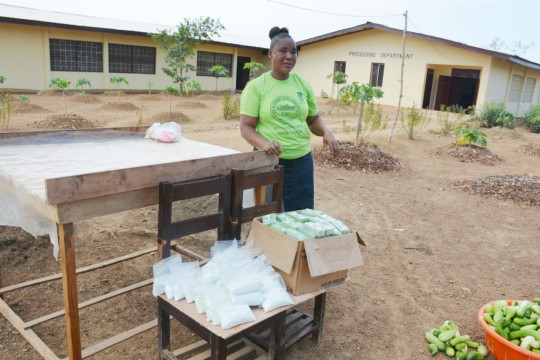
At least 96 young Liberians have acquired specialized vocational skills in general agriculture, electronic/repairs and food processing from the Center Songhai Liberia (CSL).

The CSL was supported by the United Nations Development Programme (UNDP) under its project titled: «Support to the Designed and Roll Out of a Youth-Focused Vocational/Life Skills Training Project».

CSL National Programme Director and Team Leader Christopher Fayia said the graduates have now joined the network as foot soldiers, to work in their local communities to develop themselves and society.

The trainees acquired specialized vocational skills following four months of intensive training in the following areas; general agriculture -54 (47 males 7 females); 21 in electronics and repairs; and 21 in food processing (2 males and 19 females).

——————————————————————————————————————————————————————–

Al menos 96 jóvenes liberianos han adquirido conocimientos profesionales especializados en la agricultura en general, electrónicos / reparaciones y procesamiento de alimentos desde el Centro Songhai Liberia (CSL).

El CSL fue apoyada por el Programa de Desarrollo de las Naciones Unidas (PNUD) en su proyecto titulado: «Apoyo al Diseño y despliegue de una Vida Habilidades Proyecto Juvenil-Focused Formación / Formación».

CSL director del Programa Nacional y Jefe de Equipo Christopher Fayia dijo que los graduados se han unido a la red como soldados de a pie, para trabajar en sus comunidades locales para desarrollar ellos mismos y la sociedad.

Los participantes adquirieron conocimientos profesionales especializados siguientes cuatro meses de entrenamiento intensivo en las siguientes áreas; agricultura general -54 (47 hombres 7 mujeres); 21 en la electrónica y las reparaciones; y 21 en el procesamiento de alimentos (2 machos y 19 hembras).

————————————————————————————————————————————————————————


Mr. Fayia said given the high number of young people in the country with less number of small scale agribusinesses and the drive to meet the ever growing market demands, there is a serious need for rehabilitation and construction of additional structures at the CSL to respond and correspond to this challenge.

The CSL Director of Programme disclosed that UNDP has already approved the renovation of one of the female dormitories that will accommodate at least 75 to 100 females.

“This renovation will be carried out as another training project where at least 20 young men and women will be recruited under the supervision of mentors in electricity, carpentry, masonry and plumbing” Mr. Fayia said.

He commended UNDP for tremendous support towards the project. He explained that the project is a five -year agro-business and Technical Vocational Education Training (TVET) program.

Mr. Fayia further noted that they are encouraging partners to support the program which will enable the center enroll over 500 students during a full cycle training and take the program nationwide.

Speaking at the program, UNDP Resident Representative Mr. Antonio Vigilante urged the graduates to make the best out of what they have learned.

“You are now graduates with life skills training that you can survive on” Mr. Vigilante said.

He also challenged the students to empower themselves as entrepreneurs by engaging in business instead of waiting for employment.

Serving as Keynote Speaker, Youth and Sports Minister Saah N’toh thanked the graduates for taking a great step in improving their lives by gaining such training.

Minister N’toh called on the graduates to see the day as a day of reflection while they celebrate.

The Center Songhai Liberia (CSL) is a non-governmental organization operating as an integrated agricultural program that is modeled after the Songhai Regional Center (SRC) in Benin.

The principal business of CSL is the training of men and women and equipping them with the skills to manage small and medium scale, commercially viable and environmentally sustainable agricultural production and agro-based enterprises.

Fuente de la Noticia y Fotografía:

http://www.lr.undp.org/content/liberia/en/home/presscenter/articles/2016/03/22/center-songhai-liberia-csl-graduates-96/

Comparte este contenido:

South-South Cooperation: Ethiopia, South Korea and China exchange lessons on sustainable forest management

Cooperación Sur-Sur : Etiopía, intercambiar lecciones de Corea del Sur y China sobre la gestión sostenible de los bosques

Etiopía- Corea del Sur – China/25 marzo 2016/Autor: PNUD en Etiopía/ Fuente: http://www.et.undp.org/

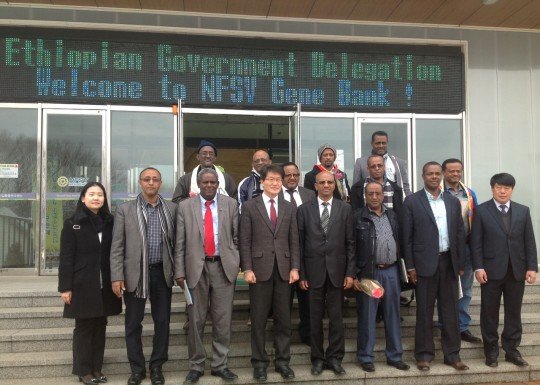
A high level Ethiopian government delegation is now back in the country following a successful experience and knowledge sharing visit to South Korea and China.

The United Nations Development Programme (UNDP) and UNREDD facilitated the visit by the high level delegation, which was led by the Minister of Environment, Forest and Climate Change Dr. Shiferaw Teklemariam and included regional presidents from Afar, Tigray and Southern Nations and Nationalities People’s regions.

Forestry is one of the four pillars in Ethiopia’s Climate Resilient Green Economy (CRGE) strategy and is identified as having the largest potential in reducing emissions and increasing the country’s climate resilience.

Ethiopia’s fast growing population, currently placing the country as the second most populous African nation, is  feared to increasingly become a major burden on resources, particularly natural resources.

According to the strategy, Ethiopia will need to reverse its deforestation and degradation if the country can be expected to meet its development goal.
The official forest coverage figure stands at only 15% showing a 50% decrease from 30 years ago.

Whereas in just 50 years South Korea has managed to tackle deforestation and degradation to transform its forest coverage mass to 64%.

The south-south knowledge exchange is hoped to lead to further cooperation around strengthening Ethiopia’s institutional capacity for sustainable forest management and facilitate the country’s access to appropriate technology, technical expertise and latest tools.

UNDP is currently partnering with Norway to enhance Ethiopia’s capacity to sustainably manage its forest resources.

—————————————————————————————————————————————————-

Una delegación de alto nivel del gobierno etíope participó en una visita exitosa a Corea del Sur y China para compartir experiencia y conocimientos.

El Programa de las Naciones Unidas para el Desarrollo (PNUD) y UNREDD facilitaron la visita de la delegación de alto nivel, que fue dirigido por el Ministro de Medio Ambiente, Bosques y Cambio Climático Dr. Shiferaw Teklemariam e incluidos presidentes regionales de Afar, Tigray y Southern Nations y Nacionalidades Personas de regiones.

La silvicultura es uno de los cuatro pilares de la estrategia de Resiliencia Climática de Etiopía Economía Verde (CRGE) y se identifica por tener el mayor potencial para reducir las emisiones y aumentar la resistencia al clima del país.

Población en rápido crecimiento de Etiopía, en la actualidad que sitúa al país como el segundo país más poblado de África, se teme a ser cada vez más una carga importante en los recursos, en particular de los recursos naturales. De acuerdo con la estrategia, Etiopía tendrá que invertir su deforestación y la degradación si el país puede esperar para cumplir con su objetivo de desarrollo. La cifra oficial de cobertura forestal es de sólo un 15% que muestra una disminución del 50% de hace 30 años.

Mientras que en tan sólo 50 años Corea del Sur ha logrado frente a la deforestación y la degradación de transformar su masa forestal cobertura al 64%.

El intercambio de conocimientos Sur-Sur se espera que conduzca a una mayor cooperación en el fortalecimiento de la capacidad institucional de Etiopía para el manejo forestal sostenible y facilitar el acceso del país a la tecnología apropiada, la experiencia técnica y las herramientas más recientes.

Actualmente el PNUD está asociado con Noruega para mejorar la capacidad de Etiopía para el manejo sostenible de sus recursos forestales

Fuente de la Noticia y la Fotografía:

http://www.et.undp.org/content/ethiopia/en/home/presscenter/articles/2016/03/25/south-south-cooperation-ethiopia-south-korea-and-china-exchange-lessons-on-sustainable-forest-management/

Comparte este contenido:

String Figures and How to Make Them

A Study of Cat’s Cradle in Many Lands

by Caroline Furness Jayne


Las figuras de cordel tienen un amplio repertorio de formas, usos y expresiones socio culturales alrededor del mundo. En este trabajo de etnología y antropologìa cultural de Carolyne Furness Jayne se refleja una ardua y paciente investigación al respecto.  Recomendamos su lectura Pueden hacerlo a través del siguiente enlace

Las Figuras de Cordel


Comparte este contenido:

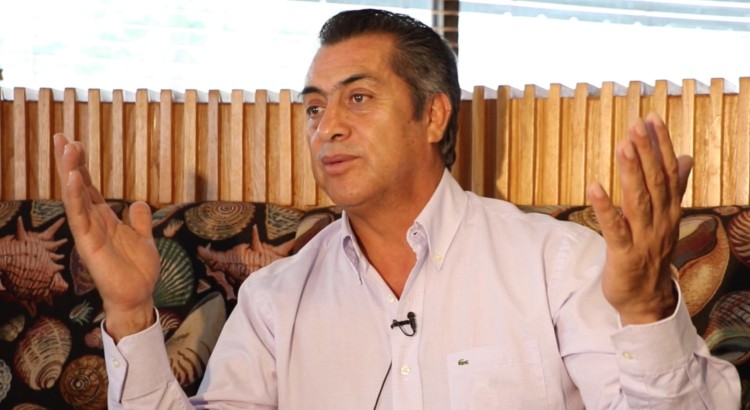
Maestros se tienen que aguantar, No Hay Dinero: Gobernador del Nuevo León en México.

Alrededor de 100 docentes han tenido problemas con sus pagos, aunque el mandatario espera que en un tiempo máximo de dos semanas ya cuenten con su sueldo.

Monterrey/28 marzo 2016/Autor: Marilú Oviedo/ Fuente: http://insurgenciamagisterial.com/

Mientras que en los últimos cinco meses la titular de la Secretaría de Educación en Nuevo León ha cobrado un millón de pesos, alrededor de 100 docentes han tenido problemas con su pago en las últimas semanas.

Ante esta situación, el Gobernador del Nuevo León, Jaime Rodríguez Calderón, expresó que los maestros se tienen que aguantar, pues dijo, no hay dinero.

“Se tienen que aguantar los maestros, como se ha aguantado la sociedad por mucho tiempo en el tema de inversiones, es decir, no hay dinero. Se contrataron muchos maestros en la pasada administración por contrato”, expresó el mandatario.

Aseguró que tratarán de cubrir algunos compromisos, pero el problema es de la federación.

“Ellos aspiraron a una plaza adicional y cuando eso pasa el gobierno cancela los pagos, no somos nosotros, es la federación, nosotros no hemos cancelado ningún pago, ni hemos hecho nada, es la federación, por la descentralización de la educación y luego la centralización de los pagos que hizo esta administración, estamos teniendo problemas”, dijo Rodríguez Calderón.

Comentó que alrededor de 366 maestros tuvieron el mismo problema, pero ahora faltan alrededor de 180 por recibir el pago.

Rodríguez Calderón espera que en un tiempo máximo de dos semanas los docentes ya cuenten con dicho sueldo.

El pago de los maestros oscila entre los 7 mil a 13 mil 048 pesos mensuales, de primarias de la sección 21 federal.

Fuente original de la noticia: http://www.multimedios.com/telediario/local/maestros-aguantar-no-hay-dinero.html

Fuente de la Noticia:

Maestros se tienen que aguantar, no hay dinero: gobernador

Fuente de la Fotografía:

http://noticaribe.com.mx/tag/jaime-rodriguez-calderon-el-bronco/

Comparte este contenido:

OECD Factbook

OECD’s dynamic and comprehensive statistical annual showing a wide range of key statistics for its member countries and major additional countries. For each indicator presented, there is explanatory text including a definition, explanation of long-term trends, and references; a table showing the indicator over a significant time span for all countries covered, and graphics showing the key messages contained in the data. Under each table is a link to an Excel spreadsheet enabling the user to access the data. This publication is available in print form, as an iPhone app, and in html form.

OECD Countries covered include Australia, Austria, Belgium, Canada, Chile,Czech Republic, Denmark, Estonia, Finland, France, Germany, Greece, Hungary, Iceland, Ireland, Israel, Italy, Japan, Korea, Luxembourg, Mexico, Netherlands, New Zealand, Poland, Portugal, Slovak Republic, Slovenia, Spain, Sweden, Switzerland, Turkey, the United Kingdom, and the United States. Non-OECD countries covered include Brazil, China, India, Indonesia, Russia, and South Africa.

Topics covered include population and migration; production and productivity; household income, wealth and debt; globalisation, trade and foreign direct investment (FDI); prices, interest rates and exchange rates; energy and transportation; labour, employment and unemployment; science and technology including research and development (R&D) and the Information and Communications Technology (ICT) sector; environment including natural resoures, water,and air and climate; education resources and outcomes; government expenditures, debt, revenues, taxes, agricultural support and foreign aid; and health status, risk and resources.

http://www.oecd-ilibrary.org/economics/oecd-factbook_18147364

OECD Factbook


Comparte este contenido:

Chicago Teachers to Strike for Public Schools and Services

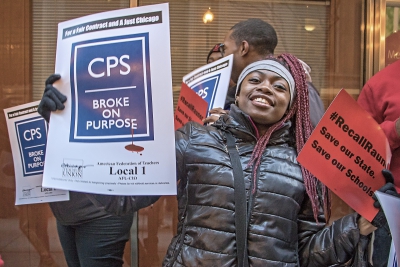
LABORNOTES/  Just in time for the 2016 Labor Notes Conference, the Chicago Teachers Union is planning a one-day strike and citywide day of action April 1. The union’s governing body, the House of Delegates, gave its stamp of approval to the action last night.

The teachers’ contract fight intensified after the district announced cuts and layoffs it claims are necessary to pay off a $480 million budget shortfall.

The union doesn’t dispute there’s a deficit. But the teachers argue that the district has brought the problem on itself by refusing to look for additional tax revenue to fund schools. Or as union leaders put it, the Chicago Public Schools are “broke on purpose.”

April 1 was chosen because it’s the day teachers were slated to see a cut in their paychecks, as the district slashed the 7 percent “pension pickup” it’s been paying since the 1980s.

Chicago teachers don’t get Social Security; instead, those contributions are diverted into the district’s pension system. “The only thing we have to retire is our pension,” said bargaining team member Tammy Vinson, a special ed teacher, last year.

Hoping teachers would call off the strike, the district has since backed off its immediate plan to impose the cut—but it wouldn’t take the demand off the table entirely.

“There are teacher’s aides that only make $29,000 a year,” said teacher Sarah Chambers. “Imagine a 7 percent pay cut.”

“We are hoping this April 1 action is a show of force,” said union Financial Secretary Kristine Mayle. “It’s not just about this contract fight. It’s about education and fair funding and the rich not paying their taxes.”

The union has been highlighting the city’s refusal to get tough with banks. It points to Bank of America and other financial institutions where high borrowing rates or “toxic swaps” have cost the city over a billion dollars.

“The whole system is screwed up,” Mayle said.


Labor Notes’ book How to Jump-Start Your Union shows how activists transformed the CTU and organized the 2012 strike.Available for $15 from our store.

ALL FEELING THE PINCH

Teachers—the largest union in the city—are asking other unions to mobilize too, and to gather for a mass rally for better funding for schools and public services.

“We are going to be joined by health care workers, fast food workers, and others facing the pinch,” Mayle said.

She pointed to clear allies: SEIU Healthcare Illinois, the Fight for $15 campaign, and students and faculty at Chicago State University, a South Side school that’s in crisis after harsh budget cuts.

Community groups representing a cross-section of the district’s parents and students have endorsed the day of action: Kenwood Oakland Community Organization, Black Youth Project 100, Grassroots Collaborative, and the worker center ARISE.

“These social services all affect our students and their families,” Chambers said. “We are demanding progressive revenue that will fund the contract, that will fund social services, that will fund Chicago State University.”

Public sector workers in Transit (ATU), AFSCME, and SEIU could be potential allies, too, since they’re also facing city and state budget cuts and layoffs.

Members have authorized an open-ended strike, but they have legal requirements to meet before they can give official strike notice, as they did in 2012. They’re in the legally mandated fact-finding phase of negotiations.

Still, the union’s officers and executive board recommended the April 1 work stoppage. Five hundred members discussed it at a March 12 summit, and the union’s governing body, the House of Delegates, voted last night to authorize it.

‘A JUST CHICAGO’

The teachers have been without a contract since last June. The union kicked off its campaign last spring, issuing a series of proposals under the umbrella of “A Just Chicago.”

Members want smaller classes, more teachers and support staff, more resources for students, and workload relief.

The union has pointed to ways the district could bring in new revenue for schools—including renegotiating the “toxic swaps” and repurposing tax increment financing (TIF) money that’s currently being used to subsidize real estate development.

Over the summer, the two sides worked on a one-year contract extension that would have generally maintained the status quo—but in August, new Chicago Public Schools CEO Forrest Claypool tanked it. Instead he demanded that teachers take a pay cut by giving up the district’s pension contribution.

In December, 88 percent of Chicago teachers voted to authorize a strike.

NOT GOOD ENOUGH

In January, the appointed board made a settlement offer, which had some promising elements on the surface. The district was offering a moratorium on new charter schools and layoffs—if enough members (both teachers and paraprofessionals) took an early retirement buyout. The 7 percent pension pickup would be phased out.

But the union’s big bargaining team rejected the offer—and not only because of the pay cut.

“The things that they gave us were not enforceable,” Mayle said, pointing out that the state also has the power to authorize charters. And there was no guarantee that the district would fill the jobs of the 2,000 veteran teachers it would be pushing into retirement—so the plan risked worsening already barebones staffing levels.

The district wouldn’t take no for an answer. Claypool announced the plan to impose the pension pickup, along with layoffs that mostly affect the district’s central office and school employees represented by other unions. The district later announced three furlough days for teachers and school employees.

Union workers now have just over a week to prepare their co-workers for the action and bring in more allies across the city.

“I think this is really going to scare them,” Chambers said. “This has never happened before.”


Samantha Winslow is a staff writer and organizer with Labor Notes.samantha@labornotes.org

Comparte este contenido:

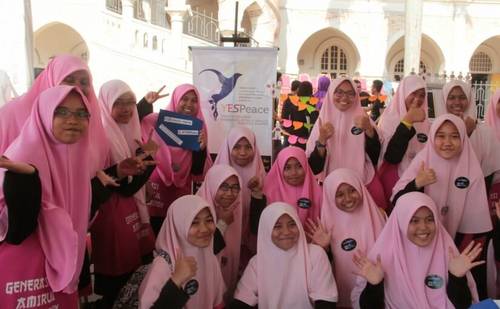
La Red YESPeace de la UNESCO aprovecha la capacidad de los jóvenes del mundo para cambiar el futuro

UNESCO/Marzo 2016

“Tenemos que reincorporar a los jóvenes en la sociedad y lo que ellos necesitan es identidad y sentido”, dijo el Dr. Anantha Kumar Duraiappah, Director del Instituto Mahatma Gandhi de Educación para la Paz y el Desarrollo Sostenible (MGIEP por sus siglas en inglés) en Nueva Delhi (India).

“Tenemos que reincorporar a los jóvenes en la sociedad y lo que ellos necesitan es identidad y sentido”, dijo el Dr. Anantha Kumar Duraiappah, Director del Instituto Mahatma Gandhi de Educación para la Paz y el Desarrollo Sostenible (MGIEP por sus siglas en inglés) en Nueva Delhi (India).

El MGIEP es el instituto de la UNESCO especializado en educación para la paz y el desarrollo sostenible y lleva su nombre en tributo a los principios de no violencia y vida sostenible de Mahatma Gandhi.

Entrevistado tras participar en una consulta de expertos de la UNESCO sobre la prevención del extremismo violento mediante la educación, el Dr. Duraiappah afirmó que la Red YESPeace es parte de la respuesta del instituto a estos desafíos.

Unir a los jóvenes en torno a la paz y el desarrollo sostenible

“Los jóvenes quieren que se les escuche y quieren dignidad”, dijo el Dr. Duraiappah. “Viven en un mundo interconectado que es cada vez más pequeño y están inmersos en las conversaciones de las redes sociales. Queremos elaborar una plataforma que los una en torno a nuestro mandato de paz, desarrollo sostenible y ciudadanía mundial”.

La red es un elemento del programa para jóvenes del Instituto, que se ha propuesto empoderar a la juventud mediante la educación para construir un futuro pacífico y sostenible. La red congrega a los jóvenes para que se centren en los Objetivos de Desarrollo Sostenible, y en particular en la Meta 4.7 de los ODS, relativa a la educación para el desarrollo sostenible (EDS), que el MGIEP ha hecho suya.

“Hablamos con los jóvenes acerca de esa meta y nos dijeron que era borrosa y que no significaba gran cosa para ellos, mientras que las cuestiones concretas, tales como la pobreza, el agua potable, el acceso equitativo a la educación y la salud, sí eran significativas, de modo que incorporamos esa idea”, dijo el Dr. Duraiappah.

En respuesta a la cuestión, el MGIEP elabora actualmente un banco de datos con aportes de jóvenes que han dado seguimiento a la Meta 4.7 y que comprende una aplicación de telefonía móvil para que puedan cargar directamente ejemplos de cambios de conducta de la comunidad en la vida real, en lo tocante a la EDS.

“Queremos que los jóvenes lleven la iniciativa en la aplicación y el seguimiento de los ODS”, afirmó.

No existe una solución única para todos los problemas

El Dr. Duraiappah asegura que los jóvenes tratan de hallar algo en que creer y, como resultado de esa búsqueda, algunos caen bajo la influencia de los extremistas, pero advierte que no existe una sola solución para todos los casos.

“Debemos recordar que las motivaciones de un joven en Siria o Afganistán son muy diferentes de las de otro en Canadá o en cualquier otro país”, señaló.

“Queremos enseñarles a los jóvenes de qué manera pueden llegar a ser ciudadanos del mundo, que pueden asumir identidades múltiples dentro de cada sociedad y que dudar de uno mismo no es un síntoma de debilidad, sino de fortaleza”.

Una campaña sobre ciudadanía mundial coordinada por los jóvenes

Además de la Red YESPeace, el MGIEP dirige el Programa Embajadores de la Universidad, que promueve el diálogo intercultural, y elabora actualmente el Programa Agentes del Cambio, que se centra en la capacitación y el liderazgo, sobre la base de los valores del humanismo y la compasión.

Cada año, el Instituto celebra el evento Talking Across Generations [Diálogo intergeneracional], que en 2016 estuvo dedicado al extremismo violento y la educación, y que contó, como primicia, con un concierto mixto de la banda pakistaní Junoon y la banda india Indian Ocean. En la actualidad se está programando una segunda actuación conjunta de ambas formaciones musicales, que tendrá lugar el 2 de octubre, Día Internacional de la No Violencia y aniversario del nacimiento de Mahatma Gandhi.

Comparte este contenido:
Page 6016 of 6130
1 6.014 6.015 6.016 6.017 6.018 6.130