Page 704 of 6134
1 702 703 704 705 706 6.134

Bahamas: Teachers are fearful amid COVID cases, says BUT president

Teachers are fearful amid COVID cases, says BUT president

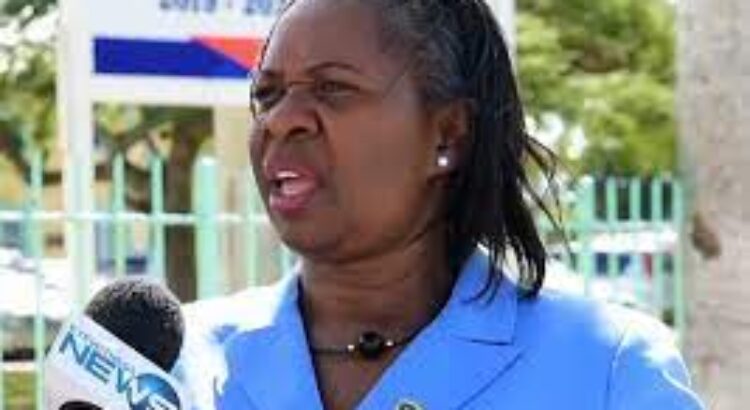
NASSAU, BAHAMAS — Bahamas Union of Teachers (BUT) President Belinda Wilson yesterday urged education officials to shore up health and safety protocols in public schools as positive cases of COVID-19 continue to pop up among the student and staff population.

According to the union, cases have been confirmed at Thelma Gibson Primary, Sadie Curtis Primary, Uriah McPhee Primary, Gambier Primary and Government High School

“As the COVID-19 positive cases rise again, New Providence schools have students and teachers that are testing positive,” Wilson told Eyewitness News.

She continued: “Again, the Bahamas Union of Teachers is urging the Ministry of Education to ensure that safety protocols are being followed.

Wilson expressed concern about protocols within schools surrounding suspected cases.

“Once there is a suspected case(s) the time period is too long before teachers are informed,” she said.

“Teachers are still not being informed in a timely manner about confirmed cases.

The BUT president also expressed concern that teachers, who are frequently tested, must do so at their own expense.

Wilson also said time spent in quarantine has been deducted from normal sick leave, a practice she called unfair.

“Teachers are fearful for their health,” she continued

“A concern now that many students, even some entire grade levels, are in quarantine and teachers are also in quarantine.

“The concern of teacher shortage was expressed in at least one school.

“The Bahamas Union of Teachers will continue to monitor this situation and we are in frequent communication with the shop stewards and union representatives at the various schools.”

As of April 20, Director of Education Marcellus Taylor advised that there had been 15 to 20 suspected or confirmed cases of COVID-19 in public schools across New Providence.

He assured that there was a stringent protocol to follow with suspected and confirmed cases.

Minister of Education Jeffrey Lloyd has also said he had “no concern at all” that an outbreak could occur at schools open for face-to-face learning.

The majority of schools offer face-to-face and virtual learning on a rotational basis.

Fuente de la Información: https://ewnews.com/teachers-are-fearful-amid-covid-cases-says-but-president

Comparte este contenido:

Viet Nam: Mother and son unjustly convicted in “travesty of justice”

Viet Nam: Mother and son unjustly convicted in “travesty of justice”

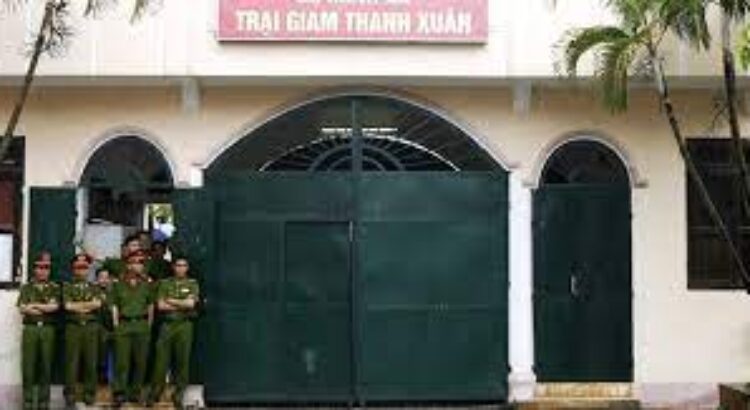
Responding to the conviction of prominent land rights activists Trinh Ba Tu and Can Thi Theu, Amnesty International’s Deputy Regional Director for Research, Emerlynne Gil, said:

“This conviction is a travesty of justice. Can Thi Theu and her son, Trinh Ba Tu, are brave human rights defenders who should be protected by the Vietnamese government, not harassed and locked away.

“Can Thi Theu and Trinh Ba Tu should never have been arrested in the first place, let alone convicted of bogus charges. They are clearly being punished in retaliation for their peaceful activism to expose injustices and human rights violations. Sadly, in Viet Nam, the peaceful defence of human rights is enough to face a lengthy prison term.

The authorities in Viet Nam should overturn this unjust conviction without delay and immediately and unconditionally release Can Thi Theu and Trinh Ba Tu. They were convicted solely for peacefully exercising their human rights. The Vietnamese authorities must release all those unjustly imprisoned in Vietnamese jails.”

Background

Trinh Ba Tu and Can Thi Theu were both sentenced to eight years’ imprisonment followed by three years’ probation after being convicted for “making, storing, or spreading information, materials or items for the purpose of opposing the State of the Socialist Republic of Viet Nam” by the People’s Court of Hoa Binh province today.

Can Thi Theu is a well-known land rights activist and human rights defender in Viet Nam. She became an activist after her family’s land was confiscated by the authorities in 2010. She began advocating against forced evictions and became a leading figure of the land rights movement.

In 2014, Can Thi Theu and her husband, Trinh Ba Khiem, were arrested while filming a forced eviction and later were convicted by the People’s Court of Ha Dong district. Can Thi Theu was sentenced to 15 months’ imprisonment and her husband was given an 18-month sentence. Both were charged under Article 257 of the 1999 Criminal Code for “resisting persons in the performance of their official duties”.

In June 2016, Can Thi Theu was arrested again for leading a peaceful protest at the Central Citizen Committee office to demand justice for people whose land were confiscated. She was tried in September the same year by the People’s Court of Dong Da district and convicted and sentenced to one year and eight months in prison for “resisting persons in the performance of their official duties” under Article 257 of the 1999 Criminal Code.

After the imprisonment of their parents, Trinh Ba Tu and Trinh Ba Phuong also became activists and human rights defenders. They became leading figures of the land rights movement while their parents were in prison. Upon her release from prison, Can Thi Theu continued her land rights activism together with her sons.

In January 2020, police raided the village of Dong Tam in Ha Noi in a clash in which an 84-year-old village leader and three police officers were killed. Authorities also arrested dozens of villagers in relation to the high-profile land dispute between the government and the local community. Can Thi Theu and her two sons, Trinh Ba Tu and Trinh Ba Phuong, played prominent roles in informing the public about the incident through their social media platforms.

On 24 June 2020, police arrested Can Thi Theu, Trinh Ba Phuong and Trinh Ba Tu. The three were charged for “making, storing, or spreading information, materials or items for the purpose of opposing the State of the Socialist Republic of Viet Nam” under Article 117 of the Criminal Code. Trinh Ba Phuong remains in pre-trial detention.

Fuente de la Información: https://www.amnesty.org/en/latest/news/2021/05/viet-nam-mother-son-unjustly-convicted/

Comparte este contenido:

Esta dos Unidos: Megan Rondini lawsuit can proceed, state supreme court rules: Former Alabama student died in suicide after alleged rape

Megan Rondini lawsuit can proceed, state supreme court rules: Former Alabama student died in suicide after alleged rape

The lawsuit against a man from a prominent Tuscaloosa family in the death of Megan Rondini, a former college student who killed herself after alleging she was raped, can move forward, according to an Alabama Supreme Court ruling issued Friday.

Rondini was a UA student from Texas when she reported to police she was raped by T.J. Bunn in 2015.

Bunn worked at ST Bunn Construction Company, which is across the street from the Innisfree Pub, where Rondini reportedly became drunk, or was drugged, before being raped for 30 minutes in July of that year.

Rondini’s story became public in a June 2017 BuzzFeed story, as told by her parents, family and friends.

They claimed the 20-year-old was mistreated by Tuscaloosa County investigators, the university and DCH Regional Medical Center. Rondini left Tuscaloosa and took her own life in February 2016.
In an earlier lawsuit filed on behalf of parents Michael and Cynthia Rondini, the documents identified T.J. Bunn, the Tuscaloosa man implicated in the alleged sexual assault of Rodini, as being part of a family that is “well connected and powerful in the Tuscaloosa community, and were major financial supporters of UA.”

Bunn had filed a motion in federal court saying that because Rondini took her own life, that automatically prevented him from being liable in her death.

For example, experts explained, if a person was injured in a car wreck and later committed suicide as a result of that car wreck, Alabama and most other states typically say that the person who caused the wreck is no longer responsible.
In this case, however, the Alabama Supreme Court decided that when it comes to sexual assault, if there’s enough evidence to show the sexual assault happened and the victim then commits suicide, the alleged assailant can still be held liable for the sexual assault.

In the Supreme Court ruling, it says the federal court had concluded that Rondini’s family had produced substantial evidence that Bunn had sexually assault her, said Rondini attorney Leroy Maxwell of Birmingham law firm Maxwell Tillman.

“We all knew that was a fact,’’ Maxwell said Friday. “Bunn made a technical argument, not an innocence argument, he made a technical argument saying since he killed herself, he should no longer be responsible for damages,’’ Maxwell said.

The Supreme Court, however, said if someone hurts someone intentionally and they commit suicide, the assailant can still be held responsible for her wrongful death. “They literally did exactly what we asked the court to do and cited the exact case law from our brief,’’ Maxwell said. “This is a huge day for her family, an emotional, big day for them.”


Fuente de la Información: https://www.al.com/news/2021/05/megan-rondini-lawsuit-can-proceed-state-supreme-court-rules-former-alabama-student-died-in-suicide-after-alleged-rape.html

Comparte este contenido:

Child Sex Abuse In Indonesia’s Schools

Child Sex Abuse In Indonesia’s Schools

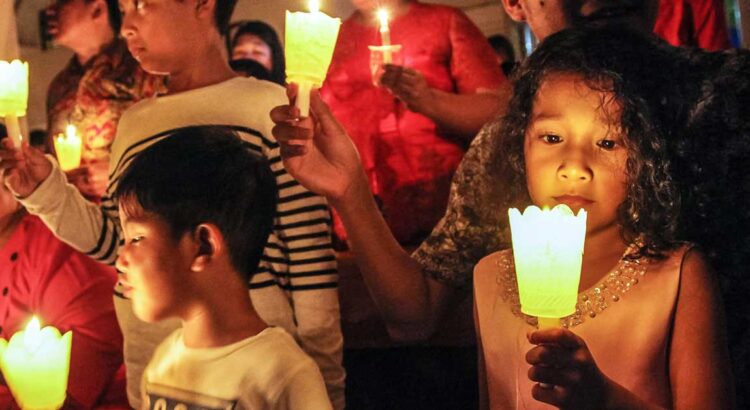
This file photo shows children attending prayers at a Catholic Church in Medan, North Sumatra, on 24 December, 2019. (AFP Photo)

A child molestation incident in Medan, North Sumatra has highlighted the need for schools and local authorities in Indonesia to better protect their students, particularly when the perpetrators are religious leaders, experts have said.

At a school in Medan, six female students came forward last month to allege that the institution’s male principal, who is also a Protestant priest, had sexually assaulted them. Mira*, the mother of one of the alleged victims, said that her 13-year-old daughter had been taken to a local motel on at least four occasions from the age of 11, where she was sexually assaulted.

“My daughter said that the principal told other staff that he was taking her to karate practice outside the school grounds,” Mira said. “When they got to the hotel, he took off her clothes, blindfolded her and forced her to give him oral sex. When she tried to resist, he pulled her head down by her hair to force her to continue.”

Mira filed a police report against the alleged perpetrator earlier this month.

Five additional female students also said they were locked in the principal’s office for “special classes” including English lessons and ballet but they were forced to sit on the man’s lap while he sexually assaulted them. It is not clear how many cases of child sex abuse in schools happen every year in Indonesia, although the National Commission on Violence Against Women recorded more than 38,000 cases of violence against women and children in 2020, the highest ever.

In recent years the Southeast Asian nation has been rocked by a number of high-profile cases of child sex abuse.

In 2020, the head of an Islamic boarding school in Aceh Province was sentenced to 15 years in prison for assaulting 15 male students that year and a Catholic priest, “Brother Angelo”, who was arrested on suspicion of sexually assaulting minors at a children’s home in Jakarta in 2021 is currently on trial.

But many such cases are deliberately kept out of the public eye.

“When the sexual violence perpetrated by religious leaders, it is a very difficult process, because people believe that the perpetrator is unlikely to commit violence, as these leaders are considered holy figures, authoritative and nurturing. Many victims end up being judged by their local community and accused of seducing the perpetrators,” said Ermelina Singereta, a lawyer at the Dike Nomia Law Firm in Jakarta, which is representing the victims in the “Brother Angelo” case.

In Medan, Mira says that the school initially tried to resolve the case internally, with the principal signing a written agreement, in which he apologised to two of the victims and promised not to reoffend, something which Singereta noted is very common.

“Many cases are resolved through religious organisations, due to a lack of education or information in the community,” she said. “Sometimes religious organisations solve the problem of violence against women or children with internal mechanisms even when they have a responsibility to go through state legal mechanisms.”

Indonesia’s child protection laws were created in 2002 and updated in 2014.

Punishments for those convicted of the sexual abuse of a minor can range from between five and 15 years in prison, although a new amendment was proposed by the Indonesian Parliament in 2016 following the gang rape and murder of a 14-year-old teenager in Bengkulu on Sumatra’s west coast.

One of the proposed changes of the 2016 bill allows for the chemical castration of convicted paedophiles by injection. Indonesia’s President Joko Widodo, popularly known as Jokowi, signed the use of chemical castration into force in January 2021, although the punishment has yet to be carried out. Fear and shame

Sister Eustochia Monika Nata, a Catholic nun who works with victims of child sex abuse as part of the Volunteer Team for Humanity (TRUK-F) on Flores in Indonesia’s east, said that in the town of Maumere alone, which has a population of about 90,000 people, she sees about 30 new cases of sexual assault of children and minors every year. “Those are the cases that are reported to us at TRUK-F, and so of course there are likely many more that are not reported,” she added.

“Some of the victims become pregnant due to the abuse, and they don’t want to report what has happened to them because they feel ashamed or because they think that they will not be supported by the investigating authorities.”

Ranto Sibarani, a human rights lawyer based in Medan who is representing the six alleged victims at the Protestant school, said that the legal process can be long and arduous for victims of sexual assault and more needed to be done to support the victims and encourage them to take action.

“In Indonesia, women and children are often in the weakest position to speak up for their rights, so it is important that we empower them to do so,” he said. “In many parts of the country, they are considered second-class citizens because of the patriarchal dominance in Indonesian society.” He also says there is a need for tougher safeguards to be put in place and has urged the government and the Education Ministry to take steps to monitor educational and religious staff more closely.

“I would ask the government to re-evaluate how both teachers and religious leaders are recruited and how they can get jobs teaching in schools without sufficient background checks and psychological evaluations that would help to keep students safe,” the lawyer said. “Child sex abuse cases are worse than terrorism as we have no idea how many victims have actually been affected.”

On 16 April, angry parents staged a protest outside the school in Medan calling for a full investigation and asking staff to cooperate with the local authorities. They also held signs calling for the principal, who has yet to be arrested, to be sacked.

Mira says she is proud of her daughter for speaking out and that her family felt compelled to report the abuse to the authorities out of fear that other victims would be affected in the future.

“The number of victims who have come forward are probably the tip of the iceberg, so he [the principal] has to be stopped otherwise he will do it again,” she said. “He was her teacher but for two years he treated my daughter like an animal.”

“We hope that schools will be the safest of places for parents to educate their children,” added Sibarani. “But this case shows how even schools which purport to promote strong religious values can turn into houses of horror.” – Al Jazeera

*Mira is a pseudonym to protect her daughter’s identity.

Fuente de la Información: https://theaseanpost.com/article/child-sex-abuse-indonesias-schools
Comparte este contenido:

Activistas feminista en Rusia enfrenta pena de cárcel por dibujos “cuerpo positivo”

Proyecto de arte positivo para el cuerpo conllevaría una condena de seis años de prisión

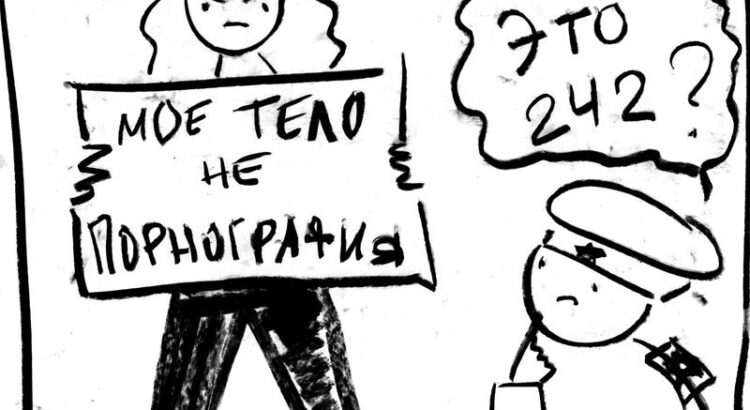
Yulia Tsvetkowa es artista feminista, directora del teatro y activista LGBT que enfrenta una pena de seis años de cárcel por distribución de imágenes pornográficas por difundir en redes sociales sus dibujos, que sus seguidores han llamado “cuerpo positivo”.

El 12 de abril, una corte en Kosmomolsk-on-Amur, en la región oriental rusa de Jabárovsk, empezó el último juicio del caso de Tsvetkova. El juicio se lleva a cabo a puertas cerradas, presuntamente porque se muestran imágenes pornográficas.

A Tsvetkova, de 27 años, es artista y directora de teatro a quien se acusa de “crear y distribuir material pornográfico” [artículo 242 (3b) del Código Penal de Rusia] por publicar varios dibujos de mujeres desnudas y vaginas en su página de VKontakte. Los dibujos son parte de su proyecto artístico “cuerpo positivo“. “Una mujer no es una muñeca”. Las acusaciones según el artículo 242 podrían tener como resultado un sentencia de prisión de hasta seis años.

Anna Khodyreva, la madre de Tsvetkova, dijo a AFP que no les permitirían asistir a la audiencia reservada y calificó el caso de “absurdo”. Dijo que todo se “estaba haciendo para asegurarse de que tengamos tan poca información como sea posible”.

Natalia Zvyagina, directora de Rusia para Amnistía Internacional, criticó la decisión de tener una audiencia reservada, y dijo que las autoridades rusas deberían “garantizar una audiencia pública” en el caso de Tsvetkova. Junto con el centro de derechos humanos Memorial, Amnistía Internacional ha calificado a Tsvetkova como prisionera de consciencia y ha pedido a Rusia que retire las acusaciones y que “deje de atacar a feministas, LGBTI y otros activistas”.

Historia de persecución

Yulia Tsvetkova ha gestionado varios proyectos educativos en Jabárovsk, así como un grupo juvenil, grupos en línea sobre feminismo y educación sexual para jóvenes, además de un grupo Monólogos de la Vagina que celebraba el poder y la naturaleza única del cuerpo femenino.

Yulia Tsvetkova fuera del tribunal. Foto (c): Yulia Tsvetkova.

Inicialmente fue detenido en noviembre de 2019, y quedó bajo arresto domiciliario hasta el 16 de marzo de 2020. En diciembre, la declararon culpable de violar la ley rusa que prohíbe “propaganda de relaciones sexuales no tradicional entre menores”. La multaron con 50 000 rublos (780 dólares), y en julio de 2020 le fijaron otra multa de 75 000 rublos (1050 dólares) por publicar un dibujo de parejas del mismo sexo con niños con la leyenda “La familia está donde está el amor. Apoya a las familias LGBT+ “.

En 2020, le dijo a AFP que cree que las autoridades usaban la acusación de pornografía como una oportunidad para reprimir su activismo LGBT, porque es fácil acusar a los ciudadanos y conlleva una larga sentencia.

En una entrevista de 2020 para la sección de Rusia y el espacio posoviético de oDR, openDemocracy, Tsvetkova habló del impacto de su arresto domiciliario y sobre las amenaza que enfrentó de activistas anti-LGBT. El actual caso penal contra ella empezó después de una queja presentada por Timur Bulatov, conocido activista anti-LGBT. También reflexionó sobre su condición de prisionera política:

Creo que hoy hay muchas prisioneras políticas: madres, esposas, mujeres que soportan un peso increíble a causa de los juicios políticos”, dice la artista rusa Yulia Tsvetkova, designada prisionera política por la asociación de derechos humanos Memorial. “Los prisioneros políticos son héroes, pero las mujeres son el personal invisible de servicio.

La próxima audiencia en el caso de Yulia Tsvetkova sería el 6 de mayo.

Fuente: https://es.globalvoices.org/2021/05/05/activistas-feminista-en-rusia-enfrenta-pena-de-carcel-por-dibujos-cuerpo-positivo/

Comparte este contenido:

Al menos 30 muertos tras una explosión cerca de una escuela para niñas en Afganistán

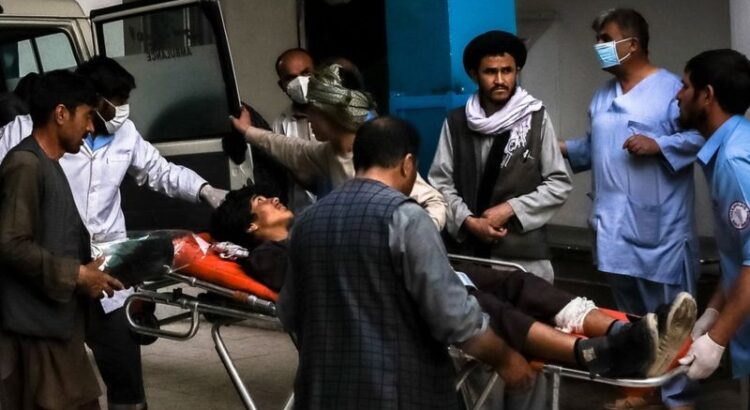
Al menos 30 personas murieron y decenas resultaron heridas- gran parte ellos, menores de edad- tras una explosión cerca de una escuela secundaria para niñas en Kabul, la capital de Afganistán.

La explosión ocurrió cuando un grupo de estudiantes salía del instituto este sábado, informaron autoridades del país asiático.

Según los corresponsales de la BBC, varias imágenes difundidas en las redes sociales muestran mochilas escolares abandonadas en las calles de la capital afgana.

La mayoría de las personas que resultaron heridas eran niñas, de acuerdo con una portavoz del Ministerio de Educación.

Fuente: https://www.bbc.com/mundo/noticias-internacional-57015307

Comparte este contenido:

Bolivia: Ministerio de Educación confirma que habrá horario de invierno y vacación escolar

El viceministro de Educación Regular, Bartolomé Puma, confirmó este jueves que habrá un descanso pedagógico en esta gestión y también se establecerá horario de invierno.

“En la Resolución 001/2021 se establece el descanso pedagógico. Dependerá de la situación climática, principalmente en La Paz, Oruro y Potosí que registran un intenso frío”, dijo, citado en un boletín institucional.

La autoridad recordó que en los nueve departamentos, en las áreas rurales están pasando clases presenciales, en las áreas urbanas y periurbanas las clases son semipresenciales y solamente en áreas de mayor concentración son virtuales.

“Vamos a aplicar el horario de invierno también cuando corresponda”, apuntó.

​Fuente: https://noticiasporelmundo.com/bolivia/ministerio-de-educacion-confirma-que-habra-horario-de-invierno-y-vacacion-escolar-noticias-bolivia/

Comparte este contenido:
Page 704 of 6134
1 702 703 704 705 706 6.134