Perú registra disminución de muerte por coronavirus
El Ministerio de Salud de Perú ha notificado este sábado un total de 86 muertes a causa de la COVID-19, después de que el presidente, Martín Vizcarra, destacara que el jueves se confirmaran 95 decesos, la primera cifra de dos dígitos «después de mucho tiempo».
Los 86 nuevos fallecimientos a consecuencia de la enfermedad causada por el nuevo coronavirus han elevado a 31.369 las víctimas mortales en Perú desde que comenzó la pandemia.
Asimismo, el número de contagiados ha ascendido hasta los 762.865, después de los 6.453 adicionales registrados este sábado, según los datos ofrecidos por las autoridades sanitarias del país andino.
Por otra parte, 9.269 pacientes permanecen hospitalizados por el covid-19, de los que 1.421 están internados en unidades de cuidados intensivos y requieren respiración mecánica. Por su parte, 607.837 personas han logrado recuperarse de la enfermedad en Perú.
Entretanto, el Ministerio de Relaciones Exteriores de Perú ha informado de que el Instituto Nacional de Salud (INS), la autoridad regulatoria del país, ha dado luz verde a la realización de los ensayos clínicos de fase tres de la vacuna contra el covid-19 del laboratorio AstraZeneca en el país.
La institución ha anunciado que el estudio se llevará a cabo con aproximadamente 3.000 voluntarios y comenzará a principios de octubre, según ha trasladado el diario local ‘El Comercio’.
Es una demostración de la confianza en la capacidad de los científicos peruanos y en la experiencia de los centros de investigación del país».
Fuente de la Información: https://diario.elmundo.sv/peru-registra-disminucion-de-muerte-por-coronavirus/
América del Sur/Argentina/21-09-2020/Autor(a) y Fuente: CONADUH-CTA
Este Miércoles 23 de septiembre, se llevará adelante la Conferencia Universitaria Argentina de cara al “I Congreso Mundial en defensa de la Educación Pública y contra el Neoliberalismo Educativo” a realizarse los días 25, 26 y 27 de septiembre. La misma dará inicio a las 17 horas (ARG) y contará con dos momentos: uno con la participación de invitadxs internacionales, para luego abordar los ejes de debate nacional.
La pandemia del COVID-19 generó una situación inédita de crisis global, que desnudó las profundas desigualdades del sistema. La actual coyuntura mundial es de crisis profunda del sistema capitalista que lo lleva a intentar colocar sobre las espaldas de los y las trabajadores los costes de esta situación.
Este contexto ha servido de pretexto para avanzar en la agenda neoliberal sobre la Educación Pública, la cual se concreta con novedosas formas de privatización educativa, asociadas al acceso a la conexión a internet y la posesión de equipos para participar en las clases virtuales.
El experimento de la virtualidad en casa está siendo usado para colocar una disputa que no existía en febrero de 2020, entre educación presencial en la escuela versus educación virtual en casa. A pesar de ello la docencia de todos los niveles ha asumido por cuenta propia y con el acompañamiento de sus gremios y sindicatos la tarea de actualizarse para enfrentar los actuales desafíos pedagógicos. Hemos peleados por garantizar el derecho a la educación, en condiciones cada vez más adversas, sosteniendo el vínculo pedagógico con los y las estudiantes.
Frente a este y otros debates llevaremos adelante en nuestro país la Conferencia Universitaria Argentina, convocada por CONADU Histórica, COAD y CTA Autónoma camino al I Congreso Mundial en defensa de la Educación Pública y contra el Neoliberalismo Educativo.
PRIMER MOMENTO
Presentación de la Conferencia Internacional a cargo de Claudia Baigorria, secretaria adjunta de CONADU Histórica. Participan:
Luis Bonilla Molina, Centro Internacional de Investigaciones OVE (Venezuela).
Isabel Vargas Torres. Unión Nacional de Educadores UNE (Ecuador).
Fernando Ábrego. Asociación de Profesores de la República de Panamá. AsoProf (Panamá).
Eblin Farage. Sindicato Nacional dos Docentes das Instituiçôes de Ensino Superior ANDES-SN (Brasil).
Osvaldo Coggiola. Sindicato Nacional dos Docentes das Instituiçôes de Ensino Superior ANDES-SN (Brasil).
SEGUNDO MOMENTO
Presentación y coordinación de la Conferencia Nacional, a cargo de Elena González y Oscar Vallejos de CONADU Histórica. Se abordarán los siguientes ejes:
La participación gremial en la articulación de las luchas y resistencias locales. Federico Gayoso (Secretario General de COaD),
Virtualización de la educación universitaria y preuniversitaria en tiempos de pandemia. Antonio Rosselló (Secretario de Organización CONADUH),
La mercantilización de la educación universitaria: Ley de Educación Superior. Luis Tiscornia (Secretario General CONADUH),
El rol de los sindicatos docentes universitarios en la lucha contra el neoliberalismo educativo. Claudia Baigorria (Secretaria Adjunta CONADUH),
Repensar la universidad en clave de géneros. Elizabeth Paz Burgos (Secretaria Adjunta ADIUNSa),
La universidad en tiempos de covid-19: docencia, investigación y extensión. Andrés Duhour (Secretario de Relaciones Internacionales CONADUH).
«Solo un par de horas más y no la contamos»: cómo fue el rescate de un grupo de migrantes venezolanos abandonados en el desierto de Chile
«Nos dijeron que caminaríamos unas horas, que empezaríamos a caminar por la noche y al amanecer ya estaríamos […]
«Pero no sabíamos con lo que nos enfrentábamos.
«Si lo hubiéramos sabido, no nos arriesgamos. No íbamos a arriesgar la vida de nuestros hijos».
Yolanda (utilizamos un nombre falso por petición suya) pensó que quizás les esperaba lo peor a ella, su hija pequeña y otros familiares con los que se perdió en uno de los lugares más áridos del mundo.
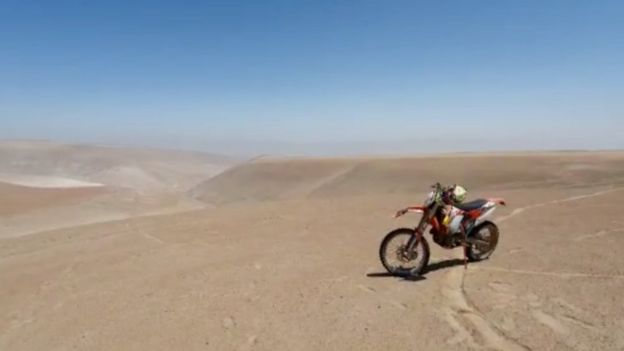
El desierto que ocupa la frontera norte de Chile, al que los locales conocen como «la pampa», es una extensión de cerros y quebradas de tierra y roca tan inhóspito que no viven ni animales.
Pero ella y un grupo de una cuarentena de migrantes venezolanos decidieron cruzarlo tras salir de la ciudad peruana de Tacna, intentando alcanzar la ciudad de Arica, en Chile, por uno de los pasos «no habilitados» que separan ambos países.
La frontera oficial está cerrada a las personas debido a la pandemia del coronavirus.
El grupo salió el pasado viernes 11 por la noche, pensando que al amanecer estarían en Arica. Eso es lo que les dijeron los «coyotes» que les cobraron US$150 por, supuestamente, guiarlos y acompañarlos en el viaje.
Pero las cosas no salieron como imaginaban. Al amanecer, los abandonaron. Supuestamente les quedaban tres horas para llegar.
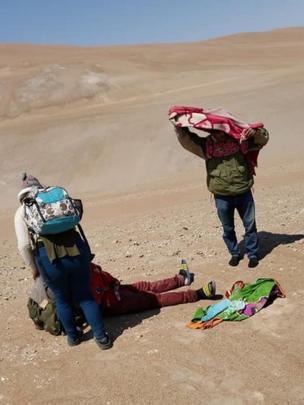
Habían salido con la comida y el agua suficiente para una noche. Y se quedaron solos en un desierto donde a las 10 de la mañana el calor puede alcanzar los 30 grados, y no hay donde resguardarse.
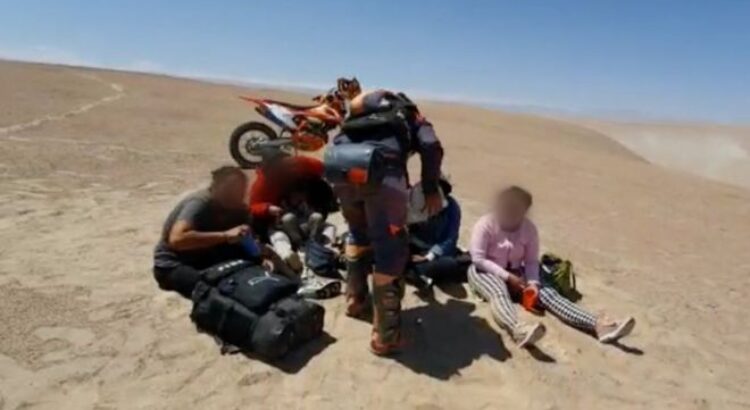
Derechos de autor de la imagenBASTIAN IVAN MORENOImage captionPasaron sed y hambre al no llevar provisiones suficientes.
En el grupo, además, había varios niños, incluidos al menos dos bebés.
Yolanda había salido de Venezuela unos 15 días antes, buscando reunirse con familiares que migraron a Chile antes que ella.
Su trabajo de cajera en el estado de Táchira no llegaba para mantener a todas las bocas que dependían de ella.
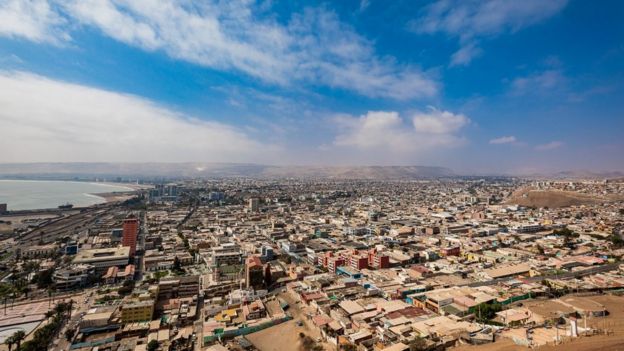
Recorrió miles de kilómetros en autobús hasta llegar a Tacna, una ciudad de más de 280.000 habitantes en el sur de Perú, en la que cada vez recaen más migrantes venezolanos que buscan llegar a Chile huyendo de la situación de emergencia social que vive el país.
A las complicaciones del clima y el terreno, los migrantes que cruzan por los pasos no habilitados se enfrentan también a una zona con minas que se colocaron durante el régimen de facto de Augusto Pinochet, cuenta a BBC Mundo Gerardo Espíndola, alcalde de Arica.
Espíndola recuerda casos de migrantes que han perdido extremidades al pisar uno de estos artefactos que, aunque el Estado chileno ha hecho esfuerzos por desactivar, no siempre es sencillo encontrar.
Su destino final no suele ser esta ciudad en la que casi nunca llueve, sino otros lugares de Chile.
Pero la cuarentena que sigue en vigor en el país ha causado que muchos migrantes se queden varados y tengan que sobrevivir pidiendo limosna en las calles.
«Veíamos desierto y montañas por todos lados»
La situación del grupo al quedarse solos el sábado por la mañana era ya complicada.
«Estábamos desesperados porque el agua ya se nos estaba acabando. Nos dividimos en tres grupos», le cuenta por teléfono a BBC Mundo esta mujer joven. Detrás se oye el ruido de niños jugando.
[Están ahora en una residencia sanitaria, donde fueron trasladados para ser examinados y pasar la cuarentena por el coronavirus.]
Empezaron a caminar de nuevo. En la tarde, cuando atravesaban un cerro, Yolanda sintió que no podía más.
«Me quedé a mitad de montaña, mientras mis compañeros llegaron a la cima a dejar los bolsos para poder ayudarme a subir.
«Cuando llegamos a la cima, lo que veíamos era puro desierto. Pensábamos que veríamos algo: una carretera, el mar, luces de casas.
«Pero lo que veíamos era desierto y montañas por todos lados, todo desolado.
«Nos empezó a atacar los nervios, la desesperación, porque iba a caer la noche y nosotros ahí, sin comida. Ya no teníamos una gota de agua y nos quedaba solo una lata de atún», cuenta todavía emocionada por la experiencia.
Cuando estaba ahí, en medio del desierto, lo único en que pensaba eran sus padres, que se quedaron en Venezuela, y en la preocupación que tendrían al no tener noticias de ellos durante tanto tiempo.
El grupo se había puesto en contacto con el cuerpo de Carabineros de Chile para pedir auxilio, pero estaban en un sitio tan complicado de acceder que ni la policía ni el ejército habían logrado encontrarlos o llegar hasta ellos.
Al caer la noche, el frío se hizo «insoportable», recuerda Yolanda.
«Nos tocó quemar ropa, objetos, para poder soportar un poco el frío. Pero la fogata no duraba nada prendida. Nos arropamos entre todos. Lo que más nos preocupaba eran los niños», relata.
Al amanecer, el policía con el que estaban en contacto les dijo que los veía a lo lejos. «Estábamos como a tres montañas de donde él estaba».
«Llorando, desesperados, pidiéndole a Dios que no nos abandonara».
Sin agua ni comida
El policía les dijo que era imposible llegar donde estaban, que tenían que acercarse. Llevaban toda la tarde del sábado, la madrugada y la mañana del domingo sin probar una gota de agua y sin comer nada.
A pesar de que casi no tenían ya fuerzas, empezaron a caminar de nuevo.
«Si usted viera, esas montañas son infinitas», dice Yolanda.
Cuando llegaron al pie del último cerro, se pusieron debajo de una roca para que les diera sombra.
Ya habían empezado a escuchar el rugir de las motos que serían su salvación.
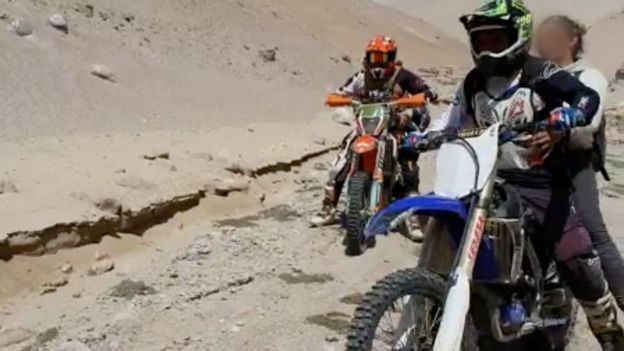
Esa mañana, un grupo de motoristas de Team Tuareg, un equipo de aficionados a la aventura, había salido como cada fin de semana a hacer un recorrido por el desierto.
Antes se habían encontrado con dos otros grupos de migrantes extraviados, que les habían alertado de que había más. Los juntaron y avisaron al Ejército de la ubicación para que pudieran encontrarlos.
Se habían quedado impactados a ver a los migrantes pedir desesperadamente agua y comida, con «los labios partidos, la carita roja de los niñitos, y dos bebés», le cuenta a BBC Mundo Fuad Garrido, uno de los motoristas.
«Yo estaba a punto de llorar ahí mismo, de verdad».
Tras socorrer a los primeros grupos, una parte de los motoristas salieron a buscar al que quedaba, en el sitio más complicado.
Bordearon un empinado cerro y, abajo, «en una quebrada donde nadie se podía imaginar que podían estar, ahí estaban, debajo de una piedra», recuerda Garrido.
«Los niñitos se tiraban al suelo», dice este aficionado al motociclismo, quien reconoce que ese día, cuando llegó a casa por la tarde, se desató a llorar.
«Fue muy fuerte», asegura Freddy Lovera, otro de los motoristas que participó en el rescate.
«Gracias a Dios logramos rescatar a todos, y eso es lo que importa».
Los rescatados fueron una veintena, pero los motoristas aseguran que no quedó nadie por sacar del desierto.
Nadie sabe a ciencia cierta qué paso con el resto del grupo inicial que salió de Perú. Probablemente lograron llegar, pero no hay información oficial.
Yolanda cree que el rescate fue obra divina.
«No le diría [que fue] suerte, le diría un milagro de Dios. Dios nos mandó esas personas en el momento exacto y en la hora precisa. Solo un par de horas más y nosotros de verdad no la contamos».
Fuente de la Información: https://www.bbc.com/mundo/noticias-america-latina-54192069
Los estudiantes de Enfermería estallan contra las universidades
Los alumnos de Madrid, Murcia y Ceuta y Melilla empezarán las clases sin poder realizar prácticas clínicas en los centros hospitalarios
Los alumnos de Enfermería–y del resto de carreras de Ciencias de la Salud– de Madrid, Murcia y Ceuta y Melilla empezarán las clases sin poder realizar prácticas clínicas en los centros hospitalarios después de ver cómo sus prácticas eran aplazadas o suspendidas de forma indefinida sin explicación por parte de las consejerías. “Desde el Consejo General de Enfermería estamos preocupados por esta incomprensible decisión que pone en riesgo la graduación de miles de estudiantes de Enfermería el próximo mes de junio si no pueden realizar todas las horas de práctica que estipula la directiva europea que regula nuestros estudios”, ha señalado Florentino Pérez Raya, presidente del CGE.
El grado de Enfermería es una carrera eminentemente práctica, la mitad de cuyos créditos se realizan en el último curso académico, “si los estudiantes no pueden realizar esas prácticas implica que no pueden obtener la titulación. No graduarse tal y como estamos, con la situación sanitaria que tenemos en España, supone que no va a haber egresados este año, no va a haber una renovación en junio y puede suponer todavía más colapso en el sistema sanitario que ya tiene una evidente falta de enfermeras”, ha destacado el presidente del CGE.
Tanto desde el Consejo General de Enfermería como desde la Asociación Estatal de Estudiantes de Enfermería (AEEE) señalan que no entienden «cómo la Comunidad de Madrid, por ejemplo, dice por activa y por pasiva que no tienen enfermeros, que las bolsas están vacías, pero aplaza las prácticas. Nos han informado de que en Murcia se prevé un colapso del sistema sanitario en aproximadamente dos semanas por el incremento tan rápido que tienen de casos y de casos en UCI, pero no tienen bolsa de Enfermería ni de Medicina y vamos a llegar al escenario, en dos semanas, que llamen a los estudiantes de 4º curso, como auxilio sanitario, porque no tienen otro personal disponible, cuando a día de hoy no nos quieren en los hospitales. No tiene sentido”.
Manifestación virtual
Para hacer pública esta situación, las asociaciones de estudiantes de Enfermería y Medicina han realizado una manifestación virtual esta semana. “Con la situación epidemiológica actual creemos que es más responsable no hacer manifestaciones físicas, subraya Andújar. Lo que buscamos con el hashtag #NoSinMisPrácticas es alzar la voz y que se escuche a todos los estudiantes de Enfermería y de Medicina sobre la importancia que tienen las prácticas clínicas en las carreras sanitarias y generar ruido en redes sociales para que las comunidades autónomas que han tomado estas decisiones, o que todavía no han tomado ninguna decisión se pongan las pilas”, explican desde AEEE.
La participación a través de Twitter e Instagram, con el hashtag #NoSinMisPrácticas, mencionando a @aeeenfermeria y a @_ceem como convocantes de la manifestación, ha sido masiva.
Fuente de la Información: https://www.elconfidencial.com/alma-corazon-vida/educacion/2020-09-10/estudiantes-de-enfermeria-estallan-contra-la-universidad_2742747/
Reclamaban una suba en sus salarios de hambre y Vicentin dejó de pagarles
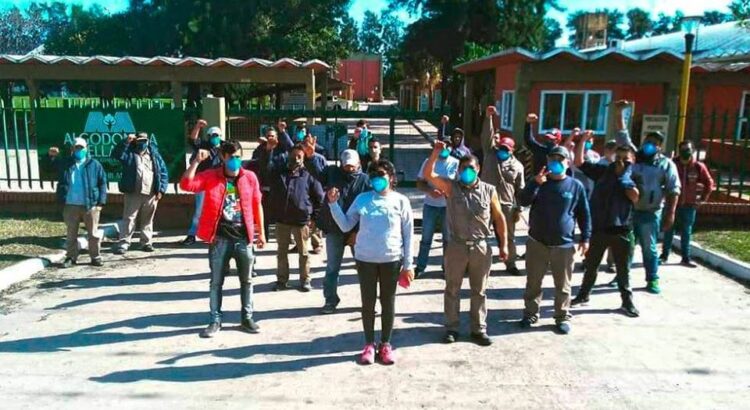
Redacción Canal Abierto |“¿Y si cumplimos con la Constitución Nacional?”, arranca el último comunicado del Sindicato de Obreros y Empleados Aceiteros y Desmotadores de Algodón de los Departamentos General Obligado y San Javier en el que reclama que la Algodonera Avellaneda S.A. del grupo Vicentin reconozca los derechos estipulados en el artículo 14 Bis de nuestra carta magna.
Este fin de semana, los trabajadores de la planta desmotadora de algodón santafesina se movilizaron hasta el domicilio del directivo y accionista de la empresa Alberto Padoan, en la ciudad de Reconquista, para exigir el pago de salarios y se garantice los puestos de trabajo para los más de 400 empleados de la planta paralizada hace un mes y medio.
En julio pasado, los trabajadores sólo percibieron la porción de los sueldos que aportó el Estado a través del programa de Asistencia de Emergencia al Trabajo y la Producción (ATP). Por el resto, Algodonera sólo ofreció vales de mercadería de otras dos empresas del grupo: carnes del Frigorífico Friar y aceite de la marca Vicentin.
“Este mes la empresa ni siquiera hizo los trámites para que los trabajadores cobren el nuevo ATP”, cuenta Dionisio Alfonso, secretario general del gremio.
A todo esto, durante la mañana de este miércoles se celebró la segunda audiencia convocada por el Ministerio de Trabajo de Santa Fe a la que asistieron los representantes obreros y funcionarios del Ejecutivo, pero que la empresa insiste en desconocer. “Nosotros queremos mantener un canal de diálogo, pero lamentablemente ellos no”, señalan desde el sindicato.
El problema de fondo es el retraso salarial que sufren los trabajadores de esta planta de Vicentin, producto de una representación gremial de Asociación Obrera Textil que brilla por su ausencia. “Los laburantes se cansaron de reclamar y no tener respuestas, por eso se acercaron para que los representemos”, aseguran desde el gremio aceitero.
El reclamo obrero es tan puntual como razonable: una recomposición que les permita acceder a un salario equivalente a una canasta básica de $43.811, según los últimos cálculos de INDEC. En la actualidad, el sueldo promedio en la Algodonera es de aproximadamente $23.000.
¿Y si cumplimos con la Constitución Nacional?
Ante el largo conflicto colectivo que desde el mes de febrero vienen atravesando los trabajadores y trabajadoras de la empresa Algodonera Avellaneda SA del grupo Vicentin, sus directivos -lejos de buscar una solución a los reclamos de sus dependientes-, pretenden a través de sus mandaderos esconder o disimular lo que es ni más ni menos que un reclamo obrero por mejores salarios y condiciones de trabajo.
Fuente de la Información: https://canalabierto.com.ar/2020/08/13/reclamaban-una-suba-en-sus-salarios-de-hambre-y-vicentin-dejo-de-pagarles/
Una niña de 10 años muere después de que un profesor la golpeara por equivocarse en una respuesta
La menor ya había contado en casa que tenía miedo de su maestro de matemáticas, porque pegaba a los alumnos.
Una alumna de 10 años falleció en un hospital chino después de que su profesor de matemáticas la golpeara por no responder correctamente a dos preguntas, informa China Daily.
Según la investigación de la Policía, la niña, apellidada Zhang, era estudiante de la escuela primaria en Guangyuan, donde el martes fue castigada por su profesor, Wang, que le golpeó las manos y la hizo arrodillarse durante unos minutos. Además de a Zhang, el maestro también castigó a otros 8 alumnos.
Tras lo ocurrido, la chica se sintió mal y su abuela la llevó a un hospital, donde falleció horas después. Los médicos todavía no han revelado la causa de su muerte.
La abuela de la niña, Yang Juqing, contó que la llamaron del colegio para que viniera a busca a su nieta. Cuando llegó, la niña ya no podía hablar ni abrir los ojos. La mujer explicó que su nieta le había contado varias veces que tenía miedo de su profesor de matemáticas, porque pegaba a los alumnos.
Tanto Wang, como el director de la escuela, han sido apartados de sus puestos, mientras la Policía investiga el caso.
Fuente de la Información: https://actualidad.rt.com/actualidad/367100-nina-10-anos-muere-profesor-respuesta
Las personas son una ‘amenaza mucho mayor’ para los mamíferos, que el clima
Muchas de las 5.700 especies de mamíferos que existen en el planeta se enfrentan a graves amenazas existenciales y es probable que se extingan en un futuro próximo.
Eso dice un equipo de científicos que ha utilizado la simulación por computadora y el modelado bayesiano para rastrear el destino de los mamíferos desde el comienzo del Pleistoceno tardío hace más de 120.000 años. Lo que han descubierto es que los humanos han tenido un impacto mucho mayor en la extinción de mamíferos que los cambios climáticos, que han tenido “un impacto insignificante”.
“Los mamuts, por ejemplo, sobrevivieron varias edades de hielo antes de la última y no hay ninguna razón climática por la que no deberían estar vivos en Siberia hoy”, señala Daniele Silvestro, un biólogo computacional que fue autor de un nuevo estudio .
Eso puede sonar contradictorio frente a las diversas amenazas del cambio climático, sin embargo, “el tamaño de la población humana es capaz de predecir extinciones pasadas con un 96% de precisión”, argumentan los expertos. “Basándonos en las tendencias actuales, predecimos para el futuro cercano una escalada de tasas de una magnitud sin precedentes”, escriben.
Durante los últimos 126.000 años, no menos de 351 especies de mamíferos se han extinguido en la Tierra y alrededor de 80 especies lo han hecho solo en los últimos 500 años, desde los llamados tigres de Tasmania en Australia hasta los tigres autóctonos de Bali.
Y a medida que las poblaciones humanas continúan creciendo en gran parte del planeta con crecientes impactos ecológicos, la tasa de extinción de mamíferos se está acelerando a una tasa que es 1.700 veces más alta que a principios del Pleistoceno tardío. En general, cuanta más gente vive concentrada en un área determinada, mayor es la tasa de extinción entre los mamíferos más grandes de sangrado lento allí, según los científicos que emplearon modelos informáticos para llegar a su conclusión.
Sabemos desde hace mucho tiempo que la pérdida continua de hábitat y la caza furtiva o la caza pueden poner en gran peligro a las poblaciones de mamíferos, especialmente en lugares con un gran número de personas. Sin embargo, incluso relativamente pocas personas pueden causar estragos en animales en peligro de extinción.
Basándose en las tendencias actuales, los investigadores predicen que hasta 558 especies de mamíferos se habrán extinguido en la naturaleza a finales de este siglo. “Para el año 2100, pronosticamos que todas las áreas del mundo habrán entrado en una segunda ola de extinciones”, advierten, y agregan que la tasa de extinción entonces será 30.000 veces el nivel natural.
En algunas áreas del planeta, las extinciones masivas de mamíferos más grandes ya están en marcha como resultado de las actividades humanas. “Descubrimos que Australia y el Caribe en particular ya han entrado hoy en la segunda ola de extinciones basadas en las extinciones que han ocurrido durante las últimas décadas”, escriben los científicos.
Esto suena bonito, pero no todo está perdido. Al menos no todavía. “Podemos salvar a cientos de especies de la extinción con estrategias de conservación más específicas y eficientes”, subraya Tobias Andermann, biólogo de la Universidad de Gotemburgo, primer autor del estudio.
“Pero para lograr esto, debemos aumentar nuestra conciencia colectiva sobre la inminente escalada de la crisis de la biodiversidad y tomar medidas para combatir esta emergencia global”, agrega. “El tiempo apremia”.
OtrasVocesenEducacion.org existe gracias al esfuerzo voluntario e independiente de un pequeño grupo de docentes que decidimos soñar con un espacio abierto de intercambio y debate.
¡Ayúdanos a mantener abiertas las puertas de esta aula!







 Users Today : 104
 Total Users : 35506474
 Views Today : 114
 Total views : 3633340