Asia/China/03-05-2020/Autor(a) y Fuente: spanish.xinhuanet.com
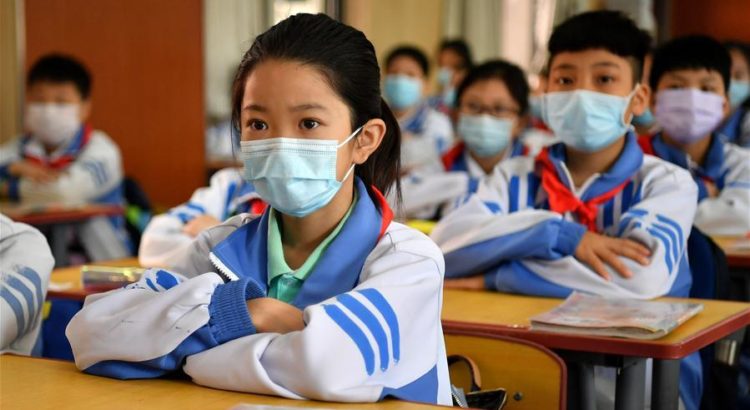
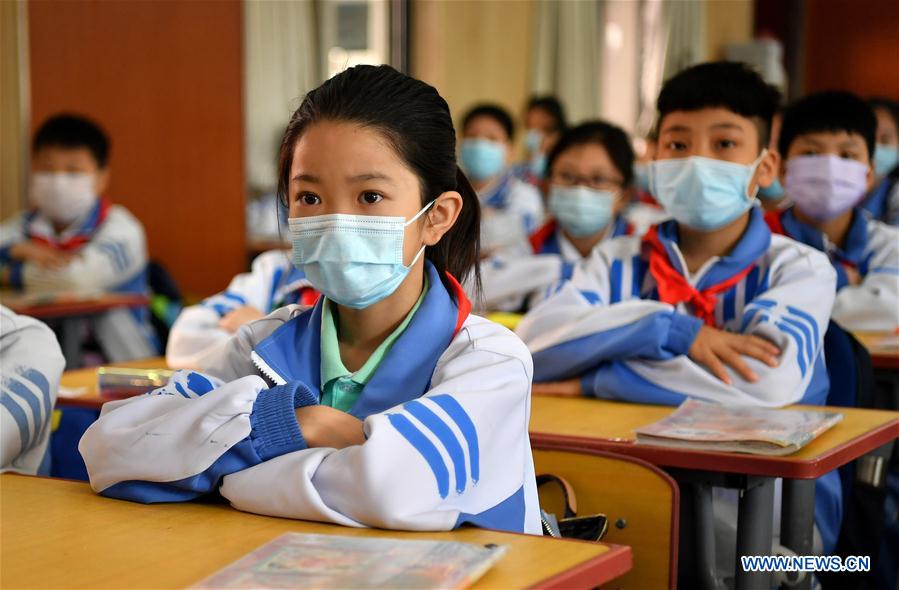
XI’AN, 27 abril, 2020 (Xinhua) — Estudiantes asisten a una clase en la Escuela Primaria de Jinyuan de la Universidad Normal de Shaanxi en Xi’an, provincia de Shaanxi, noroeste de China, el 27 de abril de 2020. Estudiantes de primaria en los grados del 4 al 6 en Xi’an regresaron el lunes a la escuela. (Xinhua/Liu Xiao)
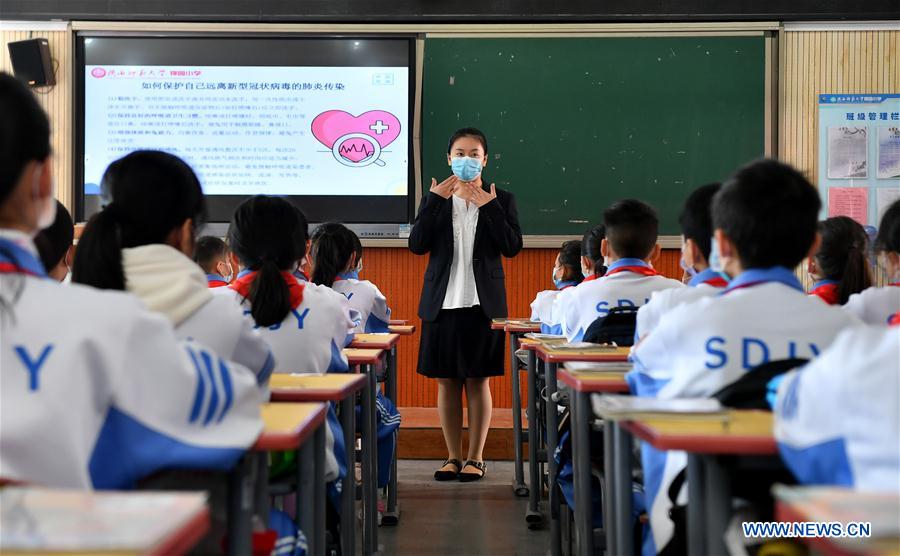
XI’AN, 27 abril, 2020 (Xinhua) — Una maestra realiza una presentación sobre la prevención y control epidémico a estudiantes en una clase en la Escuela Primaria de Jinyuan de la Universidad Normal de Shaanxi en Xi’an, provincia de Shaanxi, noroeste de China, el 27 de abril de 2020. Estudiantes de primaria en los grados del 4 al 6 en Xi’an regresaron el lunes a la escuela. (Xinhua/Liu Xiao)
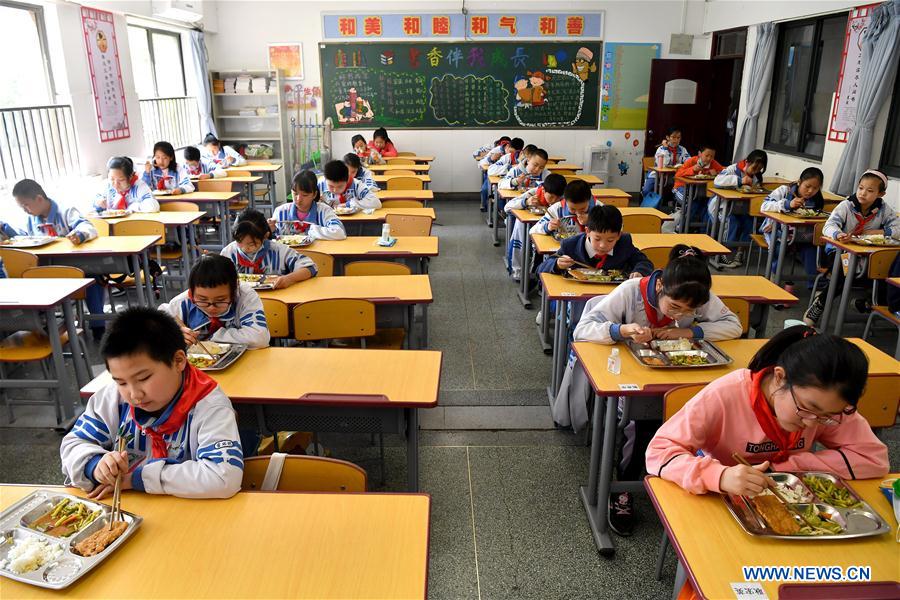
XI’AN, 27 abril, 2020 (Xinhua) — Estudiantes almuerzan en la Escuela Primaria de Jinyuan de la Universidad Normal de Shaanxi en Xi’an, provincia de Shaanxi, noroeste de China, el 27 de abril de 2020. Estudiantes de primaria en los grados del 4 al 6 en Xi’an regresaron el lunes a la escuela. (Xinhua/Liu Xiao)
Fuente e Imagen: http://spanish.xinhuanet.com/photo/2020-04/30/c_139013444.htm
América del Sur/Colombia/03-05-2020/Autor(a) y Fuente: www.laopinion.com.co
El alumnado sigue manifestando no contar con las herramientas necesarias durante las clases virtuales.
Desde iniciada la cuarentena y tomada la modalidad virtual en centros educativos, varios representantes estudiantiles han manifestado inconformidades en el proceso pedagógico que se lleva desde lo digital.
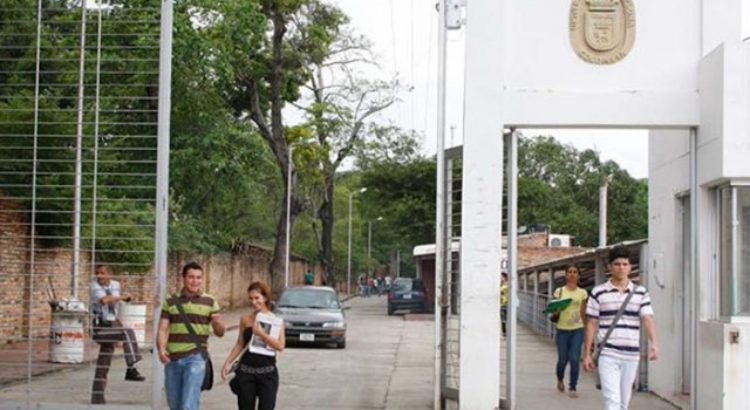
La Universidad de Pamplona expuso las alternativas para llevar a cabo la formación académica, entre las que se señala que “la universidad gestionará estrategias de acompañamiento a docentes y estudiantes que manifiesten dificultades en el manejo de herramientas tecnológicas”, expuesto en el punto siete del comunicado 02 del Consejo Académico.
Aun así, el alumnado sigue manifestando no contar con las herramientas necesarias. Estudiantes de medicina, de las asignaturas Biología Molecular Médica y Bioquímica Médica informaron tener inconvenientes con la plataforma, así que, enviaron un reporte a la decanatura de la Facultad de Salud.
Emitida la carta con los inconvenientes y haciendo petición a nuevas alternativas, como cambio de plataforma y ampliación para presentar trabajos y previos, el decano respondió al correo electrónico donde da posibles soluciones.
La polémica se desató con el punto cinco de las recomendaciones; “Lamentamos los inconvenientes que presentan estos estudiantes, pero quienes no tengan las condiciones y herramientas tecnológicas deberán considerar cancelar voluntariamente asignaturas, el sistema estará habilitado para dicho proceso”.
El correo, que fue respuesta para los estudiantes de medicina, fue filtrado en redes sociales, donde gran parte de la comunidad universitaria se preocupó por la situación.
Heriberto Rangel, Decano de la Facultad de Salud emitió un comunicado público. En el punto cinco ofrece disculpas “por las molestias causadas en la situación, donde se tomó un fragmento de una respuesta a unos estudiantes que hicieron manifestación de sus preocupaciones”.
También resaltó, que las solicitudes de la Facultad de Salud han sido solucionadas de forma y fondo, y antes de cancelar, consideren las opciones expuestas en el acuerdo número 029 emitido por el Consejo Académico, que permite la flexibilidad curricular en el desarrollo del primer semestre académico de 2020.
“Pedimos que se generen estrategias donde la pedagogía sea de aprendizaje, no un causante de estrés con malas calificaciones, también que se haga efectiva la flexibilidad académica, ya que se presenta inconvenientes de conectividad o con el ingreso de plataformas académicas”, expresó Sebastián Serrano, representante estudiantil de la Facultad de Salud.
Los representantes del centro de liderazgo Unipamplona, piden garantías académicas, además que, “la cancelación de materias no debería considerarse una opción, y si lo es, entonces que se reembolse el valor pagado por las matrículas”.
Como dato curioso, este año la plataforma ha mantenido habilitada la opción de cancelar materias voluntariamente en todo el semestre, caso contrario en años anteriores, donde esta opción solo se habilita finalizado el segundo corte solo durante una semana.
Fuente e Imagen: https://www.laopinion.com.co/cucuta/cancelar-materias-la-ultima-opcion-de-los-estudiantes-de-la-unipamplona-195452#OP
La Organización Internacional del Trabajo (OIT) advirtió que alrededor de la mitad de la fuerza laboral mundial, o 1.600 millones de trabajadores, corren un riesgo inminente de perder su sustento debido al impacto económico de la pandemia de coronavirus.
En su último informe, la agencia de la ONU declaró que los más afectados por los efectos financieros del brote de Covid-19 han sido los trabajadores de la «economía informal», incluidos los trabajadores independientes y los que tienen un contrato a corto plazo.
«Se estima que el primer mes de la crisis dio como resultado una caída del 60 por ciento en los ingresos de los trabajadores informales a nivel mundial», dijo la OIT sobre el daño económico ya causado por la pandemia.
«Para millones de trabajadores, sin ingresos significa sin alimentos, sin seguridad y sin futuro», dijo el Director General de la OIT, Guy Ryder, sobre el fuerte impacto de una caída económica.La crisis cada vez más profunda en muchas partes del mundo ha dejado a más de 436 millones de empresas enfrentando dificultades financieras y un posible cierre, declaró la OIT, que inevitablemente perjudicará a los trabajadores. El informe enumeró los sectores más afectados como manufactura, alojamiento y servicios de alimentos, comercio mayorista y minorista, y bienes raíces.
Agregó que, según datos de la OIT, se espera un aumento «masivo» de los niveles de pobreza en todo el mundo, a menos que los gobiernos reconozcan la necesidad de reconstruir sus economías en torno a mejores prácticas laborales y «no un retorno al mundo precario de precarias trabajar para la mayoría «.
Desde que surgió el nuevo coronavirus en China a fines del año pasado, se han confirmado más de 3.1 millones de casos en todo el mundo y más de 216,000 personas han muerto. Los drásticos bloqueos para limitar su propagación han tenido un efecto negativo en la economía mundial, lo que provocó la agitación del mercado y numerosas proyecciones de la fuerte recesión que se producirá este año.
Fuente e Imagen: https://www.rt.com/news/487288-coronavirus-economic-impact-workforce-jobs/
América del Sur/Perú/03-05-2020/Autor(a) y Fuente: andina.pe
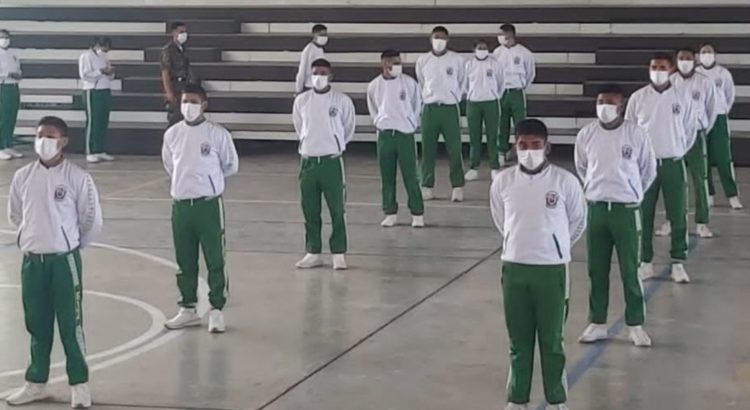
Un total de 510 cadetes y alumnos en las Escuelas de Oficiales y Suboficiales de la Policía Nacional de Puente Piedra dio positivo a las pruebas rápidas de Covid-19.
Así lo informó la Policía Nacional a través de su cuenta de Twitter, señalando que la toma de pruebas son parte de las medidas de prevención adoptadas contra la pandemia.
Los exámenes fueron practicados a 2,707 de cadetes y alumnos que cursan estudios en la Escuela, de los cuales 510 resultaon infectados.
Según la comunicación, estos jóvenes no presentan ningún tipo de síntoma ni complicación en su salud y se encuentran cumpliendo la cuarentena aislados del resto de sus compañeros.
«Se ha dispuesto un equipo médico que monitoree el estado de los afectados y garantice las condiciones que debe mantener un asintomático como el reposo y la hidratación, así como adoptar una atención temprana si alguno manifestara síntomas o complicaciones en su evolución.
Fuente e Imagen: https://andina.pe/agencia/noticia-510-alumnos-y-cadetes-escuela-oficiales-y-suoficiales-pnp-dieron-positivo-a-covid19-795200.aspx
Kenya through Konza Technopolis Development Authority (KoTDA), has partnered with the Association of Countrywide Innovation Hubs,private sector,academia,Non-Governmental Organizations and the United Nations Development Program(UNDP), to launch the Great Covid-19 Innovation Challenge.
Konza Technopolis has convened multiple stakeholders to co-create technology-based solutions, by harnessing the creativity and innovative capabilities of Kenyans and Africans towards the challenges emerging from COVID19.
Eng. John Tanui, the Chief Executive officer KoTDA, said that “KoTDA is honored to lead this Great Challenge, as the convener of the technology and innovation ecosystem in Kenya. It is at times of adversity as espoused by COVID-19, that innovators are called upon to step up to the challenge and offer solutions. The hackathon will focus on three thematic challenge areas of around COVID-19, namely, Health Systems Innovation, Food Systems Innovation and dignified work.”
On his part, Mr.Joe Mucheru, the Cabinet Secretary for ICT and Youth Affairs said that “the Ministry of ICT has in place, a national data center located and managed by KoTDA, that will offer a platform for hosting the applications emerging from the challenge. One envisioned product is a call center solution targeted at front line health workers to access information, provide feed-back and make prompt decisions on managing the pandemic.”
Mr. Philip Thigo, Senior Director for Africa at Arizona State University’s Thunderbird School of Global Management said that “this Challenge is a testament to the power of multi-stakeholder collaborations in harnessing the power of emerging technologies and its ability to proffer practical solutions to pressing developmental challenges. We welcome the Government’s commitment to innovation and offer our capabilities towards this effort as one of the Top 5 Universities best placed to solve the world’s biggest Challenges.”
“The pandemic has proved that local solutions to such a global challenge are critical to the country’s efforts to mitigate and flatten the curve. Through collaboration, partnership,co-creation of ideas and harnessing the skills of youth, Kenya stands, a chance of mitigating the effects of the pandemic. As an association, we are keen to work with the government through the Konza innovation ecosystem to find solutions that can help the country overcome the pandemic while at the same time provide companies with solutions to mitigate social and business impacts.”said David Ogiga, Chairman, Association of Countryside Innovation hubs.
Since the declaration of Covid -19 as a global pandemic, the world has moved with speed to find ways of mitigating the effects of the pandemic as well as provide solutions to communities who have had to change the way they live, learn and work.
The pandemic was first reported in Kenya on 13th March. Since then, the country has been going through unprecedented times driven by the need to Isolate and reduce the spread of the pandemic. This new social norm has adversely affected all sectors of our economy. This situation, therefore, calls for creative and effective solutions to ensure preservation of life and productivity of Kenyans and the world.
Globally, technology and innovation centers and hubs are at the forefront of developing solutions towards the COVID19 pandemic. KoTDA as one such center of excellence in Technology advancement has taken the initiative to partner with other like-minded institutions to advance solutions as a practical response to mitigating against the effects and impacts of the pandemic and building resiliency Post COVID.
KoTDA wishes to acknowledge the partnership and support of Huawei, Oracle, Infonet, Microsoft,UK-Kenya Tech Hubs, Arizona State University’s Thunderbird School of Global Management, Moi University, Machakos University,Dedan Kimathi University,Meru University, Strathmore University and Technical University of Kenya.
Konza Technopolis is a vision 2030 project whose objective is to position Kenya as knowledge-based economy and a preferred Science, Technology and Innovation destination.
Through building a vibrant innovation ecosystem, Konza Technopolis shall focus on key sectors of the economy, among them, Life Science, Engineering and ICT/ITES that will enhance local innovation, R&D, entrepreneurship and Technology enterprise formation culture.
Konza Technopolis Development Authority (KoTDA) will initiate programs that will support the generation of 17,000 direct jobs and 30,000 residents on completion of phase 1 and over 200,000 residents on its completion.
Source and Image: https://www.kbc.co.ke/kenya-launches-the-great-covid-19-innovation-challenge/
Europe/France/03-05-2020/Author(a) and Source: www.bbc.com
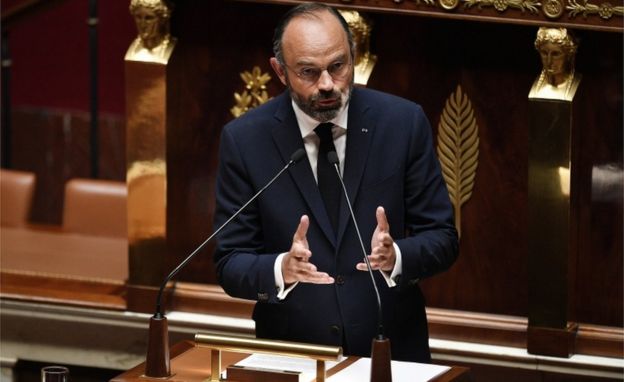
France will make face masks compulsory on public transport and in secondary schools when it starts easing its coronavirus lockdown on 11 May, Prime Minister Edouard Philippe has said.
Schools will reopen gradually, starting with kindergartens and primary schools.
Pupils aged 11-15 will be expected to wear face masks.
It comes as hard-hit Spain also outlined its lockdown exit plan, aiming for what its prime minister called «a new normality» by the end of June.
How will France reopen?
Non-essential shops and markets will open their doors again from 11 May, but not bars and restaurants.
Stores will have the right to ask shoppers to wear masks, and should ensure they remain a metre (3ft) apart, the prime minister said.
In a relief to many, the French will be able to go outside again without a certificate confirming their intentions, and public gatherings of up to 10 people will be allowed. Crèches will also reopen – but with a maximum of 10 children in each group.
France has suffered one of the highest Covid-19 death rates in Europe, along with the UK, Italy and Spain.
On Tuesday the number of people who have died with the virus rose by 367 to 23,660, the country’s health ministry said. Some 129,859 people have been infected.
Hospital admissions and the number of patients in intensive care have been falling, however, giving cause for cautious optimism.
Addressing parliament, Mr Philippe said the lockdown had saved an estimated 62,000 lives in France in a month, but that it was time to ease measures to avoid an economic collapse.
«We will have to learn to live with the virus,» he said, until a vaccine or effective treatment is available.
Image copyrightEPAImage captionFrench Prime Minister Edouard Philippe said the country must take care to avoid a second deadly wave of Covid-19
He summed up France’s priorities as «protect, test, isolate».
Parliament backed his proposals after a debate by a large majority. Only 75 of almost 600 French MPs were allowed into the chamber for reasons of social distancing, with others voting by proxy.
Will the lockdown definitely be lifted?
Mr Philippe stressed that France must take strict precautions to avoid a second wave of coronavirus infections.
«The risk of a second wave, which would strike a weakened hospital fabric, which would impose a ‘re-confinement’, which would ruin the efforts and sacrifices made during these eight weeks, is a serious risk,» he said.
The lockdown will not be eased on 11 May if new cases don’t stay below 3,000 a day, he added.
France has seen about 2,162 new cases a day on average over the past two weeks.
The government has set a target to carry out at least 700,000 coronavirus tests per week from 11 May, the prime minister said, and will cover the cost of testing.
«Once a person has tested positive, we will begin to identify and test all those, symptomatic or not, who have had close contact with them. All these contact cases will be tested and will be asked to isolate themselves,» he said.
Mr Philippe said that where possible, people should keep working from home beyond 11 May.
French central planning is at its finest in a crisis
As the prime minister said, never in history – not in war, occupation or disease – has France had to confront such massive disruption. And now from the best fonctionnaire brains in the land comes an exit strategy that might just measure up to the disaster.
As ever in hyper-rational France, the plan is built round numbers, categories and systems.
The key figure is 3,000. That is what the government reckons will be the number of daily infections in the weeks ahead. By setting up local «brigades» of investigators to track the trail of infection, they reckon they will test 20 contacts per infection – so 420,000 tests a week, which is well within planned capacity.
Those found to have the virus will be expected to self-isolate, either at home with their families or in requisitioned hotels. And as for the rest of the population, life will very gradually resume.
Protection, testing, isolation. That is the system. Which is itself then conditioned by three imperatives: acceptance of the enduring nature of the virus, progressive implementation, and regional adaptation.
It always sounds a mouthful when a French technocrat expounds on a plan. But sometimes it may be exactly what the country needs.
Who will have to wear masks?
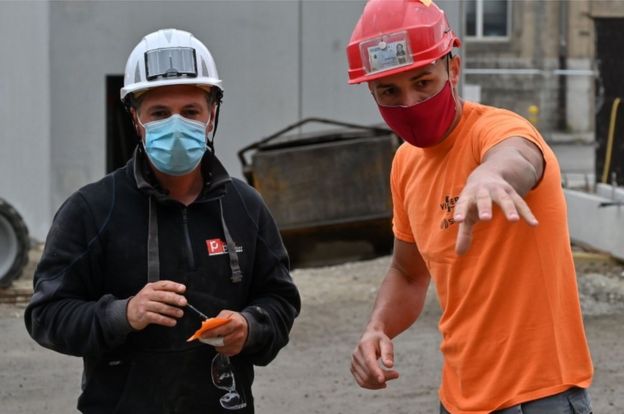
Addressing the shortage of masks in France, Mr Philippe said they would be widely available by 11 May. He called on all companies to provide staff with masks, and said the government would help small firms if necessary.
Masks will also be sold on the website of the French post office, and five million washable masks will be set aside each week for the most vulnerable.
Image copyrightAFP/GETTY IMAGESImage captionThe government has asked companies to provide French workers with masks
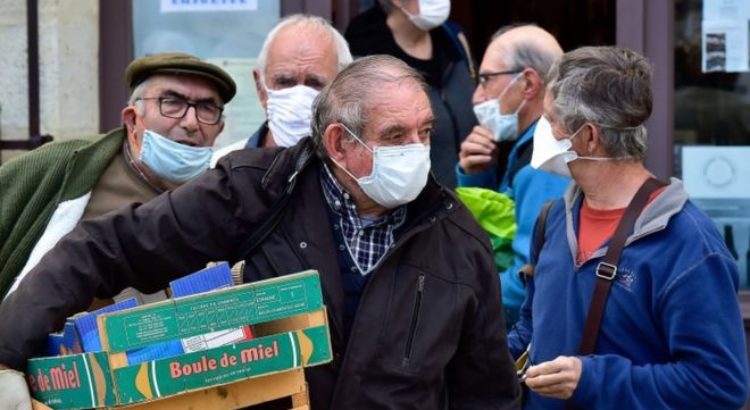
From 11 May everyone using public transport, including trams, trains or the metro, will have to wear a face mask.
In schools, France’s kindergarteners will not be expected to wear masks unless they start showing symptoms during the school day. Middle school children (aged 11-15) will be expected to, however, and the government will make masks available for students who can’t access them.
Classes will be no larger than 15 students, the prime minister said.
Elementary schools will begin opening from 11 May. Middle schools in districts with milder outbreaks may be allowed to reopen from 18 May, and high schools at the end of the month.
What will remain closed?
The prime minister noted that some parts of the country had suffered worse outbreaks than others, and said mayors and local authorities would be allowed to adapt the government’s strategy to their locality.
The framework to decide which areas need a stricter form of lockdown easing will be fixed on 7 May, he said.
Some areas will be categorised as «green» and others as «red», depending on their tally of new cases, testing capacity, and the pressure on local hospitals.
Nationwide restrictions that will remain in place include:
Funerals will continue to be limited to 20 attendees
Religious ceremonies cannot be organised before 2 June
Beaches, bars, cinemas and restaurants will remain closed
France’s top two football divisions, Ligue 1 and Ligue 2, will not resume this season
Source and Image: https://www.bbc.com/news/world-europe-52459030
América del Sur/Colombia/03-05-2020/Autor(a) y Fuente: www.elespectador.com
Desde sus territorios alegan que para estos fines deben ser invertidos 19 billones de pesos, que según ellos, fueron acordados en la Consulta Previa del Plan Nacional de Desarrollo.
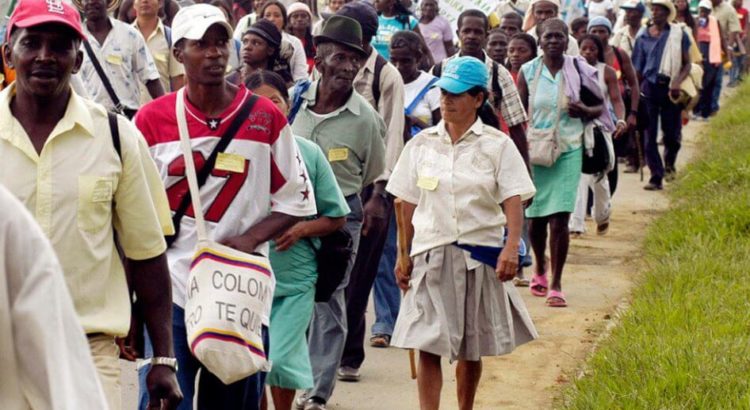
Comunidades negras representadas por los colectivos Asociación de Mujeres Negras del Norte del Cauca, Asociación de Municipios con Población Afrocolombiana, el Centro de Estudios Afrocolombianos, el Consejo Nacional de paz Afrocolombiano, la Federación de Municipios del Pacífico y el Proceso de Comunidades Negras en Colombia, le pidieron al Gobierno Nacional el otorgamiento de garantías económicas para atender a su población vulnerable frente al COVID-19.
Los reclamos, que fueron hechos a través de una carta, van dirigidos en la consolidación de un Plan Especial con Enfoque Diferencial Étnico, mediante una inyección de 9.5 billones de los 19 billones que supuestamente se acordaron en el marco del Plan Nacional de Desarrollo (PND) del actual Gobierno.
Por la pandemia de coronavirus, estos colectivos exigen que los recursos sean transferidos de manera inmediata, en un marco de trazabilidad, transparencia y apto para la rendición de cuentas.
A su vez, estas comunidades dicen que sus peticiones, en las que se extienden quejas por la situación de orden público que viven por la violencia, están amparadas por la Constitución, la legislación internacional y la Ley 70 de 1993, asociada al reconocimiento de las comunidades negras en la ocupación de tierras baldías.
En el documento emitido, agregan que este plan ayudaría a posibilitar una «verdadera infraestructura para la atención efectiva en salud, una seguridad y autonomía alimentaria que garantice el bienestar de la población. Como les mencionamos inicialmente, los recursos para ello, están ya acordados, aprobados y consignados en el Plan Nacional de Desarrollo».
Mientras dichas ayudas y transferencias no lleguen, las comunidades negras aseveran que estarán en niveles altos de NBI, sin posibilidades de contar con personal médico y unidades de cuidados intensivos y en general, con una «muy precaria infraestructura hospitalaria».
Fuente e Imagen: https://www.elespectador.com/noticias/nacional/comunidades-negras-piden-plan-de-enfoque-etnico-para-afrontar-la-pandemia-articulo-917023
OtrasVocesenEducacion.org existe gracias al esfuerzo voluntario e independiente de un pequeño grupo de docentes que decidimos soñar con un espacio abierto de intercambio y debate.
¡Ayúdanos a mantener abiertas las puertas de esta aula!





 Users Today : 3
 Total Users : 35460827
 Views Today : 3
 Total views : 3420080