Page 2246 of 6145
1 2.244 2.245 2.246 2.247 2.248 6.145

Liberian Women Lead Protest Against Reported Serial Rape of Teenage Girls

Africa/ Liberia/ 24


.10.2018/ Source: frontpageafricaonline.com.

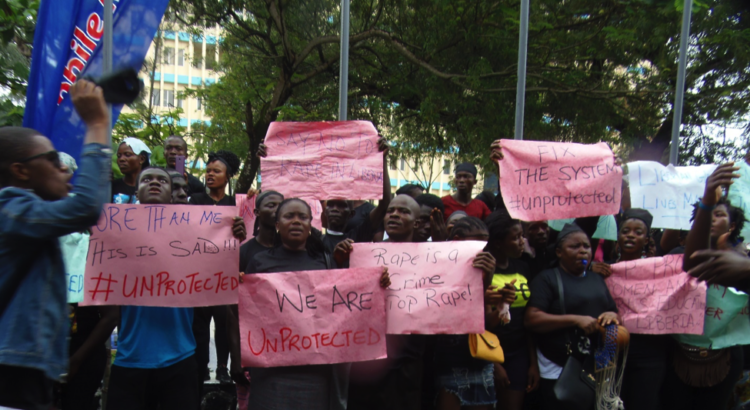
Protesters, mainly women, attired in black outfit have presented petitions to international organizations calling for justice for under-aged girls that were reportedly raped by a co-founder of More Than Me charity foundation.

The petitioners are also calling on the government to revoke the license of the American charity organization, which opened in Liberia 2011 to protect girls from sexual exploitations by offering them education.

The protest dubbed #UNPROTECTED is a reaction to a recent documentary by ProPublica also titled Unprotected. The investigative report recounts the alleged raping and cover-up of over a dozen teenagers attending the MTM funded school in Monrovia.

Thursday’s protest begin early in the morning when protesters gathered in Sinkor at the Vamoma House carrying placards and chanting anti-rape slogans like: “Uncle turn to a rapist, no more uncle, do not rape, we tired with an uncle, let uncle face justice, where is Ministry of Justice, Women and Children protection section, don’t touch my butt, don’t touch my breast I am a minor.”

The first copies of the petition were presented to Ministries of Justice, Education, and Gender and later to the Vice President Jewel Howard Taylor, who was attending an international women forum happening in Monrovia.

They also called on the Ministry of Gender Social Children Protection, House speaker Bhofal Chambers and the Vice President to take charge of the case in ensuring that the girls be tested for HIV/AIDS. They also want funds raised by MTM used to directly compensate the survivors.

The protesters then moved to the headquarters of the United Nations and also petitioned the UNDP and UN Women.

“We will appreciate that appropriate measures are taken by the Government of Liberia to prioritize and ensure the safety and well-being of these girls, which may or may not include their temporary relocation,” said Facia Harris, who read the petition on behalf of the protesters, comprising over 26 women and CSO groups.

“The prevalence of violence against women and girls in our society is enabled by the culture of impunity which continues to prevent women and girls from accessing justice,” added Harris.

“We, therefore, remind the Liberian government to use this as an opportunity to advance its commitment to Liberian women and girls and ensure adequate laws and mechanisms are in place to protect Liberian women and girls from these horrifying and inhumane experiences.”

Several men also joined in the protest to show solidarity for the survivors

The protesters have also slammed moves to amend the New Rape Law and call on the Legislature to expedite the passage the Domestic Violence Bill, stressing that the MTM rape scandal “highlights the critical need for improving the justice system and strengthening the legal framework to protect Liberian women and girls from violations”.

The protest comes on the second day of the SHEHERO international women forum aimed at increasing women participation and advancement in Liberia. Former president Ellen Johnson Sirleaf, former Uganda President Joyce Binda and First Lady Clar Weah are all attending along with an array of international guests.

Respond to Petition

The United Nations Development Program Pa Lamin Beyai received the petition while Vice President Jewel Howard Taylor said that President George Weah is a He for She and will address issues affecting women in the country.

At the Ministry of Justice, the Minster of codification Cllr. Nyenatee Tuan received the petition promising that his ministry will review the case file relying on recent press statement issued.

Education Minister Ansu Sonii received the ministry’s petition as he also promised to look into the petition.

Protesters were furious when Deputy Minister for Children Protection, Lydia Sherman told protesters that she has no knowledge of the case.

She was seen calling for sexual and Gender-Based violence Director Deddeh Kwekwe who was nowhere to be found.

“When this case came I was at the Ministry of Health, and later got appointed in 2014, but Ebola came I was in America.” According to her, she started work in 2015.

But MTM case was heard in 2015 when she started work and has been serving the position for three years.

Protesters described the statement by Sherman as shifting blame and failure to follow cases involving children.

“She cannot be serving as minister for children protection and up to now, she has no knowledge of the entire case. This is sheer incompetence,” said Siatta Freeman, who also expressed regret in the statement made by Minister Sherman.

Protesters: Charity should not Abuse Girls

Georgina Dahn said she joined the protest because she’s a mother of three adding that the next generation rests on their shoulders and the decision to protest determines their tomorrow.

Korte Bazzie alias Kobazzie, Liberian musician was seen with placards, he said the protest is to show to the international community that Liberia accepts charity but charity should not use their works to abuse underprivileged girls.

The petition also highlights the following concerns:

To appoint a Trustee(s) to take More Than Me (MTM) Academy inaugural school on Ashmun Street which is at the center of these allegations. This should include relocation of the school given circumstance around ownership and the stigma associated with the current coverage.

• To re-assign all nineteen (19) public schools under the management of MTM Academy in the LEAP program.

To demand the establishment of an Independent Trust of funds raised by MTM to cover school fees, uniforms, feeding, transportation, stipend, and or medical costs for all the students at MTM Inaugural School through their graduation from high school. A selected Liberian Woman Organisation should administer the fund with oversight from the trustee(s).

The release of the selection process for the contracting of MTM under the “Partnership for School” Program (and now as LEAP) with the Ministry of Education in 2016 and 2018, respectively.

• To institute healthcare and psychosocial counseling for all the students under More Than Me (MTM) from its After School Program to the establishment of its inaugural school up to present, fully covered by MTM.

An independent audit report of MTM financial activities in Liberia since 2013.

An independent investigation to review the activities of More Than Me (MTM) in Liberia, from its After School program in 2011 to present, in order to determine the full scope and magnitude of the organization’s activities in regards to the safety, security, and welfare of these girls under their care.

• To demand that More Than Me (MTM) makes available key documentation as part of an investigation to ascertain what actions were taken by MTM and its Board to curb further exposure of these girls to danger. The documentation should include but not limited to:

To institute an Oversight Committee to ensure the roll-out and the implementation of the Sexual Exploitation and Abuse Policy (SEA) for NGOs, INGOs and all public and private education institutions.

• The resignation of the Director of the SGBV Crimes Unit of the Ministry of Justice, Cllr. John A.A. Gabriel and Tenneh Johnson, a staff of the said unit. We no longer have the confidence and trust that they will and can continue to enact their duties in a fair, objective and committed manner.


Source of the notice: https://frontpageafricaonline.com/news/liberian-women-lead-protest-against-reported-serial-rape-of-teenage-girls/
Comparte este contenido:

El reto de la educación en España: tecnología y profesionales más formados

Europa/ España/ 23.10.2018/ Fuente: www.abc.es.

La sociedad en general se encuentra inmersa en una revolución de la que nadie se exime. Y la educación no va a ser menos. Es necesario adecuarse a un mundo versátil, pluricultural, plurilingüísta, multirracial y, sobre todo, tecnológico. Por eso es el momento de que la educación en España se modernice y reinvente. Y uno de los primeros pasos es la formación del profesorado para adecuarse a los que serán algunos de los perfiles más demandados en los próximos años.

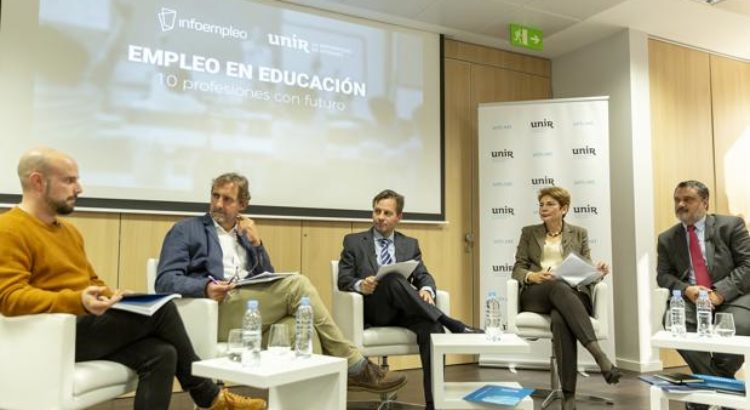
Estas son algunas de las reflexiones recogidas en «Empleo en Educación», el informe que han elaborado conjuntamente Infoempleo y UNIR. En él se desgranan las principales cifras del sector en cuanto a inversión, número de profesionales o distribución regional, junto con los retos del sistema y las tecnologías que cada vez se implantan más en las aulas.

El documento se ha presentado hoy en Madrid en un acto en el que, junto a destacados expertos y profesionales del sector de la educación, han estado presentes el rector de UNIR, José María Vázquez García-Peñuela, el consejero de Educación de La Rioja, Alberto Galiana, el subsecretario de Educación y Formación Profesional, Fernando Gurrea, y el director general de Infoempleo, Jorge Guelbenzu.

Juntos han repasado las cifras de un sector que, según los datos oficiales más recientes, en el curso 2016-17 contaba con 695.598 docentes de enseñanza no universitaria, de los cuales 491.894 trabajaban en el sector público. Sin embargo, según la UNESCO, se calcula que en nuestro país, tan solo en Educación Primaria, se necesitarán entre 100.000 y 500.000 nuevos profesores para cubrir plazas de nueva creación y sustituirá los que se jubilarán en los próximos doce años.

Es precisamente el envejecimiento una de las situaciones que define la situación actual de los docentes en España, conun 34% que supera los 50 años, según el informe del Consejo Escolar del Estado de 2017. En el mismo, se indica que un 72% son mujeres y que la educación pública predomina con 19.092 centros frente a los 9.317 privados.

Pequeñas pinceladas de un mercado laboral sobre el que la paralización del pacto educativo arroja interrogantes a la hora de reformar la profesión docente –los recortes, la interinidad y la falta de reconocimiento social ha disminuido el índice de satisfacción– y modernizar la enseñanza, con una mayor autonomía para las escuelas, el uso de TIC en el proceso de aprendizaje y la promoción de la enseñanza multilingüe.

En ese sentido, el subsecretario de Educación y Formación Profesional, Fernando Gurrea, ha asegurado que van a procurar «sentar las bases con el máximo acuerdo con las Comunidades Autónomas y todos los partidos para crear una ley educativa estable y que se configure el estatuto del personal docente». Tras recordar que en la convocatoria del próximo año van a destinar 500 millones más (hasta un total de 2.000 millones) para mejorar las becas educativas, Gurrea ha destacado el papel de las Comunidades Autónomas. «Desde que asumieron la prestación de los servicios educativos, los pasos en esta materia en España han sido de gigante, han hecho un esfuerzo presupuestario y organizativo fantástico».

El testigo lo ha recogido el consejero de Educación de La Rioja, Alberto Galiana, quien después de aportar algunos datos de su Comunidad Autónoma, ha lamentado que se haya «abandonado el espíritu del pacto educativo a nivel nacional» y ha reclamado el mismo prestigio para un neurocirujano que «para quien configura la mente de nuestros niños». Por eso, ha insistido en que la formación de los docentes «establecerá los valores de la sociedad dentro de 50 años».

Pero no son los únicos retos a los que la Educación debe hacer frente. A ellos se suman la necesidad de mejorar las diferencias entre regiones –el avance en educación es muy desigual en cuanto a conocimientos, competencias, capacidades escolares, formación del profesorado y apoyo individual a los estudiantes-, la reducción del abandono escolar, la mejora de la convivencia en las aulas y la disminución de la brecha de género.

«La educación es fundamental en nuestra sociedad. Por eso este informe trata de arrojar luz sobre las cifras del sector y las oportunidades laborales que ofrece. Tenemos muchos retos presentes y futuros y es momento de trabajar en ellos y procurar una educación de calidad, que prepare a los profesionales del futuro con una experiencia en las aulas que complete y apoye su experiencia vital en la etapa escolar», ha reflejado Jorge Guelbenzu, director general de Infoempleo.

Para afrontar dichos desafíos, una de las conclusiones que se obtienen es que la formación es un elemento clave en el desarrollo de una sociedad y, como tal, debe ser una prioridad en la que trabajar y mejorar de forma constante. De ahí la importancia de contar con los profesionales adecuados, capaces de afrontar el futuro de la educación. Pero no solo eso. También es necesario un marco regulatorio estable, con mayores partidas para tener los recursos suficientes, amplios y variados para desarrollar el potencial de los alumnos y sacar lo mejor de cada uno.

Cuestiones todas ellas que se han abordado en una mesa redonda en la que han intervenido Elena Martínez Carro, Decana de la Facultad de Educación de UNIR; Roberto Martín, representante de CICAE (Asociación de Colegios Privados e Independientes) y director de RRHH de King’s Group; Juan Manuel Núñez, Socio Director de OTBInnova y Raúl Bermejo, Fundador de Thinksforkids y docente de UNIR. Todos ellos han hablado sobre el perfil profesional del profesorado, la tecnología e innovación y la diversidad, convivencia y retos en el aula.

Martínez Carro ha hecho hincapié en la importancia de las leyes para mejorar el sistema, para que éstas atiendan «a la diversidad y necesidades educativas de nuestros niños» y a la «estabilidad de los profesionales». Por su parte, para Raúl Bermejo resulta clave «entender el cerebro del niño y su evolución para saber tratar con él porque si no, les estaremos pidiendo cosas para las que no están preparados».

En palabras de Roberto Martín, esta sociedad necesita «una educación flexible que enseñe competencias a los niños, para estar preparados para un futuro que no conocemos, y para eso necesitamos profesionales muy bien formados». Por último, Juan Manuel Núñez ha desvelado las, a su juicio, habilidades destacadas de los docentes actuales. «Debe ser un cazador de talentos, un community manager (que gestione las redes físicas de chavales y familias y del mundo tecnológico), un DJ que mezcla materias y que cuente con una mente abierta para identificar problemas y que use las herramientas a su alcance, además de tener inteligencias múltiples».

¿Qué perfiles se solicitan más?

En este informe se describen cada uno de los siguientes perfiles, salidas profesionales, rango de salarios y formación necesaria para desempeñar sus funciones y se recogen testimonios de profesionales en activo.

Director de centro educativo, encargado de planificar e impulsar las medidas que busquen la mejoría para toda la comunidad escolar. Rango salarial: entre 35.000 y 50.000 euros anuales en centros públicos y en los privados se parte de los 30.000.

Educador intercultural: hace posible una educación en igualdad de derechos y oportunidades por medio de planificar, coordinar y desarrollar actividades complementarias y extraescolares para mejorar la relación entre el centro y el entorno social del alumno. Rango salarial: entre 25.000 y 35.000 euros anuales en centros públicos y entre 21.000 y 25.000 en privados.

Especialista en neuroeducación: diseña estrategias de estimulación cognitiva para mejorar el rendimiento escolar de los alumnos. Rango salarial: entre 21.000 y 24.000 euros al año.

Experto en metodologías educativas innovadoras: investigan nuevos métodos innovadores y proporcionan a alumnos y docentes nuevas formas de enseñar relacionadas con el entorno TIC. Rango salarial: entre 25.000 y 29.000 euros anuales.

Experto en tecnología educativa y competencias digitales: dirige y orienta para conseguir una educación 3.0 en el centro educativo. Rango salarial: entre 24.000 y 30.000 euros al año.

Maestro de educación especial: dota a los alumnos de las herramientas necesarias para su crecimiento personal. Rango salarial: entre 27.000 y 33.000 euros anuales en centros públicos y entre 20.000 y 22.000 en privados.

Orientador psicopedagógico: detecta las necesidades educativas y los trastornos de aprendizaje de los alumnos. Rango salarial: entre 24.000 y 30.000 euros anuales.

Profesor bilingüe: imparte diferentes materias en otros idiomas. Rango salarial: 27.000 euros en Educación Primaria y 35.000 en Educación Secundaria en centros públicos.

Profesor de español para extranjeros: adapta el idioma al contexto particular del lugar donde imparte clases. Rango salarial: entre 23.000 y 26.000 euros al año si da clases a extranjeros en universidades españolas.

Profesor especializado por materias: posee un conocimiento más amplio en un ámbito concreto. Rango salarial: entre 25.000 y 35.000 euros anuales en un centro público. Entre 22.000 y 23.000 si es en uno privado.

Fuente de la noticia: https://www.abc.es/sociedad/abci-reto-educacion-espana-tecnologia-y-profesionales-mas-formados-201810161430_noticia.html

Comparte este contenido:

Denigrante y discriminatorio: Nuyado crítica reducción de fondos para educación intercultural


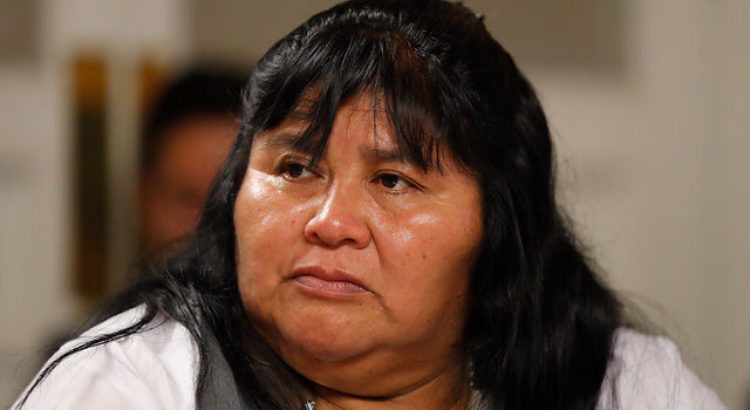
La diputada por Osorno, Emilia Nuyado, criticó la reducción en el presupuesto nacional para la partida que financia los programa de educación intercultural bilingüe en el país. Según detalló, para el próximo año el financiamiento bajará en más de 2.000 millones de pesos.

Este 2018 fueron poco más de 3.500 millones de pesos dispuestos, sin embargo, la administración de Sebastián Piñera considera para el 2019 la suma de 1.460 millones y fracción.

Para Nuyado se trata de inconsecuencia del Gobierno, que por un lado dice apoyar a los pueblos originarios, pero con esta reducción se verán afectados educadores tradicionales, imposibilitando que algunos sigan realizando su labor en diversos establecimientos.

El tema además afecta a los educadores interculturales bilingües, que verían reducidas las posibilidades laborales. De hecho los llamó a manifestarse considerando que esta cifra presupuestaria es denigrante y discriminatoria.

“Hoy vemos con estupor cómo se hace una rebaja de más de 60 % afectando directamente a más de 500 educadores tradicionales que no podrán realizar su labor. Lamentamos que el discurso del gobierno se haya quedado solo en palabras”, dijo la diputada huilliche.

Comparte este contenido:

United States: Stand with our Students Rally: Hundreds march to State Capitol fighting for education

North America/ United States/ 23.10.2018/ Source: www.thv11.com.

Hundreds of educators, parents and teachers marched to the Arkansas State Capitol Saturday, Oct. 20 for the Stand with our Students Rally, hosted by the Arkansas Educators Association.

Hundreds of educators, parents and teachers marched to the Arkansas State Capitol Saturday, Oct. 20 for the Stand with our Students Rally, hosted by the Arkansas Educators Association. Their message to voters and politicians is to make education a priority.

“We are fighting for our students and we are fighting for public education,” said Anna Beaulieu, President of the Fayetteville Education Association.

Many educators holding signs and expressing concern that their retirement could be in jeopardy.

“We must be clear. Hands off our retirement,” chanted Cathy Koehler, President of the Arkansas Education Association.

Governor Asa Hutchinson’s office in a statement Saturday morning ahead of the rally said,” Under the Governor’s plan to reorganize state government, the Arkansas Teacher Retirement System (ATRS) will remain a constitutionally separate and independent agency.

“I trust the Arkansas Teacher Retirement System board and support its independence and the long term health and viability of our teacher retirement system,” Governor Hutchinson said. “I value the teachers of our state and am committed to supporting a strong and stable retirement for them.”

Koehler expressed support for Arkansas governor democratic candidate, Jared Henderson.

“Our single, defining most important goal must be that in 10 years, Arkansas is the best state in the United State to be a public school teacher,” said Henderson.

Governor Hutchinson’s office, defending his stance on education, included in their statement:

“Since Governor Hutchinson came into office in 2015, he has been committed to supporting teachers. Under the Governor’s leadership, the minimum teacher salary has increased by 5.57 percent, and the Governor recently announced that he will propose legislation during the 2019 session that raises the minimum salary for teachers by $1,000 a year over four years ($4,000 total) to reach $36,000, a 13 percent increase over the current minimum. If the General Assembly passes this proposal, Arkansas would then offer the highest minimum teacher salary of all the surrounding states, giving Arkansas a competitive edge.”


Source of the notice: https://www.thv11.com/article/news/education/stand-with-our-students-rally-hundreds-march-to-state-capitol-fighting-for-education/91-606355132

Comparte este contenido:

El acceso a la educación en África se estanca ante la crisis económica

África/ 23.10.2018/Por: Sofía Lobo/ Fuente: www.vaticannews.va.

Los avances en el acceso a la educación para todos los africanos se ha visto ralentizado como consecuencia de la crisis económica que afecta a gran parte del continente, según los datos más recientes compilados por el Instituto de Estadística de la UNESCO (IEU), que muestran que 61 millones de niños en edad de cursar los estudios primarios permanecían sin escolarizar en 2015, una cifra equivalente a la de años atrás en 2010.

Es un dato muy significativo, teniendo en cuenta que el número de niños sin acceso a las aulas en África había disminuido regularmente a lo largo de los últimos 15 años.

Las niñas, que en el año 2000 representaban el 58% de los menores sin escolarizar y en 2010 eran el 53%, fueron las más beneficiadas por los esfuerzos encaminados a mejorar el acceso a la enseñanza. Pero lamentablemente los progresos en ese ámbito se han detenido.

Millones de niños sin oportunidad de estudiar

La mayor parte del estancamiento puede atribuirse a la situación que prevalece en el África subsahariana, región donde vive la mayoría de los niños sin escolarizar.

Casi uno de cada cuatro niños en edad de cursar la enseñanza primaria (el 23%) nunca ha asistido a la escuela o abandonó los estudios antes de terminar el ciclo de primaria, en esta región donde el número de párvulos sin escolarizar aumentó de 29 millones en 2008 a 31 millones en 2010. En Nigeria hay 10,5 millones de niños sin escuela y en Etiopía, 2,4 millones.

“A pocos meses de cumplirse el plazo para lograr la educación primaria universal, este hecho es motivo de grave preocupación. El acceso a la educación no es sólo un derecho humano. Es una vía de escape de la pobreza que abre la puerta a una amplia gama de posibilidades de desarrollo a lo largo de toda la vida», afirma Irina Bokova, quien fue la Directora General de la UNESCO hasta 2017.

“ Casi uno de cada cuatro niños en edad de cursar la enseñanza primaria (el 23%) nunca ha asistido a la escuela o abandonó los estudios antes de terminar el ciclo de primaria, en esta región donde el número de párvulos sin escolarizar aumentó de 29 millones en 2008 a 31 millones en 2010 ”

La moraleja que encierran estos datos empíricos resulta evidente: es necesario un compromiso mundial mucho más enérgico, así como políticas nacionales que den prioridad a la tarea de llegar a los niños más marginados y velar por su formación.

Luchando por un derecho humano

Pero el actual panorama no es totalmente negativo, ni el futuro de la educación mundial es tan desolador.

Los estudios también revelan que en Asia Meridional y Occidental se lograron mejoras significativas y el número de niños sin escolarizar disminuyó de 39 a 13 millones entre 1990 y 2015.

Las demás regiones del mundo tienen un número mucho menor de no escolarizados: 5 millones en los Estados Árabes, 2,7 millones en América Latina y el Caribe, 1,3 millones en América del Norte y Europa Occidental, 0,9 millones en Europa Central y Oriental, y 0,3 millones en Asia Central.

El IEU calcula que de los 61 millones de niños en todo el mundo que no forman parte del sistema escolar, sólo el 27% podría llegar a tener acceso a la enseñanza. Otro 26% de ellos empezará los estudios pero no lo terminará, mientras que el 47% nunca tendrá oportunidad de estudiar.

Trabajando por un futuro sin marginación

La imposibilidad de acceder al sistema educativo suele deberse a la situación de marginación que padecen los más pequeños de cada sociedad.

Habitualmente, son los habitantes de las zonas rurales remotas y pobres, las personas afectadas por los conflictos, o los miembros de las minorías étnicas, raciales o lingüísticas quienes suelen quedar marginados de la enseñanza.

“ El IEU calcula que de los 61 millones de niños sin escolarizar que hay en el mundo actualmente, sólo el 27% podría llegar a tener acceso a la enseñanza. Otro 26% de ellos empezará los estudios pero no lo terminará, mientras que el 47% nunca tendrá oportunidad de estudiar ”

Si el cometido de velar por la instrucción de cada niño es un imperativo moral en sí mismo, el logro de la instrucción primaria universal también tendría consecuencias de largo alcance en materia de desarrollo. En los países de rentas bajas, cada año adicional de escolaridad añade un 10% al ingreso promedio de cada persona.

Beneficios de la educación en la salud

Por otro lado, los informes del IEU, explican que la educación beneficia además a la salud y el bienestar.

Se ha demostrado fehacientemente que la formación básica de las madres, hace que disminuya la mortalidad infantil. Cada año adicional de instrucción puede reducir el riesgo de mortalidad infantil entre un 7 y un 9%.

Las madres instruidas tienen más probabilidades de dar a luz en condiciones seguras. También es mucho más probable que vacunen a sus hijos.

En cuanto a la problemática mundial frente a enfermedades como el VIH y el SIDA, si bien es cierto que la educación por sí sola no puede erradicarlas, sí puede contribuir a limitar la difusión del virus.

Fuente de la noticia: https://www.vaticannews.va/es/mundo/news/2018-10/acceso-a-la-educacion-en-africa-se-estanca-ante-la-crisis-unesco.html

Comparte este contenido:

Freedom of speech concerns over drive to attract Chinese students

Asia/ China/ 23.10.2018/ Source: www.rte.ie.

Chinese students offer a substantial financial reward for Irish universities. But some academics are concerned about what a greater dependence on revenue from China could mean for freedom of speech on campus, writesYvonne Murray

«I really miss the autumn in Beijing,» said Junhan Zhang, who is studying Irish at University College Dublin, «with the smell of roasted sweet potatoes and chestnuts.»

«But Autumn in Dublin is wonderful too».

Junhan is one of the rising number of Chinese students in higher education in Ireland today.

Second only to the US in terms of students sent, China represents an important market for Ireland’s cash-strapped colleges.

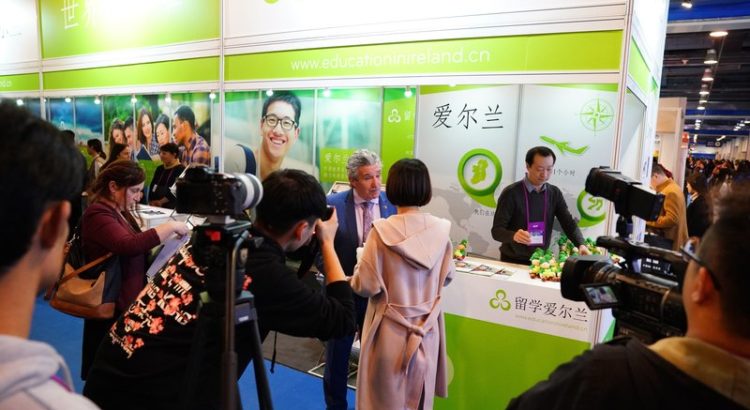
It is one that a delegation of 11 universities and technical institutions, headed by the Minister of State for Training and Skills John Halligan is in Beijing to get a bigger slice of.

«The purpose of the visit is to further collaboration and cooperation with the Chinese education system» he said.

«We have 62 collaborative projects at present and we have signed four memorandums of understanding.

«We now have over 3,500 Chinese students coming to Ireland. The Chinese market is now worth €35.7 million annually.

«Our story resonates around the world – we are a small country, with a small population but a really big hitter in education,» he adds.

There were just over 1,300 study visas granted to Chinese students in 2013, rising to 2,216 last year.

Applications so far this year suggest a further 20% rise.

Many of the applicants enter via joint programmes with Chinese higher-level institutions.

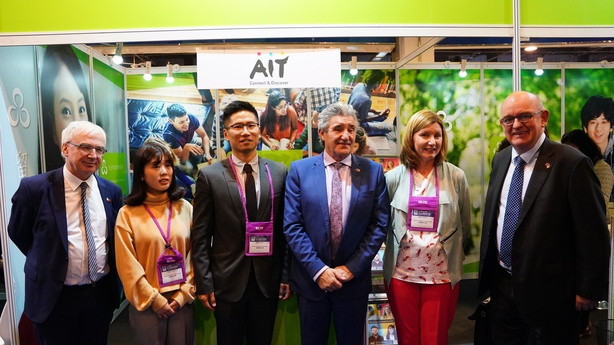
John Halligan (C) with Mary Simpson Director of International Office AIT, Jack Meng, Director of Asia, Irish Ambassador Eoin O’Leary and Niall O’Donnellan Enterprise Ireland

UCD’s partnership with the Beijing University of Technology, established in 2012, sees about 40-50 Chinese students joining the science, technology and commerce departments annually, each paying fees and administration costs of between €14,000 – €16,000.

This week, Maynooth University will sign a memorandum of understanding with Fuzhou University, in the southern province of Fujian, bringing Ireland’s total number of joint partnerships with Chinese higher education institutions to five.

The Maynooth-Fuzhou joint college of engineering is expected to see 1,200 Chinese science and technology students graduate over the next four years.

Maynooth University is hoping it will lead to future research and innovation partnerships, particularly in the fields of artificial intelligence and robotics.

The bite of funding cuts

Irish universities have been feeling the pinch of austerity for the past decade. Falling budgets and staff numbers have been blamed for a drop in the world rankings tables this year.

But Ireland could stand to gain from China’s current trade and political tensions with traditional study destinations such as the US and Australia.

«There are signs that Chinese students are becoming increasingly nervous about studying in the US, largely as a result of tightened immigration restrictions,» said Ellie Bothwell, the global rankings editor at Times Higher Education.

«Recent data also show that the number of Chinese people applying for Australian higher education visas has stalled.

«It has been suggested that visa problems and geopolitical tensions have played a factor in dampening interest.

«All this means that countries such as the UK and Ireland could see more university applications and enrolments from Chinese students in the near future,» she said.

The delegation this week is also keen to convey the message to China’s students that Ireland remains firmly within the EU, while its closest neighbour prepares to leave.

Academic freedom

But while an uptick in numbers could mean a substantial increase in fees – non-EU students pay three to four times as much in tuition as their European counterparts – some professors sound a note of caution.

«One concern about greater reliance on the Chinese market for fees is that it could prompt universities and their governing structures to be more accommodating should the Chinese authorities interfere in some way to curtail academic freedom,» said Alexander Dukalskis, assistant professor in the School of Politics and International Relations at UCD.

«We see some academic publishers that make money in the Chinese market, for example, adhere to the government’s censorship demands,» he said.

«It would be a problem if Irish universities perceived that they had to curtail academic freedom or engage in self-censorship to protect access to the Chinese student market.

«We ought to be very careful to never demonise Chinese students,» he added, «because we may not like some policies of the Chinese Communist Party.»

Restrictions on campus activities have tightened significantly in China in recent years, in line with a wider crackdown on civil society. In 2013, a document, reportedly aimed at «dangerous Western values» – which became known as the «Seven Speak Nots» – was posted online by a professor of law at a Shanghai university.

It revealed a government ban on teaching topics such as freedom of the press, human rights, judicial independence and past mistakes of the communist party. The professor, Zhang Xuezhong, was promptly dismissed from his teaching post.

Critics have accused China of attempting to also stifle debate abroad, via their Confucius Institutes – government-funded and controlled language and culture centres based on university campuses. As a result, several universities in Europe and North America have severed ties with the centres.

«The Chinese Communist Party views Confucius Institutes as a means to improve China’s image abroad,» said Prof Dukalskis.

«They are a very intentional and integral part of Beijing’s effort to cultivate a more amenable international environment for the CCP’s policies.

«Given that the Party, which ultimately controls Confucius Institutes, does not respect free academic inquiry domestically there ought to be major concerns about protecting academic freedom on campuses that host the institutes.

«For example, issues like repression in Xinjiang or Tibet, the policies and personal wealth of Xi Jinping, or the jailing of government critics are basically off-limits for academic inquiry in China and so universities abroad should be alert to the possibility that the Chinese Communist Party would seek to externalise censorship on these and similar issues,» he said.

«I am not aware of any such efforts in Ireland yet,» he added, «but there are troubling examples elsewhere that should stimulate awareness here»‘

The building of UCD’s Confucius Institute’s new premises has been stalled over a construction funding dispute.

On Friday in Beijing, Minister Halligan met with representatives of Hanban, the Confucius Institute’s governing body.

«We discussed it. We didn’t go into it in great detail,» he said, «we are engaged in further cooperation and collaboration over the next couple of weeks and months with them.»

When asked about what safeguards Irish universities have in place to protect academic freedom, he said: «We trust our universities and institutes of technology.

«I have ultimate faith, they do the right thing for their universities and for their country on that issue.»

Student life a long way from home

Fang Zhang has a PhD from Beijing Foreign Studies University and is studying Irish at UCD, on a Chinese government-sponsored scholarship.

«I understand it’s easy to have collisions in mutual understanding when it relates to politics,» he wrote in an email exchange, «but I feel myself as a patriot and I do not believe it is fair to criticise everything we are doing in China.»

«It is more complicated than Westerners believe,» he added. «It is easy to criticise the Communist Party of China and the Chinese government, but without it, China would never grow as a strong country.»

A long way from China, Fang sometimes gets homesick, «mostly because of the food,» he said.

It is a sentiment echoed by Junhan.

«I have problems adjusting to the cuisine,» she said, «it is too oily and sweet.»

Despite the culinary challenges, both students feel welcome in Ireland. «You scarcely see cold faces like in some other countries,» explains Fang.

They will spend two years at UCD before returning home to teach Irish in Beijing.

«For the second year here, I would love to live with an Irish family, » said Junhan. «It is better if they have pets, have interests towards China and Chinese culture.»

«And accept Chinese cooking,» she adds.

Source of the notice: https://www.rte.ie/news/world/2018/1021/1005637-china-students-ireland/

Comparte este contenido:

Guatemala: Recursos para el Pacto Colectivo de Educación se incluirán en el Presupuesto 2019

Centro América/ Guatemala/ 23.10.2018/Por: Diario La Hora/ Fuente: lahora.gt.

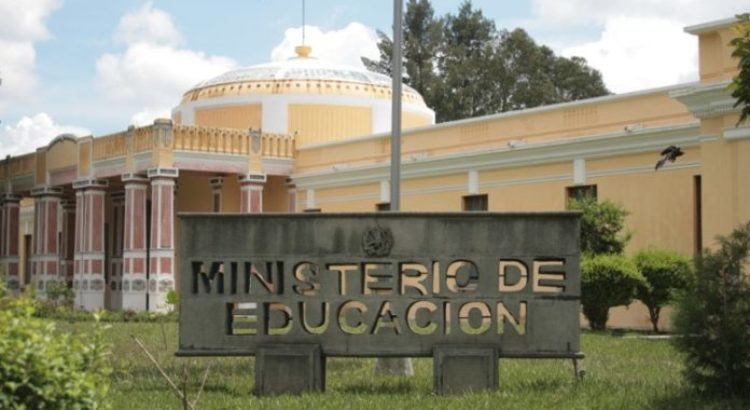
El Ministerio de Educación solicitó al Congreso una asignación presupuestaria de Q16 mil 374 millones de Presupuesto para el próximo año, de los cuales Q1 mil 500 millones serían destinados al Pacto Colectivo.

Estos recursos serán utilizados para “cumplir” con los beneficios que se les ofreció al magisterio, contemplados en el acuerdo laboral. Los fondos cubrirían todo el 2019. “Nosotros en el Presupuesto 2019 hemos incluido lo que correspondería para ese período de tiempo”, afirmó el ministro de Educación, Óscar Hugo López.

En relación a los pagos que corresponderían al 2018, el funcionario dijo que estos se realizarán una vez el Legislativo apruebe la ampliación presupuestaria de Q961 millones 755 mil. “Seguimos en espera de la resolución del Congreso sobre la solicitud de ampliación, con los cuales podríamos cumplir con el Pacto Colectivo de este año”.

“Nosotros no podemos ofrecer algo que no podemos cumplir. Si no tenemos ampliación no podemos cumplir como Ministerio de Educación”, respondió López, al consultarle si se realizarían pagos retroactivos a los maestros.

Por otro lado, el titular del Ministerio de Educación indicó que mantienen el diálogo con el magisterio, “por este diálogo permanente y abierto, estamos terminando el ciclo escolar sin manifestaciones y bloqueos”.

Sin embargo, existe la amenaza que los maestros bloqueen el inicio del ciclo escolar 2019, “por eso continuamos con las conversaciones y seguimos a la espera de la aprobación de la ampliación”, dijo López.

EN ANÁLISIS

La Comisión de Finanzas del Congreso aun no emite una opinión técnica sobre la ampliación presupuestaria para el Ministerio de Educación, pues se encuentran a la espera que el Ministerio de Finanzas envié un informe sobre las fuentes de financiamiento para costear el Pacto Colectivo, que acordó el presidente Jimmy Morales con el sindicalista Joviel Acevedo.

Fuente de la  noticia: https://lahora.gt/recursos-para-el-pacto-colectivo-de-educacion-se-incluiran-en-el-presupuesto-2019/

Comparte este contenido:
Page 2246 of 6145
1 2.244 2.245 2.246 2.247 2.248 6.145