Page 4226 of 6129
1 4.224 4.225 4.226 4.227 4.228 6.129

Reino Unido: Oxford University considers post-Brexit foreign campus in France

Reino Unido/Febrero de 2017/Fuente: Hindustantime

RESUMEN: En una ruptura de su historia de 700 años, la Universidad de Oxford del Reino Unido está considerando la posibilidad de abrir su primer campus extranjero en Francia para seguir recibiendo fondos de la UE después de Brexit, informó el lunes un informe de la prensa. Una de las instituciones educativas más antiguas y conocidas del mundo considera que los planes son un resultado directo del referéndum de Gran Bretaña en favor de una salida de la Unión Europea (UE), lo que podría afectar la financiación de la UE. A la Universidad de Oxford se le ha dicho que cualquier campus abierto en Francia podría tener el estatus legal francés y seguiría recibiendo fondos de la UE después de Brexit, informó The Daily Telegraph.

In a break from its 700-year-long history, the UK’s University of Oxford is considering opening its first-ever foreign campus in France in order to continue receiving EU funding post-Brexit, a media report said on Monday.

One of the world’s oldest and best-known educational institution is reportedly considering the plans as a direct result of Britain’s referendum in favour of an exit from the European Union (EU), which could impact EU funding.

Oxford University has been told that any campus opened in France could have French legal status and would continue to receive EU funding following Brexit, ‘The Daily Telegraph’ reported.

As part of the plans, British Universities would “relocate” degree courses and study programmes and create joint degrees and research laboratories.

A spokesperson for the University said no decision has been taken, adding, “Oxford has been an international University throughout its history and it is determined to remain open to the world whatever the future political landscape looks like.”

French officials met senior staff at Oxford University last week to discuss a so-called “satellite” base in Paris.

Other universities, including the University of Warwick, have also been approached with the idea to build a new campus in Paris in 2018.

Jean-Michel Blanquer, the former director-general of the French ministry for education, confirmed that efforts were under way to attract Britain’s best Universities on to French shores.

“The idea is symbolic, to say after Brexit, we want to build bridges and that academic life is not totally dependent on political problems.

“We want to say to British Universities that it can be a win-win game for you. To have high quality institutions from the UK working in our territory, interacting together in terms of research and collaboration,” Blanquer told the newspaper.

Last month, Oxford University’s head of Brexit strategy Professor Alastair Buchan said: “We have got to be absolutely sure we are open. Every student and every staff member that comes to Oxford is a benefit for this country because we recruit quality, people that play in the top league.”

A spokesperson for the UK government’s Department for Business, Energy and Industrial Strategy said Britain is home to some of the world’s best Universities and research institutions and the plan is to secure the best possible outcome for the UK’s research base after Brexit.

“We have already taken steps to provide assurances by committing to underwrite Horizon 2020 grants bid for prior to the UK’s departure from the EU and put science and research at the heart of our Industrial Strategy with an extra 2- billion-pound investment per year – and will seek agreement to continue to collaborate with our European partners on major science, research and technology initiatives,” the spokesperson said.

Fuente: http://www.hindustantimes.com/education/oxford-university-considers-post-brexit-foreign-campus-in-france/story-JCWzPSEMNWpggFZ6uqLY4I.html

Comparte este contenido:

Sudáfrica: Eastern Cape Education On Mdeni High School

Sudáfrica/Febrero de 2017/Fuente: All Africa

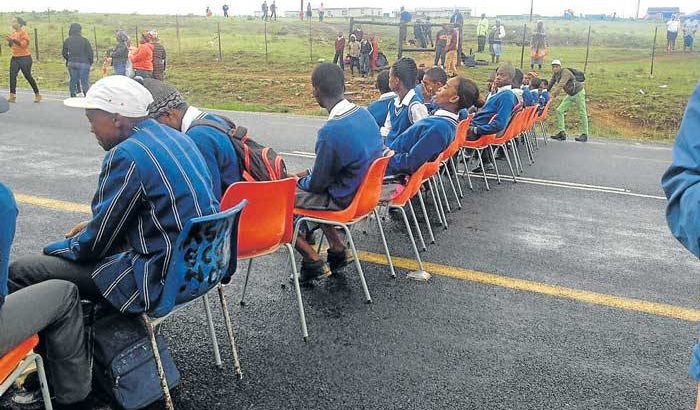
RESUMEN: El miércoles 15 de febrero de 2017, estudiantes de la Escuela Secundaria Mdeni, cerca de Alice, en el Cabo Oriental, realizaron una silenciosa protesta en una carretera nacional por su infelicidad y la falta de acceso a sus nuevas aulas. La protesta silenciosa, que fue viral en las redes sociales, vio a los estudiantes llevar a su clase a la autopista, lo que resulta en el tráfico de llegar a un alto total. En el corazón de la materia, las nuevas aulas fueron construidas en la escuela con los fondos que fueron donados por el tablero nacional de las loterías. Esto se debía a que las viejas aulas construidas por la comunidad ya no eran propicias para el aprendizaje. Sin embargo, debido a un desglose en la comunicación, el contratista no fue pagado a tiempo y esto resultó en que el proveedor de servicios bloqueó las aulas y negó el acceso de los estudiantes al edificio.

On Wednesday, 15 February 2017, learners of Mdeni High School near Alice in the Eastern Cape held a silent protest on a national road over their unhappiness with a lack of access to their new classrooms.

The silent protest, which went viral on social media, saw learners take their class to the freeway, resulting in traffic coming to a complete halt.

At the heart of the matter, new classrooms were built at the school through funds that were donated by the National Lotteries Board. This was because the old community-built classrooms were no longer conducive for learning.

However, due to a breakdown in communication the contractor was not paid on time and this resulted in the service provider locking classrooms and denying learners access to the building.

The Eastern Cape Department of Education has been seeking solutions to end the impasse since September last year.

Following this week’s protest, the Education provincial Head of Department, Themba Kojana, conducted a site visit to the school to engage the school’s principal, parents, the School Governing Body (SGB), teachers and learners to listen to their concerns and find immediate, medium and long term solutions.

After intense discussions, an agreement was made between the department and the contractor, who then unlocked the padlock for schooling to resume.

In turn, Mr Kojana has committed to resolving all the administrative concerns that were raised by the contractor in the medium term.

Mr Kojana also said parents would meet next week to seek permission to demolish the old structure in order to erect more classrooms to accommodate an increase in admissions at the school.

«It is regrettable that the situation was allowed to reach this point and it is unacceptable that learners are denied access to their classrooms over a dispute that could have been avoided.

«While the concerns of the contractor are receiving urgent attention, I have asked departmental officials to investigate this matter so that those responsible for mismanaging this project are held accountable,» Kojana said.

The Eastern Cape has been identified as a priority province to improve the quality of education, from infrastructure to improving learner outcomes.

The programme of eradicating mud and plankie schools is progressing well, but more still need to be done.

In his State of the Province Address, Eastern Cape Premier Phumulo Masualle said the provision of quality education is central to the task of building a province that is characterised by a high standard of living of its citizens.

«It was with this understanding in mind that at the beginning of this term, we undertook to create better access to quality education as one of our apex priorities,» Masualle said.

Through the Accelerated Schools Infrastructure Delivery Initiative, government has provided water to 615 schools, decent sanitation to 425 schools and electricity to 307 schools.

Fuente: http://allafrica.com/stories/201702200413.html

Comparte este contenido:

Yemen: se agrava la crisis alimentaria y la ONU pide ayuda urgente para evitar una catástrofe

Yémen/Febrero de 2017/Fuente: FAO

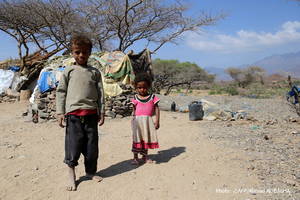
El número de personas que padecen inseguridad alimentaria en Yemen ha aumentado en 3 millones en siete meses, y se estima que actualmente 17,1 millones de yemenís tienen dificultades para alimentarse, según una evaluación conjunta realizada por tres organismos de la ONU.
De esos más de 17 millones, se calcula que unos 7,3 millones necesitan ayuda alimentaria de emergencia.
Los resultados preliminares de la Evaluación de la seguridad alimentaria y la nutrición en emergencias (ESANE) revelan que las condiciones de seguridad alimentaria y nutrición se están deteriorando rápidamente debido al conflicto en curso.
Más de dos tercios de la población de Yemen –que tiene 27,4 millones de habitantes- carecen actualmente de acceso a alimentos y tienen una dieta insuficiente.
La ESANE es una encuesta conjunta realizada por la Organización de las Naciones Unidas para la Alimentación y la Agricultura (FAO), el Fondo de las Naciones Unidas para la Infancia (UNICEF) y el Programa Mundial de Alimentos (PMA), en colaboración con las autoridades yemenís. Se trata de la primera evaluación nacional a nivel familiar realizada en el país desde la escalada del conflicto a mediados de marzo de 2015.
Las tasas de malnutrición aguda han superado el umbral “crítico” en cuatro gobernaciones, mientras que la producción agrícola está disminuyendo en todo el país, según el informe.
“La rapidez con la que está empeorando la situación y el enorme incremento de personas expuestas a la inseguridad alimentaria son sumamente preocupantes”, señaló Salah Hajj Hassan, Representante de la FAO en Yemen. “Teniendo en cuenta que la agricultura es la principal fuente de sustento para la mayoría de la población –añadió-, la FAO pide con urgencia fondos para ampliar su apoyo a los medios de subsistencia agrícolas de campesinos, pastores y comunidades pesqueras con el objetivo de mejorar su acceso a los alimentos en 2017 y evitar que la difícil situación de la seguridad alimentaria y los medios de vida se deteriore aún más”.
“Estamos presenciando unas de las tasas de malnutrición infantil más elevadas en Yemen en los últimos tiempos. Los niños que padecen malnutrición grave y aguda tienen un riesgo de muerte once veces mayor que el de sus coetáneos sanos, si no se tratan a tiempo. Incluso si sobreviven, estos niños corren el riesgo de no alcanzar todo su potencial de desarrollo, lo que pone en serio peligro a toda una generación en Yemen y mantiene al país sumido en el círculo vicioso de pobreza y subdesarrollo”, afirmó por su parte Meritxell Relaño, Representante de UNICEF en Yemen.
“El nivel actual de hambre en Yemen no tiene precedentes, y se traduce en duras privaciones y consecuencias humanitarias negativas para millones de yemenís, especialmente para los grupos vulnerables”, dijo a su vez Stephen Anderson, Director de país del PMA en Yemen.
“De forma trágica, vemos como más y más familias se saltan comidas o se van a dormir con hambre, mientras los niños y las madres desfallecen por el escaso sustento. El PMA solicita ayuda urgente para los siete millones de personas que padecen inseguridad alimentaria grave y que podrían no sobrevivir a esta situación durante mucho más tiempo”, advirtió Anderson.
Seguridad alimentaria
La grave situación de inseguridad alimentaria en el país ha empeorado rápidamente en los últimos meses, estimándose que el 65% de los hogares padecen hoy inseguridad alimentaria.
Además, la situación económica de tres cuartas partes de las familias es peor ahora que antes de la crisis. Los ingresos han caído y muchos empleados del sector público llevan meses sin cobrar. Como consecuencia, el 80 por ciento de los yemeníes están hoy endeudados y más de la mitad de las familias han tenido que comprar alimentos a crédito.
Muchos hogares -el 60 por ciento- han recurrido a mecanismos negativos de supervivencia como consumir alimentos que no prefieren, reducir porciones o suprimir comidas completas.
Malnutrición
Los resultados de la ESANE revelan que más de 2 millones de niños padecen malnutrición aguda.
En cuatro gobernaciones -Abyan, Al Hudaydah, Hadramaut y Taizz- las tasas de malnutrición han sobrepasado el umbral de “emergencia”, lo que equivale a un nivel de malnutrición aguda superior al 15 por ciento. En otras siete -Adén, Al Dhale’e, Al Jawf, Al Mahwit, Hajjah, Lahj y Shabwah- las tasas superan actualmente el umbral “grave”, con un porcentaje de malnutrición aguda por encima del 10 por ciento.
Agricultura
El sector agrícola es la principal fuente de sustento para al menos el 60% de las familias yemeníes. Los medios de subsistencia de este importante segmento de la población se han visto gravemente afectados por la drástica reducción de la producción agrícola en 2016, en comparación con los niveles previos a la crisis.
Hasta 1,5 millones de familias dedicadas a la agricultura carecen actualmente de acceso a insumos agrícolas vitales (incluyendo semillas, fertilizante y combustible para el riego) y necesitan urgentemente apoyo agrícola de emergencia. Entre ellas, 860 000 familias que viven de la ganadería no tienen acceso a piensos (forraje, concentrados y minerales) y muchas se han visto obligadas a vender sus animales para satisfacer otras necesidades familiares.
Mientras tanto, el control insuficiente de enfermedades de los cultivos y el ganado erosiona aún más un sector agrícola, que se encuentra ya en una situación delicada y requiere protección de emergencia para salvaguardar sus activos.
Fuente: http://www.fao.org/news/story/es/item/470326/icode/
Comparte este contenido:

Guatemala: Maestros exigen renuncia de dirigencia magisterial

Guatemala/Febrero de 2017/Autor: Oscar Figueroa/Fuente: Prensa Libre

Los manifestantes, provenientes de Joyabaj, Chichicastenango, Uspantán, Nebaj, Cunén y Santa Cruz del Quiché, entre otros, también denunciaron presiones de la dirigencia sindical, para que no acudieran a la protesta planificada desde comienzo del año.

Los docentes llevaban pancartas y exigieron la salida del dirigente Walter Rodríguez Natareno, a quien señalan de adueñarse del cargo y no convocar a elecciones cada dos años tal y como mandan los estatutos del gremio.

Renovar liderazgo

«Se han eternizado en los cargos y no existe ningún logro que nos beneficie.  Por eso es que los maestros nos unimos para exigirle a Rodríguez a que convoque a elecciones para renovar el liderazgo en el departamento”, manifestó Harim Estrada, docente de Joyabaj.

“Lo mismo pedimos a nivel nacional, porque Joviel Acevedo no es grato para nosotros y no nos representa”, enfatizó.

En las pancartas de los manifestantes se leía “Alto al sistema jovielista”, “Suelten el hueso”, “Exigimos cambio de pseudolíderes del STEG departamental y nacional”.

Los manifestantes aseguran contar con el carné que los acredita como miembros activos del STEG, mismo que fue firmado y entregado por Rodríguez.

“En su oportunidad nosotros lo elegimos por confiar en él, pero ahora queremos un cambio» culminó Estrada.

Se pronuncia

Por su parte, el líder Rodríguez Natareno, en múltiples ocasiones ha indicado que el grupo que adversa su gestión no es representativo y no pertenecen a STEG, porque según él, renunciaron a esa calidad.

Fuente: http://www.prensalibre.com/guatemala/quiche/maestros-exigen-renuncia-de-lideres

Comparte este contenido:

Perú: Ministerio de Educación contratará 4,600 docentes y profesionales para institutos y escuelas públicas

Perú/Febrero de 2017/Fuente: Perú 21

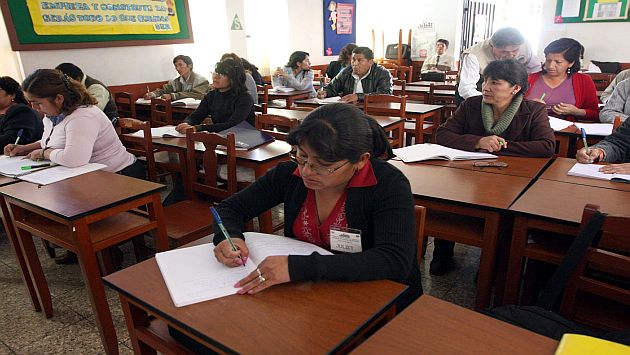
El Ministerio de Educación (Minedu) , a través de las Direcciones Regionales de Educación (DRE) del país, abrirá a partir de este lunes 20 de febrero, plazas en la modalidad de contrato para institutos y escuelas de educación superior públicas de todo el país.

Se trata de más de 4,600 plazas, a tiempo completo y parcial, en los Institutos de Educación Superior Tecnológicos (IEST), Institutos de Educación Superior Pedagógicos (IESP), Institutos Superiores de Educación (ISE) y Escuelas Superiores de Formación Artística (ESFA).

La cantidad de plazas, según el tipo de instituto y escuela, es de 3,181 en el caso de los IEST, de 707 en IESP, de 486 en los ISE, de 244 en las ESFA.
Los contratos podrán tener una vigencia hasta diciembre del presente año y por periodo académico, según las necesidades identificadas por las DRE y de acuerdo a los requerimientos del plan de estudios y la selección de personal para cubrir las plazas vacantes.

Requisitos

  • Contar con título profesional de docente y experiencia de acuerdo a la carrera que se convoca.
  • También podrán postular aquellos profesionales especializados que, sin ser de docentes de profesión, poseen vocación para la enseñanza y experiencia comprobada en su especialidad.

El objetivo de la convocaría es encontrar a los mejores docentes y profesionales que tengan las mayores habilidades y destrezas, así como la experiencia y la dedicación, con el único fin de transmitir sus conocimientos en el campo técnico, tecnológico, pedagógico y artístico en favor de los miles de jóvenes.

Para conocer más sobre las fechas de convocatoria, los docentes y profesionales especializados deberán comunicarse con la DRE de su región.

Fuente: http://peru21.pe/actualidad/minedu-contratara-4600-docentes-y-profesionales-especializados-institutos-y-escuelas-publicas-2271392

Comparte este contenido:

Chile: Gobierno da a conocer los resultados para la Gratuidad 2017

Chile/Febrero de 2017/Fuente: Terra

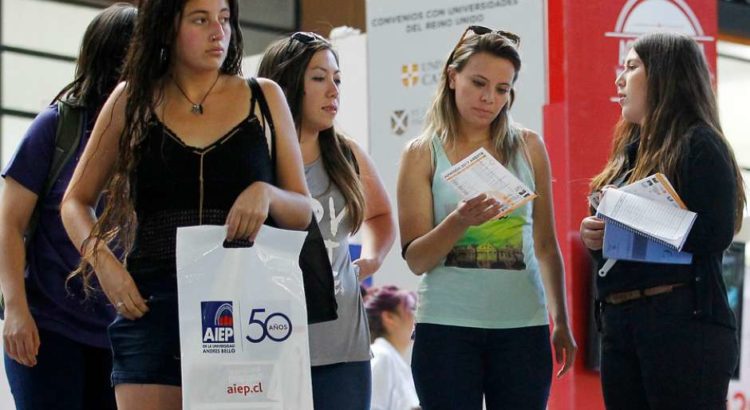
La tarde de este jueves se dieron a conocer los resultados de la asignación de la Gratuidad en la Educación Superior para este año, donde según detalló la Ministra de Educación, Adriana Delpiano , el 58% corresponde a estudiantes técnicos profesionales.

Cabe mencionar, que 164.170 jóvenes resultaron beneficiados en la primera entrega de Gratuidad, becas o créditos. En el caso exclusivo de la gratuidad son 94.871 jóvenes.

Hasta antes de las 17 horas cerca de 73 mil estudiantes ya habían ingresado a ver sus resultados al sitio web www.gratuidad.cl .  Quienes quieran apelar a los resultados lo pueden hacer desde esta jornada hasta el 8 de marzo a través de la misma página.

Sobre los alumnos afectados por los incendios forestales, la ministra llamó a dichas personas a actualizar sus datos.

“Tenemos más de 21 mil que entran en gratuidad en regiones O’Higgins, el Maule y Biobío . Esto sin hacer ningún cambio producto de los incendios”, dijo Delpiano.

Fuente: https://noticias.terra.cl/chile/gobierno-da-a-conocer-los-resultados-para-la-gratuidad-de-educacion-superior-2017,d630ac4af7119b3463fd877d2175e6efpumh5avc.html

Comparte este contenido:

Estados Unidos: Michigan test score gains worst in nation

Estados Unidos/Febrero de 2017/Fuente: The Detroits News

RESUMEN: Un nuevo análisis de los resultados de una prueba nacional de educación muestra a los estudiantes de Michigan, quienes continuamente han desmejorado las puntuaciones a nivel nacional desde 2003. El estudio, realizado por el profesor de la Universidad de Michigan Brian A. Jacob,  sobre las puntuaciones de la Evaluación Nacional del Progreso Educativo (NAEP) de los estudiantes de Michigan,  encontró que estaban en la parte inferior de la lista. Este análisis se produce en  menos de seis meses después de la publicación del informe Talent Crisis del Michigan por Education Trust-Midwest que encuentran que los estudiantes de Michigan están cayendo muy por detrás de sus compañeros de todo el país.

A new analysis of results of a national educational test shows Michigan students have continually made the least improvement nationally of scores since 2003.

The study, by University of Michigan professor Brian A. Jacob, of scores of the National Assessment of Education Progress (NAEP), also found that Michigan students were at the bottom of the list when it comes to proficiency growth in the four measures of the exam.

That analysis comes less than six months after the release of the Michigan’s Talent Crisis report by Education Trust-Midwest that found Michigan’s students are falling far behind their peers across the nation. The ETM report found that Michigan is in the bottom 10 states for key subjects and grades, including early literacy.

Both analyses looked at data from NAEP and rank states on their academic achievement and growth, said Sunil Joy, assistant director of policy and research at non-partisan Education Trust, in an email. “However, Jacobs’ analysis also incorporates factors like state size, population density, median household income and others.”

“Even when controlling for these factors, Michigan still fares poorly,” Joy added.

Michigan “makes the bottom 10 list on all four measures, and ranks dead last in terms of proficiency growth since 2003,” said Jacob, who prepared the study for the Brookings Institution.

According to the NAEP results, in 2015, the average math score of eighth-grade students in Michigan was 278 out of 500, compared to the national average score, 281. The average Michigan score has not significantly changed from 280 in 2013 and 277 in 2000.

In that year, the average reading scores of eight-grade students in Michigan matched the national average of 264 out of 500, while the science scores of eight-grade students in Michigan was slightly better at 154 out of 300 than the national average at 153.

Jacob’s analysis found that 29 percent of Michigan students performed at or about the “proficient level” on the NAEP exam in 2015. Those results were not significantly different from the 30 percent found in 2013 and the 28 percent recorded in 2000.

NAEP officials produce an annual Nation’s Report Card to inform the public about the academic achievement of elementary and secondary students in the United States. Sponsored by the U.S. Department of Education, NAEP assessments of reading, mathematics, science, writing, U.S. history, civics, geography, and other subjects have been conducted periodically since 1969.

The NAEP testing, which collects and reports academic achievement at the national level, began collecting some assessments at the state and district levels in 1969. The test’s results are a barometer of the condition and progress of education.

Education officials have compared the NAEP results with scores from Michigan’s Michigan Student Test of Educational Progress, or M-STEP, testing program, as one measure to the state’s students performances. The M-STEP testing last year found that with the exception of fifth-grade English and 11th-grade English, less than half of Michigan’s students reached proficiency in core subjects.

Jacob said the two tests are similar in content and format, though not identical.

“We should care about the NAEP because it is a very good exam that measures important knowledge and skills, and does so very well from a technical perspective,” he said. “And, more importantly, the NAEP is common across states, so it allows us to compare ourselves to other states, both at one point in time and in terms of change over time. The M-STEP does not.”

In his report to the Brookings Institute, Jacob wrote: “It is clear that several states stand out as having particularly weak performance as measured by the NAEP. Several poor, and historically low-performing states such as Alabama and West Virginia appear multiple times. But we also see historically higher-achieving states that have made little progress over the past decade, including Connecticut.”

Proficiency vs. spending

Jacob, a nonresident senior fellow at the Brookings Institute, said there is no single explanation of the Michigan rankings.

“I believe that there are a number of factors responsible for Michigan’s weak performance: a lack of adequate state and local funding for schools, the highly decentralized nature of governance that makes it difficult for the state Department of Education to develop coordinated reforms, the lack of regulation and accountability in the charter sector, and the economic and political instability that have plagued Detroit and other urban areas in the state,” he said.

“Another reason is the relatively decentralized nature of education in Michigan,” he added. “The long tradition of local control in the state has made it harder for the state Department of Education or others to establish coordinated policies.”

Jacob said those factors particularly affect Detroit. “The political and financial instability of Detroit over the past decade or two undoubtedly had a major impact on student performance in the city and surrounding areas,” he said.

Several education experts and government officials expressed alarm at the findings and offered several explanations.

State Rep. Tim Kelly, R-Saginaw Township, chairman of the House Education committee, dismissed arguments that lack of funding in the schools is a factor in the results.

“Michigan is one of the highest spending states in terms of educating students,” Kelly said Wednesday in a telephone interview. “If you look at local, federal and state, it’s about $10,000 or more per pupil.”

Kelly contends that there is “no direct correlation between proficiency and spending.”

“There is a silly correlation saying just because you throw money at the problem, things will get better,” he said.

Kelly pointed to several initiatives several state districts are implementing, including a focus on third-grade reading and early childhood investment. He said the solution is to focus on issues at the building level “with all hands on deck from the janitor to the principal.”

Seizing opportunities

Gov. Rick Snyder admits there is room for improvement in educating the state’s students, spokeswoman Anna Heaton said, “which is why he is continuing increased investments in K-12 education.”

Heaton added: “For the upcoming budget cycle, the governor recommended an additional $50-$100 per student, with $150 million additional for at-risk students. This would be the seventh consecutive year of increased funding.

“The governor also convened a 21st Century Education Commission to thoroughly assess our current educational system and make recommendations for improvement,” she added. “Their report is expected within the next month.”

A spokeswoman for the Michigan Department of Education said there is work to do.

“Because the NAEP is not aligned to Michigan’s content standards, the M-STEP is our benchmark of measuring Michigan’s success in improving education,” MDE spokesman William Disessa said. “We all have work to do to improve academic performance. The NAEP is one of the measures being identified in making Michigan a Top 10 state in 10 years. By improving outcomes on Michigan’s assessments, we expect that to be reflected on the NAEP, as well.”

While Detroit Public Schools Community District officials would not comment on the Brookings report, Madison Public Schools superintendent Randy Speck said further examination of the state’s education system is warranted.

“Michigan has lost opportunity after opportunity to be a leader in education because there has not been a concerted effort in funding, strategy and overall outcomes,” he said. “By pushing all districts to focus on college-ready, we lost the opportunity to be a national leader in training students for ready-made careers in advanced and modern manufacturing.”

By focusing on accountability scorecards, “we lost opportunities to blend in computer science and coding options for students,” Speck said.

“And because we were focused on penalizing the worst schools with the highest poverty and obstacles to overcome, we forgot there were real children with real needs who needed to be educated,” he said. “Although money in an equitable manner is desperately needed in Michigan, what is truly needed is the understanding that there is zero urgency.”

Fuente: http://www.detroitnews.com/story/news/local/michigan/2017/02/20/michigan-test-score-gains-worst-nation/98144368/

Comparte este contenido:
Page 4226 of 6129
1 4.224 4.225 4.226 4.227 4.228 6.129