Page 4610 of 6131
1 4.608 4.609 4.610 4.611 4.612 6.131

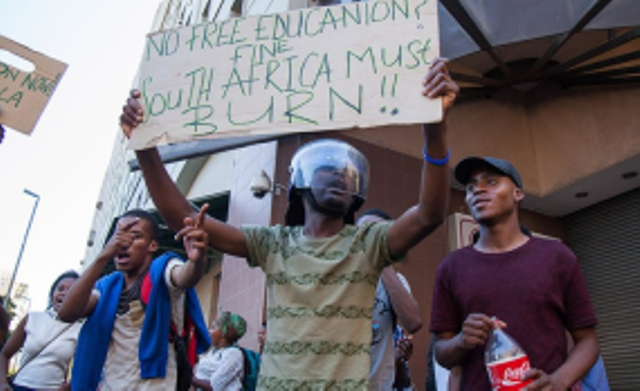
South Africa: Free Higher Education Won’t Magically Improve Access

África/Noviembre 2016/Noticias/http://allafrica.com/

Many academics, including myself, have explored why free higher education is not economically viable in South Africa.

Money is not the only issue, though. Quality also matters. And the two go hand in hand. Students have hastened to conflate free education and access to quality education. But introducing free university education will not magically grant students access to quality education, nor employment in the marketplace. There’s a lot of work to be done to achieve this. And in my view this should take precedence over doing away with university fees.

This work will not only involve universities as institutions.

The starting point must be to improve the quality of basic and secondary education. South Africa’s basic education system faces serious problems and has done so for years.

Added to this is the fact that universities have become increasingly bureaucratic as well as driven by the need to raise money from fees. This makes them ever more expensive and beyond the reach of the vast majority of South Africans. Universities must return to their core business of teaching, research and learning rather than focusing on profit margins.

And, last but not least, there needs to be a shift in students’ attitudes: they must begin to value their access to universities.

Basic education is a mess

The basic education system compares poorly with others on the continent. It fares even worse when compared globally.

The country has too few teachers; those who are in classrooms are frequently under qualified and perform badly. Teacher to pupil ratios are extremely high and many public schools – particularly those in rural areas – lack even basic infrastructure like desks and books.

Against this backdrop, the relatively small number of students who eventually manage to enter university education are naturally ill-equipped to handle the complex nature of knowledge construction at a tertiary level. They struggle with literacy and numeracy and are in no way ready to tackle university assignments.

So, fundamental change must happen in the basic education sector. It’s no use making higher education free for all if those entering the system are not able to cope with its demands.

Universities aren’t corporate houses

While it is necessary to overhaul the basic education system, South Africa needs to also transform its educational institutions and make them affordable.

This will involve not just equipping students with the skills the country needs, but also making degrees affordable. The cost of higher education in South Africa has risen phenomenally in the last two decades.

According to a 2016 survey, a standard Bachelor of Arts or Bachelor of Social Science costs anywhere from R14 000 to an average of around R35 000. This is far beyond the reach of most South African households. By comparison, a standard Bachelor of Arts at one of Kenya’s biggest public universities currently costs the equivalent of R14 000 for a year.

Higher education must be seen to be within the reach of poor students who aspire to it. Universities are not corporate houses that need to be obsessed by profits and income. It’s not appropriate that they focus on things like «management and efficiency techniques and professional support for accountability, measurement, ‘product control’ and assessment» instead of teaching and research.

Corporatisation of the higher education system has led South Africa down the wrong path. Too much money is spent on paying senior managers and remunerating bloated administrative units.

With the ever-growing decrease in state funding for higher education, the universities are forced to depend on student fees, donor funding and other sources. There may be some justification that universities are profit driven to pay for the increasing costs of higher educational institutions.

But all this comes at a cost to students and the academic programme. It’s time to return the academic agenda – teaching and research – to the centre of university life.

Rethinking protest

It’s also important to remember that access to education is a two sided coin. It’s not enough for universities to open their doors; the people entering must also value their access. Yes, universities have a lot of work to do to ensure they are transformed. But there must also be a change in the culture of students.

Students must realise that South Africa is no longer fighting an external enemy like the apartheid system. Instead, citizens are fighting within a system of democracy. This means that the way the country protests needs to be rethought. In the past the means for legal protest weren’t easily available. There are now appropriate structures and institutions to seek redress and put pressure through peaceful protest and through democratic negotiations. The destruction of infrastructure that’s been seen at educational institutions in recent months will only deprive the future generations of access to education.

Fuente

http://allafrica.com/stories/201611160426.html

Fuente imagen

https://lh3.googleusercontent.com/7bCKqVvNU7nCqheTmgeVMcUAqhQfUtigcVdt-Z2B4ck-6F2C3C5MXGDAGej4uWGmgnmP018=s85
Comparte este contenido:

Brasil: El idioma más difícil del mundo se habla en Latinoamérica y tardaría 10 años en aprenderlo

América del sur/Brasil/Noviembre 2016/Noticias/https://actualidad.rt.com/

«El idioma más difícil del mundo es sin lugar a dudas el pirahán», afirma Rolf Theil, profesor de lingüística de la Universidad de Oslo. Por encima de otros miles de idiomas que se hablan en el planeta, Theil ha elegido a este idioma que hablan unos 350 nativos de una región cercana al río Maici, en la Amazonía brasileña, informa el portal Science Nordic.

Un idioma de otro mundo

El pirahán es un idioma cuya pronunciación es muy especial, un dialecto donde la entonación es muy importante. Por ejemplo, las palabras ‘amigo’ y ‘enemigo’ son las mismas, pero se diferencian aplicando una melodía distinta.

Foto ilustrativa

Puede ser hablado, cantado e incluso silbado. De hecho, está basado en un conjunto de sonidos emitidos bajo silbidos que se transmiten a distancias considerables. Esto permite a los nativos orientarse de mejor forma al cruzar la espesa selva o los ríos y se convierte en una considerable ventaja para comunicarse bajo las torrenciales lluvias amazónicas.

¿Podríamos aprenderlo?

Este difícil idioma únicamente utiliza verbos en tiempo pasado y futuro, pero pueden ser expresados ¡hasta en 65.000 diferentes formas! Además, no cuenta con sustantivos en su forma singular o plural. El contexto de la frase dirá si está hablando de una persona o de varias.

Foto ilustrativa

El pirahán solo tiene tres vocales y ocho consonantes, pero muchos sonidos específicos adquieren el significado de palabras enteras. Su transliteración puede ser detectada muchas veces de forma intuitiva, pero si se desconoce determinadas reglas del dialecto sería imposible transmitir una idea.

Los especialistas consideran que por su complejidad, el aprendizaje de este idioma le tomaría unos 10 años a una persona con una memoria promedio. Los expertos han encontrado un buen parecido entre muchos términos del pirahán con el inglés y el portugués. Sin embargo, una gran cantidad de estas palabras tienen un significado diferente, lo que dificulta aún más su aprendizaje.

Descargar Vídeo aquí:

https://youtu.be/F7tiTMLaN_I

Fuente:

https://actualidad.rt.com/actualidad/224045-pirahan-idioma-dificil-mundo-hablar-latinoamerica

Fuente imagen:


https://lh3.googleusercontent.com/26lDG_ysVTFAz__TJ675yqJ4g654wS_3bZeZVtoB7jNLU5i5tmtCocUPIeo5q_XBZdHdoQ=s85


Comparte este contenido:

Éducation à la sexualité ou éducation à l’hétérosexualité?

 On parlait du cycle menstruel. Le jour 14, c’est le jour où tu ovules, et tout. Un élève a dit : « Merde ! J’ai fait l’amour le 14 février ! » Il a fallu que j’explique que l’ovulation n’avait pas nécessairement lieu le 14 de tous les mois », raconte, perplexe, une enseignante d’école secondaire québécoise. « “En matière de sexualité, c’est au garçon d’assurer. C’est lui qui fait tout puisque c’est lui qui pénètre”. C’est le genre de commentaire qu’on entend systématiquement », rapportent des professeurs de collège français. Pour peu qu’on s’intéresse à l’éducation à la sexualité, les anecdotes abondent, navrantes et similaires des deux côtés de l’Atlantique.

La sexualité sans plaisir

Ces constats, pourtant, sont loin d’étonner les membres du Groupe académique Éducation à la sexualité de Créteil. Ce groupe d’une quinzaine de membres (infirmières, enseignant(e)s, chefs d’établissements, etc.) de l’Académie de Créteil œuvre depuis 2013 à l’information et à la formation des personnels en matière d’éducation à la sexualité. Leurs actions menées au sein de différents établissements visent à susciter chez les élèves des réflexions quant aux fausses croyances (liées notamment à une méconnaissance du fonctionnement du corps ou des pratiques sexuelles) et aux stéréotypes sexués (accordant aux filles et aux garçons des rôles distincts et complémentaires dans l’exercice de la sexualité) qu’ils peuvent entretenir.


Ces préconceptions ne sont pas entièrement adressées par les programmes actuels, qui misent pour la plupart sur des points d’entrée en matière essentiellement biologiques, via les sciences de la vie et de la Terre. Cela contribue à constituer, toujours selon des membres du Groupe avec qui nous avons échangé, un frein à une éducation à la sexualité plus complète et inclusive. Ils estiment que cette approche dessert les élèves LGBTI(lesbiennes, gays, bisexuels, trans et intersexes) mais, plus globalement, « tous les élèves qui se questionnent ou estiment ne pas être dans la norme – du corps, du comportement, du ressenti », comme le montrait d’ailleurs l’anthropologue américaine Gayle Rubin.

Les contenus des apprentissages en éducation à la sexualité passionnent Guillaume Cyr, doctorant en éducation à l’Université du Québec à Montréal et ancien enseignant de science. L’ennui, selon lui, c’est que l’inclusion des programmes d’éducation à la sexualité se heurte à au moins deux types d’obstacles. Le premier, c’est l’insistance accordée aux enseignements sur la reproduction sexuée. « Cela évacue la question du plaisir sexuel, ce qui tend à naturaliser l’hétérosexualité ». Le second, « c’est qu’on présente les corps, et donc la sexualité, selon une bicatégorisation par sexe ».

Selon ces enseignements, au-delà des anatomies féminine et masculine, il y aurait des manières acceptables de draguer, de solliciter les rapprochements sexuels, de se comporter pour plaire à l’autre, de concevoir le plaisir sexuel, qui seraient distinctes en fonction du sexe. Ces représentations limitées de la sexualité humaine (presqu’exclusivement associées à la pénétration vaginale) contribueraient de surcroît à présenter une sexualité associée au plaisir pour les garçons/hommes, et à la responsabilité et à la gestion du risque pour les filles/femmes. Bref, les programmes auraient tendance à reconduire une série de normes en matière de sexualité qui seraient largement genrées.

Tabous, clichés et controverses

Les tensions autour des contenus à transmettre en éducation à la sexualité n’étonnent guère les sociologues du curriculum. La sexualité est peut-être l’une des thématiques dont l’inclusion dans le curriculum scolaire a fait – et continue de faire – l’objet du plus de controverses, et dans plusieurs pays. Au Canada, le gouvernement de la province de l’Ontario a dû retourner à la table de travail en 2010 après que sa tentative d’introduire un nouveau programme d’éducation à la sexualité abordant les notions d’orientation sexuelle et d’identité de genre ait déplu à des groupes de parents d’élèves. Au Royaume-Uni, de 1988 à 2003, les enseignant(e)s désireux de parler d’homosexualité étaient largement freinés en raison de la section 28 de l’acte de gouvernement local interdisant de faire la promotion de l’homosexualité.

En France, la controverse la plus récente date de 2011 et concerne l’introduction des notions d’identité et d’orientation sexuelles dans les manuels scolaires de science et vie de la terre. Cette initiative a engendré une importante levée de boucliers, ses opposants reprochant à l’Éducation nationale de se faire porteuse d’une supposée « théorie du genre ».

On identifie trois courants dominants d’intervention en éducation à la sexualité, qui correspondent à autant de manières d’inclure la sexualité dans le curriculum.

  • Le modèle traditionnel, préconisé par plusieurs états américains se caractérise par la promotion de l’abstinence avant le mariage, la valorisation de l’union hétérosexuelle et la condamnation de l’homosexualité. Ces programmes accentuent la construction d’un certain type de « normalité sexuelle », encensant les notions de monogamie, de relation sexuelle comme étant uniquement centrée sur la pénétration, de la conformité des partenaires aux rôles de genre conventionnels.

  • Le modèle préventif, sur lequel s’axe notamment le programme scolaire français, aborde la sexualité sous l’angle de ses risques inhérents (infections transmissibles sexuellement, grossesse à l’adolescence, violence dans les relations amoureuses, etc.) et des manières d’y faire face (principalement la contraception).

  • Quant au modèle libéral, en vigueur dans les pays scandinaves, il est axé sur la promotion du plaisir et la discussion des différentes orientations sexuelles.

L’Unesco a publié en 2010 des Principes directeurs internationaux sur l’éducation à la sexualité, mais suggère qu’une approche uniforme des contenus liés à la sexualité n’est ni possible, ni souhaitable. L’efficacité des initiatives d’éducation sexuelle dépend ainsi des influences culturelles spécifiques à chaque région.

Pas d’uniformisation des savoirs

Au-delà des contenus scolaires, le manque d’uniformisation des connaissances transmises d’une école à l’autre, même d’une classe à l’autre, règne en maître au chapitre des préoccupations. « L’éducation à la sexualité est tout à fait inégale d’une école à l’autre », constate Guillaume Cyr. « Au Québec, on a peu d’informations, autres qu’anecdotiques, sur ce qui se passe dans les écoles ».

Il faut dire que l’éducation à la sexualité a connu son lot de pérégrinations dans la province. Instaurés en 1986 comme module du cours de Formation personnelle et sociale, les enseignements liés à la sexualité ont à toutes fins utiles disparu du cursus scolaire en 2000, avec la modification du programme de formation de l’école secondaire. Malgré cette réforme des contenus, ces sujets demeuraient en théorie sous la responsabilité de l’école. Les enseignant(e)s et les personnels scolaires se partageaient donc la tâche d’évoquer, ici les mécanismes de la reproduction humaine, là la puberté, là encore, l’épineuse question des orientations sexuelles. En septembre 2015, un programme pilote d’éducation à la sexualité a vu le jour dans 19 écoles secondaires, mais n’en est encore qu’à ses premiers balbutiements.

La situation n’est ni plus simple, ni plus rose en France. L’éducation à la sexualité est obligatoire dans les écoles françaises depuis l’adoption de la loi du 4 juillet 2001. Les écoles, les collèges et les lycées sont tenus d’assurer au moins trois séances annuelles d’éducation à la sexualité. Comme au Québec, on fait rapidement le constat d’initiatives inégales en fonction des écoles et des territoires, puisqu’étroitement liées aux bonnes volontés d’enseignants et de personnels.

Le 15 juin 2016, le Haut Conseil à l’égalité entre les femmes et les hommes publiait un rapport relatif à l’éducation à la sexualité. Ce rapport tirait la sonnette d’alarme quant aux inégalités filles-garçons en matière de sexualité : poids des attentes de genre et des stéréotypes de sexe, enjeux liés à la préservation d’une réputation féminine, popularité des violences sexistes et cybersexistes, méconnaissance du plaisir et du corps féminin, inégalité des responsabilités en matière de prévention des maladies sexuellement transmissibles et des grossesses non désirées, etc.

Comment aller de l’avant, alors, avec une éducation à la sexualité répondant dans les faits aux besoins de tous les élèves ? Le caractère inclusif du programme devrait être dans la mire des ministères d’éducation et du corps enseignant, suggère Guillaume Cyr.

« Le programme d’éducation à la sexualité devrait faire mention des réalités des personnes LGBTI, inclure une historicisation des contenus des programmes afin d’éviter de les présenter et de les percevoir comme universels, et les présenter de manière non genrée afin d’éviter la bicatégorisation par sexe. »

Selon le Groupe académique Éducation à la sexualité de Créteil, il faudrait a minima que l’on questionne la manière dont les membres des équipes éducatives se représentent eux-mêmes la sexualité. Car si les tabous en matière de sexualité sont surtout verbalisés par les jeunes, ils n’en sont pas moins partagés par les adultes à l’école

Fuente:

https://theconversation.com/education-a-la-sexualite-ou-education-a-lheterosexualite-67612


Fuente imagen: https://lh3.googleusercontent.com/65tW-nCuHUhwFBrOXX9QLnspp-JENp0e5GTSkfPH7uo7lzFaryfWOcOR18KskIM1z1rU=s85

Comparte este contenido:

Venezuela: Constituido Comité Nacional Provisional del Movimiento Pedagógico Bolivariano

América del Sur/Venezuela/ Noviembre 2016/noticias/http://www.aporrea.org/

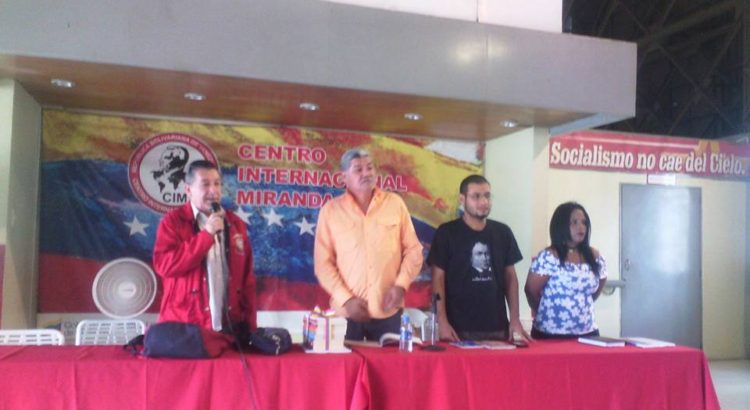
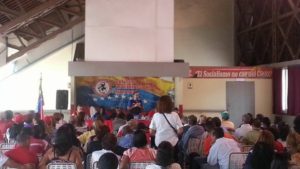
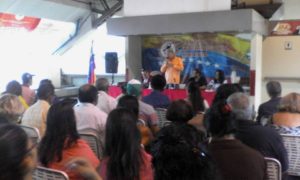
Desde todas las regiones del país, ciento cuatro (104) delegados, en su condición de voceros de igual número de movimientos, colectivos y expresiones del profesorado Bolivariano se encontraron en las instalaciones del Centro internacional Miranda (CIM) en Parque Central, Caracas los días 18 y 20 de Noviembre. Allí discutieron temas diversos desde la situación de la educación mundial en el marco del capitalismo neoliberal del siglo XXI, la pedagogía en la tradición política venezolana, las tendencias globales de las reformas educativas, la propuesta venezolana de reforma curricular, entre otros temas desarrollados por Luis Bonilla-Molina, Omar Hurtado Rayugsen, Carlos Bracho, entre otros.

El evento contó con la presencia del Ministro del Poder popular para la educación Rodulfo Pérez y el educador Eduardo Piñate quienes disertaron sobre las tareas de los docentes en la actual coyuntura política y de transformaciones educativas. El Ministro de Educación expresó a los participantes el saludo enviado por el Vicepresidente del área social Jorge Arreaza, del Vicepresidente Ejecutivo Aristóbulo Istúriz y del Presidente Nicolás Maduro Moros. Igualmente tanto Pérez como Piñate exhortaron a los presentes a participar activamente en el Congreso de la Patria, sector educación, el cual se unificó para ser expresión de los debates de todo el sistema educativo, desde la educación inicial hasta el postgrado, Así mismo se decidió reabrir el registro online del movimiento.

Articular a los docentes e investigadores de todos los niveles, modalidades y expresiones del sistema educativo venezolano desde el preescolar hasta la universidad en función de avanzar en la sistematización del pensamiento pedagógico Bolivariano, la agenda de transformaciones educativas de nueva generación y la repolitización del debate educativo, constituye un propósito central del naciente movimiento unitario.

Los participantes decidieron conformar el equipo nacional promotor del Movimiento Pedagógico Bolivariano, nombrando a Eduardo Piñate como Coordinador Nacional y ratificando al Equipo Nacional de Organización conformado por los profesores Alexis Corredor, Melys Garcia, Carlos Bracho y Luis Bonilla-Molina

En los próximos días se estará comunicando la agenda de reuniones y trabajo del Movimiento Pedagógico Bolivariano (MPB) por regiones.

Para registrarse y recibir informaciones sobre los pasos siguientes por favor acceder al siguiente link

https://goo.gl/forms/HaioSsDfP1wNoEY63
RegistroMovimientosPedagogicos@gmail.com


Otras fotos del encuentro:

encuentrocim002

encuentrocim003

encuentrocim004

Fuente

http://www.aporrea.org/educacion/n300501.html

Comparte este contenido:

Reviving Indigenous languages – not as easy as it seems

Oceanía /Australia/Noviembre 2016/Noticias/https://theconversation.com/

The NSW government has announced it will propose legislation for protecting and reviving NSW Aboriginal languages.

NSW Aboriginal languages are part of the heritage of NSW Aboriginal people, and part of Australia’s heritage.

Recognising this should lead to greater understanding of the people and history of different parts of NSW, to greater respect for Aboriginal people, and, in turn more reconciliation between Aboriginal and non-Aboriginal people.

How to revive a language

But protecting and reviving languages is no easy task. Here are a few things to consider.

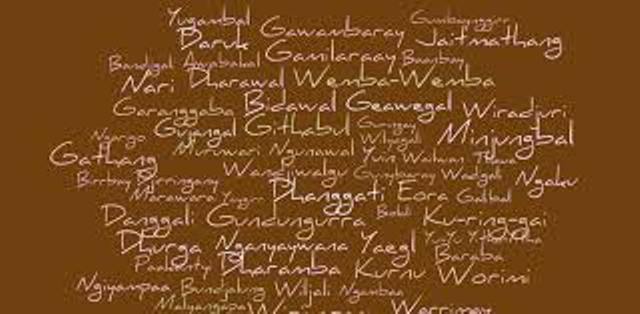
NSW has a lot of languages. There are at least 35 distinct languages, and many of those languages have different dialects.

For many of these languages, only a few words have been handed down. The last few years have seen activity in mining archives and libraries for these words.

But it takes considerable practice to interpret how a word should be pronounced from reading the old spellings, and comparing them with other word-lists and what is known of closely related languages.

The next step is to interpret the sentence structure and reconstruct the grammar of the language. Muurrbay Aboriginal Language and Culture Co-operative (Nambucca Heads) have done outstanding work in working with linguists to create short grammars for some of the 35 languages.

As it stands, only a few languages (eg Bundjalung, Gumbaynggirr, Muruwari, Paakantyi, Wiradjuri, Yandruwandha, Yuwaalaraay/Gamilaraay) currently have enough material in a useable form for adults to begin learning the languages.

NSW Aborigines bore the brunt of first settlement, and so it is sad, but unsurprising, that NSW no longer has communities where children grow up speaking a traditional Aboriginal language every day. And many Aboriginal people in NSW live away from their traditional country.

This has major consequences for reviving the languages. The first step is for enough adults to learn the languages, so that they can help the children learn the languages.

Revitalising a language needs first and foremost the interest and engagement of the community. This is the easy part.

Then it needs teachers, a staged curriculum and resources, for children and for adults. Here, it is all too easy for things to go wrong, and for communities to be deeply disappointed.

Lack of Indigenous language teachers

We simply don’t have enough teachers who speak NSW Indigenous languages to cover all the schools in all the communities where people want to revitalise their languages.

This was identified as a major problem in a recent national workshop hosted by First Languages Australia.

There are local initiatives to learn languages, but whereas German and French teachers would be expected to have university-level qualifications in the language, only two NSW languages, Gamilaraay and Wiradjuri, are offered at university level.

Little training in language teaching methods is available – the University of Sydney offers a Masters of Indigenous Language Education for trained teachers, but there aren’t enough trained teachers who are Aboriginal in the first place.

NSW could consider the model offered by Western Australia, where the state education department offers a course especially designed for Indigenous people who want to teach their own language. Successful completion allows them to apply for a limited authority to teach the languages.

Once we have the teachers, we need back-up and succession planning. Programs often flounder when a brilliant teacher gets sick or retires. So one teacher per school is not enough.

Zeke Kay at Winanga-Li Aboriginal Child and Family Centre in Gunnedah, beginning Gamilaraay. Photographer: Hilary Smith. Not to be republished., Author provided

Need to design a curriculum and resources

Teachers need a framework for teaching languages. A generic curriculum for teaching Indigenous languages, with a pathway for language revitalisation programs, has been developed through the Australian Curriculum, Assessment and Reporting Authority (ACARA).

That curriculum needs fleshing out for each language, and that will take time, as teachers need first to understand the grammar and vocabulary of the language, and then break it down into learnable lessons that build up logically.

Lastly, teaching a language needs lesson plans and activities that engage learners.

Languages such as French and German have vast numbers of accessible, beautiful and exciting learning materials.

They are the products of many years’ experience and of a very large market. Only a few Indigenous languages in NSW have teaching resources like Yuwaalaraay and Gamilaraay.

NSW will have to be very clever in sharing and creating re-usable resources. Unfortunately Australia has a dreadful track record in wasting money on well-meant but ill-thought-out projects.

For example, in 2003, the Federal Department of Communications, Information Technology and the Arts spent nearly half a million dollarson paying a developer (Multilocus) to build language learning programs for five Indigenous languages. No one appears to have done an evaluation of the effectiveness of the CDs as a learning/teaching aid.

The software was not open source, was not updated, and appears to exist now only as archived relic CDs, one of which contains no more than 230 words. That’s a lot of dollars per word.

That’s why we need the accountability framework that is proposed. And we need one that has teeth.

The state government has taken an important first step in recognising NSW Aboriginal languages. Reviving the languages will be a giant step.

Fuente :

https://theconversation.com/reviving-indigenous-languages-not-as-easy-as-it-seems-68977

Fuente imagen:

https://lh3.googleusercontent.com/mknPvAFgycmcLiFXSzqMUCq-3isAvUA1lVAsdZJajTJOcX60dqRKWiO_m3cH9sUWxGYs4w=s85

Comparte este contenido:

Colombia: Timochenko” dice que el acuerdo de las Farc con el Gobierno colombiano es “definitivo”

América del Sur/Colombia/Noviembre 2016/Noticias/.noticias24.com/

El líder de las Fuerzas Armadas Revolucionarias de Colombia (Farc), Rodrigo Londoño Echeverri, alias “Timochenko”, aseguró hoy que el nuevo acuerdo firmado con el Gobierno es “definitivo”.

“Tenemos un acuerdo sólido, incluyente, plural y posible de implementación. Por lo tanto, es definitivo”, dijo desde Cuba “Timochenko” a la Agencia Nueva Colombia, vinculada a las FARC.

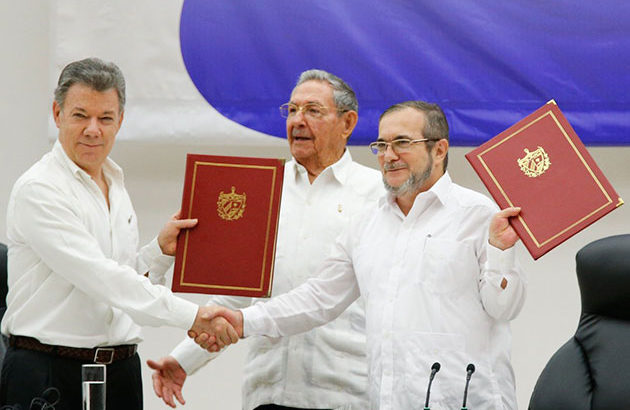
El nuevo acuerdo de paz, sellado el pasado 12 de noviembre en La Habana, contiene las aportaciones de los sectores contrarios al pacto inicial que fue firmado el pasado 26 de septiembre en Cartagena de Indias y rechazado por los colombianos en un plebiscito el 2 de octubre.

Asimismo Londoño aseguró que las FARC están cumpliendo “rigurosamente” los acuerdos a los que llegó con el Gobierno y de los que dijo “son sagrados”.

Igualmente destacó la participación de la sociedad en la elaboración del nuevo documento.

“Los movimientos sociales y los grupos organizados de víctimas, mujeres, jóvenes, representantes de Iglesias y los más diversos credos fueron fundamentales para lograr el acuerdo definitivo”, enfatizó el líder guerrillero.

Y añadió que “Colombia entera tiene una deuda con ustedes, nosotros desde las Farc-EP, no les vamos a fallar”.

El Gobierno colombiano no ha definido el mecanismo para refrendar el nuevo acuerdo de paz pero baraja las posibilidades de convocar un nuevo plebiscito, a través del Congreso de la República, o mediante cabildos abiertos, es decir concejos municipales con participación directa de los ciudadanos.

COn informción de EF

Fuente :

http://www.noticias24.com/internacionales/noticia/119797/timochenko-dice-que-acuerdo-de-farc-con-el-gobierno-colombiano-es-definitivo/

Fuente imagen:

https://lh3.googleusercontent.com/kh57thOnin5bxHg4X8qMVxQVqafxfBXUHFC3a5DjFlhG2WkhVGEIzXGWlfF7qWha7_vXiw=s85

Comparte este contenido:

Rusia: Внеурочная работа La educación en casa

Europa/Rusia/Noviembre 2016/Noticias/http://ng.sb.by/

Después de horas de trabajo


 Resumen:
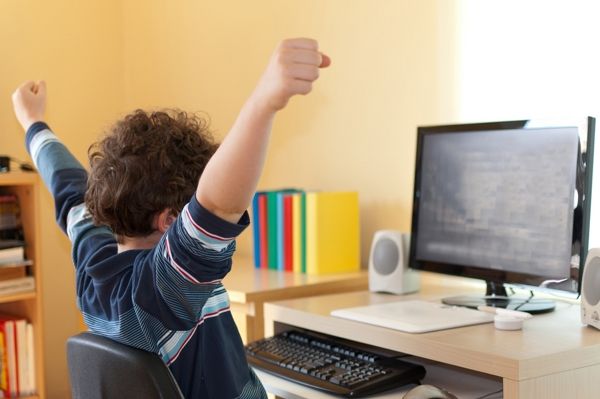
Señalan que  enseñar a los niños en el hogar,  esto es ahora un fenómeno común   a su vez se refieren que en realidad aprender en la casa más es  mas difícil que en la escuela. enfatizan que :  Por supuesto, no hay nada malo con el aprendizaje individual. Pero no es adecuado para todos. En primer lugar, los padres deben tener un nivel de ingresos muy por encima de la media, para pagar las clases. En segundo lugar, se requiere más atención a los niños. Uno de los padres es probable que tenga que abandonar el trabajo. En cualquier caso, hoy en día hay niños que aprenden en casa y  este proceso debe ser marco civilizado y claramente definida, y cómo hacerlo? .
Многодетная семья Голуб из Гомеля практически ничем не отличается от остальных. Папа, мама, два брата и две сестры, новая квартира по льготному кредиту — это теперь в жизненной копилке многих белорусов. Необычным можно назвать отношение к школьному образованию. Голубы обучают ребят на дому. Насколько это сейчас распространенное явление?
Старший сын Антон пошел в первый класс. Через год второй сын Максим — в первый. Все вроде бы было неплохо, но мы переехали в новую квартиру. Вокруг одни новостройки, школа далеко. Мы с супругой приняли необычное решение — перейти на надомное обучение. Закон позволяет. Правда, нужна веская причина. Например, ребенок сильно болеет и не может посещать занятия, тогда из школы домой к нему приходит учитель. Мы объяснили директору, что нам неудобно ездить, так как школа далеко и у детей разные смены. Бесплатного  учителя не требовали, сказали, что будем заниматься с репетиторами дома, а в школу приезжать на контрольные. Договорились. Написали необходимые заявления.

Конечно, в индивидуальном обучении нет ничего плохого. Но оно подходит не для всех. Во-первых, родители должны иметь уровень заработка гораздо выше среднего, чтобы оплачивать занятия. Во-вторых, это требует большего внимания к детям. Один из родителей, скорее всего, должен будет отказаться от работы. В любом случае сегодня есть дети, которые учатся дома. И этот процесс должен идти цивилизованно и в четко оговоренных рамках. А как это сделать? Над этим нужно думать. Главное — не запретить, а развить, помочь, разъяснить, выработать общие подходы. Ведь исключения только подтверждают правило.
Fuente:
http://ng.sb.by/obrazovanie-4/article/vneurochnaya-rabota.html
Fuente imagen
https://lh3.googleusercontent.com/EVFXlzTBiMr-YHpwbJr3PI6wOPo6F-YXCR_tj-QvDmUPS77LeXZpzf9lp0FqKOKkqpbD=s128
Comparte este contenido:
Page 4610 of 6131
1 4.608 4.609 4.610 4.611 4.612 6.131