Page 5152 of 6186
1 5.150 5.151 5.152 5.153 5.154 6.186

Sudáfrica: The Education System Is Leaving Children With Disabilities Behind

África/Sudáfrica/26 de Agosto de 2016/Autor: Nyiko Shikwambane

RESUMEN: El 17 de agosto, la justicia social ONG Sección 27 publicó un informe titulado «Demasiados niños que quedan atrás: La inclusión en el sistema de educación inclusivo de Sudáfrica». El informe es el resultado del trabajo de investigación llevado a cabo por Tim Fish Hodgson y Silomo Khumalo en el norte de KwaZulu Natal, en colaboración con la Fundación Philisa Isizwe para las personas que viven con discapacidades. La investigación siguió la vida de 55 cuidadores de niños con discapacidad que se encuentren en centros de educación especial o que no pueden acceder a ningún tipo de escolarización. Sección 27 se reunió con los padres y cuidadores para identificar los problemas en el Distrito Umkhanyakude en KwaZulu Natal.«Nos encontramos cerca de 50 padres que consideramos como nuestros clientes. Cuando nos encontramos con esos padres, nos dimos cuenta de que había varios problemas con el acceso de los niños con discapacidades. Los padres se quejaron de que las tasas eran demasiado caros, las escuelas estaban lejos de casa y que los niños fueron abusados en sus albergues «, dijo Silomo Khumalo, uno de los autores del informe.

On 17 August, social justice NGO Section 27 released a report entitled «Too Many Children Left Behind: Inclusion in the South African Inclusive Education System». The report is a result of research work conducted by Tim Fish Hodgson and Silomo Khumalo in northern KwaZulu Natal in partnership with the Philisa Isizwe Foundation for persons living with disabilities.

The research followed the lives of 55 caregivers for children with disabilities who are either in special schools or are unable to access any kind of schooling. Section 27 met with parents and caregivers to identify the issues in the Umkhanyakude District in KwaZulu Natal.

«We met about 50 parents who we regard as our clients. When we met those parents, we found out that there were various issues with access for children with disabilities. Parents complained that the fees were too expensive, the schools were far from home and that the children were abused in their hostels,» said Silomo Khumalo, one of the authors of the report.

After looking at those who were not in any kind of schooling, they investigated further and considered the inclusive education legislative and policy framework in relation to the Constitution. Section 29 of the Constitution says every child has the right to basic education, which includes children with disabilities.

The Schools Act does not exclude children with disabilities: section 12(4) of the Act says that children with disabilities have the choice between attending a mainstream school or a special needs school. However, this choice is meaningless if mainstream schools lack the necessary resources to accommodate learners with disabilities. Mainstream schools often deny access to children with disabilities or monitor their behaviour like a daycare centre. Either way, no effective learning is done and these children should be considered among those who are «out of school».

The Sisizakele Special School is one of the only schools in the district that has the capacity to educate disabled children. Unfortunately, there is a long waiting list to get access to this school because it does not have the capacity to deal with the number of learners who need access. Those who cannot be accommodated at Sisizakele will have to spend their days at crèche without furthering their education.

«She now goes to a crèche near Manguzi Hospital. She is excited to be there, and was quite lonely at home by herself without other children. I want her to have a skill that she will be able to do well, so that if I pass away, my child will be able to have some way of making a living for herself,» said a parent of a child with physical and intellectual disabilities in Manguzi.

«In order for us to assist these parents we had to understand the issues faced by teachers and house care in special schools schools. We received complaints about most teachers not having the adequate amount of training to teach learners with disabilities. That is why we have cases of full service schools treating children with disabilities like clients of a day care centre,» said Khumalo.

Children are admitted into mainstream schools which lack the capacity to teach them. Similarly, the report suggests that special schools are understaffed and lacking capacitated employees. The abuse in hostels is prevalent in special schools because the house parents are merely volunteers in the space who earn a stipend of R1, 000 per month.

«We have begun looking at the education system before the current democratic state. We found that black learners with disabilities suffer from a kind of ‘double discrimination’. They are excluded out of the education system by virtue of their disabilities. They are excluded because schools in rural areas don’t have the adequate resources or skills to accommodate children living with disabilities,» says Khumalo.

The report recommends that the National Department of Education reimagine the implementation of the inclusive education system. It has been 15 years since the inclusive education policy was passed in 2001, but no apparent implementation to date. «Section 27 wants to sit with the department to discuss how we can better implement the policy in rural communities. There is a big gap between the South African education policy and the reality,» said Khumalo. The report includes recommendations for funding, school support schemes, skills and vacancies to create a more efficient inclusive education system.

Fuente: http://allafrica.com/stories/201608241101.html

Fuente de la imagen: http://www.bbc.com/news/business-28191371

Comparte este contenido:

China: Xinjiang’s universities force new push in ‘political education’

Asia/China/26 de Agosto de 2016/Fuente: Asia Times

RESUMEN: Universidades de la región de Xinjiang, noroeste de China han comenzado un nuevo impulso para fortalecer la lealtad hacia la facultad de Pekín, con instructores obligados a escribir artículos que promueven la «unidad étnica» y alabando iniciativas del gobernante Partido Comunista de China, dijeron las fuentes. El movimiento a partir del 15 de agosto ha introducido una serie de nuevas demandas y ha acortado el tiempo disponible para instructores por las vacaciones de verano, así lo expresó  al Servicio de RFAl un maestro en el sur de mayoría musulmana de Xinjiang Uigur. «Este año las vacaciones de verano se truncó, y los estudios políticos ya han comenzado», dijo la fuente de la RFA, que habló bajo condición de anonimato.«Estamos escribiendo y estudiando los documentos que expresan su apoyo al llamado [Chino] presidente Xi Jinping, de la ideología occidental para evitar la entrada de las escuelas, junto con varias otras directivas enviadas por el Ministerio de Educación.» «Esta es nuestra situación actual, y será el mismo en el día del maestro, 10 de septiembre, cuando por lo general tienen un día libre».

Universities in northwestern China’s Xinjiang region have begun a new push to strengthen faculty loyalty to Beijing, with instructors forced to write papers promoting “ethnic unity” and praising initiatives of the ruling Chinese Communist Party, sources said.

The move beginning Aug. 15 has introduced a range of new demands and has shortened the time available to instructors for summer break, one teacher in Xinjiang’s mostly Muslim south told RFA’s Uyghur Service.

“This year our summer break was cut short, and political studies have already begun,” RFA’s source said, speaking on condition of anonymity.

“We are writing and studying papers expressing support for [Chinese] president Xi Jinping’s call to prevent Western ideology from entering the schools, along with various other directives sent out by the Education Ministry.”

“This is our present situation, and it will be the same on Teachers’ Day, Sept. 10, when we usually get a day off,” he said.

“Our own course of political studies began on Aug. 15,” another teacher said, speaking from Xinjiang’s regional capital Urumqi.

“We are learning how to curb our students’ inclinations toward religion, stamp out religious extremism, and promote ethnic unity [between Uyghurs and Han Chinese],” he said.

Calls seeking comment from several Xinjiang universities rang unanswered, but one Xinjiang teacher told RFA that faculty had been warned against speaking in interviews or taking phone calls from abroad.

In an Aug. 11 posting, however, the website of southwestern Xinjiang’s Kashgar University boasted “increased political education and ethnic unity education” as school achievements in a quote by university president Erkin Omer, speaking to Han students visiting from China’s Jilin province.

Obstacles to advancement

Strict political requirements have, meanwhile, created obstacles for teachers seeking advancement on the basis of academic accomplishments alone, one Xinjiang instructor told RFA, speaking on condition of anonymity.

“These have made it difficult for me to get a professor’s title, or even an associate professorship, so I had to give this up,” he said.

“Because some of my students were found praying, I was disqualified twice,” he said.

“Many teachers have left their posts, and some have gone abroad. I might apply for early retirement as well because of the stress over politics.”

Faced with growing assertions of Uyghur national identity in Xinjiang, China regularly conducts “strike hard” campaigns in the group’s traditional homeland, including police raids on Uyghur households, restrictions on Islamic practices, and curbs on the Uyghur people’s culture and language.

But experts outside China say that Beijing has exaggerated the threat from Uyghur “separatists” and that Chinese domestic policies are largely responsible for instability in the region.

Fuente: http://atimes.com/2016/08/xinjiangs-universities-force-new-push-in-political-education/

Comparte este contenido:

Canadá: concern over study permit rule change

América del Norte/Canadá/26 de Agosto de 2016/Autor: Backie Smith/Fuente: The Pie News

RESUMEN: El cambio en la regulación coloca instituciones canadienses a la par con sus homólogos estadounidenses cuando se trata de la expedición de visados. La decisión del IRCC siguió pisando los talones de orientación emitida el mes pasado por SEVP en los EE.UU., que han precisado que las universidades no están autorizados a emitir certificados de elegibilidad para visas a estudiantes dados admisión condicional.La emisión de un permiso de estudios a largo plazo para los  programas independientes está teniendo un impacto en los informes de cumplimiento. Los educadores en Canadá han expresado su preocupación por el impacto de un cambio en la emisión de permisos y las admisiones condicionales para estudiar. Sólo cuando los estudiantes pueden demostrar que han completado los requisitos previos para estudios posteriores van a ser capaces de aplicar un su segundo permiso de estudios.

Educators in Canada have voiced their concern over the impact of a change to study permit issuance and conditional admissions that will mean international students completing a pathway or language programme before progressing to postsecondary study must obtain a separate study permit for each course.

Until now, students offered acceptance to a college or university on condition of completing another course have been issued a study permit for the duration of both courses. But last month, Immigration, Refugees and Citizenship Canada said that effective immediately, it will no longer issue study permits on the basis of conditional admission.

In the case of conditional admission based on the completion of a prerequisite progamme, immigration officers will only issue a study permit for the duration of students’ first programme of study.

Only when students can demonstrate they have completed the prerequisites for further study will they be able to apply for their second study permit.

An update published on IRCC’s website said the change stemmed from concerns that students may be abusing the immigration system. Because a study permit affords postsecondary international students work rights, there is a danger that students who do not successfully complete their prerequisite programme will nevertheless stay in Canada to work, it said.

“The issuance of a long-term study permit for two separate programs is having an impact on compliance reporting,” the notice stated.

“Issuing a study permit or SX-1 visa for the first prerequisite program only will ensure compliance reporting is sent to the appropriate [institution], and students will not be negatively affected,” it adds.

Despite these assurances, educators have qualms over the potential impact of the change, which was quietly introduced through an internal decision over IRCC over visa processing.

“The biggest concern we have, of course, is around delays,” Gonzalo Peralta, executive director of representative body Languages Canada, told The PIE News. He noted that a student taking a language course in summer would have only weeks to obtain a permit that would allow them to attend college in September.

Some 10,600 international students entering Canadian universities come via pathway programmes each year, according to a study published last year, and Peralta estimated that the number of students affected by the new regulations will be far greater, as many more complete prerequisite language programmes before progressing to further study.

“Are [IRCC] going to be able to handle processing and other 25-40,000 permit renewals per year?” he asked.

The association’s members have also said they are worried about the costs the new system might incur for students and schools.

“There’s a cost attached to that which is passed onto the student for – we don’t believe – any valid reason, because it’s not going to actually provide any more integrity as far as we’re concerned,” he said.

“The second point is it creates more administrative drain on resources for institutions. Every educational institution is concerned with where their dollar is going.”

The impact of the changes may not be as dramatic as some schools fear, Peralta said, but the lack of industry consultation on the issue means it’s an unknown.

“It might actually even be a good thing, but that’s not the way it reads and we have no way of knowing,” he said. “And not only was there no consultation, there is no process to implement it in a way that’s not going to disturb the lives of thousands.”

Languages Canada is in the process of canvassing its members to gain a clearer picture of how they may be affected.

Like Languages Canada, Tina Bax, founder and president of ELT and pathway provider CultureWorks is sympathetic to IRCC’s aims. “But adding an additional regulatory hoop for students who want to go on as planned seems silly,” she added. “We used to have that regulation 15 years ago in Canada. It seems as though we’re going backwards.”

Bax suggested that alternative options could help IRCC to keep track of students, without requiring students to change visas.

“Why not require schools to report students who don’t show up, or who leave the programme, to IRCC? IRCC could then track whether the student re-enrolled somewhere else,” she said.

The regulatory change places Canadian institutions on a par with their American counterparts when it comes to visa issuance. IRCC’s decision followed hot on the heels of guidance issued last month by SEVP in the US, which clarified that universities are not allowed to issue certificates of eligibility for visas to students given conditional admission.

Fuente: http://thepienews.com/news/canada-concern-over-study-permits-rule-change/

Comparte este contenido:

En busca de un modelo educativo para los millennials mexicanos

América del Norte/México/26 de Agosto de 2016/Autora: Claudia Karina Gómez Cancino/Fuente: CONACYT

El Instituto de Innovación y Robótica Educativa (Inire) en Nayarit diseña un nuevo método educativo, basado en la robótica, que atienda a las necesidades y realidad de personas nacidas a partir de la expansión de Internet y las tecnologías de la información y comunicación (TIC), los llamados «nativos digitales» o «millennials».

La directora del instituto, María de los Ángeles Solórzano Murillo, aclaró que el programa educativo que diseñan contempla la creación de ecosistemas de ciencia y tecnología —bajo criterios de rentabilidad y productividad—, con la finalidad de que existan más opciones para la generación y apropiación del conocimiento.

Para la Agencia Informativa Conacyt, Solórzano Murillo estableció que quienes nacieron a partir de los años 90 necesitan de entornos y ambientes de aprendizaje adecuados para la percepción del mundo que los rodea, inminentemente digitalizado, y por ello es indispensable modificar paradigmas, previendo el futuro.

“Identificamos que el sistema educativo en México requiere de estudios e investigación formales y sistemáticos que nos ayuden a consolidar un nuevo paradigma educativo, que tenga que ver con una sociotecnopedagogía que sea adecuada para los nativos digitales de nuestro país”, explicó.

Mencionó que una vez concluido el proyecto, se ofrecerá principalmente a escuelas particulares, pero buscarán a las autoridades de educación pública para promoverlo en instituciones de este sector en el estado.

La titular del proyecto dijo que la idea es que el encuentro entre los niños y jóvenes con la robótica, les permita desarrollar el método científico, a partir de conocimientos como la programación; además de que se ubiquen en una nueva forma de pensamiento y adquieran habilidades que potenciarán en su entorno.

“La enseñanza de la robótica no es solo el armado de los prototipos, conlleva otras habilidades, cuando es usada a partir de plataformas comerciales, se puede caer en el error de interactuar con un juguete más, aunque hay beneficios como el hecho de que aprenden a programar o hacer estructuras, pero no hay retos para interrelacionar conceptos, trazar una hipótesis y aplicar el método científico”, apuntó.

La investigación se lleva a cabo en la escuela Orbik, laboratorio experimental de la empresa Robótica, Innovación y Tecnologías S.A. de C.V. (RITSA), que cuenta con el Registro Nacional de Instituciones y Empresas Científicas y Tecnológicas (Reniecyt) 2014/20220.

Pantallas digitales vs. pizarrones

La muestra para la investigación, con la que se pretende conocer cuál es la situación actual de los entornos tecnológicos y su aprovechamiento en escuelas de nivel básico, fue de 74 niños y niñas de edad preescolar, primaria y secundaria, a quienes se impartió un curso de robótica pero manteniendo la didáctica particular de cada nivel educativo.

“Esta es una investigación cualitativa, que se ejecuta en las aulas en los ciclos escolares, se hacen análisis para trazar hipótesis y se detallan las secuencias didácticas y luego, a partir del cruce de información, se identifican las oportunidades y las debilidades de esas secuencias”, subrayó.

La titular del Inire afirmó que uno de los hallazgos recientes es que el sistema tradicional contempla cuestiones pedagógicas en el nivel preescolar, que deben preservarse, como el autodescubrimiento, la autodeterminación, la reflexión, generando experiencias constructivas en el niño, donde la construcción de un prototipo robótico pase a segundo lugar.

“En la etapa de primaria, los contenidos tienen mayor relevancia, aunque sean las mismas prácticas que en preescolar; en este nivel, los niños y niñas son mejores receptores de conceptos teóricos, pero ahí la parte medular es con los valores, la autorregulación”, determinó.

Asimismo, informó que con este estudio se ha identificado que existe una subutilización de tecnologías en las aulas donde se cuenta con equipo.

“Algunas escuelas cuentan con equipo y tecnologías, notamos una subutilización de ellas, por ejemplo, las pantallas digitales las usan para proyectar imágenes desde el cañón, no se percibe la utilidad de la tinta digital, tienen estos equipos y siguen usando los pizarrones, eso ya pasó a la historia, pero es necesaria la capacitación del docente y la creación de un paradigma sobre la robótica como un medio didáctico”, afirmó.

Para finalizar, admitió que la introducción de este sistema educativo podría ser compleja, ya que una de las limitantes es que no todas las escuelas públicas y privadas pueden acceder a las plataformas tecnológicas, debido al costo.

Fuente: http://conacytprensa.mx/index.php/tecnologia/robotica/9798-en-busca-de-un-modelo-educativo-para-los-millennials-mexicanos

Comparte este contenido:

Liberia: Ministry of Education Must Design Strategies to Attract Students

África/Liberia/26 de Agosto de 2016/Fuente: Front Page Africa

RESUMEN: El Director Ejecutivo de Educación para Liberia, Inc. Dr. Emmanuel Daykeay hizo una mueca ante el Ministerio de Educación, y se desalienta en cuanto a cómo el Ministerio de Educación en Liberia es de bajo rendimiento, y sus actuaciones están causando explotaciones y marginación de los alumnos de las diferentes escuelas. Las Estadísticas recientes del Consejo de Exámenes de África Occidental (CEAO) 2016  muestra resultados de manifiesto que el Ministerio de Educación dormita sobre el futuro de los niños y jóvenes.  A partir del jueves, 26  de agosto, vamos a empezar a desafiar al Ministerio de Educación en nuestro país para llegar a los estudiantes y padres y empezar a educarlos acerca de las estrategias relativas a la educación, el desarrollo de políticas y filosofías. El Ministerio de Educación de Liberia se abstiene repetidamente sin ningún tipo de veneración a los que se ven afectados. Se tiene que cambiar por el bien del país. Escuelas en Liberia tienen una educación deficiente. El gobierno ha vuelto a ser el más alto empleador del país. ¿Cuál ha sido el gobierno, los partidos políticos y las contribuciones de los ciudadanos a la mejora de la escuela dentro del país?

Education for Liberia, Inc. Executive Director, Dr. Emmanuel Daykeay grimaced at the Ministry of Education, and is discouraged as to how the Education Ministry in Liberia is underperforming, and their performances are causing exploitations and marginalization of pupils in different schools. It all has to change!

Also, it is important to state that the bulks halt with the Ministry of Education and it is time to take responsibility for their actions. It is indeed time to stop talking and act to rescue our Education System.

Recent Statistics of the West African Examination Council (WAEC) 2016 Results illustrates that the Ministry of Education is slumbering over our children’s future.

Senior High Division:

Total number of registered candidates: 46,927
Total number of candidates who sit the test: 46,613
Total number of Males: 24,966
Total number of Females: 21,961
Total number candidates that sit and passed: 16,072
Total number of Males: 8,872 or 55.20%
Total number of Females: 7,200 or 44.80%
Total number of candidates that failed: 22,651 or 52.56%
Total number of Males: 11,915 or 52.56%
Total number of Females: 10,756 or 47.44%
Total number of candidates that went division#2: 10

Junior High Division:

Total number of registered candidates: 53,213
Total number of Males: 27,953 or 52.53%
Total number of Females: 25,260 or 47.47%
Total number of candidates that passed: 30,824
Total number of Males: 16,809
Total number of Females: 14,015

A total of ten (28) schools made 100% successful passed.

Beginning Thursday, August 26, 2016, we will start to challenge the Ministry of Education in our country to reach out to students and parents and start educating them about strategies concerning education development, policies, and philosophies.

The Education Ministry of Liberia is repeatedly failing without any veneration to those who are affected. It has to change for the good of the country.

Using the perceptions of the students to your advantage is wrong. Schools in Liberia have a deficient education which leads everyone running after government jobs.

The government has turned to be the highest employer in the country. What has been the government, political parties’ and citizen’s contributions to school’s enhancement within the Country?

Fuente: http://frontpageafricaonline.com/index.php/news/1811-ministry-of-education-must-design-strategies-to-attract-students

Comparte este contenido:

Universities New Zealand: Lincoln will need to show creative thinking

Oceanía/Nueva Zelanda/26 de Agosto de 2016/Autora: Emily Murphy/Fuente: Stuff

RESUMEN: Universidad Lincoln tendrá que pensar de forma creativa para reducir costes y aumentar los ingresos, dice un jefe de sector terciario. La universidad especialista en tierra considerará opciones que incluyen la inversión privada y la venta de activos para ayudar a recaudar los millones de dólares que necesita para equilibrar sus cuentas.La Universidad de Canterbury fue un ejemplo. Tenía «una serie de edificios en la periferia del campus», que se alquila a otros negocios, dijo. Encontrando formas creativas para maximizar los «activos de bajo rendimiento» fue una decisión responsable, dijo Whelan. Al otro lado de Nueva Zelanda, las universidades tendrían que encontrar formas de reducir los costos. La Comisión de Enseñanza Superior (TCE) ha estado monitoreando las finanzas de Lincoln. Un asesor financiero independiente ha sido nombrado, y se requiere la universidad para informar a la comisión mensual.No se habían tomado decisiones, pero esperaba que recurrir a consultores para ayudar a implementar los cambios.

Lincoln University will need to think creatively to reduce costs and increase revenue, a tertiary sector boss says.

The specialist land-based university will consider options including private investment and selling off assets to help raise the millions of dollars it needs to balance its books.

Vice-chancellor Robin Pollard said plans to turn around the university’s financial outcomes were needed urgently. «Unpopular» courses would be culled as part of that process.

Universities New Zealand chief executive Chris Whelan said private investment was more common in universities than people thought.

The University of Canterbury was one example. It had «a number of buildings on the periphery of campus» which it rented out to other businesses, he said.

Finding creative ways to maximise «underperforming assets» was a responsible decision, Whelan said. Across New Zealand, universities would have to find ways to reduce costs.

Lincoln was no exception, although there was «perhaps a slightly different level of urgency», he said.

The Tertiary Education Commission (TEC) has been monitoring Lincoln’s finances. An independent financial advisor has been appointed, and the university is required to report back to the commission monthly.

There was an expectation it would «return to and sustain a reasonable surplus over time», a TEC spokeswoman said.

Pollard estimated $7 million dollars would need to be found. The university made a $6m loss last year, excluding insurance proceeds.

Lincoln had a «high value of assets on its balance sheet», Pollard said, including «thousands» of hectares of farmland.

It owned and managed 19 farms in total. Among the largest was Mt Grand – a 2127 hectare high country station in Central Otago.

Pollard had asked for farms to be categorised according to their purpose, so the university could best understand how to «utilise the money tied up in them».

Options included selling or leasing them, he said.

No decisions had been made, but he hoped to bring in consultants to help implement changes.

Ngai Tahu has the right of first refusal on any Government land being sold, however if it went to open market it could be «well received», Colliers International director Shane O’Brien said.

The farms around Lincoln had «good soils», and their position close to the city would be «keenly sought after».

The lower dairy payout meant there were fewer buyers in the market, «but there’s still a number», he said.

Tertiary Education Union branch president Stuart Larsen worried urgent changes would put «added pressure» on staff, who were already dealing with high workloads.

Most staff wanted Lincoln to succeed, he said. Giving students the «best experience» was a common goal.

More direction was needed so staff knew exactly what they were consulting on.

Larsen said spending on consultants should be kept to a minimum.

The university has been criticised over its consultancy budget during former vice-chancellor Andrew West’s tenure.

Between 2013 to 2015 the university employed and paid $410,754 to hire consultant Roger Pikia, who had previously been found by the High Court to have committed a «fraudulent breach of trust» in claiming his own grandmother’s land.

Tertiary Education, Skills and Employment Minister Steven Joyce said as each university operated autonomously it was «primarily Lincoln’s responsibility to return to financial sustainability».

«However, the Government is providing additional funding support to the university and the TEC is supplying financial and governance expertise to assist the university to develop a strategy for long-term sustainability.»

Joyce said the Government had committed more than $100m to help replace earthquake-damaged buildings and tuition subsidies for agriculture courses had increased by about 50 per cent over the last three budgets.

During question time in the house on Thursday, Associate Minister for Tertiary Education, Skills and Employment Louise Upston said Lincoln had struggled «since before 2007, because of its small size».

Overall, Lincoln University had received a 65.3 per cent increase in funding since 2008, compared to 24.2 per cent for the university sector overall.

Fuente: http://www.stuff.co.nz/national/education/83564356/universities-new-zealand-lincoln-will-need-to-show-creative-thinking

Comparte este contenido:

Paraguay: Secundarios piden aumentar la inversión destinada a educación

América del Sur/Paraguay/26 de Agosto de 2016/Fuente: La Nación

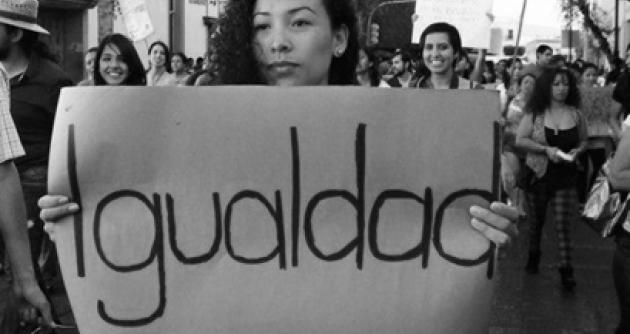
Estudiantes secundarios paralizaron las clases en las primeras horas de la jornada escolar de ayer con una sentata. Esto lo hicieron en el marco de la campaña “Camino al 7%” para exigir el aumento del presupuesto destinado a a la cartera educativa.

La medida fue impulsada por la Federación Nacional de Estudiantes Secundarios (Fenaes) y la Unión Nacional de Estudiantes del Paraguay (Unepy).

Las instituciones educativas de Asunción que se plegaron a la protesta fueron: Colegio Técnico Nacional (CTN), que inició la sentata en horas de la formación; mientras que los colegios como el Católico Politécnico Pa’i Lino, el Nacional de E.M.D. Ysaty, el Albarín Romero, Stella Maris, Pablo L. Ávila, Campo Alto y Nacional Juan Eudoro Cáceres, siguieron con la medida con una jornada deportiva que tuvieron en la Secretaría Nacional de Deportes (SND).

Por otro lado, otras comunidades educativas del interior también se sumaron a la huelga estudiantil.

La Unepy, en sus planteamientos sobre la campaña “Camino al 7%” exige que el presupuesto general de la nación destine G. 960.000 millones, que equivalen, según secundarios, a US$ 180 millones, aproximadamente, para el 2017. “El sistema educativo paraguayo está en malas condiciones, lo sabemos todos, incluso demuestran los resultados de múltiples estudios, que desde hace una década nos pone en los últimos lugares en términos de formación y conocimiento del estudiante”, reza el afiche de la campaña de Unepy.

Otra de las propuestas presentadas por los secundarios es que se refuerce el kit escolar con una inversión de G. 130 mil millones, para que se incluyan a la canasta escolar 5 libros para el 3º ciclo y otros 5 textos para el Nivel Medio. En cuanto a este planteamiento, el Ministerio de Educación (MEC) anunció que se tiene previsto como parte de útiles escolares incluir 14 textos o destinar un libro para cada materia.

Asimismo, el MEC manifestó a través de la viceministra de Educación, María del Carmen Giménez Sivulec, que no se busca frenar la movilización juvenil y que algunos de los pedidos ya se encuentran en pleno curso de ejecución.

Fuente: http://www.lanacion.com.py/2016/08/25/secundarios-piden-aumentar-la-inversion-destinada-educacion/

Comparte este contenido:
Page 5152 of 6186
1 5.150 5.151 5.152 5.153 5.154 6.186