Page 776 of 6193
1 774 775 776 777 778 6.193

Kirguistan: Teacher Training in the Time of Coronavirus: an Experience from Central Asia

Teacher Training in the Time of Coronavirus: an Experience from Central Asia

In the wake of the coronavirus pandemic, educators worldwide have been forced to actively adopt new remote learning formats. Amnesty International’s human rights education team for Europe and Central Asia, together with Amnesty Ukraine, conducted two three-day blended learning courses  for teachers from Kazakhstan and Kyrgyzstan. These courses replaced the face-to-face trainings in Bishkek, which had been planned before the pandemic. 

From offline to online without loss of quality or group dynamics

In the autumn of 2020, due to the crisis caused by the coronavirus pandemic, Amnesty International’s human rights education team was not able to conduct offline trainings in Kyrgyzstan and Kazakhstan. Therefore, the methodical materials for the programme on human rights and Write for Rights aimed at teachers of different disciplines had to be completely re-designed. We faced the challenge of moving the course into the format of a fully distance learning course, without losing quality, atmosphere and active participation.

As a result, the human rights awareness component and the information about the Write for Rights campaign were transformed into remote learning elements – an hour and a half long course «Introduction to Human Rights» was supplemented with a 15-minute course on «Write for Rights» on the Amnesty Academy platform. The trainings sessions devoted to learning the methodology of giving lessons on human rights and building a community of human rights educators were transformed into an interactive webinar, which consisted of three intensive sessions over three days, each lasting 3 hours.

As a result, instead of a planned one-day offline training, the online training took three days. Based on the experience of both holding and participating in many hours of online events, it was decided to do three three-hour intensive webinars, taking place on a Friday, Saturday and Sunday, rather than all on a single day. Regarding the workload, the difficulty of preparation lay in the fact that instead of a standard training program, it was necessary to develop a minute-by-minute script for webinars with the distribution of roles between co-hosts, an expert and a technical assistant.

Stasya Denisova, Human Rights Education Coordinator for Europe and Central Asia, explains, «It was important to us that this online course fulfilled the ambition we had originally for the offline course. We wanted to create a group of like-minded teachers who share the values of human rights and who would communicate with each other and us after finishing. We did not want our online course to turn into another online conference with hosts presenting slides all the time. Moreover, it should be an event as close as possible to the experience of a face-to-face training session, with the inherent group dynamics, interpersonal communication and most of all, active participation. That was why we paid attention to replacing the traditional elements of a workshop with adequate online tools. For example, the group’s routine evaluation exercises at the beginning and end of each day were replaced by «temperature measurements» using the MentiMeter online tool, which creates a real-time cloud of associations».

«We had previously been in contact with teachers through other messenger services so that if they were disconnected or delayed for some reason, everyone was aware of what was happening to the group. This provided a sense of care and continuous communication with the members and maintained the group’s integrity, » explains Aizhan Kadralieva, Human Rights Education Consultant in Central Asia.

An important task was to create a ‘blend’ between the Amnesty Academy’s distance courses and the webinar sessions. Kahoot interactive quizzes provided an opportunity for participants to test their knowledge gained in the online courses. Moderated discussions about human rights values allowed for reflection on the relevance of human rights to values such as freedom, equality and justice in each teacher’s context. Working in small groups and creating a shared vision was done through virtual breakout rooms in Zoom and synchronized work in the program Miro. Flipchart presentations became PowerPoint presentations using the «share your screen» feature. After the course, a mutual exchange of experience and methodological peer-to-peer support continued in a closed group in a user-friendly social network.

Unexpected benefits of online learning 

Instead of the expected few dozen applications from Bishkek or Almaty’s teachers, we received 67 applications from teachers from ten cities and districts across Kyrgyzstan and Kazakhstan. These teachers were from public and private schools, including the Academy of Education and the Republican Institute for The Excellence and Teacher Training at the Ministry of Education and Science of the Kyrgyz Republic. Due to the great interest and for better group work, we decided to divide the groups into two and ended up with not one, but two hybrid courses, one after the other.

For many teachers, these blended learning webinars were their first course on human rights, and indeed many noted that they had not previously been familiar with Amnesty International. «For me, reaching out to new audiences with basic information about human rights norms and values is very precious,» says Stasya Denisova. «One teacher said that she even ‘dared for the first time to sign an electronic petition to support a Saudi Arabian women’s rights activist’. That’s an important and positive shift in attitudes for us.»

We were especially pleased to read the reviews in which teachers said they had learned new techniques and tools and those praising the course program to be so engaging and interestingly designed that it almost did not feel like online work.

Anna Vitalyevna Tolstosova, an event manager, citizenship teacher and organizer of the debating society at the «Bilimkana Bishkek» school said, «I liked the methods used during the webinars. Given the circumstances – that it was an online event, I think we managed to do everything: we figured out ways to work using different programs and received important and necessary information.»

Irina Nikolaevna Yesina, history and citizenship teacher for years 9 – 11 at Novopokrovky middle school No.1, shared: «I especially want to mention the online course «Introduction to Human Rights» on the Amnesty Academy platform. The course is very compact, both theoretical and practical and well-designed too. I was impressed by the materials supplied, the electronic design and the use of electronic testing methods. Conveniently, it is possible to take it at any time, and sums up everything learned at the end of the course, and you automatically obtain a certificate.»

Another unexpected benefit of going entirely online was the possibility for teachers from very remote areas of Central Asia to fully participate in the course. Their experiences enriched group discussions about the relevance of human rights education in schools outside of big cities. Teachers from Southern parts of Kyrgyzstan said that lessons about women’s rights would be especially relevant for their high school pupils. Notorious «bride kidnapping», when very young girls are being abducted for forced marriages, is still widely spread in that part of the country. Another teacher gave an example – at one rural school, boys can have mobile phones starting from junior school. In contrast, girls are not allowed to have phones even in graduating classes. Aside from striking inequality, the teacher thought that schoolgirls were thus more vulnerable to bride kidnapping as without access to mobile phones they had no means of communication in case of abduction.

Added value of online that would be scarcely possible in a traditional format was the sharing the experience of Amnesty experts and teachers from Ukraine, Moldova, Kazakhstan and the Netherlands who have conducted sessions on Write for Rights in their schools and communities for many years. Many participating teachers noted that the stories and work done by fellow teachers from Ukraine and Moldova inspired them to scale up ideas to introduce human rights education in their schools.

In the end, all 67 teachers received a pack of methodical materials and engaged with the courses on the Amnesty Academy platform. More than 35 took part in one or more blended learning course elements, and 29 teachers completed the blended learning course with a certificate of completion. These teachers developed and presented their human rights and Write for Rights lesson plan.

Overall, 95% of all teachers reported improvements in their ability to teach human rights in the classroom, particularly the right to peaceful protest and the inadmissibility of discrimination against women. 92.5% of all who passed the course confirmed that they will be able to apply this knowledge and skills in their classrooms to support Amnesty International’s Write for Rights campaign and have joined our Facebook group «Human Rights Educators».

As a result, in November-December 2020, 2084 pupils participated in a Write for Rights lesson and wrote a letter or posted a message on social media in support of human rights defenders in Saudi Arabia and Chile.

Burul Uvaidullana Kozubayeva, a teacher trainer for the subjects of citizenship and history, praised the translation of Write for Rights HRE materials into Kyrgyz and added, «In the future to expand Amnesty blended learning course, I propose to include Kyrgyz-speaking schools and teachers.

Irina Maslova, a history teacher and citizenship teacher at Kara-Balta Middle School – Gymnasium No. 6, shared that: «The lessons about the featured individuals who need help in the Write for Rights campaign are wonderfully thought out. The website is just great, and its educational materials are too. You can download and use informative cards, worksheets and exercises. It seemed to me that this is exactly what is needed to present to high school students. I’ve already drawn up a plan of 4 lessons for my 9th-grade citizenship class.» 

We continue to work with teachers and receive inspiring results and feedback both from teachers and students. Letters that students write in support of Write for Rights heroes are very moving and stunning drawings will lift the spirit of those who suffer from human rights abuses. We are very grateful for the courage and strength of the teachers who took part in this intensive course despite the disruption caused by the pandemic.

Traditionally, blended learning is defined as a pedagogical method that combines face-to-face learning with online instruction. For example, it can be the use of a combination of online courses, where students can gain the necessary knowledge and face-to-face classes that can be devoted to acquiring new skills. It requires both the coach and the learner’s physical presence, with some control over the time, place, course of study or pace. Blended learning has proven to be a successful approach to improving understanding, interaction and inclusion in education.

Fuente de la Información: https://www.amnesty.org/en/latest/campaigns/2021/01/teacher-training-in-the-time-of-coronavirus/


Comparte este contenido:

Australia: Unplaced Western Cape pupils caught in middle of MEC and activists spat

Unplaced Western Cape pupils caught in middle of MEC and activists spat

Cape Town – Equal Education (EE) and Equal Education Law Centre (EELC) dismissed claims by the Education MEC Debbie Schäfer that they were unwilling to help resolve the school admissions crisis.

The groups said Schäfer must fulfil her responsibility to develop long-term solutions to the yearly admissions crisis instead of making false claims about them.

In a statement, the groups said last week, Schäfer claimed that EE had not provided the Western Cape Education Department (WCED) with “any verifiable data” on the number of pupils in the province who had not yet been enrolled at schools.

“This is most unfortunate as we (the WCED) had hoped to have assistance in this regard,” she said.

EE and the EELC said they wanted to put it on record that Schäfer’s comments were false.

«At the start of every year, there are thousands of learners who are unplaced at schools in the Western Cape, and in anticipation of this we wrote to Schäfer on October 23, 2020, to raise our concerns and to ask about the WCED’s plans for the placement of learners for 2021.»

They said their two organisations stressed the need for the WCED to develop well-thought through, clear plans to address the yearly crisis, and that Schäfer’s response to their letter was dismissive and did not provide a plan.

Schäfer said the list provided by the EELC contained no ID numbers or Centralised Educational Management Information System (Cemis) numbers, and in one instance, not even the surname was provided.

She said no phone numbers were provided for the parents of 10 of the pupils, preventing the department from accessing the required information to place pupils.

«There are further concerns – a 30-year-old ‘learner’ appears on the list, for whom the parents allegedly applied to a primary school. A 6-year-old is listed as needing a place in Grade 5. One child is 4 years old – not even of school-going age,» said Schäfer.

She said most tellingly, for 28 learners, the parents stated that they never applied for a school, and for a further 14 pupils, they did not respond to the question as to whether and where they had applied

«It is not clear how a learner can be unplaced if they have not even applied for a place in a school. Yet EELC claims they are unplaced,» she said.

Fuente de la Información: https://www.iol.co.za/capeargus/news/unplaced-western-cape-pupils-caught-in-middle-of-mec-and-activists-spat-54536963-e1f2-48f3-b4cd-962e7923fff1

Comparte este contenido:

Nigeria Gunmen Abduct Dozens of Students in College Raid

Nigeria Gunmen Abduct Dozens of Students in College Raid

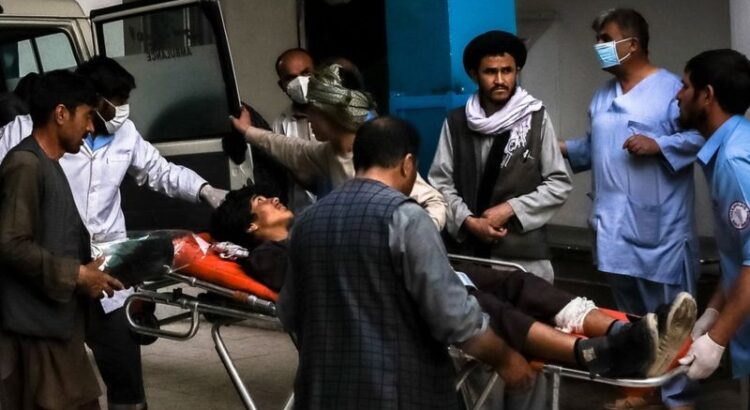
KANO, NIGERIA – Gunmen raided a college in northwestern Nigeria and kidnapped 39 students, government officials and parents said Friday, in the latest mass abduction targeting a school.

The abductors stormed the Federal College of Forestry Mechanization in Mando, Kaduna state, around 9:30 p.m. (2030 GMT) Thursday, shooting indiscriminately before taking students.

The Kaduna college was said to have some 300 male and female students, mostly aged 17 and older, at the time of the attack.

Map of Mando, in Kaduna state, Nigeria

Kaduna state commissioner for internal security Samuel Aruwan said 39 of the students were missing while the army was able to rescue 180 people after a battle with the gunmen.

«Further checks in the wake of the attack by armed bandits … indicate that 39 students are currently unaccounted for,» including 23 females and 16 males, Aruwan said in a statement late Friday.

He had initially said 30 students were unaccounted for.

Aruwan said the state government «is maintaining close communication with the management of the college as efforts are sustained by security agencies toward the tracking of the missing students.»

The commissioner said some of the rescued students were injured during the operation and were being treated at a military hospital.

Appeal to the government

Police and military personnel stood guard around the college at the outskirts of Kaduna city on Friday afternoon as anxious parents and families waited for news. A fighter jet flew overhead.

People are seen at the broken perimeter fence through which gunmen gained access the male and female hostels at the Federal…

Government officials said the students were found to be missing after a headcount at the college, and parents said they had been taken by the gunmen.

«We have confirmed from her colleagues our daughter Sera is with the abductors,» Helen Sunday told reporters, tears rolling down her face. «I appeal to the government to help rescue our children.»

«It is unacceptable for parents to send their children to school only to be kidnapped by criminal elements,» said Denis John, who said his brother was among those taken.

Heavily armed gangs in northwest and central Nigeria have stepped up attacks in recent years, kidnapping for ransom, raping and pillaging.

The bandits have recently turned their focus to schools where they kidnap students or schoolchildren for ransom. Thursday’s attack was at least the fourth since December.

Mass kidnappings in the northwest are complicating security challenges facing President Muhammadu Buhari’s forces who are also battling a more than decade-long Islamist insurgency in the northeast.

Late night gunfire

Residents near the Kaduna college also heard repeated gunshots in the area late Thursday.

«We kept hearing gunshots that we ignored as shooting drills from the Nigeria Defense Academy, which is a stone’s throw from the forestry college,» said Mustapha Aliyu, who lives in the area.

«It was only when we came out for the morning prayers in the mosque that we learned it was gunmen who took away students from the college,» he said.

The area is notorious for banditry and armed robbery, especially along the highway linking the city with the airport.

The gangs are largely driven by financial motives and have no known ideological leanings. Victims are often released shortly after negotiations though officials always deny any ransom payments.

Last Saturday, criminal gangs known locally as bandits broke into the staff quarters of the nearby Kaduna airport, abducting 12 people, according to airport officials.

On February 27, gunmen abducted 279 schoolgirls in nearby Zamfara state.

And a week earlier, gunmen seized 42 people, including 27 students from an all-boys boarding school in central Niger state.

In December, hundreds of schoolboys were seized in Katsina, Buhari’s home state, while he was on a visit.

The U.S. has condemned the recent attacks on schools.

«Frankly, we’re disgusted by this pattern of mass abductions of school kids. I can think of nothing more abhorrent,» said Michael Gonzales, deputy assistant secretary at the U.S. State Department’s Bureau of African Affairs, at a press briefing.

He said the U.S. «is ready to provide appropriate support to the Nigerian government if requested to do so.»

Fuente de la Información: https://www.voanews.com/africa/nigeria-gunmen-abduct-dozens-students-college-raid

Comparte este contenido:

México: Cuatro años del feminicidio de Lesvy en la UNAM

Por: Erika Lozano

“En el cuarto año de la siembra de Lesvy decidimos regresar al Jardín de la Memoria para acompañar sus últimos pasos en este plano y reafirmar que la memoria colectiva es vínculo social”, señaló el Grupo de Acompañamiento Político a la Familia de Lesvy en un comunicado. A cuatro años de su feminicidio, la familia de Lesvy convoca a una velada este 2 de mayo para recordarla y seguir exigiendo justicia.


Con este acto, dicen, también “acompañarán la memoria” de Aidée, joven estudiante asesinada dentro de las instalaciones del Colegio de Ciencias y Humanidades (CCH) Oriente el 30 de abril de 2019. “Frente a su indiferencia, nuestra alegre rebeldía, frente a la impunidad, la justicia feminista que se construye nombrando a las que hoy no están en este plano pero que acompañan cada uno de los pasos que hemos dado por ellas, por todas”, señaló el Grupo.

El 3 de mayo de 2017, Lesvy fue asesinada junto a una caseta telefónica en la UNAM, en el jardín conocido como Camino Verde del Instituto de Ingeniería, un lugar que su familia y las colectivas que la acompañan, resignificaron en un “Jardín de la Memoria”. En octubre de 2019 se llevó a juicio a quien fuera su ex-novio, Jorge Luis González, y, aunque fue declarado culpable, la sentencia aún sigue pendiente.

La madre de Lesvy, Araceli Osorio Martínez, se convirtió en defensora de los derechos de las mujeres, y a raíz del feminicidio de su hija, se ha orientado desde hace ya más de 3 años a visibilizar y exigir justicia en casos de violencia de género contra niñas y mujeres. Junto a otras mujeres, sigue exigiendo justicia para todas las víctimas de feminicidio del país.

Fuente e imagen:  desinformemonos
Comparte este contenido:

Coronavirus: el presidente puso en funciones la Mesa de Salud en Argentinay Educación

El presidente Alberto Fernández puso en funciones la mesa de Salud y Educación nacional, que estará integrada por especialistas del área pediátrica y pedagógica y será el espacio que analizará los indicadores sanitarios de cada jurisdicción ante la pandemia de Covid-19.

“Nuestra mayor preocupación es que vuelvan a clases presenciales lo antes posible, y para eso hay que contener la suba exponencial de contagios”, dijo el mandatario acompañado el ministro de Educación, Nicolás Trotta, y la ministra de Salud, Carla Vizzotti. Y añadió: “Estamos haciendo un enorme esfuerzo para tener la mayor presencialidad posible”,  al momento que señaló que  «las aulas no son el problema, el problema es la circulación”.

El mandatario nacional recordó que “de las 24 jurisdicciones, 20 tienen clases presenciales”, y remarcó que lo “que pasa en el Área Metropolitana de Buenos Aires no es igual al resto del país”.

Del encuentro participaron el presidente de la Sociedad Argentina de Pediatría, Omar Tabacco; la jefa de Epidemiología del Hospital de Niños Ricardo Gutiérrez, Ángela Spagnuolo de Gentile; la jefa del Servicio de Control Epidemiológico e Infectología del hospital pediátrico Juan P. Garrahan, María Rosa Bologna; la embajadora especial de la OMS /OPS para América Latina y el Caribe, Mirta Roses, y la representante de Unicef en la Argentina, Luisa Brumana.

Los y las especialistas se pusieron a disposición para el trabajo conjunto. “Siempre pueden contar con nuestra contribución para pasar esta situación excepcional”, expresaron. Luego de evaluar diferentes escenarios internacionales,  afirmaron que en Alemania hubo que tomar “medidas estrictas, cortas y específicas” para contar con la mayor efectividad posible. Por ejemplo, abordaron lo ocurrido en Israel que para disminuir la circulación del virus aplicó una cuarentena estricta de un mes y medio, que incluyó el cierre de escuelas.

La instancia, que quedó constituida en una reunión encabezada este mediodía por el Presidente en la Casa Rosada, apunta a que se realice un trabajo conjunto entre las Mesas de Salud y Educación para poder volver a las clases presenciales en todo el país en el corto plazo.

También, asistieron las secretarias de Evaluación e Información Educativa, Gabriela Diker; y de Acceso a la Salud, Sandra Tirado; la secretaria general del Consejo Federal de Educación, Marisa Díaz, y la directora de salud perinatal y niñez del Ministerio de Salud, Gabriela Bauer.

Fuente: https://redaccionrosario.com/2021/04/30/coronavirus-el-presidente-puso-en-funciones-la-mesa-de-salud-y-educacion/

Comparte este contenido:

“Con la perspectiva de los pueblos originarios, la historia es otra”: Patricia Cerda, autora de ‘Bajo la Cruz del Sur’

Entrevista. Hablamos con la escritora e historiadora chilena a propósito de su nuevo libro, donde nos cuenta el otro lado de uno de los viajes más famosos de la historia universal.

Navegar siguiendo las estrellas parece ser una encomienda titánica para una generación que no se plantearía atravesar el globo en barco pudiendo viajar en aviones. De allí surge parte de la magia de Bajo la Cruz del Sur, un libro que nos lleva a bordo del viaje que cambió la manera en que la humanidad comprendía el mundo y su cartografía, gracias la travesía liderada por Hernando de Magallanes, que arrancó un 20 de septiembre de 1519.

Esto fue lo que nos contó, a propósito de su nuevo libro.

Han pasado poco más de 500 años desde que se realizó este viaje, y gracias al libro sabemos que no todo fue como se contó en los libros de historia, ¿qué documentos y testimonios le permitieron acercarse a ese lado ‘B’ del relato?

Mi fuente principal de información fue la crónica de Antonio Pigafetta, que era uno de los pocos aliados de Magallanes. La primera versión de su crónica, la que él entregó a Carlos V, se perdió. Hay una intriga allí que yo cuento en la novela. Pero el italiano escribió otras versiones que se conservaron. García Márquez dijo en su discurso del Nobel que Pigafetta fue nada menos que el fundador del realismo mágico. Otra razón para abordar su crónica 500 años después. También obtuve información del libro “El descubrimiento del Océano Pacífico” del historiador chileno José Toribio Medina. Allí se incluyen relatos de algunos de los sobrevivientes del viaje. La información sobre las tres mujeres rehenes que viajaron con la armada durante seis meses la encontré allí.

¿Qué momentos de la historia, a medida que redactaba el texto, aprovechó para sacudirle la visión eurocentrista a este libro?

Intenté abordar en profundidad cada contacto de la armada con los pueblos originarios en Brasil, Patagonia, Filipinas y las islas Molucas, algo que la visión eurocéntrica no hace. En Bajo la Cruz del Sur ellos están siempre presentes con toda su dignidad humana. Me interesaron los malos entendidos y la subestimación de los nativos por parte de los europeos. Fue la razón porque Magallanes no pudo terminar su viaje. Murió en una isla de las Filipinas en una batalla que él daba por ganada de antemano el 27 de abril de 1521. El vencedor de esa batalla, Lapu Lapu, es hoy un héroe en las Filipinas. Cuando se incluye la perspectiva de los pueblos originarios, la historia es otra.

Me interesaron los malos entendidos y la subestimación de los nativos por parte de los europeos. Fue la razón porque Magallanes no pudo terminar su viaje

-Patricia Cerda, sobre La Cruz del Sur

Al terminar de escribir, ¿cómo cambió la idea que tenía de Hernando de Magallanes?

La idea que tenía de Magallanes me la formé leyendo la biografía de Stefan Zweig. Fue el primer libro que consulté cuando decidí escribir Bajo la Cruz del Sur. Eso fue durante una estadía de un mes en Punta Arenas, frente al estrecho que él descubrió. Pero en el proceso de escribir la novela fue apareciendo otro Magallanes, más contradictorio que el de Zweig. Era un hombre con una tremenda fuerza interior, ambicioso e implacable cuando se trataba de castigar motines o pecados contra natura. Era la cabeza y el corazón de la expedición. Eso explica la desorientación que se apoderó de la armada después de su muerte. Que Sebastián Elcano terminara el viaje es, para mí, un hecho notable, pero aleatorio.

Como historiadora, ¿Cómo combinó los datos exactos mientras se permitía al mismo tiempo una narración literaria, donde necesariamente debía imaginar diálogos y llenar “vacíos” que no están en los libros de historia?

Disfruté imaginando las escenas, los diálogos y poniéndome en el lugar de los personajes. Mi formación de historiadora me ayudó a hacerlo con soltura. Me subí a la nao capitana y viajé con ellos, pero manteniendo la distancia. La narradora de Bajo la Cruz del Sur no hace concesiones. Desenmascara, nombra las cosas por su nombre y nunca pierde de vista las preguntas centrales de la existencia que surgen en ese espacio profundo en que no hay diferencias entre los seres humanos.

Luego de este libro, ¿qué otros momentos históricos le gustaría narrar?

Me interesa todo lo relacionado con la memoria cultural latinoamericana y el papel que ha tenido la mujer en ella. Bajo la Cruz del Sur es mi quinta novela. Otra novela mía, Violeta & Nicanor, que también fue publicada por Editorial Planeta en Colombia, trata la relación entrañable entre los hermanos Violeta y Nicanor Parra y su gran aporte a nuestra cultura. Y ahora estoy metida en una novela ambientada en el siglo XVIII, cuando estaba surgiendo el brote de la libertad. Pienso que hay muchos temas latentes esperando a sus escritores.

Fuente: https://www.publimetro.co/co/cultura/2021/04/29/con-la-perspectiva-de-los-pueblos-originarios-la-historia-es-otra-patricia-cerda-autora-de-bajo-la-cruz-del-sur.html
Comparte este contenido:

Defender a los defensores ambientales | Campaña de Canadá para América Latina

Amnistía Internacional (AI) Canadá lanza una campaña esta semana en defensa y en solidaridad de los defensores del medio ambiente de América Latina.

El brazo canadiense de este organismo mundial de defensa de los derechos humanos invita a los ciudadanos de Canadá a apoyar esta campaña, que se basan en las «legítimas demandas de los propios defensores», según AI.

Quizá la mayor prioridad transfronteriza a la que nos enfrentamos todos es la protección del medio ambiente, del que dependen nuestros derechos humanos y nuestro futuro común. 

Los defensores del medio ambiente en América Latina arriesgan sus propias vidas para responder a este desafío con esperanza y enorme valor.

De hecho, América Latina es la región más peligrosa del mundo para defender los derechos humanos y el medio ambiente.Amnistía Internacional Canadá

Para esta entidad, los defensores indígenas, negros y campesinos son los que más riesgo corren, especialmente cuando se enfrentan a personas que pretenden querer controlar sus tierras para explotar su potencial económico o los recursos naturales que allí se encuentran, sin importar el coste, explica AI Canadá. Entre los activistas ambientales en riesgo, las mujeres lo son aún más.

Las mujeres defensoras del medio ambiente corren el riesgo añadido de sufrir violencia sexual contra ellas o sus hijos, ya que sus esfuerzos francos desafían los roles tradicionales de género, así como los intereses económicos.Amnistía Internacional Canadá

Afiche de Amnistía Internacional Canada para Jani Silva, activista colombiana, presidenta de la Asociación para el Desarrollo Integral y Sostenible de la Perla Amazónica, ADISPA. Jani ha sufrido amenazas de muerte y acosos durante varios años.

Jani, Danelly, Joel y María

La campaña de Amnistía Internacional ha enfocado su campaña principalmente en los casos de los activistas colombianos Jani Silva, Danelly Estupiñan, Joel Rodríguez y María Ciro que,  según las evaluaciones e informes que el organismo ha presentado en meses recientes, se juegan la vida para responder al reto medioambiental con «esperanza y enorme valor».

Colombia es el segundo país con mayor biodiversidad del mundo, con ecosistemas únicos que incluyen vastas extensiones de selva amazónica, el pulmón del mundo. Colombia es también el país más peligroso para las personas que defienden la tierra y el medio ambiente, que son vitales para los pueblos indígenas, las comunidades afrodescendientes y todos nosotros. 

Sólo en el último año han sido asesinados cientos de defensores, y casi a diario se registran nuevos asesinatos. Otros, como Jani, Danelly, Joel y María, están amenazados de muerte si siguen alzando la voz. Sin embargo, se niegan a callar.Amnistía Internacional Canadá

En un país con enormes desigualdades y el legado perdurable de la colonización y la esclavitud, los líderes indígenas, negros y campesinos rurales corren un riesgo especial, sobre todo cuando la defensa de su derecho a un medio ambiente sano les pone en contacto con personas poderosas que pretenden explotar su potencial económico o los recursos naturales que allí se encuentran, sostiene Amnistía.

Por otro lado, las mujeres defensoras del medio ambiente corren el riesgo añadido de sufrir violencia sexual contra ellas o sus hijos, ya que sus esfuerzos francos desafían los roles tradicionales de género, así como los intereses económicos.Amnistía Internacional Canadá

Mujeres y defensoras, una combinación difícil

Las dificultades y riesgos a las que se enfrentan las mujeres cuando deciden defender causas en América Latina están bien documentadas. El organismo canadiense CoDev Canadá ha hecho un seguimiento sobre este tema por algún tiempo.

Recientemente, este grupo civil presentó en su sitio internet una conversación con Berenice Celeita, defensora de derechos humanos en el Suroeste de Colombia. En la entrevista la activista es firme sobre las situaciones particularmente complejas a las que se enfrentan las mujeres defensoras.

La defensa de los derechos humanos en Colombia ya es un trabajo difícil. Además, ser una mujer que defiende los derechos humanos tiene consecuencias porque venimos de una sociedad muy «machista». Hemos estado acostumbradas a que los hombres tomen las decisiones durante décadas y desempeñen funciones de dirección y coordinación, a pesar de los debates [sobre género] que hemos tenido en las últimas décadas. 

En la Asociación para la Investigación y la Acción Social (NOMADESC) hemos aprendido la perspectiva de género a través de la lucha y la defensa de los pueblos. Hemos sido cuidadosos en respetar las cosmologías locales, entendiendo lo importante que es encontrar el equilibrio y la armonía en la vida cotidiana en las reservas indígenas, las comunidades negras y los sindicatos.

La mayoría de las decisiones son tomadas por hombres, incluso en organizaciones que se precian de ser alternativas, progresistas y defensoras de los derechos humanos.

En mi caso, creo que tengo una personalidad fuerte. Soy muy creativa. […] Ha sido difícil con los representantes del Estado porque la mayoría de los ministros, gobernadores y alcaldes son hombres y siempre tratan de disminuirme. Ha sido difícil entre nosotras lidiar con el liderazgo de los hombres, pero ha sido aún más difícil cuando se debate con quienes tienen ideas opuestas.

Esto te anima a ser más fuerte, a construir a tu alrededor un colchón de protección y alianzas.Berenice Celeita

Los defensores y defensoras de Colombia han enviado un SOS al mundo con el hashtag #NosEstanMatando y #VocesEnRiesgo

Según Amnistía Internacional, las expresiones de preocupación y los llamamientos al cambio desde Canadá pueden desempeñar un papel importante, especialmente teniendo en cuenta los estrechos lazos de comercio, inversión y cooperación entre Canadá y Colombia.

El 1o de abril pasado el organismo mundial entregó algunos de los más de 16.500 mensajes de Canadá a la Embajada de Colombia, instando a la Unidad Nacional de Protección, al Ministerio del Interior de Colombia y al Ministro Daniel Palacios y al Presidente de Colombia Iván Duque a que aseguren protección de la defensora ambiental amenazada Jani Silva y su organización ADISPA.

El tuit también etiquetaba a la ministra de Desarrollo Internacional de Canadá, Karina Gould, el ministerio de Relaciones Exteriores, así como la embajada de Canadá en Colombia y el embajador canadiense en Colombia (@marcel_lebleu).

Paloma Martínez, para RCI, con informaciones de Aministía Internacional Canadá y CoDesarrollo Canadá (CoDev Canada).
Fuente: https://www.rcinet.ca/es/2021/05/01/defender-a-los-defensores-ambientales-campana-de-canada-para-america-latina/
Comparte este contenido:
Page 776 of 6193
1 774 775 776 777 778 6.193