Page 675 of 1673
1 673 674 675 676 677 1.673

EEUU: Trump ‘to scrap’ college racial bias policy

By: bbc.com/04-07-2018

The Trump administration is set to roll back the Obama-era policies promoting diversity in universities, known as affirmative action, US media report.

US Attorney General Jeff Sessions revoked 24 guidance documents on Tuesday, many involving race in schools and affirmative action recommendations.

It comes as Harvard University faces a discrimination lawsuit alleging it limits admissions for Asian-Americans.

In 2016, the US Supreme Court had ruled in favour of affirmative action.

Supreme Court Justice Anthony Kennedy, who wrote the 2016 opinion, announced his retirement from the top US court last month.

His departure gives President Donald Trump a chance to appoint a justice who more closely matches the administration’s views on taking race into account in college admissions.

The Trump administration is expected to tell schools not to consider race in the admissions process, discontinuing the policy former President Barack Obama adopted to promote more diversity at colleges and high schools.

What does rescinding the policy mean?

Academic affirmative action – known as positive action in the UK- which involves favouring minorities during the admissions process in order to promote campus diversity, has long proved controversial in the US.

The lawsuit against Harvard currently filed by the Students for Fair Admissions alleges that the college holds Asian-American applicants to an unfairly high admissions standard.

The Justice Department is also currently investigating Harvard over racial discrimination allegations.

In April, it called for the public disclosure of the Ivy League college’s admissions practices.

Harvard argues it «does not discriminate against applicants from any group, including Asian-Americans».

Asian-Americans currently make up 22.2% of students admitted to Harvard,according to the university website.
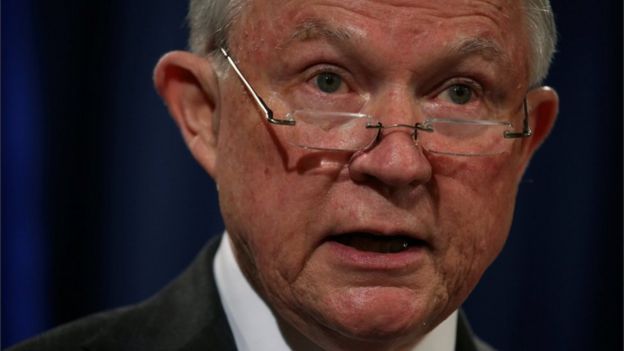
Jeff Sessions
Image copyrightREUTERS
Image captionThe US attorney general revoked several affirmative action guidances

Under President Barack Obama, the Departments of Justice and Education issued guidelines for universities to promote diversity on campuses.

«Learning environments comprised of students from diverse backgrounds provide an enhanced educational experience for individual students,» the guidance reads.

«By choosing to create this kind of rich academic environment, educational institutions help students sharpen their critical thinking and analytical skills.»

The guidance features ways to encourage diversity, including granting admission preferences to students from certain schools based on demographics and considering a student’s race «among other factors in its admissions procedures».

The Obama-era policy replaced the Bush-era view that discouraged affirmative action.

The Bush-era guidance had been removed from the government website during the Obama administration, but it has since reappeared.

Education Secretary Betsy DeVos told the Associated Press she would not debate or discuss the matter of race and college admissions.

«I think this has been a question before the courts and the courts have opined,» Ms DeVos said.

But according to a Pew Research Center study, 71% of Americans surveyed in October 2017 have a positive view of affirmative action.
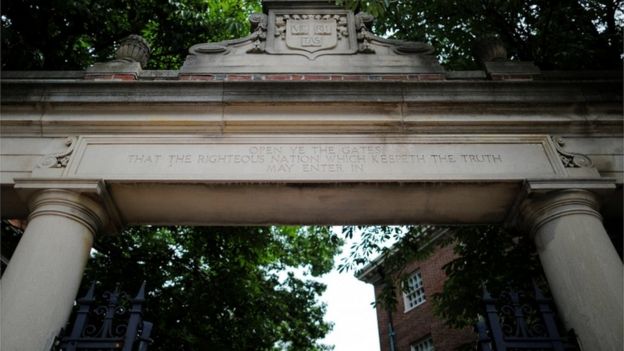
Gate at Harvard UniversityImage copyrightREUTERS
Image captionHarvard University has one of the lowest admissions rates, accepting less than 6% of applicants

What is affirmative action in US colleges?

Affirmative action, or the idea that disadvantaged groups should receive preferential treatment, first appeared in President John F Kennedy’s 1961 executive order on federal contractor hiring.

It took shape during the height of the civil rights movement, when President Lyndon Johnson signed a similar executive order in 1965 requiring government contractors to take steps to hire more minorities.

Colleges and universities began using those same guidelines in their admissions process, but affirmative action soon prompted intense debate in the decades following, with several cases appearing before the US Supreme Court.

The high court has outlawed using racial quotas, but has allowed colleges and universities to continue considering race in admitting students.

Critics rail against it as «reverse discrimination», but proponents contend it is necessary to ensure diversity in education and employment.

*Fuente: https://www.bbc.com/news/world-us-canada-44703874
Comparte este contenido:

México: AMLO y sus propuestas en materia educativa

América del Norte/México/03.07.18./Fuente: www.educacionfutura.org.

El virtual presidente electo, Andrés Manuel López Obrador ha insistido durante toda su campaña que, de llegar a la presidencia, realizaría cambios importantes en materia educativa.

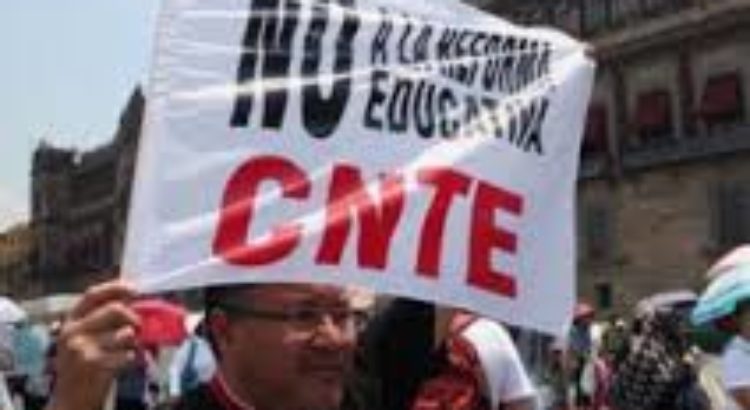
Entre estos cambios, destacan la cancelación de la reforma educativa, respeto a los derechos del magisterio, ampliación de los programas de becas y una mayor cobertura educativa.

Adicionalmente, habría anunciado al presidente de Fundación Azteca, Esteban Moctezuma, como el siguiente titular de la Secretaría de Educación Pública.

Ante ello, el pasado 12 de mayo, en Guelatao, Oaxaca, Obrador dio a conocer un decálogo educativo ante miembros del magisterio, donde se comprometió a atender los siguientes puntos:

  1. Fortalecer la educación pública, gratuita y de calidad en todos los niveles escolares, bajo la premisa de que la educación no es un privilegio, es un derecho del pueblo.
  2. Habrá alimentación en todas las escuelas de educación básica de las zonas pobres y marginadas del país.
  3. Todos los estudiantes de preparatoria o nivel medio superior, obtendrán una beca mensual para evitar la deserción escolar.
  4. Los estudiantes de familias de escasos recursos que estudien en universidades y escuelas medio superior obtendrán una beca de 2 mil 400 pesos mensuales. No habrá rechazados. 100 por ciento de inscripción a todos los jóvenes de universidades.
  5. Será prioritario fortalecer a las escuelas normales y a la Universidad Pedagógica Nacional para actualizar métodos de enseñanza y aprendizaje y mejorar la calidad de la educación.
  6. Se cancelará la mal llamada reforma educativa. Haremos uso de las facultades del Ejecutivo para detener como aquí de ha planeado las afectaciones laborales y administrativas al magisterio nacional. Habrá justicia para todos los afectados por la imposición de la mal llamada reforma educativa. Habrá justicia para cesados injustamente, para presos políticos y víctimas de la violencia.  Enviar desde el inicio del gobierno, las iniciativas de reformas a las leyes que vulneran la dignidad y los derechos de los maestros de México.
  7. Elaborar conjuntamente con los maestros, padres de familia, con pedagogos, especialistas, un plan educativo que mejore de verdad, en realidad, la calidad de la enseñanza sin afectar los derechos laborales del magisterio. Nunca más una reforma educativa sin el magisterio.
  8. Se respetará la independencia y autonomía de los trabajadores de la educación en México. El gobierno no intervendrá en la vida interna de sus organizaciones para garantizar una plena democracia sindical.
  9. Las propuestas alternativas de educación que cada entidad ha impulsado, que cada entidad federativa ha impulsado, como el Plan para la Transformación del Estado de Oaxaca (PTEO), y en especial se apoyará la educación indígena respetando y preservando las lenguas, las tradiciones, costumbres, el medio ambiente y la organización social comunitario.
  10. Se suspenderán las cuotas que pagan los padres de familia para el mantenimiento de las escuelas, y el gobierno destinará de manera directa recursos con estos propósitos a los consejos escolares de participación social. No hay presupuesto para el mantenimiento de las escuelas. Por eso se cobran cuotas. Ya no se van a cobrar las cuotas a padres de familia para el mantenimiento de las escuelas.

Fuente de la noticia: http://www.educacionfutura.org/amlo-y-sus-propuestas-en-materia-de-educacion/

Comparte este contenido:

Acuerdo o plan: el magisterio de nuevo

Por Carlos Ornelas

Sólo algún error catastrófico, dicen quienes comentan las encuestas, puede impedir que Andrés Manuel López Obrador pierda las elecciones del 1 de julio. Ése tendría que ser de él, sus contrincantes no le encuentran el flanco débil. Las coaliciones adversarias apuestan a que el gran porcentaje de voto indeciso sea antiAMLO y voten por su candidato. Wishful thinking, apuntan los que saben inglés

Los vaticinios, pienso, son correctos, aunque tal vez la ventaja de AMLO no sea tan amplia. Hoy, es casi seguro que él será el próximo presidente de México. Por lo tanto, hay que tomarse en serio sus declaraciones, así como las de las personas que designó para ejercer en su gabinete. Aunque, supongo, los planteamientos más serenos —los que no buscan el voto— vendrán después de las elecciones. Por lo pronto, tanto AMLO como Esteban Moctezuma Barragán —futuro secretario de Educación Pública, si se cumplen los pronósticos— persiguen el sufragio de los maestros. AMLO, con una defensa cerrada de la CNTE y del magisterio en general con un grito de guerra; EMB, con mensajes edificantes, pero sin obviar la crítica a la Reforma Educativa.

En su cierre de campaña en Oaxaca, territorio de la CNTE, en su discurso, AMLO reiteró que cancelará la “mal llamada Reforma Educativa”. También, como en sus tres decálogos sobre educación, se comprometió a poner en marcha un verdadero plan —ya no una auténtica reforma— para mejorar la calidad de la enseñanza sin afectar los derechos de los trabajadores de la educación. Pero ya abajo del templete, según el reportaje de Ernesto Núñez, el candidato de Morena señaló: “Lo voy a decir, con todo respeto, con toda mi buena fe, y sin ofenderlos, pero el periódico Reforma, desde que empezó la imposición de la llamada Reforma Educativa, se convirtió en un medio hostil a los maestros y, en más de una ocasión, han calumniado a los maestros” (17/05/2018).

Cierto, algunos encabezados de Reforma pintan mal a los maestros que hacen paros, toman carreteras y casetas de peaje, incendian edificios públicos, bloquean y saquean comercios y camiones de carga, pero en sus reportajes los deslindan del resto del magisterio. Aunque AMLO lo haya dicho con todo respeto, el tono levanta temores entre editores, reporteros y articulistas. Espero —y de veras hago votos por ello— que sean palabras de campaña y no presagio de una línea de censura a la libertad de expresión.

En su artículo del 15 de junio en El Universal, EMB usó una inflexión distinta, una epístola de aliento a los maestros, aunque pone a todos en el mismo saco, no hace diferencias entre los maestros cumplidos y los que escogen la violencia para expresar sus demandas. La oferta que hace Esteban Moctezuma es pareja.

En su parte medular, EMB asienta: […] lo primero que se tiene que hacer en el próximo gobierno es revalorar a las maestras y a los maestros de México… Empoderarlos como lo que son: la columna vertebral del sistema educativo”. Luego lamenta la caída en la matrícula de las escuelas normales y que se haya acelerado la jubilación. Al final, reitera, “la primera tarea del próximo gobierno en materia educativa es entusiasmar al magisterio, es empoderarlo como una profesión respetable y respetada”.

La tesis de EMB es que el nuevo plan educativo debe hacerse en consulta y con un “acuerdo” entre gobierno y maestros. EMB era subsecretario de Planeación y Coordinación de la SEP en 1992, fue el encargado de las negociaciones con la dirigencia del Sindicato Nacional de Trabajadores de la Educación para llegar al Acuerdo para la Modernización de la Educación Básica. Tiene experiencia y sabe que el SNTE —cualquiera de sus facciones— no cede en nada sin obtener ganancias concretas, legítimas o no.

Sospecho —aunque de corazón espero equivocarme— que cuando AMLO y EMB hablan de acuerdo, pactos o consultas con los maestros, piensan en los jefes de las facciones de un sindicato corporativo; incluso, AMLO habla de unificación de los liderazgos y se comprometió con el grupo de la señora Gordillo a restablecer la carrera sindical. En otras palabras, regresarles privilegios que este gobierno clausuró.

No sé cuál vaya a ser al final la política educativa del eventual gobierno de AMLO. Muchas de sus propuestas programáticas son ambiguas —hasta habla de voucherso bonos educativos—, pero estoy convencido de que, si regresa prerrogativas a las camarillas que controlan la vida del sindicato, él no gobernará en la educación.

Fuente del artículo: https://www.excelsior.com.mx/opinion/carlos-ornelas/acuerdo-o-plan-el-magisterio-de-nuevo/1246700

Comparte este contenido:

México: Que la educación incluya la problemática nacional

América del Norte/México/Por Armando Cobián Lafont/03.07.18/Fuente: www.noticiasdelsoldelalaguna.com.mx.

Torreón, Coahuila.- El diputado federal por Coahuila, José Refugio Sandoval Rodríguez presentó un punto de acuerdo en donde solicita que la Secretaría de Educación Pública incluya dentro de sus planes de estudio una asignatura que trate la problemática nacional y lo que se refiere al Plan Nacional de Desarrollo, lo que sin duda redundará en los niños y jóvenes a tener una mayor conciencia de lo que ocurre en el país y sus posibles soluciones.

Sandoval Rodríguez, presentó ante el pleno de la Comisión Permanente una iniciativa que tiene por objeto que la Secretaría de Educación Pública desarrolle programas de estudio prioritarios de conformidad con el Plan Nacional de Desarrollo.

El legislador federal explicó que “es necesario que la educación en México se enfoque en dar a conocer los problemas actuales y sus probables soluciones, con el fin de preparar a nuestros niños y jóvenes para enfrentar los nuevos retos globales.”

“Algunos de estos temas prioritarios son nutrición, medio ambiente, desarrollo sustentable, cambio climático, protección civil, entre otros, cuyas oportunidades laborales no se limitan al territorio mexicano, sino que están abiertas a cualquier parte del planeta”, puntualizó.

La iniciativa especifica que los temas prioritarios deberán incluir es el plan de estudios vigente en al menos 4 horas a la semana en todos los niveles de educación básica y media superior, con la finalidad de que los estudiantes centren en sus procesos internos, la relevancia de estas materias y sean participantes activos en atender las problemáticas actuales de nuestro país.

“Para lograr que los educandos cuenten con la mejor formación en las nuevas materias, es necesario que la Secretaría de Educación Pública cuente con perfiles especializados para su impartición”, finalizó Refugio Sandoval

Fuente de la noticia: https://www.noticiasdelsoldelalaguna.com.mx/local/que-la-educacion-incluya-la-problematica-nacional

Comparte este contenido:

United States: ‘Vilified too long’: Teachers’ unions fight back after supreme court ruling

North America/United States/03.07.18/Source: www.theguardian.com.

In Pennsylvania, organizers go door-to-door to make a personal case for educators as a court decision threatens union funding

Gunshots ring out from the nearby hunting range across the railroad tracks in Westmoreland City, Pennsylvania, but Jason Davis is not easily deterred.

“You never know what’s going to happen when you knock on someone’s door,” says Davis as we get out of his car to start walking the hills of this blue-collar, Trump-supporting community in the foothills of the mountains of south-western Pennsylvania.

Davis is going door-to-door to rally support for a teacher’s union after a historic supreme court decision – Janus vs AFSCME – that threatens its funding and that of all other US public sector unions.

Following last Wednesday’s ruling, non-union members will no longer have to pay “fair share” fees to be represented by unions in collective bargaining negotiations. The move could cost unions millions and lead some union members to make the decision to stop paying their dues.

For Davis, this is vital work. Over the past 15 years, the Republican-leaning school district where Davis teaches has seen the number of teachers reduced through attrition and layoffs from 320 to 270 today. He sees unions as the best way to fight back against those cuts.

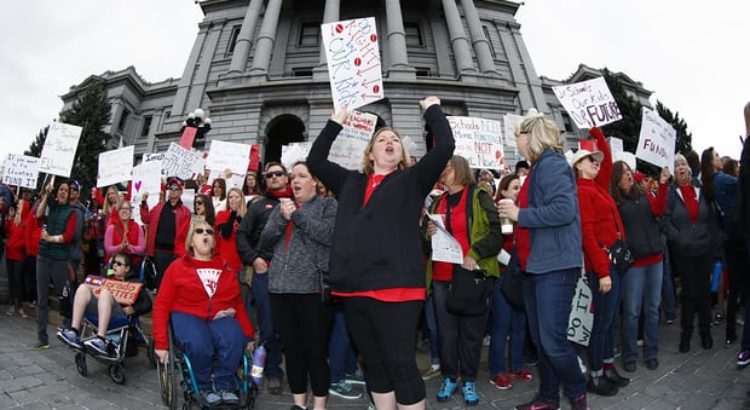
While anti-union organizations have launched a broad effort to get public sector union members to stop paying dues, unions like Davis’s are going into high gear to not only retain their members, but to build on public support for teachers felt in the wake of this year’s teachers’ strikes.

McKinney had played in the band, which is nationally ranked. But after he graduated in 2012, the then governor, Republican Tom Corbett, cut more than $1bn from the state’s education funds, and the school started instituting fees for kids who wanted to play. Now, Norwin high school parents like Davis pay $620 a year for each of their kids to play in the band.

“The band was so important to me. It taught me discipline,” says McKinney as we stand on the front porch of his parent’s house.

Davis and McKinney begin to discuss how statewide funding cuts have devastated education and how the current Democratic governor, Tom Wolf, is fighting the narrowly Republican-controlled Pennsylvania state legislature to increase funding. Davis quickly wins over McKinney as a convert to the teachers’ union cause.

“Funding education is important. We gotta support our teachers,” says McKinney as we leave his doorstep.

Davis, who canvasses the area regularly, says that conversations force people who never think about education funding to consider why unionized teachers like himself are seeking more funding.

“I just reminded him of the greatest moments of his life,” says Davis. “Now, he is going to have a conversation with his parents about what we talked about and they are probably going to talk to two or three people, which means that I helped facilitate not one conversation, but multiple conversations about education.”

A few doors down, we encounter a woman wearing a shirt depicting Joe Paterno, the controversial hero and legendary Penn State football coach. She appears a little nervous to talk to Davis. She starts to complain about how local property taxes are too high and at the same time, the school seems to be letting staff go and the quality of teaching is going down.

Davis explains to her that local property taxes have gone up as state funding of education has gone down. Davis talks for a few brief minutes, but as the reception seems less warm than at the previous home, he doesn’t stick around.

Even though the conversation isn’t quite what Davis expected, he still sees it as a victory in the fight to humanize teachers’ unions.

“For too long, we have been vilified and the only way to stop that is to put a human face on it,” says Davis. “If we want to exist, we have to sell ourselves as unions about why are we valuable. This is intensive, but it does make a difference and it will help.”

Davis and his colleagues have their work cut out for them. The Janus case was backed by some of the richest rightwing activists in the US, including the Koch brothers. As the Guardian revealed earlier this year, those groups have been planning an all-out assault on public sector unions following the Janus decision. They too will be going door-to-door and buying ads to encourage union members to rip up their membership cards and drop out now that they no longer have to pay “fair share” fees.

“In the wake of Janus, that one-on-one direct form of communication is extremely important,” says Annie Briscoe, a union organizer with the Pennsylvania State Education Association. “The ability to connect with one another is something that unions have unfortunately struggled with in recent decades. So, from an organizing standpoint, it’s very much back to basics with the canvassing effort to talk to members of the community about the nuts and bolts of public schools and why education funding works.”

Source of the notice: https://www.theguardian.com/us-news/2018/jul/01/teachers-unions-supreme-court-janus-ruling

Comparte este contenido:

México: Universidad Intercultural presenta trabajos de investigación

América del Norte/México/02.07.18/Fuente: www.elsoldesanluis.com.mx.

Personal docente de la Universidad Intercultural de San Luis Potosí Unidad Académica Valles (UICSLP-UAV), presentó en las instalaciones del nuevo campus los artículos de investigación realizados durante el primer semestre de este 2018.

Las palabras de bienvenida estuvieron a cargo del Subdirector de la Unidad, Francisco Orduña González, el moderador fue el Presidente de la Academia de Derecho, Lic. Norberto Hernández Paz, y el cargo de la Relatoría del Presidente de la Academia de Informática Administrativa del MTI Gerardo Ramiro Reyes, contando con la anuencia del Director de la Unidad Académica Valles de la UICSLP, CP Joel López Fernández.

Los trabajos que se presentaron fueron; “Lengua materna como medio de conocimiento” por la Lic. Yohana Angélica Martínez Martínez, “Derechos Humanos de las mujeres” de la Lic. Anahí Espinoza Reyna, y “Dificultades para la Interculturalidad” por el Ing. Eduardo Méndez Galarza.

También “La enseñanza de la lengua indígena Tének a través de las redes sociales” Por la MAE María del Rocío Maldonado Rivera, el Lic. Fidel Blanco Sánchez y el MTI Gerardo Ramiro Reyes; el tema “Marginación de la lengua indígena” por la Ing. Carmen Lizbeth Castillo Reyes y “derecho del turista para la sustentabilidad e interculturalidad en Cd. Valles” por el MTI Gerardo Ramiro Reyes, C.P. Joel López Fernández, Lic. Norberto Hernández Paz y el MDCT Francisco Orduña González.

Al finalizar la presentación el director del plantel Valles C.P. Joel López Fernández, felicitó a todos los participantes tanto a quienes lo presentaron de manera individual como colaborativa. Especificó que en esta segunda exposición de trabajos, luego de la primera presentada en diciembre del 2017, la visión de los proyectos continúa mejorándose y se espera que más de ellos sean publicados por revistas científicas internacionales.


Fuente de la Noticia: https://www.elsoldesanluis.com.mx/local/valles/universidad-intercultural-presenta-trabajos-de-investigacion-1799278.html


Comparte este contenido:

Book Reviews: Teaching about the Border

By Kelly Moser

Written in 2006 and published by the teacher-led Rethinking Schools organization, The Line Between Uscontinues to be an excellent resource for teachers who address border issues in the classroom.

Beginning with a personal narrative, author Bill Bigelow provides us with a teacher-friendly book to assist students in understanding complex issues related to immigration and globalization. He offers teachers concrete strategies, lesson ideas, and resources that force students to engage in critical debate and to reconceptualize the unnecessary ‘us’ and ‘them’ dichotomy.

Unlike many teacher-oriented texts, the author chronicles his successes and failures as a teacher who strives to challenge learners’ preexisting beliefs about Mexico, the border, and immigration.

Although I am not a teacher of social studies, as a language teacher and teacher educator, I can easily identify the strengths of this particular book. Since students often hold preconceived notions about other cultures, peoples, and nations, it is my opinion that this book can be used effectively in the social studies classroom to promote empathy and social action, and to encourage an ongoing, critical dialogue.

Further, teachers in other content areas, such as foreign languages, will be able to incorporate several of these firsthand accounts and other resources to provide students with a glimpse into how other peoples live, the challenges they face, and the variety of reasons that they choose (or are forced) to come to the United States.

Teacher-friendly

First and foremost, the author allows all readers to visualize how the lesson unfolds in its entirety. Lesson examples begin with a hook, often in the form of questions intended to identify students’ background knowledge and beliefs. These opening sets are then followed by detailed step-by-step procedures to guide the teacher from beginning to end. All accompanying materials such as role play cards, external readings (political speeches, poems, personal narratives), and others are included as well.

Strategies Independent of Content Area

As an experienced teacher, I was most impressed with the numerous strategies to motivate and engage students. The author included opportunities for collaborative learning, problem solving, and debate. Among the ideas that stand out from the text are the following:

Tea Party — The tea party event is used to introduce students to a variety of historical and imaginative (yet historically appropriate) characters. At the party students receive a character card, and they become the character in order to answer classmates’ questions about a variety of issues.

Role Play — One of the role plays in this text allows students to consider four policy proposals: Proposition 187, the Extension of the Wall Between Mexico and the United States, the Legalization of Immigration from Mexico, and the Abolishment of NAFTA. Students are provided with resources to assist them in considering the implications of each policy with regard to the government, its citizens, the economy, and the environment.

Interior Monologue — The interior monologue requires learners to write from another’s perspective from the first person. Through this activity, students assume the role of another which may foster empathy and a greater understanding of the issues that impact that particular literary or historical figure.

Us and Them

Bigelow includes a variety of tasks that require students to think outside of the box. Through these activities, students begin to recognize the interconnectedness of all beings and to “regard themselves as part of a broader human family” (p. 84). They also begin to understand how politics contribute to several pervasive problems such as poverty, a widening gap between the haves and the have-nots, strict immigration laws, and environmental issues.

Most important, the lessons in The Line Between Us provide students with a more nuanced perspective, one built on a crucial balance between historical inquiry and personal anecdotes. It is perhaps this fundamental component that facilitates the connection of such complex issues to students’ unique lives.

Kelly Moser is an Assistant Professor in the Department of Curriculum, Instruction, and Special Education at Mississippi State University. Kelly coordinates the undergraduate foreign language education program, which prepares prospective teachers of Spanish, French, and German. She teaches courses related to foreign language methodology, secondary education, curriculum development, and technology integration. Her research focuses on foreign language teacher preparation and certification, using literature to promote empathy and technology in the world language classroom.

Comparte este contenido:
Page 675 of 1673
1 673 674 675 676 677 1.673