UNESCO – México/ 10 de octubre de 2017/Fuente: http://www.eldiariodecoahuila.com.mx
En todos los niveles educativos, las presiones políticas y los intereses comerciales pueden restringir la capacidad de los docentes «de enseñar en libertad», subrayó la Organización de las Naciones Unidas para la Educación, la Ciencia y la Cultura (UNESCO).
Con motivo del Día Mundial de los Docentes, que hoy jueves se celebra, esa organización destacó que «Los maestros que viven y trabajan en países y comunidades afectados por conflictos e inestabilidad suelen afrontar mayores problemas, en particular el aumento de la intolerancia, la discriminación y las limitaciones que de ello se derivan para la investigación y la docencia».
Para el organismo internacional, «empoderar» a los docentes implica que tengan acceso a formación profesional, un salario «justo», oportunidad para continuar desarrollándose profesionalmente.
Resaltó que se necesita que sean tomados en cuenta para la elaboración de los planes de estudio de sus países y que se les permita elegir los métodos y enfoques pedagógicos para dar clases; pero también que se garantice que pueden dar clases en un entorno seguro, sin importar la inestabilidad o conflicto de su contexto.
México/ 10 de octubre de 2017/Por: Yanin Alfaro/ Fuente: https://www.entrepreneur.com
La startup llega a México después de revolucionar la educación digital y ayudar a otras startups en países como España, Francia y Estados Unidos.
La semilla de Ironhack se sembró desde el nacimiento de uno de sus fundadores: Ariel Quiñones, que vivió inmerso en el mundo de la educación desde pequeño, su madre era profesora de escuela primaria y su padre era un profesor universitario que se aventuró a iniciar un proyecto educativo que desafiaba un poco el modelo tradicional.
Ironhack pretende crear un modelo innovador alternativo que facilite cerrar la brecha entre empresas y profesionistas, especialmente programadores. La denominación de esta startup se inspiró en la conjunción del nombre de competencia de triatlón Ironman y la palabra ‘hacker’; “no en el sentido malicioso sino en el del programador moderno, creativo, que soluciona problemas con el uso de la tecnología”, asegura Quiñones, en entrevista con Entrepreneur en Español.
La misión de IronHack es formar programadores y cumplir ciertas métricas de colocación y de mejora salarial de los alumnos, lo cual han logrado con un buen plan curricular y una plantilla de profesores calificados.
Aunque sus primeros pasos profesionales se orientaron al mundo de las finanzas, Quiñones siempre supo que quería crear un proyecto a favor de la educación. La oportunidad de hacerlo le vino mientras estudiaba la maestría en la Universidad de Pensilvania, en Filadelfia, Estados Unidos en donde conoció a su cofundador, Gonzalo Manríquez, un compañero de clase español.
Gonzalo Manríquez y Ariel Quiñones, fundadores de IronHack/ Foto: Cortesía.
El proyecto surgió en un contexto en el que observó cómo pese a que la gente invierte mucho en su educación, es difícil encontrar un lugar en el mundo laboral. Por otro lado, se dio cuenta de que las empresas se quejaban de no encontrar los perfiles adecuados, principalmente en las áreas de innovación, en los perfiles de programación.
“Para mí la inspiración fue esa brecha entre la oferta y la demanda”, asevera el emprendedor de origen puertorriqueño.
Pese a que la idea del emprendedor era iniciar su startup en América Latina o en Estados Unidos, Manríquez lo convenció de que podrían arrancar en Madrid, España, pues en 2013, el 50% de los jóvenes menores de 30 años estaban desempleados y había una oferta laboral de casi un millón de vacantes en la industria informática en la comunidad europea.
Expansión hacker
Aquel verano de 2013 parecía no ser el mejor momento para emprender en un país en crisis como España, “pero fue todo lo contrario”, expresa el emprendedor. Aunque el panorama no parecía muy alentador con sólo tres alumnos que iniciaron con el curso de programación web, que apostaron por el proyecto.
“Cuando alguien innova en cualquier sector, siempre hay resistencia por parte del consumidor. A veces no confiaban en la propuesta de valor”, recuerda Quiñones.
Pero para 2014 la historia había cambiado, pues ya habían llegado a Barcelona y habían logrado graduar a 100 alumnos. Este 2017 se han graduado 700 alumnos en cuatro campus distribuidos en Madrid, Barcelona, París y Miami, que según Quiñones, es el puente para llegar a América Latina.
Para levantar capital, primero se aseguraron de que el modelo era el correcto y de que podían captar al cliente adecuado. Otros emprendedores hacen lo contrario, primero hacen una presentación y así esperan levantar capital para tener resultados.
También han hecho alguna formación a empresas, pero sólo ha representado un 10% de la facturación total, pero Quiñones no descarta que en el futuro sea un para que podamos explotar más.
El proyecto se fondeó orgánicamente durante más de tres años. El año pasado, con el objetivo de acelerar el crecimiento geográfico, buscaron financiamiento venture capital y hace unos meses cerraron una ronda de inversión de 3 millones de dólares con el fondo español JME.
Ironhack llegará a México a principios de 2018. El país “es una de las capitales más importantes en tecnología y en emprendimiento de la región, y también hay un déficit de profesionales de informática”, recalca Quiñones.
Quiñones confía en que en una urbe como la Ciudad de México, donde hay 130 mil graduados universitarios anuales, Ironhack tiene una gran oportunidad de mercado.
EEUU/ October 10, 2017/By: Valley News/Source: https://vtdigger.org
State officials and school board members say the Education Fund shortfall could go as high as $80 million and could wallop many property owners with a 5 percent increase in the school tax rate.
Vermont Secretary of Education Rebecca Holcombe has said that a 7- to 9-cent increase in the statewide property tax is likely unless school boards make significant budget cuts.
The projections for fiscal year 2019 will ultimately add pressure to local school boards gearing up to begin their budget processes, said Hartford School Board Chairman Kevin Christie, who also is a Democrat in the Vermont House.
“There might be some very, very difficult decisions to make, and until we know what that bottom line is looking like, we don’t know what they are,” Christie said.
Hartford School Board chair Kevin Christie. File photo by Geoff Hansen/Valley News
If the budget gap falls on property taxpayers, who pay $1.06 billion into the $1.58 billion Education Fund, it would add about 8 cents to the current homestead property tax rate of $1.51 per $100 of assessed property. It also would add 8 cents to the nonresident rate, currently $1.535, state officials said this week.
The exact impact on individual school districts will vary, depending on their spending, but the base rate increase would amount to a $200 tax hike on a home valued at $250,000 for those Vermont residents not eligible for the state’s income sensitivity program.
“Needless to say, the pressures that we’re trying to address are very similar to the state level, especially with the health care component, and we haven’t completed our negotiations for our teacher contracts,” Christie said.
Emily Byrne, the chief financial officer for the Vermont Agency of Education, said the primary driver of the funding gap is the state’s decision to prop up the current FY2018 budget with about $47 million in “one-time” funds that were taken primarily from an end-of-year surplus and an education reserve fund.
“The problem from a budgetary perspective is, if you use one-time money for ongoing costs, you have a problem right out of the gate the following year,” Byrne said.
Those measures actually slightly decreased the property tax rate for the current year, but for fiscal year 2019, which starts next July, there is pressure not only to make up for the loss of the cushion, but also to put about $9.4 million back into the reserve.
Adam Greshin, commissioner of finance and management said the Education Fund gap could go as high as $80 million if school district voters approve budgets with an average increase of of 3 percent. If school budgets are held level or below 3 percent, the anticipated tax increase could be partially averted, said Greshin, a former independent state representative and school board member from Warren.
“I think the governor is going to continue to focus on the same issues because they’re just as important,” he said. “We’re going to ask school districts to reduce the growth in their spending and level fund their budgets, and we’re going to continue to advocate strongly for a statewide health care contract.”
Greshin pointed to an anticipated spike in fiscal year 2019 health care rates — the Vermont Education Health Initiative says premiums will increase by as much as 17 percent for school district employees across the state.
“Keep in mind, the two initiatives that you saw out of the administration last (spring), both would have zeroed in on unsustainable growth. The first would have asked school boards to level fund their budgets. That didn’t happen,” Greshin said.
“The second initiative, which received a great deal of attention, was to move to a statewide health care contract for all school employees. That too didn’t happen. Both of those initiatives would have made life substantially easier this year.”
Royalton School Board member Geo Honigford, president of the Vermont School Boards Association, said he’ll argue against a budget cap at an upcoming Oct. 19 meeting of VSBA members that will include a discussion on how to address the fiscal crisis.
“Caps are never really great policy, because they’re a one-size-fits-all solution,” he said, citing schools with capital improvement emergencies or growing student populations as examples of districts that would not do well under a cap.
Honigford said the Vermont School Boards Association is developing recommendations for solutions that would include a statewide teacher health care agreement negotiated by school boards and unions.
The VSBA also will seek to address Vermont’s student-to-staff ratio, which Honigford said has fallen from 4.7 students per staff member to a lowest-in-the-nation 4.2 to 1 over the past several years.
“A task force would look at staffing in each district and then be able to make recommendations,” he said.
Honigford said that local budget talks in Royalton would depend on the outcome of an upcoming Oct. 24 vote on a consolidation with the Bethel School District.
Even as school boards prepare to sharpen their pencils on local education budgets, there will be various initiatives to change the picture at the state level.
Honigford said the Legislature is sure to make an effort.
“It’s an election year, so we fully anticipate legislators will have no stomach for an 8-cent increase and then saying ‘vote for me.’ We anticipate some sort of cost containment measures coming down the road and we want them to make sense,” he said.
Christie said he’s seen several proposals, some including diversifying the revenue stream, that would dramatically change the way that education is funded, and that any one of them could be implemented very quickly — if the political will can be mustered.
“Most of the concepts have been placed on the table before or at least have been looked at in a cursory way,” he said. “It kind of takes a collective will to say ‘we’re going to change.’ That’s not easy.”
Community Girls Schools (CGS) is a unique education program designed to accelerate equitable access to quality basic education for girls aged between 8-12 years in villages that have no established formal schools. It’s a modified education program which offers flexible learning opportunities to learners mainly in lower primary education, where girls are expected to constitute 70% of the total learners, and boys constitute the remaining 30%. The CGS program is mainly characterized by condensed syllabus, faster learning process, targeting marginalized female learners, and flexibility in the learning schedule and calendar.
One of the four clusters of CGSs that are getting support from the Out of School Children (OOSC) project being implemented by UNESCO Juba Office is that of Imotong State. The partner that is given the assignment to provide the support and to run the 93 CGSs in the three counties of Torit, Magwi and Nimule is Alternative Basic Education for Pastoralists (ABEP). ABEP has also managed to cater for displaced children who left their areas of Pageri, Moli and Kerepi and are temporarily settled in Nimule.
ABEP has recruited 93 all-female CGS teachers who are conducting classes for 2,731 students (1,927 girls and 804 boys). As the target set was to enroll 2,790 students, ABEP has achieved a 97.9% success rate in terms of enrolment. With regard to sex disaggregated targets, ABEP had planned to enroll 1,953 girls and therefore has achieved 98.7% of its target; the success rate for boys is 92.8% as the plan was 837 boys and actual enrolment is 804. ABEP has reported that it has given capacity development orientation training for all its 93 teachers in the writing of lesson plans, and use of learners’ attendance register.
ABEP has conducted one assessment of learning so far, and the pass rate for girls was 63% and for boys 67%, an indication of the need to work harder to support girls succeed in their education.
ABEP mentions insecurity and famine in the project areas as two of the major challenges it faces in the execution of its activities. It recommends some kind of school feeding programme to be launched in the CGS schools if it is possible to do so.
Following a very turbulent start with weather and other scheduling interruptions, Minister of Education, the Honourable Shawn Richards, said that schools are settled and educators geared as they move full force into the activities for 2017-2018. He underscored a number of opportunities that are available and encouraged teachers to position themselves to capitalize on them.
On the heels of the celebration of World Teacher’s Day which was observed on Thursday, October 05 with a dinner for public school teachers as a show of solidarity and support, the Minister has stated that individual teachers must now make use of the opportunities that are being provided to assist them in upgrading their skills and qualifications towards a better classroom experience.
Minister Richards highlighted the intentions of the ministry in this regard at the start of the Summer Workshops for Teachers in August this year. He revealed a plan of action including “the establishment of a programme of continuous professional development leading to the certification and licensing of teachers.” At its most basic level this included one year of In-Service Training for new teachers which got underway on October 3rd.
He also alluded to the implementation of the CDB sponsored TVET programme that was officially launched in July 2016. “This initiative aims to further solidify the commitment to the development and expansion of Technical, Vocational Education and Training in the federation,” the Minister stated, explaining that this would also involve the amalgamation of all current post-secondary institutions (that is Project Strong, National Skills Training Programme, and the A.V.E.C) into one umbrella organization- the National Training Institute.”
According to the Education official, as the Ministry of Education explores other avenues whereby teachers can secure the necessary qualifications, the ministry is now in discussion with MidWestern State University in Texas to provide an online degree course for teachers where they undertake training which will include a few summers on the campus.
The Ministry of Education has begun the implementation of the 2017-2021 Education Sector Plan. This provides the blue print by which this transformation will continue.
Under the theme: Education for All: Embracing Change, Securing the Future, the plan provides a strategic road-map to improve the provision and administration of education in our Federation.
Estados Unidos/09 octubre 2017/Fuente: Miami Diario
Tres distritos escolares de la Florida en los Estados Unidos están pidiendo al estado que retrase las fechas de exámenes luego de que perdieran un tiempo de clases considerable tras el paso del huracán Irma por la nación.
Los condados de Miami-Dade, Collier y Lee han solicitado que el Departamento de Educación revise el calendario de pruebas del estado para considerar los cierres de escuelas durante y después de la tormenta. Los estudiantes perdieron entres siete y doce días de clases.
El tiempo perdido «seguramente será una desventaja para nuestros estudiantes» en las evaluaciones estatales, dijo el superintendente de las Escuelas de Miami-Dade, Alberto Carvalho, en una carta del 3 de octubre a la comisionada Pam Stewart.
Por su parte, en el condado de Monroe, el de los devastados Cayos de la Florida, algunos estudiantes perdieron hasta 18 días de clases. Funcionarios del distrito han hablado con el Departamento de Educación sobre las preocupaciones por los exámenes, pero no han presentado una solicitud formal para cambiar las fechas, dijo Lynsey Saunders, portavoz del distrito. No está claro si planean hacerlo.
Muchas escuelas quedaron sin fluido eléctrico y tuvieron que limpiar los escombros después de la tormenta.
Stewart hizo algunas revisiones en el calendario de pruebas del estado después del huracán, extendiendo el período que los distritos tienen para administrar realizar varias pruebas en este otoño. Aún no se ha anunciado si realizará revisiones adicionales. En un correo electrónico enviado a los superintendentes de la Florida poco después de la tormenta, Stewart dijo que los distritos afectados «tienen todo nuestro apoyo» y alentaron a los líderes de la escuela a ponerse en contacto con el Departamento de Educación con cualquier preocupación.
México/09 octubre 2017/Fuente: Insurgencia Magisterial
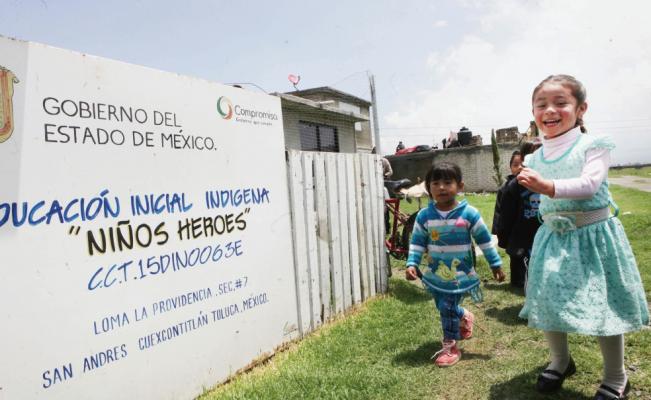
La población se unió y decidieron trabajar, leñadores consiguieron madera para construir las aulas, mientras que otros pusieron sus camionetas, herramienta y mano de obra para levantar las escuelas, todo esto sin apoyo del gobierno.
En la comunidad de Santa Lucía, municipio de Ocuilán, Estado de México, los habitantes no esperaron a las autoridades y, con sus propias manos, reconstruyeron tres escuelas.
Para ayudar, mujeres de la comunidad preparan la comida para las 300 personas que diariamente se dedican a esta intensa labor.
El delegado de la comunidad, Manuel Sosa Néstor, dijo: “Unas cabañas improvisadas para los niños que tienen que venir a estudiar aquí ya que nuestras escuelas fueron afectadas, la escuela primaria Miguel Hidalgo y la telesecundaria José María Velasco y el kinder bilingüe”.
Luego del sismo, el jardín de niños, la primaria y la telesecundaria de la comunidad son escuelas que quedaron destruidas y los padres de familia, maestros y alumnos de estos planteles ayudaron con recursos naturales a su alcance y empezaron a construir las nuevas escuelas, informa el medio Sur Digital.
La población se unió y decidieron trabajar, leñadores consiguieron madera para construir las aulas, mientras que otros pusieron sus camionetas, herramienta y mano de obra para levantar las escuelas.
Los habitantes acusaron, que la administración del gobernador del estado de México, Alfredo del Mazo, envió 120 pacas de láminas de cartón, pero las rechazaron porque este material de nada sirve en el temporal de lluvias.
MANDAN MENSAJE AL GOBIERNO DE LA REPÚBLICA
El presidente de la Asociación de Padres de Familia, Félix Gómez Hernández dijo: “Esta es la escuela de este pueblo indígena Tlahuica Santa Lucia Ocuilan, ahora queremos ver la escuela de ustedes y cuanto antes, ahora no estamos para pedirles, ahora queremos exigirles, nosotros ya hicimos una parte, no se preocupen, nuestros niños van a estar bien aquí, pero mientras esas escuelas se demuelen, queremos que nos las hagan cuanto antes, no porque ya las hicimos nos va a hacer caso omiso”.
OtrasVocesenEducacion.org existe gracias al esfuerzo voluntario e independiente de un pequeño grupo de docentes que decidimos soñar con un espacio abierto de intercambio y debate.
¡Ayúdanos a mantener abiertas las puertas de esta aula!







 Users Today : 3
 Total Users : 35468444
 Views Today : 4
 Total views : 3534620