Mochilas, cuadernos, lápices y muchas ganas de aprender. Parecen los ingredientes típicos de cualquier centro escolar, y de hecho lo son. La diferencia, en este caso, es que todas las alumnas son abuelas.
Aajibaichi Shala es el nombre de esta escuela que forma a mujeres indias de entre 60 y 90 años. El centro abrió sus puertas el 8 de marzo del año pasado, coincidiendo con la celebración del día de la mujer en el distrito de Thane, en el estado indio de Maharashtra.
Sitabai Deshmuk es la más veterana de la clase, a sus 90 años afirma que «Nunca, en mi larga vida, pensé que pudiera tener la oportunidad de ir al colegio».
«Cuando era joven, mi familia era pobre y las chicas no teníamos la oportunidad de ir al colegio. He tenido una nueva vida durante el último año», añade, en declaraciones a The Hindustan Times.
Su nieta de 8 años, Anushka, explica que ayuda a su abuela a hacer los deberes «Nos lo pasamos bien estudiando juntas».
El profesor Yogendra Bangar, uno de los impulsores de la iniciativa, afirma que la idea surgió cuando «una de las abuelas me dijo que le hubiera gustado poder leer por lo menos los libros sagrados. Es entonces cuando sentí que tenía que hacer esto».
Fue él mismo quien levantó el aula donde empezaron a impartirse las clases con la ayuda de organizaciones benéficas indias, aunque Bangar corrió con los gastos para el material que usan las abuelas en clase.
«No acepto donaciones. No cuesta mucho y para mí es como si fuera mi bebé y debo estar pendiente de ello», explica.
«Además, soy profesor y este es mi deber», añade.
Shital es la maestra de esta clase tan especial y afirma que se sintió «muy feliz» cuando Bangar le ofreció hacerse cargo de la educación del grupo.
«Les enseño cómo escribir sus nombres, a leer en maratí [lengua regional del estado de Maharashtra] y a multiplicar». Además, la suegra de Shital es también su alumna, según informa el medio.
Las abuelas, ataviadas con sus saris de color rosa a forma de uniforme escolar, seguirán estudiando, ahora en un nuevo emplazamiento, en una escuela a la que también acuden niños llamada Phangane zilla parishad School.
Internet se ha convertido en una herramienta imprescindible para la educación, sobre todo a la hora de buscar información acerca de trabajos para clase. Sin embargo, no siempre se utiliza con un buen fin. Para ayudar a los docentes a detectar si el alumno ha copiado su tarea, os traemos un listado de programas que permiten la identificación de plagios.
1. Viper
Se trata de un software que coteja más de 14 billones de páginas web, artículos, libros de texto, periódicos o revistas para detectar un plagio. Con simplemente escanear el documento, la aplicación muestra si se ha copiado o no, destacando incluso las partes del contenido que han sido reproducidas tal cual.
Esta herramienta utiliza diversos buscadores de Internet como Google o Bing, lo que ofrece una gran base de datos para encontrar si existe plagio o no. Cuando la aplicación detecta que el trabajo no es original muestra las partes copiadas en diferente color, calcula el porcentaje de plagio del texto y ofrece los links de las páginas de las que se han sustraído la información.
Esta aplicación dispone de varios niveles de búsqueda en la web. El más sencillo y superficial, se puede utilizar de manera gratuita, tan solo copiando el texto que se desea revisar. Para análisis más exhaustivos, cuenta con varias opciones de pago, ofreciendo la posibilidad de tener una cuenta común para varios docentes, lo que permitiría un ahorro de costes.
Esta herramienta tiene dos funciones. Por un lado, permite comprobar la originalidad de un texto y averiguar, en caso de plagio, de dónde se ha sustraído la información. Y por otro, ofrece la posibilidad de recibir notificaciones cuando un texto propio ha sido copiado por otros usuarios. Cuenta con una opción gratuita y otras dos de pago para un análisis más en profundidad.
Este programa fue creado por Crossref, una organización sin ánimo de lucro que busca hacer más accesible el contenido de las publicaciones académicas. Para evitar plagios, crearon Crosscheck, una herramienta que examina las copias en trabajos científicos.
Inés, una niña de 11 años, ha creado un himno contra la guerra que se cantará en más de 450 colegios castellanos leoneses el próximo 30 de enero, ‘Día escolar de la no violencia y la Paz’.
Un nutrido grupo de profesores y maestros de música de Castilla-León se unieron hace unos meses para llevar a cabo la iniciativa #YoSoyDeMúsica. Se trata de un proyecto para compartir recursos e ideas y para coordinarse y estar al tanto de todas las ideas que nacían en los colegios hicieron lo que casi todo el mundo hace, crear un grupo de WhatsApp. En una de esas conversaciones se compartió la idea de una alumna de sexto de Primaria del Colegio Kantica Arroyo, de Arroyo de la Encomienda, en Valladolid. Su idea, crear una canción en favor de los refugiados de Siria usando la melodía de Como te atreves a volver, del grupo colombiano Morat. Inés, la alumna que ingenió el proyecto, y Diego Gutiérrez, su profesor de música, han explicado en La Ventana como surgió y se desarrolló la transformación de la nueva letra de la canción.
La canción, que está siendo un exitazo, se cantará en el Día escolar de la no violencia y la Paz, que se celebra cada año el 30 de enero, en numerosos colegios de la comunidad castellano-leonesa. Se empezó a pasar por grupos por internet, por grupos de WhatsApp y a día de hoy se ha extendido a más de 450 centros, entre ellos algunos de otras comunidades y otras partes del mundo como Italia o Túnez.
«Juntar a muchos niños para que canten por Siria es muy emocionante», ha reconocido Inés, que decidió que el éxito de Morat era el mejor tema para versionar porque todos lo conocían. La pequeña, que supo lo que está pasando en Siria viendo el Telediario en casa con su familia, tardó poco en materializar la idea: «Tardamos en hacer la letra de un jueves a un domingo».
Gutiérrez, que ayudó a Inés a encajar la letra en la melodía del grupo colombiano, ha señalado que aunque nos parece que los niños no se enteran de las cosas de los adultos, se enteran más de lo que podemos pensar: «En una sociedad en la que vivimos conectados a través de internet, la radio y la televisión es inevitable que se empapen de las realidades que nos rodean, aunque pasen a miles de kilómetros».
El objetivo ahora, ha explicado Gutiérrez, es crear un vídeo común con imágenes de todos los centros que participan en la iniciativa para difundirlo a través del blog que han creado conjuntamente: «En todos los colegios que participan se van a grabar vídeos y se van a hacer fotografías para hacer un vídeo y subirlo en el blogcylcantaporsiria.blogspot.com.es«.
The family apartment of Maher al-Hashlamoun, a Palestinian jailed for killing an Israeli settler in 2014, in the West Bank city of Hebron, after Israeli forces punitively destroyed it in October 2015. Israel is escalating the use of such collective punishment, following Sunday’s truck ramming attack in a settlement near Jerusalem that killed four of its soldiers.
Muhesen AmrenAPA images
After issuing orders to demolish their home and rounding them up in detention centers, Israel now plans to revoke the Jerusalem residency of the relatives of the man who ran a truck into a group of Israeli soldiers at a settlement near Jerusalem on Sunday, killing four and injuring more than a dozen others.
The Palestinian man, identified as Fadi Ahmad Hamdan al-Qunbar, 28, was shot dead at the scene.
The sweeping order, issued by interior minister Aryeh Deri on Tuesday, is a striking expansion of Israel’s tools of collective punishment against an alleged attacker’s family.
It would strip at least a dozen people of their right to live in their home city of Jerusalem.
The Israeli human rights group HaMoked, which is representing the family, reported that more individuals were notified on 11 January that their residency would be revoked.
“Let this be known to all who are plotting, planning or considering carrying out an attack, that their families will pay a heavy price for their actions and the consequences will be severe and far-reaching,” Deri said.
“This is a decision that signals a new era against terrorism and terrorists who use their status to carry out attacks against citizens,” Deri added. The move is supported by prime minister Benjamin Netanyahu.
Illegal
Israel occupied the West Bank, including East Jerusalem, in 1967. It later annexed the city in violation of international law, a move not recognized by any country.
Israel treats East Jerusalem’s indigenous Palestinian population as if they were mere “permanent residents” whose ability to stay in the city is contingent on Israeli permission.
In its December resolution, the UN Security Council condemned all of Israel’s measures “aimed at altering the demographic composition, character and status of the Palestinian Territory occupied since 1967, including East Jerusalem.”
It confirmed that such measures, including “the construction and expansion of settlements, transfer of Israeli settlers, confiscation of land, demolition of homes and displacement of Palestinian civilians,” are “in violation of international humanitarian law” and previous resolutions.
As the occupying power, Israel is also bound by the Fourth Geneva Convention, which outlaws “collective penalties” and states that no person “may be punished for an offense he or she has not personally committed.”
But since there have been no effective international measures to hold Israel accountable, it has continued to use collective punishment with impunity for decades.
Punishing children
Like other forms of collective punishment Israel uses, particularly the punitive demolition of family homes, these measures are reserved for Palestinians; Israel does not use collective punishment against the families of Jews who carry out attacks.
Some of al-Qunbar’s relatives were summoned Tuesday morning to Israel’s Population and Immigration Authority, where they received a letter that said the family is “suspected of having connections to ISIS,” and members are considered a security risk “as long as they remain in Israel,” according to the Tel Aviv newspaper Haaretz.
Israeli police raided the homes of other relatives, delivering revocation orders.
Al-Qunbar’s mother’s status is also being revoked supposedly on the basis that she made a false claim 30 years ago when she first received her residency status upon marrying her husband, a Jerusalemite.
Among those who now face becoming stateless are two children in the al-Qunbar family aged 11 and 17.
Other voices in the Israeli government have called on the family to be expelled to Syria or Gaza.
“Disloyalty” to an occupation
While thousands of Palestinians in Jerusalem have had their residency revoked under various pretexts, the first instance of revocation for “lack of loyalty” didn’t occur until 2006, when Israel stripped three elected Palestinian lawmakers and the Palestinian Authority’s minister for Jerusalem affairs of their status.
Human rights groups appealed this move to Israel’s high court, where a decision is still pending.
But a lack of judicial ruling has not stopped occupation authorities from advancing this new avenue of expelling Palestinians from Jerusalem.
Last January, four men were stripped of their residency before they were convicted of anything.
Three of the men were charged with throwing rocks at passing traffic, allegedly leading to a fatal accident of one driver. The fourth man was accused of committing an attack on a bus in which three Israelis were killed and several others wounded.
Israel said the revocations were for lack of loyalty to the state. HaMoked is appealing this decision, arguing there is no allegiance implied in Palestinians’ permanent residency status.
Also last January, a bill was introducted in Israel’s parliament that would allow the cancellation of permanent residency on grounds of “disloyalty” to Israel.
At least 13 Palestinians have since had their residency revoked over the last year on the basis of breaching loyalty to the state, according to documentation by Community Action Center at Al-Quds University.
When the Israeli government first made rumblings of introducing the new grounds for revoking residency, Israeli analyst Zvi Bar’el predicted in Haaretz, “That’s how it works when rights are trampled. You start small, get the people used to it, and then you can move on to the mass phase.”
Revoking citizenship
Meanwhile, human and civil rights group Adalah, based in Haifa in the north of present-day Israel, and the Association for Civil Rights in Israel (ACRI) are petitioning an Israeli court to reject Deri’s attempts to revoke the citizenship of Alaa Zayoud, a Palestinian citizen of Israel, who was sentenced to 25 years in prison for attempted murder.
Adalah and ACRI are also demanding Israel annul the 2008 amendment to its Citizenship Law that allows revoking citizenship for “breach of loyalty.” To date it has exclusively been used against Palestinian citizens.
“A minister who chooses to employ such moves only against Arab citizens, in an effort to serve his own narrow political interests, drags the court into his discriminatory struggle against Arab citizens and, by doing so, stains the court,” Adalah said.
The Israeli high court refused to revoke the citizenship of Israeli Jewish citizen Yigal Amir, who assassinated then-prime minister Yitzhak Rabin in 1995.
In its decision to uphold Amir’s citizenship the court stated, “society has expressed its reservation about this brutal murder, but that is no reason to revoke Amir’s citizenship, not because of the killer’s dignity, but because of the dignity of that right [to citizenship].”
Last February, the government attempted to expand its ability to revoke the citizenship of someone in absentia.
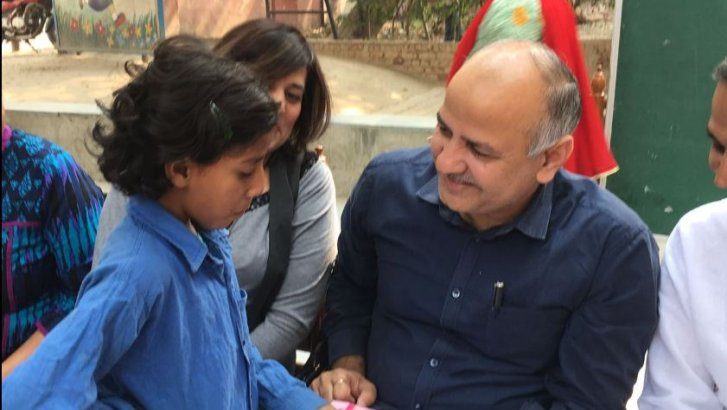
RESUMEN: Delhi está a punto de convertirse en un «estado modelo saturado» en la asistencia sanitaria en un futuro próximo y mejorar dramáticamente la calidad de la educación, dijo el viceministro en jefe Manish Sisodia. El líder del partido Aam Aadmi (AAP) también dijo que el gobierno de Delhi había construido unas 8.000 escuelas desde que asumió el cargo en febrero de 2015 y agregará un número similar dentro de un año y medio. Sisodia también dijo que el gobierno de Delhi estaba comprometido a mejorar drásticamente la calidad de la educación. Dijo que el número de aulas construidas hasta ahora ascendía a la construcción de unas 200 nuevas escuelas. Además, en Nueva Delhi aparecerán 100 nuevas escuelas en los próximos años, dijo. «Será una buena infraestructura para los próximos 20 años». Sisodia dijo que unos 100 directores de escuelas gubernamentales en Delhi que, dijo, estaban experimentando una gran transformación, habían ido a Cambridge por la exposición a educación de alta calidad.
Delhi is poised to become a «saturated model state» in healthcare in the near future and dramatically improve the quality of education, Deputy Chief Minister Manish Sisodia has said.
The Aam Aadmi Party (AAP) leader also said the Delhi government had built some 8,000 schoolrooms since taking office in February 2015 and will add a similar number within one-and-a-half years.
«When we build 1,000 Mohalla Clinics, Delhi will be a saturated model state for healthcare,» he said.
The Mohalla Clinic is a flagship initiative of the Delhi government that aims to provide free primary healthcare to people in their neighbourhoods. As many as 1,000 Mohalla Clinics are to be set up by March 31.
«Once we build that number, wherever you may be in Delhi, you will have access to a Mohalla Clinic within 10 minutes (distance).»
At least 107 Mohalla Clinics have already come up across the capital, in both middle class and urban poor neighbourhoods, where doctors and medicines are available and people enjoy facilities for tests — all for free.
Around two million people have so far availed themselves of the benefits of Mohalla Clinics, the minister said, adding that a sharp increase in the number of clinics will significantly reduce the burden on major hospitals in Delhi.
Sisodia also said the Delhi government was committed to dramatically improving the quality of education. He said the number of schoolrooms built so far amounted to constructing some 200 new schools.
In addition, 100 new schools would come up in Delhi in the coming years, he said. «It will be a good infrastructure for the next 20 years.»
Sisodia said some 100 principals of government schools in Delhi which, he said, were undergoing major transformation, had gone to Cambridge for exposure to high-quality education.
«Another 100 will be sent to Harvard… And teachers will also go to Singapore, Finland and Germany.»
China/Enero de 2017/Fuente: South China Morning Post
RESUMEN: En Asia, la educación es un principio central de la sociedad. La ONU ha priorizado el tema con la misión de promover «una educación de calidad inclusiva y equitativa». La matriculación en la enseñanza primaria en los países en desarrollo ha alcanzado el 91%, pero 57 millones de niños siguen sin estudiar. Ahora es el momento para que la filantropía respalde enfoques innovadores que puedan abordar la tarea a mano. La prestación de una educación inclusiva y equitativa en todos los niveles requerirá más que un cheque en blanco. La automatización de las industrias significa que el futuro crecimiento económico será menos dependiente de empleos de gran intensidad de mano de obra, con profundas implicaciones para la política educativa. Pero los gobiernos en todo el mundo se enfrentan a retos para asegurar que la educación se adapte a las necesidades cambiantes.
In Asia, education is a central tenet of society. The UN has prioritised the issue with a mission to promote “inclusive and equitable quality education”. Enrolment in primary education in developing countries has reached 91 per cent, but 57 million children remain out of school .
Now is the time for philanthropy to back innovative approaches that can tackle the task at hand. Delivering inclusive and equitable education at all levels will take more than just a blank cheque.
The automation of industries means future economic growth will be less dependent on labour-intensive jobs, with profound implications for education policy. But governments everywhere face challenges in ensuring education keeps pace with changing needs.
Who are the biggest Chinese philanthropists?
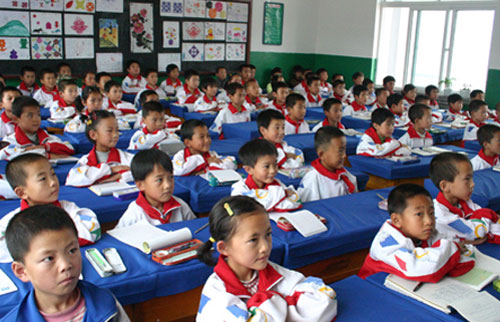
Take China. Resources have been invested in public education, but are still scarce and severely imbalanced. Quality teachers are concentrated in larger cities. Students dropping out of school is a serious issue in rural areas, especially for migrant workers who have to leave their children behind. China had 61 million “left-behind” children in 2014, accounting for 22 per cent of all its children.
China has 61 million left-behind children … that’s almost Britain’s total population
Action is needed to ensure these children have the necessary skills to enter the workforce. According to the “Yidan Prize Forecast: Education to 2030”, a study conducted by the Economist Intelligence Unit, China’s youth unemployment rate hit 10.8 per cent in 2015, and is projected to increase to 14 per cent in 2030.
Philanthropy in China is still at an early stage. Yet it is home to the world’s fastest-growing population of high-net-worth individuals. A new generation of philanthropists is already showing a growing willingness to step forward.
However, while good intentions are welcome, money without purpose achieves few results.
Philanthropy is best when it acts as a beacon for creative voices from around the world to gather to find solutions. This means putting philanthropy to work by funding effective programmes with measurable results, to enhance traditional models.
2030 vision: 5 ways the world’s educators must adapt to the new machine age
Technology will be key, helping to lower the cost of quality education and boosting outcomes, such as through big data applications, and using analytics to deliver an optimal learning environment. This may provide the next exciting stage in the growth of massive open online courses.
Investment has had a fantastic impact on students around the world, through better technology in the classroom, higher funding to institutions and scholarships for underprivileged students. A new generation of philanthropists can extend this impact by embracing their role as champions of innovative approaches to our biggest challenges.
Turquía debe mantener el Estado de derecho y respetar los derechos humanos, declaró este sábado la primera ministra británica, Theresa May, en Ankara, donde se reunió con el presidente turco, Recep Tayyip Erdogan.
En su visita, la primera como jefa de Gobierno, se entrevistó con Erdogan durante tres horas, un día después de su encuentro con el presidente estadounidense, Donald Trump, en Washington.
La primera ministra trató de encontrar un equilibro entre su voluntad de asegurar las buenas relaciones con Turquía y las preocupaciones de la Unión Europea (UE) por las purgas emprendidas por Ankara, tras el intento de golpe de Estado del 15 de julio.
La mandataria anunció la creación de un grupo de trabajo turco-británico para impulsar sus relaciones comerciales, una vez que el Reino Unido haya salido de la Unión Europea.
Se firmó un protocolo de acuerdo entre el grupo británico BAE Systems y el grupo aeronáutico público Turkish Aerospace Industries (TAI) para el desarrollo de una nueva generación de aviones de combate turcos.
Esto «marca el inicio de una relación comercial nueva y reforzada con Turquía», aseguró May. Añadió que el acuerdo prueba que el Reino Unido está «abierto a hacer negocios».
El contrato, por valor de más de 100 millones de libras ($125 millones) debería abrir la vía a otros acuerdos multimillonarios en los próximos 20 años, declaró a la prensa la portavoz de May.
Tras la reunión, May dijo estar «orgullosa» de haber permanecido al lado de Turquía, en «defensa de su democracia», durante la intentona golpista del 15 de julio, que Ankara imputa al predicador islamista Fethullah Gülen, exiliado en Estados Unidos.
«Ahora es importante que Turquía apoye su democracia, mantega el Estado de derecho y respete sus obligaciones internacionales en materia de derechos humanos, como el gobierno se ha comprometido a hacer», declaró.
May evocó que Turquía es uno de «los más viejos amigos del Reino Unido», haciendo alusión a las relaciones entre el Imperio otomano e Inglaterra durante el reinado de Isabel I en el siglo XVI.
Ambos líderes políticos también abordaron la lucha contra el yihadismo en Siria y la cuestión de la reunificación de Chipre, de la cual Londres y Ankara son garantes.
OtrasVocesenEducacion.org existe gracias al esfuerzo voluntario e independiente de un pequeño grupo de docentes que decidimos soñar con un espacio abierto de intercambio y debate.
¡Ayúdanos a mantener abiertas las puertas de esta aula!

 Se trata de un software que coteja más de 14 billones de páginas web, artículos, libros de texto, periódicos o revistas para detectar un plagio. Con simplemente escanear el documento, la aplicación muestra si se ha copiado o no, destacando incluso las partes del contenido que han sido reproducidas tal cual.
 Esta herramienta utiliza diversos buscadores de Internet como Google o Bing, lo que ofrece una gran base de datos para encontrar si existe plagio o no. Cuando la aplicación detecta que el trabajo no es original muestra las partes copiadas en diferente color, calcula el porcentaje de plagio del texto y ofrece los links de las páginas de las que se han sustraído la información.
 Esta aplicación dispone de varios niveles de búsqueda en la web. El más sencillo y superficial, se puede utilizar de manera gratuita, tan solo copiando el texto que se desea revisar. Para análisis más exhaustivos, cuenta con varias opciones de pago, ofreciendo la posibilidad de tener una cuenta común para varios docentes, lo que permitiría un ahorro de costes.
 Esta herramienta tiene dos funciones. Por un lado, permite comprobar la originalidad de un texto y averiguar, en caso de plagio, de dónde se ha sustraído la información. Y por otro, ofrece la posibilidad de recibir notificaciones cuando un texto propio ha sido copiado por otros usuarios. Cuenta con una opción gratuita y otras dos de pago para un análisis más en profundidad.
 Este programa fue creado por Crossref, una organización sin ánimo de lucro que busca hacer más accesible el contenido de las publicaciones académicas. Para evitar plagios, crearon Crosscheck, una herramienta que examina las copias en trabajos científicos.




 Users Today : 2
 Total Users : 35462315
 Views Today : 2
 Total views : 3423734