Page 3044 of 6733
1 3.042 3.043 3.044 3.045 3.046 6.733

España: La Junta pone en marcha 22 actuaciones para la mejora de infraestructuras educativas en la provincia

España/27 de marzo de 2018/Por: Europa Press/Fuente: https://www.20minutos.es

La Consejería de Educación de la Junta de Andalucía, a través de la Agencia Pública de Educación (APAE), ha licitado y contratado 22 actuaciones para la mejora de infraestructuras escolares de la provincia de Huelva en el primer trimestre del año en curso.

A las importantes licitaciones de las obras en los institutos San José de Cortegana, Fuentepiña de Huelva, El Sur de Lepe y el colegio Manuel Siurot de La Palma del Condado, se unen una serie de contratos menores para la realización de obras y reformas en distintos centros educativos que, en conjunto, suponen una inversión de 8,3 millones de euros, según ha informado la Junta en una nota de prensa.

Estas últimas tendrán lugar en los institutos Diego Angulo de Valverde del Camino, La Palma de La Palma del Condado, Padre José Miravent de Isla Cristina, La Marisma de Huelva, San Miguel de Jabugo, así como en los colegios Los Llanos de Almonte, Triana de Trigueros, San Matías de Villanueva de los Castillejos, Juan Ramón Jiménez de Beas, Lora Tamayo de Bonares, Miguel de Cervantes de Gibraleón, Prácticas, Profesora Pilar Martínez Cruz de Huelva, Tartessos y Juan Ramón Jiménez de Huelva, Los Perales de Rociana del Condado y Argantonio de Tharsis.

Nuevas construcciones y ampliaciones para adaptar los centros a sus necesidades de escolarización, mejora de talleres de formación profesional, retirada de últimas estructuras con fibrocemento, sustitución de sistemas eléctricos, mejora de condiciones térmicas con medidas sostenibles y eficientes desde el punto de vista energético, reparación de aseos y filtraciones en cubiertas, sustitución y reparación de redes de abastecimiento de agua, así como obras de urbanización de patio, constituyen el grueso de las actuaciones puestas en marcha en estos primeros meses del 2018, en el marco del Plan de Infraestructuras y Equipamientos de la enseñanza no universitaria de la Consejería de Educación.

Se trata de un plan en el que la Junta de Andalucía va a invertir más de 34 millones de euros en la mejora de las infraestructuras escolares de la provincia, fruto de una rigurosa evaluación de las necesidades y del cual, se van a ejecutar casi 11 millones de euros en esta anualidad.

Dicho programa contempla importantes trabajos como la reforma integral y adecuación del IES La Rábida de Huelva, (7.454.700 euros), la construcción del nuevo Centro de Educación Infantil y Primaria (CEIP) del Ensanche en la capital (4.787.000 euros), la ampliación y reforma de la Escuela de Arte León Ortega (2.700.000 euros), adecuación de espacios docentes en CEIP Pedro de Lope de La Redondela, (1.600.000. euros), la construcción de aulario de segundo ciclo de Educación Infantil en CEIP San Walabonso de Niebla (1.375.000 euros), la ampliación del IES Alto Conquero (1.320.000 euros) y del CEIP Virgen del Carmen de El Rompido (1.200.000 euros).

Fuente de la Noticia:

Ver más en: https://www.20minutos.es/noticia/3295122/0/educacion-la-junta-pone-marcha-22-actuaciones-para-mejora-infraestructuras-educativas-provincia/#xtor=AD-15&xts=467263


Comparte este contenido:

Malaysia has clear education roadmap; on track to achieve TN50: Mahdzir

Malaysia/ March 27, 2018/By THARANYA ARUMUGAM/Source: https://www.nst.com.my

Education Minister Datuk Seri Mahdzir Khalid today took a swipe at critics who condemned the Malaysian education system and policies.

He said Malaysia has a clear and extensive education roadmap that serves as guideline to the ministry, schools, teachers and students.

«We are on the right track towards achieving the National Transformation 2050 (TN50) vision in propelling Malaysia into the world’s top 20 nations.

«The government prioritises quality education, hence the reason we have various frameworks and policies such as the Malaysia Education Blueprint 2013-2025, National Education Policy and English Language Roadmap 2015-2025.

«While there are many critics here (in Malaysia) condemning our education system and policies, we continue to strive to ensure our children receive quality education on par with the global standards.

«These critics fail to realise that Malaysia is on the right pathway. We also ensure all strata of society obtain equal education, such as continuing vernacular school system in the country,» he said at the SMK Kota Kemuning 2 groundbreaking ceremony in Kota Kemuning today.

Mahdzir cited Singapore and Indonesia as examples, where he said Singapore abolished vernacular schools and only developed English-medium schools, while Indonesia chose Bahasa Indonesia as its official language.

«But Malaysia as a multinational country continue to allocate funds to build more vernacular schools, catering to the needs of the people. Prime Minister Datuk Seri Najib Razak has also assured that this initiative will continue as long as Barisan Nasional remains the ruling government.

«The government allocated about RM50 million each for Chinese, Tamil, religious and missionary schools.

«But this has angered certain quarters saying that we should abolish vernacular schools to move forward.

«We are only finding ways to inculcate a sense of oneness among students to ensure unity remains in the community when they grow up. (Not to abolish vernacular schools).

«There is no need to involve politics in the education system. I am confident the people of Selangor can see the government’s efforts for themselves and make the right choices.

«Water is a necessity. How can you say it is a developed state if the people still suffer from water crisis? They (critics) should first address this before commenting about the education system.»

It was reported that as of March 31, 2016, there were 2,058 national schools, 578 Chinese vernacular schools, and 360 Tamil vernacular schools in Malaysia.

Based on an operational cost analysis, these schools need RM67,130.65 per student every year compared to RM5,321.84 annually per student in other schools.

Source:

https://www.nst.com.my/news/government-public-policy/2018/03/348505/malaysia-has-clear-education-roadmap-track-achieve-tn50


Comparte este contenido:

EEUU: State officials explain education program

EEUU/March 27, 2018/By Grant McPherson Staff Writer/Source: http://leader.mainelymediallc.com

Residents have numerous questions regarding profiency-based diploma program
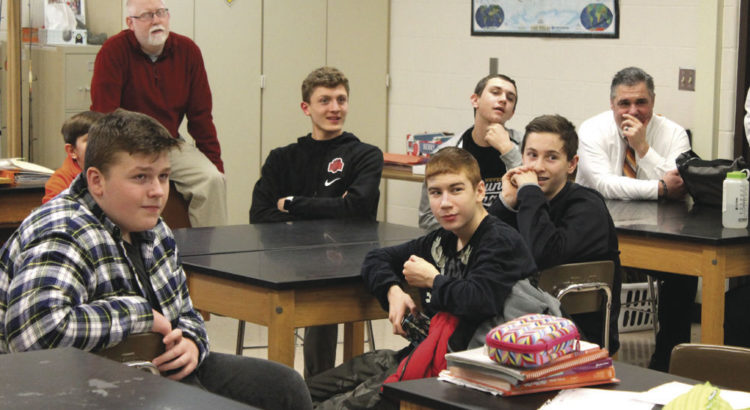
State officials attended a Scarborough board of education meeting to discuss where the state was in its implementation of proficiency-based diplomas as well as the challenges they face, but residents still have many questions.

Maine Department of Education Chief Academic Officer Paul Hambleton and Sen. Brian Langley (Dist. 7), chairman of the Education and Cultural Affairs Committee, spoke before board members, school staff and the public Thursday, March 15 and answered questions about what kind of regulations the state was considering.

Following a state mandate, ninth graders at Scarborough High School must demonstrate they have mastered skills in eight different educational areas in order to graduate. Residents are concerned how the new grading system will affect their children’s chances of being accepted to colleges and universities.

Hambleton, who taught English and special education before joining the department of education, said he’s heard both concerns and success stories from around the state regarding the transition. He spoke before the Education and Cultural Affairs Committee and asked for clarification from the legislature about what the definition of “proficient” should be.

“The struggle I was having was in one particular area of the law,” Hambleton said. “It describes the diploma as something that is awarded when a student reaches proficiency in all eight areas and my challenge with that after talking to colleges is if we take that at straight face value, we were concerned about the way we were setting it up was going to result in a lot of kids not being able to meet that bar.”

Hambleton has been back and forth in discussion with the legislature about amendments to the law, which could look similar to aspects of the No Child Left Behind Act and Every Student Succeeds Act, the latter a reauthorization of the 50-year-old Elementary and Secondary Education Acts.

“Now the question is, what does a diploma mean,” Hambleton said. “The other moving piece is what do we expect kids to be able to do by the time they graduate high school? Do we want to create a statewide definition for all students in all eight areas before they exit high school? That’s been our challenge. Where is that model and where do we land on that? What are we expecting all kids in the state to be able to do regardless of zip code? How do we help all kids get there without creating a barrier that will trip kids up? That’s essentially where we are now, finding that sweet spot.”

Over the next couple weeks, Hambleton said he would work with the legislature and his department to try and answer some of those questions.

Langley spent 27 years teaching culinary arts at the Hancock County Technical Center in Ellsworth before his time in the legislature and was present when the proficiency-based diploma bill was introduced. He said that a proficiency based grading system is not a mandate of the new law and local school districts are free to implement it, create a hybrid system or keep a numerical method of grading.

Langley said he doesn’t know how many schools have chosen a proficiency based grading system, but that eight high schools in Maine will graduate students this year with performance-based diplomas.

The law took effect Jan. 1, 2017 and Langley said as long as the state legislature continues to turn over every few years there will continue to be amendments to the law. However, he is hopeful the changes will be beneficial in the long-term.

“It’s been difficult for those whom the system has always worked for,” Langley said. “They will continue to say it still works. I spent my career working with castaway kids. When they had been given up on they would end up in my program. With a grading system of one through four for a perfect blueberry pie taste, they could begin making one when they compare themselves against a standard and not someone else’s work.

“Most school systems already have proficiency based (models). In kindergarten through second grade, a report card shows if a student can tell time to a quarter of the hour, count to 10 and recite the alphabet.”

Langley said the legislature would wait for an amendment to the law from the department of education or possibly choose to delay further implantation by a year. While not originally planning to attend the Scarborough Board of Education’s meeting, he said he felt obligated when he heard a municipality was discussing how to implement its own methods.

“It’s nice to see so many people out for a school board meeting,” he said. “From my perspective it’s hard and people are very concerned about what’s best for their kids. A lot of school systems have trouble finding enough people to serve on the school board. You will develop thick skin working through the issues and come out better for it.”

Scarborough resident Jeannine Uzzi said while she supports the transition to proficiency-based education, making sure colleges and universities understand students’ transcripts is critical.

“I have no philosophical issue, but the fact of the matter is the onus is on the district to replace the familiar transcript with narrative data and it will take a lot of hard work upfront before the switch to a different grading system,” she said. “Proficiency-based education will not disadvantage students in terms of learning, it should be an advantage. There need to be resources put into recreating how we grade assessments and how teachers are trained. The town has to invest money to support changes.”

Maria Connolly, another resident, was less enthusiastic about the change. She said the discussion about proficiency based education has only caused more anxiety for her children, who are considering private school to ensure a better chance at being accepted to the college or university of their choice.

“You have the future of our children in your hands,” she said. “We want you to leave a legacy of positivity for them. I regret I didn’t get involved in the discussion sooner. I regret my 13-year-old son came up to me at the beginning of the school year asking to go to Cheverus for the rest of his high school career because he was unhappy with the grading system. As a 13-year-old he was worried about the impact on himself. If a 13-year-old saw the writing on the wall, then you as the board of education and superintendent should have.”

Staff Writer Grant McPherson can be reached at news@scarboroughleader.com

Source:

http://leader.mainelymediallc.com/news/2018-03-23/Community_News/State_officials_explain_education_program.html


 

Comparte este contenido:

Need to give quality education in India to students who fly overseas: Rajan

India/March 27, 2018/By: Anup Roy & Nikhat Hetavkar/Source: http://www.business-standard.com

We have fantastic institutions. But remember, we have so many young children coming in now, looking for admission into colleges, says Rajan.

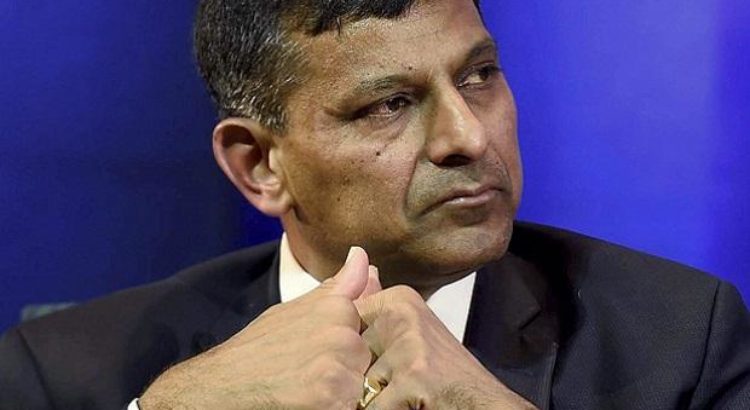
Eminent economist and former Reserve Bank of India (RBI) governor Raghuram Rajan is part of an elite group that launched a unique undergraduate liberal arts private university. In an exclusive chat with Anup Roy and Nikhat Hetavkar, Rajan says there is a need to give quality education in India to students who fly overseas every year. Edited excerpts:You are on the advisory council of KREA University. Will you be teaching also? Just like I was previously associated with ISB (Indian School of Business), I go there once in a while, I taught a course there, and I visit classes. My wife teaches there now. So, there will be an engagement of course. I am working with the academic council and the board. It’s a bunch of people who have come together. I don’t want to occupy any bigger position than I am holding now. I am merely helping, along with a large group of very dedicated people.You are a product of an Indian education system.What do you think the system is lacking now? We have fantastic institutions. But remember, we have so many young children coming in now, looking for admission into colleges. And our system is inadequate in terms of numbers to serve all of them with high-quality education. And of course, every time there is an opportunity to rethink what the old institutions are doing. Can we do things differently? Is there room for something new even when the old continues? We need more institutions to meet the demand. We have 100,000 students going abroad every year. So, we have room for at least 100 universities of very high quality to service those 100,000 students. We have the freedom to create a new model and that’s what is exciting.Why is Dr Rajan, who is very much a public figure, not engaged in the public education system, and why do you have to branch out to the private sphere? It’s not much of private. The intention is to make it available to those who qualify. There will be scholarships for those who can’t afford to pay. There is far more flexibility in creating a new institution when you come together without the existing structures.

That’s why it’s important to try and experiment outside the formal public structure.But even then the fee is Rs 700,000-800,000 per annum for a four-year course. This is what it costs. When we talk about IITs, you will have to look at what the true cost per student the country is paying. Now that is buried somewhere in the government budget. And students are paying only a fraction of it. I paid a fraction of the cost it took the country to educate me. With private institutions, the cost is all out there. If you want quality, you want to pay your faculty a reasonable amount, you want buildings as places in which you feel like learning, you have to spend money. What we are trying to say is that we will try and ensure that anybody who is admitted can afford to pay. Certainly in this country we can’t subsidise education too much.

Education inflation was always a worrying factor for you. Now that if you have such a high fee structure for a premier institute, there is a good chance that other private institutions will hike their fees. I don’t think the intention is to make enormous amounts of money here. This is a not-for-profit institute. What we will try to do is to keep it as affordable as possible. But you have to ensure a certain quality of education. Now if this institution turns out to be overly expensive, alternatives will come up. Competition will always work, even in the education market. We have lots of entities that can provide quantity, but we need to ensure that we have at least some that can provide quality. As I said, there are institutions that are very respectable out there.

Will it have courses like monetary economics etc, where you could be engaged? I think there would be a course in economics. Any course in economics will certainly teach undergrads micro economics, macro-economics and so on. The extent to which it specializes into master’s level courses that will have to stage two or three down the line. Initially what we want to give is strong undergrad curriculum for the students who are coming in.

Source:

http://www.business-standard.com/article/economy-policy/need-to-give-quality-education-in-india-to-students-who-fly-overseas-rajan-118032400010_1.html

Comparte este contenido:

United Kingdom: I Sense The Tide Is Turning On School Funding – But Education Needs Money Now

United Kingdom/ March 27, 2018/Source: https://www.huffingtonpost.co.uk

A promise of “jam tomorrow” will not cut it with the profession, parents and voters who that know any further delay will be devastating.

I have a sense that the tide is turning on school funding.

The latest wave rolled over last Friday when the influential Education Policy Institute reported that the proportion of local authority maintained secondary schools in deficit has nearly trebled. They said that over sixty percent of these schools spent more than their income in 2016-17.

Whilst this report focused on maintained schools, a national report by a firm of accountants a day or so later showed that 55% of the 450 academy trusts that they had audited up to August 2017 were in deficit.

As reported in the Waugh Zone, NAHT’s own survey of members was published as a report this week, with 71% of members expecting to have to set a deficit budget in 2019/20 and 79% by the following year. In this year, 80% had made cuts to teaching assistant roles and 37% had cut teaching roles in order to secure a balancing budget.

If you watched ITV News recently you will have seen the incredibly powerful testimony of our member Michelle Gay, who runs Osborne Primary School in Birmingham. She was in tears as she warned of the dire consequences for her pupils if the school funding crisis was not urgently addressed.

And the government appears to acknowledge that they have work to do to regain the confidence of voters. At the weekend, in a speech to the Conservatives Spring Conference, Theresa May said: “…some people question our motives. They wonder whether we care enough about our NHS and schools.” She also said: “…we might think that the public’s doubts about us are unfair. But they are a political fact which we must face up to.”

Damian Hinds has also said that school funding is ‘tight’.

However he was reprimanded by the UK Statistics Authority for claiming that “real-terms funding per pupil is increasing across the system”. The claim is incorrect because although per-pupil funding will increase in cash terms in the next two years, it will not take into account inflation and cost pressures and does not therefore represent a “real-terms” rise.

But of course, for school funding to truly rise, Phillip Hammond must start taking notice.

I’ve written to The Chancellor to say that: “Education is often allowed to fall behind matters of health, social security and policing as these are headline issues with the electorate.  However, we believe that continuing to push education to the back of the funding queue is damaging to the nation. The children in the education system today are the generation that will ensure the United Kingdom is a success in a post-Brexit world. To fail to provide them with the education and support they need will short-change the nation in the long term.”

I’ve asked to meet with him to discuss our concerns but in the meantime, we’re also determined to continue to reveal the true effect of the funding situation  with a focus on both mainstream and high needs funding.

When the government talks about using education to improve social mobility I know they are genuine in their intent. I also acknowledge that the rhetoric of “there has never been so much money in education” is a device used to align priorities.

But the truth that education funding is now as much a funding priority as any other call on the public purse can no longer be denied. I am quite happy to trade statistics on this one but the stories of cuts to teaching posts, to teaching assistant posts, cuts to the number of subjects schools offer, cuts to support services and dilapidated buildings paint the real picture that rising costs have far outstripped the budgets schools are given.

There is simply not enough money going in and we are in danger of failing a whole generation. Governors know it, parents know it, and parliamentarians are beginning to get it. We have many supporters. You only have to look at the massive activity this week from the parent-led @SaveSchoolsUK campaign.

Of course, the contribution of school leaders remains absolutely critical. They should not be coy about the pressure they face. It’s their pupils that we’re campaigning for.

Education needs money now. A promise of “jam tomorrow” will not cut it with the profession, parents and voters who that know any further delay will be devastating.

The more they speak up, the quicker the tide will turn for good.

Source:

https://www.huffingtonpost.co.uk/entry/school-funding_uk_5ab5276ce4b054d118e277e1

Comparte este contenido:

EEUU: Baltimore city is suing Trump administration over cuts to teen pregnancy prevention education

EEUU/March 27, 2018/BY DR. LEANA S. WEN/Source: http://thehill.com

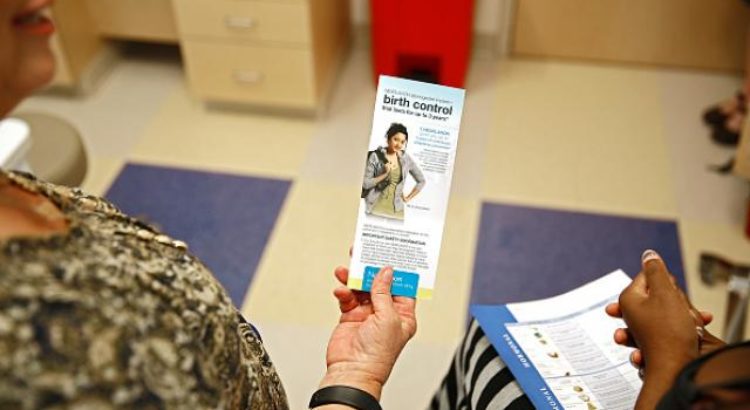
Baltimore City joined a lawsuit brought by Healthy Teen Network against President Trump, challenging a decision by the U.S. Department of Health and Human Services (HHS) to cut funding from evidence-based teen pregnancy prevention education.

In June 2015, the Baltimore City Health Department (BCHD) was awarded an $8.6 million grant to implement comprehensive, evidence-based teen pregnancy prevention education in all of the City’s more than 120 middle schools and high schools.

In July 2017, BCHD received notice from HHS that the grant period would be terminated two years early. This termination amounts to a reduction in overall grant funding to $5.1 million — a funding cut of $3.5 million. Despite multiple phone and written requests for explanation, Baltimore City has not received a response from HHS as to why our program is being terminated.

This cut is not just cruel — it’s unprecedented. Funding for Teen Pregnancy Prevention Initiatives (TPPI) was appropriated by an act of Congress — a statutory mandate — specifically dictating to HHS the parameters under which the funding was to be distributed. The funding appropriated is still available for the five-year grant period.

There is no reason to terminate it early. HHS made its decision despite the early success of the program and strong evidential foundation, violating the Administrative Procedure Act’s requirements that agency decision making not be arbitrary, capricious, an abuse of discretion, or contrary to law.

The funding cut means that 20,000 students in Baltimore will no longer have evidence-based curricula, creating a vacuum of critical health education for vulnerable youth. In addition to eliminating education on physiology, as well as STD and HIV prevention, the funding cut also removes the financial support necessary to train teachers and build capacity for health education. Last year, BCHD trained 115 teachers to deliver evidence-based teen pregnancy prevention programs. These facilitators ensured that more than 10,000 Baltimore City teens received this valuable education during the 2016-2017 academic year alone.

The Trump administration’s actions also jeopardize the newly-formed Youth Advisory Council, which is comprised of Baltimore City teens who serve as peer health advocates and share information about reproductive health. For the participants in this program, their education goes well beyond health: the program gives them control over their lives and empowers them to make the best choices for themselves. One participant told us, “Without this education, I likely would have been a teen mom and my future would have been very different.”

As a doctor and public health official, I have seen how much this evidence- and science-based grant has helped Baltimore. In particular, I am deeply concerned about three major areas if funding is curtailed.

First, this will slash educational attainment and economic opportunities for our youth. This cut comes at a time when Baltimore City has made remarkable progress, reducing teen pregnancy by 61 percent since 2000. Numerous studies show us that reducing teen birth rates increases young girls’ ability to graduate from high school and to have economic stability for themselves and their families.

Second, these funding cuts will increase costs for our City and for our country. In 2010, teen pregnancy and childbirth accounted for nearly $10 billion in costs nationwide. We should be doing everything we can to empower our youth to succeed and to thrive.

The devastating impacts of these cuts extend beyond Baltimore City: These cuts will affect 81 grantees across the country, totaling $213.6 million. As a result, it is estimated that 580,000 students will no longer be provided with essential evidence-based reproductive health education.

Third, these cuts will adversely affect health outcomes for our most vulnerable mothers and children. Teen mothers give birth at higher rates to preterm, low birth-weight babies, who are more likely to have worse health outcomes. Adolescent and teen pregnancy is also associated with increased risk of infant mortality.

There are also poorer long-term health outcomes for the mothers themselves. I voice my concern not just as a doctor, but as a new mother to a seven-month-old son. Parents want nothing more than to have a healthy child. If we have a strategy that will improve health outcomes for our women and children, then the last thing we should do is cut funding that could hurt generations to come.

In Baltimore, we do not see this funding cut as a number. We see the faces of 20,000 teens who will not receive critical pregnancy prevention education. We see the effect on their futures and on their children’s futures. We see the impact on our communities. We fear what this means for valuing science and evidence, and for how we can continue to fulfill our responsibility of protecting health and ensuring well-being.

Leana S. Wen M.D. is the health commissioner of Baltimore City. Follow her on Twitter @DrLeanaWen.

Source:

http://thehill.com/opinion/healthcare/379869-baltimore-city-is-suing-trump-administration-over-cuts-to-teen-pregnancy


Comparte este contenido:

Inakuwa: Educación para acabar con la pobreza

Tanzania/24 de Marzo de 2018/

Acabar con la pobreza. Este es el objetivo de una ONG creadea recientemente por estudiantes dle Colegio Estudio. En Tanzania, ayudarán a la emancipación de las mujeres.

No es nada nuevo que el mundo está lleno de desigualdades, y que, por ello, es necesario que haya gente en el planeta que dedique parte de su tiempo a hacer de él un lugar mejor. Es por eso que un pequeño grupo de universitarios ha creado una asociación sin ánimo de lucro que trabaja para llevar la educación a cada rincón del mundo. Inakuwa, cuyo significado en suajili es creciendo, busca el desarrollo y la autonomía de las personas más desfavorecidas a través de cursos lúdicos, prácticos e instructivos.

“Inakuwa es una oportunidad de terminar con las diferencias que marca nuestra sociedad actual, diferencias que imposibilitan tener una oportunidad a muchas mujeres, niños y hombres para demostrar de lo que son capaces”, afirma Pablo Colomina, vicepresidente de la asociación.

Durante un mes, se impartirán clases de alimentación y cocina, agricultura, economía, arte, medicina, educación sexual e inglés

A pesar de ser una entidad muy reciente, ya que se constituyó en octubre de 2017, en julio ya se podrá ver en pie uno de sus principales proyectos del 2018. El primer plan se llevará a cabo en Rau, Moshi, Tanzania, en colaboración con la ONG Jiendeleze Women, al cual acudirán once voluntarios. En esta localidad hay un centro al que van diariamente 60 mujeres para mejorar la situación de opresión a la que se ven sometidas. Durante un mes, se impartirán clases de alimentación y cocina, agricultura, economía, arte, medicina, educación sexual e inglés.

 Este equipo de jóvenes, cuyo único fin es la igualdad de todas la personas, son estudiantes de todas la ramas, medicina, ingeniería, cine, psicología, historia del arte, y es esta variedad lo que hace posible un desarrollo cultural abordado desde diferentes áreas.

“La concienciación de los más jóvenes acerca de la situación actual en la que viven miles de personas es el primer paso para poder revertir esa situación, por eso creo que Inakuwa es una oportunidad preciosa para intentar poco a poco hacer del mundo un lugar mejor”, reitera Colomina.

Desde el principio, un grupo de estudiantes del Colegio Estudio tenía claro que quería hacer un voluntariado en Tanzania, y se puso manos a la obra para organizarlo, pero después de unas semanas, los jóvenes se dieron cuenta de que podían dar más, hacer más, crear una asociación, con tan solo 19 años. Mes y medio después Inakuwa cuenta con 7 miembros en la junta directiva y más de una veintena de voluntarios

Amantes de la ciencia

Se definen a ellos mismo como “artistas, estudiantes y amantes de la ciencia, de la medicina, del derecho, de la música… somos personas soñadoras, entusiastas, diferentes, inconformistas…”

“Creo que eso es lo que hago normalmente, demostrar que los límites son construcciones, y que no todo vale. Sí hay diferencia entre lo bueno y lo malo. No podemos quedarnos indiferentes”, expresa María Caso, presidenta de la Asociación Inakuwa.

Aunque su primer gran proyecto se realizará en Tanzania, esta no es su única iniciativa. Su intención es ofrecer estos cursos también en España a todas aquellas mujeres que también lo necesiten, porque la desigualdad no solo existe en otros continentes, también está presente a la vuelta de la esquina.

Además, en abril de este año, se llevara a cabo el I Congreso. Todo el dinero recaudado tanto en las entradas como en merchandasing será destinado a la organización.

Durante el día que se lleve a cabo, el 21 de abril, se impartirán una serie de charlas siempre con el hilo conductor y la temática de la mujer en la historia, en la literatura, en las artes y en la ciencia. A pesar de que el público al que va dirigido el congreso es principalmente adulto, los jóvenes tendrán su papel como voluntarios. “Este congreso, será definitivamente un un punto de inflexión para Inakuwa”, expresa Ana Diez, vocal de la Asociación Inakuwa.

Fuente: https://www.elconfidencial.com/alma-corazon-vida/2018-03-20/pobreza-desigualdad-ong-colegio-estudio-tanzania-mujeres_1538354/

Comparte este contenido:
Page 3044 of 6733
1 3.042 3.043 3.044 3.045 3.046 6.733