Page 1208 of 6179
1 1.206 1.207 1.208 1.209 1.210 6.179

Chile – Alerta Educativa: El Uso de la Radio como Experiencia de Pedagogía Popular

Chile. Alerta Educativa: El Uso de la Radio como Experiencia de Pedagogía Popular

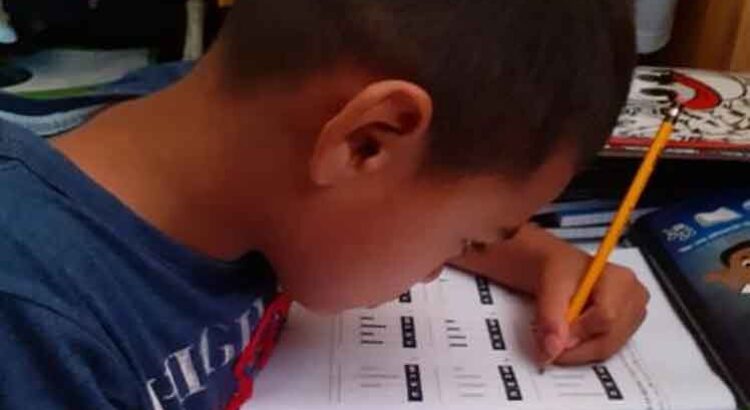
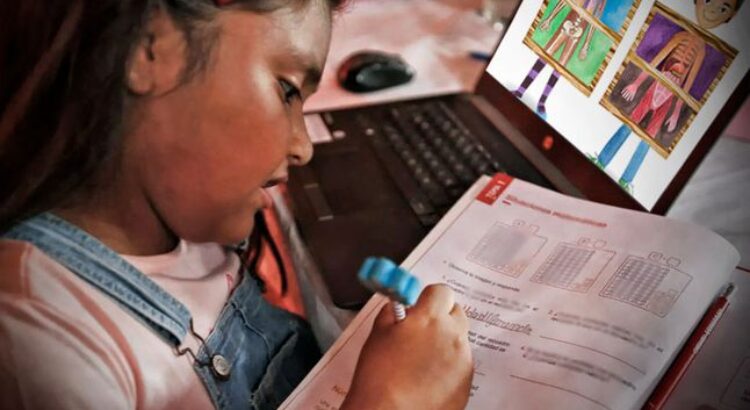
La crisis sanitaria local producto del Covid-19 obligó a las escuelas chilenas y sus comunidades tanto a abandonar sus aulas presenciales como a implementar educación a distancia. Así, en Chile tres coma seis millones de estudiantes escolares realizan hoy clases desde sus casas.

La educación es una institución social clave del funcionamiento cotidiano en nuestra sociedad. En este contexto las instituciones, profesores, estudiantes y, en el caso de las y los más pequeños, los apoderados, intentan por estos días responder al año escolar a través de las distintas plataformas virtuales. Esto llevó a que algunos establecimientos se replantearan nuevas formas de interacción, debido también a que no todos cuentan con las condiciones técnicas o de conexión para realizar una clase virtual, o bien, debido a que internet no ofrecía buenas oportunidades para conectarse. Por esta razón han surgido experiencias de innovación pedagógica que han dado continuidad al proceso de aprendizaje, por ejemplo, por medio del medio comunicativo radial.

Es por esta razón que nos acompañan protagonistas de dos de estas experiencias que usan la radio como plataforma para educar: profesora Ximena Cani y estudiante Constanza Villanueva, ambas en representación del colegio Marcelino Champañat de La Pintana; además, en representación del Liceo Bicentenario Pablo Neruda de Arica, el profesor Carlos Casanueva y la estudiante Lilian Urzúa; y, por último, Juan Ortega, coordinador general de la radio Juan Gómez Millas. Además participaron en el programa, por medio de audios pregrabados, las educadoras Erica Cortés de Calama y Paulina Araya de Curepto.

Fuente de la Información: https://kaosenlared.net/chile-alerta-educativa-el-uso-de-la-radio-como-experiencia-de-pedagogia-popular/


Comparte este contenido:

Ghana: Summary Of Results From IFEST’s Tracking Of Reopening Of Schools: Views Of Teachers And Students

Summary Of Results From IFEST’s Tracking Of Reopening Of Schools: Views Of Teachers And Students

The Institute for Education Studies elected itself to assiduously track the views of relevant stakeholders on issues relating to the reopening of schools, the provisions of relevant PPEs and other related matters during this period of COVID-19.

Our first study focused on the perception of relevant stakeholders on the possibility of reopening of schools. The findings of the report were duly published on our website, media platforms, and shared extensively among the stakeholders in the education sector.

This study which is the second on our research agenda dubbed “Education in the midst of a pandemic” focused on tracking the provision of PPEs to schools, challenges being faced by students and teachers on campus in relation to implementing the relevant health protocols and to ascertain if there is a need to shut down the schools in the midst of the perceived challenges.

IFEST for the past two weeks (1st – 14th July 2020) has monitored and collected data from 1245 respondents comprising (513 teachers and 732 students from Basic and SHS levels) from 80 districts across 13 regions in the country. The selection of respondents was done accidentally.

The summary of the results is presented below.

  1. 78% of the respondents are satisfied with the provision of the relevant PPEs to the schools. These are respondents who answered YES to questions pertaining to the provision of veronica buckets, nose masks, hand sanitizers and thermometer guns.
  2. 22% indicated that they have still not received the full complement of the relevant PPEs. Respondents in districts such as Kasena Nankane, Sekyere Kumawu, Ekumfi, Talensi, Awutu Breku, Awutu Senya East, Boso indicated that they do not have the full complement of their PPEs.
  3. 67% of the respondents indicated that, they have been able to implement the 25/30 students in a class policy. However, 33% mentioned that they have not been able to do so and indicated that there seems to be congestion. Again, in relation to the practice of social distancing on campus, 51% mentioned that they have not been able to implement the social distancing protocols on campus.
  4. 42% mentioned that they were oblivious of what to do when there is a possible incidence of a case of Covid-19 on campus. Respondents from districts such as Ejisu, Juaben, Ekumfi, Bosome Freho, Talensi, Ahafo-Ano South West, Atwima Nwabiagya, Awutu-Senya East etc. indicated that they were unaware whether their schools have been linked to a health facility.
  5. Some of the challenges encountered since the reopening of schools included:
    1. Students not adhering to the health protocols during break time, in their dormitory and after closing.
    2. Lack of accommodation for day students
    3. Congestion in some dormitories as a result of the gold-track students on campus.
    4. Inadequate source of water for students’ usage on campus.
    5. Students refusing to disclose their health status to friends and teachers for the fear of being tagged as an example of a Covid-19 case.
    6. Staff room always full due to the directive by certain heads and directors of education at the district level, that each teacher in the school should be present always (this was prominent among the Basic school teachers)
    7. Continuous use of school premises by external people
    8. Insufficiency of the PPEs provided
    9. BECE candidates’ inability to fully appreciate the indoor break system.

    In relation to whether respondents STILL SUPPORT or DO NOT SUPPORT the decision to partially reopen schools, 69.3% out of the 732 students indicated that, they STILL SUPPORT the reopening of the schools despite the challenges, 26.4% mentioned that they wish the schools will be closed down while 4.3% said they were indifferent. The major reason given by the students was that, they needed to finish their education. For the WASSCE candidates, some indicated that their parents have already purchased their admission forms for entry into the university.

    For the teachers, it was a split decision since 52.1% indicated that the schools should be closed while 47.9% otherwise.

  1. 78% of the respondents are satisfied with the provision of the relevant PPEs to the schools. These are respondents who answered YES to questions pertaining to the provision of veronica buckets, nose masks, hand sanitizers and thermometer guns.
  2. 22% indicated that they have still not received the full complement of the relevant PPEs. Respondents in districts such as Kasena Nankane, Sekyere Kumawu, Ekumfi, Talensi, Awutu Breku, Awutu Senya East, Boso indicated that they do not have the full complement of their PPEs.
  3. 67% of the respondents indicated that, they have been able to implement the 25/30 students in a class policy. However, 33% mentioned that they have not been able to do so and indicated that there seems to be congestion. Again, in relation to the practice of social distancing on campus, 51% mentioned that they have not been able to implement the social distancing protocols on campus.
  4. 42% mentioned that they were oblivious of what to do when there is a possible incidence of a case of Covid-19 on campus. Respondents from districts such as Ejisu, Juaben, Ekumfi, Bosome Freho, Talensi, Ahafo-Ano South West, Atwima Nwabiagya, Awutu-Senya East etc. indicated that they were unaware whether their schools have been linked to a health facility.
  5. Some of the challenges encountered since the reopening of schools included:
    1. Students not adhering to the health protocols during break time, in their dormitory and after closing.
    2. Lack of accommodation for day students
    3. Congestion in some dormitories as a result of the gold-track students on campus.
    4. Inadequate source of water for students’ usage on campus.
    5. Students refusing to disclose their health status to friends and teachers for the fear of being tagged as an example of a Covid-19 case.
    6. Staff room always full due to the directive by certain heads and directors of education at the district level, that each teacher in the school should be present always (this was prominent among the Basic school teachers)
    7. Continuous use of school premises by external people
    8. Insufficiency of the PPEs provided
    9. BECE candidates’ inability to fully appreciate the indoor break system.

    In relation to whether respondents STILL SUPPORT or DO NOT SUPPORT the decision to partially reopen schools, 69.3% out of the 732 students indicated that, they STILL SUPPORT the reopening of the schools despite the challenges, 26.4% mentioned that they wish the schools will be closed down while 4.3% said they were indifferent. The major reason given by the students was that, they needed to finish their education. For the WASSCE candidates, some indicated that their parents have already purchased their admission forms for entry into the university.

    For the teachers, it was a split decision since 52.1% indicated that the schools should be closed while 47.9% otherwise.

    Fuente de la Información: https://www.modernghana.com/news/1017041/summary-of-results-from-ifests-tracking-of-reopen.html

Comparte este contenido:

Estados Unidos: The Baum School of Art auction goes virtual

The Baum School of Art auction goes virtual

The annual Baum School of Art auction is going virtual this year, due to the coronavirus pandemic.

Executive Director, Shannon Fugate, joined Karin and Bo virtually Saturday morning to express the differences in this year’s event and how an online platform could potentially attract more bidders.

«That’s our hope, it’s that folks that maybe wouldn’t have normally come to the event, might log on,» Fugate says. «Folks that haven’t participated in the in-person event find this — particularly with the coronavirus situation — find it more appealing to be able to just watch from their phones.»

The Baum School of Art has art pieces available from regional artists, local artists, and also faculty members.

The 35th annual art auction will take place starting Sunday, July 26 at 12:00 a.m. and run through Saturday, August 1 at 10:00 p.m.

To register and to learn how to support artists in the community, visit givergy.us.

Fuente de la Información: https://www.wfmz.com/news/area/lehighvalley/the-baum-school-of-art-auction-goes-virtual/article_74f1bc86-c8f6-11ea-8f3c-c72b95b5d411.html

Comparte este contenido:

Kenia – Legal Aid: My university de-registered me

Legal Aid: My university de-registered me

I joined a local University on October 26, 1998 for a Master of Arts degree programme but I am yet to graduate.

Dear Eric,

I joined a local university on October 26, 1998 for a Master of Arts degree programme.

In September 2005, I defended my MA Thesis and was expected to carry out corrections within three months from February 2006, so that I submit the corrected thesis to the Director, Board of Postgraduate studies for the award of the degree.

However, absentee supervisors delayed marking corrections. A job opportunity landed me in South Sudan. When I returned to the country in 2015, I found that I had been de-registered on 25th May 2013.

The department marked and gave me a certificate of corrections on November 23,2015. I also submitted two copies of thesis to the Institute.

However, the Director Board of postgraduate studies declined to accept it.

Note that up to today, I have never received my de-registration letter.

I then appealed against de-registration in vain.

Now my question is whether I can move to court since I had paid all fees.

Dear Reader,

Two decades and still chasing the dream of a Master’s degree. You deserve empathy. Your quest demonstrates the significance society places on education.

It is a gateway to many possibilities and privileges. Other factors left constant education remains the most critical means associated with success in today’s world. No doubt, we invest handsomely in higher education expecting rewards after tedious and sometimes long journey that take years. No one has powers to curtail another’s pursuit of education, nor contribute to their failure. Your calling to South Sudan for a job, didn’t in any way reduce your capacity to be a student, especially after completion of course work, awaiting finalisation of the project (dissertation).

Your concerns, herein interpreted as predicaments are both legal and administrative. Several conversational dimensions abound to understand the subject of higher learning in Kenya; a) first, a look at the laws that promote higher education. Second, are processes employed by universities on matters Masters upwards. Third, glimpse of likely dispute handling mechanisms in universities whenever conflicts emerge: and an understanding of remedies available to a student feeling aggrieved?

The legal framework that promotes higher education in Kenya, for which all private and public universities are subject is known as Universities Act, No. 42 of 2012. It stipulates regulations governing the advancement of university education. Provisions at section 18 indicate that every university to which accreditation is granted has full autonomy in the administration of its academic affairs. This includes right to determine lecturers, how and what may be taught It therefore follows that, Universities develop regulations to determine eligibility of persons for admission to a course of study including standards of proficiency to be gained in each examination for a degree, diploma, certificate or any other award. Bottom line is, powers to register or deregister a student are discretionally, permissive and internal. In this case the university may have been faithful to the law under which it is established.

SUPREME ACADEMIC BODY

To contextualise the university’s fidelity to the statute, we get to underpin the place of the university senate in this matter. The university senate often under led by the vice-chancellor is the supreme academic body of the university responsible for adjudicating and standardising admissions, curriculum, examinations, discipline and welfare of students.

By its deliberations the senate can summon all scholastic units of the university to create consensus on all matters of concern.

Therefore, your issue should have been canvassed by this body. However, we are unable to tell from the text.

We are not privy to the facts cited by the University to deregister you, but Article 47 of the Constitution of Kenya 2010 provides that;  where an administrative action is likely  to adversely affect the rights of any person, it behooves the specific administrator to give the affected person:  Prior and adequate notice of the nature and reasons of the proposed administrative action; An opportunity to be heard; Notice to a right of review or internal appeal; Notice of the right to legal representation where applicable; and, Disclosure of information or material to be relied on in taking the administrative decision.

In many jurisdictions around the world, it has been long established that notice is a matter of procedural fairness and an important component of natural justice.

Similarly, section 7 (2)(a)(i)(ii) and (iii) of the Fair Administrative Act, 2015 provides that, a court or tribunal may review an administrative action or decision, if the person who made the decision denied the person to whom administrative decision relates, a reasonable opportunity to state the person’s case.

From the foregoing you have grounds to move the court or tribunal of competent jurisdiction for unfair administrative action manifesting as deregistration.

First, you allege an absentee supervisor delayed to mark your thesis corrections. Second, the department upon your return gave you a certificate of correction on 23rd November 2015, despite deregistration claims of your dated 25th May 2013. Third, no letter has been given to you to confirm the aforesaid deregistration. Fourth, you have made an appeal, which no one has opted to hear.

In this context pray for readmission, similarly an order to compel the university to furnish you with necessary support towards completion of your master’s course.

Fuente de la Información: https://www.nation.co.ke/kenya/life-and-style/family/legal-aid-my-university-de-registered-me-1446312


Comparte este contenido:

Grecia: Virus Resurgence Forces Countries to Reimpose Restrictions

Virus Resurgence Forces Countries to Reimpose Restrictions

People wait in a queue to give their nasal swab samples to test for the coronavirus at a government health center in Hyderabad, India, Wednesday, July 15, 2020. (AP Photo/Mahesh Kumar A.)

PROMACHONAS, Greece (AP) –

Countries around the world are re-imposing lockdowns and implementing new health checks at their borders in an effort to curb a resurgence of the coronavirus before it spins even further out of control.

Starting Wednesday, all travelers arriving in Greece from a land border with Bulgaria were required to carry negative coronavirus test results issued in the previous 72 hours. The new rules, which follow an increase in tourism-related COVID-19 cases, triggered an immediate drop in arrivals compared to recent days.

In the U.S., some state governments and businesses imposed their own new restrictions or sanctions.

In New York, Gov. Andrew Cuomo added to a list now totaling 22 states whose visitors will be required to quarantine for 14 days if they visit the tri-state region. Out-of-state travelers arriving in New York airports from those states face a $2,000 fine and a mandatory quarantine order if they fail to fill out a tracing form.

And Walmart became the largest U.S. retailer to require customers to wear face coverings at all of its Sam’s Club and namesake stores.

Meanwhile, the first U.S. governor to announce he had tested positive for COVID-19, Oklahoma Gov. Kevin Stitt, said he would be quarantining at home. The first-term Republican governor has backed one of the country’s most aggressive reopening plans, has resisted any statewide mandate on masks and rarely wears one himself.

Stitt attended President Donald Trump’s rally in Tulsa last month, which health experts have said likely contributed to a surge in coronavirus cases there.

Florida, meanwhile, has now reported more than 300,000 confirmed coronavirus cases as its daily average death rate continues to rise.

The developments come with more than 13 million cases of coronavirus cases confirmed worldwide, and with over 578,000 deaths, according to a tally by Johns Hopkins University. The actual numbers are thought to be far higher due to a number of reasons including limited testing.

After the border restrictions Greece imposed Wednesday, traffic at the crossing fell by about half, authorities said, but waiting times were still lengthy and a line of cars and trucks was over 500 meters long as the number of tests carried out by medical teams at the border were increased.

Gergana Chaprazova, 51, from Plovdiv in southern Bulgaria, plans to visit the Greek seaside town of Kavala with her husband, and complained that she was being tested again.

“I have to wait for a test but I (already) have test from Bulgaria. I don’t understand why I must have a test here,” she told the AP.

Romania, citing the rising number of infections, announced a 30-day extension for a nationwide state of alert. Measures include mandatory face masks on public transportation and in shops, while restaurants may only serve customers in outdoor locations. The country set a record for new infections on Saturday.

Residents of Australia’s second-largest city, Melbourne, were warned on Wednesday to comply with lockdown regulations or face tougher restrictions. Melbourne’s 5 million people and part of the city’s semi-rural surroundings are a week into a new, six-week lockdown to contain a new outbreak there.

“The time for warnings, the time for cutting people slack, is over,” Victoria state Premier Daniel Andrews said. “Where we are is in a very serious and deadly position.”

In Serbia, which has been hit hard by a spike in infections and anti-government protests, a government crisis team expanded a ban on gatherings of more than 10 people from Belgrade to encompass the entire country. Masks were also made mandatory in public spaces where there is no opportunity for five feet of distancing, such as in lines to enter shops and bus stations.

Renewed restrictions also took effect in Hong Kong, with public gatherings limited to four people, restaurants restricted to takeout after 6 p.m., and a one-week closure for gyms, and selected other businesses. Masks were mandated on public transit for the first time, with the non-compliant being fined.

After a surge in daily infections beginning last month, Israel moved last week to reimpose restrictions, closing events spaces, and bars. It has imposed lockdowns on areas with high infection rates, which in some cases sparked protests from residents.

Officials warn that if case numbers don’t come down in the coming days, Israel will have no choice but to lock the entire country down again, as it did in the spring.

“I don’t see what other tools we have aside from a lockdown,” Israeli Health Minister Yuli Edelstein told the Israeli news site Ynet. “Unless there is a miracle.”

South Africa, Africa’s most developed country, is already showing signs of being overwhelmed by the pandemic — an ominous outlook for the rest of the continent of 1.3 billion people.

A ban on alcohol sales and a night curfew were reimposed this week to reduce the volume of trauma patients to hospitals that are struggling to cope with an influx of COVID-19 patients.

One result was more economic pain in a country which already has a high unemployment rate of 30%.

Concerns exist even in locations that have not experienced outbreaks. A World Health Organization delegation visiting Turkmenistan, a country that has not reported any coronavirus infections, recommended that the country take stronger actions.

In Spain, authorities in the northeastern Catalonia region made fresh attempts to stem the spread of new coronavirus outbreaks as health experts warned that more and better contact tracing is needed.

Since midnight Tuesday, 160,000 residents in and around the city of Lleida were forbidden to leave their homes unless it’s properly justified. The area was closed off, with police checkpoints outside every municipality.

Authorities in the English town of Blackburn also imposed new restrictions on social mingling amid what they say is a “rising tide” of new coronavirus cases. Director of Public Health Dominic Harrison said that if infection numbers didn’t fall by July 27, officials would begin to reimpose lockdown measures such as the closing of shops and other businesses.

And in Tokyo, Gov. Yuriko Koike said Wednesday that the spread of the infections in the Japanese capital have escalated to levels tantamount to “issuing an alarm” and requested that residents and business owners step up their preventive measures.

Fuente de la Información: https://hamodia.com/2020/07/15/virus-resurgence-forces-countries-reimpose-restrictions/

Comparte este contenido:

España: Al ritmo de cada estudiante en clases presenciales o a distancia

Europa/España/19-07-2020/Autor(a) y Fuente: www.educaciontrespuntocero.com

Con el objetivo de que los centros dispongan de todas las opciones para el próximo curso, la plataforma adaptativa Snappet ha desarrollado la opción ‘Snappet en casa’, que permite trabajar desde los hogares contenidos curriculares para Matemáticas, Lengua castellana e Inglés. Se puede solicitar un proyecto piloto gratuito.

El curso que viene se presenta con  gran incertidumbre. ¿Cuándo podrán volver los alumnos al aula? ¿Habrá nuevas llamadas a confinarse temporalmente? Todo apunta a que los centros deben planificar el próximo curso teniendo en cuenta esta situación y eso lleva a buscar una solución de aprendizaje que se pueda usar en clase y también en casa. Por ello, la plataforma de aprendizaje adaptativo Snappet incluye la opción ‘Snappet en casa’, y se adapta a los posibles escenarios, trabajo online, trabajo en el aula o mezclando los dos. Son contenidos curriculares para Matemáticas, Lengua castellana e Inglés (en las lenguas autonómicas catalán, valenciano, euskera y gallego).

Con un chat

clases presenciales o a distancia

Para resolver los posibles problemas de comunicación entre profesores, alumnado y familias en esta ‘educación a distancia’, Snappet ha desarrollado un chat en la plataforma de forma que puedan estar en contacto de forma sencilla y eficiente.

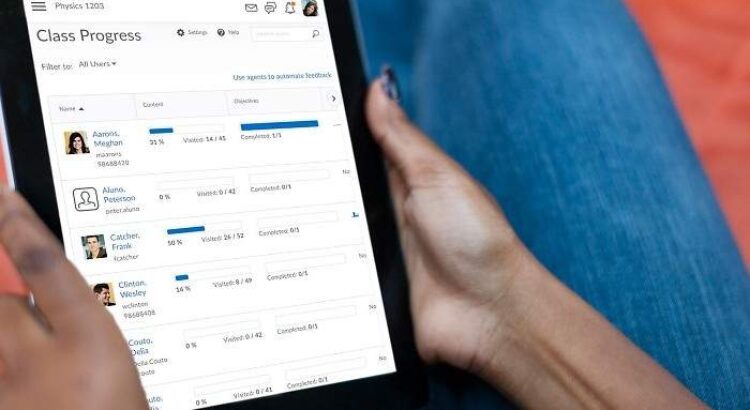
Una de las principales características de la plataforma es que los docentes pueden ver en tiempo real el progreso de los estudiantes, de forma que pueden mandar las tareas adaptadas a las necesidades de cada uno de ellos, tratando así la diversidad en el aula. De igual modo, su tecnología adaptativa permite que avancen a su ritmo.

En cuanto a los dispositivos, Snappet ofrecía tabletas de 7 pulgadas a los centros que no dispusieran de equipos propios. A partir del próximo curso, a esta opción se suma contar con Chromebooks en el aula, ya que así lo han solicitado numerosos colegios.

Pruebas piloto

clases presenciales o a distancia

Todos los centros educativos que deseen probar Snappet en sus aulas pueden hacerlo gracias a una prueba piloto que ofrece acceso libre a esta plataforma de aprendizaje adaptativo. Con una duración de 8 semanas, permite así el acceso a miles de actividades interactivas de Lengua, Matemáticas e Inglés, incluyendo todas las lenguas de las distintas comunidades. Además, los docentes disfrutarán de formación continua gracias a los ‘coaches’ que le acompañarán en todo el proceso.

Además, y en el caso de que los centros no dispongan de dispositivos (siempre pueden emplear los propios), Snappet se los facilita, así como un router para evitar problemas de conectividad.

Más de 500 colegios se inscribieron el pasado curso, destacando sus múltiples posibilidades:

¿Qué nos dicen los maestros que han participado en el piloto? La personalización real en el aula, la inclusividad, la alta autonomía de los niños, los alumnos aprenden de sus errores, la mejora en el rendimiento, el cambio de dinámica en el aula, la motivación, el gran volumen de ejercicios de todo tipo para poder tener siempre lo que necesitan a mano, sin tener que dedicar horas y horas buscando y adaptando, optimizar el tiempo en el aula y poder dedicar más tiempo a cada alumno…

Todos los centros que deseen probarlo puede hacerlo escribiendo un correo electrónico a la dirección info@snappet.es.
Fuente e Imagen: https://www.educaciontrespuntocero.com/noticias/clases-presenciales-o-a-distancia/
Comparte este contenido:

El Salvador: La violencia ha acabado con la vida de 42 niños este año

América Central/El Salvador/19-07-2020/Autor(a) y Fuente: www.elsalvador.com

Cifra corresponde a registros de Fiscalía. También reporta denuncias de otros 1,087 menores víctimas de ataques sexuales y de maltrato infantil.

La Fiscalía General registra los asesinatos de 42 niños en el transcurso de este año. A los homicidios de estos menores se le suma otros 1,087 casos en que se ha denunciado acciones violentas contra niños como ataques sexuales y maltrato infantil que han sido denunciadas en el primer semestre de 2020 en las unidades especializadas que investigan delitos contra de la niñez.

El más reciente crimen que ha consternado a la sociedad salvadoreña es el de Erick G., un niño de tres años que fue hallado muerto este miércoles, tras cuatro días de estar desaparecido. Su cuerpo estaba en un terreno cubierto de piedra volcánica en la zona de El Playón, de Quezaltepeque, La Libertad.

Las investigaciones preliminares aún no arrojan pistas ni indicios de quién o quiénes habrían cometido este atroz asesinato de un indefenso niño, según las autoridades.

Fuentes policiales aseguraron que por las condiciones en las que se extravió Erick G. y en las que se encontró su cadáver, existe bastante probabilidad de que el agresor o agresores puedan ser conocidos del niño y de la familia.

Al igual que Erick, hay menores que también han sido víctimas de ataques armados que han acabado con sus vidas. Tal es el caso de Jeremías A., quien tenía 11 años.

Jeremías fue atacado a balazos, la noche del 27 de abril pasado, por dos motociclistas, mientras él estacionaba el pick up de su padre en la cochera de su casa. El ataque se produjo en el caserío Santa Rita de El Porvenir, Santa Ana, en la carretera hacia Candelaria de la Frontera.

Pero la violencia criminal no solo ha cobrado la vida de niños y menores a manos de las pandillas o delincuentes; sino que también hay pequeñas víctimas, a quienes asesinaron justo en momentos de nacer.

Son casos en los que sus madres, supuestamente, han asesinado a sus hijos recién nacidos, como el ocurrido el 17 de junio pasado en San Miguel. En esa ocasión, Lesli Ramírez, con 20 años de vida, le habría causado la muerte a su bebé.

Aunque la joven alegó que no sabía que estaba embarazada, eso no fue suficiente para convencer a un tribunal de San Miguel de que la dejara en libertad. Lesli guarda prisión en un penal mientras se llega el día de su audiencia preliminar.

La hija de Lesli tenía cinco lesiones de arma blanca en el cuello que le causaron la muerte de manera inmediata, según el reporte fiscal.

La violencia contra la niñez y adolescencia no solo se manifiesta con quitarle la vida a un menor de edad. Hay otras vulneraciones a la integridad física y mental de niños como ataques sexuales y maltrato.

Las cifras que maneja la Fiscalía General a través de la Dirección de Análisis, Técnicas de Investigación e Información, dan cuenta de 1,087 niños que fueron víctimas de esos delitos en el primer semestre de este año, según denuncias.

El reporte detalla que 119 menores sufrieron violaciones sexuales agravadas, otras 399 fueron víctimas de violación sexual; mientras que 298 recibieron algún tipo de agresión sexual y hubo 271 niños víctimas de maltrato infantil.

La mayoría de las víctimas que sufrieron ataques sexuales y maltrato eran niñas. 725 por agresiones sexuales y 149 por maltrato, según los datos oficiales.

Así también, 91 niños sufrieron agresiones sexuales y otros 120 fueron víctimas de algún tipo de maltrato, en su mayoría por sus padres, algún familiar o conocido.

La mayoría de las víctimas (436) de los ataques sexuales, tenían entre 13 y 17 años. Otros 380 que sufrieron abusos sexuales tenían entre 0 y 12 años de edad.

En el caso del maltrato infantil, los menores de 12 años son los más castigados: 198 víctimas tenían entre 0 y 12 años; en 73 casos tenían entre 13 y 17 años.

Fuente e Imagen: https://www.elsalvador.com/eldiariodehoy/violencia-42-ninos-asesinados-2020/733701/2020/

Comparte este contenido:
Page 1208 of 6179
1 1.206 1.207 1.208 1.209 1.210 6.179