América del Sur/Colombia/02-04-2020/Autor(a): Juan Manuel Reyes Fajardo/Fuente: www.publimetro.co
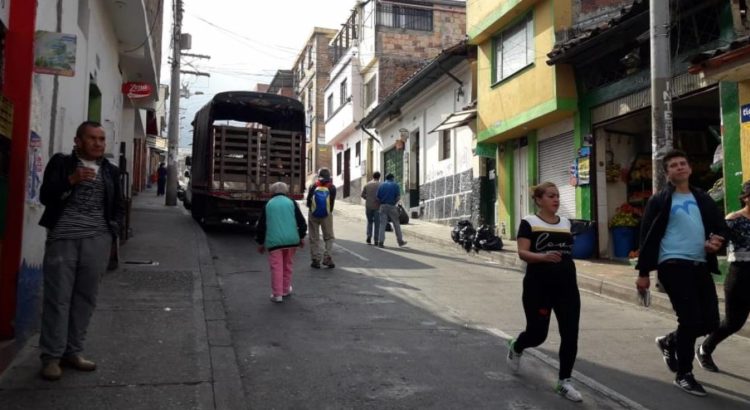
Una encuesta entre empresarios de Acopi planteó que el 19% de mipymes podrían cerrar tras una cuarentena ampliada en Bogotá.
Gran parte de la preocupación por una cuarentena ampliada en Bogotá radica en el impacto que podría tener sobre la economía. La hipótesis de la alcaldesa Claudia López de un posible confinamiento durante tres meses podría acabar con el tramado económico de la región. Así lo plantea una encuesta de Acopi Bogotá-Cundinamarca, donde se preguntó a sus afiliados sobre el efecto de esta cuarentena en sus negocios.
Los encuestados fueron 115 propietarios de micro, pequeñas y medianas empresas (mipymes) en Bogotá y la Sabana, que dieron una visión crítica a la situación. Los encuestados aseguraron que, en un 54%, planean reducir el número de sus trabajadores para sobrevivir a la cuarentena. Un 19% aseguró que tendrá que cerrar operaciones totalmente. Esto pondría en riesgo a más del 50% de los trabajadores de las empresas encuestadas.
Además de esto, la cuarentena ampliada en Bogotá tendría serios impactos para el recaudo de impuestos. Los empresarios aseguraron que no podrían pagar recaudos como impuestos prediales, IVA o renovaciones de Cámara de Comercio. Sobre todo, el 95% de los empresarios aseguraron que no podrían pagar recursos de valorización.
«Con estas decisiones los niveles de desempleo en el corto plazo serán más del 25% y la supervivencia comercial y financiera de las mipymes no será viable», aseguró Acopi. Aún así, el gremio aseguró que apoya las decisiones del gobierno nacional y local en medio de esta coyuntura.
El gremio recomendó medidas agresivas para salvar la integridad de los colombianos. Entre estas están protecciones de un 80% de la nómina por parte del Gobierno, congelar todos los créditos durante seis meses, líneas de crédito blandas a pagar hasta 2026 y congelar los pagos de arrendamientos, alimentos y materias primas.
Aún así, la secretaria de Desarrollo Económico de Bogotá, María Carolina Silva, aseguró a Noticias Caracol que la situación puede soportarse. Según la funcionaria, aunque se podrían poner 1,8 millones de empleos en riesgo, el 75% de las empresas de Bogotá podrían resistir hasta dos meses «si no venden un fríjol».
Fuente e Imagen: https://www.publimetro.co/co/noticias/2020/04/01/empleo-se-da-una-cuarentena-ampliada-bogota.html
North America/United States/02-04-2020/Author and Source: www.rt.com
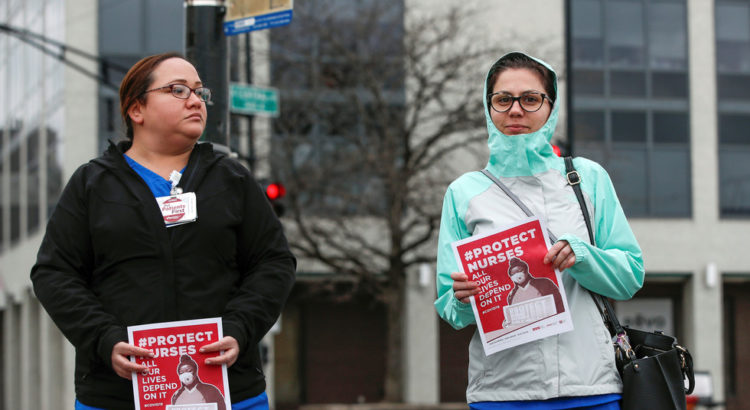
National Nurses United has accused HCA, a healthcare company that runs a chain of hospitals across the US, of putting members at risk when treating coronavirus patients. Protests this week will demand better work conditions.
“Nurses at various HCA hospitals are reporting that they have had to work without proper protective equipment,” Jean Ross, president of National Nurses United, said in a statement on Wednesday.
Nurses from HCA hospitals across seven states will protest through April 3 by picketing outside, demanding better work conditions.
Among the safety complaints cited by Ross are reports of having to reuse protective masks, not being informed when nurses are in contact with a confirmed coronavirus patient, and some nurses being told not to wear masks at all because it “scares” patients.
The union is demanding HCA hospitals provide “optimal personal protective equipment for nurses and other staff,” which includes respirators and “head-to-toe coverings.”
Keenan Willard@KeenanKFOX_CBS
#BREAKING: Nurses at Las Palmas Del Sol will be protesting the hospital’s lack of COVID-19 preparedness.
According to the LPDS Union, the protest will be tonight at 6:30 in front of Del Sol.
NNU represents 10,000 registered nurses at 19 HCA hospitals in states such as California, Florida, Kansas, Missouri, Nevada and Texas.
This will not be the first time medical professionals have protested during the coronavirus pandemic. Nurses at Jacobi Medical Center, located in New York City – a city struggling with hospital capacity and a shortage of proper equipment – staged a protest on Saturday over the conditions they were working under, which includes reusing medical masks due to a lack of supplies.
“We’re all at risk if we lack the supplies we desperately need,” one nurse at the protest told the New York Post. “It’s a pandemic. If we get sick, our community gets sick. We are all people and our patients deserve better.”
Hospitals in states such as Illinois, Georgia and California have seen nurses protest for similar reasons. The NNU’s new protest will be the first effort coordinated across multiple states.
Source and Image: https://www.rt.com/usa/484710-nurses-protest-coronavirus-hca-hospitals/
Europa/España/02-04-2020/Autor(a): Daniel Vidal/Fuente: www.laverdad.es
La empleada llamó a su médico de cabecera tras perder el gusto y el olfato, y ayer le notificaron los resultados aunque el IMAS señala que «no ha estado en contacto con los internos» y «no hay peligro de contagio»
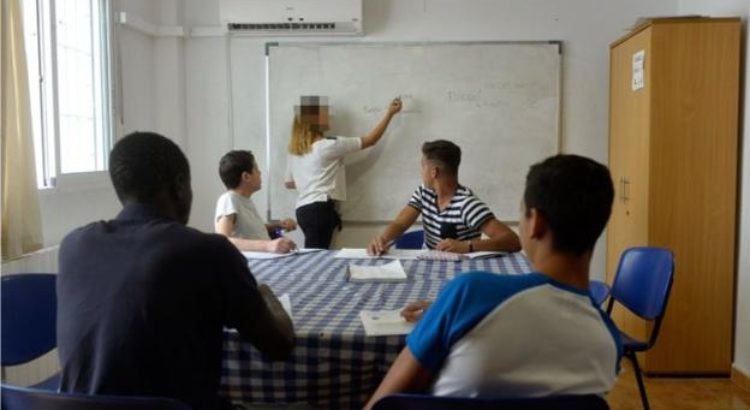
La Consejería de Salud ha detectado un nuevo caso de coronavirus en una educadora social de la Fundación Diagrama, que gestiona el centro de menores extranjeros no acompañados (‘menas’) Ankaso, en Alguazas. Esta trabajadora llamó a su médico de cabecera el pasado día 24 de marzo tras perder el gusto y el olfato, y el día 30 recibió los resultados positivos de la prueba. Actualmente se encuentra aislada en su domicilio.
Según fuentes de la Dirección General de Familias y Protección de Menores de la Consejería de Mujer, Igualdad, LGTBI, Familias y Política Social, la educadora «no ha tenido contacto con los niños», por lo que «no hay peligro de contagio». Pese a todo, la Consejería de Salud, tal y como indica el protocolo del Ministerio de Sanidad, está haciendo el pertinente estudio de los contactos que haya podido mantener esta trabajadora para descartar posibles positivos.
Fuente e Imagen: https://www.laverdad.es/murcia/educadora-social-centro-20200401124721-nt.html
Asia/China/02-04-2020/Autor(a) y Fuente: spanish.xinhuanet.com
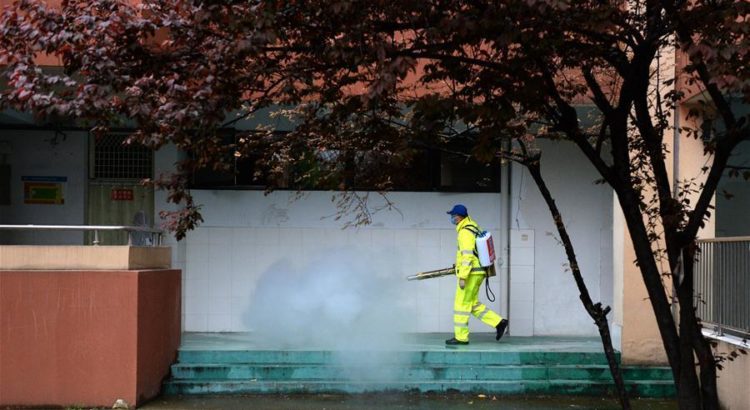
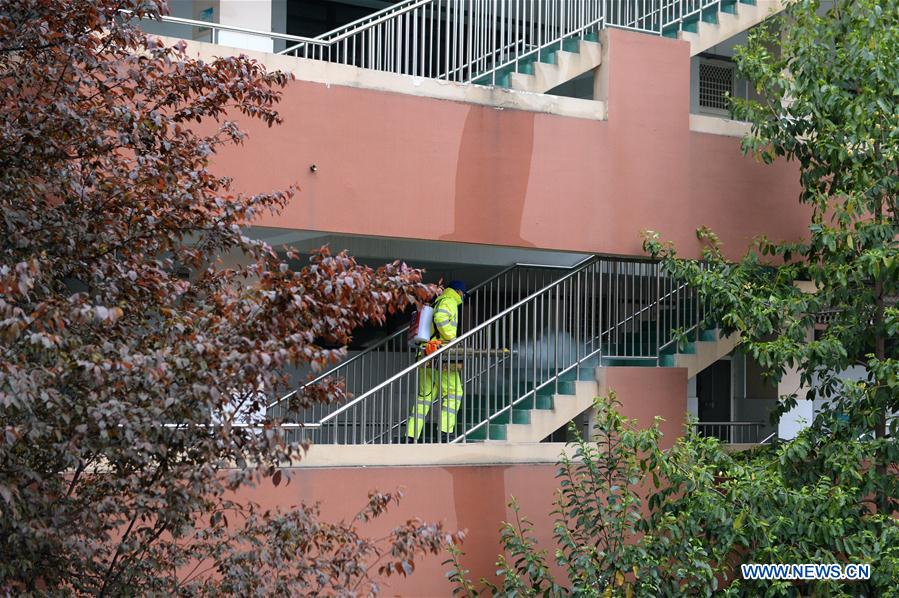
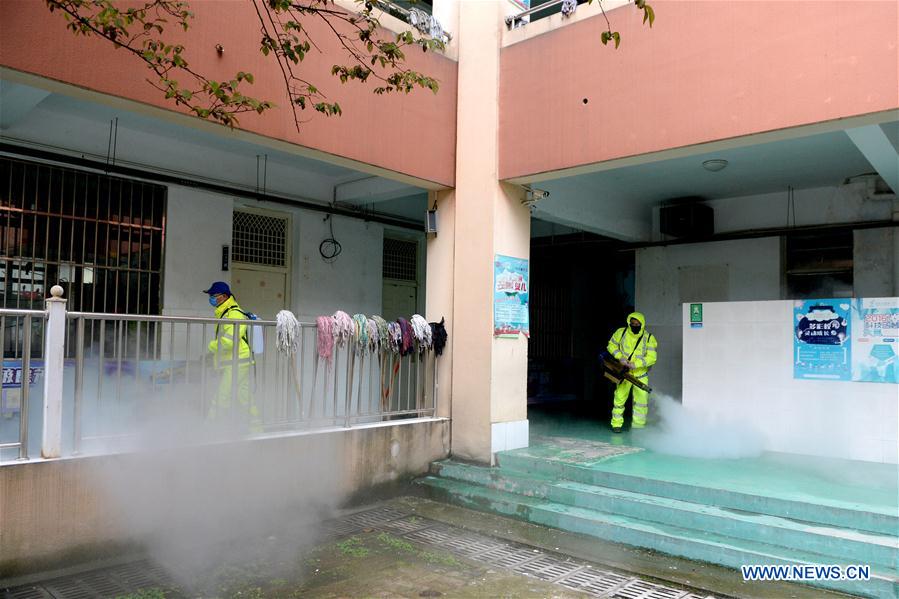
Un trabajador desinfecta el interior de la Escuela Primaria Jinhu, en Hefei, capital de la provincia de Anhui, en el este de China, el 29 de marzo de 2020. La Escuela Primaria Jinhu de Hefei fue desinfectada exhaustivamamente preparándose para la reapertura de la escuela. (Xinhua/Huang Bohan)
HEFEI, 29 marzo, 2020 (Xinhua) — Un trabajador desinfecta el interior de la Escuela Primaria Jinhu, en Hefei, capital de la provincia de Anhui, en el este de China, el 29 de marzo de 2020. La Escuela Primaria Jinhu de Hefei fue desinfectada exhaustivamamente preparándose para la reapertura de la escuela. (Xinhua/Huang Bohan)
HEFEI, 29 marzo, 2020 (Xinhua) — Trabajadores desinfectan el interior de la Escuela Primaria Jinhu, en Hefei, capital de la provincia de Anhui, en el este de China, el 29 de marzo de 2020. La Escuela Primaria Jinhu de Hefei fue desinfectada exhaustivamamente preparándose para la reapertura de la escuela. (Xinhua/Huang Bohan)
Fuente e Imagen: http://spanish.xinhuanet.com/photo/2020-04/01/c_138931733.htm
Europe / Spain / 01 / April / 2020 / Author: Ulia F. Cadenas / Isabel Valdés / Source: english.elpais.com
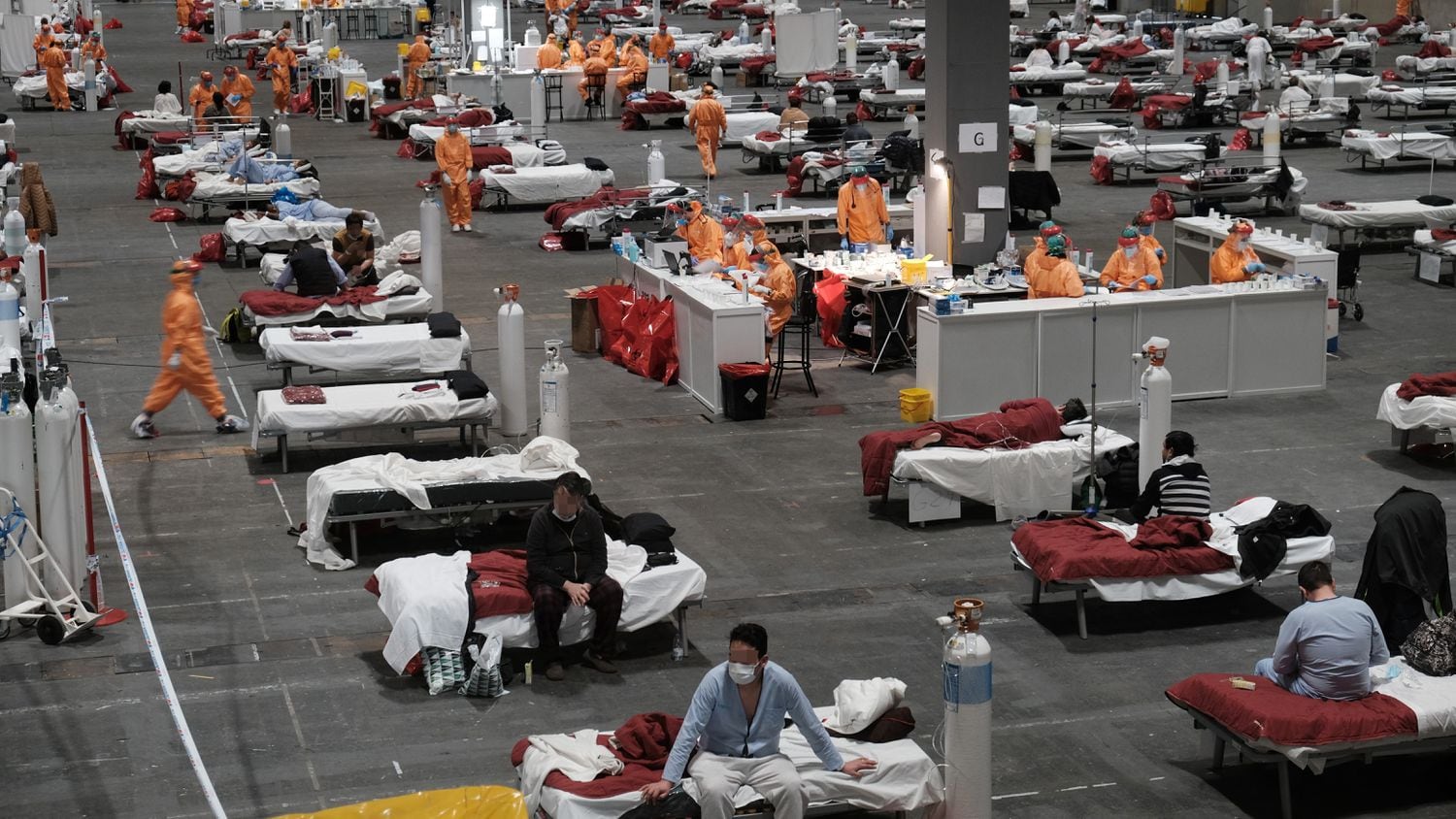
The convention center in the Spanish capital was meant to help ease the strain of the coronavirus crisis, but staff complain it is overcrowded and poorly managed
In Pavilion 5 of the Ifema convention center in Madrid, which has been turned into Spain’s largest field hospital to manage the rising number of coronavirus patients, there is neither two meters of distance between one patient and another, nor adequate personal protective equipment. The conditions of nurses and doctors are “shameful” and they don’t even have the computer program they need to work.
This is what doctors, nurses, guards and administration staff at the center told EL PAÍS this past weekend.
“There is greater risk of contagion than of being cured in this situation. It’s a disaster,” says one nurse.
Ana González, another nurse who works a a local health center in Móstoles and in intensive care units (ICUs) in different hospitals in Madrid, went to the field hospital on Wednesday to volunteer. “The patients are overcrowded …. It looks like [a scene from a] war, there are barely two steps between beds, there is one bathroom for all the patients, and they had gone 13 days without showering until a shower was installed on Friday. There are no stands to hold up drips, we are using broomsticks!”
These are just some of the dozens of complaints from health workers. The terrible conditions faced reached their limit on Sunday, according to Spain’s CCOO labor union, which argues that the protocol for personal protective equipment is not being met, that there is overcrowding, and that the changing rooms fail all safety measures aimed at avoiding contagion and stopping the spread of the virus.
Pavilion 5 at Madrid’s Ifema exhibition center on Friday.
Up until now, the field hospital has been run by volunteers, but many are thinking of refusing to work in these conditions. On Sunday, trash bags were handed out instead of caps to protect heads, and non-protective green gowns were put on with a plastic apron.
“The waiting areas and the changing rooms are being filled up with scrubs, caps and personal protective equipment that we have been using before with infected patients. There is not even a meter of distance between one person and another,” staff have told the union. This situation breaks all safety protocols set out by the Madrid region’s public health department for health workers and non-health workers who have direct contact with patients.
“[I work] three nights in a row and where I am there is no replacement. There are very few of us in Summa [Madrid’s emergency services] and the patients are very unwell,” says a nurse. “They are left exhausted by the fever, the diarrhea caused by [HIV medicine] Kaletra and an indescribable sadness.”
The regional government in Madrid has recognized that there was a “one-off organizational problem” on Sunday that led to complaints from professionals, but says that the field hospital is being provided with the necessary resources. “There are professionals who have decided to also cover their gowns, caps and shoes with plastic bags,” authorities added.
The CCOO union has warned that it would not allow workers to be threatened for refusing to work without adequate personal protective gear. In response, the Madrid regional government said that they had seen no evidence of such threats and encouraged staff to report such cases “because they would not be tolerated.”
Some health workers insist that the threats are real. One of them says they are “veiled but continuous.” “They don’t want people to know how things are being done and there is pressure all the time,” they explain.
The pro-public healthcare group Coordination Against Healthcare Privatization (CAS) says that “many patients from residencies were brought in directly, without a Covid-19 diagnosis” this weekend, and added that the field hospital did not have the resources needed to carry out the necessary analyses. “The computer program is not installed and there is no way of creating a patient’s history.”
Volunteers for 5,500 beds
Since the field hospital opened, 1,110 patients have been admitted and 424 have been discharged after recovering. On Sunday night 750 patients were in the hospital. The space is set to have capacity for 5,500 hospital beds and 500 intensive care beds. “But obviously they are not all there right now. Not even those that are there have the optimum conditions for patients,” says one family doctor.
Another family doctor, Carmen, 45, who works in a health center in Móstoles, received a call on Friday afternoon from her boss. They needed people at the field hospital “right away.” She told her husband, 52, who is also a doctor, and the two of them went on Saturday to Pavilion 5, the first of the three that the Madrid government converted to ease the strain on hospitals in the region.
Intensive care beds at the Ifema field hospital.MINISTERIO DE DEFENSA
“That first day was devastating. Nothing had been put together. It was all very makeshift, it was very cold. It is a sad site, a grey concrete hangar, with beds separated without screens, with no privacy,” says Carmen. The best part of the center was the attitude of the health workers. “We are all volunteers except for the internists who coordinate. The volunteers are very eager, we came to give it our all, to do what was needed.” But, as one nurse notes, “enthusiasm doesn’t protect you, and willpower doesn’t cure.”
That job is done by personal protective gear. Carmen arrives at 7.30am at Ifema and it takes the Samur staff at least 10 minutes to put on her four gloves, socks over her pants, fix everything in place with duct tape, a plastic suit that is “fearfully hot,” two face masks and protective facial visor “like welders wear, only transparent.” This is the highest level of protection.
“They are very heavy suits to wear, everything is tight and it’s very hot. We come out of them literally sweating. Working seven hours this way is very hard,” says Carmen.
But it is better than not having access to this equipment at all, says one nurse. “The dehydration under this weight of plastic and the marks and the injuries that it can give you, these are all things that we all want, rather than feeling completely unprotected, thinking that we are going to get infected and infect the patients.”
Prioritizing patients
Every patient at the Ifema field hospital has mild symptoms and has been transferred from a hospital in Madrid, a region which has been overwhelmed by the health crisis. When a patient arrives with more serious symptoms, or their condition worsens, the health workers have to make a decision.
“Some are transferred to ICUs in hospitals, but there are others, who because of their age or the fact they have multiple illnesses, are candidates for sedation,” says Carmen. The doctor from Móstoles explains the triage system: prioritize those with the greatest chance of survival when faced with a shortage of resources to help critical patients. “The ICU beds are limited. Sadly, you have to select patients. We can’t send patients over 90 to the ICU when a 30-year-old needs it… It’s very hard,” she says.
Since she started to work at the Ifema field hospital, Carmen has discharged five patients and her husband two. On Tuesday she had to sedate an 87-year-old woman, a moment she won’t ever forget. “It’s very sad but I am happy that I made it so that she would not die alone.” A day before her condition worsened, the woman suddenly improved and asked to speak with her daughter, by gesturing to her cellphone. Hours passed and when Carmen realized she was not able to do any more for the woman, she called the patient’s daughter again. This time, so that they could say goodbye. “I wanted for her to hear her daughter’s voice before she was sedated. [During the call] the grandmother smiled occasionally. I heard that they were talking to her about her granddaughter.”
Ana González, a 22-year-old volunteer nurse, does not go home when her shift ends “I stay in case someone gets dizzy and I have to go back in.” According to González, the working hours at Ifema are set by the protective suit: between four and six hours a day with one day off a week: “And that day, we work for free.” With the protective suit on, health workers cannot go in for more than six hours. But many staff who worked last weekend say that after experiencing the conditions on Sunday they may not last a minute longer. “And we can’t allow ourselves to take sick leave,” says one health worker. “The worst is yet to come.”
English version by Melissa Kitson.
Source and image: https://english.elpais.com/society/2020-03-30/health-workers-and-unions-at-madrids-ifema-field-hospital-its-a-disaster.html
01/04/2020/Autor: Internacional de Trabajadores de Amazon/Fuente: sinpermiso.info
Si bien la pandemia de Coronavirus ya ha matado a miles de personas y matará a muchas más, los almacenes de Amazon continúan funcionando las 24 horas, los 7 días de la semana.
Los gobiernos de todo el mundo ordenan el distanciamiento social, pero al mismo tiempo obligan a los trabajadores a seguir trabajando.
Los paquetes de Amazon fluyen a través de ciudades que, debido a la alta propagación del virus, han sido selladas del resto del mundo.
En los países donde el público tiene prohibido reunirse, Amazon puede operar como un «estado dentro del estado», libre de ponernos en peligro y explotarnos, mientras miles continuamos trabajando en espacios cerrados.
Los conductores de camiones y los mensajeros subcontratados, las venas de nuestra economía global, mueven el virus entre los depósitos. Incontables bolsas pasan de mano en mano y entre instalaciones. De hecho, Amazon obliga a los trabajadores a arriesgarse a contagiarse entre sí y luego llevar el virus a nuestras familias, lo que permite su propagación.
Esta crisis ha afectado mucho a todos los trabajadores (no solo a nosotros en Amazon). ¡Algunos trabajadores, como enfermeras o trabajadores de supermercados, ni siquiera obtienen el equipo de protección adecuado!
Los estados de emergencia supuestamente destinados a contener la pandemia también son un intento de criminalizar incluso las más pequeñas protestas y piquetes.
Estas políticas le dan al gobierno herramientas para silenciar a los trabajadores, quienes ven que las políticas irresponsables de Amazon están facilitando la propagación del virus.
Pero incluso si Amazon nos obliga a seguir trabajando en estrecha proximidad, a un ritmo de trabajo cada vez mayor y, a menudo, sin protección de la salud, la semana pasada miles de nosotros nos organizamos para protestar.
Protestamos contra el intento de la compañía de sacar provecho de esta crisis mientras pone en riesgo nuestra salud.
Protestamos en Polonia y en España, hicimos huelga en Italia, en Francia y en Nueva York.
Demostramos que es posible en todas partes luchar por nuestra salud y nuestras vidas y que no nos detendremos.
Amazon también debe saber que un aumento salarial, diferente de un país a otro como si nuestras vidas tuvieran precios diferentes según su nacionalidad, no será suficiente para comprar nuestra salud y seguridad.
Nosotros, los trabajadores de Amazon de todo el mundo, no permaneceremos en silencio mientras la codicia de nuestros jefes y la cobardía de los gobiernos nos pone en peligro a todos.
Hacemos un llamamiento a los trabajadores en todas partes para que tomen medidas de seguridad y practiquen el distanciamiento social, pero, al mismo tiempo, ¡se organicen, protesten y estén preparados para defenderse!
Exigimos:
– El cierre inmediato de los almacenes de Amazon hasta que la Organización Mundial de la Salud declare esta pandemia de coronavirus terminada.
Durante este cierre, Amazon debe pagar a todos los trabajadores su salario completo.
– Que Amazon dé 20 mil millones de dólares a los sistemas de salud pública de los países donde Amazon mantiene operaciones.
– Hasta que Amazon cierre sus almacenes, la compañía debe conceder licencia por enfermedad remunerada a todos los trabajadores que están enfermos, en cuarentena, que necesitan cuidar a sus seres queridos o que necesitan cuidar a los niños debido al cierre de las escuelas.
Hasta que Amazon cierre sus almacenes, los trabajadores de Amazon deben recibir un plus de riesgo.
– Hasta que Amazon cierre sus almacenes, no debe haber cancelaciones o despidos relacionados con las tarifas o horas extras para que los trabajadores puedan priorizar la seguridad sobre la productividad en estas condiciones de trabajo peligrosas.
– Hasta que Amazon cierre sus almacenes, la compañía debe reducir el tiempo de trabajo en sus almacenes, sin reducir los salarios.
Los trabajadores necesitan más tiempo libre remunerado para permitirnos satisfacer nuestras necesidades básicas y lidiar con el impacto de Coronavirus en nuestras vidas.
América/Estados Unidos/01/04/2020/Autor y fuente: tercerainformacion.es
El senador Bernie Sanders califica de “vergüenza internacional” la muerte de los estadounidenses que no van al hospital por temor a los altos costos médicos.
“Hoy las personas están muriendo sabiendo que están enfermas, pero no van al hospital porque no pueden pagar la factura […] Esa es una desgracia internacional”, denunció el domingo el aspirante demócrata a la Presidencia de EE.UU.
En un mensaje difundido en su cuenta en la red social Twitter, Sanders criticó el continuo crecimiento de la cifra de muertos y contagiados por el coronavirus en EE.UU., en medio del aumento de las críticas internas y externas a la gestión de la pandemia por parte del presidente estadounidense, Donald Trump.
Debido a tal situación, el senador estadounidense por el estado de Vermont (noreste) ha insistido en que el Gobierno norteamericano debe garantizar la atención médica a todos los ciudadanos.
La semana pasada, varios informes revelaron que un centro de atención de urgencia estadounidense denegó la atención médica a un joven de 17 años porque no tenía seguro médico, y acabó muriendo por problemas vinculados con el nuevo coronavirus, denominado COVID-19.
Es más, conforme a los resultados de un sondeo realizado por la consultora Ipsos, casi uno de cada cuatro adultos estadounidenses ha perdido su trabajo o ha sido suspendido por la pandemia del COVID-19.
“Es inaceptable que decenas de millones de estadounidenses, a pesar de trabajar duro en empleos a tiempo completo, ahora se encuentren despedidos, sin nada en el banco y están aterrorizados de cómo podrán alimentar a sus hijos”, lamentó Sanders en otro tuit. fmk/nii/
Fuente e imagen: https://www.tercerainformacion.es/articulo/internacional/2020/03/30/es-vergonzoso-que-mueran-estadounidenses-por-costos-medicos
OtrasVocesenEducacion.org existe gracias al esfuerzo voluntario e independiente de un pequeño grupo de docentes que decidimos soñar con un espacio abierto de intercambio y debate.
¡Ayúdanos a mantener abiertas las puertas de esta aula!






 Users Today : 5
 Total Users : 35464122
 Views Today : 16
 Total views : 3428213