Page 1558 of 6195
1 1.556 1.557 1.558 1.559 1.560 6.195

Estados Unidos: What Role Should Textbooks Play in Education?

What Role Should Textbooks Play in Education?

Does your school use textbooks for teaching and learning? Are there certain subjects for which you think textbooks are important?

By 

Do your teachers use textbooks in class or for homework assignments? Are there certain classes where you think textbooks are particularly beneficial to learning? Are there other subjects that you prefer learning a different way?

The New York Times writer Dana Goldstein spent the last five months reading 43 middle school and high school textbooks. In “Two States. Eight Textbooks. Two American Stories.,” Ms. Goldstein writes about the differences between major textbooks published in Texas and California since 2016:

In a country that cannot come to a consensus on fundamental questions — how restricted capitalism should be, whether immigrants are a burden or a boon, to what extent the legacy of slavery continues to shape American life — textbook publishers are caught in the middle. On these questions and others, classroom materials are not only shaded by politics, but are also helping to shape a generation of future voters.

Conservatives have fought for schools to promote patriotism, highlight the influence of Christianity and celebrate the founding fathers. In a September speech, President Trump warned against a “radical left” that wants to “erase American history, crush religious liberty, indoctrinate our students with left-wing ideology.”

The left has pushed for students to encounter history more from the ground up than from the top down, with a focus on the experiences of marginalized groups such as enslaved people, women and Native Americans.

The article continues:

The differences between state editions can be traced back to several sources: state social studies standards; state laws; and feedback from panels of appointees that huddle, in Sacramento and Austin hotel conference rooms, to review drafts.

Requests from textbook review panels, submitted in painstaking detail to publishers, show the sometimes granular ways that ideology can influence the writing of history.

A California panel asked the publisher McGraw-Hill to avoid the use of the word “massacre” when describing 19th-century Native American attacks on white people. A Texas panel asked Pearson to point out the number of clergy who signed the Declaration of Independence, and to state that the nation’s founders were inspired by the Protestant Great Awakening.

All the members of the California panel were educators selected by the State Board of Education, whose members were appointed by former Gov. Jerry Brown, a Democrat. The Texas panel, appointed by the Republican-dominated State Board of Education, was made up of educators, parents, business representatives and a Christian pastor and politician.

Shortly after the article was published, many Times readers responded in comments and on social media. In the follow-up article “Readers Respond to Our Look at the Politics of American History Textbooks,” Ms. Goldstein highlights some of those comments.

She noticed many readers were struck by the difference in how the two states interpreted and presented African-American history. For example, the CNN commentator Keith Boykin tweeted:

Both California and Texas textbooks teach the Harlem Renaissance. But Texas school books say that some critics “dismissed the quality of literature produced.” California explains white flight to the suburbs in the 1950s. Texas doesn’t mention their race.

There were educators, and other readers, who questioned the benefits and future of textbooks:

One teacher, Peggy Warren, wrote on Twitter that the article was “Solidifying my decision to not use the designated textbook in my classroom! Primary sources are the way to go!”

Some people questioned how much students retain from textbooks. But others responded that textbooks may be most influential as a guide to teachers on how to focus their lessons.

James, a Times reader in Los Angeles, commented, “I teach college freshmen. Those of you who think that these textbooks have little or no effect on the students’ education are being naïve. I see the difference every day. Some states simply teach better history.”

Writing on the Mother Jones website, the journalist Kevin Drum said, “I hate both of these textbooks. I hate all textbooks these days. Cut them all in half! Get rid of the endless boxed inserts and stupid ‘discussion points.’ But add more charts! If I had been forced to learn American history from one of these overstuffed, chopped-up monstrosities, I’d probably hate history too.”

Some readers proposed that there be a national curriculum to ensure consistency of interpretation across the United States:

Trish Zornio, a Democratic candidate for Senate in Colorado, wrote on Facebook, “As an educator myself I’ve long supported a basic federal common core curriculum (e.g. evolution not creationism) to ensure American children get consistent and quality education no matter where they grow up. This comparison of textbooks between two states shows why it’s vital.”

Richard N. Haass, the president of the Council on Foreign Relations, agreed, posting on Twitter:

National unity depends on their being a national narrative. This is especially so for the US as it is a country based on an idea. The idea of each state fashioning its own narrative is an oxymoron that contributes to our political dysfunction.

However, Nikole Hannah-Jones, a writer at The New York Times Magazine and the creator of The 1619 Project, responded to Mr. Haas on Twitter by saying:

“National unity” has depended on a national narrative and political reality that downplays and erases genocide and slavery to play up an “idea” only made possible through the subjugation of millions. The belief that there was ever a single national narrative is naive.

Students, read the entire article, then tell us:

  • What are your experiences with textbooks? What are the benefits and limitations to learning with textbooks? Have you had different experiences with textbooks depending on the subject you were studying or how the teacher presented the material?

  • Do you trust all that you read in textbooks? Have you ever perceived bias in the textbooks you have used? If yes, have teachers or other students called out or responded to the bias? Do you think any textbooks are free from bias or opinion? Can you think of anything you have read in a textbook that reflects something about the state where you live? You can look at the examples in the original article if you want ideas.

  • 1. Authors, often academics, write a national version of each text.

    2. Publishers customize the books for states and large districts to meet local standards, often without input from the original authors.

    3. State or district textbook reviewers go over each book and ask publishers for further changes.

    4. Publishers revise their books and sell them to districts and schools.

    What do you think about this process? Is there anything you think could be done differently? Why? How do you think people should be selected for reviewing textbooks?

    • In the two articles, some teachers express how they have thought about ditching textbooks entirely, adding or challenging the information in the textbook, or using an article, like Ms. Goldstein’s, to remind students about the bias inherent in their textbooks. What do you think about these approaches and responses? Does one resonate with what you think should be done?

    • What do you think about the idea of having a national curriculum? Do you think it would be beneficial to have one narrative or one perspective on science, math, history, English and other subjects? What concerns do you have about this approach?

    What do you think about the idea of having a national curriculum? Do you think it would be beneficial to have one narrative or one perspective on science, math, history, English and other subjects? What concerns do you have about this approach?

Fuente de la Información: https://www.nytimes.com/2020/01/14/learning/what-role-should-textbooks-play-in-education.html
Comparte este contenido:

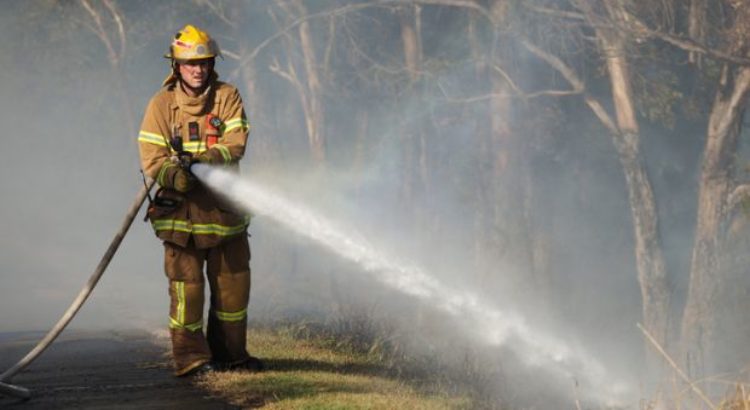
Australian education bodies take action as bushfires still rage

Oceania/ Australia/ 14.01.2020/ Source: www.timeshighereducation.com.

Australia’s international education representative body is vowing to curb its carbon emissions, as the bushfire emergency elevates climate consciousness across the scorched country.

The International Education Association of Australia is developing a carbon neutral policy to mitigate the climate impacts of globetrotting education leaders. Meanwhile the leading university body is joining education minister Dan Tehan’s crisis meeting on the bushfires.

Mr Tehan said Prime Minister Scott Morrison had asked him to call the meeting of the sector’s representatives “to hear first-hand how the bushfires have impacted education, and how our government can help”.

The summit, scheduled for 15 January, echoes similar forums of key players in other sectors. It will focus primarily on schools and childcare centres, where the summer break ends much earlier than at universities.

But Universities Australia chief executive Catriona Jackson said the meeting offered an opportunity to thrash out how her members could continue supporting affected communities.

“University expertise is being deployed to help the community make sense of the crisis, across almost every aspect,” she said.

Ms Jackson highlighted the need for clear communication with international students during the crisis. She said students heading for Australia should contact their prospective universities if they had queries or concerns, while those already in the country should “reach out to university support services if they feel distressed or anxious”.

The support has not all been one-way, with international students among those contributing to the relief effort. International media has carried a story about Mark Yeong, a Singaporean student at the University of Sydney who joined a volunteer firefighting brigade.

International education representatives from Australia’s eight states and territories are also putting together a joint statement on the bushfire emergency, in collaboration with the education and trade departments and IEAA.

Its primary focus is ensuring the safety of current and incoming foreign students, in line with provisions outlined in a “collaborative marketing framework” developed a year ago by the Council for International Education, which is convened by IEAA chief executive Phil Honeywood.

The provisions are designed to coordinate the sector’s responses to critical incidents, and to ensure that jurisdictions do not profit from each other’s misfortunes in situations like the bushfire crisis.

Mr Honeywood said the disaster had also presented an “appropriate time to have a comprehensive look at the carbon footprint situation and to lead by example”. He said that given their considerable domestic and overseas travel, international education representatives needed to find ways to alleviate the climate impact.

This included encouraging webinars and teleconferences as an alternative to international travel. When flying became unavoidable, education representatives should support measures offered by airlines to mitigate the carbon footprint, such as paying for trees to be planted.

He said the industry should also look at ways of reducing the far greater carbon footprint generated by the international travel of students themselves. An obvious measure was to put more resources into branch campuses rather than focusing on onshore recruitment.

“Australia has not been very good on transnational education,” he said. “Surely it’s part of our mission as a sector to be more accessible to the largest number of students possible…to provide world class education in countries where it’s not readily available.”

He said the policy was expected to be approved by the end of February.

Source of the notice: https://www.timeshighereducation.com/news/australian-education-bodies-take-action-bushfires-still-rage

Comparte este contenido:

China ramps up tech education in bid to become artificial intelligence leader

Asia/ China/ 14.01.2020/ Source: www.nbcnews.com.

A bespectacled eight-year-old has become the poster child for China’s campaign to dominate the world of high tech.

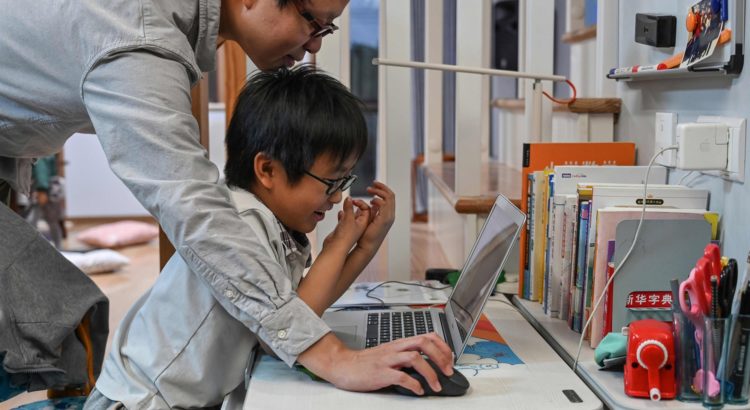
From his home in Shanghai, Vita Zhou hosts training videos for other children on how to code for artificial intelligence. He already has almost 80,000 followers on the Chinese streaming website Bilibili, and some of his videos have gained more than 1.3 million views. Vita has even attracted the attention of Apple CEO Tim Cook, who sent him birthday wishes Monday on Weibo, China’s equivalent of Twitter.

“What do you think? Isn’t it easier to write code once you understand how it works?” Vita says in one video. With the help of his dad, Zhou Ziheng, he demonstrates how to write codes with Apple-developed Swift Playgrounds, an app teaching kids basic coding through interactive games.

Vita’s celebrity comes as China steps up efforts to become a world leader in artificial intelligence by 2030. The trend of teaching young people to code has been on the rise in recent years, particularly as the Asian giant fights to close the gap in its workforce in the technology sector, most notably AI talent. In November, China’s education ministry updated its curriculum to include books about AI, big data, coding and quantum computing.

A quarter of the 422-page recommended reading list is now about science, math, chemistry, aerospace, medicine and most notably AI.

“Coding’s not that easy but also not that difficult — at least not as difficult as you have imagined,” Vita, who is familiar with Swift, Scratch and C++ languages, told the AFP news agency.

China has a lot of ground to make up on AI, with the number of top researchers in the field standing at one-fifth of that in the United States in 2017, according to research by the Washington-based Center for Data Innovation.

At the same time, it faces a shortage of 5 million AI professionals, according to a 2017 article from the state-owned newspaper People’s Daily.

These disadvantages have not stopped it from setting ambitious targets: The country aims to catch up with the U.S. next year, based on “A Next Generation Artificial Intelligence Development Plan,” a government blueprint.

In order to close in on the talent gap, the country is now speeding up AI education for children, in addition to efforts to increase the talent base from universities. By 2018, there were 96 Chinese universities with AI-related programs, up from just 19 in 2017.

Despite some shortcomings, a trove of Chinese AI companies such as iFlytek, SenseTime, Cloudwalk and DJI, have caught the world’s attention for standing out in sound recognition, facial recognition and drone technologies. China’s big tech companies, such as Baidu, Tencent, Alibaba and Huawei, also have invested heavily in AI research and development.

Image: A trainer leading a class at a children's computer coding training center in Beijing
A trainer leading a class at a children’s computer coding training center in Beijing on Nov. 8, 2019Wang Zhao / AFP – Getty Images file

Some of those companies have taken a hit in China’s trade war with the U.S., with Washington blocking a few Chinese tech firms from acquiring its most advanced technologies. But experts say the roadblocks are only fueling China’s desire to get ahead.

“The increasingly fierce trade and technology competition between China and the U.S. puts pressure on China to improve its innovative capacity,” said Zhang Xusheng, a science, technology, engineering and math professor at Zhejiang University. “And it naturally means we need to bring the students to study high-tech and be more innovative.”

In 2018, the education ministry added AI to the high school curriculum, encouraging around 25 million teenagers to study the technology. The same year, China’s first AI textbook for high school students — which introduces the basics of image recognition, sound recognition, text recognition and deep learning — was put into use in more than 40 pilot schools.

“I would like to read the books to explore the scientific reasoning behind things like AI, aerospace, programming and big data,” Cui Jingjing, 14, a high school student in Fujian, said. “I am also keen to join science competitions.”

“I think China will win the AI race with the U.S.,” Cui said, “We are catching up very fast.”

China is not alone in ramping up AI education. While the private sector has led the response to AI, governments like France, South Korea and the United States also have strategies in place to expand their workforce in the sector with increased investments, although predominantly at the postsecondary level, according to a 2019 UNESCO report.

Many European Union member states are also reviewing their curricula to integrate more lessons about computational thinking in the classroom. Some countries like Austria, Poland and Lithuania have long provided strong computer science education in high schools.

Image: A pupil reading a book outside a classroom as she waits to attend a class at a children's computer coding training centre in Beijing
A pupil reading a book outside a classroom as she waits to attend a class at a children’s computer coding training centre in Beijing on Nov. 8, 2019.Wang Zhao / AFP – Getty Images file

The enthusiasm for AI education goes beyond policy. The market value of the coding industry for children reached around $57 million in 2018 and is expected to surge to around $4.3 billion by 2023, increasing 650 percent in the span of five years, according to a report by iResearch, a Shanghai-based consulting company.

That investment is transforming classrooms. In Shenzhen, China’s tech hub, an AI program for students in grades 3 to 8 was being piloted in 2019.

Zheng Weicheng, a primary school math teacher in Fujian province, thinks that teaching AI also has broader benefits by helping children establish scientific concepts and improve their problem-solving ability, which will directly benefit their future development.

“Well-equipped youths lead to a powerful country,” Zheng said.

Source of the notice: https://www.nbcnews.com/news/world/china-ramps-tech-education-bid-become-artificial-intelligence-leader-n1107806

Comparte este contenido:

El acceso a la Universidad aviva en Chile la protesta por el modelo educativo

Redacción:   Informe 21.com

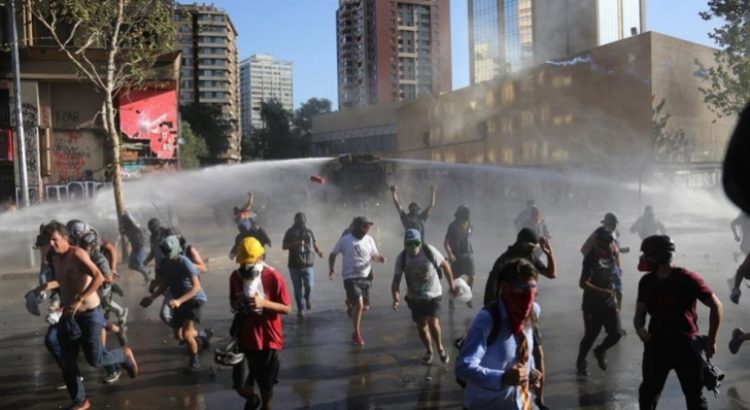
La rebelión esta semana de los estudiantes chilenos contra la prueba de acceso a las universidades públicas y privadas intensificó la crítica al modelo educativo del país, una de las bases del estallido social.

Mediante el boicot, la filtración de exámenes y la ocupación de algunos de los centros en los que se llevó a cabo los pasados lunes y martes la llamada Prueba de Selección Universitaria (PSU), la movilización estudiantil provocó que la instancia fuese parcialmente suspendida, volviendo a poner el foco de las protestas en la educación.

El llamamiento a la revuelta contra la PSU partió de la Asamblea Coordinadora de Estudiantes Secundarios (Aces), que considera que esta prueba segrega a los estudiantes en función del poder adquisitivo de sus familias y perpetúa un modelo educativo que califica como mercantilizado.

La directora del Programa de Acceso Inclusivo, Equidad y Permanencia de la Universidad de Santiago de Chile (Usach), Lorena López, explicó a Efe que en todas las PSU de los años anteriores los resultados obtenidos por los estudiantes estuvieron directamente relacionados con su posición social.

De esta manera, la PSU estaría favoreciendo que sólo ingresen en la Universidad los estudiantes de un nivel socioeconómico alto cuyas familias pueden pagar escuelas secundarias privadas de calidad o que viven en barrios acomodados o pudientes donde las escuelas públicas tienen más recursos y pueden formar mejor a los jóvenes.

«Si uno observa cuáles son los mejores rendimientos de las pruebas, estos siempre se dieron en (estudiantes que provenían de) colegios de alto nivel socioeconómico. Ahí es donde empieza a instalarse la segregación», explicó López.

El modelo educativo como problema de fondo

Por ello, la movilización de los estudiantes de secundaria no es sólo por un cambio en la PSU en sí, sino contra el sistema educativo del país.

«Hay que ir a mejorar la calidad de la educación pública de tal manera que las escuelas sean ese espacio en el que las diferencias sociales comienzan a disminuir«, defendió López.

La portavoz de Aces Aye Salgado abundó en la idea de que el problema de fondo es la educación, «que en Chile no es vista como un derecho sino como un privilegio», dijo a Efe.

«Hay educación para ricos y educación para pobres y eso se ve reflejado en la PSU. Cuando las personas tienen acceso a una educación (secundaria) mejor pueden entrar con más facilidad a la educación superior, algo que no pasa con otros colegios que no tiene recursos», explicó Salgado.

La representante de Aces señaló que se debe acometer un cambio radical en el modelo educativo creando un nuevo sistema con participación de profesores y estudiantes y avanzar hacia un sistema de acceso a la Universidad que permita que «todo aquel estudiante de secundaria que quiera entrar a la educación superior pueda hacerlo».

El boicot a la prueba

La PSU comenzó a realizarse en 2003 y consta de cuatro exámenes que se hacen en dos jornadas: Lenguaje y Comunicación; Matemáticas; Ciencias; e Historia, Geografía y Ciencias Sociales.

El Consejo de Rectores de las Universidades Chilenas (CRUCH), que agrupa a 30 universidades estatales y públicas no estatales del país, es el órgano responsable de organizar la prueba, cuya ejecución encarga a la Universidad de Chile.

El boicot de esta edición acabó con la suspensión de la PSU en 86 de los 729 locales en los que se aplicó el pasado lunes y con la suspensión al día siguiente a nivel nacional de la prueba de Historia debido a la filtración de parte del examen.

Estas situaciones afectaron a 44.226 personas que no pudieron rendir la PSU de Lenguaje y Comunicación (15 % de los inscritos para la evaluación); 37.396 en Ciencias (20 % de los inscritos) y 86.571 en Matemática (29 % del total), según el CRUCH.

En tanto, más de 202.000 postulantes se había inscrito para rendir Historia, Geografía y Ciencias Sociales, que no se llevará a cabo este año por razones de «inviabilidad técnica, logística, territorial y de seguridad pública», divulgó el Consejo de Rectores.

Estudiantes amenazan con seguir boicoteando la prueba

El CRUCH sí programó para los próximos 27 y 28 de enero las pruebas de Matemáticas, Lenguaje y Ciencias para quienes no pudieron hacerlo esta semana por el boicot.

Sin embargo, la Aces está decidida a seguir movilizándose para impedir que tenga lugar la prueba que, en opinión de uno de sus portavoces, Víctor Chanfreau, «no puede darse nunca más» porque «atenta contra el derecho a la educación»

«Es ahora o nunca el momento de cambiar estructuralmente el modelo educativo y esta prueba de acceso a la educación superior, que sólo segrega», dijo Chanfreau esta semana a la prensa.

La PSU estaba fijada en un primer momento para los días 18 y 19 de noviembre del año pasado, pero se pospuso hasta en dos ocasiones dado el contexto social del país, inmerso desde el 18 de octubre de 2019 en un fenómeno de movilizaciones sociales contra la desigualdad.

En este marco se han reportado episodios de violencia extrema con saqueos, incendios, barricadas y destrucción de mobiliario público y al menos 27 muertos, además de centenares de denuncias por la presunta comisión de violaciones de derechos humanos por las fuerzas de seguridad al contener las manifestaciones.

Fuente: https://informe21.com/actualidad/el-acceso-a-la-universidad-aviva-en-chile-la-protesta-por-el-modelo-educativo


Comparte este contenido:

Apuesta Educación Superior por perfeccionar la Historia de Cuba y el Marxismo-Leninismo en las universidades cubanas

Centro América/ Cuba/ 14.01.2020/ Fuente: www.cubadebate.cu.

Entre los retos futuros de los educadores que imparten Marxismo-Leninismo e Historia de Cuba, el más sagrado es la defensa del proyecto social cubano, en el que corresponde un rol determinante la defensa del pensamiento martiano, marxista y fidelista, que implica el perfeccionamiento de los programas de estudio y la constante mejora de la calidad de la enseñanza y el aprendizaje de esas asignaturas.

De ahí que la Universidad de las Ciencias Informáticas (UCI) será sede de la Reunión Nacional para el perfeccionamiento de las asignaturas de las disciplinas de Historia de Cuba y Marxismo – Leninismo, durante los días 16 y 17 de enero de 2020, informó en su sitio oficial el Ministerio de Educación Superior (MES).

El programa comenzará con las intervenciones de la Vice Ministra Primera: Martha del Carmen Mesa Valenciano y Rafael Emilio Cervantes Martínez, Director de Historia y Marxismo – Leninismo del Ministerio de Educación Superior.

En la primera jornada, la Doctora Isabel Monal Rodríguez, impartirá el tema: “Significación de la cultura marxista en los profesionales cubanos” y la Doctora Thalía Fung Riverón, se referirá a “La problemática de la verdad en la teoría del conocimiento y las ciencias naturales”.

Durante las sesiones, también se realizará el trabajo en comisiones para el perfeccionamiento de cada asignatura sobre la base del intercambio de las experiencias de avanzada obtenidas en el Plan E. Las asignaturas a trabajar son, entre otras: Historia de Cuba, Filosofía, Economía Política, Teoría Socio Política y Problemas Sociales de la Ciencia y la Tecnología.

A partir de sus resultados se presentarán las relatorías por comisiones que culminarán con la presentación del Doctor en Ciencias Abel González Santamaría, secretario del grupo y Asesor de la Vice Ministra Primera, con la “Proyección y estructura del Grupo Central de Trabajo Político Ideológico del Ministerio de Educación Superior”.

De la eficacia con que se desarrolle la educación de las nuevas generaciones, depende el éxito que se obtenga en la construcción de un ciudadano capaz de explicarse y explicar la dinámica de su sociedad, convirtiéndose en un agente transformador activo, de su propio sistema, subraya por su parte el sitio web de la UCI.

Fuente de la noticia: http://www.cubadebate.cu/noticias/2020/01/11/apuesta-educacion-superior-por-perfeccionar-la-historia-de-cuba-y-el-marxismo-leninismo-en-las-universidades-cubanas/#.Xh4cOcgzbIU

Comparte este contenido:

Venezuela: Educadores tomarán las calles de Carora

América del Sur/ Venezuela/ 14.01.2020/ Fuente: www.elimpulso.com.


Sin nada que celebrar en su día, este 15 de enero educadores en Carora se harán sentir a través de una toma de calles y posterior concentración en la Plaza Lara en la avenida Francisco de Miranda, frente a la Alcaldía, y
con pancartas y consigas le dirán a Nicolás Maduro y su ministro de educación Aristóbulo Istúriz que la paz escolar en Venezuela depende del gobierno nacional.

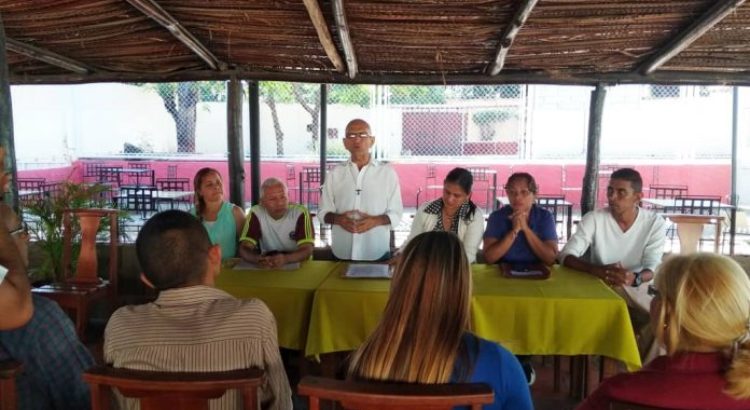
Los detalles de las acciones a emprender este miércoles Día del Educador, en la capital torrense, la esbozaron los delegados de la Coalición Sindical de Educación del Municipio Torres conformada por Mirian Gómez y Lusbelly Quintero, por Sinvemal; Alex Montes de Oca, Yamilet Oropeza y Daisi Piñango del Colegio de Profesores; Jairo Valera y Beatriz Camacho, de Fenatev y Felipe Ordaz por Fetralara y Fetramagisterio.

El jueves 16 partirán de una concentración frente a la Casa del Educador hasta la sede de la Zona Educativa de Torres donde protestarán
hasta hacerse escuchar por las autoridades, que al decir de la citada coalición, son docentes de aulas categoría 2 y 3 sin acreditaciones para
ocupar cargos de supervisores, por lo que serían unos usurpadores que además están abusando del poder que se les otorgó.

El viernes 17 invitan a los docentes a quedarse en casa en lo que han llamado Situación Famélica, un acto simbólico que representa el hambre por la que atraviesan ante el alto costo de la vida y la falta de dinero para el traslado en transporte hasta sus instituciones a causa de los bajos sueldos que devengan.

Lusbelly Quintero dijo que a pesar de la problemática salarial y social que los afecta, derivada de la desatención del Gobierno hacia el sector educativo del país, no dejarán de buscar a Dios, y el miércoles 15 asistirán a una
misa en la iglesia San José de Calazanz, a las 8:00 de la mañana, pero esta vez sin la presencia de los representantes de la Zona Educativa de Torres, a quienes no invitaron por considerarlos contrarios a sus luchas reivindicativas.

Acotó que se han dado a la tarea de cometer actos contra el marco legal educativo al calificar falsamente abandonos de cargo para algunos docentes, mientras a sus más allegados les siguen pagando sueldo aunque
no asistan a las aulas regularmente y a otros que están fuera del país.

En la tarde invitan a un breve acto recreativo en la Casa del Educador.
Educadores condenados a la muerte Felipe Ordaz reveló que las autoridades educativas a escala nacional recientemente licitaron para la escogencia de una empresa aseguradora de salud, quedando seleccionada
Universal de Seguros.

Sin embargo, lamentó que con el actual tabulador que poseen no les atenderán en este seguro porque no les reconocerán una cotización de apenas doscientos mil bolívares, por lo que están condenados a morir de
presentárseles alguna emergencia de salud.

La Coalición Sindical de Educación del Municipio Torres exhortó al gremio a dejar el confort y a despertar en la lucha, porque la situación en la que se encuentran perjudica no solamente a docentes activos sino también a
jubilados.

Respecto a la ideología política ligada al oficialismo que practican algunos y que los mantiene con ciertos temores de expresarse, la coalición sostiene que es el momento de concientizarlos para que dejen el miedo, ya que ellos también están en la misma situación, a pesar que dicen defender al actual gobierno.

Fuente de la noticia: https://www.elimpulso.com/2020/01/13/__trashed-13/

Comparte este contenido:

Panamá: Garantías de la accesibilidad gratuita al servicio de internet

Centro América/ Panamá/ 14.01.2020/ Por: Marly Eined Castillero Devis / Fuente: www.panamaamerica.com.pa.

El pasado mes de octubre del 2019, se presentó el anteproyecto de Ley sobre Internet gratuito para todos, el que asegura la continuidad y estabilidad del programa Internet para Todos. Pero, ¿cuál es el fin de este anteproyecto de ley?

El propósito es que además de tener estabilidad jurídica, se convierta en un beneficio para todos los panameños y, sobre todo, que constituya en una herramienta para salir de la pobreza.

Robustecería la continuidad y estabilidad jurídica del programa «Internet para Todos» o similares, y la accesibilidad gratuita al servicio de Internet en todo el territorio nacional, acorde con las tecnologías óptimas del momento.

La estabilidad del programa es importante porque permite a la ciudadanía el acceso a diversas plataformas educativas, de emprendimiento, participación ciudadana y comunicación.

Como estudiante, considero beneficioso este anteproyecto por el hecho de que facilita la integración de plataformas digitales en los procesos educativos como parte de una estrategia macro para lograr una educación de calidad.


Hoy, por medio de dichas plataformas, podemos aprender desde materias escolares como matemáticas y biología, hasta cómo arreglar electrodomésticos, emprender una empresa y conocer sobre las diferentes culturas.

Todas estas plataformas operan por medio del acceso a Internet.

El anteproyecto de ley establece varios puntos del compromiso y es que la Junta Asesora de Servicio y Acceso Universal tendrá como obligación de ofrecer, de manera gratuita, el servicio de Internet por medio de tecnologías de la comunicación a todo el territorio de la República de Panamá, con alto nivel de servicio que serían las veinticuatro horas del día, siete días a la semana durante todo el año, con el fin de fomentar el conocimiento inclusivo y equitativo; promover la educación digital y mejorar el conocimiento de docentes y estudiantes; garantizar el acceso a oportunidades laborales y de emprendimiento a ciudadanos con limitaciones geográficas o económicas; incrementar la competitividad del país; agilizar la comunicación entre el Estado y los ciudadanos; ofrecer acceso a información y servicios gubernamentales; promover la participación ciudadana, con facilidades para tramitar y comunicarse con las entidades del Estado; facilitar la comunicación entre personas; enriquecer nuestra cultura e identidad nacional, entre otras.

El anteproyectyo es un plan de acción que garantizará la accesibilidad gratuita al servicio de Internet, por medio de Wi-Fi u otras tecnologías de la información disponibles en todo el territorio nacional, especialmente en las áreas más vulnerables y aún no cubiertas y combatirá las necesidades educativas en muchas áreas de nuestro país.

Fuente de la noticia: https://www.panamaamerica.com.pa/opinion/garantias-de-la-accesibilidad-gratuita-al-servicio-de-internet-1153886

Comparte este contenido:
Page 1558 of 6195
1 1.556 1.557 1.558 1.559 1.560 6.195