Page 1574 of 6145
1 1.572 1.573 1.574 1.575 1.576 6.145

Continúan jornadas de Paro Nacional en Colombia

América del Sur/ Colombia/ Fuente: www.telesurtv.net.

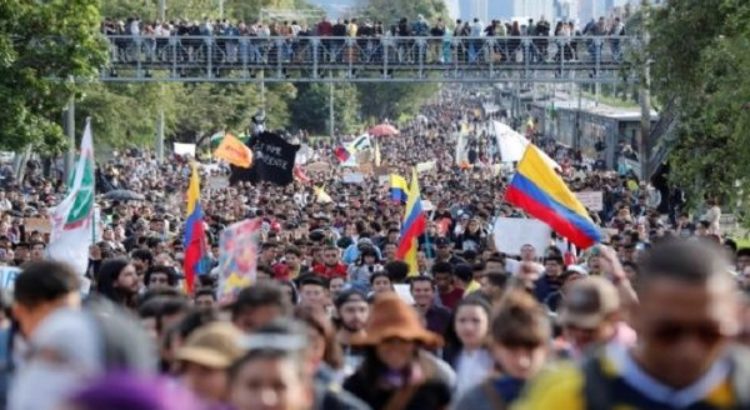
El Comité Nacional del Paro prevé que la movilización del 4 de diciembre sea muy similar o superior a las del 21 y 27 de noviembre pasados, y está encaminada a fortalecer la movilización social en el país.

El Comité Nacional del Paro de Colombia convocó este domingo a una nueva movilización para el día 4 de diciembre, en el marco de las jornadas de protestas que se han sucedido desde el pasado 21 de noviembre.

Este llamado es el tercero que hace la organización durante los últimos días, la cual presentó hace poco los 13 puntos de su pliego de peticiones al presidente colombiano Iván Duque.

El fiscal de la Central Unitaria de Trabajadores (CUT), Fabio Arias, quien forma parte del comité organizador, aseguró que las movilizaciones se llevarán a cabo en todo el país, y contarán con la participación de la Minga indígena del Cauca, que se trasladó a la capital para participar de las marchas.

El paro del 4 de diciembre, que se vaticina sea muy similar o superior a los acaecidos el 21 y 27 de noviembre, está encaminado a fortalecer la movilización social en el país.

Esta vez, según Arias, habrá un ingrediente especial para la negociación con el Gobierno: darle más fuerza al movimiento social.

El punto final del paro aún no se ha definido, debido a que el  alcalde de Bogotá, Enrique Peñalosa, anunciara que no permitiría que se realizaran concentraciones en la Plaza Bolívar, por el montaje del alumbrado navideño.

En contraposición, Arias señaló su rechazo a la decisión del alcalde de restringir el paso a este emblemático sitio de la capital colombiana para la concentración prevista por el CUT.

“Nosotros reclamamos nuestro legítimo derecho a la protesta y, obviamente, la utilización de espacios tan representativos y simbólicos en la protesta social en Colombia como la Plaza de Bolívar”, expresó el vocero.

Hasta el próximo 10 de diciembre el Comité Nacional del Paro ha previsto una serie de actividades entre las que figuran un cacerolazo intercontinental, un encuentro nacional de organizaciones, el concierto Enciende tu voz: Un canto por Colombia y la conmemoración del Día Nacional de los Derechos Humanos.

La situación interna de Colombia se tensó luego de los ajustes económicos  y tributarios de la administración de Iván Duque, y el Comité Nacional de Paro, que agrupa a las principales organizaciones civiles movilizadas, demanda un mayor presupuesto para áreas como las educación, así como que se implementen los acuerdos de paz con la exguerrilla de las FARC.

Fuente de la noticia: https://www.telesurtv.net/news/continuan-jornadas-paro-nacional-colombia-diciembre-20191201-0008.html

Comparte este contenido:

Down España lanza una emotiva campaña para impulsar la educación inclusiva

Europa/ España/ 02.12.2019/ Fuente: www.extradigital.es.

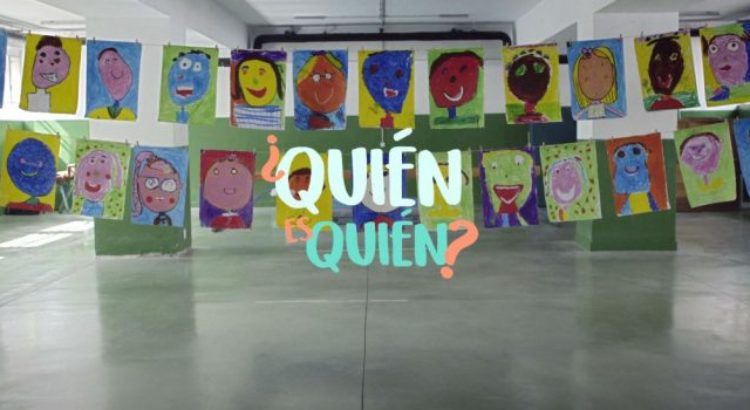
  • Tiempo BBDO, que firma la acción, ha creado “Quién es quién” y ha contado con la colaboración de “El Cangrejo” para producir una pieza audiovisual que se grabó en el Colegio Cardenal Spínola de Madrid.
  • El spot de dos minutos puede verse online y su versión de 30 segundos aparecerá en las principales cadenas de televisión

Cuando somos pequeños no vemos más diferencias que las que son realmente obvias. Vemos si uno es más alto o bajo, si tiene el pelo de color rubio o moreno o si lleva gafas o no. Porque a los ojos de los niños y niñas, todos somos iguales. Esta es la premisa de la que parte Tiempo BBDO en su nueva campaña para Down España, que defiende la educación inclusiva como la única que ve a todos los alumnos con la misma mirada que los niños. Es decir, todos iguales, sean cuáles sean sus necesidades o sus características físicas, psíquicas e intelectuales. Una enseñanza que no solo beneficia a los alumnos con síndrome de Down. También ayuda a avanzar a toda la sociedad en términos de igualdad, empatía y solidaridad.

La agencia creó el concepto “Quién es quién” y contó con la colaboración de la productora “El Cangrejo” para producir una pieza audiovisual que se grabó en el Colegio Cardenal Spínola de Madrid, centro pionero en el modelo de educación inclusiva en España. Los alumnos de 1º de primaria son los protagonistas de esta campaña de Down España por la educación inclusiva. Participaron dibujando un retrato de un compañero o compañera suyo. Más tarde, sus dibujos se usaron para poner a prueba a padres, madres y profesores: ¿serían capaces de identificar quién es cada uno de los niños?  Y ahí, precisamente, está la clave de la emotiva campaña.

Un reto y una oportunidad

Para Eva Crespo, directora creativa de Tiempo BBDO“causas como las de Down España siempre son un reto y al mismo tiempo una gran oportunidad de trabajar junto a personas que cada día hacen de nuestra sociedad un sitio más justo e igualitario. Después de la realización del vídeo y de conocer la realidad de estos niños y niñas en una escuela como el Colegio Cardenal Spínola, todos somos mucho más conscientes del camino educativo que queremos para nuestro futuro”.

“Quién es quién” podrá verse online en su versión de dos minutos, y en un spot de 30 segundos que aparecerá en las principales cadenas de televisión del país durante las próximas semanas. Además, para completar la campaña, se han preparado diferentes acciones abiertas a la sociedad: colaboraciones con influencers, exposiciones temporales en toda España y la edición de un libro realizado con la colaboración de Penguin Random House Grupo Editorial. Tanto la exposición como el libro mostrarán los dibujos realizados por niños y niñas de distintos centros inclusivos de Madrid, Huesca, Sevilla, Écija, Valdepeñas, Ciudad Real, Lleida y Valladolid, que también participaron en la campaña.

En palabras de Beatriz Prieto, directora de Comunicación de Down España, “es muy necesario concienciar a las familias, las escuelas y a la sociedad en general, de lo positivo de la inclusión. Actualmente, muchos de estos niños y niñas son derivados a centros de educación especial o acuden a colegios donde no reciben el apoyo que necesitan. Se vulnera así su derecho a una plena inclusión en la sociedad, recogido en la Convención de los Derechos de las Personas con Discapacidad de la ONU”.

Fuente de la noticia: http://www.extradigital.es/down-espana-lanza-una-emotiva-campana-para-impulsar-la-educacion-inclusiva/

Comparte este contenido:

Perú: Minedu actualiza Política de Educación Intercultural y Educación Intercultural Bilingüe

América del Sur/ Perú/ 02.02.2019/ Fuente: radionacional.com.pe.

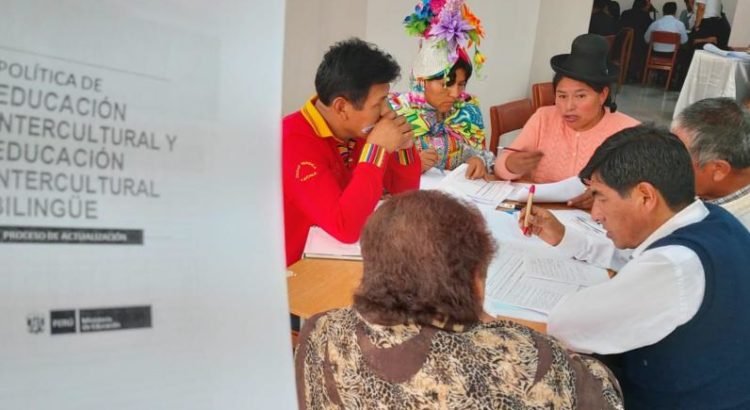
Más de un centenar de representantes de organizaciones sociales y de entidades públicas y privadas participan del proceso de actualización de la Política Sectorial de Educación Intercultural y Educación Intercultural Bilingüe al 2030, que impulsa el Ministerio de Educación (Minedu) en las ciudades de Tarapoto, Piura, Arequipa y Lima.

El objetivo de estas consultas ciudadanas es actualizar este instrumento normativo en correspondencia con el reglamento que regula las políticas nacionales bajo rectoría o conducción del Minedu.

La Política Sectorial de Educación Intercultural y Educación Bilingüe ha permitido brindar las condiciones para implementar el Plan Nacional de Educación Intercultural Bilingüe al 2021, sostuvo Nora Delgado Díaz, directora general de Educación Básica Alternativa, Intercultural Bilingüe y de Servicios Educativos en el Ámbito Rural.

“Estamos escuchando a los representantes de diferentes organizaciones, comunidades y entidades públicas y privadas porque queremos que esta política educativa responda a la diversidad cultural y lingüística del país y que la interculturalidad se implemente en todo el sistema educativo, no solo en contextos de pueblos originarios”, agregó la funcionaria.

Los talleres buscan enriquecer los objetivos priorizados y así asegurar una adecuada atención educativa para el desarrollo de competencia interculturales, el acceso y la trayectoria en el sistema educativo para todos los estudiantes de pueblos originarios, afroperuanos y de otras tradiciones culturales con la finalidad de mejorar la calidad educativa.

A los talleres efectuados se suman las jornadas de trabajo realizadas con expertos e investigadores del sector en casi todas las direcciones regionales de Educación para recoger aportes que contribuyan con la actualización de la política.

Como se recuerda, la educación intercultural tiene como principios rectores el respeto de la identidad cultural de los estudiantes, brindar una educación que se adecúe a su cultura y el desarrollo de competencias que les permitan participar activamente y contribuir con una sociedad libre de discriminación.

Fuente de la noticia: https://radionacional.com.pe/informa/politica/minedu-actualiza-politica-de-educacion-intercultural-y-educacion-intercultural-bilingue

Comparte este contenido:

Exigen que no se modifique ley de Educación Sexual Integral en Argentina

América del Sur/ Argentina/ 02.02.2019/ Fuente: www.aciprensa.com.

La plataforma CitizenGo Argentina entregó más de 60 mil firmas para impedir que el Congreso de la Nación modifique el Programa Nacional de Educación Sexual Integral (ESI), a través de un proyecto de ley cuyo debate debía comenzar este 20 de noviembre.

Las firmas fueron entregadas el martes 19 a los diputados Alejandro Snopeck, Jorge Enriquez y David Schlereth.

La ESI, promulgada en 2006 mediante la ley Nº 26.150, tiene como objetivo proveer educación sexual sobre la base de conocimientos científicos y la promoción de actitudes responsables ante la sexualidad, para prevenir problemas de salud pública como las enfermedades de transmisión sexual y embarazos adolescentes, procurando la igualdad de trato y oportunidades para varones y mujeres.

Uno de los puntos que plantea el proyecto de ley es eliminar el respeto al ideario institucional según las convicciones de los miembros de cada comunidad educativa. En cambio, obligaría la inclusión de contenidos ESI sin posibilidad de adaptar las propuestas a la realidad sociocultural.

Con lo anterior, según CitizenGo Argentina, se limitaría el derecho de los padres a educar a sus hijos de acuerdo a sus valores.

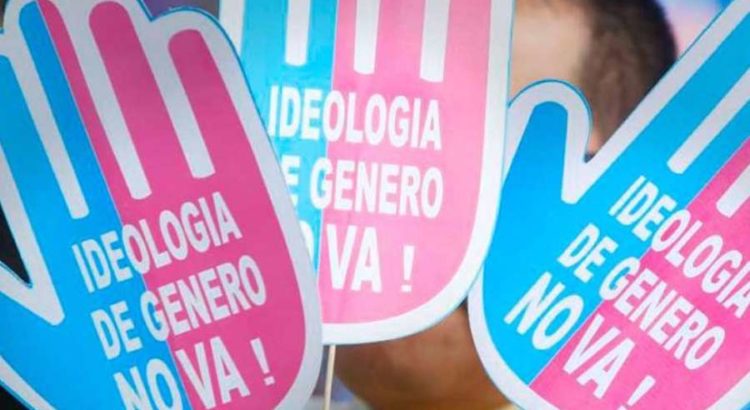
En otro articulado el proyecto modificaría el concepto de ESI en función de las leyes vigentes sobre la materia, es decir, de diversidad sexual y de género.

Según la licenciada en Organización y Gestión Educativa, María de los Ángeles Mainardi, “en ninguna parte de la Ley de Identidad de Género Nº 26.743, se alude a la necesidad de que la identidad de género deba ser incorporada a los contenidos educativos en general o a los contenidos de la ESI en particular”.

“La Ley de Identidad de Género, bien utilizada, tiene como finalidad la protección contra la discriminación y la ampliación de derechos (registrales y médicos) de una minoría que se autopercibe con una identidad de género distinta a la biológica”, explicó Mainardi a ACI Prensa.

El Estado puede “simultáneamente considerar dignos de protección especial y derechos ampliados a una minoría, sin tener por ello que promover en la población, a través de la educación, la teoría defendida por dicha minoría”, reflexionó.

En ese sentido, “la imposición de una sola teoría explicativa de la sexualidad en la auto-percepción, que no se encuentra universalmente aceptada o científicamente demostrada, es violatoria de las libertades de culto y de pensamiento”, derechos que están protegidos por la Constitución, explicó Mainardi.

La modificación a la ley ESI también vulnera normativas como la Declaración Universal de los Derechos Humanos que determina la libertad de pensamiento, conciencia y religión y el derecho de los padres a escoger preferentemente el tipo de educación para sus hijos; así como el Pacto San José de Costa Rica que declara el derecho a que los hijos reciban la educación religiosa y moral que esté de acuerdo con sus propias convicciones.

En cuanto a la Convención sobre los Derechos del Niño, existe una reserva para Argentina que establece que “las cuestiones vinculadas con la planificación familiar atañen a los padres de manera indelegable de acuerdo con principios éticos y morales, y el Estado debe adoptar medidas para la orientación a los padres y la educación para la paternidad responsable”, precisó Mainardi.

Por último, va contra la ley de Educación que determina el derecho de los padres a ser reconocidos como agentes naturales y primarios de la educación y a participar en las actividades de los establecimientos educativos, en el marco del proyecto educativo institucional que responda a sus convicciones filosóficas, éticas o religiosas.

La misma ley reconoce que los docentes tienen derecho a ejercer la docencia sobre la base de la libertad de cátedra y la libertad de enseñanza; y la obligación de respetar la libertad de conciencia, la dignidad, integridad e intimidad de todos los miembros de la comunidad educativa.

La Cámara de Diputados quitó de la agenda del miércoles 20 el proyecto de ley de modificación a la ESI; tema que de prosperar, podrá ser tratado después del 10 de diciembre cuando Alberto Fernández asuma el Poder Ejecutivo, al igual que los nuevos miembros del Poder Legislativo.

Puede apoyar la campaña de firmas de CItizenGo AQUÍ

Fuente de la noticia: https://www.aciprensa.com/noticias/exigen-que-no-se-modifique-ley-de-educacion-sexual-integral-en-argentina-28697

Comparte este contenido:

Nigeria: Atiku Seeks More Funds for Education

Africa/ Nigeria/ 02.12.2019/ Source: allafrica.com.

Former Vice President, Alhaji Atiku Abubakar who was the presidential candidate of the main opposition party, Peoples Democratic Party (PDP), in the 2019 general election, has called for more investment in education for Nigeria to lift majority of its people out of poverty. He also queried the increasing rate of borrowing by the federal government as against spending more on education.

Atiku, at the convocation ceremony of the America University of Nigeria, Yola, said Nigeria could not grow if it did not invest heavily in education.

«When philosophers say that an investment in education yields the most interest, they were stating a truism for which we see ample evidence in Nigeria,» he stated.

He also attributed insecurity in the country to poverty, adding that poverty is caused by illiteracy.

«It is a cycle that we can only break by educating our people. For the past four years, our education budgets have demonstrated the fact that developing the minds of our people has not been our priority.

«Two weeks ago, a friend of mine, Prof. Anya O. Anya, who just happens to be a former Chief Executive Officer, Nigeria Economic Summit Group (NESG), revealed that Nigeria has taken more loans in the last three years than she has taken in the 30-year period preceding 2016,» he added.

The former vice president queried the increasing rate of borrowing in Nigeria to the detriment of funding investment in education.

He said: «Now, how can we have such a monumental increase in borrowings vis-à-vis an unprecedented reduction in investments in education?»

According to him, as a businessman, the first lesson one should learn in business is that you do not take loans except it is to expand your business and there is no justification for taking out loans to pay salaries.

Atiku said Nigeria’s greatness was not tied to its elders but to its youths, who should be the focus of national investment.

He went further to give statistical relationship between education, crime and insecurity.

«Scandinavia outspends every other part of the world in investing in education, with the Nordic nation of Denmark spending an average of eight per cent of its Gross Domestic Product on education. They are followed closely by Iceland, Sweden, Norway and Finland.

«Now, is it a coincidence that in every survey of crime and insecurity released by the United Nations Office on Drug and Crime (UNODC) for 2018, these same nations and their region are listed as the safest parts of the world as well as the most crime-free states? I don’t think so. In fact, as someone who has invested heavily in education for decades, I know that this is not a coincidence,» he said.

Atiku explained that instead of doing many things and doing them poorly, the federal government and the federating units should rather focus on doing one or two things so that they can do them well.

He said: «When we get this right, we will get Nigeria right. The easiest way to make the most significant impact, in the shortest amount of time, is via education.

«As proof, I cite the fact that 2014 represented the year Nigeria invested the most in education with a N493 billion allocation (then the equivalent of $3.3 billion) to education, representing 9.94 per cent of the total budget.

«The very next year, the trio of the World Bank, the World Economic Forum, and CNN Money rated Nigeria as the third fastest-growing economy in the world. Again, I ask, was that a coincidence?

«If you think that it is, then how do you explain the fact that Nigeria slid into a recession the same year that our education budget began to drop from their pre-2015 levels? The total percentage of the budget allocated to education in 2014 was 9.94 per cent, which dropped to 6.10 per cent in 2016. It is as clear as night and day.

«What I propose is that the federal, states and local governments should consider a policy of allocating at least 10 per cent of the total budget appropriations to the education sector. If insanity is doing the same thing and expecting different results, it follows that the sane thing to do is that when you get a result that you like, you are challenged to repeat the process, and in fact, improve upon it, so that you can get the same or perhaps improved results.»

He explained that there is documentary evidence from the Human Development Index that the United Nations publishes annually that educated people are healthier.

He said: «Because they are healthier, the proportion of their income and the income of the government that is spent on treating diseases and sickness reduces, they, therefore, have more disposable income to spend, which boosts the economy. Healthier people are more productive. Because they are more productive, they are less prone to crime. The multiplier effects go on and on.

«And all tiers of government must recognise that there would be more money available to the government, via an improved economy, which means improved taxation, if they invest in education. I have been in this business since the 1980s. For every naira, you invest in educating a child, you add N5 to his life earnings. Tell me which other investment can yield that type of return on investment?»

«I have been spending some time in Germany because of the Saudi German Hospital investment I am attracting to Nigeria. One thing I found out in Germany is that private-sector corporations and manufacturers have their schools and institutes. Vocational education is so big in Germany and Japan that a lot of the German and Japanese labour force are vocationally educated by the industrial sector, rather than by the government or their parents or themselves,» he added.

Atiku said with support from the government by way of tax incentives and part-funding, Nigeria could ease its educational challenges by adopting the German Dual VET model, stating that it is a win-win for both government and the organised private sector because education will lead to an increase in highly skilled workers for the real sector, which will boost the economy and reduce unemployment.

He challenged multi-national companies and banks in Nigeria to step up their corporate social responsibilities, saying, «I want to see an MTN Academy for Telecommunications Studies, an Access Bank School of Business and Banking Studies, a Dangote Institute for Agriculture and Engineering and an Innoson School of Automotive Studies.

«Think of the impact such institutions will have. They will ease the burden on our public institutions and will enable artisans and technicians get the certification they need to transit from being low skilled workers to medium to highly skilled specialised semi-professionals.

«We are the largest black nation on earth, and it is our destiny to be a beacon of hope in Africa and to the Black Diaspora. And the only way we can fulfill our potential and live up to our boast of being the giant of Africa is by educating our people and unleashing their creative geniuses.»

Source of the notice: https://allafrica.com/stories/201912020257.html
Comparte este contenido:

Misplaced Modesty Hampers Sex Education in Japan’s Schools

Asia/ Japan/ 02.12.2019/ Source: www.nippon.com.

Sex education in Japan’s schools lags behind that in other countries on many fronts. What are the differences and why is Japan behind so much of the rest of the world? We asked Hashimoto Noriko, professor emeritus at Kagawa Nutrition University and an authority on educational sociology and gender studies, to explain.

Learn About the Body—But Keep It Clothed

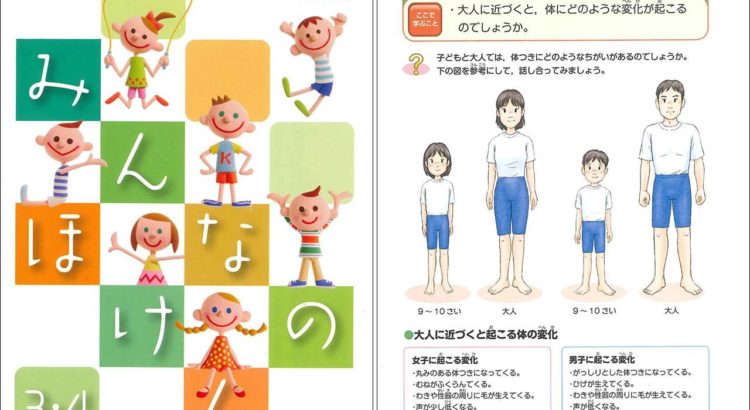
This is a page from a health and physical education textbook for third and fourth grade school students. The textbook is Minna no hoken (Health for Everyone, published in 2011 by Gakken) and the page is titled, Otona ni chikazuku karada (“As the Body Approaches Adulthood”).

Shown are a boy and girl, around age 10 and as adults. All are depicted wearing short-sleeved tops and shorts. Says Hashimoto: “How can you learn about the changes in the body by looking at an illustration of clothed figures?” In the 2005 edition of the textbook, the figures are naked, but someone decided to put clothes on them for the 2011 edition.

What are the textbooks like in other countries and how do they handle sex education? Hashimoto explains, “Many countries carry out comprehensive sex education based on UNESCO’s International Technical Guidance on Sexuality Education. Comprehensive sex education covers much more than just the subject of how the body develops. It encompasses everything from relationships and rights to sexual diversity and gender equality.”

The international differences are stark, as she explains. “In Finland and France, they teach biological facts, such as the role chromosomes play in determining the sex of a fetus; they delve into the diversity of human sexuality; and they explore the phenomena of human relationships. In China, they use explicit illustrations of the sexual organs to teach about sex, and the sex education in major Chinese cities is strongly influenced by the attitudes of Chinese citizens who have studied abroad. In Japan, however, as we can see by this textbook illustration, nothing is taught about the biological and scientific facts of human reproduction.

“In South Korean sex education textbooks, they even explain how to put on a condom. Thailand doesn’t go into that much detail, but does teach about safe sex as one way to deal with sexual urges. The correct way to put on a condom is not taught in Japan. Most sex education textbooks in Japan just do not meet international standards.”

Hashimoto Noriko believes Japan has much progress to make in the area of sex education. (Photo provided by Hashimoto)

A great part of this is due, says Hashimoto, to National Curriculum Standards that prohibit teaching about the processes of fertilization in fifth-grade science or about pregnancy in first-year junior high school health and PE classes.

Hashimoto explains how sex education in Japan got to this point.

“In the 1990s, sex education in Japan was among the most advanced in Asia, in part because of the AIDS scare. It was possible then to teach junior high school students about sexual urges and sexual behavior, sexual intercourse and birth control, and sexually transmitted diseases. The revised government education guidelines for elementary schools issued in 1992 for the first time called for health class textbooks for the fifth and sixth grades. A supplementary reader published in 1991 included a section on sexual intercourse. A textbook with similar content is being used in South Korea right now for sixth grade classes. But in Japan, this supplementary reader is out of print.”

Backlash Against Sex Education

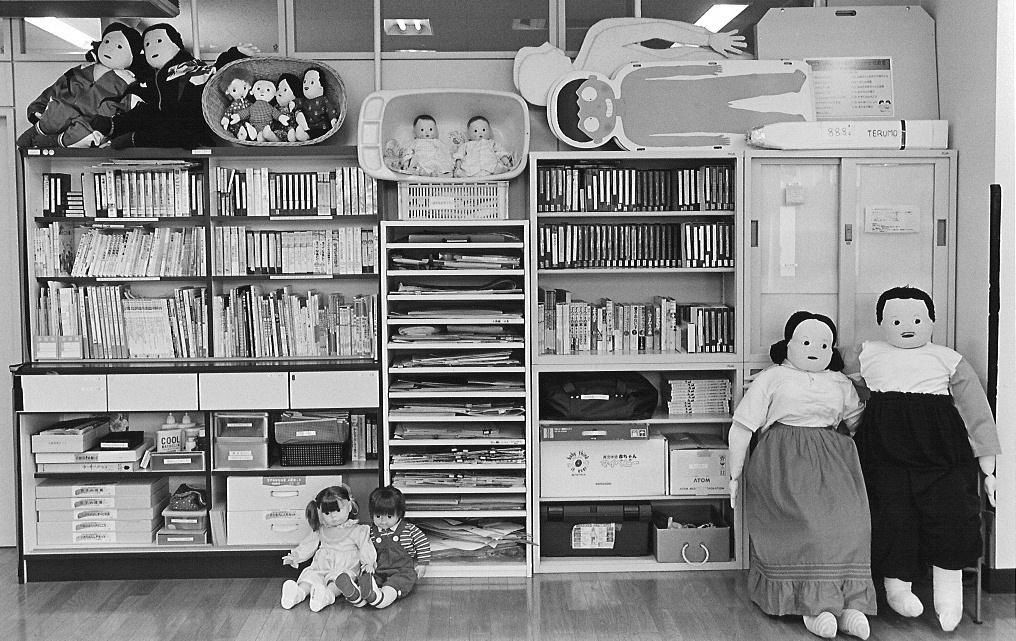
Japan’s sex education was at the forefront in the 1990s. Why did it suddenly regress? The backward trend is related in part to a 2003 campaign to stop sex education at what is now the Nanao Special Support School, a Tokyo public institution for children with special needs. The campaign was led by some members of the Tokyo metropolitan assembly who were shocked to learn the school was teaching children with mental disabilities about sex using songs and dolls. They criticized the school for teaching “inappropriate” content that went well beyond government curriculum guidelines. The Sankei Shimbun concurred with a report critical of such “extreme” education, and the Tokyo Metropolitan Board of Education took disciplinary action against the principal and other teachers at the school. The faculty and parents fought back, however, taking the case to court with the claim that such intervention by metropolitan assembly members and the board of education was illegal. The case went all the way up to the Supreme Court, where it ended in 2013 in the defeat of the Tokyo metropolitan government and legislature.

These sex education materials in the health care office at the Nanao school were confiscated by the Tokyo Metropolitan Board of Education in 2003 in response to growing public disapproval of sex education in general.

“The court decision stated that the National Curriculum Standards could not be interpreted as word-for-word legal writ,” says Hashimoto. “In other words, the Standards are simply guidelines and a school’s decision to do something outside of the guidelines cannot be immediately judged as illegal. This case took ten years to resolve and went all the way to the Supreme Court. During this decade, sex education stagnated in Tokyo schools, where the disciplining of the Nanao teachers had a chilling effect.”

In 2004, immediately following the furor over the Nanao incident, the Tokyo Board of Education revised its handbook on sex education to emphasize that sex education must be pursued systematically and in stages appropriate to students’ physical development and in line with the National Curriculum Standards.

The Nanao defeat did not deter a Tokyo assemblyman involved in the case to once again, in 2018, decry as “inappropriate” a school’s approach to sex education. This time the criticism was aimed at a ninth-grade class on birth control and abortion in a public junior high school in Adachi, Tokyo. The National Curriculum Standards recommend that these topics be covered in senior high school, but this does not mean the junior high school acted illegally by including them in their curriculum.

“This junior high school had found in a survey that nearly half of its students thought it was OK to be sexually active once they moved on to high school. This, and the fact that the school was located in a less affluent district, led to the decision that earlier education on birth control and abortion was imperative. The school did not bring up the topics all of a sudden. The teachers began by teaching the seventh graders about relationships and the importance of equality, gradually leading up to the topics of birth control and abortion.”

Hashimoto stresses: “Children who undergo sex education learn to control their bodies. Without proper knowledge, they are left defenseless. And yet there are people who do now want to give children the knowledge they need.”

The Problem with Sex Ed in Ethics Classes

In the case of this junior high school, the Tokyo Board of Education reprimanded the school for prematurely introducing topics that did not coincide with the children’s level of development, but the Adachi Board of Education refuted this claim. Against this background, the revised Tokyo Board of Education guidelines for sex education issued this year for the first time concede that sex education going beyond the National Curriculum Standards may be implemented with the approval of the parents. Still, Hashimoto sees a problem in the numerous examples given in the guidelines of sex education being implemented within ethics classes.

“I see problems with every one of the eight publishers of government-approved junior high school ethics textbooks,” says Hashimoto. “Take for example, the ethics textbook for public junior high schools published by Nihon Kyōkasho, a textbook publisher with close ties to Nippon Kaigi, an ultranationalist group. This ethics textbook—which, by the way, Tokyo decided not to use in its schools—has a section titled ‘Life Roles,’ which tells the story of a mother on the day she is to be interviewed for a promotion at work. Both parents work in this family, and they usually have the grandmother who lives nearby take care of their youngest elementary school child during the day. On this important day, however, the grandmother falls ill and needs to be taken to the hospital. The father says he must go to work, and the elder daughter, a university student, says she has to go to school to make a presentation. The mother phones her company to cancel the promotion interview saying, ‘It appears I have another role to play.’ The family’s junior high school daughter is left to wonder what this ‘other role’ might be. The message is: Housework, childcare, and nursing care of elderly parents take precedent over a woman’s career. This is completely out of line with the concepts of gender equality and diversity in UNESCO’s International Technical Guidance on Sexuality Education.”

The Impact of the Failure to Teach About Sex

The biological, scientific facts of sex, noted earlier, and the concept of gender equality are missing in Japan’s sex education, says Hashimoto. Gender equality is a core concept in the global standard set by UNESCO’s Guidance. Japan’s failure to teach this concept is evident in a number of areas.

“Some years ago Thailand introduced a policy allowing married couples to choose to have different surnames. This is still not allowed in Japan. As with the approval of oral contraceptive pills, Japan is once again the last holdout in the United Nations to approve such policy. The virility drug Viagra was promptly approved to treat erectile dysfunction in men, but it took a long time before contraceptive pills were approved. As can be seen in the ethics textbook example cited earlier, there is a neoconservatism, which first appeared in the 1970s, that blames Japan’s economic ills on a decline in morals and advocates a return to traditional conservative values. This dovetails nicely with the neoliberal interest in the pursuit of profit.”

Hashimoto goes on: “These people want to cut back on social security. The family should be the safety net, they say, and women should sacrifice themselves for the family. But this perception of society goes completely against the Convention on the Elimination of All Forms of Discrimination Against Women which calls for the elimination of gender-based roles.”

The CEDAW was adopted by the United Nations General Assembly in 1979, took effect in 1981, and was ratified by Japan in 1985. Later, in 1999, an amendment was added that allowed for individuals to directly appeal to the UN’s Committee on the Elimination of Discrimination against Women when their rights as stipulated by this treaty were violated and they were unable to find recourse within their own country. Hashimoto notes, though: “This is an optional protocol, and Japan is the only developed country that has yet to ratify it. If Japan had ratified this protocol, it would be possible to appeal to the United Nations to make Japan give couples the option to each retain their respective surnames after marriage.”

What does this kind of delay in promoting human rights mean for Japan?

“The UNESCO Guidance asserts that sex education from early childhood through adulthood can determine a person’s happiness throughout life. The failure to provide proper sex education hinders individual development and happiness. If things continue here as they are now, Japan is going to find itself isolated within the international community.”

Source of the notice: https://www.nippon.com/en/japan-topics/c06603/misplaced-modesty-hampers-sex-education-in-japan%E2%80%99s-schools.html

Comparte este contenido:

Brasil abandona el área de educación del Mercosur en vísperas de la cumbre

América del Sur/ Brasil/ 02.12.2019/ Fuente: www.efe.com.

Brasil anunció este viernes que abandona los grupos de cooperación en educación que existen en el Mercosur, casi en vísperas de la Cumbre semestral del bloque, que se celebrará la semana próxima en la ciudad brasileña de Bento Gonçalves.

«A partir de ahora, el país deja de participar en las reuniones del bloque y pasa a tener relaciones y acuerdos bilaterales en esa área», indicó en un comunicado el Ministerio de Educación, según el cual la decisión obedece a «la falta de eficiencia y de resultados prácticos» del «Sector Educacional del Mercosur».

El comunicado aclara que todas las iniciativas en ese sector «serán mantenidas sin perjuicios a las partes» y cita entre ellas «el reconocimiento de la equivalencia de estudios en el ámbito de la educación básica», la cooperación en cursos de graduación y posgrado y el sistema de becas que funciona en el Mercosur.

Según la nota, «los demás países que hoy componen el Mercosur fueron comunicados oficialmente de la decisión» este mismo viernes por el ministro de Educación de Brasil, Abraham Weintraub, durante una reunión de autoridades del área educativa del bloque.

Agrega además que, en esa reunión, «solamente comparecieron el ministro brasileño y el de Paraguay, Eduardo Petta San Martín», en tanto que Argentina «envió un representante y Uruguay no estuvo presente».

En el comunicado, el Gobierno brasileño «resalta que no está rompiendo relaciones con los países vecinos», que «el diálogo permanece» y que «los futuros acuerdos, que traigan resultados efectivos, podrán ser firmados bilateralmente, como por ejemplo la implementación del bilinguismo (español-portugués) en las escuelas».

Según Brasil, a lo largo de los 28 años de cooperación dentro del Mercosur en el área de educación, no ha habido «resultados prácticos que impactasen positivamente en la mejoría de los índices generales de educación, aún con la inversión de recursos y la presencia política del país».

La decisión fue anunciada en momentos en que el Gobierno del ultraderechista Jair Bolsonaro se prepara para acoger la Cumbre semestral del bloque que su país integra con Argentina, Paraguay y Uruguay.

La cumbre se celebrará la semana próxima en la ciudad de Bento Gonçalves, donde este mismo viernes la cancillería confirmó que estarán presentes, junto a Bolsonaro, los presidentes de Paraguay, Mario Abdo Benítez, y Argentina, Mauricio Macri.

El mandatario argentino se despedirá en Bento Gonçalves de estas cumbres, ya que el próximo 10 de diciembre le entregará el poder al peronista Alberto Fernández, quien mantiene unas fuertes diferencias de carácter ideológico con Bolsonaro, que no le ha felicitado por su victoria en las urnas y anunció que no asistirá a su investidura.

El presidente uruguayo, Tabaré Vázquez, quien también asistiría a su última Cumbre del Mercosur, pues en marzo le traspasará el cargo al conservador Luis Lacalle Pou, no asistirá debido al cáncer que le ha sido detectado y será representado por la vicepresidenta, Lucía Topolansky, según la cancillería brasileña.

Fuente de la noticia: https://www.efe.com/efe/america/politica/brasil-abandona-el-area-de-educacion-del-mercosur-en-visperas-la-cumbre/20000035-4122460

Comparte este contenido:
Page 1574 of 6145
1 1.572 1.573 1.574 1.575 1.576 6.145