Page 1612 of 6145
1 1.610 1.611 1.612 1.613 1.614 6.145

Schools Should Follow the ‘Science of Reading,’ Say National Education Groups

Schools Should Follow the ‘Science of Reading,’ Say National Education Groups

In the wake of falling reading scores on the test known as the Nation’s Report Card, 12 major education groups are calling on schools to adopt evidence-based reading instruction.

On Tuesday, the collective—consisting of Achieve, Alliance for Excellent Education, Collaborative for Student Success, the Thomas B. Fordham Institute, Learning Heroes, Literacy How, the National Association of Elementary School Principals, the National Council on Teacher Quality, the National Urban Alliance, the National Urban League, the Military Child Education Coalition, and the Education Trust—released a call to action, urging policymakers and education officials to prioritize evidence-based instruction, content-rich curriculum, and teacher training.

With this move, the 12 organizations join the growing number of education groups publicly advocating for the «science of reading»—the decades of psychology and cognitive science research that demonstrate best practices in teaching children how to comprehend text. This summer, for instance, the International Literacy Association endorsed systematic and explicit phonics in all early reading instruction. 

The topic has seen a surge of interest recently, after a series of radio documentaries by American Public Media’s Emily Hanford reported that a lot of elementary schools aren’t delivering the kind of systematic phonics instruction that many beginning readers need in order to decode words.

«We’ve known for more than two decades—at least since the report of the National Reading Panel—that the successful instruction of almost all beginning readers must include phonics, phonemic awareness, fluency, vocabulary, and text comprehension instruction,» the collective’s statement reads. «Yet, that isn’t what’s happening in many American schools.»

The results on the 2019 National Assessment of Educational Progress, released last month, painted a troubling picture of young students’ reading ability. Overall, 4th and 8th graders’ performance in reading is declining—and the lowest-performing students are losing the most ground.

Only 35 percent of 4th graders were considered proficient readers on the NAEP test, compared to 37 percent of 4th graders in 2017. Eighth graders’ scores dropped too, from 36 percent at proficient in 2017, to 34 percent this year. While the highest-performing students scores’ stagnated, the lowest-performing students scores dropped.

What’s causing this trend? It’s hard to know for sure. The NAEP test measures reading comprehension, but as EdWeek’s Liana Loewus pointed out after the scores were released, comprehension isn’t a single skill. Instead, it’s the product of two different factors.

Students need to be able to understand how to read the words off a page—how to decode. But they also need to have the vocabulary and background knowledge to understand the words that they read. While the NAEP scores can show that students are struggling, they can’t pinpoint which part of this comprehension equation students are struggling with.

The first two points on the 12 groups’ agenda highlight both strands of reading comprehension, calling for schools to teach foundational skills, while also implementing curriculum that is designed to build student knowledge.

The group also called for teacher preparation programs to better train future educators in evidence-based instruction, for greater availability of high-quality books by diverse authors, and for an increased federal investment in literacy, from birth through 12th grade.

The collective cited Mississippi, one of the only two states to see an increase in reading achievement on NAEP, as an exemplar of «what’s possible when these strategies are implemented patiently and effectively.»

In 2013, the state passed a 3rd grade retention law, which allowed students to be held back if they couldn’t reach proficiency. In the years since, Mississippi has turned its attention to training teachers in evidence-based practices.

Image: Getty

Fuente de la Información: http://blogs.edweek.org/teachers/teaching_now/2019/11/schools_should_follow_the_science_of_reading_say_national_education_groups.html


Comparte este contenido:

Profiles In Innovation: Leading At The Edge Of Education

Profiles In Innovation: Leading At The Edge Of Education

Innovation

Innovation requires adding method to creativity, and innovation in the education sector particularly demands this. In our last piece we discussed the massive complexities of the sector including the fact that innovation takes place in 132,000 separate localities and that it necessitates changes in the interrelated parts that make up the core design of schools. In this piece we would like to showcase examples of education innovation from some of these localities—schools and school systems whose leaders are structuring their institutions in innovative ways, and are tackling the core design of school itself to better and more equitably serve the needs of students.

We present these examples within the context of a simple framework that can serve to add method for others embarking on innovation.

Method: An Innovation Conditions Framework

Through four years of supporting more than 100 district, charter, independent, and denominational school communities in 20+ states to design and launch innovative school models that aim to transform the experience of schooling, Transcend, a national non-profit, has learned that five critical conditions are necessary for innovation to grow in a sustainable manner:

  1. Conviction in the importance of the work
  2. Clarity on the vision
  3. Capacity to implement the ideas
  4. Coalition of broad and diverse stakeholders
  5. Culture of honesty, trust, and learning

The Five Conditions in Action

Innovation begins with conviction in the need for extraordinary, equitable learning environments that redefine student success and reimagine the experiences intended to foster success. Our world is changing rapidly; schools need to be redesigned equitably and foundationally; leaders who take on the work of redesigning schools understand that they are the bearers of this urgency.

  • Stacy Kane, ED and Cofounder, Washington Leadership Academy, a charter school in Washington D.C., is visionary and steadfast in her conviction that all students should have a high school education that prepares them not only for college and career but also for a lucrative side hustle. She understands the complex contexts of her students include the need to be able to earn money during high school and post-secondary education, both for themselves and their families. Instead of locating those needs beyond the scope of school, she insists that school be designed  to meet these needs. To that end she is building a school that brings Computer Science (CS) and the ability to create coding-related side gigs like web design to all WLA students, not just those in advanced classes. She has convinced her team of the crucial importance of both traditional academic approaches to CS and immediately applicable ones in ways that have required changes in the core design of school including mindsets, schedules, partnerships, crediting pathways, and more.

We have found that leaders who move innovation forward develop and spread clarity regarding the overarching goals of the work. To move from the conviction for change to a clear path forward requires the ability to tell the story of why and how to move forward. Leaders at the edge of education often grow this clarity by engaging in innovative processes that bring the world outside of schooling into the often closed institution that is the current design of school.

  • Adam Bunting, Principal of Champlain Valley Union High School wanted to lead his school “not through top-down ‘push’ energy but rather ‘pull’ energy” where staff, students, and the community embarked on change because they believed in it. He engaged a storyteller from The Moth  to grow conviction into clarity by leading students, the leadership team, and the entire faculty of 120 through the process of developing their own stories for why change was needed. The community realized their current design needed to become much more personalized, in ways that enabled all students to thrive and Internalize their uniqueness. The current design of school that reduced learning to a set of letters and numbers (class grades, GPAs) could not accommodate all this personalized storytelling so the school moved to a competency-based assessment system that may culminate in a new interface between high school and college; the school is collaborating with the Mastery Transcript Consortium to pilot a new mastery-based transcript without GPAs that enables students to tell their unique story to colleges and employers.

Once conviction and clarity are strong, successful leaders focus intently on capacity. They are driven to find the personnel, funding, time, and training required to successfully design and implement a transformative school design.

  • Cynthia Robinson-Rivers, Principal of  Van Ness Elementary School in the District of Columbia Public Schools (DCPS), is building a school where children, families, and educators come together to develop a generation of confident, curious, and compassionate members of society. At the center of this vision is the notion of school as a place that addresses the whole child, not just the academic being. It entails attending to the mental health and wellbeing of children, as defined by neuroscience and clinical best practices, few of which are part of the training of teachers. Cynthia regularly and consistently engages her staff in the learning science around trauma informed practices / wellbeing. She prioritizes this as much as academics, knowing that — if Van Ness wants real learning to happen — this is an essential foundation. Doing so requires her to make major shifts in the core design of school to enable this continuous learning: by creating a comprehensive school plan, redesigning professional development, redesigning schedules, curriculum, and budgets.

The complex work of school transformation requires a coalition—the support of a committed group of stakeholders, including students, parents, educators, community members, government, and industry, who are helping the work become a sustained success. Without a coalition, innovative leaders may be able to launch the work but it is rarely sustained. This is especially crucial in a sector where leadership turnover is a concern and where resources are scarce.

  • Under Newark Schools Superintendent Roger Leon, students are being enrolled in a coding academy to create a more equitable access to the jobs of the future. The Panasonic Foundation and the superintendent recognized the urgency of this need, and rather than reinvent the wheel, partnered with the Hispanic Heritage Foundation to launch Coding as a Second Language (CSL), a program established first in 2013 that had also been implemented successfully in Calexico, CA; Atlanta, Georgia; and Reno, NV. By the end of this year over a hundred middle and high school students will be exposed to STEM education and tech professionals who will serve as mentors to them. This coalition of a school district, industry, foundations, and community professionals grows the capacity of the district to undertake this important and complex work, and thereby impact future outcomes for students. “This collaborative partnership helps us address one of the most critical issues minority students are facing today,” said Alejandra Ceja, Executive Director of the Panasonic Foundation.

Finally, our work has shown us that leaders of innovation attend closely to culture: intentionally building values, norms, and practices amongst adults and young people that enable new ideas to emerge, be tested and iterated on, and eventually codified and spread. They understand that this may entail growing the capacity for risk-taking and vulnerability.

  • Kim Taylor, Director of Pathways High, a regional charter school located in downtown Milwaukee, accompanied Pathways High board members when they pitched the school to the C suite of a local Fortune 500 company. The company leadership shared Pathways High’s concern that too many students lack the skills necessary to perform the jobs they offered and that workplace and school cultures were misaligned. Pathways High had already developed IMPACT, a program that provides students with real world learning experiences both within and outside the classroom.  However, after meeting with the C suite, Kim and her team recognized the need to extend the IMPACT program to include teachers so they could embrace a culture of innovation from a personal, lived experience. As most educators have very little contact with the current world of work beyond education, the Pathways High leadership team wanted the IMPACT program to enable both students and teachers to work in businesses to create bridges across the different cultural mindsets. Kim and her team began by sending Pathways High teachers a survey asking them to describe their passions, what they would do if they weren’t teaching, and what they read in their free time. Using these interests inventories, they then connected their teaching staff and students with industry professionals whom they could shadow.

The examples above show how innovation is possible in the education sector.  Innovative leaders often intentionally cultivate one or two of these critical conditions, and perhaps accidentally cultivate some of the others. What if they were to take on all five conditions intentionally?

This article was developed and researched in collaboration with Sujata Bhatt, Senior Fellow, Transcend

Fuente de la Información: https://www.forbes.com/sites/barbarakurshan/2019/11/12/profiles-in-innovation-leading-at-the-edge-of-education/#46cc8e306109

Comparte este contenido:

Bolivia: Red de intelectuales repudia golpe de Estado contra Evo Morales

América del Sur/ Bolivia/ 12.11.2019/ Fuente: www.telesurtv.net.


La Red de intelectuales y Artistas denunció la evidente inacción de los Gobiernos hermanos ante el desarrollo del golpe de Estado en Bolivia, contra la legitimidad del presidente Evo Morales y su gabinete.

La Red de Intelectuales y Artistas en Defensa de la Humanidad (REDH), capítulo Argentina, reunidos el pasado sábado 9 de noviembre, repudió de manera tajante la estrategia golpista empleada en Bolivia por la oposición de esa nación contra el presidente, Evo Morales.

“Este intento de derrocar a un presidente legitimado en las urnas debe verse como una maniobra más solapada, orgánica y efectista de los intereses imperialistas del norte sobre nuestra región y sobre Bolivia en particular”, manifestó la red en un comunicado oficial.

Asimismo, la REDH destacó que estos reiterados ataques de la oposición boliviana vienen a producir un flagrante desequilibrio en la democracia de esa nación suramericana, en detrimento de la paz y la estabilidad del pueblo de Bolivia.

Los intelectuales, artistas y movimientos sociales que constituimos el capítulo venezolano de la REDH, condenamos enérgicamente el golpe de estado de carácter fascista en contra del Presidente legí…
humanidadenred.org.ve

«Repudia las maniobras golpistas de la oposición y las amenazas reiteradas hacia la figura presidencial, orientadas a producir una ruptura del orden democrático y una polarización abismal en la sociedad boliviana”, remarcó en un pronunciamiento.

Por otra parte, esta coalición de artistas e intelectuales defendieron la legalidad de las elecciones celebradas en suelo boliviano el pasado domingo 20 de octubre, alegaron además que tras estos comicios la derecha golpista aprovechó para gestar un ambiente desestabilizador en ese país.

Luego de este pronunciamiento, los integrantes de este movimiento exhortaron a la comunidad internacional a intervenir para el restablecimiento de la calma y la sobriedad social en Bolivia, para evitar así más sublevación social, muertes, acoso y violación de derechos sociales.

«Hacemos un llamado a los Gobiernos realmente democráticos del mundo, y en particular, de nuestro continente, a pronunciarse en rechazo del golpe consumado en contra del Presidente Evo Morales, financiado y dirigido por el Gobierno de Estados Unidos, arremetiendo una vez más contra la soberanía de nuestro continente», destacó la REDH, capítulo Venezuela.

Fuente de la noticia: https://www.telesurtv.net/news/bolivia-red-intelectuales-artistas-defensa-humanidad-orden–20191112-0013.html

Comparte este contenido:

Rights group: Iraq education system on brink of collapse

Asia/ Iraq/ 12.11.2019/ Source: www.aljazeera.com.

Millions of students across Iraq are losing out amid a shortage of teachers and education funding, the Norwegian Refugee Council (NRC) has said.

Across Iraq, 2.5 million children are in need of education support, including 775,000 internally displaced children residing in and out of camps, the independent humanitarian organisation told Al Jazeera.

According to NRC information shared with Al Jazeera, more than 240,000 Iraqi children were unable to access any form of education in the last year. The United Nations’ humanitarian funding appeals for education in Iraq have also not been met for this year, reaching less than half of the $35m required.

Over recent weeks, hundreds of thousands of Iraqis have taken to the streets to protest against the poor state of public services and corruption. Their demands include more access to jobs and better economic opportunities.

Tom Peyre-Costa, the media coordinator for NRC Iraq, said one way to empower young people would be to provide education and training so that young people would have a better chance of finding work.

«An education system on the brink of collapse can’t effectively address these challenges,» he said.

Teacher shortage

Since the conflict against the Islamic State of Iraq and the Levant (ISIL or ISIS) armed group erupted in 2014, no new teachers have been hired, which has led to a 32 percent shortage, according to the NRC. In Nineveh, the second most populated region in Iraq, the number of teachers has plummeted from a prewar level of 40,000 to 25,000.

The aid group said that a lack of teachers has contributed to a high student dropout rate, particularly affecting secondary schools, where 28 percent of girls and 15 percent of boys are not in school. This is compared with primary schools where 9.6 percent of girls and 7.2 percent of boys are out of school.

In addition, a lack of contact time with teachers has hindered the performance of those children who are in school; many schools are now run in a system of two to three shifts a day in order to reduce class sizes, though numbers of students can still reach up to 650 per class.

Nada, a secondary school student in Mosul, said the lack of teachers was shocking.

«Today is my first day in school and I am in shock, we are more than 1,700 students and we don’t have enough teachers,» she told NRC.

Volunteers

With no new teachers hired since the start of the war, volunteers have started to fill the gaps in many areas. In Mosul, which bore the brunt of the war against ISIL, 21,000 volunteers represent almost half of the teachers in the city, the NRC said.

Volunteer teachers are generally subsidised through stipends paid by humanitarian agencies such as UNICEF and NRC, though some, such as those in Internally Displaced People’s (IDP) camps in Duhok, north Iraq, receive no such funding.

«The volunteers are typically not trained teachers and are either unpaid, or working on short-term contracts,» Peyre-Costa said.

He told Al Jazeera that since 2015, NGOs and the UN have spent more than $30m paying teachers in Iraq.

But for this current school year, humanitarian agencies said they will cease funding teachers’ salaries, in an attempt to pressure the government to hire and pay qualified teachers.

«Well qualified teachers, who have strong subject knowledge and effective pedagogical skills, are critical for moving from crisis to recovery in Iraq,» Peyre-Costa said.

IDP camps

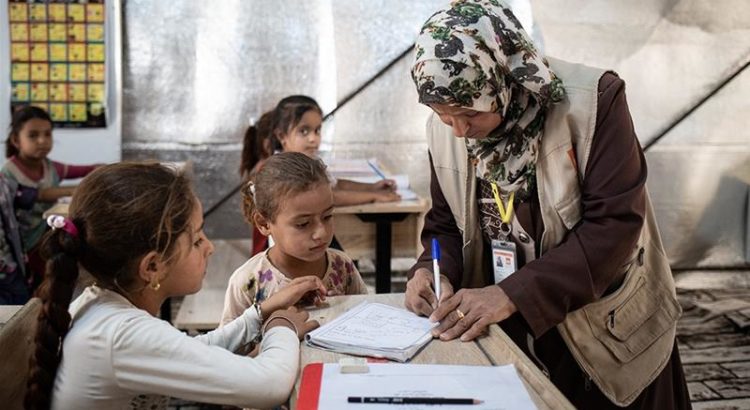
Children in IDP camps have been hit particularly hard by the shortfall. At an IDP camp in Kirkuk, the Iraqi education ministry pays two teachers for more than 1,700 students enrolled in two primary schools, the NRC said.

READ MORE

After ISIL, children try to catch up with school in Mosul

In Hamam al-Ali camp, classes for the current school year have not started due to a lack of teachers, leaving some 5,000 children without access to education.

During the war against ISIL, 50 percent of all school buildings in conflict-ridden areas were damaged or destroyed, the majority of which have not been rebuilt, according to the NRC.

«Now we study in prefabs, it’s cold during winter and burning during summer. We are suffering a lot,» Nada, the student, said.

In some governorates across Iraq, announcements have been made that all support for IDP school facilities would cease from the start of this school year.

In Duhok, northwest Iraq, the Ministry of Migration and Displacement stated they would cease paying rent on buildings used as schools for IDP children.

As a result, approximately 60,000 children in 12 official IDP camps in the Duhok area were at risk of losing access to education, the NRC said.

A teacher counting students in the schoolyard due to a lack of school building - back to school day 2019-2020 in Aljaleel school, Mosul [Tom Peyre-Costa/NRC]
A teacher counting students in the schoolyard due to a lack of school building [Tom Peyre-Costa/NRC]

Peyre-Costa told Al Jazeera the closure of schools is one of the multiple government measures designed to encourage people to return home.

«But by closing IDP schools, the government just pushes children out of schools, not out of camps,» he said.

«The education of their children is often sacrificed vis-a-vis security issues, or simply the lack of a home to return to.»

Source of the notice: https://www.aljazeera.com/news/2019/10/rights-group-iraq-education-system-brink-collapse-191028180740513.html

Comparte este contenido:

Venezuela: Profesores universitarios se unen al paro nacional de 72 horas convocado por los maestros

América del Sur/ Venezuela/ 12.11.2019/ Fuente: cronica.uno.

Lourdes Ramírez de Viloria, presidente de la Federación de Asociaciones de Profesores Universitarios de Venezuela, informó que la junta directiva decidió participar en la protesta. El personal obrero y empleados administrativos también se sumarán.

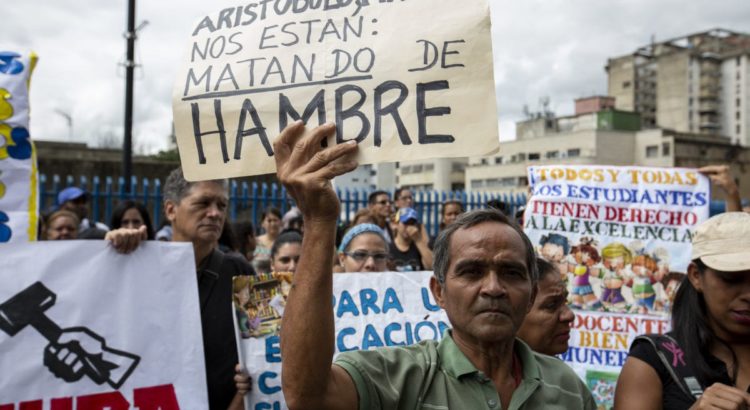
Caracas. No solo los maestros de educación básica, media y diversificada dejarán de acudir a las aulas por 72 horas a partir de este martes. Los profesores universitarios también se unirán al paro nacional convocado por las ocho federaciones que conforman el magisterio.

Lourdes Ramírez de Viloria, presidente de la Federación de Asociaciones de Profesores Universitarios de Venezuela (Fapuv), informó que la junta directiva decidió participar en la protesta. El personal obrero y empleados administrativos también se sumarán.

“Nuestras reivindicaciones están destruidas”, dijo Ramírez. El salario de un profesor titular son 550.000 bolívares. Mientras que, a los maestros, desde octubre de 2018, les adeudan 220 % por concepto de incremento salarial.

Ramírez agregó que las universidades están bajo la amenaza de quitarles la autonomía tras la sentencia 034 del 27 de agosto del Tribunal Supremo de Justicia. El fallo ordena realizar elecciones de autoridades en la Universidad Central de Venezuela en un plazo no mayor a seis meses bajo un nuevo mecanismo electoral.

Estimados colegas, FAPUV nos convoca a un paro estos tres días: martes 12, miércoles 13 y jueves 14 Para organizar las acciones de lucha, acordar con los demás gremios una respuesta conjunta al plan de intervención de las universidades y luchar con el Magisterio por la educación

Denunció que no han podido sostener encuentros con las autoridades del Ministerio de Educación, pues este solo se reúne con “una federación paralela” que no agrupa a todas las voces. De hecho, la asignación presupuestaria en muchos casos no superó ni 10 % de lo solicitado por las universidades.

Los profesores universitarios acompañarán este martes a los maestros a una protesta en el Ministerio de Educación. También asistirán a una reunión con la Subcomisión de Educación de la Asamblea Nacional.

El miércoles tendrán una jornada de asambleas y visitas a las escuelas. Y entregarán volantes para que conozcan la situación de las universidades. Mientras que el jueves, cuando se cumplen las 72 horas de paro, protestarán en Parque Carabobo. Cerrarán la semana con una asamblea de líderes sindicales en el IPP de la UCV.

Fuente de la noticia: https://cronica.uno/profesores-universitarios-se-unen-al-paro-nacional-de-72-horas-convocado-por-los-maestros/

Comparte este contenido:

Los abortos clandestinos se disparan en Nigeria por conflicto con Boko Haram

África/ Nigeria/ 12.11.2019/ Fuente: newsweekespanol.com.


Los abortos clandestinos e inseguros se han disparado en Nigeria desde que comenzara el conflicto con el grupo yihadista Boko Haram en 2009, según han denunciado este lunes trabajadores sanitarios del país. En Nigeria, uno de los países que tienen una legislación más restrictiva en cuanto al aborto del mundo y que sólo lo permite para salvar la vida de la madre, se producen 2,7 millones de abortos al año, la mayoría de ellos practicados en secreto y en condiciones peligrosas, según la Universidad Johns Hopkins.

Son las mujeres pobres y las que no han tenido oportunidad de educación las que más riesgo corren en este sentido. Además, al menos 40 mujeres y niñas acuden para recibir asistencia médica tras un aborto al mes, ha contado a Thomson Reuters Foundation Aminu, una enfermera de una clínica gestionada por el gobierno nigeriano situada en el estado de Yobe. Hace una década, eran entre 10 y 15 mujeres las que precisaban atención médica tras un aborto. Te puede interesar: Liberan a 19 mujeres embarazadas de una “fábrica de bebés” en Nigeria Nigeria tiene la cuarta tasa de mortalidad materna más alta del mundo: unas 100 mujeres y niñas mueren por esta causa al día, según la Organización Mundial de la Salud (OMS).

En este contexto, las tasas en el noreste del país, donde las clínicas y los hospitales han sido destruidos por grupos armados para crear un califato islámico, son las peores en Nigeria, según muestran datos gubernamentales. Las autoridades nigerianas insisten en defender la legislación actual en contra del aborto. (Foto: AFP) Según Aminu, las mujeres acuden a farmacias, a vendedores locales de fármacos o a mujeres ancianas para abortar y usan fármacos, hierbas o herramientas, como barras, para hacerlo. “No mueren si las admitimos en el hospital”, según la enfermera. “Pero hay muchos más casos en los que las mujeres y las niñas toman hierbas solas, no van al hospital y mueren porque no quieren exponerse”, ha lamentado Aminu.

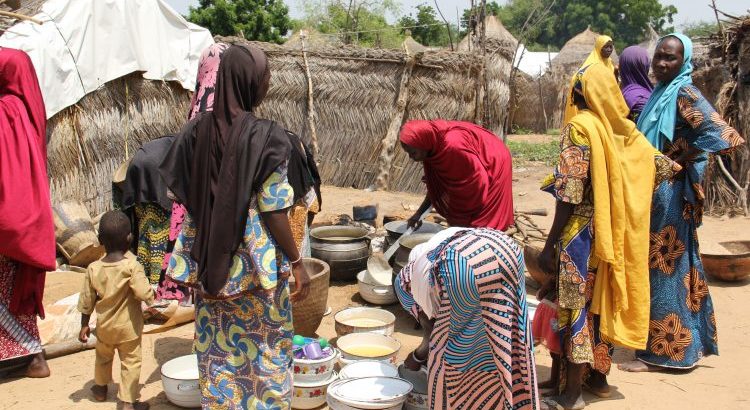
Sexo por comida Naciones Unidas ha registrado miles de casos de violencia sexual y de intercambio de sexo por comida, particularmente en mujeres y niñas que carecen de ésta, cobijo o dinero. “Mucha gente que está desplazada vive con anfitriones que se aprovechan de ellos”, ha explicado la directora de la Fundación Juventud Africana para el Desarrollo y el Empoderamiento de la Paz, Maryam Aje. Kellu, una adolescente que perdió a su familia después de que miembros de Boko Haram atacaran su aldea hace dos años, se quedó embarazada después de que un soldado le ofreciera comida y amparo a cambio de sexo.

No quiere tener el bebé. Lee más: Escuela de Nigeria era una “casa del horror”, estudiantes eran torturados y violados Después de mudarse a un campo de refugiados del estado de Borno, quiso practicarse un aborto, pero no sabía dónde acudir para ello, como un número creciente de mujeres desde que comenzara la insurgencia islamista. “Si continúo con este embarazo, arruinaré mi vida”, ha explicado Kellu, que cree que está embarazada de dos meses. “Todo el mundo sabe lo que hice. Me estigmatizarán por tener un bebé sin estar casada”, ha lamentado. “Además, no tengo dinero para encargarme de mí misma. ¿Cómo se supone que voy a cuidar de un niño?”, se ha preguntado Kellu, que ha declinado proporcionar su nombre real.

Por su parte, las autoridades nigerianas insisten en defender la legislación actual. “Sin importar las circunstancias, el aborto está prohibido excepto por razones médicas”, ha recordado el subdirector de respuesta médica de emergencia del Ministerio de Salud de Borno, Ali Grema. “No está permitido para razones sociales”, ha zanjado. Tabú La educación sobre planificación familiar se focaliza en Nigeria en las mujeres que están casadas por las actitudes conservadoras propias del país, ha recordado una enfermera del campo de Maiduguri, Hadiza. Por su parte, Lucy Dlama, una miembro de Mujeres en la Nueva Nigeria, que proporciona apoyo a las supervivientes de violación a través de la atención sanitaria, ha asegurado que muchas mujeres ni siquiera saben que el sexo puede dejarlas embarazadas.

La educación sobre planificación familiar se focaliza en las mujeres casadas.

“Nuestra cultura establece que es un tabú para los padres proporcionar educación sexual a sus hijas”, ha afirmado Dlama, que ha animado a las madres a enseñar a sus hijas sobre sus cuerpos. Por otra parte, el embarazo fuera del matrimonio también es un tabú, incluso cuando es el resultado de una violación por parte de soldados, milicias o funcionarios de campos de desplazados.

Fuente de la noticia: https://newsweekespanol.com/2019/10/abortos-clandestinos-nigeria/

Comparte este contenido:
Page 1612 of 6145
1 1.610 1.611 1.612 1.613 1.614 6.145