Page 2318 of 6193
1 2.316 2.317 2.318 2.319 2.320 6.193

Vietnam: Schools that lack teachers not allowed to expand staff

Asia/ Vietnam/ 09.10.2018/ Fuente: english.vietnamnet.vn.

VietNamNet Bridge – Schools have repeatedly complained to the Ministry of Education and Training (MOET) about the lack of teachers, but the Ministry does not have the right to recruit teachers.

MOET’s Deputy Minister Nguyen Duy Thang said at an event held by the National Assembly’s Committee for Culture, Education, the Youth and Children on September 24 that 29 provinces want an additional 40,447 civil servants for the education sector this year. Thanh Hoa province alone needs 7,519.

According to MOET, schools now lack 80,000 teachers, including 43,000 for preschools.

The shortage has forced schools to employ teachers under short-term labor contracts. They are not official civil servants and do not receive salaries from the State.

Dang Thi My Huong, a National Assembly deputy, has raised questions about the responsibilities of MOET and the Ministry of Interior Affairs (MIA) for teacher shortage.

29 provinces want an additional 40,447 civil servants for the education sector this year. Thanh Hoa province alone needs 7,519.

According to Huong, the teachers working under labor contracts signed with schools receive “starvation” salaries, about VND2 million a month.

The jobs are unstable because schools may terminate the contracts at any time.

In reply, MOET’s Minister Phung Xuan Nha said MOET is aware of teacher shortage, but the ministry does not have the right to recruit teachers. MIA is in charge of recruiting civil servants.

He said this was a difficult question to solve as schools want to recruit more teachers, while Vietnam is trying to cut out waste in organizations to ease the burden on the state budget.

Tran Hong Quan, deputy chair of Ca Mau province, also said that while the number of students increases every year (the population of the province increases by 10,000 each year), the number of teachers do not.

Van Thi Bach Tuyet, a National Assembly deputy from HCMC, commented that the solutions mentioned by MOET and MIA cannot settle the problem quickly. She suggested a mechanism under which cities and provinces have self-determination, with no need to wait for MIA’s approval on the personnel list.

Meanwhile, most National Assembly deputies agree that the problem lies in the recruitment scheme.

Nha said that under current laws, MOET and local education departments can only make suggestions, while it is MIA which makes final decisions in recruiting teachers.

Tran Thi Tam Dan, former chair of the National Assembly’s Committee for Culture, Education, the Youth and Children, said: “Those who use workers need to be given the right to recruit workers. It is unreasonable to assign teacher recruitment to MIA.”

“Only education establishments know how many teachers they need and what they have to do to settle the problem,” she said.

Fuente de la noticia: https://english.vietnamnet.vn/fms/education/209484/schools-that-lack-teachers-not-allowed-to-expand-staff.html

Comparte este contenido:

Ta’allum educators speak about ‘engaged learners’

Asia/ Qatar/ 09.10.2018/ Source: www.thepeninsulaqatar.com.

Three Ta’allum educators spoke at the national Teaching and Learning Forum sponsored by Qatar Foundation’s Education Development Institute.

The conference took place on October 7 at the Qatar National Convention Center. The theme of the forum was engagement, with keynote speeches and workshops by international educationalists like Steve Francis and Joy Marchese.

Aimed at motivating teachers to reach for the highest level of student, staff and parent engagement and achievement, participants gained tools to inspire young people to excel personally and academically.

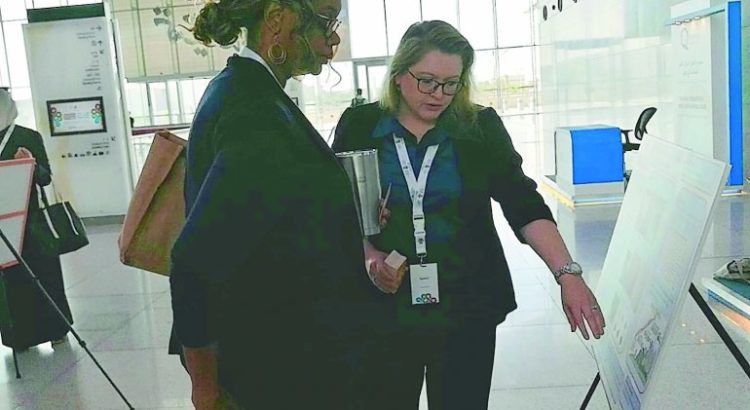
Ta’allum delegates Jude Ensaff, Samera Kouser, and Rukshana Begum spoke to visitors about the great work that has been achieved in Ta’allum academies over the past three years.

Taallum’s contribution, a poster presentation entitled ‘Moving learners from passive to engaged: a strategic approach’ outlined the steps taken in the three academies to move Early Years and Primary classrooms from teacher-directed to learner-centred approach.

The delegates further described the ongoing journey in Al Maha Academy for Girls, Al Maha Academy for Boys and Al Jazeera Academy to learner-driven classrooms.

Some of the key methods that make the transition to learner-driven classrooms are the professional development of staff, use of hands-on resources and approaches, and the introduction of more speaking opportunities through practicals.

Mohammed Saefan, Ta’allum Director of Education, said: “At the three academies, we are harnessing our resources in training our students to become independent learners. We are acquiring new technology and instructional materials to promote enquiry-based learning. As our presentation described it at this important forum, the learner is at the centre of the learning process.”

Ta’allum schools have made great strides forward for student engagement and achievement. This first foray into national and regional forums in education opens doors of opportunities in future for more sharing of Ta’allum successes.

Source of the notice: https://www.thepeninsulaqatar.com/article/09/10/2018/Ta%E2%80%99allum-educators-speak-about-%E2%80%98engaged-learners%E2%80%99

Comparte este contenido:

Brasil y Colombia, batalla por la calidad educativa

América del Sur/ Brasil/ 09.10.2018/ Fuente: www.educacionyculturaaz.com.

Los sistemas educativos de Brasil y Colombia enfrentan, al igual que nuestro país, el enorme reto de elevar la calidad educativa, así lo comentaron las ex ministras de educación de ambos países, María Do Pilar Lacerda y Nohemy Arias Otero, respectivamente, en su participación en el Foro Nacional de consulta que pasó revista al modelo educativo de la Educación Básica convocado por la Secretaría de Educación Pública (SEP).María Do Pilar Lacerda ex secretaria nacional de Educación Básica del Ministerio de Educación de Brasil, de 2007 a 2012, señaló que el Plan Nacional de Desarrollo de la Educación (PDE) que empezó en 2007, respondió a las demandas sociales que exigían una mejor calidad educativa para combatir los bajos índices de logro académico señalados por pruebas nacionales e internacionales.

Entre los retos que enfrenta el sistema educativo brasileño, señaló Lacerda que les hace falta incluir a 3 millones 400 mil niños y jóvenes, que están fuera de la escuela con edades entre 4-5 15 y 17 años.

El PDE fue criticado al principio, reconoció la ex ministra de Educación de Brasil, pero éste ganó legitimidad cuando el ministro de educación fue a los 27 estados de la República de aquel país. Con ello se logró articular un plan de acciones interrelacionadas para que a partir del conocimiento del estado de la educación brasileña, se elaborara un plan para transferir recursos con un mejor criterio.

A partir de ahí, se creó el Programa “Dinero Directo a la Escuela”, señaló María Do Pilar Lacerda, programa en el que se destina dinero adicional a las escuelas con los peores resultados educativos por un periodo de dos años, explicó la ex funcionaria carioca.

Entre otros desafíos que contempla el sistema educativo brasileños están garantizar la carga horaria mínima de 800 horas al año a mil 400. Además, fortalecer la formación continua para los maestros, transformar la escuela en un espacio público comunitario y lo más trascendente, invertir 10 por ciento del PIB en educación, como ya lo había advertido Educación Futura.

Colombia, saber para mejorar

En su oportunidad, Nohemy Arias Otero, ex ministra de Educación de Colombia (2002 y 2011), señaló que en su país, en 2005, se realizó un ejercicio similar al que México realiza ahora (los foros de consulta); derivado de esta convocatoria surgió el Plan Decenal de Educación en 2006.

En el devenir del sistema educativo colombiano, señaló que a partir de 2001 emprendieron una descentralización educativa que en 2002 continuó con la profesionalización docente, expuso Arias Otero.

La ex ministra señaló como indispensable contar con un sistema de información sobre el sistema educativo, así como con una buena infraestructura tecnológica para su consulta. Entre las simetrías del sistema educativo colombiano con el mexicano, Arias Otero señaló que 80 por ciento del gasto educativo de Colombia se destina a la nómina docente.

Ahora al sistema educativo colombiano le queda por delante perseverar en una comunicación permanente con todos los actores incluyendo el sindicato, así como distribuir recursos con un criterio de equidad y eficiencia; en suma, establecer una relación directa entre gasto, cobertura y calidad.

Fuente de la noticia: http://www.educacionyculturaaz.com/educacion/brasil-y-colombia-batalla-por-la-calidad-educativa

Comparte este contenido:

Cuba: Estudiantes universitarios que den clases no tendrán que aprobar asignaturas básicas

Centro América/ Cuba/ 09.10.2018/ Fuente: www.cibercuba.com.

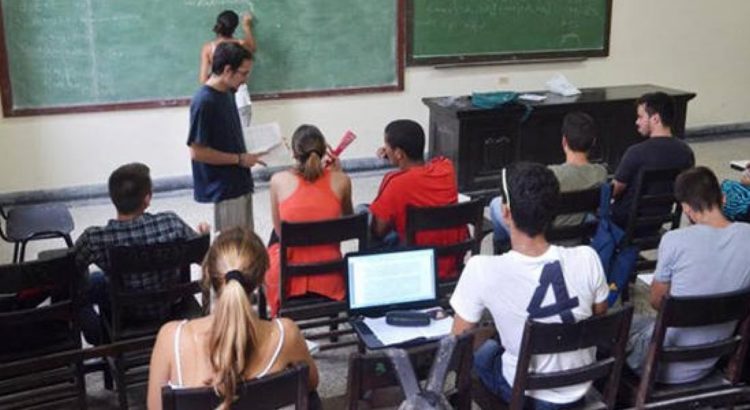
Estudiantes universitarios que dan clases no estarán obligados a aprobar asignaturas básicas como Matemática, Español e Historia, según la nueva medida aplicada por autoridades de la Educación en la provincia de Sancti Spíritus.

Cerca de 90 estudiantes que se forman en una licenciatura por el programa de curso por encuentros y quienes además ejercen una labor pedagógica frente a las aulas, se eximen de aprobar las asignaturas básicas, informó esta semana el periódico local Escambray.

De acuerdo con declaraciones al medio de la doctora en Ciencias Pedagógicas Maité Suárez Pedroso, la medida será adoptada por estos estudiantes durante en primer año de la carrera.  En un principio, los alumnos beneficiados con la medida corresponden a las facultades de Ciencias Pedagógicas y Ciencias Técnicas y Empresariales.

Dicha transformación en la Educación Superior, indicó, tiene como objetivo favorecer la cobertura docente del territorio, “que representa la mayor dificultad del Ministerio de Educación en Sancti Spíritus”. Al igual que en el resto del país, los maestros espirituanos cobran un salario mensual por debajo de la media, equivalente a 21 dólares.

Suárez Pedroso señaló que esta alternativa tiene como antecedente que -desde hace dos cursos- se trasladaron los requisitos del ingreso y se establecieron como parte del contenido a vencer durante el primer año de curso todos los matriculados en este sistema, que tiene 24 carreras.

“A pesar de que la Matemática constituye la materia de mayor dificultad para los estudiantes en general, ellos disponen de varias opciones para vencer las asignaturas básicas, ya que pueden presentarse al examen ordinario, extraordinario, mundial, e incluso pueden repetir el año solo por una sola”, dijo.

Según datos aportados por el periódico, al cierre del curso escolar pasado, el índice de alumnos aprobados en estas asignaturas osciló entre apenas un 54% y 62%, cifra que mostró -no obstante- un avance en las calificaciones registradas años anteriores.

En agosto pasado, autoridades del sector educativo en Cuba confirmaron que el país abriría el nuevo curso escolar con un déficit de más de 10.000 profesores, con énfasis en provincias como La Habana, Matanzas y Artemisa.

La ministra de Educación, Ena Elsa Velázquez Cobiella, confirmó que el Mined evaluó unos 12 territorios y en cada recorrido debió insistir en el tema de la cobertura. Provincias como Sancti Spíritus y Pinar del Río, que no declaran déficit de educadores, comenzaron a implementar varias “alternativas”.

“Eso siempre nos pone un bombillo rojo, porque son maestros fuera de la plantilla de la escuela y en determinado momento puede existir inestabilidad, detalló la titular del ramo”, dijo la titular.

Fuente de la noticia: https://www.cibercuba.com/noticias/2018-10-07-u73624-e73624-s27061-cuba-estudiantes-universitarios-den-clases-no-tendran

Comparte este contenido:

In Neighborhoods Without Public Schools, Zimbabwe’s Students Rely on Illegal Schools

Africa/ Zimbague/ 09.10.2018/ Fuente: globalpressjournal.com/africa/zimbabwe/neighborhoods.

It’s noon on a windy Friday in Caledonia, a neighborhood along Harare’s eastern edge. Children roam the schoolyard at Ngodza Primary School, excited for the weekend ahead.

This for-profit school has three classrooms. Together, those classrooms accommodate 118 children, who each pay $10 per month to attend. The school is not registered with the government. It operates illegally.

Teclar Chengedzai lives in Caledonia and says her 6-year-old must learn there because there are no government schools nearby.

This is a common problem as Harare expands far beyond its original boundaries. Unregistered schools now outnumber registered schools in the city, according to government data.

There were an estimated 1.48 million Harare residents in 2012, according to census data. It’s not clear how many schools operate in the city, but locals say the government doesn’t come close to meeting their education needs.

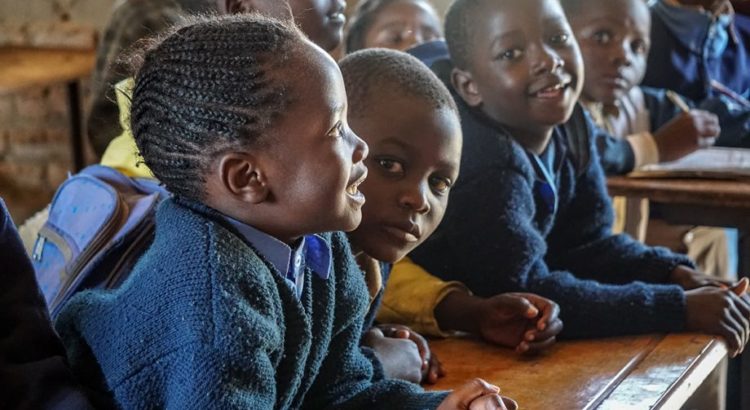
Children attend class at Ngodza Primary School, an unregistered school in Harare, Zimbabwe.

Gamuchirai Masiyiwa, GPJ Zimbabwe

As a result, unregistered schools, both primary and secondary, are opening in areas such as Caledonia, where there are no public schools. That’s a far cry from Zimbabwe’s educational heyday in the early 1980s, when a new government under Robert Mugabe abolished a long-standing system that favored the country’s white minority with high-quality schools while black students’ education was neglected. Under Mugabe’s leadership, Zimbabwe attained a literacy rate of nearly 100 percent and the government boasted of having the best school system on the continent. But over time, those gains dissolved under a corrupt and brutal regime, leaving Zimbabwean students with few options for quality education (See a timeline of Zimbabwe’s education system here.)

Now, some areas have more unregistered schools than government ones, says Christopher Chamunorwa Kateera, director of the Harare Provincial Education Office in the Ministry of Primary and Secondary Education, but the government can’t close the illegal schools because it would leave entire neighborhoods without options for education. An amendment to the country’s Education Act obliges the government to provide students in such areas with a formal alternative.

According to government data, there are 205 registered schools and 219 unregistered schools in Harare, Kateera says.

The government has closed some unregistered schools and enrolled their students in registered schools, but in other cases, officials seek to formalize unregistered schools, Kateera says.

“Wherever we identify unregistered colleges, we call them in and have meetings with them informing them of the procedures they should follow to regularize their establishments,” he says.

Parents say unregistered schools come with their own challenges. The school that Chengedzai’s child attends doesn’t provide textbooks. It also doesn’t offer grades six or seven because, unlike registered schools, it doesn’t have access to the exams required to attend secondary school.

“They want parents to buy these books, which are expensive to get as well,” Chengedzai says.

A teacher leads students at Ngodza Primary School in the Caledonia neighborhood of Harare, Zimbabwe.

Gamuchirai Masiyiwa, GPJ Zimbabwe

Another problem is that a student must be enrolled at a registered school in order to take standardized exams, which are required for entrance into university and also for many jobs.

Godfrey Hozo, the school’s headmaster, says the school opened in 2016. It’s difficult to keep teachers, he says, because of the school’s low pay. Right now, the school has four teachers, including himself.

“We end up having composite classes, because at times you might have five students for grade three and 16 students for grade four,” he says. “The teacher then has to plan what they teach for each level, but they will be in the same room.”

The school charges $10 per month for fees, he says. About 70 percent of the enrolled children are able to pay. Those who can’t pay the fees are eventually dismissed.

A major problem, he adds, is getting information from the national education ministry about the government-approved curriculum. Hozo says he asks teachers in government schools to help him access syllabi and textbooks.

Hozo says the government should relax what he calls the “stringent conditions” for school registration, so that institutions like his can fully engage in the nation’s educational system.

There’s no indication that the government will ease those conditions. Instead, Kateera says, unregistered schools need to improve their standards and formally register with the government.

Fuente de la noticia: https://globalpressjournal.com/africa/zimbabwe/neighborhoods-without-public-schools-zimbabwes-students-rely-illegal-schools/

Comparte este contenido:

Indonesia Needs to Educate on Natural Disasters

Asia/Indonesia/09.10.2018/Source: www.fairobserver.com.

fter another earthquake and tsunami in Indonesia, it is clear that people are not taught what to do in the event of natural disasters.

Indonesia has once again been hit by a natural disaster. On September 28, a 7.5-magnitude earthquake followed by a tsunami struck the cities of Palu and Donggala on the island of Sulawesi. At the time of publishing, at least 1,424 people died, with thousands more injured. With homes in ruin, tens of thousands have been forced to live in makeshift refugee camps.

According to Reuters, Indonesia’s geophysics agency, BMKG, lifted a tsunami warning too early, just before the waves hit the coast of Palu. It is also understood that buoys — which are connected to the seafloor to detect tsunamis — in Sulawesi have not worked for the past six years and had not been fixed due to a “lack of funding.” With poor planning in place, Indonesians were left with little notice of an imminent disaster.

As reported by The Guardian, Phil Cummins of the Australian National University and Adam Switzer of Nanyang Technological University in Singapore believe the earthquake and tsunami were not the result of a failure in technology, but rather due to the lack of education among the people.

In 2004, Southeast Asia was left devastated by an earthquake and tsunami that quickly spread across the Indian Ocean. Unlike that time, the wave that struck Sulawesi was not was prompted by an earthquake hundreds of miles out in sea. Instead, it was a localized tsunami resulting from an earthquake close to the coast. The tsunami waves hit Palu just 30 minutes after the quake which, according to Switzer, “should have been the early warning.”

Cummins added that to blame technology is “misguided.” Instead of relying on a warning system, he said, people should have sought “high ground immediately. They cannot afford to wait for a siren or a warning, they need to move instantly.” The issue is that Indonesians in Sulawesi did not really know they should have done that.

He added: “Either they didn’t know they needed to do that or they didn’t believe anything would happen, and in either case that says the people in Sulawesi were not educated about what they need to do in this situation. And that’s what killed people.”

THE NEED TO EDUCATE

The conditions in Palu should be a wake-up call about the need for education — especially for those living in earthquake-prone areas — not only about natural disasters in general, but what people must do to ensure their safety. It is indeed difficult to predict when a natural disaster will occur. But considering Indonesia is vulnerable to such situations, it needs a comprehensive plan so that citizens are educated in how to respond to earthquakes and tsunamis. Sufficient response plans would mean that every Indonesian has basic knowledge about what to do when disaster strikes.

In Indonesia, most elementary school textbooks in social studies contain a a lesson about natural disasters. These include that cutting down trees can cause landslides and trigger floods or about how earthquakes occur. But there is no lesson about what to do when an actual quake takes place. Presumably, mitigation in Indonesia has not become a serious issue just yet.

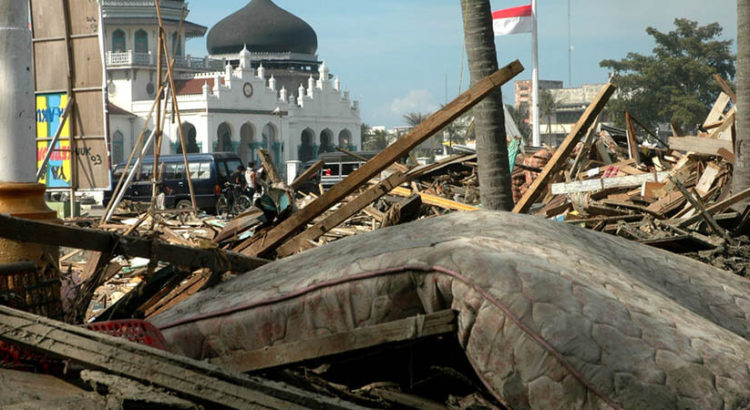
Records over the past 15 years show there have been two devastating earthquakes in the country, leading to thousands of casualties. The 2004 earthquake and tsunami in Aceh caused 230,000 deaths across 14 countries around the Indian Ocean — the majority of those in Indonesia. Another earthquake took place in Yogyakarta in 2006, which claimed the lives of 5,000 people.

Several years have passed, but Indonesians still do not understand what to do when an earthquake occurs, other than running out of a building or trying to protect themselves under a table. With the country situated in an active geological area, Indonesia must prepare itself for natural disasters.

EARTHQUAKES AND TSUNAMIS

It should be made clear that educating people about what to do when an earthquake takes place is as crucial as having advanced technology to predict when disasters may occur. According to the US Department of Homeland Security’s Ready website, when an earthquake shakes the ground and you are in a vehicle, you should immediately pull over and stop. If you’re in bed, you should stay there. If you are outdoors, you should stay outdoors. Such valuable information is often unknown to Indonesians and should be an example for authorities and nongovernmental organizations in helping to increase people’s readiness to face earthquakes.

There is also a need for disaster exercises such as practicingdrop, cover and holdAs per Ready, this involves dropping on the ground to your hands and knees; covering or protecting your head and neck with your arms; crawling to the extent needed to avoid falling or collapsing materials; and holding onto strong furniture or doorways in a building until an earthquake stops.

No less important is making an emergency communicationpattern with your family. In an earthquake-prone country like Indonesia that has the 2004 tsunami in its memory, this is necessary.

There are also reasons why you are advised not to run out of a room if there is an earthquake. Trying to run when an earthquake takes place is very dangerous due to potentially falling debris or broken glass. It is safer for people to stay at home and protect themselves by crouching under a table.

Earthquakes do not usually last for very long. It only takes tens of seconds for an earthquake to occur. However, when the the ground stops shaking, people must be aware of the possibility of a tsunami, especially if they live on the coast. Again, these things are not taught to the average Indonesian.

In 2004, the tsunami in Aceh was preceded by a 9.2-magnitude earthquake that lasted for an estimated 10 minutes. In such instances, it is important to educate fishermen who work at sea.

Nature will usually give a number of signs before a tsunami hits. When a tsunami approaches the coastline, water will usually spread toward dry land and cause the inside of the sea to be exposed, showing its contents, corals and fish in the sea itself. Because of the low tide, there are often many fish floundering on the beach. Due to a lack of understanding, fishermen may not always act immediately. They need to be aware that they should not pick up the fish and should instead seek high ground.

Tsunamis cause abnormal sea activities. The key sign is the presence of a wall of water with a great roar. Imagine a sound that resembles that of a train or jet.

PREPARING FOR NATURAL DISASTERS

The theory seems easy, but the practice is difficult. As natural disasters are hard to predict, humans can only anticipate them by preparing themselves. Therefore, there is a need to make sure that training is carried out in Indonesia.

There are many things that can be done to educate people about disaster avoidance efforts. Schools could conduct regular evacuation exercises for earthquakes. Posters can also spread awareness about what can be done during natural disasters. National media outlets can also be used to educate people, such as making earthquake alertness videos. Relevant institutions and government ministries also need to make more of an effort to ensure that those who live and work on the coast are sufficiently educated about the signs of natural disasters and what they need to do in such events.

What is clear is that, learning from Palu and previous natural disasters, more efforts are needed by both the Indonesian government and other relevant stakeholders to educate people not only about basic information concerning natural disasters, but also what they need to do to recognize signs and steps to be taken when those disasters occur. Doing so could save lives.

Source of the notice: https://www.fairobserver.com/region/asia_pacific/indonesia-earthquake-sulawesi-tsunami-natural-disasters-asia-news-today-24920/
Comparte este contenido:

Coquille Tribe moving forward with Indian education curriculum, celebrating culture


The Coquille Indian Tribe has a long cultural history, broken apart by the loss and restoration of their «Tribe» designation.

The tribe has not always been given the chance to teach their history to the younger generation.

Newly passed legislation, Senate Bill 13, puts into law the process to make sure the next generation knows and celebrates their culture.

The Oregon Department of Education will draft a mandated statewide curriculum for the 2019-2020 school year. and the nine tribes of Oregon can submit their own lesson plans specific to their history.

«What an Indian is and what they look like is the story of their tribe,» said Bridgett Wheeler, the tribes’s culture, education and library director. «One of the things I’ve struggled to convince my children is that they are, in fact, legit Indians of the Coquille Indian tribe.»

According to the tribe, after miners arrived and the government pushed the indigenous people from their lands in the 1850s, few Coquille women with white husbands were allowed to stay.

Many married white people, and these mixed-race families now make up the Coquille Tribe.

Kristina Simpson, Head Start director, said educating the younger generation is important to her as a mom and a tribal spouse.

They are currently accepting bids for proposed lesson plans that are in line with state and federal standards

«Our expectation is we lay out what we would like people to provide us,» Wheeler said, «their expertise, examples of lesson plans, basically, what their plan and price would be for them to provide this product.»

Source of the notice: https://kcby.com/news/local/coquille-tribe-moving-forward-with-indian-education-curriculum-celebrating-culture

Comparte este contenido:
Page 2318 of 6193
1 2.316 2.317 2.318 2.319 2.320 6.193