Page 2551 of 6193
1 2.549 2.550 2.551 2.552 2.553 6.193

Haïti – Social : Impact de l’éducation sexuelle sur les femmes en Haïti

Amérique Centrale//Haïti/05.06.2018/Source: www.haitilibre.com.

Dans le cadre le cadre de la Journée internationale d’action pour la santé des femmes (28 mai), lors d’une conférence débat organisée par le Collectif du droit à la Santé Sexuelle et Reproductive (DSSR),autour du thème « se dwa fanm pou jwenn bonjan swen sante » (Les femmes ont droit à de bons soins de santé) ; la sociologue et militante féministe Danièle Magloire, Représentante de « Kay Fanm » a déclaré que la vulnérabilité des femmes haïtiennes dans le domaine de la sexualité est actuellement l’un des grands défis du système de santé national.

Elle a souligné que « Cette éducation sexuelle doit participer à une déconstruction des représentations stéréotypiques et des conceptions erronées, qu’ont les femmes, face à leurs maladies » critiquant l’idée mécanique qui lie la santé des femmes à la seule fonction reproductrice affirmant « La femme ne peut pas se définir uniquement à partir de son potentiel de procréation. Elle existe indépendamment de ce potentiel »

Le Dr Reynold Grand’Pierre, Directeur de la Direction de Santé de la Famille (DSF) du Ministère de la Santé publique, a rappelé que l’âge moyen pour le premier rapport sexuel en Haïti est entre 13 et 14 ans pour les garçons et entre 16 et 18 ans pour les filles plaide pour la planification familiale rexpliquant « la planification familiale, n’empêche pas les femmes d’enfanter, mais leur permet d’enfanter au moment voulu et d’espacer les naissances » convaincu que la planification de la grossesse est une étape importante qui permettrait aux femmes d’accoucher à l’âge approprié et dans de bonnes conditions. Soulignant que la qualité et l’accès aux soins et la capacité des hôpitaux sont d’autres fardeaux du système de santé qui affectent directement les femmes.

Dans son intervention, l’ex Ministre de la Justice Me. Jean Joseph Exumé, Président de la Commission présidentielle sur la réforme du droit a souligné « On ne peut pas concevoir une bonne médecine, sans un système d’assurance fiable et une résidence appropriée pour les professionnels de la santé […] Les textes de loi doivent mettre en exergue les droits des patientes et patients » déplorant que le code pénal ainsi que le code d’instruction criminelle du pays datent de 1835.

Source des novelles: http://www.haitilibre.com/article-24551-haiti-social-impact-de-l-education-sexuelle-sur-les-femmes-en-haiti.html

Comparte este contenido:

Egypt: Education min. to integrate students with special needs in society

Asia/Egypt/05.06.2018/Source: www.egypttoday.com.

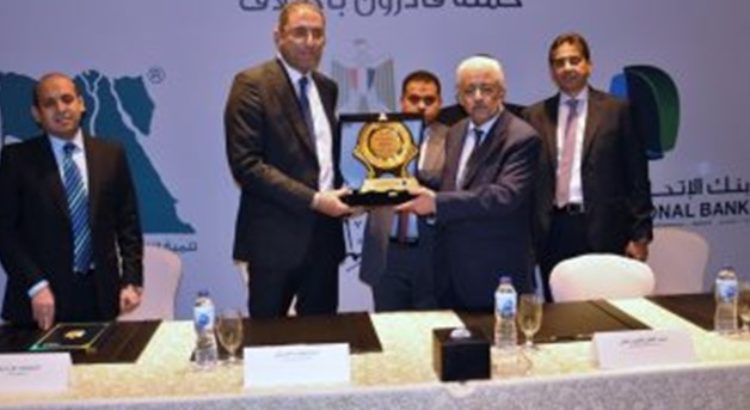
The Ministry of Education signed on Saturday a cooperative protocol with the National Union bank and Misr El Kheir Foundation (MEK) to implement the media campaign “Differently-abled” that aims to integrate students with special needs in the society.

Advisor of the Minister of Education for Marketing and Promotion, Yousra Allam, launched the biggest national campaign “Differently-abled”, focusing on psychological and educational needs of students with special needs, according the spokesman for the Ministry of Education Ahmed Khairy.

Allam remarked that the campaign will raise the awareness of the society particularly parents about the sound ways to treat their children through different kinds of media.

The Ministry of Education has taken several steps to enhance education in Egypt, which is part of Egypt’s 2030 vision to cultivate economic and social justice and revive the role of Egypt as a regional leader. Launching the first Arabic Citation Index (ARCI) worldwide comes at the top of these efforts.

First Arabic Citation Index worldwide

Minister of Education and Technical Education Tarek Shawki, a representative of the Knowledge Bank, signed on May 28 a protocol with Clarivate Analytics to launch the first Arabic citation index worldwide.

The signing ceremony was attended by Minister of Culture Inas Abdel Dayem, head of Bibliotheca Alexandrina Mostafa el Feki, public figures, members of Parliament and leaders at the Ministry of Education.

“The ARCI will be powered by the Web of Science – the world’s most trusted and only publisher – neutral citation index for researchers in Egypt and across the 22 member states of the Arab League,” according to Clarivate Analytics’ website.

The new system of education

In the same context, he mentioned that the index is included in the new system of education at the secondary school, stressing that the Ministry of Education has contracted many international entities to buy their contents and deliver them to Egyptian students, along with buying 2D and 3D films, adding that 5,700 videos in English and Arabic have been bought. He said that these movies, Al-Adwaa book and other scientific content would be put on tablets.

He stated that a random exam would be prepared every week to encourage students to come to schools.
Japanese schools

On the sidelines of the signing ceremony, the minister of education said in a press statement that the Egyptian-Japanese schools’ curriculum will be in Arabic at primary schools.

The Japanese education system, Tokkatsu, will be applied at 40 Egyptian-Japanese schools in different governorates in September.

A total of 20,000 teachers have applied to receive a training in the Japanese Tokkatsu education system in the ministry.

Shawki added that the ministry will hold a meeting on June 4 to choose 1,500 students for Japanese schools.


Source of the news: https://www.egypttoday.com/Article/1/51471/Education-min-to-integrate-students-with-special-needs-in-society

Comparte este contenido:

Israel: Ultra-Orthodox Families’ Increasing Demand for Secular Education Not Being Met

Asia/Israel/05.06.2018/By: Or Kashti/ Source: www.haaretz.com.

Education Ministry ‘foiling attempts at integration into society,’ say parents who want state-run Haredi school system to incorporate subjects like English, math

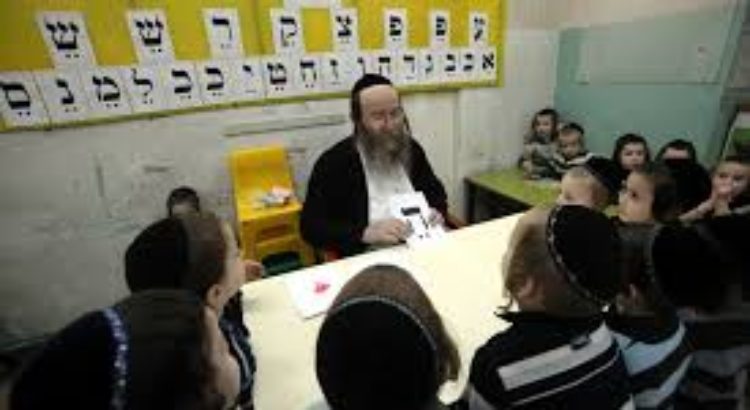
Hundreds of ultra-Orthodox children whose families want them to receive education in secular subjects are likely to be left in the lurch in the coming school year.

Despite growing demand among the ultra-Orthodox, or Haredim, to have children learn «core» subjects as English and math as part of the curriculum in the state Haredi school system – no solution has been forthcoming. The reasons for this, parents claim, include lack of room, hurdles by the local authorities and indifference on the part of the Education Ministry.

In light of this situation, an attempt by parents of some 250 children to be accepted to state Haredi schools next year is doomed to fail. A group of parents has gotten together recently, demanding an increase in the number of classrooms in these schools, but it seems that most will end up registering their children in the regular Haredi school system, where secular subjects are taught at a low level, if at all.

The parents accuse the Education Ministry of shirking its responsibilities. One has even charged that “the state is foiling attempts by Haredi families to integrate into the general society.”

The state Haredi school system was launched at the initiative of former Education Minister Shai Piron, who sought to bypass the contentious issue of core subjects being taught in the non-state schools that cater to the community. In addition to religious subjects, the relatively new state-run system offers a full curriculum of secular subjects from the first grade, and it is supervised by the ministry, in contrast to the Haredi system that is independently managed and has its own curriculum.

According to Education Ministry figures, the number of children enrolled this academic year in 43 state-run Haredi schools is 5,562, as compared to 4,675 pupils in 36 institutions last year. The ministry would not divulge data regarding the coming school year.

In conversations with parents and Haredi education activists it emerges that some 150 children who will be entering first grade in Jerusalem in the fall have been told that the schools are completely full. In Petah Tikva and Bnei Brak, 70 children are looking for a place in Haredi state schools, while others seek to enroll in them in Bat Yam, Holon and other cities – including locales with a Haredi majority such as Modi’in and Betar Ilit.

According to senior Education Ministry officials, these are numbers that warrant urgent attention.

A preliminary survey by Itamar Kea Levi, an activist in Jerusalem, reveals that there are 120 families across the country that have shown interest in setting up a school as part of the state-Haredi system in their own locales. He says that dozens of other families did not wish to give details about their efforts, as yet.

“The world is changing, people realize that you can stay in the world of Torah and work at the same time,” says Kea Levi. “In such a world, you want your child to have all the options.”

There are currently three such schools in Jerusalem – an elementary school for girls, and an elementary and high school for boys. Next year, a high school for girls is scheduled to be opened.

‘A different approach’

Former Bnei Brak resident Neta Katz says that he moved to Jerusalem so that his two sons, aged 7 and 9, will be able to study at a state Haredi school. “We’re at the end of the first year and I thank God for the move,” he says, adding that his daughter will be entering first grade in the fall of 2019.

“I asked the principal of the girls’ school to keep a place for her,» he says, «but she told me not to count on it. If it’s hard to deal with the demand at this point, I have no doubt that things will only get worse.”

Katz himself studied in schools run by the strict Gur Hasidic sect, and he recalls that, “95 percent of the time was devoted to religious studies, with an hour or an hour and a half left over for secular subjects. English was taught on an irregular basis. When I reached the academic world I had great difficulties since I had to start from very basic concepts like simple arithmetic problems.”

In the state Haredi schools, Katz explains, “the approach is completely different, both in terms of the level and the scope. I never knew there was a subject called science. I don’t believe core subjects should be imposed on people who don’t want them, but the state must enable this for those who do. In many high-density Haredi communities there are no such schools. If one considers the interest of the state, this is an unacceptable situation.”

Israel’s compulsory education law gives the responsibility for education to the state and to local authorities. Often, this joint responsibility leads one of the sides to pass the buck. According to sources in some local governments, the procedure is usually that the municipal education department turns to the ministry to ask for a new school to be built. The ministry has various methods of supporting the school system in local authority, through enhanced general budgets or by covering some specific expenses.

The Haredi department at the Education Ministry is responsible for state Haredi schools as well as for the independent Haredi system. Katz says that when he met in the past with people in this department, he was advised to organize a group of parents and then approach the local authority.

“The problem is that you can’t wait for the free market to kick in,” says Katz. “There are many hurdles and objections and you can’t tell parents to deal with local governments on their own.”

Says Yehuda Grovais, from Bnei Brak, “The Haredi department promised to deal with establishing a school if we produced a list of interested parents. By word of mouth we managed to get a list of 40 girls who want to attend such a school next year. So we were sent to the municipality. The sense is that the Education Ministry prefers that someone else do the fighting for them.”

Grovais notes that city hall had suggested that the girls go to a regular Haredi school. When he insisted he wanted something different, he was told that, “it won’t work here.” The same thing happened to another group in Petah Tikva.

“[Education Minister] Bennett is abandoning ultra-Orthodox people who want to integrate” says one parent. “The ministry is strengthening the grip of the extremist elements of the Haredi community and we’re paying the price.”

In response, the Bnei Brak municipality says that efforts will be made to resolve the issue. The Petah Tikva municipality said there was not enough demand for such schools.

The Education Ministry said it viewed the demand for more state-run Haredi schools positively and would examine ways to meet it, together with the relevant local authorities.

Source of the news: https://www.haaretz.com/israel-news/.premium–1.6141203
Comparte este contenido:

France: La Coalition Education et l’UNICEF appellent la France à s’engager par des mesures concrètes pour renforcer le droit à l’éducation de toutes les filles en situation de crise

Europe/Paris/5 de juin 2018/Source: www.unicef.fr.

Les 8 et 9 juin prochains, les dirigeant·e·s des plus grandes puissances du monde se réuniront à Charlevoix, au Québec pour aborder certains des enjeux les plus cruciaux à l’échelle internationale. À cette occasion, la Coalition Éducation et l’UNICEF appellent la France à s’engager par des mesures concrètes pour renforcer le droit à l’éducation de toutes les filles en situation de crise : un des enjeux contemporains les plus négligés et pourtant l’un des plus importants auquel la prochaine génération sera confrontée.

Aujourd’hui, 75 millions d’enfants et de jeunes, sont privés d’éducation dans 35 pays en proie à des crises. Dans ces contextes de vulnérabilité, les filles ont 2,5 fois plus de risques de ne pas être scolarisées. Et lorsque les filles n’ont pas accès à l’éducation, elles sont plus vulnérables à la violence, notamment sexuelle,  à la discrimination et à l’exploitation, au mariage précoce et à la grossesse pendant l’adolescence.

La France a affirmé son leadership en matière d’appui à l’éducation en contexte de crise et fait partie des 74 pays ayant adopté la Déclaration mondiale sur la sécurité dans les écoles. Son engagement en faveur de l’éducation s’est accompagné en février dernier lors de la conférence de Dakar, d’un soutien de 200 millions d’euros au Partenariat mondial pour l’éducation (PME) pour 2018-2020. Un engagement diplomatique et financier de la France au G7 sous présidence canadienne sur cette thématique doit générer un élan positif qui devra être poursuivi lors de la présidence française du G7 en 2019.

« Le sommet du G7 représente une opportunité supplémentaire pour la France d’accroître la résonance politique et l’impact de son engagement en faveur de l’éducation des filles les plus vulnérables, en particulier les filles non scolarisées, en situation de crise. » selon Léa Rambaud, responsable plaidoyer et communication de la Coalition Education.

Le G7 encouragera l’engagement et l’action en faveur d’un avenir positif pour des millions d’enfants dans le monde – grâce à des ressources suffisantes évaluées à 1,3 milliard de dollars additionnels pour les trois prochaines années – en reconnaissant et en s’attaquant aux principaux obstacles à la réalisation d’une éducation de qualité pour les filles et les garçons les plus vulnérables.

« Pour des millions d’enfants pris au piège des conflits ou des catastrophes partout dans le monde, l’accès à une éducation de qualité, dispensée dans un environnement sûr, représente un puissant rempart contre les différentes formes de violences auxquelles ils sont exposés » affirme Sébastien Lyon, directeur général de l’UNICEF France.

Les organisations membres de la Coalition Éducation : Aide et Action, Asmae, Céméa, Défi, France Parrainages, Gref, Humanité & Inclusion, Ligue de l’enseignement, One, Partage, Plan International France, Planète Urgence, Sgen-CFDT, SNUipp, Solidarité Laïque et UNSA Éducation.


Source des nouvelles: https://www.unicef.fr/contenu/espace-medias/g7-faire-de-l-education-des-filles-en-situation-de-crise-une-priorite

Comparte este contenido:

Chile: Educación no sexista

América del Sur/ Chile/ 04.06.2018/ Fuente: www.emol.com.

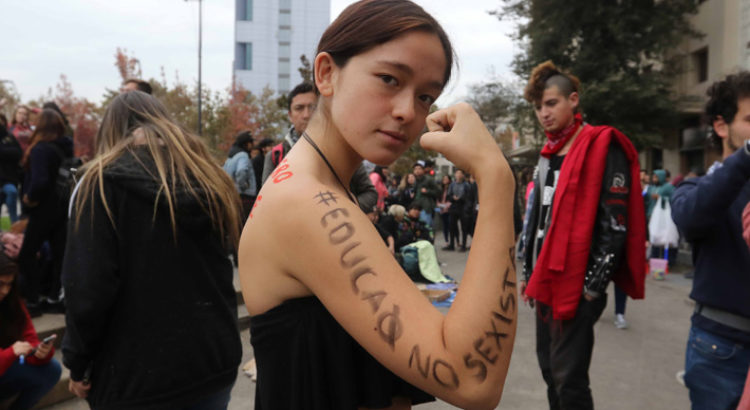
La ministra secretaria general de Gobierno, Cecilia Pérez, destacó este domingo la creación de una mesa de trabajo en el Mineduc que buscará promover una educación no sexista y se refirió a algunas de sus integrantes.

El espacio que tendrá su primera reunión este jueves será liderado por la subsecretaria de Educación Parvularia, María José Castro. «Está incorporado no solamente las personas que trabajan en equidad de género dentro del Ministerio de Educación sino que también Comunidad Mujer a través de Alejandra Sepúlveda, también el PNUD a través de Marcela Ríos, también las universidades.

Hasta ahora con la decana de Educación de la Universidad Católica y otras mujeres que van a trabajar sobre primero: mallas curriculares en todo nivel de Educación, buscando que no exista el sexismo», destacó en el programa Estado Nacional de TVN. NOTICIA RELACIONADA Presidente Piñera lanza agenda por la equidad de género y hace mea culpa por el machismo en Chile 162 Asimismo se busca abordar protocolos idóneos, no sólo de prevención, sino que también de atención a aquellas estudiantes que se sientan víctimas en toda entidad educacional, eliminar la violencia y el menoscabo en contra de la mujer.

Respecto a la ola feminista y sus demandas instó a las estudiantes movilizadas a dialogar con el Gobierno. «Lo que uno pide a un liderazgo responsable, en este caso a las estudiantes convocadas en tomas, paros, movilizadas en las universidades es a no discriminar a las mujeres. Tú no partes un movimiento o una temática que tú quieres relevar discriminando menos en este tema. Cuando ellas dicen que no validan en ninguna mesa de trabajo a ninguna ministra del Gobierno del Presidente Sebastián Piñera.

Creo que en estos temas que nos convocan a todos tenemos que unir voluntades», reflexionó.

Fuente: Emol.com – http://www.emol.com/noticias/Nacional/2018/06/03/908492/Mineduc-liderara-mesa-de-trabajo-para-promover-una-educacion-no-sexista.htm

Comparte este contenido:

España: La Consejería de Educación destina más de 80.000 euros en ayudas dirigidas a la formación del profesorado

Europa/ España/ 04.06.2018/ Fuente: www.juntaex.es.

El Diario Oficial de Extremadura (DOE) ha publicado la Orden a través de la que la Consejería de Educación y Empleo convoca ayudas por importe de 81.163 euros destinadas a la participación en actividades de formación del profesorado.

La necesidad de formar de manera específica a un profesorado con competencias profesionales cada vez más diversas hace que la Administración ofrezca una variedad de programas y una diversidad de actuaciones, con el fin de favorecer el desarrollo profesional de los docentes. Con esta iniciativa, la Consejería de Educación y Empleo pretende impulsar ayudas a la formación permanente del profesorado.

Estas ayudas tienen como finalidad atender a los gastos ocasionados por la matriculación y/o adquisición de material didáctico con ocasión de la participación del profesorado beneficiario en actividades de formación permanente de interés educativo.

Pueden ser objeto de ayuda las actividades de formación encuadradas en dos modalidades.

En la Modalidad A, destinada a la realización de estudios conducentes a la obtención de titulaciones universitarias de grado y postgrado impartidos por las Universidades Públicas o por la UNED; a la realización de enseñanzas de régimen especial de idiomas y de grado profesional de música y danza; y a la asistencia a cursos, jornadas, encuentros, congresos y seminarios organizados por instituciones reconocidas como entidades de formación del profesorado con una duración mínima de 10 horas.

En la Modalidad B, dirigida a actividades de formación on line relacionadas con la mejora de las competencias idiomáticas, y tendentes a la preparación u obtención del certificado correspondiente al Marco Común Europeo de Referencia.

BENEFICIARIOS

Podrán solicitar las ayudas el personal docente, en servicio activo, con destino en centros sostenidos con fondos públicos de Extremadura en niveles previos a la Universidad; personal docente, en servicio activo, con destino en los servicios educativos, como Equipos de Orientación Educativa y Psicopedagógica, Centros de Profesores y de Recursos, Servicios de Inspección de Educación y Servicios Centrales dependientes de la Consejería de Educación y Empleo.

Quedan excluidos de estas ayudas los profesores que, durante el periodo de realización de la actividad, han sido beneficiarios de licencias por estudios total o parcialmente retribuidas.

Los solicitantes no podrán ser beneficiarios por cada convocatoria de más de una ayuda de las previstas en la misma.

Para la Modalidad A se concederán ayudas por la participación en actividades de formación cuya realización finalice en el periodo comprendido entre el 1 de septiembre de 2017 y el 31 de agosto de 2018. Y, para la Modalidad B, por realizar la actividad para la que solicita la ayuda en el periodo comprendido entre el 1 de septiembre de 2018 y el 31 de agosto de 2019.

Finalmente, por no haber disfrutado durante la anterior convocatoria de ayudas, de una beca o ayuda económica para la realización de una actividad de formación del profesorado o, habiéndola recibido, pero que esta no superase la cantidad de 100 euros.

El plazo de presentación de solicitudes para las actividades de formación correspondientes a la modalidad A concluirá el 31 de agosto de 2018. Y, por otro lado, el plazo para presentar las solicitudes a la Modalidad B será hasta el 22 de junio.

Fuente: http://www.juntaex.es/comunicacion/noticia&idPub=25155#.WxWzDO4vyUk


Comparte este contenido:

Fortalecen desde las aulas la educación vial en México

América del Norte/ México/ 04.06.2018/ Fuente: www.nl.gob.mx.

Para crear conciencia entre los alumnos de educación básica sobre el uso de los puentes peatonales y el respeto a los señalamientos viales, la Secretaría de Educación de Nuevo León impulsa una cultura de prevención mediante acciones en los planteles.

La titular de la dependencia, María de los Ángeles Errisúriz Alarcón, mencionó que de manera permanente y durante todo el año, a través de la Coordinación Estatal de Seguridad Escolar, se realizan distintos programas en coordinación con las autoridades estatales y municipales.

Uno de ellos es el programa «Por arriba es más seguro, evita accidentes usando los puentes peatonales», donde a través de dípticos y pláticas se informa sobre las medidas de seguridad que deben tomar los peatones, utilizando los puentes peatonales en los cruces de avenidas y calles con gran flujo vial.

«Dentro del Nuevo Modelo Educativo se promueven en forma importante diferente temáticas, una de ellas la educación vial. Lo hemos estado platicando con algunos directores», comentó la titular de Educación en Nuevo León.

Explicó que también se realizan talleres donde oficiales de Tránsito informan a los alumnos sobre los riesgos y consecuencias de no respetar los señalamientos, con la finalidad de que los niños lleven esa información hasta sus padres.

Otra acción es el concurso de «patrulleritos escolares», el cual propicia la adquisición de competencias ciudadanas que favorecen la participación social, la cultura del autocuidado y legalidad a través de actividades lúdicas en seguridad vial.

Durante la visita de la Secretaria de Educación a la Escuela Primaria «Juan Escutia», en el municipio de China, los alumnos realizaron diferentes actividades, entre ellas, plasmar con sus propias manos en un mural una pintura alusiva al tema

Fuente: http://www.nl.gob.mx/noticias/fortalecen-desde-las-aulas-la-educacion-vial

Comparte este contenido:
Page 2551 of 6193
1 2.549 2.550 2.551 2.552 2.553 6.193