España/ 8 de agosto de 2017/Autor: EUROPA PRESS/Fuente: http://www.20minutos.es
Philippine/August 8, 2017/ By: Gilbert P. Felongco/ Source: http://gulfnews.com
After passage of law, hard part is to fund it.
The passage into law of a measure providing free college education could be a «game changer» for many Filipinos families as having a graduate could be a ticket out of poverty.
“A college diploma is the most decisive tool a Filipino can carry in the struggle to give his or her family a better life, and President Duterte has just given every Filipino the means to have it,” Senate President Aquilino “Koko” Pimentel said, adding that the free college education law gives more Filipino families better pathways out of poverty.
While deserving students who could pass admission in state colleges and universities are provided with free tuition, they are required to maintain certain grades.
To get free quality education, some apply for admission to the Philippine Military Academy, the Philippine National Police Academy or enter priesthood or apply for scholarship from big companies, which would likely provide them with work upon graduation, or secure really high grades that comes with scholastic honours.
Under the Universal Access to Quality Tertiary Education act, which was signed by President Rodrigo Duterte last Thursday, Filipino college students — including those wishing to take up medicine — could be provided free education in state colleges or universities.
“I have always believed that education is the great equaliser. I am where I am today because of my education,” said Pimentel, who graduated from the University of the Philippines College of Law in 1990, and topped the Bar exams the same year.
The Senate chief says that the law is a boost for the country and not just for individuals.
Pimentel said: “With this law, our country will have a bigger pool of skilled professionals who are necessary for the development of a modern economy.”
But while Duterte’s move to sign the free college education law was widely welcomed, some Senators caution that funds should be ensured to make it feasible.
Earlier, Budget Secretary Benjamin Diokno had said that such an undertaking may not be possible since it would provide a great drag on the country’s fiscal flow.
“We laud the President’s decision to sign the law even when there was some hesitation from his economic managers. The challenge now, however, is to ensure that the new law will be effectively and completely implemented in 112 state colleges and universities nationwide,” members of the Senate minority bloc said in a statement on Saturday.
The minority bloc is largely made up of members of the opposition Liberal Party.
“The new law will only become a reality if government allocates enough and accessible funding for SUCs nationwide. The executive branch and Congress must work closely to make tertiary education accessible to all through tuition subsidies and financial assistance,” they stressed.
Source:
http://gulfnews.com/news/asia/philippines/free-college-education-could-be-game-changer-for-filipino-families-1.2069703
Ghana/August 8, 2017/By: ghananewsagency.com/ Source: https://www.ghanamma.com
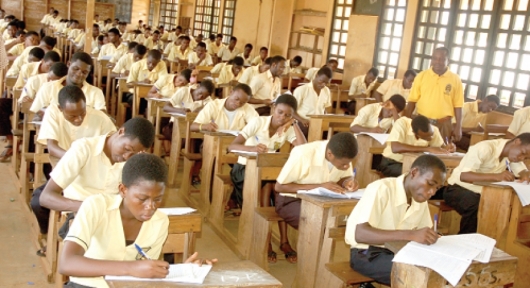
Mr Stephen Abarika, the Eastern Regional President of the Girls Education Network (GEN), says supervision and monitoring in public schools are key to improving standards and performance of the Basic Education Certificate Examination (BECE)
He therefore asked all stakeholders especially circuit supervisors of the Ghana Education Service (GES), community leaders, chiefs and elders, schools management committees (SMCs)to upscale their role to ensure that the expected outcomes in the investment of education especially at the basic level was fully realised.
Speaking at the maiden meeting of the GEN, to map up strategies in improving girl- child education, he observed that with strong supervision from all stakeholders’ public schools including girl’s education would be improved.
Mr Abarika, who is also the project officer of AG Care, Ghana, a social and relief organisation of the Assemblies of God Church, said monitoring and evaluation had led to sustainable change in entry, retention, completion and transition of learners in some schools in the Suhum Municipality by AG-Care.
He observed that, the institution of the GEN network indicated that there was a problem with girl- child education, be it enrolment, retention and transition to the next level, apart from the basic level.
He called on partners working towards the girl- child education to step up grassroots stakeholder participation.
The GEN is a Network of NGOs working in the interest of promoting girl -child education in the Region.
It consists of AG-Care, Action Aid, and College for Ama, FLOWER, CRESCCENT, International Child Development Programme, World Vision, Plan International, World Joy and the Girls Education Unit of the GES among other organisations.
Among the objectives of the GEN is to use a common strategy and platform to address issues such as teenage pregnancies, early marriages, poverty and other challenges that militate the enrolment, retention and transition of the girl- child in having a sound education for empowerment.
Teenage pregnancy, remains one of the huge challenges confronting girl -child education in the Region.
According to Ghana Health Service report in 2013, more than 12,000 girls of school going age were recorded pregnant and therefore dropped out of school.
Source:
Mexico/August 8, 2017/by Carol A. Clark/Source: http://www.ladailypost.com
Education Grants
Community Grants
Public school districts, nonprofit New Mexico educational institutions, IRS-qualified 501(c)(3) organizations, government agencies, and Pueblo/Tribal communities serving the Northern New Mexico counties of Los Alamos, Mora, Rio Arriba, San Miguel, Sandoval, Santa Fe, or Taos are eligible to apply for grants of up to $2,500.
Application and instructions may be found online at www.lanlfoundation.org/grants. Grant proposals are accepted quarterly. The deadline for second quarter funding is Aug. 15.
For more information, contact Susanne Miller at 505.753.8890 or susanne@lanlfoundation.org.
About the LANL Foundation
Since 1997, the Los Alamos National Laboratory Foundation, a 501(c)(3) nonprofit, has worked to inspire excellence in education and learning in Northern New Mexico through innovative programming, collaboration and advocacy. By investing in human potential, the Foundation’s vision is that all New Mexicans have the skills and confidence they need to be self-sufficient, lifelong learners who are engaged in their communities. Programs in early childhood, STEM inquiry education, scholarships and small grants serve Northern New Mexico communities primarily in Los Alamos, Mora, Rio Arriba, San Miguel, Sandoval, Santa Fe and Taos counties.
Source:
http://www.ladailypost.com/content/lanl-foundation-awards-61298-education-and-community-grants
EEUU/ August 8, 2017/
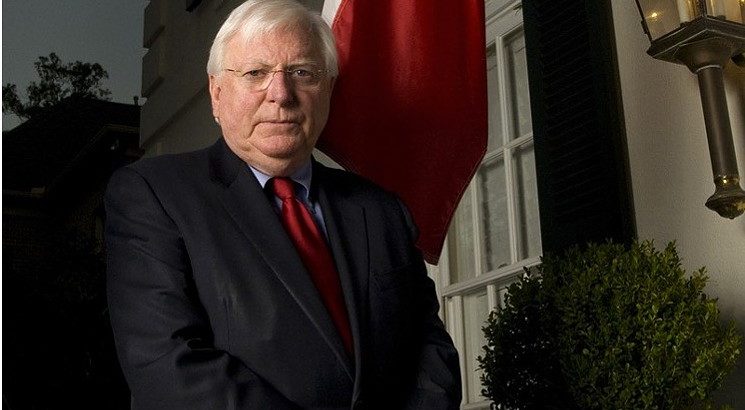
Mark White, who fought to reform the public education system in Texas as the state’s 43rd governor, died of a heart attack Saturday at his Houston home. He was 77.
White, a Democrat who served a single term from 1983 to 1987, was the most recent Texas governor from Houston. His brief tenure is remembered for the strides made to improve the educations of Texas public schoolchildren. Among other successes, White pushed the Legislature to adopt a 22-to-1 student-teacher ratio, to prevent overcrowded classrooms. Under his watch, Texas also introduced its first standardized testing standards.
More controversially, White pushed for a «no-pass, no-play» policy for student-athletes — meaning in football-crazed Texas, football players who were flunking a course had to ride the bench. The Houston Chronicle noted that White said in a 2009 interview that the policy was bad politics, but good for the kids who learned how an education is a more applicable life skill than throwing a spiral or catching a pass.
White continued to care about education long after he left office. In 2010, he was the subject of a Houston Press column on his fight to keep the Legislature from undoing many of his education reforms — including his hard-fought student-teacher ratio cap. In 2014, Houston ISD named an elementary school after White.
Born in Henderson, White was educated in Houston public schools before earning a bachelor’s degree and later a law degree from Baylor University. He worked in private practice in Houston, and served as the attorney general and secretary of state before he was elected governor.
Curiously, White is survived by just two former governors — George W. Bush, who served two terms as president of the United States; and Rick Perry, the current Secretary of Energy.
Governor Greg Abbott on Sunday ordered flags to be flown at half-staff, and in a statement praised his predecessor for his devotion to educating children.
“Mark’s impact on Texas will not soon be forgotten, and his legacy will live on through all that he achieved as Governor,» Abbott said. «Cecilia and I extend our deepest condolences to Linda Gale White and family during this difficult time, and I ask that all Texans join us in praying for the White family as they mourn the passing of a devoted husband, father and public servant.»
Source:
http://www.houstonpress.com/news/former-texas-governor-mark-white-dead-at-77-9676440
South African/August 8, 2017/By: / Source: https://www.businesslive.co.za
Source:
https://www.businesslive.co.za/bd/national/education/2017-08-07-sa-students-not-prepared-for-tertiary-education-says-study/
Britain/August 8, 2017/By: Jon Stone/Source: http://www.independent.co.uk
A slight increase in higher education could have kept Britain in the EU.
Britain would have likely voted to remain in the European Union were its population educated to a slightly higher level, a new study has found.
Researchers at the University of Leicester say that had just 3 per cent more of the population gone to university, the UK would probably not be leaving the EU.
The researchers looked at reasons why people voted Leave and found that whether someone had been to university or accessed other higher education was the “predominant factor” in how they voted.
The paper, published in the peer-reviewed journal World Development, applied a multivariate regression analysis and logit model to areas of the country to identify why people voted the way they did.
The level of higher education in an area was far more important than age, gender, the number of immigrants, or income in predicting the way an area voted, the researchers found.
Age and gender were both significant but not as important as education level, the researchers found. Income and number of immigrants in an area were not found to be a significant factor in how people voted.
The researchers also found that a lower rate of turnout – by just 7 per cent – would also likely have changed the result to Remain.
The last Labour government set a target of half of young people accessing higher education and there has been a large expansion in numbers in recent decades. Universities UK says it expected the number of people in employment with higher education qualifications to have risen from 28.7 per cent in 2002 to 51.3 per cent in 2022
Dr Aihua Zhang, from the University of Leicester’s Department of Mathematics, said: “The EU referendum raised significant debate and speculation of the intention of the electorate and its motivations in voting. Much of this debate was informed by simple data analysis examining individual factors, in isolation, and using opinion polling data.
“This, in the case of the EU referendum where multiple factors influence the decision simultaneously, failed to predict the eventual outcome. On June 23rd 2016, Britain’s vote to leave the EU came as a surprise to most observers, with a bigger voter turnout – 72.2 per cent – than that of any UK general election in the past decade.”
British voters voted by 52 per cent to 48 per cent to leave the EU in a referendum held in June 2016.
Source:
http://www.independent.co.uk/news/uk/politics/brexit-education-higher-university-study-university-leave-eu-remain-voters-educated-a7881441.html