A dos semanas de su instalación frente al palacio del Congreso, la Escuela Itinerante levantada por el gremio docente Ctera desarrolló ayer una jornada cargada de actividades que variaron entre charlas ofrecidas por referentes de la pedagogía y el sindicalismo, relatos literarios en vivo y educación popular. El día transcurrió bajo la consigna “la escuela pública enseña, resiste y sueña”.
Como charla principal e inicial de las actividades, se presentó al Movimiento Pedagógico Latinoamericano, organización iniciada hace cinco años con representantes de la educación y del sector sindical y político de varios países, que desarrolló un recorrido por la historia de la entidad y sus perspectivas de la lucha del sector en el actual escenario social a nivel regional. La disertación estuvo integrada por figuras como la pedagoga Adriana Puiggrós, el dirigente Miguel Duhalde y la referente de Ctera Sonia Alesso.
“Se rememoró el inicio en el mes de diciembre de 2011 en Bogotá. Allí participaron representantes de los sindicatos y el sector estudiantil de toda América Latina para promover la defensa de la educación pública como derecho social y elemento de integración”, dijo aContexto Hugo Yasky, secretario general de la CTA y participante de la conferencia inicial que se llevó adelante en la Escuela Itinerante.
Cabe recordar que las centrales sindicales tomaron un rol protagónico en el acompañamiento de la lucha que los docentes iniciaron a principio de año contra del ajuste y falta de respuestas respecto del salario por parte del macrismo.
“Estamos tratando de enfrentar la visión de los grupos dominantes que intentan avanzar con los proyectos de mercantilización de la educación y la instalación de modelos de doble vía que generan asimetrías en el acceso al conocimiento entre los que ellos definen como ‘dadores de empleo’ o ‘emprendedores’ y los que definen como la ‘ciudadanía común’ en referencia a los sectores de menores ingresos, para quienes tienen reservada una educación de baja calidad”, sostuvo Yasky. Y agregó: “Estos espacios representan una instancia de diálogo fundamental, ya que necesitamos disputar el sentido común de la sociedad que, en una etapa de crisis como esta, tiene una parte ganada con el discurso de que lo privado por su sola condición es mejor que lo público”.
“NECESITAMOS DISPUTAR EL SENTIDO COMÚN DE LA SOCIEDAD QUE, EN UNA ETAPA DE CRISIS COMO ESTA, TIENE UNA PARTE GANADA CON EL DISCURSO DE QUE LO PRIVADO POR SU SOLA CONDICIÓN ES MEJOR QUE LO PÚBLICO.”
En tanto, la jornada de ayer continuó con la presentación de “Narradoras por la identidad”, donde Dora Apo –madre del reconocido periodista Alejandro Apo– y Mabel Plaul recitaron cuentos para chicos; además, se desarrollaron conferencias sobre los aportes de la antropología al campo de la educación popular, legislaciones sobre presupuesto educativo y las ya conocidas clases públicas que a diario realizan los “maestros itinerantes” que se acercan desde distintas instituciones a brindar apoyo e impartir conocimiento en el espacio de la escuela montada frente al Congreso.
Desde su instalación el pasado 12 de abril, la Escuela Itinerante se convirtió en un símbolo de defensa de la educación pública, y en las últimas semanas recibió la visita de decenas de miles de personas que se acercaron a dejar su apoyo a los maestros, así como también convocó a diversos artistas que aportaron su obra para el espacio, como es el caso del cantautor Ignacio Copani y la cantante Paula Ferré.
“La Escuela Itinerante ratifica el alto poder de convocatoria que tiene el gremio docente cuando se propone, como principal objetivo, el diálogo con la sociedad. Puso al Gobierno en una actitud defensiva cuando intentó impedir su instalación mediante represión, y después cuando a lo largo de estos días ha evadido cualquier definición sobre las demandas del sector”, dijo Hugo Yasky. “En ese sentido, el que hayan pasado miles de personas en estos días demuestra que la escuela pública y los docentes representan un valor que la sociedad sigue abrazando”, concluyó.
Tras la polémica instalada por una tesina en la Unichaco, desde la Aneaes hablan de la necesidad de implementar un «banco nacional de trabajos de final de grado y posgrado» abierto a todo público.
América del Sur/ Paraguay/ Ultimahora.com
Tras la polémica instalada por una tesina en la Unichaco, desde la Aneaes hablan de la necesidad de implementar un «banco nacional de trabajos de final de grado y posgrado» abierto a todo público.
La proliferación descontrolada de carreras de nivel superior, que a tientas va camino a regularizarse, asestó un duro golpe a la calidad académica tanto en la transmisión como en la producción de contenidos en las diferentes áreas científicas.
Recientemente, en la Universidad del Chaco (Unichaco) una egresada defendió con éxito su tesis en cuyo título se trata la homosexualidad como trastorno. Ese abordaje fue desechado ya en 1973 por la ciencia psiquiátrica.
Para el Dr. Raúl Aguilera, presidente de la Agencia Nacional de Evaluación y Acreditación de la Educación Superior (Aneaes), se impone la necesidad de incorporar algunas acciones tendientes a verificar en un «futuro cercano» la existencia de una instancia académica con capacidad de «certificar la veracidad y autenticidad de la producción científica» en el proceso de elaboración de tesis de grado de las carreras de nivel terciario.
«Esta situación lleva a crear una unidad de calidad al interior de cada institución y que haga trabajos a corto y mediano plazo. Estas incorporaciones están previstas en el marco de la revisión actual del Modelo Nacional de Acreditación de la Educación Superior», expuso.
Si bien se excusó de opinar sobre la polémica tesis ya que desconoce su contenido, aprovechó la ocasión para señalar que la misma Ley Nº 4995 de Educación Superior habilita al Consejo Nacional de Educación Superior (Cones) a crear una base de datos digital en pos de la transparencia en el acceso a la información, en este caso del ámbito académico.
«Un banco nacional de trabajos de final de grado y posgrado nos va a permitir pasar por sistemas antiplagios y que los mismos estén en un lugar determinado para poder revisarlos y ver si responden a los rigores de calidad», indicó.
A su vez, esto permitirá aportar a la continuidad de la investigación, ya que se podrá ampliar esa línea investigativa.
«Si bien la elaboración de los proyectos de investigación es de absoluta responsabilidad de la institución, ya que lo metodológico trabaja con los tutores basándose en las normas científicas, las entidades responsables de la política de aseguramiento de la calidad de la educación superior (MEC, Cones y Aneaes) seguirán abriendo espacios de diálogo académico, sin quebrantar la autonomía universitaria», avisó.
Aguilera refirió que la Unichaco aún no cuenta con carreras acreditadas a la fecha.
El Cones debería regular lo básico en cuanto a los criterios y las características que debe tener un trabajo de final de grado. Gerardo Gómez, directivo de Aneaes.
Por qué no pensar en que los trabajos que preparan los estudiantes se conviertan en datos públicos.
Researchers, policymakers, and education company leaders discuss innovative technologies to improve education for disadvantaged learners.
América del Norte/EEUU/MITPrensa
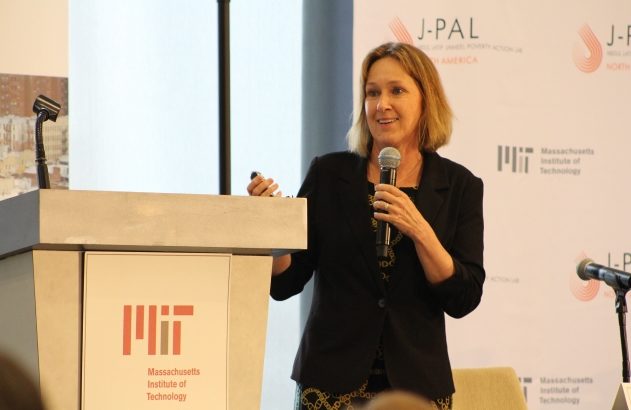
Resumen: Expertos se reúnen en el MIT para explorar una nueva investigación en tecnología de la educación Los investigadores, legisladores y líderes de la compañía educación discuten tecnologías innovadoras para mejorar la educación de los alumnos desfavorecidos. J-PAL América del Norte 28 de de abril de, 2017 Preguntas de la prensa La tecnología avanza a un ritmo vertiginoso, y se está cambiando fundamentalmente la forma en que los maestros, los políticos y los investigadores piensan acerca de la educación. El 31 de marzo, J-PAL América del Norte organizó una conferencia en el MIT para discutir el papel de la investigación y la evidencia en la tecnología de la educación, que reúne a un grupo diverso de líderes de todo el mundo académico, las empresas de educación, la práctica de la educación y la administración, y la filantropía para compartir sus experiencias implementación y evaluación de la tecnología, tanto dentro como fuera del aula. A lo largo de la conferencia, los oradores y participantes abogaron por una evaluación rigurosa para avanzar en nuestra comprensión de cómo la tecnología puede ayudar a los estudiantes, independientemente del nivel de ingreso y aprender.
Technology is developing at a breathtaking pace, and it’s fundamentally changing the way teachers, policymakers, and researchers think about education. On March 31, J-PAL North America hosted a conference at MIT to discuss the role of research and evidence in education technology, bringing together a diverse group of leaders across academia, education companies, education practice and administration, and philanthropy to share their experiences implementing and evaluating technology both in and out of the classroom. Throughout the conference, speakers and participants advocated for rigorous evaluation to advance our understanding of how technology can help students, regardless of income level, learn.
Technology: An opportunity, a challenge, and the need for research
Quentin Palfrey, executive director of J-PAL North America, and Phil Oreopoulos, J-PAL Education co-chair and professor of economics and public policy at the University of Toronto, discussed the transformative promise of education technology and some of its most exciting uses, including approaches to personalize learning and scale instruction to learners across different contexts. However, they warned that rapid advances in education technology create the risk of leaving those without access behind, exacerbating already stark inequalities between affluent and low-income students — a public policy problem known as the “digital divide.”
“Emerging fields like machine learning, big data, and artificial intelligence will likely compound the influence of technology even further, increasing the range of tools that ed-tech can draw on and speeding up cycles of learning and adjustment…[but] these technologies are arising in a context of persistent inequality,” Oreopoulos said. “Despite expanding access, the digital divide remains very real and very big. If ed-tech practitioners and researchers don’t pay close attention to equity of access and tailoring programs to the needs of those at the lower end of the income spectrum, there’s a risk that the growing influence of technology will aggravate the educational inequalities that already exist.”
Oreopoulos set the stage with a review of the current evidence on what in education technology works, what works best, and why, drawing on over 90 studies across economics, education, and social psychology. Technology-assisted personalized learning programs emerged as an especially effective approach from the review, which stems from an upcoming education technology literature review. However, many open questions remain about how to leverage technology to help disadvantaged learners, which technologies are the most cost-effective, and why successful approaches work.
Kumar Garg, a former White House advisor who spearheaded President Obama’s efforts to improve STEM education, underscored the tremendous need for investment in education research to help us answer these questions. In 2015, only 0.4 percent of the federal education budget was spent on research, compared to 6.3 percent in health and 12.3 percent in defense. By increasing investments in rigorous research, we can better understand how to use technology to truly transform education, Garg stated.
Not a silver bullet for education
Despite the excitement around education technology, a consistent theme throughout the conference was how technology alone will not serve as a panacea. Rather, it’s best used as a complement to good pedagogy.
«Technology is not a silver bullet, but education is,» said Karen Cator, CEO of Digital Promise and former director of the Office of Educational Technology for the U.S. Department of Education. During her keynote address, Cator highlighted the need to produce and use evidence to understand how we can make the most of technology both within and outside of the classroom. She went on to discuss educational equity, technology, and the profound impact of education on social justice and economic development.
Ken Eastwood, superintendent of the Middletown City School District in New York, shared his personal experience with innovative approaches to improving high-poverty schools in his home district. In his experience, “pedagogy and the art of teaching trumps technology every time,” and emphasizing complementary professional development is key to optimizing technology in the classroom.
Working at the intersection of policy, research, and philanthropy
Alongside practitioners and researchers, the conference featured philanthropic leaders like Emary Aronson, the interim chief program officer of the Robin Hood Foundation. Aronson spoke as part of a panel focused on improving access to education in the 21st century. “Technology enables access to information, and access to information is a poverty issue,» Aronson said of the foundation’s role in the education technology space.
Speakers also addressed the challenge of translating research into policy action. Tom Kane, a leading education scholar at the Harvard Graduate School of Education, discussed how he aims to keep the research process and results localized and timely in order for evidence to be actionable. Former U.S. Chief Technology Office Aneesh Chopra and former White House advisor R. David Edelman shared their perspective on how research can impact large-scale federal policies.
Additional speakers from academia and education companies discussed diverse strategies to embed rigorous evaluation in the rollout of new education programs — such as former First Lady Michelle Obama’s Reach Higher Initiative — to better understand how real-world policies affect student outcomes. Building off the lessons from the conference, J-PAL North America plans to catalyze new research and promote evidence-based policymaking in the education technology space.
Resumen: Hoy MIT y co-fundador de la Comunidad Jameel, que fue establecido y está presidido por Mohammed Abdul Latif Jameel ’78, anunciaron la creación de la Latif Jameel Laboratorio Mundial de Educación Abdul ( J-LEP ). El esfuerzo de colaboración mundial ayudará a los educadores, a universidades, gobiernos y empresas a cambiar completamente la eficacia y el alcance de la educación, con el objetivo de ayudar a preparar a la gente de todo el mundo para un mercado laboral alterado radicalmente por el progreso tecnológico, la globalización, y la búsqueda de mejores niveles de vida en todo el mundo. El enfoque rector de J-VLA será la atención a aprendices en el mundo en desarrollo, así como las mujeres, las niñas, y una creciente población desplazada que incluye refugiados.
Today MIT and cofounder Community Jameel, which was established and is chaired by Mohammed Abdul Latif Jameel ’78, announced the creation of the Abdul Latif Jameel World Education Lab (J-WEL).
The global collaborative effort will help educators, universities, governments, and companies revolutionize the effectiveness and reach of education, and aims to help prepare people everywhere for a labor market radically altered by technological progress, globalization, and the pursuit of higher living standards around the world. A guiding focus of J-WEL will be learners in the developing world, populations underserved by education such as women and girls, and a growing displaced population that includes refugees.
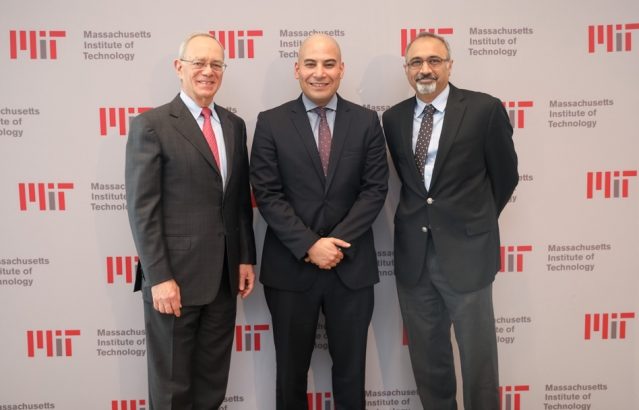
“For years, Community Jameel’s commitment to finding practical solutions to complex global problems has inspired all of us at MIT,” says MIT President L. Rafael Reif. “With J-WEL, Community Jameel builds on that extraordinary legacy with an effort that will empower learners around the world and in the United States, opening educational pathways that are currently closed to millions. We are grateful to Community Jameel for their vision, their partnership, and their unwavering dedication to making a better world.”
J-WEL will be an anchor entity within MIT’s open education and learning initiatives that are led by MIT Vice President for Open Learning Sanjay Sarma. The three special interest groups integral to J-WEL’s mission — pre-K–12, higher education, and workplace learning — will each have faculty leads. Professors Angela Belcher and Eric Klopfer will direct pre-K–12, and Professor Hazel Sive will direct the higher education special interest group. A workplace learning faculty director will be named soon. M.S. Vijay Kumar, MIT’s associate dean of digital learning, will serve as J-WEL’s executive director and will work closely with the faculty leads. Faculty will receive J-WEL grants for research related to this initiative. J-WEL will also draw on existing educational resources at MIT, including the MIT Integrated Learning Initiative (MITili) and Office of Digital Learning, to research and apply what works best in the education of children, university students, and workers.
Leveraging MIT’s resources, J-WEL will convene a global community of collaborators for sustainable, high-impact transformation in education through research, policy, pedagogy, and practice. The lab will foster new initiatives and build a powerful collaborative of schools, governments, nongovernmental organizations, philanthropists, and businesses. Through these networks, J-WEL and MIT at large will gain input and insight from the regions, both domestic and international, where the new educational tools and methods will be deployed. Collaborative members will have special access to MIT programs and resources, such as trainings, workshops, and certification programs.
Fady Mohammed Jameel, president of Community Jameel International, says: “Education and learning are fundamental to a strong society and economy — they promote employment and create increased opportunity for all. While there has been progress made in improving education, there is always more that can be done. Enabling individuals to do their very best and reach their full potential, whatever their background, is a key priority for Community Jameel and the world. That is exactly why we are establishing the Abdul Latif Jameel World Education Lab with MIT.
“MIT is one of the most respected research universities in the world, and through J-WEL those involved in education will have special access to their programs and resources, such as training and workshops, as well as collaborative opportunities with MIT and other members. From our ongoing collaborations, including the Abdul Latif Jameel Poverty Action Lab and the Abdul Latif Jameel World Water and Food Security Lab, we have already seen firsthand the benefits of working with MIT, and J-WEL will build on that record of success.”
In an age of social and technological change, education is a critical tool for society. MIT’s approach has centered on understanding the processes of learning at a fundamental level, allying that understanding with the technological means to deliver learning, and then designing educational systems in the most effective ways possible. Building on MIT’s historic footprint in education at the childhood level (through STEM teacher education camps and programs such as Scratch), in the collaborative formation of new universities (such as Singapore University of Technology and Design and Instituto Tecnológico de Aeronáutica in Brazil), and in the education of professionals (through MIT Professional Education and MIT Sloan Executive Education), J-WEL will work with its global collaborators to improve the delivery and quality of educational opportunities using new digital, maker, and in-person “mind-and-hand” approaches to learning.
Early examples of MIT efforts in this arena include work at the high school level across India with the Tata Trusts, on teacher education with the Woodrow Wilson Foundation, improvements to workplace learning at Accenture, and expanded educational reach in the Arab world with the Abdulla Al Ghurair Foundation for Education.
“Tata Trusts has successfully partnered with MIT on seeding the Connected Learning Initiative (CLIx) that leverages the power of technology to enhance both teaching and learning, in high schools in India. The Trusts are also collaborating with the Tata Center for Education and Design at MIT to apply technical talent to address challenges in development. We look forward to J-WEL breaking new ground through applied research in education in India and the world,» says Mr. R. Venkataramanan, managing trustee of the Sir Dorabji Tata Trust, in India.
“We have a very special collaboration with MIT spanning several years, with a shared vision to bring to life new ways of learning for people at unprecedented scale,” says Rahul Varma with the Talent and Learning Office at Accenture. “Hearing about the plans for J-WEL reminds us of MIT’s expertise and commitment in helping to address major issues of the day. I have no doubt J-WEL will be a success and have significant impact.”
“It is exciting to see MIT put together an effort to share emerging best practices across the world in education, especially in the primary and secondary education spaces. The need for new thinking in these sectors is pressing, especially in STEM, and MIT is perfectly poised to take on this challenge,” says Arthur Levine, president of the Woodrow Wilson Foundation
“Through J-WEL, we will forge new and long-lasting collaborations as we learn, share, and train together, using the assets developed at MIT as well as by leveraging the community convened by J-WEL,” says Sarma. “To borrow an idea expressed by philosophers and educators across the centuries: J-WEL will help to spark fires in students’ minds, and enable educators to spark solutions to their communities’ most demanding challenges.”
«As we help young people prepare to navigate in an uncertain future, we cannot do so without re-imagining learning at every level, inside and outside formal schooling. This is why our collaboration with MIT on online learning is critical to our strategy to educate and upskill Arab youth. We welcome J-WEL and look forward to being a part of its visionary work, and we applaud Community Jameel for this important educational investment,» says Maysa Jalbout, CEO of the Abdulla Al Ghurair Foundation for Education.
The gift is part of MIT’s current $5 billion Campaign for a Better World and is consistent with Community Jameel’s focus on creating a better future. Abdul Latif Jameel Poverty Action Lab (J-PAL), established in 2003, seeks answers to poverty in a changing world. Abdul Latif Jameel World Water and Food Security Lab (J-WAFS), established in 2014, seeks answers to food and water scarcity issues as the population rises and global warming takes hold.
Resumen: En Italia, al menos, 169 mil jóvenes asumen sistemáticamente el cuidado de un miembro de la familia, lo que repercute en sus opciones de educación, ocio, estilo de vida. El Instituto Profesional de Cesena desarrolla por primera vez un programa educativo adecuado a el cuidador jóvenes, pensando para cada uno de ellos un plan de estudios personalizado. «Hemos empezado a trabajar en este tema el año pasado: habíamos comprendido esta realidad y tuvimos situaciones de chicos que no habíamos reconocido o por el contrario que habíamos tratados con un pietismo excesivo», explica Alessandra Prati , participante del proyecto europeo EPYC que les llevó a ser la primera escuela en Italia para reconocer la realidad de los jóvenes cuidadores y proporcionar un apoyo adecuado a estos estudiantes.
In Italia almeno 169 mila giovani si prendono cura sistematicamente di un famigliare, con ripercussioni sul loro percorso scolastico, il tempo libero, le scelte di vita. Un Istituto Professionale di Cesena per primo ha inserito i giovani caregiver fra i BES, pensando per ciascuno di loro un piano didattico personalizzato. Un’altra scuola a Carpi fa compilare ai nuovi iscritti un questionario per misurare il loro impegno di cura
Ha 17 anni I., è originaria della Turchia ma vive in Italia. Per fare i compiti deve litigare con la madre, perché quando lei deve fare i compiti il fratello la distrae e vuole sempre ricevere attenzioni. È italiana invece S. e ha 16 anni : anche lei dice che tempo per i compiti ne ha «sempre poco» e soprattutto la sua casa «non è più un luogo accogliente in cui farli». Nessuno dei suoi docenti però le ha mai chiesto una spiegazione per il grave calo nel suo rendimento scolastico e lei si è ben guardata dal gridare ai quattro venti quanto tempo le costa fare da caregiver al fratello disabile.Queste testimonianze sono state raccolte nel volume “Care2Work” (in allegato), collegato all’omonimo progetto europeo finanziato da Erasmus + di cui per l’Italia è partner la cooperativa Anziani e non solo.
I vissuti, i bisogni e le riflessioni qui esplicitate sono li stessi di tanti giovani caregivers, nascosti nelle classi di tutta Italia. La prima scuola d’Italia a dare loro attenzione è l’Istituto Professionale Versari Macrelli di Cesena, un istituto da mille e cento studenti. Qui l’istituto ha previsto l’essere giovani caregiver fra i bisogni educativi speciali, creando quindi la possibilità di avere un piano didattico personalizzato. Oggi ne usufruiscono otto studenti.«Abbiamo iniziato a lavorare su questo tema l’anno scorso: avevamo intuito questa realtà e avevamo avuto situazioni di ragazzi che non avevamo riconosciuto o che al contrario avevamo trattato con eccessivo pietismo», spiegaAlessandra Prati, docente di economia aziendale dell’Istituto, oggi distaccata all’ufficio scolastico provinciale di Forlì Cesena.
È l’incontro con la cooperativa Anziani e non Solo e con il progetto europeo Epyc a far fare loro un salto di qualità nella riflessione, che li ha portati con questo anno scolastico ad essere la prima scuola d’Italia a riconoscere nero su bianco la figura del giovane caregiver e a prevedere adeguati supporti per questi studenti. La professoressa Prati ne parlerà oggi pomeriggio a Carpi nel workshop “Essere giovani studenti e caregiver”, nell’ambito dei Caregiver Day organizzati da Anziani e non solo (qui il programma completo), ma del tema si parlerà ancora venerdì e sabato a Rimini, nell’ambito del Convegno Erickson “Supereroi fragili, Adolescenti oggi tra disagi e opportunità”.
La professoressa Prati ha voluto intitolare il suo intervento “La scuola incubatrice di nuovi soggetti protagonisti di care” , perché «la scuola vorrebbe fare proprio questo, proteggere e insieme far crescere» questi che sono «ragazzi in punta di piedi, molto discreti, silenziosi, che faticano a esternare la propria situazione e anche solo a riconoscerla», spiega. Cita l’esempio di una sua alunna di quinta, dell’anno scorso: «la scuola aveva già avviato un percorso di sensibilizzazione sul tema dei giovani caregiver, ma lei non ha mai detto nulla. Alla maturità, faceva l’indirizzo servizi sociali, si è presentata con una tesina su lei come caregiver della sorella e tutte le discipline le ha allacciate alla sorella. Il primo obiettivo quindi è far capire ai ragazzi stessi il loro ruolo, poi farlo capire ai compagni e anche ai docenti, perché non tutti hanno accettato la proposta che la scuola ha fatto».
Concretamente, gli studenti che hanno un piano didattico personalizzato possono contare su interrogazioni programmate, se serve per alcune discipline fissare degli obiettivi minimi, recuperare le verifiche saltate e un compagno tutor per trasmettere i compiti. Se serve è possibile anche derogare al tetto massimo di assenze da scuola. «La scuola ha creato un gruppo di lavoro, siamo sei insegnanti, ci crediamo molto, stiamo cercando di diffondere questa esperienza a livello provinciale, abbiamo realizzato un concorso fotografico nelle scuole superiori della provincia di Forlì-Cesena, con la Consulta degli Studenti, per illustrare le sensazioni che un giovane caregiver prova», racconta Prati, ricordando lo scatto con il gabbiano che prova a spiccare il volo o quello in cui una ragazza allaccia le scarpe a un’amica.
Licia Boccoletti è la responsabile progetti Anziani e non solo. Proprio lei un anno fa ci aveva aperto gli occhi su questa realtà silenziosa e invisibile. Per l’Istat i ragazzi fra i 15 e i 24 anni che si prendono cura di un famigliare adulto fragile sono 169mila, pari al 2,8% della popolazione di questa età. Ma un’indagine svolta da Anziani e non solo a Carpi aveva rilevato che il 19,8% degli studenti presta un livello di cura di intensità alta o molto alta verso un genitore o un nonno, ovvero a una persona anziana o malata. Anche il Rapporto Garanzia Giovani ha evidenziato che le responsabilità collegate alla cura sono il primo motivo di inattività dei giovani Neet fra i 15 e i 29 anni. Al CFP Nazareno di Carpi, dove Anziani e non solo aveva svolto la sua ricerca, la scala MACA-YC42 viene ora sistematicamente utilizzata all’atto delle iscrizioni: «È un questionario per quantificare il carico di cura, viene distribuito all’atto dell’iscrizione, la scuola poi si impegna ad approfondire con le famiglie le singole situazioni, gli insegnanti hanno fatto un percorso con noi, c’è uno psicologo di riferimento… al termine dei nostri laboratori in questa scuola il 20-30% dei ragazzi ha dichiarato di identificarsi nel ruolo del caregiver», spiega Boccoletti.
La cooperativa Anziani e non solo nel frattempo ha avviato anche un piccolo servizio dedicato ai giovani caregiver, nell’ambito del progetto europeo Epyc, sui quattro comuni del distretto di Carpi: è stato fatto un primo censimento dei potenziali giovani caregiver, che in questo momento vengono contattati individualmente. Da inizio aprile sono tre i ragazzi fra i 13 e i 19 anni che hanno già aderito alla proposta di un percorso insieme, con incontri individuali e attività di gruppo, cominciando dalla fotografia e dal teatro, per fare qualcosa insieme e allo stesso tempo confrontarsi con qualcuno che sta vivendo la stessa esperienza.
Africa/FinancialTimes
Resumen: Uno de cada cuatro alumnos podrían ser instruidos de forma privada para el año 2021, según un estudio realizado por Caerus Capital. Se cree que uno de cada cuatro jóvenes africanos, o 66 m alumnos, podrían estar inscrito en alguna forma de educación privada para el año 2021, lo que implica un aumento de la enseñanza privada en todo el continente, según un informe. El crecimiento de la educación privada ha sido impulsado por la falta de fe en la educación pública o la incapacidad de los padres para encontrar un lugar, pero los críticos advierten que las escuelas privadas pueden exacerbar la desigualdad, erosionar experiencia en el sector público y, en algunos casos, proporcionar una educación inferior. El informe realizado por la consultora con sede en Washington, llegó a la conclusión, sin embargo, que los gobiernos africanos que bloquean el avance de la educación privada por motivos ideológicos, corren el riesgo de perder la financiación y experiencia de empresas privadas.
As many as one in four young Africans, or 66m pupils, could be enrolled in some form of private education by 2021, furthering what has been a surge of private schooling across the continent, according to a report. Sample the FT’s top stories for a week You select the topic, we deliver the news. Select topic Enter email addressInvalid email Sign up By signing up you confirm that you have read and agree to the terms and conditions, cookie policy and privacy policy. The growth in private education has been driven by parents’ lack of faith in public education or inability to find a place, but critics warn that private schools can exacerbate inequality, erode expertise in the public sector and, in some cases, provide an inferior education. The report, conducted by Caerus Capital, a Washington-based consultancy, concluded, however, that African governments that block the advance of private education on ideological grounds risk losing out on both finance and expertise. Scott Featherston, one of the report’s authors, said the aim was to end what he called “the dead-end debate” over public and private education, noting how almost every country combined elements of both. African governments needed to learn how better to harness and monitor what the private sector had to offer, he said. Africa has expanded educational provision greatly since 2000, increasing primary school-age places from 91m to 158m in 2014, and bringing net enrolment up from 60 per cent to 78 per cent. Yet despite governments spending an average 18.4 per cent of their limited budgets on education — more than other regions — enrolment still lags behind the global average of 91 per cent. 158m Primary school-age places in Africa in 2014, up from 91m in 2000 Many African governments struggle to pay teachers, some of whom skip school to farm or do second jobs. Roughly 30m children in sub-Saharan Africa, whose population is growing faster than on any other continent, receive no schooling at all, according to Unicef. In practice, gaps have been plugged by private entities, from local faith-based and community schools in remote villages or slums, to international groups offering both low- and high-cost education. Quality is mixed. Some private schools achieve better results than state ones, although critics say that is because they cater to better-off students. But others are of poor quality. “The future of education in emerging markets, within Africa and beyond, will be hybrid systems,” the report concluded. The study, to be presented at the African World Economic Forum in Durban on Thursday, estimated that $16bn-$18bn of private investment would be required over the next five years. The Big Read Africa: Between hope and despair Optimism surrounding the continent has evaporated with the collapse in commodity prices Justin Sandefur, senior fellow at the Center for Global Development, said it was important to distinguish between fee-paying schools and private provision of free education. There had long been a consensus among educators that poor families should not be paying for education, he said. However, he said some African governments did not have the capacity to deliver free, universal schooling, in which case they might contract private providers to improve quality and reach. Liberia last year began a pilot project to contract out the management of some schools to for-profit and not-for-profit providers. However, Mr Sandefur said there was little evidence to back claims that private providers could consistently improve standards or that successful schemes could be scaled up to national level. The authors acknowledged potential pitfalls of turning to the private sector, including making inequality worse by giving a better education to the children of parents who could afford it. They also highlighted the lack of capacity of some governments to monitor private schools, and recognised the danger that private schools were potentially less reliable over the longer term, particularly if their model depended on turning a profit. The report’s sponsors include the US Agency for International Development (USAID) and CDC, Britain’s foreign investment arm, both of which have invested in private education in Africa.
Contraloría realizó acción de control preventivo a colegios de la región
América del Sur/Peru/DiarioCorreo.pe
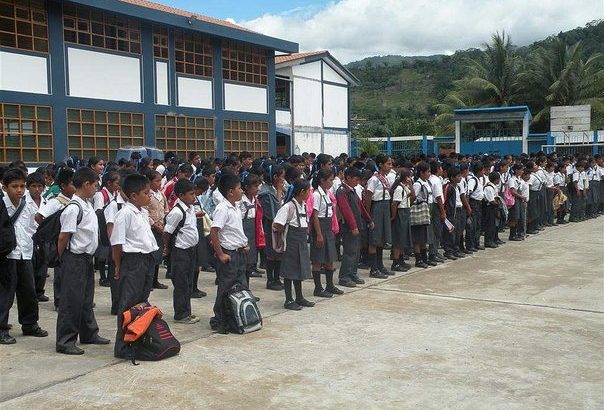
Los escolares de Junín, principalmente en colegios estatales y en zonas rurales, continúan presentando niveles de rendimientos bajos, pese a la millonaria inversión que el Estado ha realizado en los tres últimos años, tal y como lo devela el informe con los resultados del Operativo de Visita Preventiva EduQa 2016, que realizó la Contraloría General de la República a una muestra de 91 colegios de la región.
HALLAZGOS. Del 2013 al 2016 en Junín, el Estado invirtió en material y útiles de enseñanza: S/2, 578 387, en infraestructura educativa: S/ 471, 385, 244. Ello sin contar lo que invierte en sueldos de maestros, administrativos, logística y otros.
Sin embargo, se logró detectar que de los más de mil quinientos educadores, el 30 % no dicta clases de acuerdo al planificador, el 19 % no cuentan con sesión de aprendizaje, los materiales que utilizan no corresponden a la sesión. A ello se suma que el 20% de profesores no cuenta con unidad didáctica. Y en un hecho bastante reprochable, se informa que l 15 % de colegios no informa la inasistencia de sus docentes.
Y si prestamos atención a otro de los actores del proceso de aprendizaje, que son los escolares, tampoco se están haciendo las cosas bien. De 29 mil 997 estudiantes que fueron sometidos al estudio, se dio cuenta que el 21 % no utiliza los cuadernos de matemática que da el Ministerio de Educación ( Minedu), el 26 % no usa el de comunicación.
Y si alguno de ellos sufriera algún accidente al interior del centro educativo sería un verdadero riesgo para él, pues del 28 % de colegios que tienen botiquines solo cuentan con medicamentos vencidos.
INFRAESTRUCTURA. La deficiente formación de los docentes, sigue figurando entre los principales problemas de la educación, pero no es el único problema, la baja calidad de las instituciones también lo es.
El 4% de centros educativos no tiene desagüe, el 2 % no cuenta con agua, el 9% tiene los servicios higiénicos inoperativos y sucios, el 25% cuenta con mobiliario en malas condiciones para su uso, del 18 % hace mal uso del material educativo dado por el Estado. Además, el 22% no tiene saneamiento físico legal de su predio, por lo que se hace más difícil la inversión para hacer mejoras.
El 36% de colegios tiene sus paredes en mal estado, el 26 % tiene pisos en malas condiciones, el 38 % cuenta con lozas deportivas en pésimas condiciones. Y el 29 % colegios funciona en ambientes declarados inhabitables.
Y por si esto fuera poco, la Contraloría detectó que hay lugares de expendió de alcohol a menos de 100 metros en el 30 % de colegios tomados en la muestra.
Pero esas no serían las únicas deficiencias, porque el 95 % no cuenta con protección de malas para proteger a los alumnos de la radiación solar. El 92% no tiene rampas para discapacitados, no hay señalización para ellos. Si hubiera incendios no cuentan con extintores. Un buen porcentaje de quioscos escolares no cuentan con agua y desagüe y el 18 % no cuenta servicio de internet.
OtrasVocesenEducacion.org existe gracias al esfuerzo voluntario e independiente de un pequeño grupo de docentes que decidimos soñar con un espacio abierto de intercambio y debate.
¡Ayúdanos a mantener abiertas las puertas de esta aula!





 Users Today : 39
 Total Users : 35490851
 Views Today : 43
 Total views : 3604266