Page 3963 of 6131
1 3.961 3.962 3.963 3.964 3.965 6.131

Political Indoctrination in Chinese Colleges

China/Abril de 2017/Fuente: The Jamestown

Resumen: En un sistema en el que los ministros están incentivados a informar sólo una buena noticia, el ministro de Educación de China censura pública de los fracasos en la educación ideológica y política (思想 政治 教育, IPE) en las universidades chinas fue una sorpresa (FRI, 12 de marzo). Se está llevando a cabo una campaña para intensificar el IPE desde la conferencia de diciembre de 2016 sobre el trabajo ideológico y político en las universidades y colegios de China. En la conferencia, el presidente chino Xi Jinping reafirmó enérgicamente la supremacía del marxismo y el socialismo en las instituciones chinas de enseñanza superior, y presionó para fortalecer el trabajo ideológico y político para adoctrinar a los 37 millones de estudiantes universitarios del país (Xinhua, 9 de diciembre de 2016).

In a system where ministers are incentivized to report only good news, China’s Minister of Education public censure of failures in ideological and political education (思想政治教育; IPE) at Chinese universities came as a surprise (FRI, March 12). A campaign has been underway to intensify IPE since a December 2016 conference on ideological and political work in China’s universities and colleges. At the conference, Chinese President Xi Jinping strongly reaffirmed the supremacy of Marxism and socialism in Chinese institutions of higher learning, and pressed for strengthening of ideological and political work to indoctrinate the country’s 37 million college students (Xinhua, December 9, 2016). Yet the Minister of Education’s criticisms indicate that IPE is not proving successful.

The Status Quo of IPE

Chinese colleges have a long history of radicalism that stirs fear among Party elites. Whether it was the Red Guard movement, the 1989 student demonstrations, or the recent nationalist protests, the college campus, with its proclivity for freethinking, is a place where the Party cannot afford to let go of the reins. Chinese universities are firmly controlled by the state through finances and appointment of administrative leadership. Even outwardly independent private colleges are falling under the control of newly installed Party secretaries with the clear intention of being the “backbone of ideological and political work (China Wenming Online, January 13).”

According to surveys completed by Chinese researchers, the Party enjoys majority support among college students—with one poll showing that 73.3 percent “support” or “strongly support” the Party’s leadership. [1] Although we must be aware that China’s political climate deeply influences how interviewees answer a survey, research has shown that the Party does have a healthy level of support among college students. [2] Nonetheless, student support for IPE, the Party’s signature indoctrination program, is comparatively low.

Mixing Marxism, patriotism, and some traditional Chinese values, IPE aims to rally mass support for the Party, its ideology, and its governance. Taught as a required course, one study shows that 64.4 percent of students are “unsatisfied” with IPE, with another 17.9 percent “very unsatisfied.” [3] Likewise, 50 percent of respondents in another study find IPE “almost pointless,” but forced themselves to attend due to school rules. Plagiarism and cheating are common due to students’ falling enthusiasm. [4] Despite interest in Red Culture (红色文化), a set of state sponsored cultural values based on the Chinese Communist Party’s revolutionary experience—a notable minority (28.3 percent) of students find Red Culture events (a component of IPE) boring. Over half (53.2 percent) said they were forced to attend, and 60.5 percent view these events as irrelevant to real life. [5]

Why is IPE so Unpopular?

Political indoctrination is rarely fun, especially for students living in a relatively open society. While students demand more discussions, debates and field work, IPE teachers can only continue with monotonous lectures because any exercise involving critical analysis will shatter the perfect image of Marxism. [6] Thus, while Chinese college students loathe IPE for being a “single-voice class” (一言堂) where the teacher dominates the conversation, changes are less likely to come as it could possibly destroy IPE in its entirety. [7]

IPE is fighting an uphill battle in three areas. The increasing Internet usage by Chinese college students is corroding the hold of official ideology. For example, the officially championed myth of the Chinese Communist Party as the mainstay in expelling Japanese invaders is slowly losing believers, because more and more students are learning the truth from the Internet. [8] Eighty percent of Chinese college students spend more than two hours a day surfing the Web, 92 percent say they use the Internet as a source of information, and 88.9 percent use Weibo (Chinese equivalent of Twitter) and WeChat (Chinese equivalent of WhatsApp)—two apps that allow students some modicum of privacy when discussing current affairs. [9]

The arrival of organized religion to Chinese campuses poses another threat to official ideology. Besides offering mental comfort, organized religious groups serve as a social safety net for students, in comparison to communist political organizations that are fraught with corruption and exclusivism. Recent studies show that interest in religion is gaining strength in Chinese colleges, even in the Communist Youth League. [10] Forty-nine percent of students do not know that Party members must be atheists, and a third (31.4 percent) do not mind campus proselytizing—an act forbidden by the state. [11] While the growing interest in religion has not openly challenged the Party’s dominance of campuses, one trend might spell trouble in the near future. In one survey of Xinjiang colleges, 5.8 percent of respondents believe one can force a religion on others. [12] More alarmingly, 8.6 percent agree with the extreme position that spreading one’s religion using violent means is permissible. [13]

IPE educators face additional difficulties in areas dominated by ethnic and religious minorities, in particular among Tibetans and the Turkic Muslims of Xinjiang. Few of these groups played major roles in the events of the 20th century that conditioned the contemporary Chinese psyche. Compared to Mongols and Hui Muslims that allied with Chinese communists in the fight against Japan, Tibetans and Turkic Muslims played next to no role in the in the War of Resistance Against Japan (1937–1945) which forms the core of the CCP’s national narrative. Moreover, Marxism’s anti-religion doctrine makes IPE difficult when teaching Tibetan college students who hold Lamaism in high regard. Most Tibetans live their entire life according to Buddhism precepts and hold deep reverence for their religious leaders. To teach religion as obsolescent is not only deeply offensive to Tibetans, but also counterproductive to IPE in general. [14] The same can be said for Xinjiang, where ethnic Turkic Muslims constitute more than half of the province’s population. Although students would pay lip service to the curriculum just so they can graduate, the doctrinaire system of pedagogy is not truly winning over hearts and minds.

The Role of Political Counselors

Outside of the classroom, Political Counselors (政治辅导员; PCs) take care of a student’s all-around needs while attending college, and are tasked with shaping his/her ideological and political values. As the “backbone of ideological and political education for college students,” PCs are “the organizer, implementer and mentors of college students in everyday ideological and political education and management” (Ministry of Education, July 23, 2006).

Working closely with selected student cadres, the PCs spread the Party’s message when students are outside of the classroom. Although the law stipulates that there should be one PC to every 200 students, in reality, personnel shortage makes the ratio much higher. One to 300 or 400 is not an unusual number. In extreme cases, it has been reported that a PC have to take care of 1,000 students, making the job impossible. [15]

Besides being over-encumbered, 56 percent of PCs are unsatisfied with their salary and benefits. To add to the already tense environment, PCs are governed by a dual command regime, where school and department leadership can sometime issue conflicting orders. [16]

Under these circumstances, it is not a surprise to find that some PCs do not even agree with the Party line themselves. One poll shows that 31.92 percent of PCs do not believe in the Marxist dogma that a communist society is inevitable. Straying from the government narrative, close to half (47.1 percent) of PCs do not believe that the income gap will close in ten years. [17]

The Role of Protection Divisions

If IPE teachers and PCs are the softer side of political indoctrination, then Protection Divisions (保卫处) are the “stick” that police political behavior. Present in every university bureaucracy, the Protection Division have several functions—public safety, fire prevention, registering visitors and temporary workers—and most importantly, political policing. Underneath each Protection Division there is a Political Protection Section (政保科; PPS). While taking on different names at different colleges, the mission of the PPS remain more or less the same—propagate official ideology and counter any attempts by “hostile forces” in influencing students. Although the PPS do not have law enforcement power, a power reserved for the public security police, it does have the power to investigate. [18] Political Protection Informants (政保信息员), selected from the student body, serve as the PPS’s “eyes and ears (耳目)” (Xi’an Shiyou University, June 6, 2014).

Given the secrecy surrounding its work, most PPSs do not publicize their duties, but the PPS of the Harbin Institute of Technology, self-referred to as the Political Protection and State Security Office (政保国安办), openly declares its responsibilities as the following:

  1. Responsible for propaganda and education of the national security concept, enemy awareness, and political stability.
  2. Responsible for understanding, controlling, tracking, and ideological education of key people that can influence political stability.
  3. Responsible for carrying out research and information gathering; grasp the ideological trends among faculty and students in a timely and accurate manner to provide the basis for higher-level leadership decision-making.
  4. Cooperate with public security and state security police in detecting and investigating cases endangering state security.
  5. Responsible for security of important leaders and foreign dignitaries. Assist relevant agencies in implementing security measures for foreign experts, teachers, exchange students, compatriots from Hong Kong, Macau, Taiwan, and visiting foreign staff.
  6. Assist relevant agencies to prevent and punish infiltration, incitement, and sabotage of schools by domestic and foreign hostile forces, illegal religious forces, and ethnic separatist forces.
  7. Assist relevant agencies in secure management of the campus’s computer network system and identification of sources of harmful information.
  8. Assist relevant agencies in confidential work.
  9. Conduct political review of school staff in accordance with the requirements of relevant agencies.
  10. Assist relevant agencies in managing student associations.
  11. Conduct basic business work. Establish and improve the management of various data files.
  12. Assist other sections and offices in completing tasks. Complete any other mission assigned by the division director (Harbin Institute of Technology).

In essence, PPS is the monitor of campus security and ideological uniformity, in addition to serving as the workhorse of counterintelligence. While IPE staff focus on pedagogy, it is the PPS’s mission to keep out unofficial people and ideas. This repressive regime is likely to receive greater state investment due to the risks associated with liberalizing IPE.

Conclusion

Among Chinese college students, support for the Party and government remain strong—at least on paper. However, most students have shown their dissatisfaction with IPE and their inability to intake additional political coursework void of liberal teaching methods. In the future, the state will likely strengthen IPE in the following ways. Firstly, the state will try to assert greater control of the cyber sphere by clamping down on alternative sources of information popular among students—also by intensifying propaganda and counterpropaganda on Weibo and WeChat. Secondly, more PCs will be trained to alleviate the current personnel shortage. Thirdly, greater attention will be diverted to indoctrination in ethnic areas, especially to the Tibetan and Turkic Muslims most susceptible to what the state calls the “three evils” of terrorism, separatism and religious extremism. Finally, there will be a renewed pushback against the spread of religion in colleges, a trend, if unchecked, will present significant challenges in winning over China’s brightest young minds.

Fuente: https://jamestown.org/program/political-indoctrination-chinese-colleges/
Comparte este contenido:

Argentina: Mantendrán el reclamo para que no descuenten los días de paro

Argentina/Abril de 2017/Fuente: Río Negro

La titular de la Unter, Patricia Cetera, aseguró que la demanda por el no descuento de los días de paro seguirá en pie, debido a que las medidas “no fueron declaradas ilegales ni a nivel nacional ni en Río Negro”. Consideró que “no hay motivos para que nos descuenten” y agregó que hasta ahora “la ministra [de Educación, Mónica Silva] tuvo bastante apertura al respecto”.

“Los paros fueron determinados por la Confederación de Trabajadores de la Educación de la República Argentina (Ctera), y nosotros como entidad de base los llevamos adelante”, recordó Cetera. Reiteró que “no fueron declarados ilegales en el Ministerio de Trabajo de la Nación, ni rechazados por la Secretaría de Trabajo de la Provincia. Es decir que hay un respeto por cómo se llevaron adelante”.

Fuente: http://www.rionegro.com.ar/region/mantendran-el-reclamo-para-que-no-descuenten-los-dias-de-paro-DC2631959

Comparte este contenido:

Colombia necesita nuevas universidades públicas de calidad

Colombia/Abril de 2017/Fuente: El Espectador

El programa ser pilo paga surgió en 2014 con el fin de beneficiar a los jóvenes de estratos 1 y 2 del Sisben. Anualmente han sido favorecidos alrededor de 40.0000 estudiantes que han ingresado universidades públicas y privadas con la garantía de que el gobierno cubrirá la totalidad de la matrícula. Desde el primer año de la implementación del programa Ser Pilo Paga, varias han sido las críticas que estudiantes y expertos han hecho a la iniciativa.

Por cada estudiante que entra al programa, el gobierno colombiano realiza una inversión anual de $ 3 billones de pesos (Lea: ¿Vale la pena el esfuerzo del Estado para financiar Ser Pilo Paga?). Es por este motivo que varios críticos han expresado que el programa Ser Pilo Paga no garantiza el derecho a la educación superior ya que no todos los jóvenes logran ingresar a la universidad. Lo anterior debido a que el 98% del dinero destinado al programa ser pilo paga está destinado a universidades privadas.

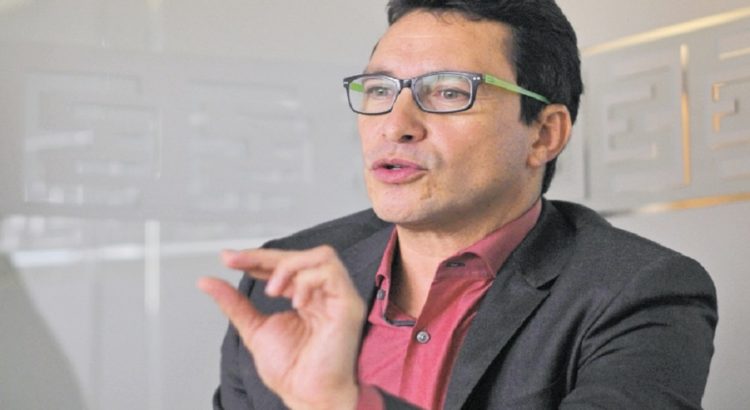
El presidente Juan Manuel Santos presentó un proyecto de ley para que el programa ser pilo paga se convierta en una política de estado. Carlos Caicedo, magister en Dirección Universitaria de la Universidad de los Andes expresó que “Ese modelo de financiación profundiza la desigualdad en el país, pues con los mismos recursos que se paga el estudio a 40.000 beneficiarios de Ser Pilo Paga se hubiera podido pagar la educación de 200.000 estudiantes en universidades públicas de calidad”.

Varios expertos han sugerido que, para aumentar la cobertura en el sistema educativo, se debe fortalecer la educación pública en el país. Precisamente, Caicedo expresó que “Ser Pilo paga es un lucrativo negocio que legitima la exclusión universitaria de los más pobres del país. Si las universidades privadas tienen algún sentido de responsabilidad social deben ser ellas las que financien el programa Ser Pilo Paga y dejar quitarles ese dinero a las universidades públicas”.

De acuerdo con el Ministerio de educación, Ser pilo paga ha beneficiado a 30.500 jóvenes de escasos recursos que provienen de 984 municipios. El 82% de los pilos están estudiando en universidades privadas y el 18% restante en públicas.

Fuente: http://www.elespectador.com/noticias/nacional/colombia-necesita-nuevas-universidades-publicas-de-calidad-carlos-caicedo-articulo-689915

Comparte este contenido:

Estados Unidos: Protesters would like to keep education funds local

Estados Unidos/Abril de 2017/Fuente: Times Bulletin

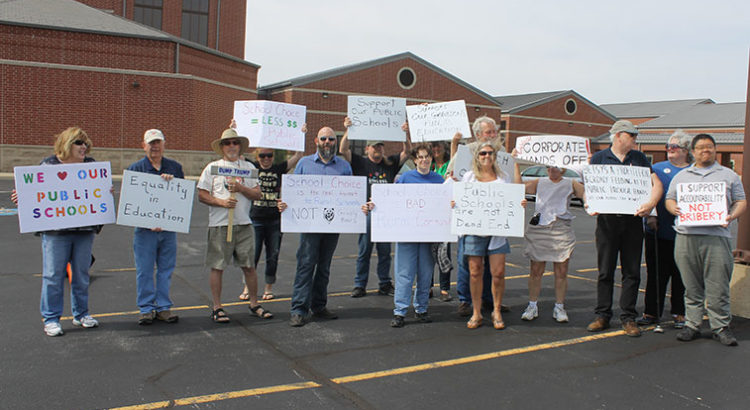
Resumen: Más de una docena de manifestantes pacíficos del noroeste de Ohio se reunieron en el estacionamiento de la Escuela Intermedia Van Wert antes de la llegada de la secretaria de Educación de Estados Unidos Betsy DeVos el jueves por la mañana. El grupo incluía miembros del Partido Demócrata del Condado de Van Wert y del Distrito 5 Indivisible de Ohio y otras entidades de base anti-Trump. Sus signos apoyaron la educación pública y denunciaron los recientes recortes de financiamiento al sector público y los aumentos a la elección de escuelas o escuelas privadas.
«Casi todos los estudiantes en el condado Van Wert asisten a la escuela pública», dijo el manifestante Gay Garman. «Cuando se quitan los fondos de las escuelas públicas y se dan a las escuelas privadas, los ricos se hacen más ricos y los pobres se hacen más pobres. Una vez más, las personas pequeñas están recibiendo el eje y el 1 por ciento se están beneficiando «. El nuevo presupuesto de la administración Trump lanzado a mediados de marzo reduce drásticamente el financiamiento para el Departamento de Educación en un 13.5 por ciento, o $ 9.2 mil millones. Bajo el nuevo presupuesto, la administración Trump quiere gastar 1.400 millones de dólares para expandir vales en escuelas públicas y privadas, lo que conduce a un financiamiento de 20.000 millones de dólares al año. Alrededor de $ 250 millones de estos fondos se destinarán a un programa de elección de escuelas privadas, mientras que $ 168 millones serán reservados para escuelas charter. Un adicional de mil millones de dólares se destinaría al título I, un programa para estudiantes desfavorecidos, cuya estructura actual se opone a muchos legisladores.

More than a dozen peaceful protesters from northwest Ohio gathered in the parking lot at Van Wert Middle School prior to United States Secretary of Education Betsy DeVos’s arrival Thursday morning. The group included members of the Van Wert County Democratic Party and Ohio Indivisible District 5 and other grassroots anti-Trump entitities.

Their signs supported public education and denounced recent funding cuts to the public sector and increases to school choice or private schools.

“Nearly all students in Van Wert County attend public school,” protester Gay Garman said. “When they take away funding from public schools and give it to the private schools, the rich get richer and the poor get poorer. Again, the small people are getting the shaft and the 1 percent are benefiting.”

The Trump administration’s new budget released in mid-March slashes funding for the Education Department by 13.5 percent, or $9.2 billion. Under the new budget, the Trump administration wants to spend $1.4 billion to expand vouchers in public and private schools, leading up to an eventual $20 billion a year in funding. About $250 million of these funds will go toward a private school-choice program, while $168 million will be set aside for charter schools. An additional $1 billion would go toward Title I, a program for disadvantaged students whose current structure is opposed by many lawmakers.

Trump’s budget plan would remove $2.4 billion in grants for teacher training and $1.2 billion in funding for summer- and after-school programs.

The protesters came from Van Wert, Wood, Mercer and Hancock counties with representation from bigger and smaller municipalities.

Van Wert resident Dan Miller would have liked to share his views with DeVos.

“I would tell Betsy that Ohio has been a petri dish for school choice policy and it hasn’t gone nearly as well as planned or they would have you believe it is going. She just needs to look at the facts,” Miller said. “There aren’t even any private schools in Van Wert County so our money that is diverted to school choice is going out of the county and even the state. We need our money to go to our schools for our students.”

Public schools are held to rigorous state standards and testing. The group cited accountability and oversight as problems with School Choice.

“Private schools schools are not assessed or held accountable like the public schools are,” Miller added. “Her solution to the education issue is more for urban areas, not rural Ohio. Our public schools are the heart or our communities. They bring everyone together for events and activities.”

The protest also became a teaching moment for students in Jeff Kallas’s government/current events class. Student Nathan Murphy agreed with some of what DeVos has been saying about public education.

“If a public school is failing, a student should have the right to go to a better school,” Murphy said. “However, if a school is doing well and is successful and shows it is providing a good education, the money shouldn’t be taken away.”

Murphy was glad DeVos was visiting his school and seeing public education firsthand.

“I think DeVos needs to educate herself on what public schools do and provide for their students and community and she seems to lack knowledge on a lot of the laws governing public education,” Murphy said. “Hopefully she’ll learn something here today, too.”

Fuente: http://www.timesbulletin.com/Content/News/News/Article/Protesters-would-like-to-keep-education-funds-local/2/4/209363

Comparte este contenido:

Sudáfrica: Racism, anti-ANC bias at public schools not the norm – education dept

Sudáfrica/Abril de 2017/Fuente: News 24

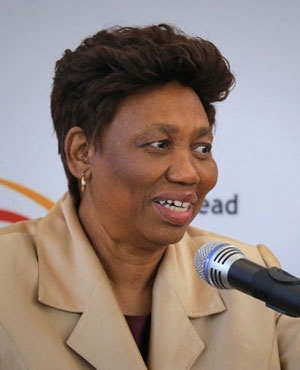
RESUMEN: El Departamento de Educación Básica dice que cualquier episodio racial o políticamente sesgado en escuelas públicas y en escuelas modelo C son incidentes aislados, y no como resultado del plan de estudios. El departamento emitió una declaración el martes que parecía contradecir las afirmaciones de Nkosazana Dlamini-Zuma, candidato presidencial del ANC, de que los estudiantes en las escuelas modelo C anteriores eran «enseñados contra el ANC». La declaración se basó en un informe del equipo de trabajo entregado a la Ministra de Educación Básica Angie Motshekga este mes, que ha estado evaluando libros de texto y otros materiales de aprendizaje desde febrero.

The Department of Basic Education says any racially or politically biased episodes at public and former model C schools are isolated incidents, and not as a result of the curriculum.

The department released a statement on Tuesday which appeared to contradict ANC presidential hopeful Nkosazana Dlamini-Zuma’s assertions that learners at former model C schools were «taught against the ANC».

The statement was based on a task team report handed to Basic Education Minister Angie Motshekga this month, which has been evaluating textbooks and other learning materials since February.

«While the Curriculum Assessment Policy Statements (CAPS) clearly outline what should be taught in schools, some teachers have, however, been found to have overstepped the boundaries,» spokesperson Elijah Mhlanga said.

«Where such incidents had taken place, such as teachers using racial slurs on others, swift action had been taken against the implicated teachers, he said.

«It must be stressed that, where such isolated incidents have taken place, these do not arise as a result of a defined norm or practice of a particular school, nor a dictate from the CAPS.»

It is, rather, individual teachers who tended to do so, the statement added. Motshekga would receive the full report at the end of the year.

Mhlanga stressed that CAPS was based on the principles of social transformation, equal educational opportunities, and ensuring the ills of apartheid were addressed.

DA MP Gavin Davies welcomed Motshekga’s statement on Wednesday, and claimed it was a clear sign that the minister disagreed with Dlamini-Zuma.

«[Motshekga’s statement] is a polite way of saying that Dlamini-Zuma was talking rubbish,» he said on Wednesday.

«If learners believe that the ANC is corrupt, it is not because of an anti-ANC propaganda campaign being waged in public schools. It is because evidence of ANC corruption is all around us.»

‘Kids taught at schools that ANC is corrupt’

On Thursday, Dlamini-Zuma raised concerns over what she termed a negative narrative against the governing party, saying it was perpetuated at schools and universities.

«They [kids] are actually taught against the ANC,» Dlamini-Zuma said in Zamdela in the Free State.

«It’s not surprising that kids will think the ANC is corrupt‚ [or that the] ANC is useless, because this is what they are fed at school.»

She alleged that some universities, such as the University of the Witwatersrand, refused to allow their students to call South Africa a democracy.

She claimed most schools would only say there is democracy and freedom in South Africa once another party took over.

ANC members needed to constantly be aware of the balance of power, and could not allow a leadership vacuum to form in the party and in government.

«We must be honest when we analyse what’s going on. We can’t not admit that the organisation is weak at this point in time,» she said.

Once we are weak and once we are divided, we cannot mobilise and unite society, she added.

Fuente: http://www.news24.com/SouthAfrica/News/racism-anti-anc-bias-at-public-schools-not-the-norm-education-dept-20170419

Comparte este contenido:

No Brasil, um em cada dez alunos de 15 anos é vítima de bullying

Brasil/Abril de 2017/Fuente: Veja

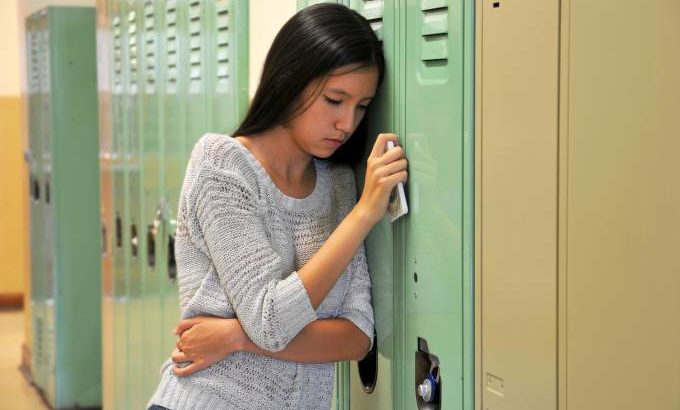
Resumen: En Brasil, aproximadamente uno de cada diez estudiantes de 15 años es a menudo víctima de acoso en las escuelas. Son adolescentes que sufren la agresión física o psicológica, que son objeto de burlas y chismes maliciosos, deliberadamente excluidos por sus compañeros, que no son llamados para fiestas o reuniones. La figura es parte del tercer volumen del Programa para la Evaluación Internacional de Estudiantes (PISA) en 2015, dedicada al bienestar de los estudiantes. El informe, elaborado por la Organización para la Cooperación y el Desarrollo Económico (OCDE), con la participación de 540.000 estudiantes de 15 años, mediante muestreo, que representa a 29 millones de estudiantes en 72 países. Hay 35 países miembros de la OCDE y 37 economías asociadas, incluyendo Brasil. Sobre la base de los informes de los estudiantes, el estudio clasificó 9% de los jóvenes de 15 años en el país como víctimas frecuentes de acoso, o están en la parte superior de la ventana de la agresión y más expuestos a esta situación. En comparación con los demás países evaluados, sin embargo, Brasil aparece con uno de los más pequeños «índices de exposición intimidación.»

No Brasil, aproximadamente um em cada dez estudantes de 15 anos é vítima frequente de bullying nas escolas. São adolescentes que sofrem agressões físicas ou psicológicas, que são alvo de piadas e boatos maldosos, excluídos propositalmente pelos colegas, que não são chamados para festas ou reuniões. O dado faz parte do terceiro volume do Programa Internacional de Avaliação de Estudantes (Pisa) 2015, dedicado ao bem-estar dos estudantes.

O relatório, feito pela Organização para a Cooperação e Desenvolvimento Econômico (OCDE), contou com a participação de 540.000 estudantes de 15 anos que, por amostragem, representam 29 milhões de alunos de 72 países. São 35 países-membros da OCDE e 37 economias parceiras, entre elas o Brasil. Com base nos relatos dos estudantes, o estudo classificou 9% dos jovens de 15 anos do país como vítimas frequentes de bullying, ou seja, estão no topo do indicador de agressões e mais expostos a essa situação. Em comparação com os demais países avaliados, contudo, o Brasil aparece com um dos menores “índices de exposição ao bullying”.

Segundo os dados, 17,5% dos jovens brasileiros de 15 anos disseram sofrer alguma das formas de bullying “algumas vezes por mês”; 7,8% disseram ser excluídos pelos colegas; 9,3%, ser alvo de piadas; 4,1%, serem ameaçados; 3,2%, empurrados e agredidos fisicamente. Outros 5,3% disseram que os colegas frequentemente pegam e destroem as coisas deles e 7,9% são alvo de rumores maldosos.

Em um ranking de 53 países com os dados disponíveis a respeito de bullying, o Brasil está em 43º. Em média, nos países da OCDE, 18,7% dos estudantes relataram ser vítimas de algum tipo da agressão mais de uma vez por mês e 8,9% foram classificados como vítimas frequentes.

“O bullying tem sérias consequências tanto para o agressor quanto para a vítima. Tanto aqueles que praticam o bullying quanto as vítimas são mais propensos a faltar às aulas, abandonar os estudos e ter piores desempenhos acadêmicos que aqueles que não têm relações conflituosas com os colegas”, diz o estudo, que acrescenta que nesses adolescentes estão também mais presentes sintomas de depressão, ansiedade, baixa autoestima e perda de interesse por qualquer atividade.

Satisfação e pertencimento

O levantamento mostra que os estudantes brasileiros estão acima da média no quesito satisfação com a vida: 44,6% dizem que estão muito satisfeitos, enquanto a média dos países da OCDE é 34,1%. Na outra ponta, tanto no Brasil quanto na média dos países da OCDE, 11,8% dizem que não estão satisfeitos com a vida.

No Brasil, 76,1% sentem que pertencem à escola. Entre os países da OCDE, 73% dos adolescentes dizem ter esse sentimento de pertencimento.

Quase todos os estudantes brasileiros (96,7%) querem ser escolhidos para as melhores oportunidades disponíveis quando graduarem e 63,9% querem estar entre os melhores estudantes da classe. Entre os países da OCDE, esses percentuais são, respectivamente, 92,7% e 59,2%.

O Brasil, no entanto, aparece quase no topo entre os países com estudantes mais ansiosos — 80,8% ficam muito ansiosos mesmo quando estão bem preparados para provas. A média da OCDE é 55,5%. O país é superado apenas pela Costa Rica, onde 81,2% dos estudantes relataram ansiedade nesses casos. Mais da metade dos brasileiros, 56%, disseram que ficam tensos ao estudar. A média da OCDE é 36,6%.

“Esses resultados sugerem a necessidade de relações mais fortes entre escolas e pais para que os adolescentes tenham o apoio de que necessitam, acadêmica e psicologicamente. Essa aproximação poderia contribuir muito para o bem-estar de todos os alunos”, diz o relatório.

Pais e professores

O levantamento mostrou ainda que pais e professores têm papel importante no bem-estar dos estudantes. Estudantes que têm pais interessados nas atividades escolares são 2,5 vezes mais propensos a estar entre as notas mais altas da escola e 1,9 vezes a estar muito satisfeitos com a vida. Com o apoio dos pais e responsáveis, os estudantes também têm duas vezes menos chance de se sentir sozinhos na escola e são 3,4 vezes menos propensos a estar insatisfeitos com a vida.

A participação dos professores também é importante. Estudantes que recebem apoio e suporte dos professores em sala de aula são 1,9 vezes mais propensos a sentir que pertencem à escola do que aqueles que não têm esse apoio. Aqueles que percebem que os professores são injustos com eles têm 1,8 vezes mais chance de se sentir excluídos na escola.

De acordo com o relatório, grande parte dos estudantes tem a sensação de que é injustiçada pelos professores. Em média, nos países da OCDE, 35% dos alunos relataram que sentem, pelo menos algumas vezes por mês, que seus professores pedem menos deles que dos outros estudantes; 21% acham que seus professores os julgam menos inteligentes do que são; 10% relataram que os professores os ridicularizam na frente dos outros; e 9%, que seus professores chegaram a insultá-los na frente dos demais.

Bem-estar dos estudantes

Esta é a primeira vez que o Pisa divulga dados da performance dos estudantes que dizem respeito à relação deles com os professores, à vida em casa e a como gastam o tempo fora da escola. Aplicado pela OCDE, o Pisa testa os conhecimentos de matemática, leitura e ciências de estudantes de 15 anos de idade. Em 2015, o foco foi em ciências, que concentrou o maior número de questões da avaliação.

Fuente: http://veja.abril.com.br/educacao/no-brasil-um-em-cada-dez-alunos-de-15-anos-e-vitima-de-bullying/

Comparte este contenido:

Greece’s refugee children learn the hard way

Grecia/Abril de 2017/Autor: /Fuente: BBC News

RESUMEN: El primer día de escuela. Se suponía que sería un momento emocionante y feliz para tantos de los 2.500 niños refugiados que ahora viven en campamentos en Grecia. Pero en cambio, algunos se encontraron con eslóganes lanzadores de piedras y nacionalistas, después de que manifestantes de extrema derecha se opusieron a la política del gobierno de integrarlos. Afortunadamente para Moustafa, de 10 años, su escuela designada en Tesalónica no vio ninguna protesta. Y a pesar de vivir en un contenedor de metal conocido como isobox, los últimos meses han traído una forma de estructura a su vida. Pasó un año huyendo de la guerra y temiendo por su vida, pero ahora tiene un horario. Todas las tardes aborda un entrenador organizado por la Organización Internacional para las Migraciones (OIM) que lo lleva al centro de la ciudad para la escuela. Es uno de los 60.000 refugiados y migrantes atrapados en Grecia desde que la reubicación a países europeos se estancó y se cerraron las fronteras.

The first day of school. It was supposed to be an exciting, happy time for so many of the 2,500 refugee children now living in camps in Greece.

But instead some were met with stone-throwing and nationalist slogans, after far-right demonstrators took issue with the government’s policy to integrate them.

Fortunately for 10-year-old Moustafa, his appointed school in Thessaloniki saw no protests. And despite living in a metal container known as an isobox, the past few months have brought a form of structure to his life.

He spent a year fleeing war and fearing for his life, but now he has a schedule.

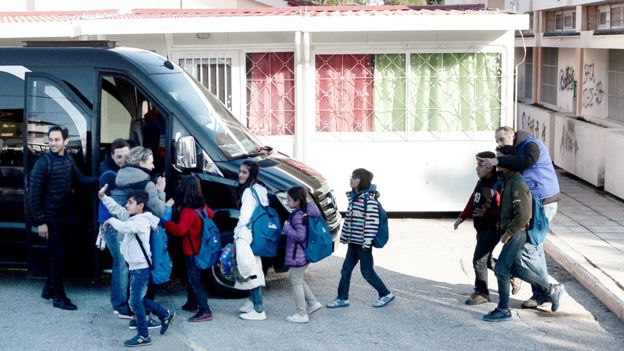
Every afternoon he boards a coach organised by the International Organization for Migration (IOM) that takes him to the city centre for school. He is one of 60,000 refugees and migrants trapped in Greece since relocation to European countries stagnated and the borders were closed.

Image copyright AFP
Image caption Nationalists protested as refugee children started school in Oraiokastro, near Thessaloniki, in February

Moustafa explains how his village near Damascus was trapped between rival warring groups and, before it was too late, his family headed for Europe.

He recounts the moment they were rescued from a sinking dinghy – so accurately, it is as if he is playing back recorded footage.

He shows off the school kit he has been given, including notebooks, pens, pencils and a rucksack.

«The most important thing now is for me to study and learn Greek,» Moustafa says. «I want to be a doctor.»

Hostile reception

The new school initiative backed by the EU follows a law passed by the Greek parliament last August. It kickstarted new classes to prepare refugee children for eventual integration into the Greek education system.

Ninety-seven schools are currently involved. In three, the initiative was met with contempt. Crowds of far-right nationalists gathered to wave Greek flags, boo the children and shout slogans such as «My homeland won’t fall!»

In the town of Profitis, riot police were called in to escort pupils after stones were thrown.

Image copyright AFP
Image caption Nationalists demanded that Greeks should come first, not refugees

In Oraiokastro, protesters chained themselves to the school gates. The self-styled «Patriotic Union of Greek Citizens of Oraiokastro» said they didn’t believe the pupils had been adequately vaccinated – something the health ministry has denied. In Perama, there were reports of physical violence.

In contrast, the arrival of pupils at Moustafa’s school in Thessaloniki went smoothly. The headteacher, Ioannis Nomikoudis, says it is down to the communication between the government, school and parents’ committee.

«The parents of the children here are not racist, but they do still have concerns and we cannot ignore that. The thing is, we didn’t make the children’s arrival debatable – like in some places.»

For Education Ministry General Secretary Giannis Pantis, the fact that there were protests at only three of the 97 schools was a success. «In many other schools the children were welcomed with songs and balloons,» he said.

He oversaw the programme from the start, when a scientific committee of leading Greek intercultural education experts and sociologists was brought together to provide advice. They assessed the work of NGOs in the camps and designed the curriculum of maths, Greek, English, art, IT and physical education.

Image caption Integration into the school system is an important part of establishing a new home

Lost in translation

The implementation of the programme has not come without its problems, though.

The lack of certified Greek-Arabic translators is a huge issue. The government says it is not a question of not being able to afford them, but that they just do not exist.

Image caption Refugee children are taught Greek – but lessons can be hard because few Greeks speak Arabic

Maths teacher Irene Voutskoglou said she did not realise how big the challenge would be.

«We can’t really communicate well at all,» she says. «I have to appoint a student as an ‘assistant teacher’ to help me. I didn’t even realise that numbers were different in Arabic. Our zero is a dot in Arabic for example. And our five looks like a seven in Arabic.»

Most translators are provided through charities, who receive funding from the European Union. But camp coordinators say the translators’ language skills are often not good enough and that they are also needed to teach the children their native language.

Scarred by war

«This is supposed to be a transitional year,» says Giannis Pantis, the man from the ministry.

«The children attend school in the afternoon, when the school day for current pupils has finished. We believe they cannot yet be fully integrated.

«Last week a child saw a helicopter and ran out of the school. Another started to cry and hid beneath the table. Some of these children, due to the war, are almost 10 years old but have never been to school. They can’t read or write. Many of them have post-traumatic stress disorder. We have a lot to do this year.»

Image caption Greek schoolchildren quickly made their refugee classmates feel at home

With a flagging economy and an education system already crippled by six years of austerity, the refugee crisis has further stretched Greece’s capacity.

The government is reliant on just €7m (£6m; $7.5m) of European funding for the next two years (NGOs have received €83m directly) and the Greek national budget to implement the programme.

Despite the struggles, Mr Pantis says they are determined to honour the government’s commitment to the fundamental and universal right to education.

Fuente: http://www.bbc.com/news/world-europe-39621097

Comparte este contenido:
Page 3963 of 6131
1 3.961 3.962 3.963 3.964 3.965 6.131