Page 4118 of 6193
1 4.116 4.117 4.118 4.119 4.120 6.193

Canadá: Boards, municipalities need to talk about school closures, education minister says

Canadá/Marzo de 2017/Fuente: CBC

RESUMEN: El ministro de Educación de Ontario dice que los consejos escolares y los municipios están siendo recordados que necesitan consultar entre sí cuando se trata de tomar la decisión de cerrar escuelas. Mitzie Hunter y su colega de Queen’s Park, Bob Chiarelli, ministro de Infraestructura de la provincia y diputado de Ottawa West-Nepean, enviaron recientemente una carta a los «líderes municipales y líderes de los consejos escolares» de Ontario para reiterar que deben trabajar juntos cuando se trata de tomar una «decisión difícil. Los comentarios de Hunter llegan un día después de que CBC News informara sobre la situación que enfrenta Yarker Family School, una escuela de preescolar hasta el grado 3 en Yarker, Ontario, una pequeña ciudad a unos 30 kilómetros al noroeste de Kingston. La población estudiantil de la escuela se ha reducido a sólo 26 niños, aproximadamente un tercio de la capacidad de la escuela. Eso llevó a la gente de Stone Mills Township a preocuparse de que el cierre de la Escuela Familiar de Yarker pudiera desencadenar una ola de cierres de escuelas rurales.

Ontario’s education minister says school boards and municipalities are being reminded they need to consult with each other when it comes to making the decision to close schools.

Mitzie Hunter and her Queen’s Park colleague Bob Chiarelli, the province’s infrastructure minister and MPP for Ottawa West–Nepean, recently sent a letter to Ontario’s «municipal leaders and school board leaders» to reiterate that they should be working together when it comes to making that «difficult» decision.

«That conversation needs to be happening,» Hunter told Alan Neal, host of CBC Ottawa’s All In A Day.

«At the same time, we know that school boards are always thinking about what [they] need to do to provide the best opportunity for our students. Because that’s their responsibility.»

Hunter’s comments come one day after CBC News reported on the situation facing Yarker Family School, a junior kindergarten to Grade 3 school in Yarker, Ont., a small town about 30 kilometres northwest of Kingston.

The school’s student population has shrunk to just 26 children, approximately one-third of the of the school’s capacity. That’s led people throughout Stone Mills Township to worry that shutting down Yarker Family School could trigger a wave of rural school closures.

Yarker’s school is the only one in the township currently under review,  but the Limestone District School Board’s long-term pupil accommodation plan recommends reviewing the other four — all of which are under capacity — next year.

«This school has been the heart of our community for over 150 years,» said Jill Kilgour, who moved back home to Yarker three years ago so her children could attend the same schools he did.

«It would really be a shame to see our heart stop beating here.»

‘Shifting demographics’ the new reality

The township’s council hired a consultant to add up what school closures would cost the local economy and its report estimated losses of close to $3.2 million per year — an amount equal to more than half of Stone Mills’ annual budget.

«The reality is that there are shifting demographics across the province. There are differing needs for the student population of today. So we don’t expect the same schools are going to serve the same communities, without any change, over time,» Hunter told All In A Day Wednesday.

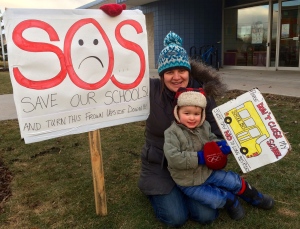
Lori Forester and her son Calum MacLaughlin want Tamworth Elementary School in Stone Mills township to stay open. The township could review its viability in 2018. (Susan Burgess/CBC)

Hunter said the province can provide boards extra funding so that they’re able to keep open a school that’s not near another facility.

She added that school boards and municipalities are required to meet annually to talk about local planning matters.

«We are very supportive of those types of conversations happening amongst communities and school boards,» Hunter said.

Stone Mills township is not the only eastern Ontario municipality facing the spectre of school closures.

Last week, the Upper Canada District School Board voted to close 12 schools in small communities outside of Ottawa.

Fuente: http://www.cbc.ca/news/canada/ottawa/mitzie-hunter-school-closures-1.4046147

Comparte este contenido:

Disaster education / Junior high school students take initiative, learn responsibility

Japón/Marzo de 2017/Fuente: The Japan News

RESUMEN: El distrito de Ogi en Noto, Prefectura de Ishikawa, es conocido por el calamar fresco. En este pequeño y envejecido distrito con una población de alrededor de 2.400, los estudiantes de secundaria están trabajando en actividades relacionadas con la gestión de desastres. Una «sesión de manejo de desastres» se llevó a cabo en la escuela secundaria Ogi de la ciudad el 21 de febrero. Cuarenta y seis estudiantes están matriculados en la escuela, que se encuentra en una colina de 42 metros de altura cerca de un puerto. Los estudiantes, especialmente aquellos en su tercer año, revisaron las actividades de manejo de desastres en las que participaron durante el año académico 2016. Las actividades de manejo de desastres de la escuela comenzaron después de que la Costa de Sanriku, que es geográficamente similar a la costa del distrito de Ogi en que tiene embocaduras en forma de embudo llamado ria, fue severamente afectada por el Gran Terremoto del Este de Japón del 2011. Si un terremoto ocurre en alta mar, un tsunami de unos 10 metros de altura podría alcanzar el distrito en unos nueve minutos, y muchas casas se concentran en áreas a menos de 10 metros sobre el nivel del mar. Dado que muchos adultos trabajan fuera del distrito durante el día, los estudiantes de secundaria juegan un papel importante en la gestión de desastres.

The Ogi district in Noto, Ishikawa Prefecture, is known for fresh squid. In this small, aging district with a population of around 2,400, junior high school students are working on activities related to disaster management.

A “disaster management session” was held at the town-run Ogi Junior High School on Feb. 21. Forty-six students are enrolled in the school, which stands on a 42-meter-high hill near a port. Students, especially those in their third year, reviewed disaster management activities they were engaged in during the 2016 academic year.

The school’s disaster management activities began after the Sanriku Coast, which is geographically similar to the coast of the Ogi district in that it has funnel-shaped inlets called ria, was severely hit by the 2011 Great East Japan Earthquake. If an earthquake occurs offshore, a tsunami around 10 meters high could reach the district in around nine minutes, and many homes there are concentrated in areas less than 10 meters above sea level. Since many adults work outside the district during the day, junior high school students play an important role in disaster management.

“Ogi will be in danger if things remain unchanged. Let’s do what we can do.” It was like fumbling in the dark, but they began by creating hazard maps of areas tsunami would potentially affect, then evacuation routes. During interviews the students conducted on 150 households in summer, many elderly people said things like, “Even if a tsunami comes, I won’t bother to run away.” Wanting these people to do their best to evacuate, the students held a tsunami seminar and distributed DVDs they had made that explain evacuation routes.

In case the school becomes an evacuation center, the students learned about evacuation center management and held Ogi’s first-ever disaster management drill. The drill is now established with several hundred people participating every year. The students have also created a card game and “disaster management calisthenics” for people to learn about disaster management in fun ways. They are used for interacting with elementary school students and elderly people. The students have been engaged in these activities as part of their physical education, home economics and ethics study classes.

Osamu Kitano, 72, chief of the Ogi district recalled, “Seeing these junior high school students working for the district made other residents feel like learning with them.”

A change was also seen in the students. Previously quiet students became proactive, and an increasing number of them began naturally reaching out to the elderly people during the drills. Third-year student Naoki Sakaguchi, 15, recalled: “The elderly people told me, ‘You’re really dependable. Thank you.’ That motivated me to do my best for the community.”

Wakako Daiku, 60, principal of the school, said: “The gratitude expressed by local people gave the students joy, motivation and pride. It also helped increase the sense of self-affirmation [among the students].” There were academic changes as well, with national aptitude test scores rising since the 2011 academic year.

The students review their activities every year. This academic year, they held the first nighttime evacuation drill, which led to the installation of emergency guidance lights that turn on automatically when it is dark.

In February’s disaster management session, soon-to-graduate third-year students passed the torch to their second-year schoolmates. Second-year student Ayumi Sakaguchi, 14, said enthusiastically, “I want to learn how to protect this district from things other than tsunami and earthquakes, too.

Fuente: http://the-japan-news.com/news/article/0003593267

Comparte este contenido:

UNESCO Habana apoya enseñanza de las ciencias en Cuba

Cuba/Marzo de 2017/Fuente: UNESCO

Como en ocasiones precedentes, la Oficina Regional de Cultura para América Latina y el Caribe de la UNESCO apoya la realización en Cuba el próximo 31 de marzo del XI Encuentro Taller científico metodológico de la Cátedra “Dulce María Escalona” y el VI Taller de la Cátedra de Cultura Científica “Antonio Núñez Jiménez”, que bajo el lema “La enseñanza de las ciencias en la Educación General y la formación de profesores”, organiza la Universidad de Ciencias Pedagógicas (UCP) “Enrique José Varona”.

Además de las mencionadas Cátedras, aúnan esfuerzos también en la organización del evento la cátedra honorífica “Vicente González Castro”, la Asociación de Pedagogos de Cuba y la Sociedad Cubana de Matemática y Computación.

El encuentro contará con un amplio programa, como parte del cual se rendirá homenaje a la primera directora de la UCP Ënrique José Varona, la Dra. Dulce María Escalona, y se impartirán los cursos La cátedra de cultura científica “Antonio Núñez Jiménez”: su continuidad en la sistematización de resultados en la Universidad de Ciencias Pedagógicas “Enrique José Varona”, Formación inicial vs formación continua de docentes: La necesaria articulación entre ellas y Una experiencia de aprendizaje permanente como miembros del Tribunal de grados científicos en Ciencias Pedagógicas, a cargo de miembros de la Academia de Ciencias y experimentados pedagogos e investigadores, entre ellos el Dr. Miguel J. Llivina,  especialista del sector de Educación de UNESCO La Habana.

Trabajo en comisiones, conferencias, presentación de libros, ponencias y otras actividades científicas completan el programa, en el que compartirán experiencias profesores e investigadores que tienen como objeto de estudio el proceso de enseñanza–aprendizaje de la Matemática, la Física, la Biología, la Química y la Geografía.

Asimismo, se desarrollará un encuentro de graduados con el propósito de favorecer su formación permanente y la introducción de resultados de investigaciones en ciencias pedagógicas vinculadas al proceso de enseñanza-aprendizaje de la Matemática en la práctica escolar.

Fuente: http://www.unesco.org/new/es/media-services/single-view/news/unesco_habana_apoya_ensenanza_de_las_ciencias_en_cuba/

Comparte este contenido:

Rusia creará una nueva generación de escolares patrióticos infiltrando Twitter, Instagram, YouTube y otras redes sociales para «despertar sentimientos de lealtad a la patria»

Rusia/Marzo de 2017/Fuente: Daily Mail

RESUMEN: Rusia espera crear una nueva generación de escolares patrióticos a través de las redes sociales para «despertar sentimientos de lealtad a la patria». El último programa de educación patriótica del Ministerio de Educación de Rusia espera infundir sentimientos de lealtad a Rusia. Su objetivo es preparar a la juventud rusa para «cumplir con sus deberes cívicos y constitucionales para proteger los intereses de la patria». El ministerio está anunciando un rol de 8 millones de rublos al año. A cambio, se espera que el empleado aumente el perfil de Internet del ministerio en un 25 por ciento para el final del año. El Día del Maestro – celebrado en Rusia el 1 de septiembre – es una ocasión que los funcionarios esperan apuntar en línea. «Los niños voluntariamente [usan los hashtags] para felicitar a sus maestros», dijo el servicio de prensa del Ministerio de Educación al tabloide ruso Izvestia.

Russia is hoping to create a new generation of patriotic schoolchildren through social media to ‘stir feelings of loyalty to the Fatherland.’

Russia’s Education Ministry’s latest ‘patriotic education programme’ hopes to instil feelings of loyalty to Russia.

It aims to prepare the Russian youth to ‘fulfil their civic and constitutional duties to protect the Fatherland’s interests.’

The ministry is advertising for a role worth 8 million rubles (£142,000) a year.

In return, the employee is expected to grow the ministry’s internet profile by 25 per cent by the end of the year.

Russia's Education Ministry's latest 'patriotic education programme' hopes to instil feelings of loyalty to Russia

Russia’s Education Ministry’s latest ‘patriotic education programme’ hopes to instil feelings of loyalty to Russia

Teacher’s Day – celebrated in Russia on September 1 – is one occasion which officials hope to target online.

‘Children will willingly [use the hashtags] to congratulate their teachers,’ the Education Ministry press service told the Russian tabloid Izvestia.

The move follows last week’s protests in Russia where thousands – including many younger people – marched against President Vladimir Putin.

It was the biggest show of defiance since a 2011-2012 wave of demonstrations rattled the Kremlin and led to harsh new laws aimed at suppressing dissent.

Police estimated the Moscow crowd at about 7,000, but it could have been larger. The one-hectare (2.5-acre) Pushkin Square was densely crowded as were sidewalks on adjacent Tverskaya Street.

In St. Petersburg, about 5,000 protesters assembled in the Mars Field park, shouting slogans including ‘Putin resign!’ and ‘Down with the thieves in the Kremlin!’

Russia is hoping to create a new generation of patriotic schoolchildren by infiltrating Twitter, Instagram, YouTube and other social media to ‘stir feelings of loyalty to the Fatherland’

Fuente: http://www.dailymail.co.uk/news/article-4364284/Russia-create-new-generation-patriotic-children.html
Comparte este contenido:

Guatemala: Estudiantes continúan bajo el asecho de pandillas

Guatemala/Marzo de 2017/Autora: Yanira Alvizurez/Fuente: Prensa Libre

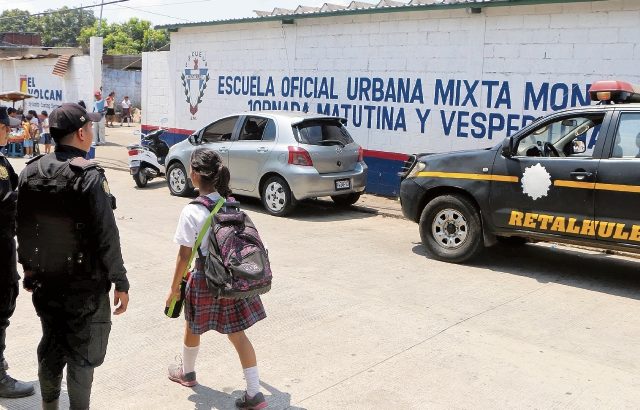
En Quetzaltenango, padres de familia y maestros denunciaron que en los últimos años han aumentado los asaltos e intimidaciones a estudiantes por parte de supuestos pandilleros, especialmente durante la jornada vespertina y nocturna.

Francisco Tirado, director del Instituto Normal para Varones de Occidente (Invo), zona 1 de Xela, dijo que el caso más reciente ocurrió hace unos días, cuando un estudiante fue interceptado por sujetos en un automóvil, quienes lo despojaron de sus pertenencias y al oponerse lo atacaron con arma blanca.

“El 97 por cierto de los estudiantes son del área rural y para llegar a sus viviendas deben abordar dos buses, situación que incrementa el riesgo de sufrir un incidente”, añadió.

Lucia Rodas, madre de familia, comentó: “Temo por la integridad de mis hijos, especialmente por la de 12 años, porque escucho de otras jóvenes que las han violado. Lo único que me queda es encomendarlos a Dios, porque la policía no hace nada y no pueden dejar de estudiar”.

Maribel Afre, directora de la Escuela Mixta Manuel Figueroa, zona 3 de Xela, indicó que aunque cuentan con cámaras de videovigilancia para evitar saqueos temen ser víctimas de los malhechores en los alrededores del establecimiento, por lo que piden a las autoridades policiales implementar patrullajes.

Fuente: http://www.prensalibre.com/guatemala/quetzaltenango/escolares-se-arriesgan-camino-a-sus-planteles


Comparte este contenido:

Special education approaching ‘crisis point’ across New Zealand

Nueva Zelanda/Marzo de 2017/Fuente: Newshub

RESUMEN: El presidente de la Federación de Principales de Nueva Zelanda (NZPF), Whetu Cormick, advierte que la educación especial se está acercando al «punto de crisis» en Nueva Zelanda. El Sr. Cormick dice que la federación está analizando los comentarios de su última reunión, y los presidentes regionales advierten que «los recursos son inadecuados» y el acceso a servicios especializados es «lamentable». «Muchos directores nos dicen que están constantemente al borde de romper las políticas de salud y seguridad de su escuela y no pueden garantizar la seguridad y el bienestar de sus estudiantes con necesidades especiales, estudiantes regulares o maestros todos los días», dice.

New Zealand Principals’ Federation (NZPF) president Whetu Cormick is warning that special education is approaching ‘crisis point’ across New Zealand.

Mr Cormick says the federation is analysing feedback from their latest meeting, and regional presidents are warning «resourcing is inadequate» and access to specialist services is «woeful».

«Many principals are telling us that they are constantly on the brink of breaching their school’s health and safety policies and cannot guarantee the safety and well-being of their special needs students, regular students or teachers every day,» he says.

«As the incidence of severe autism, ADHD, fetal alcohol syndrome, ‘P’ babies, poverty and trauma accelerates, schools are left to flounder.»

Pat Newman, President of Te Tai Tokerau Principals Association, agrees with this.

«The maximum we’re getting for some of these severe kids that are everything from knives to throwing desks to constantly fighting in the classroom and all the rest of it is two hours a day to try to keep them safe and to keep other children and teachers safe,» he says.

The NZPF conducted a survey in 2016 which found over 90 percent of schools were using operations grant money to support children with high level behavioural and learning needs.

Schools are unable to access specialist services, including diagnostic assessments, psychologists, speech therapists, RTLB, SENCOs, Teacher Aides and especially support for very high learning and behavioural needs students.

Mr Cormick says feedback shows this problem is getting worse.

«Some principals attending Moot made the comment that it is not about the Government not having funds, it’s about priorities,» Mr Cormick says.

«With special education in such disarray many principals feel that the $329 million set aside for future Communities of Learning, might be better spent on supporting special education now.»

Mr Cormick says the NZPF is advocating for changes at the Ministry level, and urges principals to «stay strong».

Fuente: http://www.newshub.co.nz/home/new-zealand/2017/03/special-education-approaching-crisis-point-across-new-zealand.html

Comparte este contenido:

Éducation : la France aurait (presque) les élèves les plus indisciplinés

Francia/Marzo de 2017/Fuente: RTL

RESUMEN: Son los profesores de francés más dignos de lástima? Esto es lo que tiende a probar un informe científico desde el asesoramiento de la  Federación del Consejo de Padres (CIPF). Según él, Francia sería el país donde la indisciplina ha reinado más en el aula, de tercera a primera a excepción de Túnez. Para llegar a esta conclusión, el fondo de inversión se basa en el último ranking PISA fechadas 2015. Cada tres años, el programa publica una encuesta para medir las disparidades de rendimiento y el aprendizaje entre los estudiantes de 34 países de la OCDE y muchos países extranjeros. Cada vez que una de las tres áreas evaluadas (Lectura, Matemáticas, Ciencias) se selecciona como el área principal, donde se entrevista a los estudiantes. En 2015, fue la cultura científica. PISA, además de rendimiento educativo, también cuestionó los estudiantes en su comportamiento en el aula. Es de estos resultados que el CIPF ahora ilumina. Las situaciones se presentan a los estudiantes y deben ofrecer la frecuencia en que ocurren: los estudiantes no escuchan a lo que dijo el maestro, hay ruido y el desorden, los estudiantes no pueden trabajar bien,  los estudiantes no empiezan a trabajar hasta mucho después del inicio del curso, el profesor tiene que esperar mucho tiempo que los estudiantes se calmen.

Les professeurs Français sont-ils les plus à plaindre ? C’est ce que tend à prouver un rapport du Conseil scientifique de Fédération des conseils de parents d’élèves (FCPE). Selon lui, la France serait le pays où l’indiscipline régnerait le plus dans les salles de classe, de la troisième à la première. Exception faite de la Tunisie.

Pour tirer ces conclusions, la FCPE s’est basée sur le dernier classement PISA daté de 2015. Tous les trois ans, ce programme publie une enquête pour mesurer les disparités de performance et d’apprentissage entre les élèves des 34 pays de l’OCDE et de nombreux pays extérieurs. À chaque fois, l’un des trois domaines évalués (compréhension de l’écrit, mathématiques, sciences) est choisi comme domaine principal, sur lequel les élèves sont interrogés. En 2015, il s’agissait de la culture scientifique.

Une situation qui empire

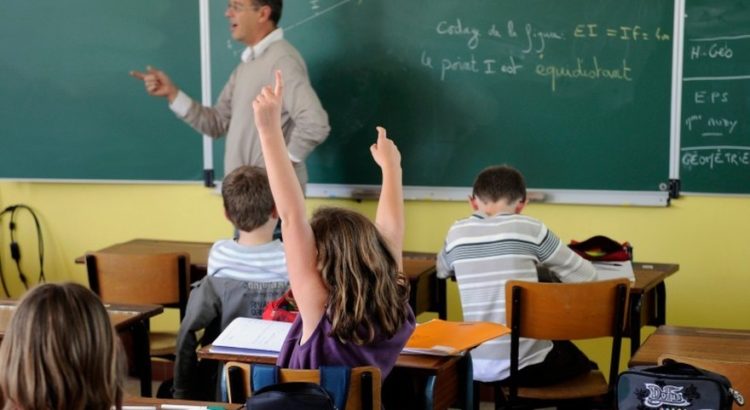
Le programme PISA, en plus des performances éducatives, interroge aussi les élèves sur leur comportement en classe. Ce sont ces résultats que la FCPE met aujourd’hui en lumière. Des situations sont présentées aux élèves et ceux-ci doivent donner la fréquence à laquelle elles se produisent : les élèves n’écoutent pas ce que dit le professeur, il y a du bruit et du désordre, les élèves ne peuvent pas bien travailler, les élèves ne commencent à travailler que longtemps après le début du cours, le professeur doit attendre longtemps que les élèves se calment.

Autant d’obstacles à un bon apprentissage qui semblent particulièrement fréquents dans les classes de l’Hexagone. Ainsi, la FCPE rapporte que la France était le pays où ce climat était le plus dégradé en 2015, non seulement au sein de l’OCDE mais également dans l’ensemble des 72 pays sur lesquels se penche PISA, Tunisie mise à part.

Dans chaque pays, on constate un écart entre les élèves défavorisés et les autres. Mais cet écart est particulièrement marqué en France. De fait, la discipline est mieux établie dans les établissements privés que publics. Et la situation ne fait que s’aggraver : en 2000, l’indice de discipline était de -0,05 par rapport à la moyenne 0 de l’OCDE. Il est désormais à -0,27.

Fuente: http://www.rtl.fr/actu/societe-faits-divers/education-la-france-aurait-presque-les-eleves-les-plus-indisciplines-7787883025

Comparte este contenido:
Page 4118 of 6193
1 4.116 4.117 4.118 4.119 4.120 6.193