Page 4545 of 6193
1 4.543 4.544 4.545 4.546 4.547 6.193

Reino Unido: Grammars will not boost poorest pupils science grades

Reino Unido/Diciembre de 2016/Fuente: BBC News

RESUMEN: Los mejores científicos temen que los planes para más escuelas de gramática en Inglaterra no aumenten las calificaciones de los alumnos desfavorecidos. En general, los alumnos más pobres hacen peores en ciencias y matemáticas en áreas con escuelas selectivas, sugiere la investigación de la Royal Society, la academia científica independiente del Reino Unido. Es probable que las nuevas gramáticas ayuden a «sólo una pequeña proporción» de los alumnos más pobres, dice. Los Ministros sostienen que sus propuestas mejorarán la movilidad social. Una consulta gubernamental sobre planes para una educación más selectiva cerró a principios de este mes. «La movilidad social es un tema complejo», dijo el profesor Tom McLeish, presidente del Comité de Educación de la Royal Society. «Apoyamos el compromiso del gobierno de asegurar que todos los estudiantes cumplan con su potencial, independientemente de sus antecedentes.

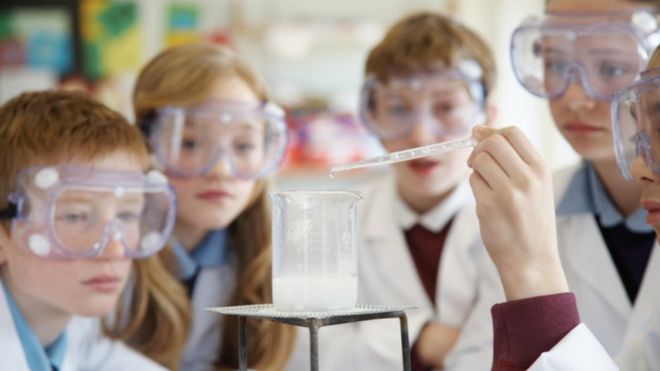
Top scientists fear plans for more grammar schools in England will not boost disadvantaged pupils’ grades.

Overall, the poorest pupils do worse in science and maths subjects in areas with selective schools, suggests research for the Royal Society, the UK’s independent scientific academy.

New grammars are likely to help «only a small proportion» of the poorest pupils, it says.

Ministers maintain that their proposals will improve social mobility.

A government consultation on plans for more selective education closed earlier this month.

«Social mobility is a complex issue,» said Prof Tom McLeish, chairman of the Royal Society’s Education Committee.

«We support the government’s commitment to ensuring all students fulfil their potential, regardless of their background.

«However, we are concerned that the approach to selective education outlined in the green paper may only support the small number of high ability disadvantaged pupils who do attend selective schools, at the cost of disadvantaged pupils who do not.»

Researchers from the Education Policy Institute, commissioned by the Royal Society, looked at the impact of selective education on the attainment of the most disadvantaged young people – those on free school meals – in STEM (science, technology, engineering and maths) subjects.

The researchers found free school meals pupils performed less well in GCSE maths in areas where there were selective schools.

In non-selective areas in 2015, 48.1% of free school meals pupils got a C or more, compared with 72.3% of pupils not eligible for the meals.

But in selective areas the attainment gap was wider, with only 43.9% of free school meals pupils getting at least a C, compared with 74.8% of pupils not receiving the meals.

The researchers found that free school meals pupils in selective schools performed very well, with 98% getting at least a C, compared with 99.2% of non-free school meals pupils.

However, free school meals pupils make up only 3% of selective schools so their achievements are not enough to make any difference to «an overall negative impact on the attainment of all free school meals pupils in GCSE mathematics in selective areas», say the researchers.

Specialist teachers

They also found that fewer free school meals pupils in selective areas took double or triple sciences at GCSE.

«We have found no evidence to suggest that overall educational standards for free school meals pupils in STEM subjects in England would be improved by an increase in the number of places in selective schools,» the Royal Society concludes.

Dr McLeish added that the best way to help every pupil achieve their potential is to make sure that they are taught by «well-trained, motivated and supported, specialist science teachers».

Support is essential, he said, to help teachers «draw out the natural curiosity and creativity that grows from a framework of knowledge in science».

In particular, the Royal Society proposes partnerships between universities, schools and businesses which could involve university staff teaching part-time and even carrying out some of their research in schools.

The Department for Education said its proposals were «about creating more choice, with more good school places in more parts of the country».

It said grammar schools have a «track record of closing the attainment gap» and the department was also raising standards for maths and science for all pupils.

A spokesman added: «We have introduced rigorous new qualifications and in science we are investing £12.1 million over the next three years to improve the quality of teaching in schools.»

Fuente: http://www.bbc.com/news/education-38343307
Comparte este contenido:

Nueva Zelanda: Secular Education Network appeals bible battle to UN committee

Nueva Zelanda/Diciembre de 2016/Fuente: Stuff

RESUMEN: Bajo la Ley de Educación, las escuelas primarias pueden cerrar por hasta una hora cada semana para clases de instrucción religiosa. Un grupo que lucha contra las clases bíblicas en las escuelas primarias está presionando para que las Naciones Unidas examinen la discriminación religiosa en Nueva Zelanda. La Secular Education Network cree que las clases tienen un impacto negativo en los estudiantes no cristianos, y no tienen lugar en un marco de educación secular. Eso es discutido por la Comisión de Educación de Iglesias – el mayor proveedor de instrucción religiosa en el país – que dice que la prohibición de las clases bíblicas sería una violación de los derechos humanos.

A group fighting against bible classes in primary schools is pushing for the United Nations to examine religious discrimination in New Zealand.

The Secular Education Network believes the classes have a negative impact on non-Christian students, and have no place in a secular education framework.

That is disputed by the Churches Education Commission – the largest provider of religious instruction in the country – which says that banning bible classes would be a breach of human rights.

Now, the network wants the issue taken up by the UN Committee on Economic, Social and Cultural Rights.

The committee will be reviewing New Zealand’s human rights record next year, along with the UN Committee on the Elimination of Racial Discrimination, and the Human Rights Commission is currently collecting submissions.

Under the Education Act, teaching in primary schools must be entirely secular. However they’re permitted to close for up to one hour a week, for the purpose of religious instruction.

Around 40 per cent of New Zealand primary schools engage in some form of religious instruction, while the rest are entirely secular.

Karl Le Quesne, head of early learning and student achievement at the Ministry of Education, says any religious programme must be approved by a school’s board of trustees.

«Schools may not discriminate against their students on the grounds of their religious belief or lack of it,» he said.

The network’s David Hines is concerned that while that may be the law, the reality is that students still experience discrimination in the classroom.

«When kids don’t attend the religious instruction class they, in many cases, get bullied by other kids,» he said.

«That scares a lot of kids and their parents, so they don’t complain about it.»

The commission’s Tracy Kirkley is disappointed by reports of students feeling ostracised, and insists that is not the intention of religious instruction.

«It’s a concern if kids are feeling that way,» she said.

«We’re obviously concerned about that, and that’s certainly something that we would not in any way encourage.»

Kirkley believes banning religious instruction would be a step in the wrong direction, and said the commission will make its own submission to the UN committee.

«To us it’s about maintaining and protecting the freedoms we enjoy in this country,» she said.

«There are mechanisms for people to choose whether their kids are in programmes, that’s the whole point of a democracy.»

But scrapping religious instruction entirely is exactly what Hines would like to see, especially given the changing demographics of New Zealand.

«If the present slide goes on, the non-religious people could well outnumber the number of Christians by the next census,» he said.

Kirkley concedes his point, and acknowledges that requests for religious instruction classes have dropped over the past few years.

«The face of New Zealand society has become a lot more diverse and multicultural, we totally understand that,» she said.

However Kirkley said the commission will continue offering religious instruction as long as there is demand from schools.

Submissions to the UN committee close in August 2017.

Fuente: http://www.stuff.co.nz/national/education/87627929/secular-education-network-appeals-bible-battle-to-un-committee

Comparte este contenido:

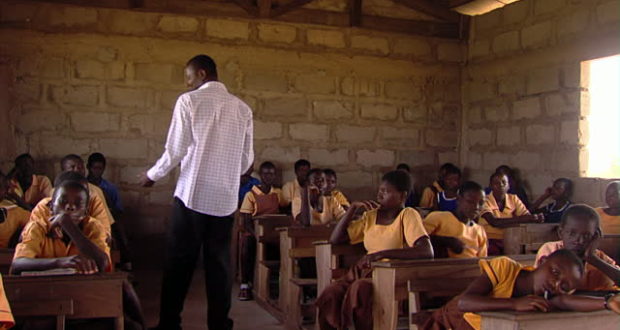
Ghana: Parents urged to invest in bilingual education of wards

Ghana/Diciembre de 2016/Fuente: Citi 97.3 Fm

RESUMEN: La señora Ama Atta Sagoe, propietaria de Ecole Francaise, una institución educativa bilingüe privada en Cape Coast, ha exhortado a los padres ghaneses a invertir en educación bilingüe para sus hijos. Dijo que ser bilingüe da a los niños una ventaja competitiva y ofrece beneficios prácticos e intelectuales en la sociedad global de hoy. La Sra. Sagoe, quien habló en una conferencia de prensa antes del quinto aniversario de la escuela y el discurso y el premio que da la celebración del día en Cape Coast, dijo que el fluir en una segunda lengua abrió el mundo de nuevas oportunidades especialmente en el mercado de trabajo.

Mrs Ama Atta Sagoe, Proprietress of Ecole Francaise, a private Bilingual Educational Institution in Cape Coast, has admonished Ghanaian parents to invest in bilingual education for their children.

She said being bilingual gives children a competitive edge and offers practical and intellectual benefits in today’s global society.

Mrs Sagoe, who was speaking at a media briefing ahead of the school’s fifth anniversary and Speech and Prize giving day celebration in Cape Coast, said being fluent in a second language opened up the world of new opportunities especially in the job market.

The anniversary celebration, which is on the theme “Significance of Bilingual Education in the 21st Century”, is scheduled for Friday, December 16.

She said it was imperative for every Ghanaian to show interest in learning French as a second foreign language.

She emphasized that learning a second foreign language promotes technology, science, culture and a technical know-how, adding that “these are tools for development”.

Mrs Sagoe called for a review of the educational policies in Ghana to enhance teaching and learning in schools.

She said the School which was established in 2012 with just four pupils, could now boast of more than three hundred pupils.

“Ecole Francaise is the only Bilingual Basic Education Institution in Cape Coast and the whole of the Central Region. We offer all the subjects under the Ghana Education Service (GES) curricula,” She said.

She mentioned some of the activities lined up to include a cleanup exercise, a donation to the children’s ward at the Cape Coast Teaching Hospital, a walk through the principal streets of Cape Coast, among others.

Fuente: https://citifmonline.com/2016/12/15/parents-urged-to-invest-in-bilingual-education-of-wards/

Comparte este contenido:

Ecuador: Más de 38 mil estudiantes se beneficiarán de proyecto de educación técnica y tecnológica

Ecuador/Diciembre de 2016/Fuente: Banco Mundial

El Directorio Ejecutivo del Banco Mundial aprobó un préstamo de US$90,5 millones para incrementar la participación y permanencia de estudiantes en programas de educación pública técnica y tecnológica diseñados e implementados en colaboración con empleadores en Ecuador.  Adicionalmente, el proyecto apoyará el fortalecimiento  de la gestión institucional de la educación técnica y tecnológica en el país.

El Proyecto Reconversión de la Educación Técnica y Tecnológica Superior Pública que lleva a cabo la Secretaría de Educación Superior, Ciencia y Tecnología (SENESCYT) fortalecerá  la optimización y mejoramiento de la oferta en provincias,  la calidad de la enseñanza y capacidad administrativa de los Institutos; la formación de docentes y directivos; así como el fortalecimiento de los mecanismos de coordinación institucional con el sector privado.  Adicionalmente, el proyecto incluye un plan de género para monitorear las tasas de acceso y permanencia de estudiantes mujeres, para promover la igualdad de oportunidades en el acceso a educación técnica.

De acuerdo con el Gobierno Nacional, este financiamiento promueve el proceso formativo del talento humano ligado al cambio de la matriz productiva. Entre las principales actividades que se impulsarán a través del proyecto está el aporte en el diseño de un plan de estudios alineado con las necesidades  del mercado laboral. El proyecto también busca la dotación de infraestructura adecuada que facilite el aprendizaje, y la articulación entre los estudios de secundaria y terciaria, y el fortalecimiento de la gestión del sistema de educación técnica y tecnológica.

El proyecto apoyará los esfuerzos del Gobierno para mejorar la calidad de los programas de educación técnica y tecnológica con el objetivo de incrementar el acceso, la permanencia y la graduación de los estudiantes a través de una alternativa a la formación universitaria tradicional que impulse la productividad. Para esto es muy importante la coordinación con los empleadores y el sector privado en particular.”, afirmó Alberto RodríguezDirector del Banco Mundial para Bolivia, Chile, Ecuador, Perú y Venezuela.

Con este préstamo se contempla la construcción y equipamiento de 11 Institutos Tecnológicos Superiores en las provincias de: Bolívar, El Oro, Guayas, Manabí, Pichincha, Tungurahua y Sucumbíos.

Este proyecto busca formar trabajadores con habilidades que requiere el sector laboral. El crédito del Banco Mundial asciende a US$102.47 millones, de los cuales la SENESCYT aportará US$11.97 millones.

El cierre del proyecto está previsto para el 2021. El plazo del préstamo es a 35 años, incluyendo un periodo de gracia de 17 años.

Contactos:

En Washington: Marcela Sánchez-Bender, (202) 473-5863, msanchezbender@worldbank.org,

En Quito: Cristina Medina, (593) 22943600 ext 676, cmedina1@worldbank.org

Fuente: http://www.bancomundial.org/es/news/press-release/2016/11/23/more-than-38000-ecuadorian-students-will-benefit-from-a-technical-and-technological-project

Comparte este contenido:

India: Ministers want education system to make students more patriotic

India/Diciembre de 2016/Fuente: Hindustamtimes

RESUMEN: Desde la introducción de las lecciones militares en las escuelas hasta el levantamiento obligatorio de la bandera nacional, la educación debe ayudar a que los estudiantes sean más patrióticos de lo que son, dijo un grupo de ministros al máximo órgano de formulación de políticas educativas del país. Entre otras sugerencias se encuentran la construcción de más escuelas enfocadas en el ejército, la enseñanza de biografías de héroes nacionales y el canto del himno nacional obligatorio para que los niños creen un «ecosistema de moral, ética y patriotismo». Las ideas fueron impulsadas por varios ministros centrales, así como los de los estados gobernados por el BJP en una reunión de la Junta Asesora Central de Educación (CABE) el 25 de octubre. CABE es el máximo órgano consultivo sobre educación para los gobiernos centrales y estatales.

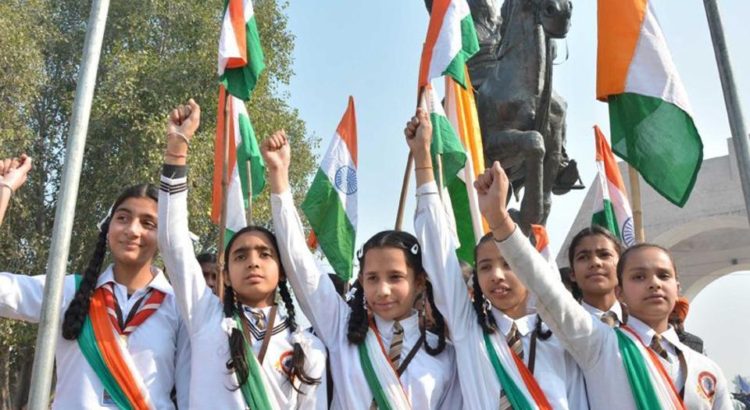
From introducing military lessons in schools to compulsory hoisting of the national flag, education must help make students more patriotic than they are, a group of ministers has suggested to the country’s top education policy-making body.

Among their other suggestions are building more military-focused schools, teaching biographies of national heroes and making the singing of the national anthem mandatory for children to create an “ecosystem of morals, ethics and patriotism”.

The ideas were pushed by several central ministers as well as those from BJP-ruled states at a meeting of the Central Advisory Board of Education (CABE) on October 25. The minutes of the meeting were accessed by HT this week. CABE is the highest advisory body on education for central and state governments.

Read | RSS holds high-profile event to influence India’s education policy

The suggestions echo an increasingly strident brand of nationalism whose rise has coincided with the election of Prime Minister Narendra Modi’s government two years ago. Many oppose this resurgent nativist wave as just a means to curb personal freedom and dissent.

In the October 25 meeting, Deepak Joshi, Madhya Pradesh’s minister of state for school education, suggested that more Sainik schools be built than state-run Kendriya and Navodaya Vidyalayas because “nationalism and patriotism is need of the hour”.

“He further suggested that chapters on the role of freedom fighters and stories of national heroes could be included in the upcoming policy,” according to the meeting’s minutes. The government is in the process of overhauling the country’s education policy.

Joshi’s idea of military education was echoed by Mahendra Nath Pandey, Union minister of state for human resource development, who said, “Military education should be provided to students to promote the idea of patriotism and nationalism. He felt that due importance be given to girls’ education and value education”.

Discussions also included shortages of teachers, skill development, the state of midday meals in schools, how to push yoga, rising dropout rates and the possibility of imparting lessons in mother tongue.

Vijay Goel, minister of state (independent charge) for youth affairs and sports, stressed on instilling patriotism and nationalism in the curricula. Terming moral-and value-based education as the need of the hour, Kunwar Vijay Shah, minister of school education of Madhya Pradesh, suggested schools and government offices compulsorily fly the Tricolour.

For Himanta Biswa Sarma, minister for higher, secondary and elementary education in Assam, the focus must be on developing an eco-system where students could learn and develop patriotism.

But this isn’t the first time government ministers have spoken of the need for education to be more patriotic.

In February, the central government decided to fly the Tricolour atop a 207-feet mast in all central universities across the country to evoke nationalistic sentiments on campuses, many of which were at that time rocked by anti-establishment protests.

Fuente: http://www.hindustantimes.com/india-news/ministers-want-education-system-to-make-students-more-patriotic/story-f61KgNidD8hX5h11cNkdZP.html

Comparte este contenido:

Argentina: Más de 2.500 chicos tendrá en 2017 un codocente

Argentina/Diciembre de 2016/Autora: Natalia Meja/Fuente: El Tribuno

Samuel Villena es abogado y a partir del 6 de marzo de 2017 pondrá su granito de arena para mejorar la educación desde el aula, de la mano de la organización Enseñá por Argentina. «Hay que trabajar en la motivación para que los chicos y adolescentes de hoy empiecen a ver un futuro distinto para su vida. Creo que esa es la clave y en lo que me voy a esforzar para que pueda salir algo bueno. Motivarlos, despertarles el interés, buscar alguna vocación en ellos, intentar en los que no ven un futuro que empiecen a construirlo desde ahora», señaló el profesional de 29 años.
Para Shajira Cortez Chaín, licenciada en Relaciones Internacionales y Ciencias Políticas, el reto será cerrar la brecha tecnológica que existe entre los chicos y los docentes. «Yo hace 10 años dejé el colegio, de manera que la realidad de hoy en día no solo es un desafío para los chicos sino también para mí misma porque hay muchas cuestiones que están interactuando en el aula y que a mi no me pasaron: las redes sociales, en fin todo lo que tiene que ver con la tecnología», dijo la líder de 26 años.
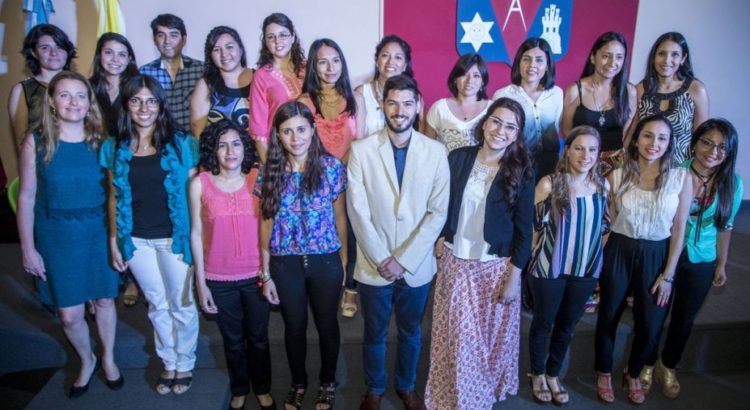
Samuel y Shajira son dos de los 30 nuevos jóvenes profesionales universitarios seleccionados por Enseñá por Argentina para trabajar durante dos años con alumnos secundarios de escuelas públicas ubicadas en zonas vulnerables, en un programa de co-docencia. Uno de los objetivos que persigue la ONG, que forma parte de la red internacional Teach for All, es que un día todos los niños y jóvenes reciban una educación de calidad.
Abogados, ingenieros, politólogos, biólogos y arquitectos, entre otras profesiones, colaborarán con el profesor responsable de la clase que se les asigne en 18 escuelas salteñas, de las cuales 11 se incorporan a la experiencia con la meta de mejorar los aprendizajes de más de 2.500 estudiantes.
En Salta, Enseñá por Argentina comenzó a trabajar en 2015 en siete establecimientos educativos. «Trabajar dentro del aula transforma la sociedad, independiente de la gestión; la gestión directiva en la institución es más administrativa y muchas veces nos hace perder esa visión del aula», señaló la ministra de Educación Analía Berruezo, quien felicitó a los «valientes» profesionales.
Samuel admitió que la posibilidad de aportar a la educación «es una puerta que se abrió y que no tenía planificado desde un principio». Por su parte, Cortez Chaín destacó: «Creo que los que trabajan en la educación son profesionales de la esperanza; ellos creen en los chicos, los adolescentes y en los jóvenes. Por eso me pareció oportuno comprometerme con la realidad de mi provincia».
A modo de balance, Oscar Ghillione, titular de Enseñá por Argentina, le dijo a El Tribuno: «Vemos mucha ganancia en el trabajo colaborativo entre el joven profesional y el docente en el desarrollo de habilidades socioemocionales que tienen que ver cómo los chicos trabajan en equipo, qué autoconcepto tienen, cómo pueden construir proyectos, proyectarse hacia el futuro. También estamos estudiando si vemos mejoras y ganancias en términos de bajar la repitencia y la deserción. Hasta ahora venimos viendo que mejoran las tasas de permanencia y de aprobación de un año al siguiente, pero pronto ya tendremos datos precisos».
Fuente:  http://www.eltribuno.info/mas-2500-chicos-tendra-2017-un-codocente-n802387
Comparte este contenido:

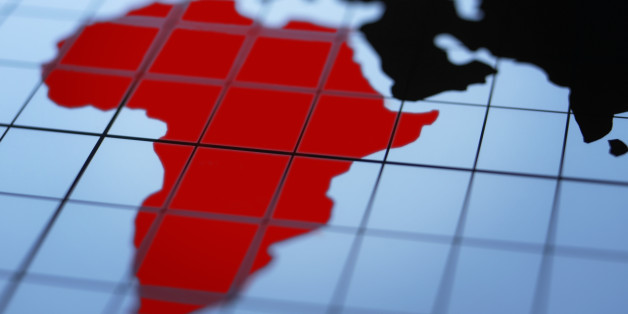
Africa: The Global Fight Against School Privatization

Africa/Diciembre de 2016/Fuente: The Huffintong Post

RESUMEN: Las empresas globales están enfocando la educación pública como un área de privatización y ganancias. En Estados Unidos nos enfrentamos al mandato de hacer triunfo de Trump para escuelas charter y vales. Si Trump y la propuesta de la Secretaria de Educación «Amway» DeVos logran impulsar su agenda, esperan que los especuladores de los fondos de cobertura, las compañías chárter con fines de lucro, las redes chárter, los llamados editores educativos y las escuelas privadas y religiosas Dólares federales.

Global companies are targeting public education as an area for privatization and profit. In the United States we face Trump’s make-believe mandate for charter schools and vouchers. If Trump and proposed Education Secretary “Amway” DeVos succeed in pushing through their agenda, expect hedge fund profiteers, for-profit charter companies, charter networks, so-called educational publishers, and private and “religious” schools to make a big play for federal dollars.

In the developing world, especially sub-Saharan Africa, government agencies and non-government organizations are having some success in pushing back against the edu-vultures. In Uganda, more than 60 Bridge International Academies were ordered closed by the government and courts for failing to meet legal and educational requirements. The first Bridge school opened in the Nairobi, Kenya in 2009. According to the Wall Street Journal, investors have poured more than $100 million into the company. They include Bill Gates of Microsoft, E-Bay founder Pierre Omidyar, textbook publisher Pearson PLC, and $10 million from Facebook founder Mark Zuckerberg. A partner at the California-based venture-capital firm Learn Capital LLC is Bridge’s largest shareholder. It also receives funding and support from the World Bank and the UK Department for International Development (DFID). DFID, while a government agency, has suspiciously close ties to the global edu-company Pearson. It also publicly criticizes UN agencies like UNESCO while promoting the World Bank’s global privatization initiatives.

Attention in the fight to stop the edu-vultures now turns to Kenya. A new study produced by Education International (EI) and Kenya National Union of Teachers (KNUT), “Bridge vs Reality,” exposes Bridge International Academies’ for-profit schemes in Kenya where the company operates 400 schools in the nation’s poorest communities. The business model implemented by Bridge increases profitability while compromising quality teaching and learning. Bridge makes its money by employing unqualified staff, enforcing a scripted curriculum, and utilizing poor facilities. Critics charge Bridge with contributing to segregation in education and undermining the right of children to free quality education.

The study revealed that Bridge Kenya students are taught largely by an unqualified, overworked, underpaid staff. Over 70 percent of Bridge “teachers“ are uncertified and they are required to work an average of between 59 and 65 hours a week for salaries ranging from $89 to $119 per month. Although Bridge charges relatively low fees, in the poor communities where their schools are located, tuition could cost a family with three children between half and all of their average monthly income.

In the French-speaking world there is now a united effort by government agencies and non-profit groups to prevent the “commercialization of education.” The Francophone Network Against Commercialisation of Education with representatives from 38 French-speaking nations around the world and over three hundred private organizations opposes the “transformation of education into a commercial product.” While largely based in Africa, it includes representatives from Haiti and other French speaking countries in the Americas. In Haiti, 80 percent of educational institutions are privately owned or operated. According to Samuel Dembelé, president of the Africa Network Campaign on Education for All (ANCEFA), “Many African countries have seen an explosion in the number of private schools during the last decade, in particular low quality low cost schools, which target the poorest people. Since 2000, the share of private institutions at the primary level has for instance increased from 10% to 17% in Burkina Faso and fivefold in Mauritania.”

Luc Allaire, General Secretary of the Comité syndical francophone de l’éducation warned “Quality education for all will only be achieved through compulsory, free, and universal public education. This is an indispensable tool to end educational inequalities that have been exacerbated by the privatisation and commercialisation of education, in Northern countries as well as in Southern countries.”

“Northern countries” includes the United States. Bridge sounds like a great model for for-profit charter school chains supported by Trump and DeVos. With their support, and with support from its funders and investors, it has the clout to come to a community near you.

Fuente: http://www.huffingtonpost.com/alan-singer/global-fight-against-scho_b_13646494.html

Comparte este contenido:
Page 4545 of 6193
1 4.543 4.544 4.545 4.546 4.547 6.193