Page 4618 of 6194
1 4.616 4.617 4.618 4.619 4.620 6.194

Ghana: GES declares December 7 “day off” for schools

Ghana/Diciembre de 2016/Fuente: Citi 97.3 Fm

RESUMEN: El Servicio de Educación de Ghana (GES) declaró el miércoles 7 de diciembre un día libre para las escuelas básicas de todo el país. Esto es para permitir que los estudiantes y maestros que voten y desempeñen papeles especiales en el Día de las Elecciones tengan la oportunidad de hacerlo sin temor a perder las actividades de la clase. El GES había instruido anteriormente a todas las escuelas y trabajadores de la educación a trabajar en el Día de las Elecciones. Una declaración del Servicio la semana pasada dijo: «Hay que señalar que el miércoles 7 de diciembre de 2016 no es un día de fiesta, por lo tanto todos los profesores, estudiantes y trabajadores de la educación se supone que están en el puesto después de la votación».

The Ghana Education Service (GES) has declared Wednesday, December 7 an off-day for basic schools across the country.

This is to afford students and teachers who will be voting and playing special roles on Election Day the opportunity to do so without fear of missing out on classroom activities.

The GES had earlier instructed all schools and educational workers to work on the Election Day.

A statement by the Service last week said, “It is to be noted that Wednesday, 7th December, 2016 is not a holiday, therefore all teachers, students and educational workers are supposed to be at post after voting.”

But the statement generated a lot of negative criticism with many arguing that the measure was inappropriate since some teachers would play special roles as election officials on Election Day.

But the Public Relations Officer of GES, Rev. Jonathan Bettey in an interview with Citi News said, the Service had to reconsider the decision after concerns were raised by various stakeholders including the Ghana National Association of Teachers (GNAT).

“It has become very necessary for the management of the Ghana Education Service to declare Wednesday, 7th December, which is the Election Day, a day off for all teachers and students in our schools across the country to enable them exercise their franchise and also make the environment serene for the exercise to be carried out.”

He said the day off will not affect the academic calendar of schools, adding that, students must report to school on Thursday, November, 2016.

He further urged all teachers and students involved in the exercise to be disciplined and conduct themselves in a manner that does not question the quality of their education.

“All teachers and pupils to be disciplined. When they go out there, they should go out to vote gently and go back home.”

Fuente: http://citifmonline.com/2016/12/01/ges-declares-december-7-day-off-for-schools/

Comparte este contenido:

Jóvenes de la región presentaron en la CEPAL iniciativas para el cumplimiento de la Agenda 2030 y la superación de la pobreza infantil

Diciembre de 2016/Fuente: CEPAL

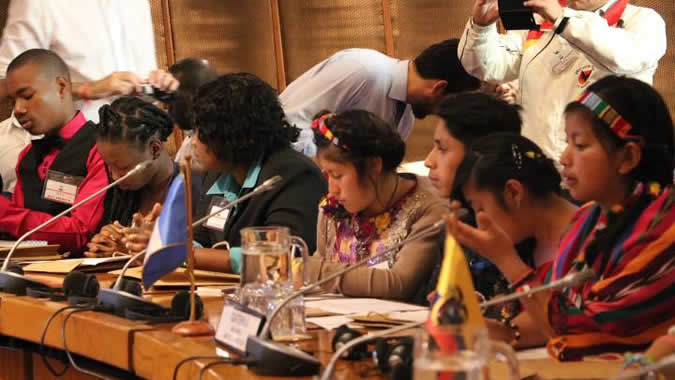
Sesenta jóvenes de once países de América Latina y el Caribe presentaron hoy sus propuestas de soluciones concretas para el cumplimiento de la Agenda 2030 para el Desarrollo Sostenible y la superación de la pobreza infantil, en un seminario realizado en la sede de la Comisión Económica para América Latina y el Caribe (CEPAL) en Santiago, Chile.

El seminario fue inaugurado por el Secretario Ejecutivo Adjunto de la CEPAL, Antonio Prado, y el Presidente Ejecutivo de América Solidaria, Benito Baranda. Intervinieron también la Representante de UNICEF en Chile, Hai Kyung Jun y el Embajador de Suecia, Jakob Kiefer.

En su discurso de apertura, Antonio Prado afirmó que la pobreza que afecta a niños, niñas y adolescentes de América Latina y el Caribe, es uno de los principales desafíos que enfrenta la región no sólo por sus efectos en el presente sino también por sus consecuencias de larga duración sobre la infancia y un desarrollo integral más igualitario en la sociedad.

Agregó que si bien la región ha mostrado avances concretos en la última década en materia de reducción de la pobreza infantil, todavía cuatro de cada diez niños y niñas viven en situación de pobreza y el 16,7% lo hace en condiciones de pobreza extrema.

“Terminar con este flagelo es responsabilidad de todos. Es urgente que los gobiernos asignen mayores recursos para promover los derechos de la infancia, aseguren un entorno protector, aumenten la provisión y la calidad de los servicios y amplíen los sistemas de protección social, animados por la lógica de establecer la titularidad universal de derechos”, afirmó el alto funcionario de las Naciones Unidas.

“Hemos de avanzar de la cultura del privilegio a la cultura de la igualdad”, afirmó Antonio Prado.

Hai Kyung Jun, por su parte, destacó que en UNICEF “trabajamos todos los días para mejorar las condiciones de vida de la infancia y adolescencia, y estamos convencidos que esto solo es posible si la sociedad en su conjunto respeta y garantiza todos los derechos a todos los niños y niñas”.

“Los jóvenes, como los que hoy vemos en Concausa, nos demuestran que todos podemos, y por lo demás debemos, hacer algo y aportar desde nuestros conocimientos y capacidades en esta gran tarea», añadió.

Benito Baranda, afirmó que los jóvenes participantes “aspiran a un continente distinto, un continente que no tenga pobreza. Y no sólo aspiran y ambicionan una América más justa y solidaria, sino que trabajan por ello”, señaló.

Baranda celebró el compromiso de los jóvenes para modificar la realidad, algo que los transforma en protagonistas.

El Embajador de Suecia en Chile, Jakob Kiefer, en tanto, llamó a la juventud de Concausa a ser la primera generación en acabar con la pobreza global. “Ustedes son el futuro”, afirmó.

Durante el seminario, Antonio Prado presentó la ponencia “Juventud y la Agenda 2030 para el Desarrollo Sostenible en las Américas” en la que destacó los principales desafíos de la región con miras al 2030.

Una participación destacada tuvo el cuarteto de cuerdas de la Fundación Orquestas Juveniles de Chile, que interpretó un repertorio que incluyó la música de Violeta Parra y Víctor Jara.

Concausa es una iniciativa impulsada por la Fundación América Solidaria con el apoyo de la CEPAL y UNICEF, que busca identificar y difundir propuestas que apunten a terminar con la pobreza infantil en la región, con miras al cumplimiento de los 17 Objetivos de Desarrollo Sostenible contenidos en la Agenda 2030.

En la iniciativa participaron jóvenes de entre 15 y 17 años de todo el continente quienes, organizados en equipos colectivos, respondieron de forma masiva.

De las 250 iniciativas que postularon, 15 fueron escogidas para participar en un encuentro en Santiago de Chile que se inició el domingo 20 y culminó hoy en la sede de la CEPAL.

Los jóvenes seleccionados provienen de Argentina, Chile, Colombia, Costa Rica, Ecuador, Guatemala, México, Paraguay, Perú, Uruguay y Haití y sus propuestas apuntan a dar cumplimiento a los 17 Objetivos de Desarrollo Sostenible a través del combate al hambre, la igualdad de género, el fin de la pobreza y la educación de calidad, entre otros.

Las iniciativas van desde una aplicación para celulares que orienta sobre educación sexual integral y busca disminuir el embarazo adolescente en Argentina, hasta la creación de huertos familiares agroecológicos para el combate del hambre en Haití y el trabajo con niños menores de tres años que viven junto a sus madres en un penal de mujeres en Perú.

Fuente: http://www.cepal.org/es/comunicados/jovenes-la-region-presentaron-la-cepal-iniciativas-cumplimiento-la-agenda-2030-la

Comparte este contenido:

Vietnan: Education ministry questions unlicensed child brain-stimulation classes

Vietnan/Diciembre de 2016/Fuente: Vietnam. net

RESUMEN: Según Ga, el Ministerio de Educación y Formación ha recibido información sobre una clase de estimulación cerebral en la ciudad de HCM. «Cualquier método de educación debe ser cuidadosamente estudiado y licenciado por los organismos de gestión para evitar cualquier impacto negativo en el desarrollo de los niños», dijo.
El ministerio ha pedido a las autoridades educativas de la Ciudad de HCM que informen específicamente sobre el funcionamiento de la clase, señaló el funcionario.Muchos padres en las ciudades de Vietnam han llevado a sus hijos a cursos de capacitación para estimular el cerebro de sus hijos, con la esperanza de que pudieran convertirse en prodigios o genios en el futuro.Los centros que organizan estas clases dijeron que siempre hay partes en los cerebros humanos que nunca se pueden utilizar en sus vidas, por lo que el entrenamiento puede ayudar a equilibrar dos hemisferios cerebrales, mejorar la memoria de los niños, su capacidad para concentrarse y aumentar la confianza.

According to Ga, the Ministry of Education and Training has received information about such a brain-stimulation class in HCM City. «Any method of education must be carefully studied and licenced by management agencies to avoid any negative impacts on the development of children,» he said.

The ministry has requested HCM City’s education authorities to specifically report on the operation of the class, the official noted.

Many parents in Vietnam’s cities have taken their children to training courses to stimulate their children’s brains, in the hope they could become prodigies or geniuses in the future.

The centres which organise these classes said that there are always parts in human brains that may never be used in their lives, so, the training can help balance two cerebral hemispheres, improving children’s memory, their ability to concentrate and boost confidence.

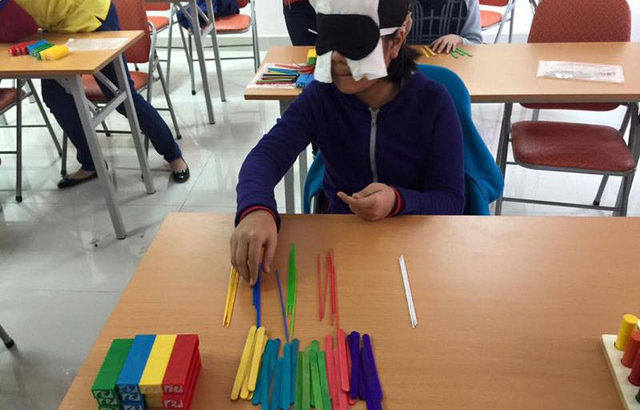
At the class, learners are asked to touch things and guess the colours of the things or they can read news just by touching the newspapers.

Speaking to DTiNews, some education experts expressed their doubts over such teaching claims and the effect they can have.

A lecturer from Hanoi National University of Education said there was scant evidence that these sorts of courses had any effect at all.

According to Dr. Tran Thanh Nam from the Vietnam National University, Hanoi, this kind of education method has not yet been applied in countries which have developed education systems such as the UK, the US and Singapore. He has also not yet found any documents which prove any good influences on children’s brains.

Meanwhile, the method could actually have serious consequences on children, Dr. Nam warned.

Fuente: http://english.vietnamnet.vn/fms/education/167856/education-ministry-questions-unlicensed-child-brain-stimulation-classes.html

Comparte este contenido:

Reino Unido: North-South divide in school standards contributed to Brexit vote, warns outgoing Oftsed chief

Reino Unido/Diciembre de 2016/Autor: Josie Gurney-Read/Fuente: The Telegraph

RESUMEN: La brecha en el número de buenas y excelentes escuelas secundarias en el norte y sur de Inglaterra ha crecido este año, dijo el jefe saliente de Ofsted. Sir Michael Wilshaw advirtió que la desigualdad educativa contribuía a los sentimientos de «negligencia» que llevaron al voto Brexit y dijo que la división entre regiones estaba «desestabilizando el país». El año pasado, el organismo de vigilancia de las escuelas informó una diferencia del 11 por ciento en la proporción de buenas y excelentes escuelas secundarias en las regiones del Norte y Midlands en comparación con el resto del país. Pero las cifras revelaron hoy que la brecha se había ampliado a 12 puntos porcentuales. Significa que hay 135,000 más estudiantes de secundaria que se enseñan en escuelas con bajo rendimiento en el norte de Inglaterra que en el sur.

The gap in the number of good and outstanding secondary schools in the North and South of England has grown this year, the outgoing head of Ofsted has said.

Sir Michael Wilshaw warned that educational inequality contributed to feelings of «neglect» which led to the Brexit vote and said that the divide between regions was «destabilising the country».

Last year, the schools watchdog reported an 11 per cent difference in the proportion of good and outstanding secondary schools in the regions of the North and Midlands compared with the rest of the country.

But figures today revealed that the gap had widened to 12 percentage points.

It means that there are 135,000 more secondary school children being taught in under-performing schools in the North of England than in the South.

Speaking at the launch of the Ofsted annual report, Sir Michael Wilshaw warned that «fissures» in education standards contributed to feelings of «alianation» that led to the Brexit vote.

«Education has the power to bring people together, but it can also divide, » he said. «Regions that are already less prosperous than the South are in danger of adding a learning deficit to their economic one.

«Recent political history shows what can happen when large parts of the population feel alienate because they feel they are not being dealt with fairly.»

«It breeds into the sense that [people in the North and Midlands] are not getting a fair crack of the whip,» he continued.

«If they sense that their children and young people are being denied the opportunities that exist elsewhere that will feed into the general sense that they are being neglected.»

«It wasn’t just about leaving the European Union and immigration,» he continued, «it was the sense of disconnection with Westminster.»

According to today’s report, there are now more than twice as many secondary schools judged to be inadequate in the North and Midlands (98) compared with the South and East (44), and of the 10 worst performing local authority areas, seven were north of The Wash,

Furthermore, of the 13 local authority areas where every secondary school inspected was rated either good or outstanding this year – all were in London or the South East of England.

In Liverpool, half of all secondary schools were rated less than good, compared with three in 10 for Manchester, and just one in 10 for inner London.

Sir Michael said: «Shockingly, the North and the Midlands are home to nearly three-quarters of the secondary schools judged inadequate for leadership.»

«This is not a result of unfair inspection practice. Every Ofsted region in the North and Midlands is below the national level on every measure; Progress 8, Attainment 8 and the Ebacc»

He added: «The geographical divides within the country are most acute for children on free school meals, the most able pupils and those who have special educational needs.

The North West was described as being of «particular concern», with the proportion of its secondary schools rated good or outstanding only increasing by 3 percentage points since 2011 – well below the national percentage points increase of 13.

Speaking in what was his final speech as chief inspector, Sir Michael called on the Government to appoint a «high profile minister for the North», to «bang heads together across the regions and make sure action is urgently taken.»

Today’s report also showed that:

  1. For the sixth year in a row, the proportion of good and outstanding nurseries, pre-schools and childminders has risen to 91 per cent;
  2. The proportion of good and outstanding primary schools has also risen from 69 per cent to 90 per cent in five years;
  3. There are 1.8 million more pupils in good or outstanding maintained schools than in 2010;
  4. Pressures on the recruitment of secondary school teachers have not abated with 15 out of 18 curriculum subjects with unfilled training places this year.

School Standards Minister Nick Gibb said: «We want every child to have access to an excellent education, regardless of their background or where they live.

«We know there is more to do, and that’s precisely why we have set out plans to make more good school places available, to more parents, in more parts of the country – including scrapping the ban on new grammar school places, and harnessing the resources and expertise of universities, independent and faith schools.

«As the Secretary of State has made clear, we are also determined to put technical education in this country on a par with academic routes.»

Fuente: http://www.telegraph.co.uk/education/2016/12/01/north-south-divide-good-secondary-schools-widening-warns-outgoing/

Comparte este contenido:

Chile: Aldo Valle, “Presupuesto de educación es un espacio a la expansión de la oferta privada”

América del Sur/Chile/02 de diciembre de 2016/radio.uchile.cl

El rector de la Universidad de Valparaíso y vicepresidente del CRUCh, es uno de los que ha estado al frente de la discusión sobre la reforma educacional, y hoy critica la Ley de Presupuesto recientemente aprobada porque no existe fiscalización para los fondos que administran los planteles universitarios privados.

La también máxima autoridad de la Universidad de Valparaíso dijo que “más allá de las limitaciones o de la sobre determinaciones que tiene el Poder Ejecutivo para las políticas de financiamiento público, el proyecto que se aprobó es un espacio a la expansión de la oferta privada”.

El académico agregó que es necesario considerar que, por una parte se ha abierto la gratuidad a toda la formación técnico profesional que es esencialmente privada, la misma que ha incrementado sus ganancias producto del crédito con aval del Estado (CAE) y la Beca Bicentenario que también se han puesto a disposición de las universidades privadas. Todo esto sin fiscalización sobre la utilización de esos fondos públicos.

“Me parece que es una expansión de oferta privada sin restricciones de arancel, ni de matrículas, que sí hay sobre las universidades del Consejo de Rectores o las universidades que adhieren a la gratuidad. En ese sentido, hay aquí una discriminación porque se entrega recursos públicos a instituciones que los pueden administrar, pero sometidas a todo tipo de fiscalizaciones a reglas de transparencia activa y pasiva. Mientras que, por el contrario, las  otras (privadas) que reciben más recursos púbicos no están sometidas a reglas de transparencia, ni pasiva, ni activa y que están lejos de la mano de la Controlaría General de la República, sin restricción de arancel, ni de la oferta de bacantes. En consecuencia, se ha ido en contra de los principios declarados para la reforma de la educación superior”.

El profesor agregó que “la Ley de Presupuesto va en el sentido de fortalecer y consolidar la cobertura privada, sin aportar como debiera a la oferta pública de las universidades del Consejo de Rectores que se extienden de Arica a Punta Arenas. Todas responden a unos estándares mucho más exigentes que muchas de las instituciones que ahora van a recibir financiamiento público sin las exigencias, sin la fiscalización, sin los controles que debería establecer la ley de recursos públicos que administran manos privadas”.

Finalmente, el vicepresidente del CRUCh  enfatizó que “esto no se les entrega a los estudiantes, ni a las familias, sino que se les entrega a instituciones privadas que por una parte destinan y administran según los intereses que tiene esas corporaciones privadas. Con esto yo tengo una discrepancia sustantiva con este proyecto de Ley de Presupuesto”.

Tomado de: http://radio.uchile.cl/2016/11/30/aldo-valle-presupuesto-de-educacion-es-un-espacio-a-la-expansion-de-la-oferta-privada/

Comparte este contenido:

Paraguay: ¿Están preparados los jóvenes paraguayos para la resistencia?

Paraguay/Diciembre de 2016/Autor: Pablo Cesio/Fuente: Aleteia.org

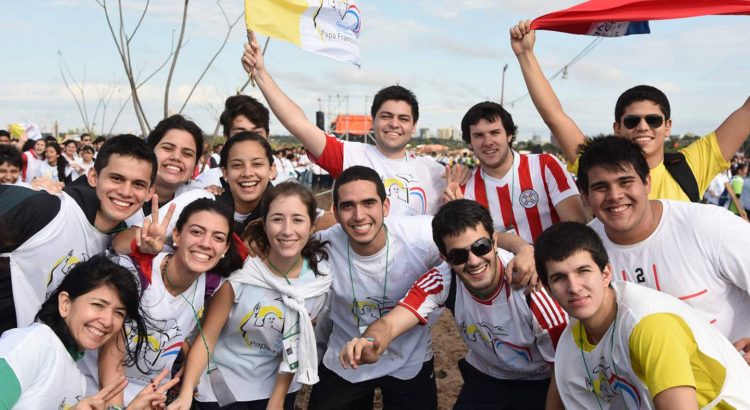
En algunos aún retumban aquellas palabras del papa Francisco en su primer año de pontificado dedicadas a los jóvenes argentinos presentes en la Jornada Mundial de la Juventud (JMJ) realizada en Brasil y en las que les decía de forma contundente: ¡Hagan lío!

En Paraguay, el obispo Miguel Ángel Cabello realizó una enérgica homilía durante el cuarto día de la novena dedicada a la Virgen de Caacupé, patrona de Paraguay, en la que llamó a los jóvenes a resistir y no dejarse vencer antes las dificultades de la vida.

“Cuántas tormentas sobre todo embisten a los jóvenes, que muchas veces los arrastran y matan, como el sinsentido de la vida, la tentación de venganza, la impotencia, los arranques de ira y desenfreno. A diario vemos casos de delincuencia, drogadicción y violencia, que nos entristecen, nos preocupan y deben interpelarnos a todos”, expresó Cabello, tal cual reproduce el diario ABC de Paraguay.

El religioso lanzó también les pidió a estos jóvenes, que lo escuchaban con suma atención, que no se derrumben ante las corrientes que golpean a la sociedad como la corrupción, el engaño y la deshonestidad.  Por ahí va la resistencia, a no dejarse vencer por estas agresiones y adversidades.

“Los jóvenes son una parte de la sociedad, bella, fuerte, dinámica, optimista, pero vulnerable y puede fácilmente dañarse. Vemos los continuos ataques y agresiones a nuestros jóvenes, que los deja débiles, incapacitados y anulados, como las propagandas agresivas para consumo de alcohol, a placeres de todo tipo, juegos, vicios, el uso descontrolado de las nuevas tecnologías(…) no es que estas sean malas, sino el uso que le damos”, indicó.

¿Por qué hay tantos motochorros, jóvenes violentos, tantos robos, asaltos, secuestros… ¿No será que algo no está funcionando bien en la sociedad? (…)”, interpeló.

En pocos días Paraguay celebrará a su patrona: la Virgen de Caacupé y esta reflexión llega en el marco de las homilías y novenarios dedicadas en su honor.

Pero también sucede en un momento clave donde los jóvenes deben afrontar los desafíos de la vida, entre otras cosas, tal cual sucede en otros países de la región, el narcotráfico, la delincuencia, la falta de trabajos formales y fallas en el sistema educativo han generado un espacio gris para este sector de la sociedad.

Y el llamado fue al mejor estilo Francisco, pidiéndoles a estos jóvenes fortaleza y compromiso, pues de ellos depende en gran parte el futuro de la sociedad.

“Los jóvenes tienen que salir, hacerse valer… Los jóvenes tienen que salir a luchar por los valores (…) ¡No se dejen excluir!”, decía Francisco por aquel entonces.

Fuente: http://es.aleteia.org/2016/12/01/estan-preparados-los-jovenes-paraguayos-para-la-resistencia/

Comparte este contenido:

South Africa’s student protests: where the past is ever-present

Sudáfrica/Diciembre de 2016/Autor: Kim Harrisberg/Fuente: Equal Times

RESUMEN: Las dos muertes, decenas de arrestos y numerosos testimonios de violencia cometidos por las fuerzas de seguridad en respuesta a las protestas estudiantiles de Sudáfrica han dejado el país tambaleándose. Los activistas han reflexionado sobre las similitudes con la brutalidad policial de la era del apartheid, mientras que muchos estudiantes ven su lucha por una educación asequible y de calidad como continuación de la larga lucha por la justicia racial y económica en Sudáfrica. El 26 de octubre de 2016, miles de estudiantes, académicos y partidarios de todo el Cabo Occidental se reunieron frente a las Cámaras del Parlamento en Ciudad del Cabo para pedir educación gratuita y descolonizada en Sudáfrica. «Dejamos estos campamentos de refugiados a los que llamamos townships, sólo para llegar a la universidad a los que se les niega una educación», dijo un estudiante a la multitud.

The two deaths, scores of arrests and numerous accounts of violence committed by security forces in response to South Africa’s student protests have left the country reeling.

Activists have reflected on the similarities with apartheid-era police brutality, while many students see their struggle for affordable, quality education as a continuation of the long fight for racial and economic justice in South Africa.

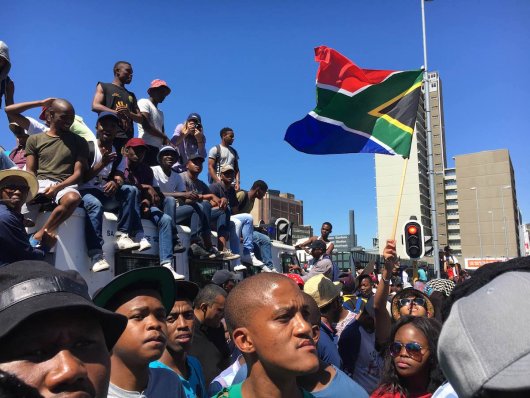
On 26 October 2016, thousands of students, academics and supporters from across the Western Cape gathered outside the Houses of Parliament in Cape Town to call for free, decolonised education in South Africa.

“We leave these refugee camps we call townships, only to make it to university to be denied an education,” one student speaker told the crowd.

Within a few hours, a flaming cardboard coffin sporting the name of Blade Nzimande – South Africa’s higher education minister – would be thrown at police officers. Moments later, stun grenades, rubber bullets and rocks dispersed the crowd, continuing the violent standoff between protestors and the South African Police Service (SAPS) that had begun almost one year prior when the initial #FeesMustFall protests gathered momentum.

Amongst other things, students in 2015 were calling for a freeze in university tuition fees, which were scheduled to increase by 10 to 12 per cent in the next academic year.

The discrepancy in these participation rates comes down to money. The impact of the massive economic inequality codified by centuries of white domination can still be felt today. In a country where approximately half of the population lives in poverty, university registration fees of up to R30,000 (around US$2,250) puts higher education out of reach for most South Africans.

Following weeks of protests, in late October 2015 the government agreed to freeze tuition fees for 2016. However, recent proposals to cap fee increases at 8 per cent for 2017 prompted the latest round of protests this October.

Decolonising education

But the protests aren’t just about the cost of education; students are also challenging the type of education they are receiving. They are calling for the decolonisation of South Africa’s universities, for more African-centred theories, more black academics, and the renaming and/or removal of buildings and monuments that centre around colonial and apartheid relics.

The students scored an important victory on 9 April 2015 when a statue of Cecil Rhodes was removed from Rhodes University.

Protestors are also demanding an end to the outsourcing of university workers and for better working conditions for university staff.

As the protests have continued, they have become increasingly violent, and universities have responded with what some are calling ‘militarised security’.

Jane Duncan, a professor of journalism at the University of Johannesburg, offers a number of reasons why this year’s student protests are more violent than in 2015, but the decision of universities to pursue what Duncan calls “securitised approaches” to the protests is identified as key.

And yet many universities stand by their decision to hire private security, which they say was a response to the increasing violence, not the cause.

“A key reason is that we can require private security companies to comply with our rules and protocols, something we cannot demand of SAPS,” says University of Cape Town (UCT) spokesperson Elijah Moholola.

“They are unarmed. Before going on duty, every shift is briefed on UCT’s rules and protocols and in particular, instructed to seek to negotiate resolution of conflict situations, to de-escalate tension, and to use physical restraint or contact only as a last resort.”

Meeting violence with violence has been a circular and worrying ideology for many protestors and police officers. “I don’t believe these vandals [the protestors that have been committing acts of violence] are students,” says Thanduxolo Mngqawa, a student activist and founding member of Inkululeko in Mind, a youth-empowerment organisation based in the Khayelitsha township of Cape Town.

“The students are clear about what they want [free university education], but the state has come back with last year’s strategy: militarising the campus. Policy surrounding the police response to protest needs to change,” says Mngqawa, who was himself injured by police during the recent protests.

“Our struggle is a working class struggle. The black men and women who are working in the SAPS and for these private security companies are victims of a violent system that wants to trap the poor into a fight for the crumbs at the table of the privileged,” she says.

“They too are subject to the humiliation and indignity of this system. We are fighting for them and their children to also walk through the open doors of learning,” says Kalla.

Going forward: plausible demands

Despite the resistance to the students’ demands, the call for fee-free tertiary education is not an impossible one, says political analyst and former Wits lecturer Ayesha Kajee.

“A key requirement would be the political will to make the necessary changes to the tax and budget policy systems, and a paradigm shift in the allocation and monitoring of state expenditure overall. Currently, the levels of mismanagement and corruption within the state are near-kleptocratic,” Kajee tells Equal Times.

Kajee is part of a an informal discussion forum of students, academics, staff and concerned members of the public called October 6, who discuss and take action against violence on South Africa’s university campuses.

On 6 November 2016, UCT signed an agreement with student leaders, granting clemency to protesters and a commitment to decolonise education policies, as long as student leaders cooperate and commit to completion of the academic year.

The state has responded to the recent protests with an interim report into the feasibility of fee-free higher education and training in South Africa. On 3 November, President Zuma issued a sluggish commitment to “study the interim report and give direction on the way forward” by 30 June 2017. Until then, fees are likely to increase by 8 percent in 2017, with government subsidising financially vulnerable students so that they can continue paying 2015 rates.

The students know the battle isn’t over but they are in it for the long-term. For the protestors, this is about trying to secure a better future for generations to come. “History is a continuum,” says Shaeera, “and in South Africa our history is a nightmare from which we are still trying to awake.”

Fuente: https://www.equaltimes.org/south-africa-s-student-protests?lang=en#.WEDA5BJGT_s
Comparte este contenido:
Page 4618 of 6194
1 4.616 4.617 4.618 4.619 4.620 6.194