Page 4678 of 6194
1 4.676 4.677 4.678 4.679 4.680 6.194

Etiopía: Más de 75 millones de niños se quedan sin educación por el cambio climático

Etiopía/21 de Noviembre de 2016/http://www.corresponsables.com/

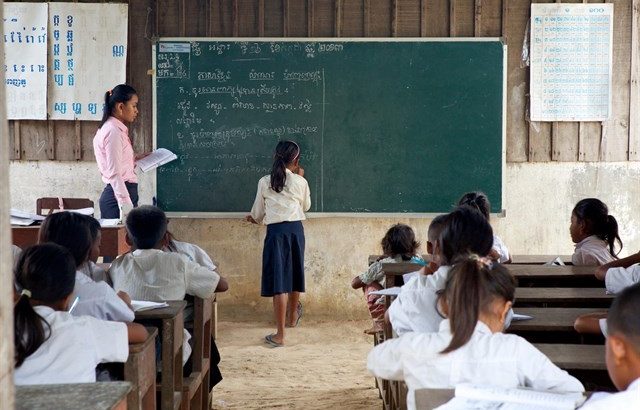
Más de 75 millones de niños y adolescentes en todo el mundo ven hoy interrumpido su proceso educativo por emergencias y crisis prolongadas debidas en gran parte a problemas climáticos, según datos de la UNESCO recogidos por Entreculturas.

 En Etiopía, la sequía ha afectado a la escolarización de cerca de 6 millones de niños y niñas, apuntó la ONG con motivo del Día Internacional de los Derechos de la Infancia que se conmemora el 20 de noviembre.

En un comunicado, llamó la atención sobre los efectos que el cambio climático puede tener sobre el derecho a la educación, pero también sobre el poder del conocimiento para combatir el deterioro medioambiental.

En el mundo hay 160 millones de niños y niñas que viven en áreas de sequías severas o muy severas y 530 millones en zonas de alto riesgo de inundaciones, según cifras recogidas en el informe La Tierra es Nuestra Mejor Escuela.

Muchos de estos niños se ven obligados a desplazarse, con lo que su formación queda interrumpida y, en ocasiones, totalmente destruida, advirtió la ONG. Además, señaló que a principios de siglo había 25 millones de refugiados medioambientales, y se calcula que en los próximos 50 años, entre 250 millones y 1.000 millones de personas se verán obligadas a abandonar sus hogares.

«La educación es fundamental de cara a un planeta sano, y un planeta sano es fundamental para que se cumpla el derecho a la educación», recalcó.

Fuente: http://www.corresponsables.com/actualidad/internacional/ninos-afectados-por-cambio-climatico

Comparte este contenido:

Polonia: Miles de maestros protestan contra reforma escolar en Varsovia

Polonia/21 de Noviembre de 2016/http://spanish.china.org.cn

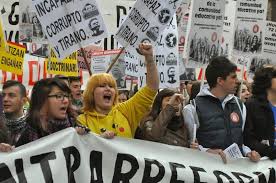
Miles de manifestantes, incluidos maestros, padres y otros opositores, se congregaron hoy en Varsovia, capital de Polonia, para protestar en contra de las reformas planeadas al sistema educativo.

Miles de manifestantes, incluidos maestros, padres y otros opositores, se congregaron hoy en Varsovia, capital de Polonia, para protestar en contra de las reformas planeadas al sistema educativo.

El organizador de la protesta, el Sindicato de Maestros Polacos, señaló que alrededor de 50.000 personas participaron. Ellas portaban carteles que leían «No al caos en las escuelas» y «Detengan la revolución en la educación».

«Deseamos protestar contra el caos, la confusión y el desmantelamiento del sistema educativo polaco», dijo Slawomir Broniarz, presidente del sindicato.

Los medios de comunicación locales han reportado que los manifestantes están preocupados de que la reforma dañe los intereses de los maestros y cause despidos.

La ministra de Educación de Polonia, Anna Zalewska, dijo anteriormente que los nuevos planes están bien pensados y que no habrá despidos de maestros como resultado de las reformas.

De acuerdo con los actuales planes de reforma, que entrarán en vigor el año próximo, el modelo actual de educación primaria de seis años, secundaria de tres años y preparatoria de tres años, será sustituido por ocho años de primaria y cuatro de secundaria o cinco de escuela vocacional.

Fuente: http://spanish.china.org.cn/international/txt/2016-11/20/content_39744276.htm

Comparte este contenido:

Finlandia: Reasons Why Finland is Better than U.S. in Education Systems

Europa/Finlandia/Noviembre de 2016/Autora: Julia Ramirez/Fuente: University Herald

RESUMEN: En todo el mundo, Finlandia es considerada como un país innovador en términos de su sistema educativo y los resultados de su innovación. A diferencia de Estados Unidos, impulsado por No Child Left Behind y Common Core, que obliga a los estudiantes del tercer al octavo grado a tomar pruebas anuales estandarizadas para supervisar su desempeño, en Finlandia sólo tienen una prueba estandarizada durante toda la educación primaria y secundaria. Pasi Sahlberg, profesor y ex director general del Ministerio de Educación de Finlandia, dijo que a los estudiantes finlandeses se les pregunta frecuentemente por cuestiones relacionadas con su capacidad para lidiar con problemas relacionados con la dieta, las drogas, la ética, la pérdida de un empleo, las cuestiones políticas, la violencia, las guerras Y otras cuestiones sociales. Estas cuestiones amplían sus ideas sobre conocimientos y habilidades multidisciplinares.Según la Organización de Cooperación y Desarrollo Económicos (OCDE), los estudiantes finlandeses pasan menos tiempo en su tarea. Sobre la base de un estudio de 2014 de los jóvenes de 15 años en todo el mundo por la OCDE, en promedio, alrededor de 2,8 horas en siete días son gastados por los estudiantes finlandeses en la tarea. Esto está en contraste con los estudiantes americanos que pasan 6.1 horas por semana en la tarea. Además, los programas de licenciatura, maestría y doctorado son completamente gratuitos en Finlandia. A diferencia de los estudiantes estadounidenses que enfrentan problemas debido a la deuda de préstamos estudiantiles, los estudiantes finlandeses persiguen sus objetivos de educación superior sin preocupaciones.

Across the globe, Finland is considered as an innovative country in terms of its education system and the results of its innovation.

On the Program for International Student Assessment (PISA) which serves as a significant instrument in measuring education systems worldwide, Finland is consistently one of the highest performing developed countries.

Despite of dropping in the ranking to 12, Finland is still higher than US ranking of 36 in the recent PISA ranking, as reported by Business Insider.

Unlike US, which is driven by No Child Left Behind and Common Core that mandates students in third through eighth grade to take annual standardized tests to monitor their performance, in Finland they only have one standardized test during the entire primary and secondary schooling.

Recently, the president of the largest teachers union in New York, Karen Magee, encouraged parents to boycott standardized tests.

While the National Matriculation Examination, Finnish Test, being taken at the end of high school and graded teachers does not include controversial or complex topics.

Pasi Sahlberg, a professor and former director general at the Finland Ministry of Education, said that Finnish students are regularly asked by questions related with their ability to cope with issues regarding dieting, drugs, ethics, losing a job, political issues, violence, wars and other social issues. These issues expand their ideas on multidisciplinary knowledge and skills.

According to the Organization of Economic Co-operation and Development (OECD), Finnish students spend less time on their homework. Based on a 2014 study of 15-year-olds across the globe by the OECD, on average, about 2.8 hours in seven days are spent by Finnish students on homework. This is in contrast with American students who spend 6.1 hours per week on homework.

Moreover, bachelor degree programs, master and doctoral programs are completely free in Finland. Unlike American students facing problems due to student loan debt, Finnish students pursue their higher education goals without any worries.

In Finland, teaching is considered as s the most revered professions with a relatively high barrier entry. According to OECD data, teachers are paid slightly more in Finland; average teacher in US makes about $41,000 a year while in Finland they make $43,000 a year.

Fuente: http://www.universityherald.com/articles/50653/20161120/reasons-why-finland-better-u-s-education-systems.htm


Comparte este contenido:

México: Necesario replantear la forma de enseñar ciencias exactas a los niños

América del Norte/México/Noviembre de 2016/Autora: Verónica de la Luz/Fuente: El Sol de Puebla

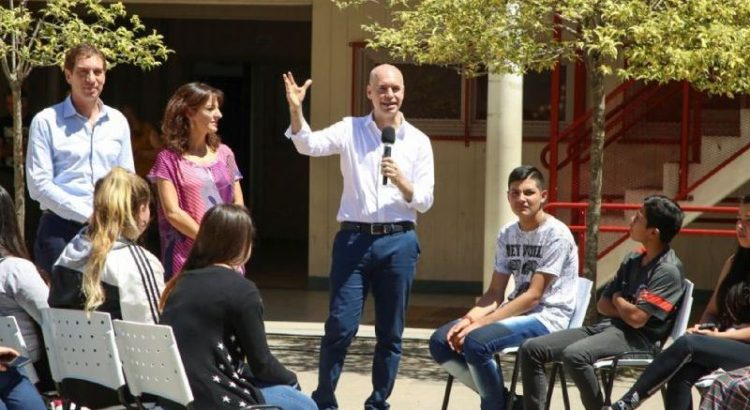
Científicos jóvenes de  Estados Unidos, Canadá, Reino Unido y México coincidieron en que el sistema educativo debe dar un giro y replantear la forma de enseñar a los niños ciencias exactas, mediante el juego.

Durante el evento Ciudad de las Ideas, la mexicana Dafne Almazán, quien se graduó de la universidad a los 13 años en Psicología, dijo que se debe aprender jugando y estimular la imaginación de los niños. Actualmente, efectúa su maestría sobre enseñanza de matemáticas a los menores superdotados y reveló que algunas veces padecen segregación.

En su participación, el arqueólogo William Gadoury de 16 años expuso sus proyectos de investigación. Él descubrió las ruinas mayas de la ciudad K´aak´chi´ y continúa sus estudios con apoyo de instituciones canadienses y mexicanas.

Este joven ha echado mano de la tecnología para identificar las ciudades mayas, que se construyeron con base en diferentes constelaciones. Él usó Google Earth para su descubrimiento ubicado en la Península de Yucatán.

Cabe decir que la ciudad denominada también “boca de fuego”, ha sido cuestionada por el arqueólogo Goeffrey Braswel, quien dijo que el supuesto hallazgo es una laguna y un plantío de mariguana.

Otros participantes: Beau Lotto y Amy O´Toole dijeron amar la ciencia y plantearon que ésta debe enseñarse de una manera que integre el juego, para acercar a los menores y no para relegarlos de temas científicos.

TECNOLOGÍA ALEJA

Como parte de la Ciudad de las Ideas, estuvo presente Lane Sutton, emprendedor y experto en social media, dijo que la tecnología acerca y aleja, debido a que en todas las reuniones está presente un dispositivo móvil que mantiene entretenidos a los comensales pero que los separa de la conversación persona a persona.

Fuente: https://www.elsoldepuebla.com.mx/local/necesario-replantear-la-forma-de-ensenar-ciencias-exactas-a-los-ninos


Comparte este contenido:

Sudáfrica: Talking decolonialisation. Transformation of higher education is long overdue

África/Sudáfrica/Noviembre de 2016/Autor: Charles Molele/Fuente: Mail & Guardian Africa

RESUMEN: Hace aproximadamente un año, estudiantes universitarios surafricanos enojados en el movimiento #FeesMustFall salieron a las calles y pidieron la inmediata introducción de una educación superior afrocéntrica en sus universidades. El llamamiento a una educación superior descolonizada sigue estando en el centro de las exigencias de una educación gratuita y de calidad. Mientras los debates filosóficos sobre la transformación de la educación superior se enfurecen, los académicos se reunieron en el Centro de Resolución de la Universidad de Johannesburgo el pasado fin de semana para discutir el contenido y el carácter de lo que una educación superior afrocéntrica y un currículo descolonizado serían en el futuro . El simposio, organizado por la División de Internacionalización de la Universidad de Johannesburgo, titulado Decolonising Knowledge Thought Leadership Series: The Curriculum and Future University, contó con la participación de decenas de estudiantes, profesores, miembros del público y partes interesadas.

About a year ago, angry South African university students in the #FeesMustFall movement took to the streets and called for the immediate introduction of an Afrocentric higher education in their universities. The call for a decolonised higher education remains at the centre of demands for a free, quality education.

While the philosophical debates on the transformation of higher education rage on, academics met at the University of Johannesburg’s (UJ) Resolution Centre this past weekend to discuss the content and character of what an Afrocentric higher education and decolonised curriculum would actually be like in the future.

The symposium, entitled Decolonising Knowledge Thought Leadership Series: The Curriculum and Future University, was organised by the University of Johannesburg’s Division for Internationalisation, and was attended by dozens of students, lecturers, members of the public and interested parties.

Professor Ahmed Bawa, chief executive of Universities SA, said the debate on the decolonisation of higher education in South Africa was long overdue. He pointed out that the transformation of higher education should have been resolved decades ago, soon after the ANC-led government came to power in April 1994.

“These issues [decolonisation and transformation] were raised and discussed in the National Commission on Higher Education process in 1995-1996,” Bawa told guests at the symposium. “And both were deferred. Why, one might ask?

“My understanding is that it was mainly from fear that such engagement would cause concern and instability in the established, historically white universities. It has taken over 20 years for us to return to both questions and however we wish to think about them, they are at the centre of the project of how we might re-imagine South African higher education, and understand its social location in the context of the next phase in our re-imagination of this society — a task in which we have been failed by our national leadership.”

Professor Nyasha Mboti, HOD of the department of communication studies at the UJ, agreed with Bawa that the ANC-led government had left the issue of transformation of higher education unresolved for far too long.

He told theMail & Guardian Africaafter the panel discussions: “As Prof Bawa pointed out, this debate was postponed over 20 years ago, and only #FeesMustFall has brought it back. We must thus duly give credit to South African university students for their bravery and foresight in turning our attention back to the core issue: the failure by universities to genuinely and sincerely transform. All the speakers at the debate showed that they are preoccupied not with complaining but with solutions: how genuine and sincere decolonisation can happen.

Uncomfortable process

“My own view is that decolonisation is not a “khumbaya” project, where at the end of the day we all hug and feel happy. On the contrary, it is an uncomfortable process dependent on telling uncomfortable truths. Unpopular, pro-justice decisions will have to be made. We have a window of opportunity to do this, which we cannot afford to let close because of vested corporate and state interests. If that window closes, the future of our children and their children’s children would have been betrayed at the altar of pessimism, racism, big business, neoliberal governmentality, and statutory complicity. The broad message, I think, is this: decolonisation will happen, with or without corporate and government approval. After all, it is not for them. It is for the oppressed.”

Dr Joseph Minga, a lecturer of Cultural Studies at the Monash University in Johannesburg, said achieving the goal of Afrocentricity meant, for him at least, a total rejection of Western education. Afrocentricity, according to Minga, was central to what should constitute education in Africa.

“The demand of our students for a decolonised education today is similar to that of Europe during the Renaissance. Consciousness obliges that some things are deleted while new ones are created,” said Minga.

“In a world where everything is yet to be done, what people need first is a line of thought, the way on which to embark that leads to one’s destiny. And I think students know the way: it is called Afrocentricity. As a theory it is vital for the African university, because by it students will become masters of their own history and the knowledge production needed by their communities.

“It is not difficult to imagine that one day the departments of Nubia and Egyptwill be established in all our universities, the Swahili language accepted in the West as are English and French and Mandarin to us, the amaPantsula dance given space in the School of Art at Sorbonne or Harvard University as we do with their ballet;that day will see the balance of forces tilt in our favour.”

Break from the West

Nigerian scholar Dr Alex Asakitikpi agreed with his fellow Monash University lecturer Minga, saying a future decolonised university must break away from the West and its knowledge production systems.

Asakitikpi also accused some academics in South African universities of “disguising” themselves as Pan-Africanist, while in their utterances and actions they are surreptitiously campaigning for the maintenance of the status quo of Western hegemonic authority over African peoples and their affairs.

“This is very important [to recognise], because it is such elements that tend to drag [out] the decolonisation debatead infinitum, thereby [short] circuiting any significant progress,” said Asakitikpi.

“Yes, I agree with my colleague, Dr Joseph Minga, for the rejection of any suggestions from the West to strike a balance as espoused by Prof [Thaddeus] Metz in his presentation. It is my candid opinion that for too long Africans have acquiesced to external forces in shaping their future, and after more than 60 years we have come to the unequivocal conclusion that that route will not take us out of the economic, political, social, and cultural quagmire that characterises African peoples today.

“What is important for me at this stage, is for Africans (peoples of African descent who have shared a common fate of slavery, colonialism, neo-colonialism, and humiliation over the last 500 years) to create a larger platform to articulate the lines of actions to be taken to achieve the common goals of our emancipation from mental slavery and neo-colonialism, [by] self-determination, endogenous sustainable development, and racial dignity.”

Bawa, in his concluding thoughts, told guests that the issue of languages was going to be critical in the decolonised curriculum of the future in SA universities, because South Africans coexist in multiple knowledge systems.

“The dominance of English and other European languages as academic languages persists in many developing nations, but for many university students these are second or even third languages,” said Bawa.

“This is clearly a matter of access, but it is also about the social justice imperatives related to the development of indigenous languages. The use of isiZulu, kiSwahili, Fulani or Gujarati as languages of academic discourse is the one way of ensuring the long-term sustainability of indigenous languages.”

Fuente: http://mgafrica.com/article/2016-11-14-talking-decolonialisation-transformation-of-higher-education-is-long-overdue

Comparte este contenido:

Reino Unido Student march: Thousands protest education cuts in central London

Europa/Reino Unido/Noviembre de 2016/Fuente: Evening Standard

RESUMEN: Más de 15.000 estudiantes y profesores marcharon hoy por el centro de Londres pidiendo al gobierno que garantice el acceso a una educación gratuita y de calidad. La manifestación organizada por la Unión Nacional de Estudiantes (NUS) vio a los manifestantes reunirse cerca del Parlamento con carteles que decían: «Sin honorarios, sin recortes, sin deuda». Los oradores, entre ellos Owen Jones y la presidenta de la NUS, Malia Bouattia expresaron su oposición a la Ley de Educación Superior, que permitirá a las universidades de Inglaterra aumentar sus tasas de matrícula en línea con la inflación. La Sra. Bouattia dijo: «El gobierno está a la altura de un experimento de mercado profundamente arriesgado e ideológicamente liderado en la educación superior y superior, y los estudiantes y profesores, que sufrirán más como resultado, están claros que esto no puede permitirse. «

Over 15,000 students and lecturers marched through central London today demanding the government ensures access to free, quality education.

The demo organised by the National Union of Students (NUS) saw protestors gather near Parliament holding signs which said: “No fees, no cuts, no debt”.

Speakers including Owen Jones and NUS president Malia Bouattia voiced their opposition to the Higher Education Bill, which will allow universities in England to increase their tuition fees in line with inflation.

Ms Bouattia said: “The government is running at pace with a deeply risky ideologically led market experiment in further and higher education, and students and lecturers, who will suffer most as a result, are clear that this can’t be allowed to happen.”

This week, before the bill has even been properly debated in parliament – let alone passed – universities are already advertising fees above £9,000.”

She added that she believed over 15,000 students and lecturers were in attendance.

Labour leader Jeremy Corbyn appeared in a short video pledging his support for campaigners, while Green Party deputy leader Amelia Womack took to the stage to back demonstrators.

The NUS has called on students to boycott the National Student Survey – an annual census the union claimed will allow the Government to hike tuition fees further.

The union’s vice president for higher education Sorana Vieru told the crowd: «This huge upheaval of higher education is not about the needs of students, but about the needs of businesses.

«Its mantra is education for profit, not for public good.»

Left-wing Jones also spoke, saying: «A society that fails to invest in education, that fails to invest in young people, fails to invest in it’s own future.»

He accused the Government of «vandalism on an industrial scale».

The Higher Education and Research Bill is due to have its third reading in Parliament on Monday.

The NUS organised an afterparty for students who attended the demo at Goldmsith’s Student Union in south London.

Fuente: http://www.standard.co.uk/news/london/student-march-thousands-protest-education-cuts-in-central-london-a3399941.html

Comparte este contenido:

Portugal: Refeições escolares passam a contar para as deduções de educação no IRS

Europa/Portugal/20 Noviembre 2016/Fuente: publico.pt/Autor:PETER CRISÓSTOMO

Resumen: El Gobierno se comprometió a revisar el sistema de deducciones de los gastos de educación en IRS este año para incluir las comidas escolares y es el momento de presentar las enmiendas al presupuesto estatal 2017, la propuesta esta en la mesa de negociaciones con partidos a la izquierda

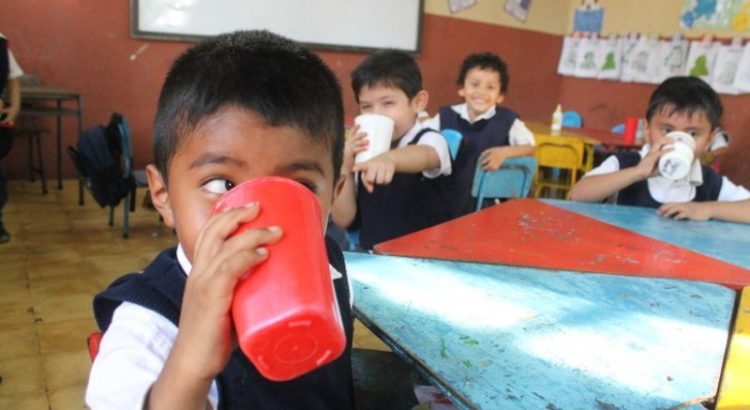
O Governo comprometeu-se a rever o regime das deduções das despesas de educação no IRS este ano para incluir neste lote as refeições escolares e, agora que chegou a hora de apresentar as propostas de alteração ao Orçamento do Estado de 2017 na especialidade, a questão esteve em cima da mesa nas negociações com os partidos à esquerda.

Uma das propostas de alteração ao OE apresentadas nesta sexta-feira no Parlamento pelo Bloco de Esquerda (BE), que terá sido aceite pelo Governo, vem “permitir a dedução à colecta de despesas com refeições escolares”. A solução desenhada pelo BE impede que estas despesas sejam duplamente dedutíveis no IRS “como despesa de educação e como dedução por exigência de factura”.

Também o PCP apresentou uma proposta para que as despesas de alimentação nos refeitórios escolares – e ainda os gastos de transporte dos alunos, através de passe social ou assinatura mensal – contem para como dedução, “independentemente da entidade que presta o referido serviço e da taxa de IVA aplicada”.

“Na reforma do Código do IRS, o anterior Governo PSD/CDS limitou drasticamente as deduções à colecta das despesas de educação, criando um tratamento diferenciado para as escolas públicas e para os colégios privados”, justifica o PCP na proposta de alteração ao OE, para que esta medida vigore relativamente à liquidação dos rendimentos referentes a 2016 (nas declarações a entregar no próximo ano).

A alteração vem resolver um problema de tratamento desigual entre contribuintes que levou alguns pais e encarregados de educação a queixar-se junto do provedor de Justiça, por causa de uma alteração ao código do IRS em 2014 que até agora ainda não está resolvida.

Tudo porque o código só permite que sejam deduzidas como despesas de educação em alojamento, transporte e alimentação (dos filhos ou dos próprios contribuintes estudantes) os serviços isentos de IVA ou tributados à taxa reduzida, de 6%, e se a entidade que emite a factura detiver o Código de Actividade Económica (CAE) “Educação”.

Como em muitas escolas as refeições das cantinas são prestadas por empresas externas que não têm o CAE «Educação», esta despesa não podia ser deduzida no IRS, o que contrastava com outras situações em que os contribuintes podiam deduzir a despesa (num estabelecimento de ensino pago que preste o serviço de alimentação, mesmo que ele não venha discriminado no recibo, todo o valor é dedutível no IRS como despesa de educação).

O facto de haver, à luz da lei, desigualdades de tratamento entre contribuintes levou o provedor de Justiça a chamar a atenção do Governo para que resolvesse este problema no Orçamento do Estado para 2017. Em Agosto,  José de Faria Costa lembrava alguns casos que eram tratados fiscalmente de forma diferente, comparando: “Dependentes que estudem em estabelecimento de ensino que preste serviços próprios de alimentação, cumulativa ou alternadamente, com o de transporte e que, por isso, beneficiam da dedução dessas despesas em sede de IRS, por contraposição a famílias cujos dependentes não beneficiam da dedução porque esses serviços não são disponibilizados pela própria escola”.

Fuente de la noticia: https://www.publico.pt/economia/noticia/refeicoes-escolares-nas-deducoes-de-educacao-discutidas-no-parlamento-1751721

Fuente de la imagen: https://imagens.publicocdn.com/imagens.aspx/1089519?tp=UH&db=IMAGENS&w=796

Comparte este contenido:
Page 4678 of 6194
1 4.676 4.677 4.678 4.679 4.680 6.194