Page 4764 of 6193
1 4.762 4.763 4.764 4.765 4.766 6.193

Guatemala: Festival de cine centroamericano impulsa historias de latinos

Centroamérica/Guatemala/Noviembre de 2016/Autora: Esmeralda Fabian/Fuente: La Opinión

En su segunda edición, este fin de semana llega el Festival Internacional de Cine Centroamericano a Los Ángeles (CAIFF 2016), presentando 12 cintas, entre largometrajes y cortometrajes, que representan lo mejor de la cinematografía de El Salvador, Guatemala, Nicaragua, Costa Rica, México y Colombia, como país invitado.

“Nuestro objetivo sigue siendo contar historias y trascender. Que la gente pueda disfrutar del talento centroamericano. Las cintas del festival traen historias que sirven para entretener, pero también son educativas sobre nuestra cultura“, indicó Óscar Domínguez, director del festival.

“El Tigre y el Venado” será el largometraje con el que abrirá el CAIFF 2016. Esta película relata una historia conmovedora, que trata sobre la violencia y la pobreza que se vive en El Salvador, donde fue filmada y producida. Narra las historias de familias y personajes que atraviesan por una cruda realidad a la que se enfrentan todos los días para sobrevivir a la adversidad. Otras cintas de este país a presentarse en el festival son el documental “Buenas Epocas” y “Children of the Diaspora: for Peace and Democracy“.

El sábado se exhibirá “Quetzal” un cortometraje producido entre Guatemala y Francia,  el largometraje guatelmateco “Ovnis en Zacapa“, además dos cortometrajes del país invitado Colombia y uno más de Costa Rica.

“Hemos preparado talleres con los productores de algunas de las películas, ya que nos interesa que la audiencia haga preguntas y conozca el proceso de producción”, explicó Domínguez.

El director de CAIFF, resaltó la misión que tienen con este festival de que las nuevas generaciones de centroamericanos en Los Ángeles dejen de ser solo consumidores del cine que se produce en Hollywood, sino que se vuelvan parte de la industria, apoyando más el cine latinoamericano y formando parte de esta. Ya sea como productores, escritores o actores, por mencionar algunos trabajos dentro de la cinematografía.

“Tenemos que abogar porque las películas sean producidas más por latinos, que no solo seamos consumistas, sino que seamos parte de esta industria billonaria”, sostuvo. “Nuestro objetivo con este festival es demostrar que hay talento. Queremos crear conciencia entre el consumidor  latino que apoyen estas películas y así compartir nuestra cultura”.

De Nicaragua se exhibirá la cinta “Hasta con la Uñas” y de Guatemala y México “Buried Secrets“. También habrán talleres informativos y sesiones de preguntas y respuestas con actores de renombre, como Gloria Sandoval y Erick Chaverria, quienes actualmente trabajan en grandes producciones de Hollywood.

“Esperamos que las historias en las películas del festival le hagan saber a la comunidad que nosotros tenemos un valor mucho más grande que el solo ser vistos como inmigrantes en este país. Que nosotros contribuimos a  la industria del cine de este país, que abogemos por mas oportunidades para los latinos”, resaltó el director del festival.

En detalle:

Qué:  Festival Internacional de Cine de Centroamericano (CAIFF 2016)

Cuándo: del 4 al 6 de noviembre, de  7 a 10 pm.

Dónde: West Adams Prep HS Theatre , 1500 W Washington Blvd, Los Angeles, CA 90007

Cómo: Entrada por donación, boletos disponibles en eventbrite.com

Fuente: http://laopinion.com/2016/11/03/festival-de-cine-centroamericano-impulsa-historias-de-latinos/

Comparte este contenido:

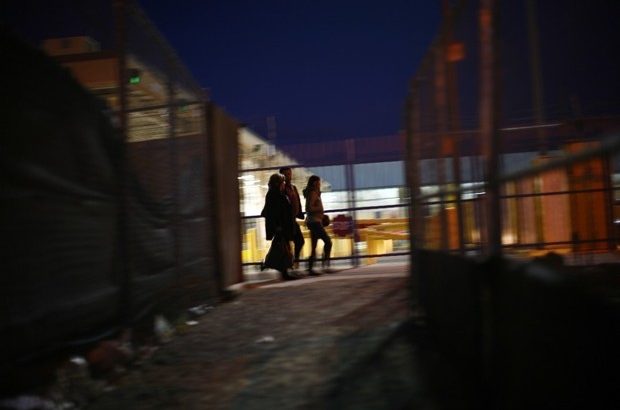
Estados Unidos: Crossing the Border for School

América del Norte/Estados Unidos/Noviembre de 2016/Autora: Emily Deruy/Fuente:Citylab

RESUMEN: A lo largo de la frontera entre los Estados Unidos y México, cientos de niños y niñas desde el jardín de infantes se suben por los puestos de control y guardias cada día para estudiar. Esto ha estado ocurriendo durante décadas. Muchos, como Vidaña Sánchez, son estadounidenses nacidos de padres mexicanos que desean desesperadamente crear una vida mejor para sus hijos y ven la educación como el camino hacia adelante. Pero en los últimos meses, mientras el candidato republicano a la presidencia Donald Trump ha vomitado una retórica divisiva -jugando construir un muro a lo largo de la frontera, acusando a los mexicanos de ser violadores- y envalentonado a sus partidarios anti-inmigrantes, cruzar la frontera se ha convertido en un proceso más lleno para algunos De estos estudiantes. (La candidata demócrata Hillary Clinton ha expresado su apoyo a la reforma migratoria integral, incluyendo la creación de un camino hacia la ciudadanía para algunos inmigrantes indocumentados, lo cual está en línea con las opiniones del presidente Obama sobre el tema).

Born in the United States, Mayra Kahori Vidaña Sanchez spent most of her childhood in Juárez, Mexico. When she was around 12, Vidaña Sanchez moved a few miles north of the border to El Paso, Texas, for school. Although technically a U.S. citizen, she spoke little English and carried a pocket dictionary to class. She spent hours listening to pop music and watching American television, trying to absorb not only a language but a culture that felt undeniably unfamiliar.

Despite her efforts, a few kids at school made fun of Vidaña Sanchez and her brother for their accents and supposed foreignness. Yet once, during elementary school back in Mexico, she’d had to give back a scholarship after the mother of a classmate complained that it shouldn’t have gone to a kid born in the United States. Not quite Mexican, not quite American.

These days, she brushes off such slights. But the 19-year-old is still navigating a life bisected by a border crossing. A sophomore studying industrial engineering at the University of Texas at El Paso, Vidaña Sanchez has technically lived and studied in the U.S. for years. Yet many days, she can still be found guiding her car out of her family’s home in Juárez toward the border—and school—before dawn, a sometimes-international commuter if not technically an international student.

Vidaña Sanchez’s story is not unusual. All along the U.S.-Mexico border, hundreds of children from kindergarten on up make their way through checkpoints and guard stations each day to study. This has been happening for decades. Many, like Vidaña Sanchez, are Americans born to Mexican parents who desperately want to create a better life for their offspring and see education as the path forward. But in recent months, as Republican presidential candidate Donald Trump has spewed divisive rhetoric—vowing to build a wall along the border, accusing Mexicans of being rapists—and emboldened his anti-immigrant supporters, crossing the border has become a more fraught process for some of these students. (Democratic candidate Hillary Clinton has expressed support for comprehensive immigration reform, including creating a path to citizenship for some undocumented immigrants, which is in line with President Obama’s views on the topic.)

Vidaña Sanchez said during a phone conversation that she has encountered a few people in El Paso recently who think a border wall is a good idea and that immigrants are stealing jobs. I hear what you’re saying and I respect you, she replies, but I just don’t agree. Once, she was so scared an encounter was about to turn violent that she sprinted away. Vidaña Sanchez recounted the incident with laughter, joking that her friends teased her for putting her athletic prowess to good use.

But she quickly turned serious. “I have no idea,” she replied to a question about whether things might improve after the election. “I hope it gets better after the election, because if it doesn’t…” She trailed off a little. She’d like to help her father, an engineer educated in Mexico, and mother, a cashier, come to the United States, and to see her younger cousin, born in America but spending the early years with family in Mexico, have an easier time fitting in north of the border. But she’s worried. “I’m trying to encourage as much voting as possible,” she said.

The tension at the border isn’t all new. Lines to cross are long and wait times can run several hours, delaying students and workers alike. As if relaying a minor annoyance like being cut off in traffic, Vidaña Sanchez said that sometimes “random people” on both sides of the border create “a little wall” to prevent students and others who are occasionally able to use a shorter line for regular commuters from moving forward. Their motivation isn’t necessarily racial. Often, it’s self-interest. “They just don’t think it’s fair for you to go first,” she said. “I try not to let it stop me or bother me.”

While the politics aren’t nearly as contentious on the northern border with Canada, even students there wonder what the impact of a Trump election would be. Ken Lambert, an American who recently spent time studying at Brock University just across the border from Niagara Falls, New York, says he’s experienced unpleasant interactions with border guards, although he acknowledges that they’re minor—comments about America being inferior to Canada, for instance. “These small jabs at each other can make living on the border uncomfortable at times,” he said. “I think that sense of bond is gone.” Lambert now lives in Philadelphia, but says friends who still live near the border say the election has intensified some of the negative rhetoric.

At border crossings that aren’t jammed with cars and pedestrians, students cross with relative ease. Several years ago, then-Education Secretary Arne Duncan visited Columbus Elementary School in New Mexico, just a few miles from the border. Nearly three-quarters of the children at the school commuted from Mexico at the time. (Many are American because the nearest hospital to their homes is actually in the United States and some Mexican women have been allowed to give birth there before returning to Mexico.) According to the Washington Post, children have been crossing the border for school there for more than six decades. These days, they are required to be U.S. citizens, but back in the 1950s, that wasn’t a requirement. And while there have been lawsuits over the years and not all residents think the children should be allowed to attend school in New Mexico, there has traditionally been broad support for allowing these children to obtain an education north of the border.

Despite some of the campaign rhetoric, not much seems to have changed this election cycle, according to Border Partners, a group working in the area. It’s hard to say, said a spokesman for the group, whether a Trump presidency would make it more difficult for children to cross because the situation is so unique.

Yet it isn’t entirely unheard of. Although it seems to have less red tape, New Mexico isn’t the only border state where schools accept U.S.-born children from across the border. As the Huffington Post noted, U.S.-born students living in Mexico who want to go to school in places like California and Texas are often required to either prove they live in the district or pay tuition, which many can’t afford. A spokeswoman for the Texas Education Agency told the site that it was up to each district to enforce those requirements. However, in Arizona, where support for curbing illegal immigration has been particularly widespread in recent years, the state has acted as the enforcer and “cracked down on border-crossing students.” For a variety of reasons, some families opt to put their children in Mexican schools instead. The country estimates that it has several hundred thousand U.S.-born students enrolled in its schools.

That crackdown hasn’t happened in New Mexico so far, although it’s unclear what a Trump win would mean for these families. The principal of the Columbus Elementary School told KRWG, a local television station, that he’d even seen an influx of kids from states like South Dakota after those children experienced the deportation of a parent. The families realized, he said, that they could reunite in Puerto Palomas, Mexico, just over the border, and that their children, born in the United States, would still be able to attend American schools like Columbus. That’s happened in part because officials there don’t enforce the same restrictions as their counterparts in places like Arizona.

It’s not just kids who live across the border who are negatively affected by the potential for a Trump presidency. Teachers across the country have reported an increase in stress this year among children, particularly those from immigrant families, who say they are scared of what might happen if Trump wins the election. For Latino kids, the worries often center around parents being deported or a wall going up along the border. Teachers also say they’re hearing more anti-immigrant rhetoric in class. While there isn’t data specifically on the perceptions of kids who cross from Mexico to the United States for school, it’s not unreasonable to expect that these children who stand to be the most affected by changes at the border are also among the most concerned.

College students express similar fears. A 2010 dissertation by a UTEP health-psychology doctoral student named Thomas J. Taylor suggested that some 40 percent of the 130 college students he surveyed who commuted to and from Juárez on a regular basis showed signs of post-traumatic stress disorder. Taylor could not immediately be reached for comment, but while violence has declined significantly in Juárez over the last six years, it hasn’t gone away entirely, and the border continues to present a physical and psychological barrier for students.

“It’s like I’m divided,” Vidaña Sanchez said. But instead of seeing the border as a barrier, she said, she tries to see the crossing—a bridge over the Rio Grande—“as a pathway to more opportunity.”

Ricardo Cagigal Perez is a 23-year-old Mexican student finishing up a degree in biology at Texas A&M International University in the border town of Laredo, Texas. Born and raised in central Mexico, he spent his high-school years in Italy before landing in Texas for college. While he doesn’t cross the border daily, he travels to Mexico frequently on the weekends and during school vacations to visit friends and family. Recently, he said, border checks have seemed a little more thorough on both sides and wait times have been longer. He’s been hearing more comments from people on campus about how students without documents should “go back,” too. They seem “to have a sense of having political backup,” Cagigal Perez said, choosing his words carefully, “in the sense of, oh, it’s being said on TV more than usual, it’s being said on radio more than usual, so they believe that it might be acceptable to say it in private.”

While he thinks the school is a generally inclusive place, he said he’s heard students who feel “discouraged” about coming to the states. Friends from Italy who might have considered a move to America now second guess that idea. Last weekend, his family came to visit and they went to Dallas. When people there realized his mother did not speak English, sometimes they asked why she was there. “It gets to you, you know?” he said.

Now, some students who grew up south of the border are electing to bypass border universities altogether. A 2010 report by the Texas Tribune showed a decline in the number of Mexican students studying at border schools like UTEP and Texas A&M International, but an increase at places like the University of Texas at Austin. State data suggests those trends have largely continued in the intervening years. Armando Martinez, a Mexican-born student who moved to Austin for school, told the Tribune that in that city, “there’s a lot of other ways things flow: different cultures and values and customs and morals that really do influence you and grant you other opportunities.”

Some universities close to the border have seen those trends and worked actively to recruit Mexican students. New Mexico State University recently said it would begin a program to offer discounted tuition to Mexican students. The school’s enrollment has been declining, and officials see the new outreach as mutually beneficial. Whether this campaign season has made the school’s recruitment efforts more difficult is unclear. “NMSU has a lot to offer students from Mexico, and we know these students have a lot to offer us in terms of their backgrounds, experiences, and diversity,” the NMSU chancellor, Garrey Carruthers, said in a statement.

Vidaña Sanchez agrees and likes being near the communities and culture that have shaped her. “I’m glad I did it,” she said of her decision to enroll at UTEP. She regularly takes her grandmother, who lives in Juárez, to the doctor, she said, and she tries to support her family, buying school supplies for her cousins. Although she does not yet have a degree, she already earns more working several part-time jobs than her family in Mexico. And regardless of who wins the presidential election, she will continue to see the border not as a boundary, but as “a connection between two countries.” “We all come together in this one pathway,” she said of the border crossing. “We cross; we are part of two cultures. It shouldn’t be seen as an obstacle.”

Fuente: http://www.citylab.com/politics/2016/11/crossing-the-border-for-school/506405/

Comparte este contenido:

Argentina: Continúa Infinito por Descubrir

América del Sur/Argentina/Noviembre de 2016/Fuente: Jujuy al dia

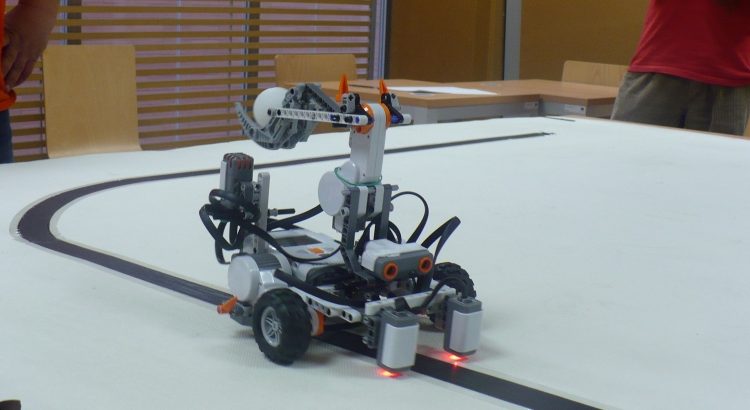
Estudiantes de nivel primario y secundario pertenecientes a distintas instituciones educativas de la provincia continúan recorriendo y participando de las propuestas que brinda el Centro de Innovación “Infinito por Descubrir” que depende del Ministerio de Educación de la provincia.

Infinito por Descubrir es una propuesta formativa innovadora que basa el aprendizaje en proyectos que combinan disciplinas como robótica, música y biotecnología con magia, pasión y amigos, fomentando la utilización de tecnologías y el desarrollo de habilidades como liderazgo, colaboración y pensamiento crítico.

Es un espacio de educación afuera de la escuela, al que los chicos y los jóvenes vienen, porque así lo deciden, a aprender, descubrir y experimentar diversas disciplinas de base tecnológica para descubrir vocaciones y talentos.

El equipo que integra Infinito por Descubrir ayuda a los estudiantes a hacer mejor lo que cada uno elige hacer, además acompaña en la búsqueda de sus pasiones y el desarrollo de sus capacidades para encontrar proyectos significativos.

Entre las instituciones que visitaron las instalaciones del Centro de Innovación se puede mencionar la Escuela de Educación Técnica Nº 1 “Escolástico Zegada”;  colegio “San Alberto Magno”, colegio “San Juan Bautista de La Salle”, Secundario Nº 36 de Monterrico, Bachillerato Nº 2 “Gobernador Jorge Villafañe”, escuela N° 178 “Nicolás Lamas” de Pampa Vieja, N° 38 “Juanita Stevens”, N° 171 “Monseñor Germán Mallagray” y N° 44 “José Ignacio Gorriti” de León.

Los estudiantes recorrieron los laboratorios de diseño, música, biotecnología, robótica, maker space y programación, donde pudieron desarrollar actividades propuestas por el equipo de Infinito, integrado por expertos, facilitadores y guías.

La convocatoria está abierta para niños y jóvenes de 6 a 18 años de edad de lunes a viernes de 9:00 a 17:00 horas y sábados de 14:00 a 18:00 horas, en  Ciudad Cultural del barrio Alto Padilla.

Por la mañana, el acceso es para las escuelas con invitación y por la tarde para los visitantes espontáneos. En todos los casos, la entrada es gratuita.

Fuente: http://www.jujuyaldia.com.ar/2016/11/03/continua-infinito-por-descubrir/

Imagen: https://diarium.usal.es/kathia_pitti/2012/10/23/proyecto-escolar-con-robotica/

Comparte este contenido:

Ghana: MTN Provides Educational Support For Physically Challenged Students

África/Ghana/Noviembre de 2016/Fuente: News Ghana

RESUMEN: La Fundación MTN Ghana ha proporcionado apoyo educativo para estudiantes con discapacidades físicas en el Centro St. Theresa para los Discapacitados de Abor en la Región de Volta. El patrocinio educativo que se imparte a 20 estudiantes con un coste total de GH ₵ 97.000,00, cubrirá tres años de formación profesional en confección, sastrería, tejido de anchoas, servicio de electrónica de radio / TV, tecnologías de la información y la comunicación, Reparaciones generales de la impresión y de la computadora / del teléfono. Además, la Fundación proporcionará fondos para compensar el costo de la alimentación, los uniformes escolares y los recursos para las sesiones prácticas y los honorarios de exámenes externos para los estudiantes. El Sr. Robert Kuzoe, Gerente Principal de Sostenibilidad e Impacto Social de MTN, indicó que la iniciativa para apoyar a las Personas con Discapacidad está en consonancia con el compromiso de la Fundación MTN de empoderar económicamente a las personas menos privilegiadas en las comunidades ghanesas.

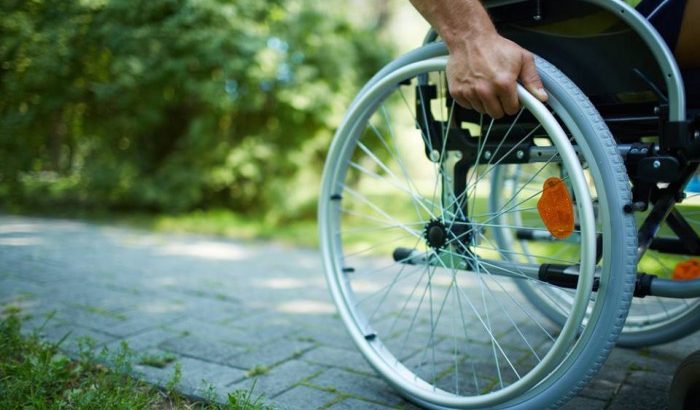
MTN Ghana Foundation has provided educational support for physically challenged students at St. Theresa Centre for the Handicapped at Abor in the Volta Region.

The educational sponsorship which is being provided for 20 students at a total cost of GH₵ 97,000.00, will cover three years of vocational training in dressmaking, tailoring, broadloom weaving, radio/TV electronics servicing, Information and Communication Technologies (ICT), leatherworks, general printing and computer/phone repairs. Additionally, the Foundation will provide funds to offset the cost of feeding, school uniforms and resources for practical sessions and external examination fees for the students.

Sharing details on the sponsorship, Mr. Robert Kuzoe, MTN’s Senior Manager for Sustainability and Social Impact indicated that the initiative to support Persons Living with Disabilities is in tandem with the MTN Foundation’s commitment to economically empower less privileged persons in Ghanaian communities.

He said, “It is our fervent hope that students who graduate after their three- year training will be fully equipped with skills that will facilitate their future employment opportunities and contribute to a significant reduction in the unemployment rate among Persons Living with Disability.”

The MTN Foundation has undertaken a myriad of initiatives aimed at empowering Persons Living with Disability. In 2012, the MTN Foundation launched the Alternative Livelihood Project in Koforidua under which they provided 150 motorized tricycles to physically challenged persons to be used as sales points for airtime, SIM cards and Mobile Money registration.

The Foundation also supported Disability Options-Ghana, an NGO, during the Disabled Sports Competition in Accra. The competition was opened to all disabled persons and was primarily aimed at promoting and protecting the rights of persons with disability.

MTN Ghana Foundation has over nine years of its existence invested more than GH₵22.2 million in 135 health, education and economic empowerment projects across the country. These projects have directly impacted the lives of over three million Ghanaians.

Fuente: https://www.newsghana.com.gh/mtn-provides-educational-support-for-physically-challenged-students/

Imagen: http://www.youngmarketing.co/tecnologia-asistiva-para-personas-con-discapacidad-motora/

Comparte este contenido:

Nueva Zelanda: Open Polytechnic Launches New ECE Diploma

Oceanía/Nueva Zelanda/Noviembre de 2016/Fuente: Scoop Independient News

RESUMEN: El lanzamiento del Diploma de Nueva Zelanda en Educación y Cuidado de la Primera Infancia (Nivel 5) por Open Polytechnic, el principal proveedor de enseñanza a distancia de Nueva Zelanda, está dirigido a mejorar los estudiantes que desean seguir una carrera en el sector de educación infantil. El nuevo diploma se extiende a Open Polytechnic de las calificaciones de la ECE que incluyen la Licenciatura en Enseñanza (Educación Infantil), el Certificado Nacional de Educación y Cuidado de la Primera Infancia (Nivel 3), y el Certificado en Práctica de la Primera Infancia (Nivel 4), que proporciona Un camino hacia el nuevo diploma de nivel 5. El Diploma de Nueva Zelanda en Educación y Cuidado de la Primera Infancia (Nivel 5) le da a los graduados las habilidades y conocimientos que necesitan para trabajar en una variedad de entornos de la primera infancia, tales como centros de atención basados en hospitales, Servicios, incluyendo contextos de primera infancia basados en la cultura.

The launch of the New Zealand Diploma in Early Childhood Education and Care (Level 5) by Open Polytechnic, New Zealand’s leading provider of distance learning, is aimed at upskilling students who want to pursue a career in the early childhood education sector.

The new diploma extends Open Polytechnic’s suite of ECE qualifications that include the Bachelor of Teaching (Early Childhood Education), the National Certificate in Early Childhood Education and Care (Level 3), and the Certificate in Early Childhood Practice (Level 4), which provides a pathway into the new Level 5 diploma.

The New Zealand Diploma in Early Childhood Education and Care (Level 5) gives graduates the skills and knowledge they need to work in a variety of early childhood settings such as centre-based, hospital-based, home-based, nanny and parent-led services including culturally based early childhood contexts.

Throughout the diploma, which is offered through distance learning backed up by face-to-face workshops and a five week practicum, students learn skills in using a range of learning theories to promote children’s learning, biculturalism, and how to apply professional standards and reflective practice when working in an early childhood setting.

“The Diploma of Early Childhood Education and Care is a perfect way to build your career and prepare for higher level study while making a real difference to the education and care of young children,” says Senior Lecturer, Sonja Rosewarne.

Graduates of the Diploma of Early Childhood Education and Care who want to progress on to becoming an early childhood education teacher may be eligible to cross-credit into the Open Polytechnic Bachelor of Teaching (Early Childhood Education).

Fuente: http://www.scoop.co.nz/stories/ED1611/S00019/open-polytechnic-launches-new-ece-diploma.htm


Comparte este contenido:

Cuba: Casi normalizado curso escolar en municipios guantanameros afectados por Matthew

Centroamérica/Cuba/Noviembre de 2016/Fuente: Radio Habana Cuba

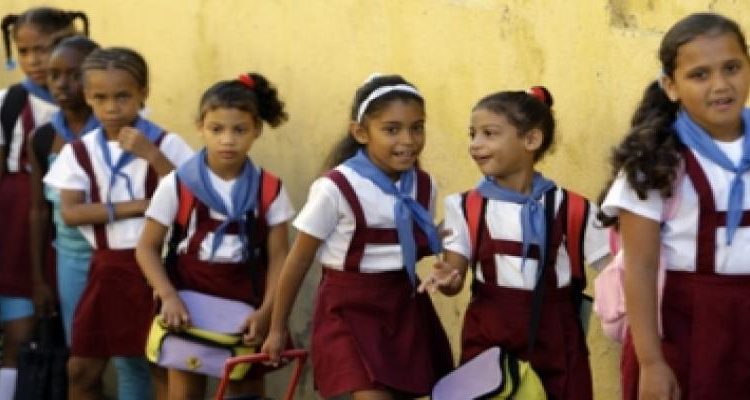
Pese a las afectaciones de Matthew, se reincorporaron a clases casi todos los estudiantes que a causa del huracán las interrumpieron en los municipios Baracoa, Maisí, Imías, San Antonio del Sur, y gran parte de Yateras.

Hasta hoy sólo cuatro escuelas de esos territorios restan por sumar sus educando a las aulas, precisó a la Acn Mercedes Guerra Sobrado, subdirectora provincial de Educación.

Guerra Sobrado dijo que fueron rehabilitadas más de un centenar de escuelas de las 291 dañadas por el meteoro, de las cuales 85 funcionan sin contratiempos después de reparadas parcial o totalmente y otras en locales adaptados con esos fines, informa el diario Granma.

Cerca de 200 centros alternativos entre hogares e instituciones estatales acogen también las actividades curriculares y complementarias, como parte de la estrategia de las autoridades en la provincia para garantizar la continuación del período lectivo.

En San Antonio del Sur, Imías y Yateras todo el estudiantado participa de las actividades educativas, mientras en Maisí y Baracoa -los municipios más dañados- la docencia se imparte al 90 y 93 por ciento de la matrícula, respectivamente, añadió la directiva.

Explicó que se adecuaron los programas de asignaturas y horarios docentes, y especialistas de la Dirección Provincial asumen en las zonas afectadas por el huracán la preparación de los maestros, en función del reajuste del plan de estudios.

Guerra Sobrado subrayó que los años terminales de las diferentes enseñanzas, especialmente el duodécimo grado, constituyen una prioridad, por su importancia para las pruebas de ingreso a la Educación Superior.

Respecto a la base material de estudio y de vida -indicó- se han recibido recursos procedentes de Ciego de Ávila, Granma, Santiago de Cuba y Villa Clara, y de varias empresas de aseguramiento del ministerio de Educación.

Agregó la funcionaria que la sucursal de la corporación COPEXTEL interviene en la recuperación de los cerca de 700 equipos audiovisuales dañados, en su mayoría computadoras y televisores.

Fuente: http://www.radiohc.cu/noticias/nacionales/110714-casi-normalizado-curso-escolar-en-municipios-guantanameros-afectados-por-matthew

Comparte este contenido:

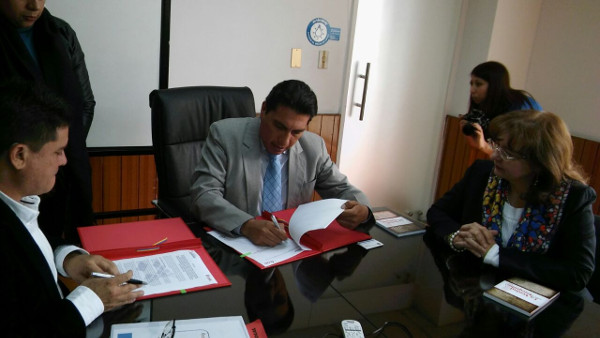
Venezuela: Inces firmó con Ecuador convenio de cooperación

América del Sur/Venezuela/Noviembre de 2016/Fuente: Correo del Orinoco

El Instituto Nacional de Capacitación y Educación Socialista (Inces) y su homólogo ecuatoriano, el Servicio Ecuatoriano de Capacitación Profesional (Secap), firmaron un convenio de cooperación con 20 cláusulas, para fortalecer la formación en telecomunicaciones y tecnología libre.

El acuerdos suscrito en la ciudad de Quito, Ecuador, entre el titular venezolano, Wuikelman Ángel, y su homólogo de Ecuador, Fabián Albarracín, tiene como finalidad brindar asistencia técnica e intercambiar especialistas de ambas naciones, indicó el Inces en una nota de prensa.

El objeto es desarrollar y mejorar los mecanismos de cooperación entre ambas instituciones, con la finalidad de contribuir al proceso de formación integral de talento humano ecuatoriano y venezolano, mediante proyectos conjuntos en las áreas de innovación tecnológica, técnica y educativa.

Se prevé que el Inces brinde capacitación en Telecomunicaciones y Tecnologías Libres a la División de Diseño y Pedagogía y a la Dirección de Tecnología del Secap. De igual manera el instituto ecuatoriano enviará al Inces dos expertos para adiestrarlos en procesos de certificación internacional, estandarización y homologación en áreas como metalmecánica y construcción.

Fuente: http://www.correodelorinoco.gob.ve/nacionales/inces-firmo-ecuador-convenio-cooperacion/

Comparte este contenido:
Page 4764 of 6193
1 4.762 4.763 4.764 4.765 4.766 6.193