Page 4879 of 6193
1 4.877 4.878 4.879 4.880 4.881 6.193

Australia: A former Sydney schools director has recalled a plan to move bureaucrats out of a building if it was needed by Bondi Public School

Oceanía/Australia/Octubre de 2016/Autora: Kate Bastians/Fuente: Daily Telegraph

RESUMEN: El Ex-Director del Departamento de Educación Regional de Sydney, Phil Lambert ha dicho que el departamento tenía un plan para mover los burócratas de la Escuela Pública de Bondi si la escuela necesita el espacio para  las aulas. El Sr. Lambert trasladó el personal del departamento de nivel inferior del edificio en 2013 cuando la población estudiantil comenzó a crecer, pero el nivel superior todavía está siendo utilizado por un puñado de burócratas de la Oficina del Distrito de Bondi a pesar de que las cifras muestran que la escuela está en el 141 por ciento de su capacidad.«La intención es que vamos a seguir examinando el crecimiento de la escuela y deberíamos (la población) llegar a un punto, que sería lógicamente conducir a la transferencia de personal del departamento a otro, no me dan ninguna garantía, pero me dijo que debería ser monitoreado y revisado cada seis meses para asegurarse de que estaba justificado para moverlos  ya que eso tiene un costo.»

FORMER Department of Education Sydney Regional Director Phil Lambert has said the department had a plan to move bureaucrats out of Bondi Public School if the school needed the floor they are housed in for classrooms.

Mr Lambert moved department staff out of the bottom level of the building in 2013 as the student population started to grow but the top level is still being used by a handful of bureaucrats from the Bondi District Office despite figures showing the school is at 141 per cent capacity.

“The intention was that we would continue to review the growth of the school and should (the population) reach a point, that it would logically lead to transferring department staff to another location subject to ongoing review,” Dr Lambert told the Wentworth Courier from Italy.

“My view was that if it was justified, they would move out and that looked like the likely scenario with the growth in numbers and the movement of staff out of the bottom floor was a signal of that intention.”

“I didn’t give any guarantee but I said it should be monitored and reviewed every six months to ensure it was justified to move them out as that would come at a cost.”

Dr Lambert led the development of Australia’s first national curriculum and is now an education consultant and adjunct professor at the University of Sydney.

On Friday shadow education minister Jihad Dib wrote to Education Minister Adrian Piccoli to question why bureaucrats had not been moved out of the building, which was purpose built for four classrooms before it became a regional office about 30 years ago.

“Blind Freddy could see there will be even more kids enrolling at the school next year because of (The Moreton) development across the road,” said Mr Dib.

He called on the local members Gabrielle Upton and Bruce Notley-Smith to come up with an alternative location for the staff at a meeting with the P & C executive next Tuesday.

He also called on the department to answer questions about how many staff used the huge space after sources told Wentworth Courier there were no more than four staff based there.

The department has refused to answer questions about how many staff are currently located there and what support they provide specifically to the school.

Labor’s Vaucluse spokesman Walt Secord said it was “ludicrous” for bureaucrats to be taking up valuable space which could accommodate up to 120 students.

“Space at the school should be used for the children’s education rather than accommodating bureaucrats who want to have office space at beautiful Bondi near the breezy beach,” Mr Secord said.

P & C vice president Rachel Blackley said department was facing a “costly band-aid solution” to convert their old hall into two classrooms if the staff did not move out of a the building.

“The old hall is used for our philosophy program, our brilliant after care service and for various teaching activities,” she said.

“We are not asking for their space or for new resources or buildings — we are just asking for our space back.

“Dr Lambert has confirmed the top level was to be returned to the school when it was needed so it is now time for the department to follow through with that commitment.

“They need to let us know exactly when they will vacate the classrooms and return the top level to the school.”

She questioned why the staff could not move to Bondi Junction where there was an abundance of office space.

Mr Piccoli said nine extra classrooms had been provided at the school since 2013 to cater for additional students.

“The school has a plan for 2017 and at this time it does not intend to use the old hall as classrooms,” he said.

A spokesman for the department said the staff provided direct support to schools in the eastern suburbs.

Fuente: http://www.dailytelegraph.com.au/newslocal/wentworth-courier/a-former-sydney-schools-director-has-recalled-a-plan-to-move-bureaucrats-out-of-a-building-if-it-was-needed-by-bondi-public-school/news-story/bb7ef669e08eec8f7e4d3faa5246978c


 

Comparte este contenido:

México: Marchan maestros en Reforma, demandan reinstalación de cesados

América del Norte/México/Octubre de 2016/Autora: Laura Poy Solano/Fuente: La Jornada

Maestros disidentes marcharon del Ángel de la Independencia a la sede de la Secretaría de Educación Pública (SEP) para reiterar su exigencia de reinstalación de todos los docentes cesados en la Ciudad de México, que incluye a 21 educadores que se sumaron a acciones de protesta contra la reforma educativa, y 11 más que no acudieron a la evaluación del desempeño en marzo pasado.

Poco después de las 14 horas, el contingente que se concentró en las inmediaciones del citado monumento comenzó a avanzar por carriles centrales de Paseo de la Reforma, pero un grupo de granaderos intentó restringir el paso de los manifestantes a tan sólo dos carriles y mantener abierta parcialmente la vialidad. Ante la negativa de los docentes, hubo conatos de enfrentamiento, y por momentos los educadores bloquearon de forma intermitente ambos sentidos de la avenida.

Poco más de 500 maestros permanecieron en los carriles centrales de Paseo de la Reforma por casi una hora, hasta que se permitió su paso hacia la dependencia federal, aunque el contingente fue custodiado por elementos del cuerpo de granaderos y de la policía de tránsito.

En el mitin, realizado en la Plaza de Santo Domingo, profesores despedidos de las escuelas primarias Leonardo Bravo, Alfredo E. Uruchurtu, José López Portillo y Rojas y Ricardo Flores Magón afirmaron que su cese es parte de la venganza de las autoridades educativas contra el magisterio que se opone a la reforma educativa, y advirtieron que con el apoyo de los padres de familia continuarán en la lucha para recuperar su empleo.

Enrique Enríquez Ibarra, secretario general de la sección 9, informó que la Coordinadora Nacional de Trabajadores de la Educación (CNTE) iniciará una defensa jurídica de los educadores, por lo que anunció que se presentarán denuncias por despido injustificado ante las instancias laborales correpondientes, así como recursos de amparo.

Fuente: http://www.jornada.unam.mx/2016/10/14/politica/016n2pol

Comparte este contenido:

EE.UU: Federal Government Continues To Feed Charter School Beast Despite Auditor’s Warning

América del Norte/EE.UU./14 de octubre de 2016/www.prwatch.org/Por: Jeff Bryant

Resumen: Los políticos siempre prometen que van a encargarse del despilfarro, el fraude y el abuso, sin embrago, son pocos los esfuerzos que pueden evidenciarse de forma clara en este particular en la Educación, pues, esta semana el gobierno federal estadounidense ha entregado casi cuatro mil millones de dólares a las escuelas denominadas Charter. Las escuelas Charter son el gran negocio del estado y les mantiene (el estado federal) con dinero cortesía de los contribuyentes. El Departamento de Educación de los Estados Unidos, informó que en con motivo de la Semana de la Educación, el dinero va a ocho estados y en 15 redes de escuelas charter del Programa de Escuelas Charter, una operación del gobierno federal que reparte millones cada año para iniciar nuevas escuelas independientes. Independientemente de cómo se imparte la educación en estas escuelas, se está más preocupado por cómo se utilizará este nuevo desembolso de gobierno para las charter, en base a la amplia trayectoria de malversación financiera en estas escuelas. De hecho, poco después del anuncio USDE, propio auditor del Departamento advirtió que el dinero es en gran medida está en riesgo, pues, puede acabar en los bolsillos de los defraudadores y estafadores en lugar de en las aulas de los estudiantes diligentes y dedicados maestros.

Noticia original: 

Politicians always promise they will rid government of «waste, fraud, and abuse,» so let’s hope at least one political leader or policy maker will denounce our federal government’s new gift of nearly a quarter-billion dollars to charter schools.

The cash dump to charters, courtesy of taxpayers, is from the U.S. Department of Education. As Education Week reports, the money is going to eight states and 15 charter school networks from the Charter Schools Program, a federal government operation that doles out millions every year to start new charter schools.

This money is the latest installment of an over $3 billion gravy train the federal government has funded to help launch over 2,500 charter schools across the nation.

Regardless of how you feel about these schools, you should be concerned about how this new government outlay to charters will be used, based on the extensive track record of financial malfeasance in these schools.

Indeed, shortly after the USDE announcement, the Department’s own auditor warned that the money is very much at risk of ending up in the pockets of fraudsters and con artists rather than in the classrooms of diligent students and dedicated teachers.

Again Education Week reports, the audit by the agency’s inspector general’s office examined 33 schools in six states and concluded that because of a general lack of oversight of charters there was a «risk that federal programs are not being implemented correctly and are wasting public money.»

The risk stems from the «cozy relationships,» the EdWeek reporter’s words, between charter schools and companies that operate them, called Charter Management Organizations (CMOs).

Of the 33 charter schools the audit examined, 22 had examples, sometimes multiple examples, of how CMOs take advantage of the unusual business relationship they have with their client charters to exploit federal education funds and redirect precious taxpayer dollars to private interests that have nothing to do with education.

In one of the more egregious examples the audit round, «the CEO of one CMO in Pennsylvania had the authority to write and issue checks without charter school board approval and wrote checks to himself from the charter school’s accounts totaling about $11 million.»

At another Pennsylvania charter, a vendor that supplied services to the school was owned by the charter school’s CMO and received $485,000 in payments from the school without charter school board approval.

In Florida, a charter and a CMO that shared the same board entered into an expensive lease agreement for the school building, then expanded the facility, extended the lease, and increased the rental payments to the CMO.

One CMO the audit examined, which operated three charters in Michigan and one in New York, required the charter schools to remit all federal, state, and local funds to the CMO and gave the CMO total responsibility, with no oversight by the charter board, for paying school expenditures.

The auditor’s report doesn’t provide the names of these schools, so we don’t know if they have received federal grant money in the past or are some of the ones getting the new money.

However, three of the six states the audit looked at – California, Texas, and Florida – are the same states the Department of Education just decided to send more money to. The other three – Michigan Pennsylvania, and New York – have received federal money for charters in the past, either sent to the state or to charter organizations operating in the state.

These states, and presumably many others the feds send charter money to, often don’t sufficiently track how the money is used, according to the audit. Of the six states examined, half could not provide consistent funding data on charter schools with CMOs, a third could not identify which charter schools used CMOs, and a third that tracked whether charter schools used CMOs had unreliable information because charter schools self-reported their operations.

The federal auditor’s revelations on charter school waste, fraud, and abuse is yet another dose of reality in a long line of factual reporting about these schools.

A study released last year by the Center for Media and Democracy found «charter spending is largely a black hole.» That’s because the «flexibility» charters have been granted by the government is often being used not to create education innovations but to «allow an epidemic of fraud, waste, and mismanagement that would not be tolerated in public schools,» the CMD report found.

Based on its extensive research on charters, CMD examined the list of new award grantees and noted Florida, that’s getting a grant of $58,454,516, has closed over 120 charter schools in a little over a decade. Texas, which is getting $30,498,392, has «an unknown number» of charter schools «housed in churches» and «closely tied to, religious groups.»

Tennessee, which is getting $15,172,732, is famous for having a statewide online charter school that is so bad, the state education chief tried to get rid of it but couldn’t because of political maneuvering by the charter lobby and lack of regulatory accountability.

California, which is getting $27,329,904, has some of the worst charter school scandals in the nation, according to a report from the Center for Popular Democracy, which uncovered over $81,400,000 in fraud, waste, and abuse in the state. CPD call the alarming figure «likely just the tip of the iceberg.»

Louisiana, another grantee getting $4,836,766 from the feds, has been ripped off by «tens of millions of dollars in undiscovered losses» from charter schools in the 2013-14 school year, according to another CPD analysis. «The state has insufficiently resourced financial oversight,» CPD contends, and has yet to put into place adequate reporting, staffing, and auditing.

Three other states – Georgia, Massachusetts, and Washington – are getting the money just when they are deeply embroiled in heated controversies over charter schools.

Georgia has a ballot initiative in November on whether to allow the state to operate an Opportunity School District that would summarily take over local schools and hand them over to charter operators. Massachusetts also has a November ballot initiative, called Question 2, that would allow the state to lift the cap on the number of charters allowed to operate in the state. And in Washington, a charter school battleground for over 20 years, court rulings, legislative shenanigans, lawsuits, and counter lawsuits related to charter schools continue to rage across the state.

No doubt, this new money – over $41 million altogether for these three states – may now sweeten the pot if pro charter forces get their way.

Regarding the individual CMOs the Department is sending money to, one of them, Uncommon Schools, is a charter chain which used to be led in part by the current head of USDE, Secretary John King. Uncommon is getting $8,004,576. No conflict of interest there.

Another recipient – the Denver School of Science and Technology charter chain in Colorado, with a grant of $4,043,361 – has paid out between $20 to $50 million to a for-profit corporation owned by two of the charter chain’s director, according to another CPD analysis.

A charter school chain in Indiana getting $1,923,866 is plagued with financial problems, low enrollment, and controversy over how the CEO spends money. No doubt the infusion of federal cash will help.

The federal auditor’s report recommends the convening of a formal oversight group to look into charter school financial malfeasance, more rigorous review of charter school operations by federal agencies, and legislative changes in Congress to firm up government oversight.

Here’s another recommendation: Stop federal funding to expand these schools.

Tomado de: http://www.prwatch.org/news/2016/10/13158/federal-government-continues-feed-charter-school-beast-despite-auditors-warning

Comparte este contenido:

Venezuela: CIM inicia Seminarios Investigativos en Comunicación Popular Alternativa

América del Sur/Venezuela/Octubre de 2016/Autor: MG Munos/Fuente: MPPEUCT

El Centro Internacional Miranda (CIM), cumpliendo la misión de debatir las principales corrientes del pensamiento actual en las áreas prioritarias de formación, investigación e incidencia política abrió la convocatoria al primer Circuito Nacional de Seminarios Investigativos sobre Comunicación Popular Alternativa el 21 de octubre, en Caracas.

La convocatoria está dirigida a comunicadores y comunicadoras populares, miembros de medios de comunicación popular alternativa, investigadoras e investigadores en Ciencias Sociales y el público en general.

El proceso de inscripción se realizará hasta el 19 de octubre, comprende la postulación en línea mediante el enlace: http://bit.ly/2e4oIMe que, además, ofrecerá a los usuarios y usuarias información de la oferta formativa y, posteriormente, la consignación de documentos en la sede principal del CIM en el Hotel Res. Anauco, PH, Parque Central, dando paso a la formalidad del registro.

Los Seminarios en Comunicación Popular Alternativa han sido forjados como espacios de discusión temática e investigación colectiva sobre temas vinculados a la comunicación popular alternativa, los cuales serán desarrollados en el proyecto de formación por los profesores Gonzalo Gómez, Lilliane Blazer, Alba Carosio, Rafael Rivas, entre otros.

Además, contará con dinámicas pedagógicas presenciales de periodicidad mensual.

Para mayor información estará disponible el equipo coordinador a través del número telefónico 0212-576.8274 y el correo electrónico cesav.cim@gmail.com

Fuente: http://www.mppeuct.gob.ve/actualidad/noticias/cim-inicia-seminarios-investigativos-en-comunicacion-popular-alternativa

Comparte este contenido:

Italia: Papa Francisco denuncia maltrato a los niños emigrantes

Europa/Italia/14 de octubre de 2016/cubasi.cu
El Papa Francisco denunció hoy el tráfico, la explotación, el abuso de menores y la privación de sus derechos, reconocidos por la Convención Internacional sobre los Derechos de la Infancia.

El pronunciamiento del Sumo Pontífice está contenido en su mensaje con motivo de la centésimo tercera Jornada Mundial del Emigrante y el Refugiado, la cual se efectuará el 15 de enero próximo bajo el lema de «Emigrantes menores de edad, vulnerables y sin voz».

Al describir la emigración como un fenómeno que afecta a todas las regiones del planeta, Francisco señaló que No se trata sólo de personas en busca de mejores condiciones de vida y trabajo, sino también de otras obligadas «a abandonar sus casas con la esperanza de salvarse y encontrar en otros lugares paz y seguridad».

Son principalmente los niños -añadió- quienes más sufren las graves consecuencias de la emigración, casi siempre causada por la violencia, la miseria y las condiciones ambientales, factores a los que hay que añadir la globalización en sus aspectos negativos.

El Papa fustigó la carrera desenfrenada hacia un enriquecimiento rápido y fácil, la cual trae consigo «el aumento de plagas monstruosas como el tráfico de niños, la explotación y el abuso de menores y, en general, la privación de los derechos propios de la niñez, sancionados por la Convención Internacional sobre los Derechos de la Infancia».

Tomado de: http://cubasi.cu/cubasi-noticias-cuba-mundo-ultima-hora/item/56351-papa-francisco-denuncia-maltrato-a-los-ninos-emigrantes

Comparte este contenido:

Ghana: Focus on quality education; not more schools

África/Ghana/Octubre de 2016/Autor: Jonas Nyabor/Fuente: Citifmonline

RESUMEN: Un ex director del Servicio de Educación de Ghana (GES), Michael Kenneth Nsowah, dijo que los gobiernos deben centrarse en garantizar una educación de calidad en el país en lugar de construir más instalaciones educativas. Según él, es preocupante tener más escuelas sin embargo, la mayoría de los graduados son incapaces de seguir una educación superior.«Los sucesivos gobiernos desde la independencia han hecho grandes inversiones en la ampliación de plazas en las escuelas, sin embargo, con el aumento de la matrícula no han visto la expansión de la oferta de maestros capacitados y el suministro de los recursos necesarios correspondientes para habilitar las escuelas para funcionar de manera eficiente,» Un investigador en ISSER en la Universidad de Ghana, el profesor Jonathan Fletcher al tiempo que presenta el informe del Instituto en el sector de la educación indica que los gobiernos no han sido capaces de equilibrar la mejora del acceso a la financiación. Profesor Fletcher reconoció que, la idea de mejorar el acceso era loable y necesaria, pero también señaló que «no estamos en condiciones de proporcionar suficientes fondos para mejorar la infraestructura.»

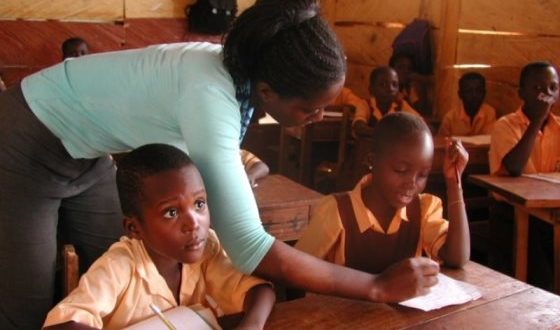
A former director of the Ghana Education Service (GES), Michael Kenneth Nsowah, says governments must focus on ensuring quality education in the country rather than building more educational facilities.

According to him, it is worrying to have more schools yet majority of the graduates are unable to pursue higher education.

“Successive governments since independence have invested heavily in the expansion of places in schools, however, the increase in enrollment have not seen corresponding expansion in the supply of trained teachers and the supply of the needed resources to enable the schools to function efficiently,” he said.

He expressed worry that successive governments continue to credit their achievements in quality educational delivery in the number of schools built; rather than achievements on performance.

Michael Kenneth Nsowah was speaking at the first national conference of the University Teachers’ Association of Ghana (UTAG) at the University of Ghana on the theme, “The Quality of Manpower and Teaching at the Pre-Tertiary Level: Its Impact on University Education.”

He noted that, such qualitative assessment of education “is a phenomenon that was reminiscent of the emerging stage of colonialism” used to measure the level of development.

“…and this thing is continuing, we are fighting over ‘I built 20 schools, you built one school’ and this is taking us no where, because at the core of the whole educational enterprise is quality.”

Michael Nsowah opined that, the low investment and interest in qualitative issues in the primary education may be attributed to the fact that most research findings and reports that expose weaknesses in the educational system, are often ignored or defended to avoid embarrassment or criticism.

“Each year, when we talk about the failure of the candidates; BECE or WASSCE we sweep it under the carpet,” he said.

He said it was worrying that most Basic Education Certificate Examination (BECE) and West African Senior School Certificate Examination (WASSCE) graduates fail in the core subjects, making it difficult for them to gain admission into secondary and tertiary institutions respectively.

‘Imbalance in infrastructure eroding quality education’

The Institute of Statistical, Social and Economic Research (ISSER), recently cited inadequate funding as one of the main reasons for the erosion of quality education at all levels in Ghana.

A researcher at ISSER at the University of Ghana, Professor Jonathan Fletcher while presenting the institute’s report on the education sector indicated that governments have not been able to balance improved access with funding.

Professor Fletcher acknowledged that, the idea of improving access was commendable and necessary, but he also noted that, “we are not able to provide enough funding to improve infrastructure.”

Fuente: http://citifmonline.com/2016/10/12/focus-on-quality-education-not-more-schools-nsowah/

Comparte este contenido:

México: Trabajo doméstico y sin acceso a la educación: realidad de las niñas

América del Norte/México/14 de octubre de 2016/www.izquierdadiario.com/Por: Ana Mirabal

Matrimonio infantil, embarazos no deseados, pobreza y violencia son otros de los fenómenos que ponen en riesgo a cientos de miles de niñas.

El informe “Sacar partido al poder de la información para las niñas: balance y previsiones hacia el 2030”, publicado recientemente por Unicef, afirma que la carga desproporcionada de tareas domésticas inicia en niñas de entre cinco y nueve años que dedican 30% más de tiempo que los niños de su edad -el equivalente a 40 millones de horas al día- a llevar a cabo tareas del hogar.

Están obligadas a cocinar, limpiar, cuidar de algún miembro de la familia, y recoger agua y leña.

A medida que crecen, aumenta la desigualdad: niñas de entre diez y 14 años dedican 50% de tiempo más que los niños de la misma edad -o 120 millones de horas cada día.

Cuando avanzan hacia la adolescencia, según un estudio de la Organización para la Cooperación y el Desarrollo Económicos (OCDE), las y los jóvenes que no tienen acceso ni a trabajo ni a educación son poco más de uno cada cinco. Pero las niñas son mayoría: las jóvenes tiene cuatro veces más probabilidades de encontrarse excluidas del mundo laboral y del escolar.

Muchas también se ven en la obligación de asumir tareas domésticas. Tareas que pasaron de manos de las madres, orilladas a trabajar fuera del hogar, a las hijas.

Y se repite el mandato obligatorio de que las mujeres lleven a cabo las tareas de reproducción de la familia. Los más beneficiados: los empresarios y los gobiernos que indefectiblemente están a su servicio, ya que las tareas domésticas no están remuneradas y son invisibilizadas.

Matrimonio infantil, violencia, embarazo adolescente

En una nueva muestra de cinismo, el gobierno de Peña Nieto afirma que el establecimiento del Día de la Niña puede contribuir a erradicar el matrimonio infantil.

De acuerdo con datos de la Encuesta Nacional de la Dinámica Demográfica (Enadid) 2014, en 23 de los 31 estados, al menos una de cada cinco mujeres se casa antes de cumplir 18 años. Esto tanto en las zonas urbanas como rurales, avalado por la Iglesia, los usos y costumbres y también por la normativa legal vigente.

Es así que México encabeza la tasa de matrimonio infantil de América Latina, con 22.9%. Sólo en Baja California Sur, Coahuila, Jalisco, Oaxaca, Quintana Roo, San Luis Potosí, Veracruz, Yucatán, Colima, y la Ciudad de México, no está permitido el matrimonio infantil.

Respecto a la violencia y el embarazo adolescente, el panorama no es mejor. De acuerdo con Unicef 63% de las niñas entre uno y 14 años ha estado expuesta a violencia psicológica.

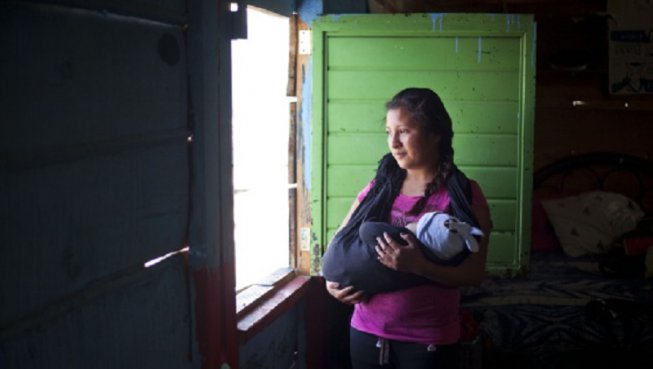
A su vez, México es el país con mayor cantidad de embarazos de adolescentes. Cada mil mujeres que dan a luz, 77 son adolescentes de 15 a 19 años. Estas jóvenes en la mayoría de los casos se ven obligadas a dejar de estudiar.

Por los derechos de las niñas y las mujeres

Al contrario de lo que pretenden hacernos creer, esto no es natural, ni es para siempre.

Estas formas de opresión de las niñas son armas de disciplinamiento para que no trasgredamos los roles de género que al capitalismo le conviene: ser esposas y madres, ser sumisas y poner por delante las necesidades de los demás antes que las nuestras.

Este sistema de explotación de la mayoría de los seres humanos por un puñado de millonarios impone desde la más tierna infancia que las mujeres garanticemos las tareas domésticas en forma gratuita para que cada día haya comida en la mesa, ropa limpia y un lugar donde dormir y que a la mañana siguiente el trabajador concurra con energía renovada su centro de trabajo. Madres para criar a las futuras generaciones de trabajadores que constituirán, como hoy, el engranaje fundamental de la maquinaria capitalista.

Contra el discurso victimizador de los grandes medios, sostenemos que esta situación puede y tiene que terminar. Como afirma Andrea D´Atri “No elegimos ser las víctimas impotentes que el patriarcado quiere que seamos. Elegimos las potentes convicciones que anidan en el odio productivo de sabernos víctimas de un orden social que apesta.”

Tomado de: http://www.laizquierdadiario.com/Trabajo-domestico-y-sin-acceso-a-la-educacion-realidad-de-las-ninas

Comparte este contenido:
Page 4879 of 6193
1 4.877 4.878 4.879 4.880 4.881 6.193