Page 5491 of 6181
1 5.489 5.490 5.491 5.492 5.493 6.181

EEUU: First Lady Trip to Africa to Highlight Educational Obstacles Girls Face

América del Norte/EEUU/Junio 2016/Autor: Editor / Fuente: voanews.com

ResumenLa primera dama de EEU, Michelle Obama, tiene previsto viajar el domingo a África para abogar por la educación de las niñas.

U.S. first lady Michelle Obama is scheduled to travel on Sunday to Africa to advocate for girl’s education.

Obama will highlight one of her core initiatives, Let Girls Learn. Sasha and Malia, President Obama and first lady’s daughters, and the girls’ grandmother, Marian Robinson, will also be joining the trip with stops in Liberia, Morocco and Spain.

“We believe very strongly that education and the empowerment of young people is going to be critical to a region that has known so much turmoil, particularly given the enormous youth population in those countries,” White House Deputy National Security Advisor Ben Rhodes said on Friday.

The first stop is Liberia, where the first lady will attend a meeting with the first elected woman head of state in Africa, President Ellen Johnson Sirleaf.

Obama then will visit the Peace Corps training facility in Kakata, Liberia, to speak with women participating at the Girls Leading Our World Program. They will also meet with Peace Corps volunteers and trainees.

The first lady will speak to adolescent girls at Unification Town, also in Liberia, about the obstacles they faced in order to acquire education. Actor Freida Pinto will join Obama and is schedule to moderate the meeting.
“The conversation will highlight both educational barriers girls face as Liberia moves beyond the Ebola epidemic, and the U.S. government’s efforts to continue to address those barriers and provide adolescent girls with equitable access to safe and quality education,” said Tina Tchen, Chief of Staff to the first lady.

Let Girls Learn is a global initiative launched by the president and first lady in 2015. The program addresses the obstacles that keep more than 62 million girls around the world out of school such as forced marriage, poverty, and violence.

White House staff said on Friday that 250 million girls live in poverty, and one out of three girls in developing countries are married by the age of 18. One in nine by 15.

In Morocco, Obama and daughters will be joined by actor Meryl Streep on June 28 and 29 for another conversation to help girls go to school. The country has about 85 percent of girls enrolled in school, but the number drops to 14 percent for high school.

The six-day trip ends in Spain, White house staff said.

Spain is a longtime U.S. ally and has dealt with “significant” economic challenges in recent years.

“The first lady, by going to these three countries, is able to visit three important regions to the United States, and is able to speak not just to government [officials] but to speak to people and to make clear that …a key part of our leadership is what we can do to lift up the lives of young people, particularly girls,” Rhodes said.

The White House said CNN films is covering trip costs for both actors. During the visit, CNN will be filming a documentary in Liberia and Morocco.

Michelle Obama will be using social media to document the trip. She recently joined Snapchat. She is also on Instagram, Twitter and Facebook. Obama will be writing about the travels in a daily diary at HelloGiggles.com.

Fuente de la noticia: http://www.voanews.com/content/first-lady-trip-to-africa-to-highlight-educational-obstacles-girls-face/3391976.html

Fuente de la imagen: http://gdb.voanews.com/53C66F1F-C0E1-4FFD-8832-D0E5C52402E0_mw1024_s_n.jpg

Comparte este contenido:

Panamá: La historia no contada en la ampliación del Canal

KaosenlaRed/25 de junio de 2016

En razón de la inauguración de las nuevas esclusas del Canal, muy poco se ha dicho de la contribución y del esfuerzo de los miles de obreros de la construcción, cuyas manos siguen erigiendo las obras que asombran al mundo, a pesar de que muchas veces son menospreciados y hasta vilipendiados por sus luchas por parte de los grandes medios de comunicación y la clase dominante.

Se exaltan los nombres de los gobernantes pasados y presente, de los directivos de la ACP, de los altos funcionarios y de las tradicionales familias oligárquicas. Muy poco de las luchas del pueblo y los trabajadores. Le llaman el “Canal de Todos”, pero amplios sectores de la sociedad así no lo perciben. Es en verdad, la fiesta de pocos.

Salud y Seguridad

Aún cuando SUNTRACS se opuso al proyecto de ampliación como parte de FRENADESO, con argumentos fundamentados que nadie refutó durante el proceso de referéndum, la concreción del proyectó obligó al SUNTRACS a velar por los intereses laborales de los obreros allí contratados, entre ellos su seguridad. Es parte del desarrollo del capitalismo, donde el papel del sindicato es impulsar la lucha por mejores condiciones de trabajo y de vida de los trabajadores, independientemente de la opinión que tengamos sobre los proyectos que se desarrollan o ejecutan, al margen de nuestra voluntad.

En primer lugar queremos resaltar el tema de seguridad laboral. La presencia del SUNTRACS fue fundamental y así fue reconocido por ingenieros y altos funcionarios del consorcio que llevó adelante la obra. Durante el canal francés, hay quienes cifran el número de muertos en 40 mil y la etapa del canal por los norteamericanos en más de 25 mil.   Una de las obras a nivel mundial que más muertos ha producido en la historia.

doc-106150

Obviamente, no hay comparación posible con esas épocas. Las condiciones y relaciones de trabajo (prácticamente de esclavitud en aquellos años), la situación sanitaria, las enfermedades, el tema de seguridad, los avances tecnológicos, etc., difieren de aquella realidad.

En las obras de ampliación, en nueve años murieron nueve obreros, un promedio de un muerto por año. Esta cifra es ínfima si lo comparamos con la que en secreto estimó el consorcio, hasta 200 muertos. Sin la presencia del SUNTRACS y su esfuerzo por garantizar el cumplimiento de las medidas y normas de seguridad esto no hubiese sido posible. Pero, fueron nueves vidas valiosas que se fueron y que aún lloran sus familias humildes. Estos son los verdaderos héroes de la ampliación y no han sido reconocidos así, toda una injusticia. Como diría el canta autor uruguayo, Jorge Drexler: “Una vida lo que un sol Vale / Toda la gloria es nada / Toda vida es sagrada.”

Pero, además, es de resaltar el hecho de que a días de inaugurarse las nuevas esclusas aún muchos de los obreros incapacitados por lesiones durante las obras de ampliación, casi cien, no han cobrado sus prestaciones laborales en la Caja de Seguro Social. ¿Es el Canal de Todos? SUNTRACS no desmayará en su esfuerzo porque se haga justicia a estos panameños, una historia excluida de los programas que difunden los grandes medios de comunicación en su cobertura de la fiesta de pocos.

La mujer trabajadora

Otro hecho importante que también pasa desapercibido en la cobertura mediática es el hecho que en la ampliación laboraron alrededor de mil mujeres, siendo la obra de construcción con mayor contratación de mano de obra femenina, la mayoría colonense.

Inicialmente hubo reticencia del consorcio en contratar mujeres. Habían dudas acerca de su productividad y destreza. Gracias a la gestiones del SUNTRACS se logró finalmente la contratación de muchas de ellas, sin casi ninguna experiencia en estos oficios. El consorcio reconoció su equivocación. Las mujeres trabajaron a la par de los hombres. La mayoría madres solteras que eran el único sustento de sus hogares. Con los salarios que devengaban cada quincena, acrecentados con las horas extras, muchas mejoraron sus viviendas, sus condiciones de vida y la de sus hijos y ganaron la experiencia que las hacen aptas para ser contratadas en otros proyectos de construcción.

Esta historia de abnegación y de trabajo de humildes mujeres panameñas tampoco se resalta en la cobertura de los medios y de la ACP sobre la ampliación.

 Los salarios

Por último, es indispensable resaltar las luchas y huelgas realizadas por SUNTRACS en el proyecto que se inaugura. Gracias a ello, se mejoraron las condiciones de trabajo en el mega proyecto, así como las medidas de seguridad y un aumento salarial que queda como base para proyectos especiales que por su magnitud, complejidad y grado de inversión representan mayores riesgos y exigencias para los obreros de la construcción.

Esta es la historia no contada por los grandes medios y la ACP en la inauguración de las nuevas esclusas del Canal. Una historia escrita por obreros.

Tomado de: http://kaosenlared.net/panama-la-historia-no-contada-en-la-ampliacion-del-canal/

Imagen:

https://www.google.com/search?q=La+historia+no+contada+en+la+ampliaci%C3%B3n+del+Canal&source=lnms&tbm=isch&sa=X&ved=0ahUKEwj4rsiI3MPNAhWIHh4KHXzVDRoQ_AUICSgC&biw=1366&bih=623#imgrc=FWkBzkOufswoxM%3A

Comparte este contenido:

Docentes de Costa Rica se solidarizan con Oaxaca

ei-ie/25 de junio de 2016


Los Estudiantes y Docentes mostraron su indignación por los hechos ocurridos en Oaxaca.

La tarde del 23 de Junio del 2016, una representación de la Asociación Nacional de Educadores (ANDE), afiliada a la Internacional de la Educación para América Latina, además de representantes del BUSSCO y de estudiantes de la Universidad de Costa Rica, se manifestaron frente a la Embajada de México en San José, en solidaridad con los docentes, estudiantes y civiles fallecidos, agredidos y reprimidos por el Gobierno mexicano, al defender sus derechos.

Carmen Brenes Pérez, Secretaria General de ANDE expresó que «este es un grito de apoyo y de solidaridad, le decimos a los docentes que resistan, que es una lucha justa. Es indignante lo que están viviendo y nos unimos a la lucha de este país».

Tomado de: http://www.ei-ie-al.org/index.php/1274-docentes-de-costa-rica-se-solidarizan-con-oaxaca

Comparte este contenido:

Rusia: Giving mums better working conditions

Europa/Rusia/Junio 2016/Autor: Natalya Paramonova / Fuente: straitstimes.com

Resumen:  Algunos consideran que una madre es un empleado no fiable – ella puede usar los días de enfermedad para cuidar de su hijo, no puede quedarse hasta tarde en el trabajo, pueden necesitar vacaciones y puede ser difícil para ella trabajar durante los fines de semana.

Some consider a mother to be an unreliable employee – she may use sick days to take care of her child, can’t stay late at work, may need a full vacation and it may be difficult for her to work during weekends.

But who pays heed to her child-minding duties and needs?

Moscow resident Olesya Kashaeva decided she had to address the issue. In 2012, she established a charity, Mother Works, which aims to be an ideal employer for mothers.

It aspires to be an employer that is aware of the problems of young mothers, provides them with the opportunity to study and offers them a means to earn an income.

The project took off in 2014, when it received a 1.6-million-rouble (S$33,600) grant from the Institute of Civil Society Issues to implement an educational project.

Today, 10 educational programmes have been established. Young women can access additional professional education, obtain a study grant, find a position or get help preparing for an interview.

The cost of the fund’s educational programmes is lower than others on the market.

In addition to a closed cycle of creating new jobs, third-party companies contact Mother Works in their search for qualified candidates.

The project currently employs eight people for an average salary of 50,000 roubles.

In August 2014, an affiliated project – the workshop, Mothers Themselves – was launched.

This is a clothing business and it aims to contribute to the Mother Works project by selling the items which mothers sew.

Still, reaching this far has not been easy.

The initial capital for the project, for instance, came from a concessional loan for a one-year period.

This helped the project team to lease premises and it paid a salary to the employees for three months, assuming that the project would start to pay for itself after this time. But this did not happen.

The problem: the team focused initially on taking care of women in difficult circumstances who needed income fast.

To do so, it tried to make children’s clothes and other complex items, but soon discovered that there were no professional seamstresses among them. As a result, materials were bought but nothing was made or sold.

Ms Kashaeva negotiated an extension for the loan and, after two years of experimentation, the group now produces cotton bags for large corporate clients.

While still unprofitable, Ms Kashaeva hopes to turn the organisation around soon.

Today, more than 70 per cent of young women who approached Mother Works consider that the project has improved the quality of their lives and given them a stable income.

Around 45 per cent of the mothers who sought help with setting up a business have actually launched their businesses and now create additional jobs.

The fund has expanded to 64 regions in Russia and has started to receive franchise requests. The sale of franchises could become an additional source of revenue for the project.

Fuente de la noticia: http://www.straitstimes.com/world/europe/3-giving-mums-better-working-conditions

Fuente de la imagen: http://www.straitstimes.com/sites/default/files/styles/article_pictrure_780x520_/public/articles/2016/06/25/ST_20160625_KYIMPACT5_2377800.jpg?itok=GSh-5yOA

Comparte este contenido:

EEUU: New Data Shows Blood Lead Levels Spiked in Children in Flint, Michigan

América del Norte/EEUU/Junio 2016/Autor: Brady Dennis / Fuente: The Washington Post

ResumenLa malograda decisión, hace dos años, para cambiar las fuentes de agua potable en Flint, Mich., dio lugar a un aumento repentino en el número de niños pequeños con niveles de plomo en la sangre, según los datos publicados hoy por los Centros para el Control y la Prevención de Enfermedades .

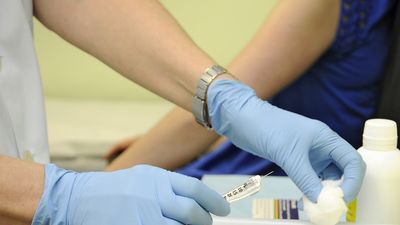
The ill-fated decision two years ago to switch drinking-water sources in Flint, Mich., resulted in a sudden spike in the number of young children with elevated blood lead levels, according to data released Friday by the Centers for Disease Control and Prevention.

Public health officials have long known that the city’s water crisis left nearly 9,000 children 6 and younger exposed to lead, a toxic contaminant that can cause permanent learning disabilities, behavioral problems and, at higher levels, a number of diseases. But to better understand the impact Flint’s tainted water had on the city’s most vulnerable population, CDC officials looked at lead tests before, during and after the switch.

Researchers found that Flint children had a 50 percent higher chance of having elevated blood lead levels after the switch in 2014. After the city switched back to Detroit water in late 2015, the percentage of children with elevated blood lead results «returned to levels seen before the water switch took place,» the agency said.

«This crisis was entirely preventable, and a startling reminder of the critical need to eliminate all sources of lead from our children’s environment,» Patrick Breysse, director of the CDC’s National Center for Environmental Health, said in a statement Friday.

The lead problems in Flint’s water began after the city switched to the Flint River for its water supply beginning in April 2014, as part of a cost-cutting move. State regulators failed to ensure that anti-corrosion chemicals were added to the water, which became contaminated when lead leached into it from aging underground pipes. The city eventually switched back to Detroit water in October 2015.

While there is no level of lead in the blood that is considered safe, CDC considers anything greater than five micrograms per deciliter as a «level of concern.» Public health officials continue to recommend that all children under age 6 living in Flint have their blood tested for lead.

Friday’s study had some limitations. For example, researchers were not able to account for exposure to lead-based paint or other potential environmental sources that could have exposed children to the toxic substance. In addition, researchers lacked information about the precise amount of lead-tainted water consumed by individual children, which limited their analysis to evaluating changes in the results of blood tests over time as the city’s water source changed.

The CDC’s work builds on initial findings from local pediatrician Mona Hanna-Attisha, who played a major role in bringing Flint’s lead crisis to the public spotlight. In August 2015, she was startled by what she found when looking back over the lead tests of 1,750 children taken at a local hospital.

“We found that when we compared lead levels before and after the [water] switch, the percentage of kids with lead poisoning doubled after the switch,” she told The Washington Post in an interview earlier this year. “In some neighborhoods, it tripled. And it all correlated with where water lead levels were the highest.”

Hanna-Attisha and several colleagues released the results at a news conference in September 2015, but the backlash was swift. State officials questioned the findings and accused Hanna-Attisha of causing unnecessary hysteria. The state later agreed that her figures were accurate.

The episode, Hanna-Attisha said, has caused a “community-wide trauma” in a city ravaged by crime, poverty and widespread unemployment.

“Our families are already riddled with every possible stress,” she said. “Every obstacle to a kid’s success, we already had. . . . And then they gave a population lead poisoning.”

In April, researchers from Virginia Tech said Flint’s water system is in far better shape since the city switched its water source in the fall and began adding chemicals to control the corrosion of aging pipes. But they made it clear that the threat of lead contamination remains.

This week, the federal government lifted a recommendation that pregnant women, nursing mothers and children under 6 in Flint drink only bottled water.

The advice was based on tests of filters that have been distributed for months for free by the state of Michigan. The Environmental Protection Agency has been testing water from the filters and has said they remove or reduce lead well below the federal action level of 15 parts per billion.

President Obama drank filtered water several times during a visit last month to Flint.

«It confirms what we know scientifically that if you use a filter … then Flint water at this point is drinkable,» he said. «That does not negate the need to replace some of those pipes, because ultimately we want a system where you don’t have to put a filter on it.»

Federal officials said they have provided millions of gallons of bottled water to the state of Michigan, along with more than 50,000 water filters. Government aid has included expanding medical services to thousands of Medicaid-eligible pregnant women and children.

Fuente de la noticia: http://readersupportednews.org/news-section2/318-66/37648-new-data-shows-blood-lead-levels-spiked-in-children-in-flint-michigan

Fuente de la imagen: http://readersupportednews.org/images/stories/article_imgs21/021593-lead-test-062516.jpg

Comparte este contenido:

Asia University Rankings 2016: results announced

Asia/Singapur/Junio 2016/Autor: Ellie Bothwell / Fuente: timeshighereducation.com

ResumenSingapur es el hogar de las dos mejores universidades de Asia, por primera vez, mientras que China y Japón tienen la mayor densidad de las principales instituciones en el continente, según el Times Higher Education Asia University Rankings 2016.

Singapore is home to the best two universities in Asia for the first time, while China and Japan have the highest density of top institutions in the continent, according to the Times Higher Education Asia University Rankings 2016.

The National University of Singapore (NUS) claims pole position, while its neighbour Nanyang Technological University (NTU) is in joint second place (with China’s Peking University) – the highest positions for the two Singaporean institutions in the rankings’ four-year history.

Singapore’s success in the table follows its rise in THE’s flagship World University Rankings; NUS has climbed 14 places in this table since 2012 to reach 26th place last year, while NTU has risen 119 places since 2011 to 55th place.

While mainland China and Japan are each home to almost a fifth of institutions in the extended top 200 table (39 each), China has the upper hand, after a shift in power towards the nation last year. The country has 22 universities in the top 100, including two in the top 10, while Japan has just 14 in the upper half of the table, and its top-ranked institution – the University of Tokyo in seventh place – has lost its place at the summit of the list.

Gerard Postiglione, chair professor in higher education at the University of Hong Kong, said that the Singaporean government’s “strategic” positioning of its universities as “competing in the global economy” and generous financial support for research are two reasons why the city state has “shone the brightest” in the ranking. He added that collaborations with world-class universities outside Asia – such as the partnership behind the Yale-NUS liberal arts college – have benefited Singapore’s universities.

“Singapore also has a very high-quality school system and its immigration policy makes it possible to bring in talented people,” he said.

China’s special administrative region, Hong Kong, has also performed well with six representatives, all in the top 45, while South Korea and Taiwan are the most-represented countries after China and Japan, with 24 institutions each.

Tony Chan, president of Hong Kong University of Science and Technology (HKUST), in sixth place, said that Hong Kong’s success is part of a “wider story about the rise of East Asia over the past few decades”.

“Being a gateway to mainland China and a melting pot of different cultures, Hong Kong, with its unique qualities including rule of law, low tax system, free flow of information, a skilled bilingual workforce and its world-class infrastructure, is the best breeding ground for knowledge and the advancement of science and technology – a reason why such a small city is home to several top universities in Asia,” he said.

Institutions from 22 countries, eight more than last year, feature in this year’s ranking, with several countries, including Bangladesh, Indonesia and Qatar, being represented for the first time.

The THE Asia University Rankings use the same 13 performance indicators as the World University Rankings, but have been recalibrated to reflect the attributes of Asia’s higher education systems.

Fuente de la noticia: https://www.timeshighereducation.com/world-university-rankings/asia-university-rankings-2016-results-announced

Fuente de la imagen: https://www.timeshighereducation.com/sites/default/files/styles/the_breaking_news_image_style/public/singapore-skyline-merlion-fountain-asia-university-rankings-2016.jpg?itok=tCfYFDtv

Comparte este contenido:

México: Salud y Educación, las más afectadas por recorte

InsurgenciaMagisterial/25 de junio de 2016

Las secretarías de Educación Pública, Salud y la de Agricultura serán las que carguen con el mayor peso del recorte preventivo al gasto por 31 mil 715 millones de pesos que anunció esta mañana la Secretaría de Hacienda, tras la salida del Reino Unido de la Unión Europea.

El recorte será y se aplicará solo al gobierno federal, sin que se afecte a Pemex.

Este monto es adicional a la disminución presupuestal por 132 mil 300 millones de pesos anunciado en febrero pasado para este año.

El 91.7 por ciento de este nuevo ajuste adicional será en gasto corriente, por lo que se calcula sean 29 mil 71 millones de pesos.

RECORTES

Secretaría de Salud – 6 mil 500 mdp

Secretaría de Educación Pública – 6 mil 500 mdp

Secretaría de Agricultura, Ganadería, Desarrollo Rural, Pesca y Alimentación – 4 mil 205 mdp

Entidades no sectorizadas – 3 mil 100 mdp

Secretaría de Comunicaciones y Transportes – 2 mil 174.5 mdp

Secretaría del Medio Ambiente y Recursos Naturales – mil 664.1 mdp

Secretaría de Desarrollo Social – mil 550 mdp

Secretaría de Gobernación – mil 88.1 mdp

Consejo Nacional de Ciencia y Tecnología – mil 800 mdp

Secretaría de Desarrollo Agrario, Territorial y Urbano – mil mdp

Secretaría de Turismo – 705.6 mdp

Secretaría de Relaciones Exteriores – 632.4 mdp

Secretaría de Economía – 600 mdp

Secretaría de Energía – 90 mdp

Comisión Reguladora de Energía – 50 mdp

Comisión Nacional de Hidrocarburos – 35 mdp

Secretaría del Trabajo y Previsión Social – 20 mdp

ajuste_al_gasto_MILIMA20160624_0360_8


Fotografía: yucatan

Tomado de: http://insurgenciamagisterial.com/salud-y-educacion-las-mas-afectadas-por-recorte/

Comparte este contenido:
Page 5491 of 6181
1 5.489 5.490 5.491 5.492 5.493 6.181