Page 5502 of 6193
1 5.500 5.501 5.502 5.503 5.504 6.193

Nigeria: Ogun Private School Owners Protest Over Multiple Levies, Others

Nigeria/25 junio de 2016/Fuente: Allafrica

Resumen:

Protesta del propietario de Ogun escuela privada a través de gravámenes Múltiples, Otros

Las puntuaciones de los propietarios de escuelas privadas bajo los auspicios de la Asociación Nacional de Propietarios de Escuelas Privadas, capítulo Ogun han llevado a cabo una protesta por supuestas múltiples gravámenes y cargas por el gobierno del estado.

Los propietarios de escuelas privadas que irrumpieron en la Unión de Nigeria Secretaría periodistas, Oke Ilewo, Abeokuta lamentaban el 50 por ciento de aumento en los cargos por el primer certificado de estudios examination.They dijo que se ha aumentado de N500 a N2,000.

Hablando en nombre de los propietarios, el presidente de la asociación, Alhaji Rilwan Hassan, dijo que el gobierno también ha aumentado las tasas para el certificado de examen de la Educación Básica en un 50 por ciento de N2,500 a N5,000.

Él explicó que no había disparidad entre las tasas que deben abonarse por las escuelas públicas y privadas para el gobierno del estado en estos dos exámenes.

Hassan dijo que la asociación había escrito tantas cartas a las autoridades competentes, incluido el Alake de Egbaland, Oba Adedotun Gbadebo, para intervenir en la situación, pero no hay respuesta.

El dijo: «Hemos llegado a apelar a través de usted y el público en general para ayudar llamamiento a Su Excelencia, el gobernador del estado de Ogun, el senador Ibikunle Amosun, para dar un respiro sobre temas que nos afectan como titulares de los centros privados y los padres que confían su niños en nuestras manos, que también son contribuyentes.

«Queremos que el gobierno a las decisiones sobre los cargos por BECE, FSLC, la señalización, la tasa de vecindad, las tasas de renovación y múltiples impuestos inversa.

___________________________________________________________

Scores of the private schools owners under the aegis of National Association of Proprietors of Private Schools, Ogun chapter have staged a protest over alleged multiple levies and charges by the state government.

The Private schools owners who stormed the Nigeria Union of Journalists Secretariat, Oke Ilewo,Abeokuta lamented 50 per cent increase in the charges for the First School Leaving Certificate examination.They said it has been increased from N500 to N2,000.

Speaking on behalf of the proprietors, the President of the association, Alhaji Rilwan Hassan, said the government had also increased the fees for the Basic Education Certificate Examination by 50 per cent from N2,500 to N5,000.

He explained that there was disparity between fees and charges payable by the public and private schools to the state government on these two examinations.

Hassan said that the association had written so many letters to the relevant authorities, including the Alake of Egbaland, Oba Adedotun Gbadebo, to intervene in the situation but no response.

He said, «We have come to appeal through you and the general public to help appeal to His Excellency, the Governor of Ogun State, Senator Ibikunle Amosun, to give respite over issues affecting us as owners of private schools and the parents who entrust their children in our hands, who are also tax payers.

«We want the government to reverse decisions on charges for BECE, FSLC, signage, tenement rate, renewal fees and multiple taxes.

«The disparity is what we say we don’t want, we are not saying there is no justification for the increment because of stationery, but for it to have been jacked up by 400 per cent, it is quite disheartening. We are not enjoying any benefit as private schools owners.

«We are assisting the government to employ staff into our schools and a lot of us are on loans. It is a social service we are rendering.»

Hassan said pupils from the private schools in the state have been doing well in the West African Examinations Council, where 55 private secondary schools were among the best performed schools, last year.

He said, «We are among the best 1,000 schools in WAEC last year, no single public school in Ogun State in the last WAEC is among the 1,000 and we have 55 private schools from Ogun State, that are among.»

Reacting to the allegation, the State Commissioner for Education, Modupe Mujota, said the increments were necessary given the current economic reality in the country.

Mujota said the increments were not a routine exercise adding that they have not been touched in the last four years.

She said, «The intention of the government was not to kill the schools adding that the decision was in line with the school fees being charged .

Fuente de la Noticia:

Nigeria: Ogun Private School Owners Protest Over Multiple Levies, Others

Comparte este contenido:

India: Smriti Irani’s video message: ‘We have made studying abroad easier’

Asia/India/Junio 2016/Autor: Editor / Fuente: Express Web Desk

ResumenBajo las nuevas normas, las instituciones educativas que buscan asociarse con las universidades en el extranjero, para los programas de pre y postgrado, ahora pueden dirigirse a la University Grants Commission (UGC) directamente para el permiso

Union Human Resource Development Minister Smriti Irani has released a video message to elaborate on the latest University Grants Commission (UGC) guidelines regarding foreign institutions.

As per the new norms, higher education institutions in India will be allowed to collaborate with foreign institutions, given that they let students study abroad for at least one semester of their postgraduate course and two semesters for an undergraduate course.

“We have seen a lot of students visiting foreign universities to get a reputed name on their CV. Now, students can get enrolled in Indian institutions and will be free to spend two semesters of their undergraduate course with a foreign institution that has a collaboration with the Indian one,” said Irani, adding.

The educational institutions here have to approach the UGC for permission to partner with foreign universities.

According to previous rules, only institutes from abroad could seek permission from the UGC for academic collaborations where as Indian institutions could not.

However, no foreign institute ever approached the UGC for such tie-ups. In addition to this, there was no provision for students to study abroad for a few semesters.

The higher education regulator tweaked the rules on Wednesday to make only Indian universities and colleges eligible for permission.

Elaborating on the credit system and facilities made available to the students now, the minister said, “Besides fee, there are other expenditures such as travelling, food, books, et al. Therefore, a new credit system is being introduced for the first time in India to help minimize the cost of an engagement with a reputed foreign institution.”

Although the new regulations do not allow the collaborating partners to offer a joint degree, the certificate awarded by the Indian varsity at the end of the programme will bear the name and insignia of the foreign university the student visited. The transcripts carrying the credits earned in India and abroad will have to be signed jointly by both institutions.

Fuente de la noticia: http://indianexpress.com/article/education/smriti-iranis-video-message-we-have-made-study-abroad-easier/

Fuente de la imagen: https://www.google.co.ve/search?q=Smriti+Irani&client=ubuntu&hs=Gou&channel=fs&source=lnms&tbm=isch&sa=X&ved=0ahUKEwif3PX36cPNAhVCdj4KHQJ1COgQ_AUICCgB&biw=1366&bih=671


Comparte este contenido:

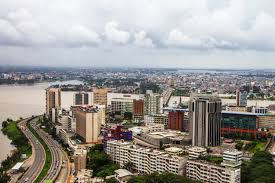
Costa de Marfil: African Ministerial Forum Stresses Urgency to Accelerate ICT Integration in Education to Achieve Africa’s Agenda 2063 and the SDGs

África/Costa de Marfil/Junio 2016/Autor: Editor / Fuente: allafrica.com

Resumen:  El Segundo Foro Ministerial Africano sobre la integración de las tecnologías de la información y las comunicaciones (TIC) en la educación y la formación, bajo el lema: «Impulsar sociedades del conocimiento integradoras en África para aplicar el Programa de África 2063 y los ODS terminaron el jueves 9 de junio en Abiyán con una conclusión más importante: es urgente acelerar la integración de las TIC en la educación y capacitación para desarrollar habilidades del siglo 21, avanzar en la sociedad del conocimiento y lograr Agenda de África 2063 y los Objetivos de Desarrollo sostenible (ODS).

The Second African Ministerial Forum on the integration of information and communications technology (ICT) in education and training under the theme: ‘Advancing inclusive knowledge societies in Africa to implement Africa’s Agenda 2063 and the SDGs’ ended on Thursday, June 9 in Abidjan with a major conclusion: it is urgent to accelerate ICT integration in education and training to develop 21st century skills, advance knowledge society and achieve Africa’s Agenda 2063 and the Sustainable Development Goals (SDGs).

Governments as well as education and training stakeholders are particularly invited to:

Move from policy to action by developing national and regional strategies and programs, as well as accountability mechanisms matching the ambition of the Global Agenda 2030 and Africa’s Agenda 2063;

Create an enabling environment for fostering partnerships to accelerate the implementation of ICT integration in education and training systems;

Accelerate the use of ICT to offer all learners an equal opportunity to access quality education;

Integrate skilling in digital technologies into all technical and vocational skills development programs;

Promote youth employment and self-employment through holistic training combining the mastery of the latest technologies, providing support for professionals and an incubation period for the creation of start-ups that include logistical and financial support;

Establish sustainable financing strategies through the development of partnerships with foundations, technical and financial partners, telecommunication regulators and operators as well as various digital solidarity funds;

Create multifunctional digital spaces accessible to all the actors of society (pupils, students, youth, women and other economic actors) to support education, health and environments conducive to business;

Design and deliver learning pathways tailored to the needs of children and young people affected by crises and conflicts as well as to the needs of other marginalized groups;

Implement mechanisms for prior learning assessment and certification of vocational and technical skills outside formal institutions, so as to promote access to employment, employability and mobility of young people;

Encourage, through incentives, the creation of training content drawing on indigenous cultures;

Build technological alliances to ensure that the latest advances in equipment and operating systems are extended to the African continent;

Provide schools with access to mini-networks and systems to ensure power supply.

Officially opened on June 8, 2016 by the Prime Minister of Côte d’Ivoire, Daniel Kablan Duncan, and closed by the Minister of National Education of Côte d’Ivoire, Kandia Camara, the Forum attracted more than 150 participants from 37 countries.

In their respective speeches, Oley Dibba-Wadda, Executive Secretary, Association for the Development of Education in Africa (ADEA); Bruno Koné, Minister of Digital Economy and Posts, Côte d’Ivoire; Kandia Camara, Minister of National Education of Côte d’Ivoire; John Galvin, Director of Intel Education; and Warren La Fleur, Microsoft’s Education Lead for West, East and Central Africa; reaffirmed their commitment to further support ICT integration in education and training in Africa.

In his address, the Ivorian Prime Minister commended especially the Association for the Development of Education in Africa (ADEA), for its technical support to the consultations on the issue of ICT integration in education in Africa.

On the way forward, the Ivorian Minister of National Education, Kandia Camara, said, «The Forum has shown that African countries are firmly engaged in the path of digital technology. Like Côte d’Ivoire, they aspire to become emerging countries and integrating ICT in education is a fundamental element towards achieving this.»

ADEA’s Executive Secretary, Dibba-Wadda said, «ICT integration in the education sector is a technical and policy issue that would guarantee continuous training to both the teacher and the learner.»

Jerome Morrissey, CEO of the Global e-Schools and Communities Initiative (GESCI) , underlined «the pivotal importance of education and skills development for future social cohesion, employment and for wider knowledge society development [… ] This means that countries must now re-focus on improving their education model through the incorporation of digital technologies,» he said, reminding the meeting that such a focus concurs with SDG 4 to «ensure inclusive and equitable quality education and promote life-long learning opportunities for all.»

Participants at the Forum included African Ministers and policy-makers in charge of education, higher education and scientific research and ICT; experts in the field of education and ICT from technical agencies, universities and research institutes; representatives of the private sector in the field of ICT; regional and international experts involved in the development and implementation of ICT integration policies in education; representatives of co-operation and development agencies; and representatives of pan-African bodies and regional economic communities working in the field of education and training.

Twenty-two African countries participated in the Forum including Angola, Benin, Burkina Faso, Côte d’Ivoire, the Democratic Republic of Congo (DRC), Djibouti, the Republic of Guinea, Kenya, Liberia, Madagascar, Mauritius, Morocco, Mozambique, Namibia, Niger, Nigeria, Senegal, South Africa, Tanzania, Togo, Zambia and Zimbabwe.

The 2nd African Ministerial Forum on the integration of ICT in education and training was organized by the Government of Côte d’Ivoire through the Ministry of National Education, the Association for the Development of Education in Africa (ADEA), the Global e-Schools and Communities Initiative (GESCI), the African Development Bank Group (AfDB), Intel, the United Nations Educational, Scientific and Cultural Organization (UNESCO), the international Organization of the Francophonie (OIF) and Microsoft.

Visit the Forum’s website at http://www.africaictedu.org for further information.

Media contacts:

– Stefano De Cupis, Senior Communications Officer, ADEA, T. +225 2026 4261, s.decupis@afdb.org

– Said Dosso, Communication Assistant, Ministry of National Education, Côte d’Ivoire, T. +225 2022 2957, youngsaid13@gmail.com

– Thanh-Hoa Desruelles, Senior Expert, Advocacy, Partner Relations and Communications, GESCI, T. +33/ (0) 4 99 43 59 22, thanh-hoa.desruelles@gesci.org

Forum Coordinators:

– Brahima Sangare, Advisor to the Minister, Ministry of National Education, Côte d’Ivoire, bsangson@yahoo.fr

– Tarek Chehidi, Senior Programme Development Specialist, GESCI, tarek.chehidi@gesci.org

– Shem Bodo, Senior Programs Officer, ADEA, s.bodo@afdb.org

Fuente de la noticia: http://allafrica.com/stories/201606241014.html

Fuente de la imagen: https://www.google.co.ve/search?q=abiy%C3%A1n&client=ubuntu&hs=L8E&channel=fs&biw=1366&bih=671&source=lnms&tbm=isch&sa=X&ved=0ahUKEwj23eeB5cPNAhVCdj4KHQJ1COgQ_AUIBigB#imgrc=TnqprUrv5GhIUM%3A

Comparte este contenido:

EEUU: First Lady Trip to Africa to Highlight Educational Obstacles Girls Face

América del Norte/EEUU/Junio 2016/Autor: Editor / Fuente: voanews.com

ResumenLa primera dama de EEU, Michelle Obama, tiene previsto viajar el domingo a África para abogar por la educación de las niñas.

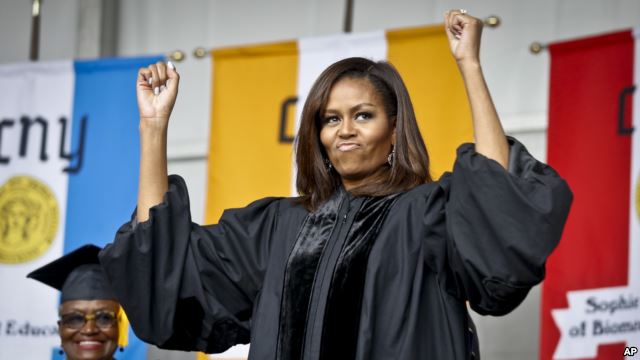
U.S. first lady Michelle Obama is scheduled to travel on Sunday to Africa to advocate for girl’s education.

Obama will highlight one of her core initiatives, Let Girls Learn. Sasha and Malia, President Obama and first lady’s daughters, and the girls’ grandmother, Marian Robinson, will also be joining the trip with stops in Liberia, Morocco and Spain.

“We believe very strongly that education and the empowerment of young people is going to be critical to a region that has known so much turmoil, particularly given the enormous youth population in those countries,” White House Deputy National Security Advisor Ben Rhodes said on Friday.

The first stop is Liberia, where the first lady will attend a meeting with the first elected woman head of state in Africa, President Ellen Johnson Sirleaf.

Obama then will visit the Peace Corps training facility in Kakata, Liberia, to speak with women participating at the Girls Leading Our World Program. They will also meet with Peace Corps volunteers and trainees.

The first lady will speak to adolescent girls at Unification Town, also in Liberia, about the obstacles they faced in order to acquire education. Actor Freida Pinto will join Obama and is schedule to moderate the meeting.
“The conversation will highlight both educational barriers girls face as Liberia moves beyond the Ebola epidemic, and the U.S. government’s efforts to continue to address those barriers and provide adolescent girls with equitable access to safe and quality education,” said Tina Tchen, Chief of Staff to the first lady.

Let Girls Learn is a global initiative launched by the president and first lady in 2015. The program addresses the obstacles that keep more than 62 million girls around the world out of school such as forced marriage, poverty, and violence.

White House staff said on Friday that 250 million girls live in poverty, and one out of three girls in developing countries are married by the age of 18. One in nine by 15.

In Morocco, Obama and daughters will be joined by actor Meryl Streep on June 28 and 29 for another conversation to help girls go to school. The country has about 85 percent of girls enrolled in school, but the number drops to 14 percent for high school.

The six-day trip ends in Spain, White house staff said.

Spain is a longtime U.S. ally and has dealt with “significant” economic challenges in recent years.

“The first lady, by going to these three countries, is able to visit three important regions to the United States, and is able to speak not just to government [officials] but to speak to people and to make clear that …a key part of our leadership is what we can do to lift up the lives of young people, particularly girls,” Rhodes said.

The White House said CNN films is covering trip costs for both actors. During the visit, CNN will be filming a documentary in Liberia and Morocco.

Michelle Obama will be using social media to document the trip. She recently joined Snapchat. She is also on Instagram, Twitter and Facebook. Obama will be writing about the travels in a daily diary at HelloGiggles.com.

Fuente de la noticia: http://www.voanews.com/content/first-lady-trip-to-africa-to-highlight-educational-obstacles-girls-face/3391976.html

Fuente de la imagen: http://gdb.voanews.com/53C66F1F-C0E1-4FFD-8832-D0E5C52402E0_mw1024_s_n.jpg

Comparte este contenido:

Panamá: La historia no contada en la ampliación del Canal

KaosenlaRed/25 de junio de 2016

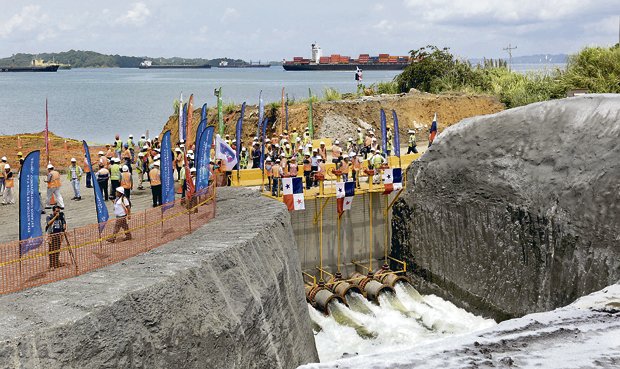
En razón de la inauguración de las nuevas esclusas del Canal, muy poco se ha dicho de la contribución y del esfuerzo de los miles de obreros de la construcción, cuyas manos siguen erigiendo las obras que asombran al mundo, a pesar de que muchas veces son menospreciados y hasta vilipendiados por sus luchas por parte de los grandes medios de comunicación y la clase dominante.

Se exaltan los nombres de los gobernantes pasados y presente, de los directivos de la ACP, de los altos funcionarios y de las tradicionales familias oligárquicas. Muy poco de las luchas del pueblo y los trabajadores. Le llaman el “Canal de Todos”, pero amplios sectores de la sociedad así no lo perciben. Es en verdad, la fiesta de pocos.

Salud y Seguridad

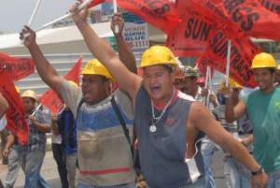
Aún cuando SUNTRACS se opuso al proyecto de ampliación como parte de FRENADESO, con argumentos fundamentados que nadie refutó durante el proceso de referéndum, la concreción del proyectó obligó al SUNTRACS a velar por los intereses laborales de los obreros allí contratados, entre ellos su seguridad. Es parte del desarrollo del capitalismo, donde el papel del sindicato es impulsar la lucha por mejores condiciones de trabajo y de vida de los trabajadores, independientemente de la opinión que tengamos sobre los proyectos que se desarrollan o ejecutan, al margen de nuestra voluntad.

En primer lugar queremos resaltar el tema de seguridad laboral. La presencia del SUNTRACS fue fundamental y así fue reconocido por ingenieros y altos funcionarios del consorcio que llevó adelante la obra. Durante el canal francés, hay quienes cifran el número de muertos en 40 mil y la etapa del canal por los norteamericanos en más de 25 mil.   Una de las obras a nivel mundial que más muertos ha producido en la historia.

doc-106150

Obviamente, no hay comparación posible con esas épocas. Las condiciones y relaciones de trabajo (prácticamente de esclavitud en aquellos años), la situación sanitaria, las enfermedades, el tema de seguridad, los avances tecnológicos, etc., difieren de aquella realidad.

En las obras de ampliación, en nueve años murieron nueve obreros, un promedio de un muerto por año. Esta cifra es ínfima si lo comparamos con la que en secreto estimó el consorcio, hasta 200 muertos. Sin la presencia del SUNTRACS y su esfuerzo por garantizar el cumplimiento de las medidas y normas de seguridad esto no hubiese sido posible. Pero, fueron nueves vidas valiosas que se fueron y que aún lloran sus familias humildes. Estos son los verdaderos héroes de la ampliación y no han sido reconocidos así, toda una injusticia. Como diría el canta autor uruguayo, Jorge Drexler: “Una vida lo que un sol Vale / Toda la gloria es nada / Toda vida es sagrada.”

Pero, además, es de resaltar el hecho de que a días de inaugurarse las nuevas esclusas aún muchos de los obreros incapacitados por lesiones durante las obras de ampliación, casi cien, no han cobrado sus prestaciones laborales en la Caja de Seguro Social. ¿Es el Canal de Todos? SUNTRACS no desmayará en su esfuerzo porque se haga justicia a estos panameños, una historia excluida de los programas que difunden los grandes medios de comunicación en su cobertura de la fiesta de pocos.

La mujer trabajadora

Otro hecho importante que también pasa desapercibido en la cobertura mediática es el hecho que en la ampliación laboraron alrededor de mil mujeres, siendo la obra de construcción con mayor contratación de mano de obra femenina, la mayoría colonense.

Inicialmente hubo reticencia del consorcio en contratar mujeres. Habían dudas acerca de su productividad y destreza. Gracias a la gestiones del SUNTRACS se logró finalmente la contratación de muchas de ellas, sin casi ninguna experiencia en estos oficios. El consorcio reconoció su equivocación. Las mujeres trabajaron a la par de los hombres. La mayoría madres solteras que eran el único sustento de sus hogares. Con los salarios que devengaban cada quincena, acrecentados con las horas extras, muchas mejoraron sus viviendas, sus condiciones de vida y la de sus hijos y ganaron la experiencia que las hacen aptas para ser contratadas en otros proyectos de construcción.

Esta historia de abnegación y de trabajo de humildes mujeres panameñas tampoco se resalta en la cobertura de los medios y de la ACP sobre la ampliación.

 Los salarios

Por último, es indispensable resaltar las luchas y huelgas realizadas por SUNTRACS en el proyecto que se inaugura. Gracias a ello, se mejoraron las condiciones de trabajo en el mega proyecto, así como las medidas de seguridad y un aumento salarial que queda como base para proyectos especiales que por su magnitud, complejidad y grado de inversión representan mayores riesgos y exigencias para los obreros de la construcción.

Esta es la historia no contada por los grandes medios y la ACP en la inauguración de las nuevas esclusas del Canal. Una historia escrita por obreros.

Tomado de: http://kaosenlared.net/panama-la-historia-no-contada-en-la-ampliacion-del-canal/

Imagen:

https://www.google.com/search?q=La+historia+no+contada+en+la+ampliaci%C3%B3n+del+Canal&source=lnms&tbm=isch&sa=X&ved=0ahUKEwj4rsiI3MPNAhWIHh4KHXzVDRoQ_AUICSgC&biw=1366&bih=623#imgrc=FWkBzkOufswoxM%3A

Comparte este contenido:

Docentes de Costa Rica se solidarizan con Oaxaca

ei-ie/25 de junio de 2016


Los Estudiantes y Docentes mostraron su indignación por los hechos ocurridos en Oaxaca.

La tarde del 23 de Junio del 2016, una representación de la Asociación Nacional de Educadores (ANDE), afiliada a la Internacional de la Educación para América Latina, además de representantes del BUSSCO y de estudiantes de la Universidad de Costa Rica, se manifestaron frente a la Embajada de México en San José, en solidaridad con los docentes, estudiantes y civiles fallecidos, agredidos y reprimidos por el Gobierno mexicano, al defender sus derechos.

Carmen Brenes Pérez, Secretaria General de ANDE expresó que «este es un grito de apoyo y de solidaridad, le decimos a los docentes que resistan, que es una lucha justa. Es indignante lo que están viviendo y nos unimos a la lucha de este país».

Tomado de: http://www.ei-ie-al.org/index.php/1274-docentes-de-costa-rica-se-solidarizan-con-oaxaca

Comparte este contenido:

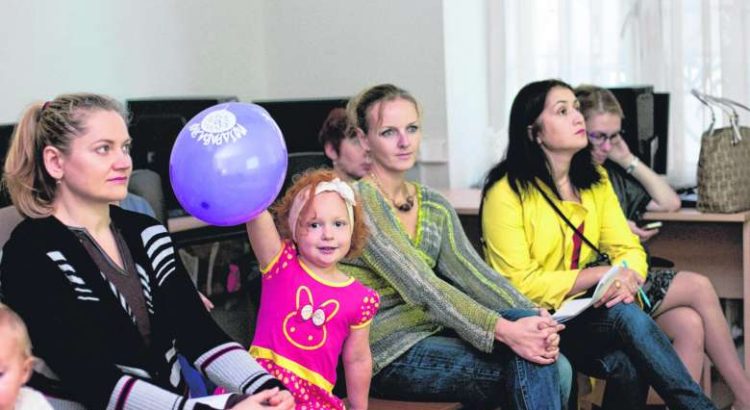
Rusia: Giving mums better working conditions

Europa/Rusia/Junio 2016/Autor: Natalya Paramonova / Fuente: straitstimes.com

Resumen:  Algunos consideran que una madre es un empleado no fiable – ella puede usar los días de enfermedad para cuidar de su hijo, no puede quedarse hasta tarde en el trabajo, pueden necesitar vacaciones y puede ser difícil para ella trabajar durante los fines de semana.

Some consider a mother to be an unreliable employee – she may use sick days to take care of her child, can’t stay late at work, may need a full vacation and it may be difficult for her to work during weekends.

But who pays heed to her child-minding duties and needs?

Moscow resident Olesya Kashaeva decided she had to address the issue. In 2012, she established a charity, Mother Works, which aims to be an ideal employer for mothers.

It aspires to be an employer that is aware of the problems of young mothers, provides them with the opportunity to study and offers them a means to earn an income.

The project took off in 2014, when it received a 1.6-million-rouble (S$33,600) grant from the Institute of Civil Society Issues to implement an educational project.

Today, 10 educational programmes have been established. Young women can access additional professional education, obtain a study grant, find a position or get help preparing for an interview.

The cost of the fund’s educational programmes is lower than others on the market.

In addition to a closed cycle of creating new jobs, third-party companies contact Mother Works in their search for qualified candidates.

The project currently employs eight people for an average salary of 50,000 roubles.

In August 2014, an affiliated project – the workshop, Mothers Themselves – was launched.

This is a clothing business and it aims to contribute to the Mother Works project by selling the items which mothers sew.

Still, reaching this far has not been easy.

The initial capital for the project, for instance, came from a concessional loan for a one-year period.

This helped the project team to lease premises and it paid a salary to the employees for three months, assuming that the project would start to pay for itself after this time. But this did not happen.

The problem: the team focused initially on taking care of women in difficult circumstances who needed income fast.

To do so, it tried to make children’s clothes and other complex items, but soon discovered that there were no professional seamstresses among them. As a result, materials were bought but nothing was made or sold.

Ms Kashaeva negotiated an extension for the loan and, after two years of experimentation, the group now produces cotton bags for large corporate clients.

While still unprofitable, Ms Kashaeva hopes to turn the organisation around soon.

Today, more than 70 per cent of young women who approached Mother Works consider that the project has improved the quality of their lives and given them a stable income.

Around 45 per cent of the mothers who sought help with setting up a business have actually launched their businesses and now create additional jobs.

The fund has expanded to 64 regions in Russia and has started to receive franchise requests. The sale of franchises could become an additional source of revenue for the project.

Fuente de la noticia: http://www.straitstimes.com/world/europe/3-giving-mums-better-working-conditions

Fuente de la imagen: http://www.straitstimes.com/sites/default/files/styles/article_pictrure_780x520_/public/articles/2016/06/25/ST_20160625_KYIMPACT5_2377800.jpg?itok=GSh-5yOA

Comparte este contenido:
Page 5502 of 6193
1 5.500 5.501 5.502 5.503 5.504 6.193