Page 823 of 6179
1 821 822 823 824 825 6.179

China: Parents of missing Uyghur children describe horror of family separation

China: Parents of missing Uyghur children describe horror of family separation

The exiled families of Uyghur children held in state “orphanages” in the Chinese region of Xinjiang described the torment of being separated in a new piece of Amnesty International research released today.

The organization spoke to parents who have been completely cut off from their children – some as young as five years old – and cannot return to China due to the threat of being sent to a “re-education” internment camp.

“China’s ruthless mass detention campaign in Xinjiang has put separated families in an impossible situation: children are not allowed to leave, but their parents face persecution and arbitrary detention if they attempt to return home to care for them,” said Alkan Akad, Amnesty International’s China Researcher.

“The heartbreaking testimonies of the parents we spoke to only scratches the surface of the scale of suffering endured by Uyghur families separated from their children. The Chinese government must end its heartless policies in Xinjiang and ensure that families can be reunited as quickly as possible without fear of being sent to an oppressive camp.”

Amnesty International interviewed six exiled Uyghur families currently residing in Australia, Canada, Italy, the Netherlands and Turkey. The families, who left China prior to the intensification of the crackdown against Uyghurs and other Muslim minority groups in 2017, had not dreamed that their children would be prevented from joining them.

The tragedy of family separation in Xinjiang exposes the inhumanity of China’s efforts to control and indoctrinate Uyghurs and other Muslim ethnic groups

Since 2017, an estimated one million or more people have been arbitrarily detained in so-called “transformation-through-education” or “vocational training” centres in Xinjiang, where they have been subjected to various forms of torture and ill-treatment, including political indoctrination and forced cultural assimilation.

“Uyghurs overseas often hesitate to publicly talk about human rights abuses against them and their families due to fear of repercussions for their relatives back in China. In spite of such challenges, these parents have decided to publicly share their stories in the hope that it will help them reunite with their children soon,” said Alkan Akad.

Children make perilous journey in attempt to reach Italy

Parents Mihriban Kader and Ablikim Memtinin fled from Xinjiang to Italy in 2016 after being harassed by police and pressured to give up their passports.

They left four children in the temporary care of grandparents, but soon afterwards the grandmother was taken to a camp, while the grandfather was interrogated by police.

“Our other relatives didn’t dare to look after my children after what had happened to my parents,” Mihriban told Amnesty International. “They were afraid that they would be sent to camps, too.”

The three youngest children were sent to an “orphan camp”: facilities set up across Xinjiang to house – and indoctrinate – children whose parents have been forced into internment camps, prison and other detention facilities. The eldest child was placed in a boarding school subjected to surveillance and monitoring.

Mihriban and Ablikim were unable to contact them from Italy, but in November 2019 they received a permit from the Italian government to bring their children to join them.

The four children – aged between 12 and 16 – travelled alone across China to the Italian consulate in Shanghai, but they were seized by police and sent back to the orphanage and boarding school.

“Now my children are in the hands of the Chinese government and I am not sure I will be able to meet them again in my lifetime,” Mihriban said. “The thing that hurts most is that, to my children, it’s as if their parents don’t exist anymore; as if we passed away and they are orphaned.”

In another case, Omer and Meryem Faruh fled to Turkey in late 2016 after police demanded they hand over their passports. They left their two youngest children, aged five and six, with grandparents because they did not yet have their own travel documents. Omer and Meryem later found out their relatives had been taken to camps, and they have received no word about their children since.

“We haven’t heard the voices of our daughters for the last 1,594 days,” Omer told Amnesty International. “My wife and I cry only at night, trying to hide our sorrow from our other kids here with us.”

Access for human rights monitors vital

Alkan Akad said: “The tragedy of family separation in Xinjiang exposes the inhumanity of China’s efforts to control and indoctrinate Uyghurs and other Muslim ethnic groups in the name of ‘countering terrorism’.

“China must end the measures that restrict the rights of all Muslim minorities to freely leave and return to the country. It must close all political ‘re-education camps’ and release detainees immediately, unconditionally and without prejudice.”

Amnesty International is calling on the Chinese government to provide full and unrestricted access to Xinjiang for UN human rights experts, independent researchers and journalists to conduct investigations about what is happening in the region.

Meanwhile, the organization urges other governments to do everything they can to ensure that Uyghurs, Kazakhs and other Chinese ethnic minorities resident in their countries are provided with assistance in trying to locate, contact, and reunite with their children.

Fuente de la Información: https://www.amnesty.org/en/latest/news/2021/03/china-parents-of-missing-uyghur-children-describe-horror-of-family-separation/


Comparte este contenido:

CDC changes school guidance, allowing desks to be closer

CDC changes school guidance, allowing desks to be closer

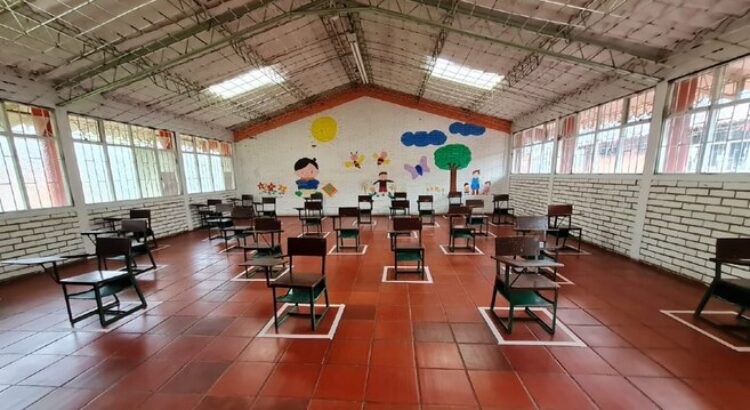
The revised COVID-19 recommendations represent a turn away from the 6-foot standard that has forced some schools to remove desks, stagger scheduling and take other steps to keep children away from one another.

NEW YORK — Students can safely sit just 3 feet apart in the classroom as long as they wear masks but should be kept the usual 6 feet away from one another at sporting events, assemblies, lunch or chorus practice, the Centers for Disease Control and Prevention said Friday in relaxing its COVID-19 guidelines.

The revised recommendations represent a turn away from the 6-foot standard that has sharply limited how many students some schools can accommodate. Some places have had to remove desks, stagger schedules and take other steps to keep children apart.

Three feet «gives school districts greater flexibility to have more students in for a prolonged period of time,» said Kevin Quinn, director of maintenance and facilities at Mundelein High School in suburban Chicago.

In recent months, schools in some states have been disregarding the CDC guidelines, using 3 feet as their standard. Studies of what happened in some of them helped sway the agency, said Greta Massetti, who leads the CDC’s community interventions task force.

«We don’t really have the evidence that 6 feet is required in order to maintain low spread,» she said. Also, younger children are less likely to get seriously ill from the coronavirus and don’t seem to spread it as much as adults do, and «that allows us that confidence that that 3 feet of physical distance is safe.»

CDC Director Dr. Rochelle Walensky said the revised recommendations are a «roadmap to help schools reopen safely, and remain open, for in-person instruction.» She said in-person schooling gives students not only «the education they need to succeed» but access to crucial social and mental health services.

The new guidance:

— Removes recommendations for plastic shields or other barriers between desks. «We don’t have a lot of evidence of their effectiveness» in preventing transmission, Massetti said.

— Advises at least 3 feet of space between desks in elementary schools, even in towns and cities where community spread is high, so long as students and teachers wear masks and take other precautions.

— Says spacing can also be 3 feet in middle and high schools, so long as there is not a high level of spread in the community. If there is, the distance should be at least 6 feet.

The CDC said 6 feet should still be maintained in common areas, such as school lobbies, and when masks can’t be worn, such as when eating.

Also, students should be kept 6 feet apart in situations where there are a lot of people talking, cheering or singing, all of which can expel droplets containing the coronavirus. That includes chorus practice, assemblies and sports events.

Teachers and other adults should continue to stay 6 feet from one another and from students, the CDC said.

The CDC’s 6-foot advice for schools, issued last year, was the same standard applied to workplaces and other settings. In contrast, the World Health Organization suggested 1 meter — a little over 3 feet — was sufficient in schools. The American Academy of Pediatrics says desks should be 3 feet apart and «ideally» 6 feet.

The CDC guidance was problematic for many schools that traditionally had 25, 30 or more children per classroom in closely grouped desks. Some schools adopted complicated schedules. For example, half a class might come to school on some days, and the other half on other days.

Some schools stopped using lockers and staggered when different grades could move between classes to avoid crowding in the halls, where maintaining any distance at all can be difficult.

The Ridley school system in suburban Philadelphia took steps like that to abide by the 6-foot guideline. But neighboring communities went with 3 feet, «and we’re not seeing the data really reflect a different spread rate,» said Lee Ann Wentzel, district superintendent.

Even before the CDC acted, the district had decided to shift to 3-foot distancing next month. Wentzel said the change in CDC guidance will make it easier to explain and defend the decision.

A recent study in Massachusetts looked at students and staff members in schools that used the 3-foot standard and those that had the 6-foot one. It found no significant difference in infection rates.

Massetti said other research has also been influential, including two studies the CDC released Friday. One out of Utah found low coronavirus transmission rates among students who did a good job wearing masks and whose desks were only 3 feet apart. The other study, done in Missouri, pointed to a similar conclusion.

Still, the change at the CDC met with skepticism in some quarters.

Randi Weingarten, president of the American Federation of Teachers, said the 1.6-million-member union is reviewing the latest research, «but we are concerned this change has been driven by a lack of physical space rather than the hard science on aerosol exposure and transmission.»

Dr. Lawrence Kleinman, a professor of pediatrics and global urban public health at Rutgers University in New Jersey, said 3 feet is «probably safe» if schools are doing everything right — if everyone is wearing masks correctly at all times and washing their hands, and if ventilation is good. But he said that’s unlikely.

«I will not send my child to a school that’s distancing at 3 feet,» said Kleinman, who has a 4-year-old daughter.

___

The Associated Press Health and Science Department receives support from the Howard Hughes Medical Institute’s Department of Science Education. The AP is solely responsible for all content.


Fuente de la Información: https://www.startribune.com/cdc-changes-school-guidance-allowing-desks-to-be-closer/600036203/

Comparte este contenido:

Education Department to fully forgive federal loans of defrauded students

Education Department to fully forgive federal loans of defrauded students

The Education Department announced this week it would fully forgive the federal loans of borrowers who enrolled in schools that «engaged in certain misconduct.»

Under the Trump administration, some students only were only given partial relief, the department said. The Education Department estimates the new formula could help approximately 72,000 borrowers receive $1 billion.

«Borrowers deserve a simplified and fair path to relief when they have been harmed by their institution’s misconduct,» said the new Secretary of Education, Miguel Cardona, in a statement. «A close review of these claims and the associated evidence showed these borrowers have been harmed and we will grant them a fresh start from their debt.»

In 2019, then-Education Secretary Betsy DeVos faced intense scrutiny over her handling of the issue when she appeared before the House Education and Labor committee. The Education Department says it will now ensure borrowers with approved claims «have a streamlined path to receiving full loan discharges,» including individuals who previously received «less than a full loan discharge.»

PHOTO: The U.S. Department of Education stands in Washington, D.C., February 21, 2021.

«The department added that it will also be «pursuing additional actions, including re-regulation, in the future.»

Democrats, including House Education and Labor Committee Chair Bobby Scott of Virginia, applauded the move.

«For more than four years, defrauded borrowers and their families have lived under a cloud of education debt that they should not have to repay,» he said in a statement. «I applaud the Biden Administration for doing the right thing by making these borrowers whole, and I can only imagine the mixture of joy and relief they are feeling today. This announcement is lifechanging for tens of thousands of people across the country.»

Fuente de la Información: https://abcnews.go.com/Politics/education-department-fully-forgive-federal-loans-defrauded-students/story?id=76579060&cid=clicksource_4380645_14_comic_strip_sq_hed


Comparte este contenido:

State Board of Community Colleges | Budget requests, Roanoke-Chowan president approved, and more

State Board of Community Colleges | Budget requests, Roanoke-Chowan president approved, and more

The State Board of Community Colleges met March 19th to discuss progress on the community college system’s legislative priorities, personnel changes, and budget accommodations around “the COVID year.”

Roanoke-Chowan presidential search

The Board announced the hiring of Dr. Murray Jean Williams as president of Roanoke-Chowan Community College. Dr. Williams was previously the vice president of adult education and academic support for Southern Crescent Technical College in Griffin, Georgia.

The board of trustees at Roanoke-Chowan Community College sent the names of two finalists to the Board’s Personnel committee, which decided on Dr. Williams. The recommendation was approved unanimously by the full Board.

“COVID year” FTE exception

The Board approved a 2021 Budget Provision Request that included two action items. One of the system’s top legislative priorities is a request for $61 million in non-recurring funding to help stabilize colleges’ budgets due to pandemic-related enrollment losses this year. The system is now requesting that these budget stabilization funds, if appropriated by the legislature, remain available through June 2023.

“This is very in line with what was done with the hurricane funds for the disaster funds there to provide a little more flexibility to the fact that the pandemic uncertainty is still kind of out there,” said Alex Fagg, director of government relations for the system office.

Second, the system requests that the 2020-21 academic year — referred to by Board members as “the COVID year”  — be excluded from the two-year budget calculation for colleges who experienced enrollment decline.

“The second one is to essentially skip the COVID year, if there was a decline at the college enrollment, or a college FTE, for the two-year calculation so that college would use the 19-20 and 21-22 to develop that two-year FTE calculation,” she said.

State funding is allocated to community colleges based on their enrollment the previous two years. During a recession, community college enrollment typically increases. But due to the uneven impact of COVID-19 and the nature of online courses, nearly all of North Carolina’s community colleges have experienced enrollment declines this year. Systemwide, community colleges experienced an 11% enrollment decline in fall 2020 compared to fall 2019.

Exempt employee status

The Board approved a motion to designate some system office staff as “exempt” employees.

“One category is what we call SBA, which is subject to the State Human Resources Act. The other category is EPA, which stands for exempt from the Personnel Act,” said Jonathan Harris, chief of staff for the system office. “The exempt folks in the system office, they are nominated by the president to the State Board, and the State Board ultimately approves the hiring of EPA staff. SBA are not brought before the Board, and they are hired here internally at the system office.”

Employees falling under exempt status are “at-will” employees and serve at the pleasure of the system president. This change affects positions in the system’s communications office, switching their status from SBA to exempt.

“The reason for that is the system president and I believe that our communications folks are the representatives of the system office and the community college system,” Harris said. “We are putting out either press releases statements, social media marketing, branding type materials, and we feel if there is a change in direction that’s needed in our communications area, that would allow us to make that change relatively quickly.”

Presidents’ Association report

Dr. Kandi Deitemeyer, president of Central Piedmont Community College, gave a report on behalf of the Presidents’ Association outlining the need for in-person learning as they plan for summer and fall terms.

“Many of our students need to be on campus,” she said. “They need to be in areas where they’re supported outside of the classroom. They need to be engaged in those supportive learning environments. And also, many of them need that sense of community, and that’s what your local community college does.”

Deitemeyer said they are considering a need for programs to address learning loss due to the nature of courses during the pandemic.

“We do anticipate we will see our students return, but we anticipate many adult learners and others who will need to rescale, retrain, or maybe who have just decided after this year, working at home or perhaps not working, that they need a new career,” she said. “They need to re-advantage themselves, and their local community college, as you know, will be the place for them to land.”

The Board will next meet on April 15 and 16. Subscribe to Awake58 for more State Board of Community Colleges coverage.

Fuente de la Información: https://www.ednc.org/03-19-2021-state-board-of-community-colleges-meeting/

Comparte este contenido:

Advancing Diversity, Equity and Inclusion

Advancing Diversity, Equity and Inclusion


The NC State College of Education’s land-grant vision is to lead the way in increasing educational opportunities for all and reducing achievement gaps. To fulfill this vision, we must confront racial injustices and build a more diverse, inclusive and supportive community — both within our college and in the field of education. In summer 2020, we created a change agent group to identify additional strategies and actions we, as a college, will take to intensify our efforts in these areas.

College of Education Change Agent Task Force

The Change Agent Task Force is made up of faculty, staff and students within the college who serve as liaisons, experts in diversity, equity, and inclusion, and advisors whose work encourages and empowers the college community and the next generation of teachers and scholar-leaders to teach and lead in ways that disrupt structural inequities, value diversity and promote systemic change.

«Our mission as a college compels us to be assertive on all fronts to defeat racial ignorance, hatred and oppression. Fulfilling that mission will require
all of us, particularly those of us who are white,
to own that racism is not a problem
that Black people can fix.»

– Mary Ann Danowitz, D.Ed.
Dean of the College of Education

Fuente de la Información: https://ced.ncsu.edu/advancing-dei/


Comparte este contenido:

Estados Unidos: Más de tres millones de personas se apuntaron a un curso sobre la felicidad. Esto aprendieron

Más de tres millones de personas se apuntaron a un curso sobre la felicidad. Esto aprendieron

Tal vez parezca sencillo, pero no está de más repetirlo: dormir, sentir gratitud y ayudar a otros son esenciales para ser felices a largo plazo.

La clase de la felicidad en Yale, oficialmente llamada Psicología 157: La psicología y la buena vida, es una de las clases más populares que se han ofrecido en los 320 años de historia de la universidad.

El curso solo se dictó en persona una vez, durante el semestre de la primavera de 2018, como una serie de conferencias para 1200 personas en el espacio más grande del campus.

En marzo de ese año, una versión gratuita de 10 semanas estuvo disponible al público en general a través de Coursera con el título “La ciencia del bienestar” y también se volvió popular al instante y atrajo a cientos de estudiantes cibernéticos. Pero cuando comenzaron los confinamientos dos años después, a finales de marzo de 2020, la cifra de estudiantes inscritos se disparó. A la fecha, más de 3,3 millones de personas se matricularon, de acuerdo con el sitio web.
“Octuplicamos el número de personas que toman la clase”, dijo Laurie Santos, profesora de psicología en Yale y directora de Silliman College, en la misma universidad, sobre la popularidad del curso durante la pandemia.
“Todos saben lo que deben hacer para proteger su salud física: lavarse las manos, mantener una sana distancia y usar cubrebocas”, añadió. “La gente no sabía bien qué hacer para proteger su salud mental”.

El plan de estudios de Coursera, adaptado del que usó Santos para sus clases en Yale, les pide a los alumnos, entre otras cosas, que hagan un registro de sus patrones de sueño, lleven un diario de gratitud, realicen actos aleatorios de bondad y tomen nota de si con el tiempo estos comportamientos se correlacionan con un cambio positivo en su humor en general.

Laurie Santos habla con unos estudiantes después de una sesión de su clase en Yale en 2018.

Gretchen McIntire, de 34 años, auxiliar sanitaria a domicilio en Massachusetts, está estudiando la licenciatura en Psicología a través de un programa en línea de la Universidad Southern New Hampshire. En su tiempo libre durante el confinamiento en agosto, McIntire tomó la clase. Dijo que le “cambió la vida”.

El aspecto práctico del plan de estudios de Coursera le atrajo a McIntire, quien a los 23 años supo que tenía el síndrome de Asperger. Siempre fue noctámbula y había tenido dificultades para dormir y apegarse a sus horarios.

“A veces es difícil imponerte estos límites y decir: ‘Sé que este libro es muy emocionante, pero puede esperar a mañana, dormir es más importante’”, dijo. “Eso es la disciplina, ¿cierto? Pero nunca lo había hecho de esa manera: ‘Te va a hacer más feliz, no es solo que sea bueno para ti; de verdad te va a hacer más feliz’”.

Dijo que le resultó útil practicar meditación a diario, y que lo ha seguido haciendo incluso después de terminar la clase. La meditación también la ayudó a dejar las redes sociales.

“Me encontré mirando hacia el interior. Me ayudó a ser más introspectiva”, dijo. “Sinceramente, fue lo mejor que hice”. (Más tarde volvió a descargar sus aplicaciones sociales, incluido Facebook Messenger, y se sintió abrumada al instante).

Tracy Morgan, supervisora de programación en el Complejo de Recreación Bob Snodgrass en High River, Alberta, Canadá, se inscribió a la clase en junio pasado mientras estaba en confinamiento con sus hijos y esposo.

“No hay razón por la que no deba ser feliz”, dijo. “Tengo un matrimonio maravilloso. Tengo dos hijos. Tengo un buen empleo y una casa linda. Pero nunca lograba encontrar la felicidad”.

Desde que tomó el curso, Morgan, de 52 años, se ha comprometido a hacer tres cosas todos los días: hacer yoga durante una hora, salir a caminar al aire libre sin importar cuánto frío haga en Alberta y escribir de tres a cinco entradas en su diario de la gratitud antes de ir a dormir.

“Cuando empiezas a escribir esas cosas al final del día, solo piensas en ellas en esos momentos, pero en cuanto lo vuelves parte de tu rutina, empiezas a pensar en ellas todo el día”, comentó.

Además, algunos estudios muestran que encontrar razones para sentir gratitud puede aumentar el bienestar en general.

Ewa Szypula, de 37 años, catedrática de estudios francófonos en la Universidad de Nottingham en el Reino Unido, dijo que ha tenido interés en las técnicas de automejora desde que estudiaba el doctorado hace unos años. “En algún momento del segundo o tercer año, sí te sientes un poco desgastada y necesitas estrategias para lidiar con eso”, explicó.

Un pequeño estudio del curso de Santos que la impresionó se trataba de una encuesta a 632 estadounidenses en las que los participantes debían predecir cuán felices serían si les daban cinco dólares para gastarlos en ellos mismos en comparación de si se los daban para gastarlos en alguien más. En el estudio, la gente predijo que sería más feliz si podía quedarse con el dinero. Pero los participantes reportaron de manera consistente que gastar el dinero en alguien más les había dado mayor satisfacción.

Szypula tuvo la oportunidad de combinar esta sabiduría recién adquirida con un experimento práctico que llevó a cabo en el cumpleaños de su hermana. En lugar de quedarse con un vestido costoso que había comprado, se lo dio a su hermana.

“Sigo sintiendo esa felicidad meses después”, expresó.

 En 2018, casi 1200 estudiantes de Yale tomaron Psicología 157: La psicología y la buena vida. La clase se trasladó desde la Capilla Battell, que solo podía albergar a 800 personas, a Woolsey Hall, la sala de conciertos de la universidad

No todos los estudiantes que han tomado el curso sintieron un cambio transformador. Matt Nadel, de 21 años de edad y alumno de último año de la carrera en Yale, estaba entre los 1200 estudiantes que tomaron la clase presencial en 2018. Dijo que le costó trabajo acostumbrarse a las exigencias de Yale cuando entró a la universidad en el otoño de 2017.

“Estaba estresado y no sabía bien cómo manejarlo”, dijo.

Nadel dijo que se sintió decepcionado de que la clase fuera una especie de resumen de los consejos buenos pero obvios que te da una abuela. Duerme bien, toma agua, haz lo mejor que puedas.

“Ya sabía que dormir es bueno. Sabía que para la felicidad a largo plazo mis calificaciones no importaban, que no iba a ser una persona más feliz y mejor si tenía buenas notas”, dijo. “¿La clase impactó mi vida de una manera tangible y a largo plazo? La respuesta es no”.

Si bien la clase no fue transformadora para él, Nadel dijo que ahora es más expresivo cuando siente gratitud. “Lo cual es genial”, opinó. “Pero eso es todo”.

Kezie Nwachukwu, de 22 años, también tomó la clase en Yale. A él tampoco le pareció revolucionaria, según dijo, pero sí ha logrado encontrar algo valioso en el programa.

Nwachukwu, quien se identifica como cristiano, dijo que lo más significativo que aprendió es sobre la importancia de la fe y la comunidad para la felicidad.

“Creo que tenía dificultades para reconciliarme con mi religión e interrogarla en términos intelectuales”, afirmó. “También para reconocer que simplemente me gusta mucho estar con esta comunidad que creo que me convirtió en la persona que soy”.

¿Transformadora? No. Pero comentó que sin duda lo hizo sentirse más positivo respecto a su vida.

“La clase me ayudó a ser más seguro y estar cómodo con mis creencias religiosas preexistentes”, agregó Nwachukwu.

Otra lección que se le quedó grabada fue el valor de la visualización negativa. Consiste en pensar en algo bueno en tu vida (como tu precioso y razonablemente asequible apartamento) y luego imaginar el peor escenario posible (encontrarte de repente sin hogar y sin red de seguridad). Si la gratitud es algo que no te surge de forma natural, la visualización negativa puede ayudarte a conseguirlo.

“Es algo que tengo muy presente, sobre todo cuando siento que mi mente está tan atrapada en pensar en los obstáculos futuros”, dice Nwachukwu. “Debería estar muy agradecido por todo lo que tengo. Porque uno no está hecho para darse cuenta de estas cosas”.

Fuente de la Información: https://www.nytimes.com/es/2021/03/19/espanol/clase-felicidad-yale.html


Comparte este contenido:

Ecuador: Trabajo infantil no desaparecerá hasta 2028, dicen las autoridades

Aunque la pobreza es un motivo que promueve el trabajo de niños, también se trata de un tema cultural.

En Quito el 3% de los niños, niñas y adolescentes realiza trabajo infantil, aunque este se encuentra prohibido en la Constitución del Ecuador. Son 25.600 infantes, según determinó el estudio “Diagnóstico situacional sobre el trabajo infantil en el Distrito Metropolitano de Quito”, realizado a finales de 2019. La mayor parte de ellos, el 71%, tiene entre 5 y 14 años.

El estudio lo lideró el Consejo de Protección de Derechos, del cabildo quiteño. El objetivo que se planteó en ese momento fue crear una ordenanza que permita trabajar en la erradicación del trabajo infantil.

En la ciudad se cuenta con cuatro Cetis: Mercado Mayorista, La Mariscal, San Roque y Carollo. Además, tres “puntos Cetis”: Ofelia, Mercado San Roque y Casa Somos de Calderón (de próxima apertura este último), que brindan los mismos servicios, pero en espacios comunitarios que se consiguen a través de convenios con empresas e instituciones.

En estos se atiende a niños de 5 a 15 años, que se encuentren en riesgo de explotación laboral o “callejización”, según explica Elba Gámez, jefa de Unidad de Proyectos de Otras Temáticas, que es cualquier actividad que mantenga a un menor en la calle.

Pablo Benalcázar, gerente del Mercado Mayorista, asegura que el trabajo infantil en esta zona ha sido casi erradicado, al menos en menores de 12 años. “En las seis semanas de gestión que llevo en la administración hemos tenido dos casos de menores que se encontraban trabajando, pero como no pertenecían al mercado solo se pudo pedir que se retiren”, indicó.

Según nos cuenta, dentro de los estatutos internos existen sanciones para quienes tengan menores trabajando. La primera vez se hace un llamado de atención verbal, la segunda instancia es una amonestación escrita y una multa que va del 5 al 10% del valor del arriendo del local, y si reincide, puede ser terminado el contrato de arrendamiento por parte de la administración.

Durante la pandemia estos centros tuvieron que cerrar, sin embargo, la situación se agravó y tuvieron que reabrirse en el mes de octubre. Con las clases en línea, durante la pandemia “los niños se ubicaban en las esquinas de los parques o alrededor del teléfono de las mamitas para recibir clases”, indicó Gámez. Esto motivó a que, cumpliendo las medidas de bioseguridad, se retome el trabajo de los Cetis.

Actualmente se atiende a 300 menores y se les brinda alimentación balanceada de manera gratuita. Los horarios de atención dependen del sector y jornada de trabajo, especialmente en los mercados de Quito. También, en convenio con Cruz Roja ecuatoriana, los niños recibirán, en los próximos días, un segundo chequeo médico y pueden acceder a atención psicológica.

El Patronato despliega, de lunes a domingo, un equipo de abordaje en las zonas de mayor incidencia de trabajo infantil. El personal se encarga de realizar un acercamiento con las familias y ofertar el servicio para los más pequeños. “Hemos tenido buena acogida, ya que es una preocupación menos para los papás que realizan trabajo en calle”, añadió Gámez.

Según las autoridades, aunque la cifra se ha reducido de 10% en 2006 a 3% en 2019, no se podrá erradicar completamente, al menos, hasta el 2028. La situación preocupa, pues los efectos más comunes en los niños que trabajan pueden evidenciarse físicamente: lesiones, fiebre, heridas, quemaduras, problemas en piel y ojos y agotamiento. (I)

Fuente: https://www.eluniverso.com/noticias/ecuador/erradicacion-trabajo-infantil-quito-nota/

Comparte este contenido:
Page 823 of 6179
1 821 822 823 824 825 6.179