Antesala y contexto. Nuestros hijos, la pandemia y la educación. La que nos da herramientas para discernir y entender al tiempo en el que vivimos, junto a la Democracia, peligra. Y peligra no solo al Sur. Hoy vemos como el Capitolio de Estados Unidos tiembla y se difumina en grupos extremistas en redes sociales. En conferencias de prensa, en Impeachments en vivo y en la pérdida de poder de compra, la inflación consiguiente y la postura concreta de gobiernos que afirman o desarman sus bases. Y con ellas a toda la población que los compone.
Traemos la palabra de CLADE (Campaña Latinoamericana por el Derecho a la Educación) desde Argentina y Brasil y la situación local de Uruguay y Latinoamérica con el Maestro y ex-consejero del CEIP (Consejo de Educación Inicial y Primaria) de Uruguay. Es tan profundo el caos en la educación pública que nos atraviesa a todos. Y debe reformularse en contexto de pandemia y de futuro. ¿Qué será de nuestros niños sin educación o perspectivas claras a corto y mediano plazo? El mundo virtual y el presencial están rediseñándose. Así también la capacidad de pensamiento y reflexión para avanzar en Democracia.
Argentina en pandemia y crisis
Consultamos a Marcela Browne, quien trabaja en FundaciónSES, una fundación sin fines de lucro creada en 1999 que desde entonces trabaja en América Latina y Europa promoviendo redes y asociaciones desarrollando conjuntamente políticas públicas con el Estado. Promueve la inclusión juvenil en riesgo enfocada en el desarrollo de sus derechos. Marcela además trabaja con CLADE poniendo en práctica programas de apoyo a la educación argentina, haciendo un esfuerzo en Argentina a través de varias políticas públicas como Acompañar-Puentes de igualdad y Crecer revinculando estudiantes a la educación. También están trabajando con UNICEF para crear una base nominalizada de seguimiento a las trayectorias educativas que permitirá acompañar la evolución de cada estudiante.
La contracara es cruda. Los sindicatos vinculados a la educación pública argentina están trabajando junto a las cooperadoras de las escuelas enfocados en el regreso a la presencialidad cuidada haciendo énfasis en infraestructura adecuada y los protocolos sanitarios. Algunas de las reivindicaciones de CTERA en la paritaria nacional docente son que el piso salarial y el FONID superen la inflación y condiciones de salud y trabajo para los estudiantes y docentes, previas al inicio de clases en la mayoría de las jurisdicciones.
Y los números dicen mucho más. En dos de las franjas más sensibles y vulnerables, el nivel inicial y los niveles secundarios hacia la educación terciaria y universitaria. En nivel inicial, según un estudio realizado por FundaciónSES, la Universidad Pedagógica Nacional y UNICEF Argentina en 2030: “El sistema educativo de gestión estatal atenderá solamente a 105.000 niñas y niños de entre 0 y 2 años de los más de 2 millones que se estima estarían en condiciones de ingresar a este nivel”.
Es decir que, de acuerdo a la Estrategia Nacional de Primera infancia, solo un 10% del total de excluidos será atendido en los Centros de Primera Infancia. Y cuanto más nos acercamos al sector de escuela primaria, mayor es la franja de niños que queda afuera del sistema público de educación. Las salas de 3, 4 y 5 años cumplirán con la obligatoriedad dejando fuera a 80 mil niños y niñas de 4 años. La sala de 3 años atenderá a menos de la mitad de la población en esa franja (311 mil de los 716 mil niños y niñas), dejando fuera del sistema a más de 400 mil niños y niñas.
Hablando de adolescentes, al igual que en la actualidad, solo el 53% de los estudiantes que ingresaron a primer año, finalizará el secundario en 2030. Creciendo la matrícula en alrededor de 16 mil estudiantes de 2020 a 2024 y decreciendo el total de matrículas en 2030 a 105.652 estudiantes de nivel secundario, aumentando la brecha en áreas urbanas. Para 2030 se prevén, desde este estudio, graves dificultades de acceso a la educación, de mantenerse las mismas tasas de cobertura, promoción y repitencia. Hablando de secciones rurales y urbanas necesarias para incorporar a las y los jóvenes en el nivel hubiera implicado la apertura de 5.737 nuevas secciones en 2020 (sobre lo que no se avanzó), 6.811 en 2024 y 4.760 secciones nuevas para el final del periodo 2030.
“En 2021 el presupuesto de la Gobernación de Buenos Aires bajó sustantivamente y una porción muy importante de este presupuesto se destina a la gestión de escuelas privadas. Y eso es grave”.
En tiempos de crisis económica naturalmente migra una franja captada por educación privada hacia educación pública. Es decir que la mercantilización de la educación en Argentina, si bien es menor que en Chile, que es un extremo, es un signo que repercute no sólo en Buenos Aires provincia sino en toda el país. Y la preocupación fundamental es cómo articular educación virtual en un contexto tan complejo y diverso con docentes también desplazados de sus puestos de trabajo. Todo esto en medio de una crisis económica que también desplaza al alumnado en franjas extremadamente vulnerables, con carencias y pobreza georeferenciadas que resultan en una expulsión de gran parte de jóvenes y niños del sistema.
Además, quien sostiene a los jóvenes y niños y niñas argentinas también son sus círculos primarios, las familias que tienen que arreglárselas entre empleo, subempleo, desempleo y sus propias rutinas para sostenerse en esta situación. Poniendo en riesgo a la integración y la continuidad de los procesos educativos que captan a más del 60% de niños, niñas y adolescentes de la argentina. Y por consiguiente al futuro de la nación si pensamos en los 3 ejes de la educación secundaria argentina: formar para la ciudadanía, para el acceso a la educación superior y para el mundo del trabajo.
Según Marcela Browne, estos tres objetivos deberían verse reflejados en las currículas y el propio proyecto institucional: “Las desigualdades atraviesan a toda la Argentina por eso es importante salir del concepto de igualdad y pasar a la concepción de justicia educativa. Hay que invertir más donde hay más desigualdades”.
En Uruguay
La situación en Uruguay tampoco es simple. Especialmente con la desaparición de los Consejos dentro de la educación pública, producto de la implementación de disposiciones contenidas en la Ley de Urgente Consideración. En estos momentos el Frente Amplio está haciendo énfasis en la junta de firmas para quitar 135 artículos que ponen en juego no solo Derechos Humanos sino la propia estructura estatal de Uruguay. Algunos de ellos yendo incluso contra la propia Constitución vigente en Uruguay. Pasando por la desconcentración y desestructuración de la educación pública tendiendo a la mercantilización de este derecho. Siguiendo por el derecho de reunión regulado en forma subjetiva y sujeto a interpretaciones que podrían configurar antecedentes sobre los que se restringe Democracia.
Además, entre otras disposiciones con la LUC (Ley de Urgente Consideración, impuesta por el actual gobierno de Luis Lacalle Pou y la Coalición de gobierno), se habilita el allanamiento de morada sin previo aviso. Sin olvidar la balacera ocurrida en Plaza Seregni de Montevideo, el domingo 1º de noviembre de 2020, donde sin previo aviso se violentó a cientos de jóvenes que estaban reunidos junto a colectivos de la comunidad negra, LGTB, estudiantes y diversos colectivos sociales. Todos ellos participando de talleres de integración sobre sexualidad, al son del candombe. Como si fuera un atentado, las fuerzas policiales también en el mismo día y de la misma forma detuvieron a jóvenes en distintas plazas del interior de Uruguay (Departamentos de Colonia y Rocha, entre otros) con la misma impunidad. La INDDHH solicitó las filmaciones de las cámaras en cada uno de los lugares citados y solo recibió contenido modificado y editado de lo sucedido desde el Ministerio del Interior. Aún se está a la espera del esclarecimiento de estas situaciones.
El colectivo autogestionado de padres y madres de alumnos de la educación pública Familias Organizadas lanzará una campaña informativa centrada en el inicio de clases 2021. Según La Diaria, “el colectivo considera que hay avances en el nuevo protocolo, pero cuestiona que el accionar en las escuelas está muy librado a lo que las direcciones (de las escuelas) puedan hacer”. Este colectivo elaboró no solamente protocolos sanitarios durante 2020. Además asesoró, gestionó y tomó la responsabilidad de alfabetizar a sus hijos. Hablamos de la educación de niñas y niñas con 200 mil personas en seguro de paro en marzo de 2020 y un crecimiento sostenido del desempleo formal en Uruguay.
El maestro Pablo Caggiani, ex consejero del ex CEIP (Consejo de Educación Inicial y Primaria) de Uruguay hace énfasis en la desarticulación del sistema educativo uruguayo, Ley de Urgente Consideración mediante. El primer punto de gravedad, según Caggiani, es el desmembramiento de la estructura educativa en Uruguay, dejando sin comunicación ni coordinación a miles de profesionales de la educación. Retrocediendo hacia principios de siglo XX. Desconectando y dejando desamparados a sindicatos y estructuras educativas, dependientes de una única dirección que concentra y congestiona la gestión y administración de la educación pública. Dice que la Coordinadora de Sindicatos de la Enseñanza de Uruguay, (CSEU) viene trabajando mucho con la Internacional de la Educación que viene trabajando en torno a la privatización de la educación en América Latina. “Los gremios están con agenda de tema. Lo que hay que ver es qué correlación de fuerzas se construye para evitar los retrocesos en todos los planos”.
Además, la tendencia mercantilista que mira hacia Chile, a pesar de que Uruguay posee una pirámide más parecida a países del primer mundo, producto de los avances llevados adelante durante los últimos 15 años hasta 2019. La alarma de Caggiani se enfoca en que de toda la evolución LUC mediante, protagonizada por Uruguay, solamente resta el Plan Ceibal, una de las fuentes de inspiración para el CEILP en Argentina. Se refirió también a un gravísimo incidente protagonizado por Gabriela Bazzano, la Secretaria Nacional de Cuidados y directora del Programa Nacional de Discapacidad del Ministerio de Desarrollo Social.
Bazzano fue investigada por la Justicia de Crimen Organizado por su trabajo liderando la asociación civil Seamos, enfocada en la reinserción de personas con discapacidad intelectual o psiquiátrica. Bazzano entregaba niños de padres en situación de riesgo económico a otras familias, sin ningún respaldo legal detrás. Esgrimió en nota radial en FM Del Sol de Uruguay que luego de viajar a países escandinavos trajo esa lógica de trabajo para replicar en Uruguay. A pesar de haber sido denunciada por INAU y el Hospital Pereira Rossell en 2015 por entregar a estos niños a otras familias sin el control del Instituto Nacional del Niño y el Adolescente del Uruguay ni de otros organismos estatales. Aun así recibió el apoyo del propio Lacalle Pou en 2020.
Caggiani también habló sobre las bancadas religiosas y su posible influencia en la situación actual de la educación frente a lo sucedido de la mano de la Ministra de la Mujer y DDHH de Brasil. Damaeres Alves desarticuló diversos programas en escuelas públicas brasileñas, como el de educación sexual, dejando desamparados a millones de niños frente al abuso sexual y psicológico, que creció aún más durante 2020 en adultos y niños.
“Bueno ese es un escenario que es cuasi-delictivo pero que da cuenta de algunas de las perspectivas que tienen del estado, de la política pública. Particularmente de la política social en los diferentes sectores del gobierno. Para el conservadurismo definido por (Robert) Nisbet, el estado tiene que ser las armas, la tierra y el poder. Y todo el resto corresponde a la comunidad. Y además, eso está ordenado por una desigualdad natural. Que es que, a uno le tocó nacer en determinado lugar y a otros en otro y se ordena según la caridad de la comunidad de los sectores que más tienen hacia los que menos tienen. Y bueno, es esa perspectiva. No hay perspectiva de sujeto de derecho en esa lógica. Es más; es algo que se hizo fuera del estado y de la inspección de los organismos que tienen que velar por los derechos del niño, niña y adolescente. O por los gurises en situación de discapacidad. Es parte de la alianza que está en el gobierno y sí, efectivamente piensan así. Así como el presidente de la Asociación Rural (ARU) dijo que la desigualdad era natural, cada tanto se escapan estas tortugas que dan cuenta de una producción de política social que está alineada a esas definiciones de cuál es el rol del estado y qué sucede con los derechos de ciudadanos y ciudadanas. Estas dos (situaciones) tienen que ver con la correlación de fuerzas que la política y los movimientos sociales generen en la coyuntura. Tanto lo de la bancada religiosa como la derogación o no de la Ley de Urgente Consideración. Y reitero: la coalición gobernante es una coalición que racionalmente no se sostiene. No podría pensar a un ultramontano o a un católico conservador sentado al lado de un Batllista. Lo mismo sucede con otros sectores de la coalición. Es muy difícil pensar que eso pueda sostenerse en el tiempo consistentemente.”
El 23 de febrero, en entrevista en el programa No Toquen Nada de FM del Sol, la directora de Planificación Educativa de la Administración Nacional de Educación Pública, Adriana Aristimuño, dijo: “En el quintil 1, de 100 niños que empezaron la escuela 18 terminan todo el ciclo educativo. La inequidad educativa nos quema”. También dijo que las elecciones de horas docentes habían culminado, información desmentida por varios docentes que testimonian que en algunos departamentos de Uruguay siquiera han comenzado.
Las perspectivas para Uruguay, para Caggiani, son complejas. “En esto vamos a depender un poco de las alianzas que las organizaciones de trabajadores o de padres o de estudiantes puedan realizar con actores académicos, ya sean nacionales o regionales. De hecho, la política del nuevo gobierno ha sido cortar todos los convenios con la Universidad de la República en el caso de primaria. Pero además, cortar convenios que teníamos para especialización de maestros en campos o en espacios de formación que no estaban disponibles en el país. Por ejemplo con la Universidad de La Plata. Todo eso lo van a pulverizar. Y bueno habrá que ver como se reconstruyen, como se ha hecho en otros momentos esas alianzas o esas redes. Pero con la política pública del recorte se va a sentir”.
También la población está a la espera de las vacunas Covid-19, que según Lacalle Pou llegaría una partida de Sinovac el 25 de febrero, luego de varios amagues desde mediados de diciembre de 2020. Según la portada de La Diaria (23/02/2021) “serán 192 mil dosis. El Ejecutivo prevé recibir 1.558.000 más este mes, y que antes que termine abril se habrán sumando 460 mil dosis de Pfizer” con un plan de vacunación que iniciaría este lunes 1º de marzo con el personal de la salud y personas mayores y susceptibles de riesgo, pudiendo incluir a maestros y profesores.
Brasil al desnudo
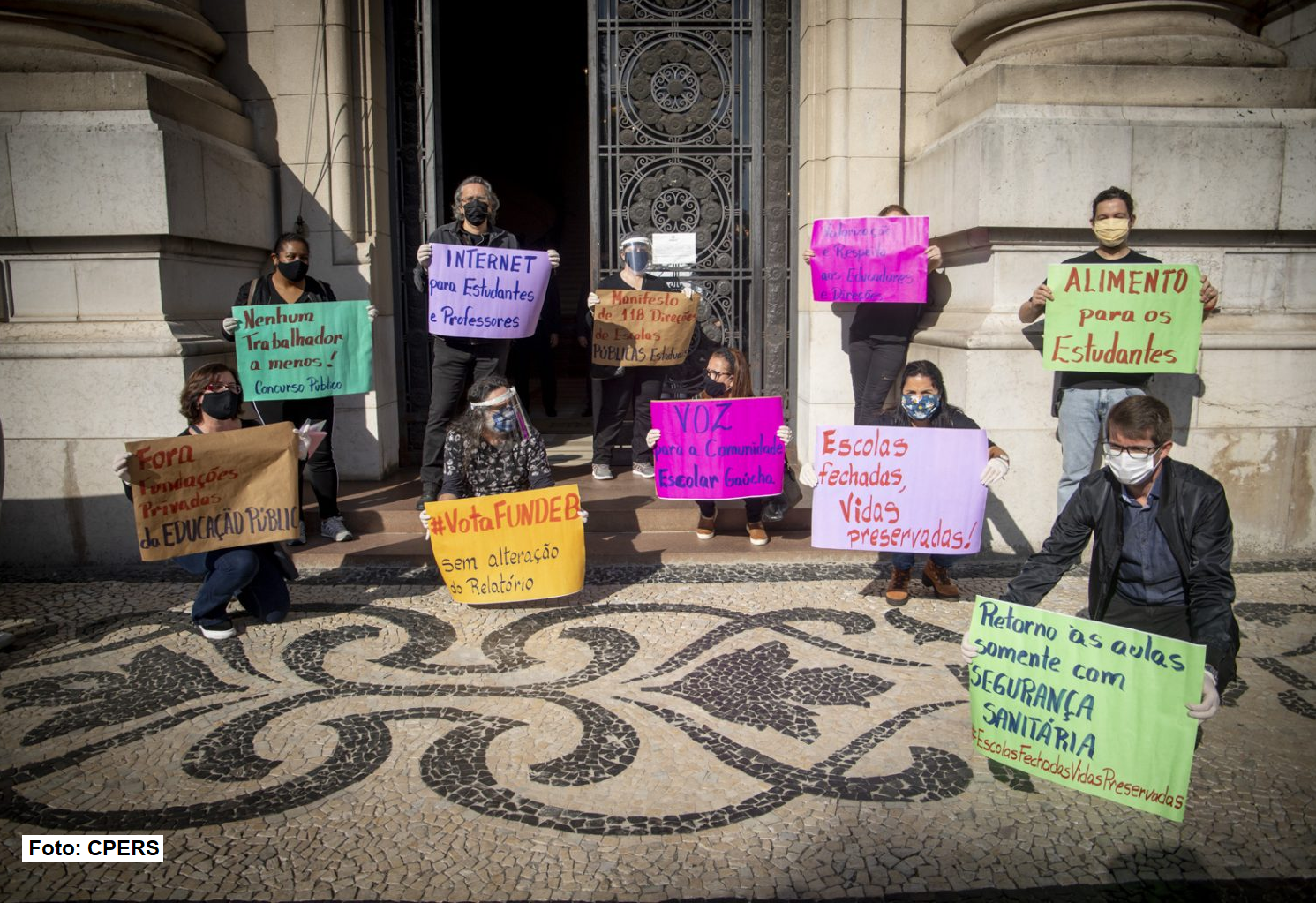
En el caso del vecino del norte, el escenario es dantesco. Jóvenes de niveles medios y secundarios ocupando las instituciones públicas, manifestándose en las calles, siendo desplazados y golpeados. Reclamando el derecho de aplazamiento del ENEM, el examen nacional al que están obligados todos aquellos y aquellas que deseen acceder a formación universitaria en Brasil. Esto a raíz de los altísimos riesgos sanitarios frente a la segunda ola de Covid-19. Esta acción fue apoyada y llevada adelante el 18 de enero por el Instituto Campanha Nacional Pelo Direito à Educação, el Centro de Asistencia Jurídica Saracura, ambas instituciones civiles sin fines de lucro. Ambas accionan en la educación pública dentro de CLADE (Campaña Latinoamericana para el Derecho a la Educación), organización internacional que, como dijimos al inicio, actúa en todo el mundo en forma de red conteniendo y apoyando a la educación pública. Los representaron el Coletivo de Advocacia em Direitos Humanos (CADHu). Esta acción se tomó al día siguiente de que cientos de jóvenes fueran reprimidos y expuestos masivamente al contagio de Covid-19 el 17 de enero.
Tengamos en cuenta que en Brasil además de la original corren otras 5 cepas de covid, con el 53% de los convocados para el examen fuera de las aulas sin documentos u explicaciones que los ampararan. Así comienza el pantallazo de la realidad educativa en Brasil, dónde cerca del 80% de la población es captada en los niveles primarios y secundarios por la educación pública. Invirtiéndose los porcentajes en la vida universitaria dónde las Universidades privadas acaparan la oferta ya que el ENEM es uno de los filtros más exigentes, a través del que pasan solo privilegiados. Por poder estudiar para rendirlo y por poder aprobarlo. De ese magro porcentaje que aprueba la mayoría se vuelca a las universidades públicas que son las más buscadas por la calidad de educación y por la gratuidad. En la acción legal llevada adelante por el brazo brasileño de CLADE, consta la violación del derecho a la educación, a la salud, de la igualdad y de la probidad administrativas (Violação do direito à educação, à saúde, da igualdade e da probidade administrativas).
En Brasil además, así como en toda América Latina, los casos de violación, violencia de género y desempleo crecieron y vienen creciendo a la par. El requerimiento básico para la universalización de la virtualidad en Brasil no existe en forma homogénea; tampoco en Argentina o Uruguay. Es decir, la capacidad económica devenida de un ingreso que pague la conectividad a internet. En Uruguay hablamos de miles de ollas populares. En Argentina a inicios de 2020 hablábamos de un desempleo que dejó desnudo al país con cifras inauditas. Durante la cuarentena el desempleo escaló a más de 13% con un 40,9% de la población argentina en la pobreza. En Brasil el FMI preveía que el impacto de Covid-19 resultaría en el aumento de la tasa de desempleo en 14,7% en 2020. Finalmente fue de 14 millones de personas, con un alza en diciembre respecto a octubre del 2%.
Paulo Guedes, Ministro de Economía de Brasil, dijo a fines de diciembre de 2020 que “la recuperación económica basada en consumo e inversiones, sólo será posible en la medida en que haya un retorno seguro al trabajo y ese retorno seguro exige la vacunación en masa de la población”.
Mientras Malala Foundation, entre otras, está apoyando a la Campaña Nacional por el Derecho a la Educación, que compone a CLADE en Brasil. Según Catarina de Almeida Santos, profesora de la Universidad de Brasilia (UnB) y dirigente de la Campaña en forma honoraria y especializada en educación básica, la situación es crítica. Aunque tienen injerencia directa en las casas legislativas del Congreso en Brasilia, junto a la ONU y en las Conferencias de Estados Latinoamericanos. Logrando accionar en favor de la educación en medidas concretas, así como en Argentina. Actualmente están luchando en Brasil por lograr la desvinculación de una enmienda en la constitución brasileña “con grandes perjuicios para los derechos sociales como la educación y la salud pública”. La propuesta que está en el Congreso brasileño y que desean eliminar trae como consecuencia “la desvinculación recursos hoy existentes en la constitución para escuelas y universidades y también en relación a la salud pública. Entonces ya comenzamos esa batalla. Actuamos también contra el retroceso en las ex – cámaras legislativas locales. Sea en la cámara de vereadores o en las ex-cámaras legislativas. Estamos luchando con el proceso de militarización de las escuelas en Brasil; pasa la gestión de las escuelas en Brasil para el comando de las fuerzas de la policía militar. Haciendo énfasis en el proyecto Escola sem Partido (Escuela sin partido) defendiendo la libertad de cátedra y los contenidos vistos en las escuelas. Inclusive sobre la Ministra Damaeres Alves, tiene mucho que ver con este gobierno que viene desarticulando todos los proyectos, o cortando financiamientos gubernamentales, cortando consejos direccionados a la protección de derechos sociales. Es decir no solo los derechos de los niños pero también los derechos de las mujeres, de las personas LGTBI, LGBTIQa+, también los de todas las poblaciones de alta vulnerabilidad. Y en todos estos casos el gobierno no solamente ha cortado financiamientos sino que también ha desenvuelto políticas de criminalización y discriminación a estos grupos. También acompañando a la Fundación Mixcure en el STF (Supremo Tribunal Federal), la Corte máxima en Brasil, combatiendo este tipo de políticas”.
Están trabajando también para revocar la enmienda constitucional Nº 95, que ataca directamente a los derechos sociales que están garantizados en el artículo 6º de la Constitución brasileña, abriendo debate nacional.
Educación en Lata o educación consciente
La evidencia en Argentina, Uruguay y Brasil muestra que son los colectivos los que están tomando la posta de la educación frente a gobiernos desviados hacia beneficios en lugar de derechos o sumergidos en crisis que parecen empañar la visibilidad de la estructura democrática de debiéramos tener más que asegurada. Y ser capaces además de enseñarles a nuestros hijos. Para darles un presente libre de atrocidades que atentan contra la continuidad de los derechos que están en riesgo, camufladas en informaciones falsas.
Fuente: https://www.analisisdigital.com.ar/opinion/2021/02/24/educacion-en-tiempos-de-capitalismo-de-datos-en-la-region




 Users Today : 249
 Total Users : 35524031
 Views Today : 328
 Total views : 3750535