Page 444 of 621
1 442 443 444 445 446 621

Sudáfrica: Five significant findings Human Rights Commission’s

África/Sudáfrica/Septiembre de 2016/Fuente: Mail & Guardian

RESUMEN: La Comisión de Derechos Humanos de Sudáfrica (SAHRC) ha publicado su informe sobre los impactos de acción de protesta sobre el derecho a la educación básica. Con la dura tarea de equilibrar el derecho a la protesta, junto con el derecho del estudiante a la educación básica, la SAHRC llegó a conclusiones significativas sobre la base de las audiencias con diversas partes interesadas. El informe fue elaborado después de que la SAHRC armó un panel que escuchó a presentaciones realizadas por el departamento de educación básica, el Servicio de Policía de Sudáfrica (SAPS), y las organizaciones no gubernamentales tales como la educación básica para todos, una organización voluntaria en Limpopo. Las audiencias se produjo a raíz de las protestas en Vuwani, Limpopo a principios de este año, cuando se prendió fuego a un número de escuelas.

The South African Human Rights Commission (SAHRC) has released its report on how protest action impacts the right to basic education. With the tough task of balancing the right to protest along with a student’s right to basic education, the SAHRC made significant findings based on hearings with various stakeholders.

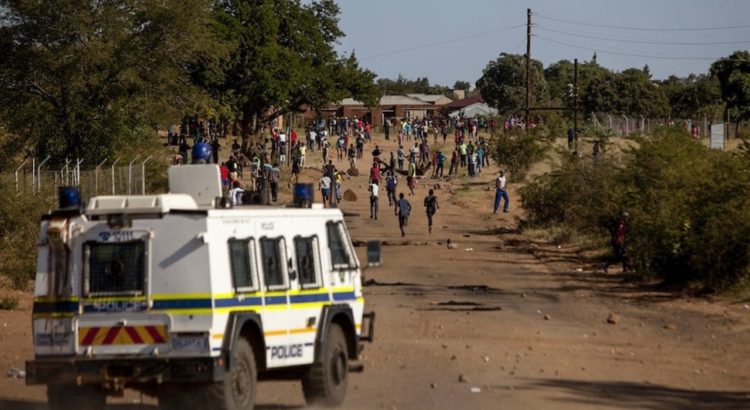
The report was compiled after the SAHRC put together a panel who listened to submissions made by the department of basic education, the South African Police Service (SAPS), and non-governmental organisations such as Basic Education For All, a voluntary organisation in Limpopo. The hearings came about in the aftermath of the protests in Vuwani, Limpopo earlier this year when a number of schools were torched.

Some of the key findings mimic what happened in Vuwani such as how, in many cases, protesters are not centering their protest on education.

1. Most protests have nothing to do with education


The SAHRC found that although schools and access to schools may be affected by protest action, education is often not the point of the protests. In South Africa, there are least 13 000 protests in a year which involve a rage of issues including water, electricity, proper sanitation services, housing and unemployment.

The commission finds that the right to a basic education is affected by protest-related action arising from causes that in most cases may be unrelated to the provision of basic education. Protesters who deny access to education are violating the right to a basic education of the affected pupils,” the report said.

2. Schools get burned because leaders don’t listen


More than 8 million South Africans are without jobs. In their presentation to the commission, Basic Education For All said the Limpopo government had failed to address deep-rooted community concerns and the “matter was left to fester”. In the report, the SAHRC finds that adequate responses from leadership are not a problem unique to Limpopo.

“The investigative hearing noted that the challenges of unemployment and poverty that face South Africa have created high levels of frustration among young people. The extent of frustration does not appear to be sufficiently recognised by people in all levels of leadership,” the report said.

“The panel identified a growing sense of despair, frustration and discontent that is in part a result of people not being able to experience the changes promised by the democratic transition.”

3. Protesters haven’t experienced the better life basic education promises


In its report, the hearings noted that people don’t always deliberately target schools, but they do it because government responds quicker when schools are affected. Those who don’t target schools – but who may affect protests by disrupting transport services or access routes – may have less sympathy for basic education because they have not witnessed a change in their own lives.

“It appears that the disregard for the right to a basic education may also be based on a view that education is not necessarily a guarantee of a better life. This is a view expressed particularly by some who live in conditions of poverty, unemployment and joblessness,” the report said.

Thus, the report concluded that the right to basic education isn’t always respected. The education department, in its submission to the panel, recommended that guidelines for greater awareness around the importance of basic education be developed and implemented.

4. Authorities like the education department and the SAPS are slow to respond

The report indicates that both the SAPS and the basic education department aren’t always prepared for protests and there is no uniform policy in place to mitigate the effects of protests on pupils and schools. The education department admitted that it had been “surprised” by the incidents in Vuwani.

“The department of basic education was overwhelmed by the situation and did not imagine that so many schools would be affected. The department is seeking expert assistance from outside it to help identify alternative solutions and interventions,” the report said.

The SAPS, in its submission at the hearing, gave a detailed response which included that measures had been taken to protect schools in the aftermath of Vuwani. However, the SAPS said they are under-resourcedand are struggling to manage public order when there are at least 13 000 protests a year. The SAPS resources include 28 units with 4 227 members, and there are 25 720 schools around the country. There is currently a three-year plan in place to increase Public Order Policing (POP) units and the members in these units.

The SAPS have been heavily criticised for the violent manner with which they have responded to protests in the past, but the report gave a reminder as to what the mandate of POP units in the SAPs is.

“The role of POP is to manage protest. POP is not supposed to suppress the rights of people who protest but rather to ensure that protests do not interfere with the realisation of other people’s rights,” the report stated.

5. The impact on pupils


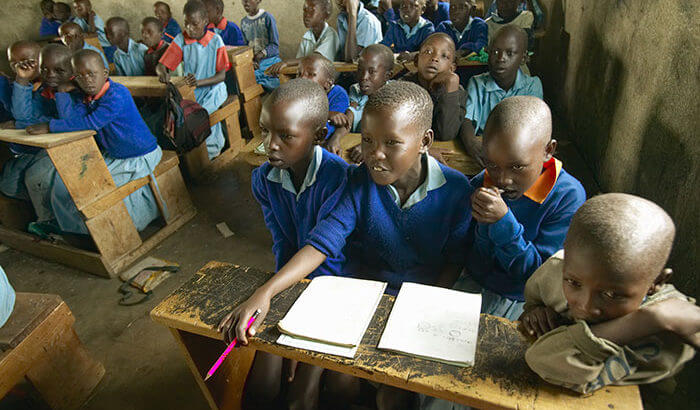
The report found that most pupils affected by protests are poor and are relying on an education system that does not provide them with the best quality education. As such, they are deeply affected when exam time is near.

“Most of the schools targeted in protest-related actions are located in the most marginalised sections of society where conditions at schools and the attendance of pupils are already precarious,” the report stated.

Teachers too have a harder time performing their jobs and in some cases, pupils are roped in to protests to achieve the political objective of older protesters.

The report did, however, fail to get much insight from pupils themselves. Many of the submissions were made by government departments, community leaders and other institutions. People who protest were also largely excluded from the hearings, which meant that much of the insight gathered on why schools become enmeshed in protest action is not told directly from people who protest at schools.

Among one of its key recommendations was that the education department develop a National Public Protest Response Team that will include relevant departments to establish early warning systems and provide clarity on the roles and policy of each department when protests take place.

The report is set to be tabled in Parliament so that the recommendations can be implemented.

Fuente: http://mg.co.za/article/2016-09-15-five-significant-findings-from-the-south-african-human-rights-commissions-educationprotestreport
Comparte este contenido:

Ghana: Deputy Minister appointment for TVET unnecessary

África/Ghana/Septiembre de 2016/Fuente: All Africa

RESUMEN: VIAM Africa hace una reflexión sobre las políticas de  la educación describiendo como en los planes del gobierno no hace falta nombrar un secretario de estado para hacerse cargo de la Educación Técnica y Formación Profesional (EFTP) en Ghana. El grupo de expertos también insiste para establecer un colegio de educación para capacitar a los maestros para la educación infantil. En un documento de cinco páginas se manisfetaron los aspectos más destacados del presidente para las elecciones de 2016, VIAM África afirma que el viceministro actual de la educación responsable de la educación superior puede, sin ningún problema, llevar a cabo una supervisión transparente de la enseñanza técnica en Ghana. El grupo de expertos cree que, si se toma su sugerencia,  salvará  una cierta cantidad de recursos del país.

VIAM Africa, a policy think tank on education has described as needless government’s plans to appoint a deputy minister to take charge of Technical and Vocational Educational Training (TVET) in Ghana.

The think tank also insists, plans by government to establish a college of education to train teachers for early childhood education can only be superfluous.

In a five page reaction to the president’s manifesto highlights for the 2016 election, VIAM Africa maintains the current deputy minister of education responsible for tertiary education can, without any problem, undertake a seamless supervision of technical education in Ghana.

The think tank believes, their suggestion, if taken will save the country some amount of resources.

VIAM Africa argued that appointing a seperate deputy minister for Technical education will «further segregate TVET from general/grammar type secondary school and would not in any way solve the problems at the TVET subsector.»

President John Mahama on Tuesday gave a two hour highlight on the yet to be launched NDC manifesto during which he touched on many sectors of the country’s development agenda.

Education was among the prominent issues highlighted by the president with a flurry of promises.

Amongst the promises include the plans to provide students at the basic and secondary level tablets on which to read their text books.

The president also promised to appoint a deputy minister in charge of technical and vocational educational training and to build a brand new College of Education to train new teachers for early childhood education in Ghana.

But VIAM Africa does not understand why government plans to build a new institution when there are existing institutions doing same.

«The establishment of a college of education (CoE) responsible for training teachers in early childhood education is superfluous. This will just increase government expenditure on our scarce resources. Currently, the University of Cape Coast and the University of Education, Winneba run programmes in Early Childhood education to train teachers for the early grades,» VIAM Africa said.

The think tank would rather government upgrades the curriculumM in the existing institutions to conform to modern trends in training at that level.

VIAM Africa, said despite the strides made in education over time there has been a misalignment of the government policies and the general development aspirations.

«Although the government has made significant progress in the education sector, most of the policy targets and interventions appear to lack clarity and focus, uncoordinated and do not align with neither our long to medium term development aspirations nor the UN’s sustainable development goal four (SDG 4) of promoting inclusive and equitable quality education and lifelong learning opportunities for all,» VIAM Africa suggested.

Fuente: http://www.myjoyonline.com/news/2016/September-14th/manifesto-watch-deputy-minister-appointment-for-tevt-unnecessary-viam-africa.php


Comparte este contenido:

Nigeria: Obasanjo – Open Varsity Graduates Should Attend Law School

África/Nigeria/18 Septiembre 2016/Fuente: /Autor:

Resumen: El ex presidente Olusegun Obasanjo ha pedido al gobierno federal revisar la decisión del Consejo de Educación Legal (CLE) de detener los licenciados en derecho de la Universidad Nacional Abierta de Nigeria para  ser admitido en la Escuela de Derecho de Nigeria.

Former President Olusegun Obasanjo has called on the federal government to review the decision of the Council of Legal Education (CLE) stopping law graduates of the National Open University of Nigeria (NOUN) from being admitted into the Nigerian Law School.

Obasanjo made the remarks when the Vice-Chancellor of NOUN, Professor Abdalla Uba Adamu, visit him in his house in Abeokuta, Ogun State, the varsity’s spokesman, Ibrahim Sheme said in a statement yesterday.

The former president, who last year graduated with a degree in Theology from NOUN, said there was every reason to believe that graduates from the institution should attend the law school.

«When they told me about law people, I said who are the early lawyers? They sat at home and read and they ate their dinner… And then they qualified. We know, we were there with most of them in the 1950s,» he said.

He described the recent appointment of Prof Adamu’s as VC as putting a «square peg in a square hole.»

He thanked the NOUN management for naming the university’s newly established Good Governance and Development Research Centre after him.

He also accepted NOUN’s invitation to present a lecture on the topic, «Leadership and Challenges of Development in Nigeria: the Way Forward» as part of the activities to mark his birthday in March.

In his remarks, the vice-chancellor said some of the steps he took in developing the university system included the renaming of schools into faculties and introducing the election of deans and heads of department, as innovative.

Fuente de la noticia: http://www.dailytrust.com.ng/news/general/obasanjo-open-varsity-graduates-should-attend-law-school/162704.html

Fuente de la imagen: http://images.dailytrust.com.ng/cms/gall_content/2016/9/2016_9$large_PAGE_7.jpg

Comparte este contenido:

Liberia: UL Releases ‘Comprehensive’ 2016/17 Academic Calendar

África/Liberia/18 Septiembre 2016/Fuente: liberianobserver/Autor: tjohnson

Resumen: Autoridades de la Universidad de Liberia (UL) ha emitido un comunicado detallando calendario académico de la institución para 2016/2017. De acuerdo con el calendario,  los estudiantes comenzarán el lunes 26 de septiembre y se extendera hasta el lunes, 10 de octubre.

Authorities of the University of Liberia (UL) have issued a release detailing the institution’s academic calendar for 2016/2017.

According to the calendar, registration for old, returning and transferred students will begin on Monday, September 26 and run through Monday, October 10.

Classes will officially begin on Monday, October 17.

Freshmen orientation will take place between October 10 and 17, while their registration will be from October 10 to 24.

“The first term/semester mid-term examination will begin on November 28, and run through December 3,” the release said.

In line with the schedule, the 2016 college-based commencement convocation will begin on Wednesday December 7, and end on Tuesday December 13. It will be closely followed by a joint commencement convocation on Wednesday, December 14, for all six graduate and professional schools.

This year’s Christmas and New Year’s break, according the UL schedule, will begin on Thursday, December 22, 2016, and end on Tuesday, January 3, 2017.

Classes for first semester will resume immediately upon returning from the break to be followed by final examinations which will be administered between February 27 and March 11, 2017.

Results of the 2016 UL entrance and placement examination that was administered on Saturday, August 13, will be published on September 30, according to the academic calendar.

Successful candidates will thereafter begin to enroll officially in the university for the first semester of the 2016/2017 academic year.

The UL second semester registration will begin on March 20, 2017, and run through April 8, 2017. Classes will thereafter begin on April 10, while the ADD and DROP Period will run from April 17 and end on April 22, 2017.

Registration for the 2017 UL entrance and placement examination for all undergraduate candidates will begin on May 16 and end on June 30, 2017. The 2017 entrance examination will be administered on Saturday, August 5.

Meanwhile the A. M. Dogliotti College of Medicine will administer its admissions test on June 19, 2017 while the School of Pharmacy and the Louis Arthur Grimes School of Law will subsequently administer their entrance tests on Saturday, June 24, respectively.

Following that, the 2016/2017 second term/semester mid-term examination will be administered between May 29 and June 3, 2017.

Thereafter, all lectures for the semester will end on July 22, 2017, while final examination will begin on August 1, and end on August 14, 2017.

As a result of this notification, all students are strongly advised to register on time and avoid disruption of any aspect of the schedule. Any change to this schedule will be duly communicated, the release from the University states.


Fuente de la noticia: http://www.liberianobserver.com/news/ul-releases-%E2%80%98comprehensive%E2%80%99-201617-academic-calendar
Fuente de la imagen: http://www.liberianobserver.com/sites/default/files/styles/large/public/field/image/UL_3.jpg?itok=76rXaXyQ
Comparte este contenido:

El año 2016 va camino de convertirse en el más caliente de la historia de la Tierra

18 Septiembre 2016/Fuente:20minutos/Autor:EFE

La Organización Meteorológica Mundial (OMM) advirtió este viernes de que 2016 está en camino de convertirse en el año más caliente que se haya registrado en la historia, con temperaturas extremadamente altas. «Hemos sido testigos de un prolongado periodo de extraordinario calor y todo indica que esto se convertirá en la nueva norma», sostuvo el secretario general de la OMM, Petteri Taalas, al apuntar que se han observado niveles inusualmente altos de concentración de dióxido de carbono y se han roto récords de temperatura.

Esta situación y el calentamiento de los océanos ha acelerado el blanqueamiento de los arrecifes de corales, recordó. La temporada excepcionalmente larga de calentamiento global continuó en agosto «La temporada excepcionalmente larga de calentamiento global continuó en agosto, que fue el más caliente en registros tanto en la superficie terrestre como en los océanos», agregó la portavoz de la OMM, Claire Nullis, basándose en datos de la NASA y del Centro Europeo para las Previsiones Meteorológicas a Mediano Plazo.

Además, según los últimos datos, la superficie de hielo en el Ártico alcanzó su mínima extensión durante el verano (boreal) el pasado día 10 de septiembre, con lo que fue la segunda más reducida desde hace 37 años, cuando empezaron los registros por satélite.

Esa superficie es comparable con la observada en el mismo periodo de 2007. La extensión de hielo en el Ártico fue de 4,14 millones de kilómetros cuadrados y se cree que la principal razón para que la situación no fuese dramática tiene que ver con que el verano en esa parte del mundo fue fresco, nublado y con tormentas regulares. «Históricamente, esas condiciones meteorológicas desaceleran la pérdida de hielo durante el verano, pero en lo esencial estaremos sólo un peldaño por debajo del récord», indicó Nullis.

La menor superficie de hielo ártico data del 17 de septiembre de 2012, cuando disminuyó hasta los 3,39 millones de kilómetros cuadrados.

Fuente de la noticia: http://www.20minutos.es/noticia/2839106/0/2016-convertirse-ano-mas-caliente-historia/#xtor=AD-15&xts=467263

Fuente de la imagen: http://img.kaloo.ga/thumb?url=http%3A%2F%2Fcdn.20m.es%2Fimg2%2Frecortes%2F2016%2F05%2F26%2F288542-944-944.jpg&md5val=ffed612c194605dfd9e944670bb194e4&key=a8d7c4df764a21315b3645d83d30e28e13704fc6&method=fill&size=1080×1080

Comparte este contenido:

Sudáfrica: Education Department Will Likely Miss School Infrastructure Deadline

África/Sudáfrica/17 de Septiembre de 2016/Autora: Diana Mellow/Fuente: All Africa

RESUMEN: El Departamento de Educación Básica dice que es poco probable que todas las escuelas públicas en África del Sur  reunan las normas y estándares mínimos en la infraestructura educativa para la fecha límite del 29 de noviembre. En 2013, el Ministro de Educación Básica, Angie Motshekga, publicó el conjunto vinculante de las normas mínimas que todos los sistemas escolares provinciales de Sudáfrica que debian trabajar. El documento requiere que todas las escuelas públicas en Sudáfrica tengan acceso a agua, electricidad, instalaciones sanitarias portátiles, personal de seguridad y conexión a internet. También limita el tamaño de clase a 40 alumnos o menos. Las normas mínimas  requieren que todas las escuelas tengan bibliotecas, laboratorios de ciencias, y  áreas de educación física. Las escuelas para los estudiantes de educación especial deben ser plenamente accesibles para las sillas de ruedas en virtud de las disposiciones. La política se produjo después de una campaña por el movimiento social, la Igualdad de Educación.

The Department of Basic Education says it is unlikely that all public schools in South Africa will meet the Minimum Norms and Standards for School Infrastructure by the November 29 deadline.

In 2013, the Minister of Basic Education, Angie Motshekga, published the legally binding set of minimum standards which all provincial school systems in South Africa must work toward. The document requires that every public school in South Africa have access to water, electricity, ablution facilities, security personnel, and internet. It also limits class size to 40 learners or less. The Minimum Norms and Standards require all schools to have libraries, science laboratories, and areas for physical education. Schools for special education learners must be fully accessible for wheelchairs under the provisions. The policy came about following a campaign by education social movement Equal Education.

After it was agreed that the policy would be legally binding, the national department began the Accelerated Schools Infrastructure Delivery Initiative (ASIDI) to help schools meet the new requirements and to rebuild schools constructed from harmful materials. 170 schools have since been constructed out of a targeted 510, according to the department’s records. 126 of these new schools are in the Eastern Cape. ASIDI is also working on securing water access in this region, though 55 schools still do not have clean, running water, the department said.

Albert Gumbo, head of communications for ASIDI, said most of the delays have arisen during construction in the Eastern Cape. Contractors often perform poorly and take longer than expected. Inclement weather and unpaved roads make construction difficult. ASIDI also goes through «rationalization exercises» in which the organisation negotiates with several small communities to decide the best site for a new provincial school. 215 school sites were identified using this method.

The Department of Basic Education has called the 29 November deadline «an ambitious target considering the need.»

Equal Education says the Department of Basic Education will likely break the law this November. The organisation was deeply critical of the department on Twitter this afternoon. According to General Secretary of the organisation, Tshepo Mostepe, «The impact will be dire [on learners]. People are being denied basic dignity and rights, basic sanitation.»

Equal Education said that if the department does not meet its November deadline, the advocacy group can release private information about contractors and officials who are benefiting disproportionately from ASIDI programs. The organisation also plans to mobilise South Africans on the issue this November.

Fuente: http://allafrica.com/stories/201609151285.html

Fuente de la imagen: https://africaupclose.wilsoncenter.org/highlight-of-the-week-meeting-about-educational-bridge-between-brazil-and-africa/


Comparte este contenido:

Cerca de 660 millones de personas tienen papiloma humano

América del Norte/México/ Ciudad de México/La Jornada

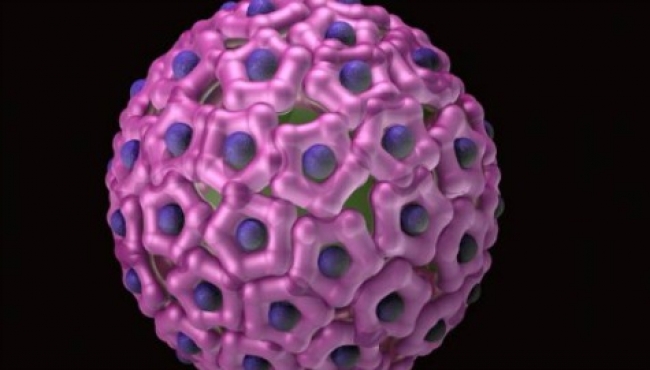
La coordinadora del Capítulo de Adolescencia del Colegio Mexicano de Especialistas en Ginecología y Obstetricia, Josefina Lara Plascencia, dijo que de acuerdo con organismos internacionales, en todo el mundo unos 660 millones de personas pueden estar infectadas con el virus del papiloma humano (VPH).

Anualmente, abundó, entre 500 mil y un millón de personas se contagian de verrugas genitales y los tipos 9 y 11 son responsables de 90 por ciento de éstas, mientras que los 16 y 18 son los principales que causan el cáncer de cuello de útero, vagina y vulva.

La infección por VPH y las verrugas genitales se transmite con una pareja infectada por contacto directo de piel a piel, al tener contacto sexual vía oral, vaginal o anal, y si bien el uso del condón reduce el riesgo de transmisión, no lo elimina por completo.

La especialista mencionó que actualmente existen tratamientos para eliminarlas, ya sea con medicamentos o mediante cirugía. Sin embargo, al ser una enfermedad recurrente las lesiones tienden a reaparecer después del tratamiento ya que el virus que las causa permanece en el organismo. La única manera que se conoce en la actualidad para prevenir este tipo de infecciones es la vacunación contra el VPH.

En México hay dos vacunas disponibles que previenen la infección de VPH, ambas actúan contra los principales tipos de virus.

Fuente: http://www.jornada.unam.mx/ultimas/2016/09/15/cerca-de-660-millones-de-personas-tienen-papiloma-humano

Comparte este contenido:
Page 444 of 621
1 442 443 444 445 446 621