Page 380 of 400
1 378 379 380 381 382 400

Not All Money Troubles Are Equal, Why Blacks and Hispanics Have It Much Worse

América del Norte/EEUU/Abril 2016/Autor: Gillian B. White/ Fuente: The Atlantic

Resumen: En los Estados Unidos de América a pesar de que todos los grupos pueden sufrir de inseguridad financiera; sin embargo para los negros y los hispanos en ese país las consecuencias pueden ser mucho peor. Concretamente en lo referente a las diferencias en las estructuras educativas y familiares que representan algunas de las diferenciaciones de los salarios.

Stories like the one told in this month’s cover story—of a well-off white professional whose finances are a wreck—seem to suggest that financial calamity can strike anyone, of any race or income level, via a series of unfortunate events or financial missteps. “Financial impotence is an equal-opportunity malady, striking across every demographic divide,” writes Neal Gabler, the story’s author.

It might be true that this can happen to anyone, but for minorities, it’s far, far more likely. It’s also true that in the event of a downturn—personal or market-wide—they fall harder, faster. They have fewer resources for digging themselves out of a hole, and they are unlikely to know anyone who is much better off who could spot them the needed cash. Financial insecurity is in no way an equal-opportunity offender.

When it comes to measuring this problem, the ability to dig into one’s emergency fund to cover it is a popular heuristic. According to Pew, common emergency expenses—such as a car repair, hospital bill, or a sudden job loss—can eat up as much as $2,000. Most American households—regardless of income —don’t have that much set aside to cover such shocks. Many white families could instead turn to liquid assets, such as stocks or bonds or other savings to bridge the gap. But that’s just not possible for the majority of minorities. “Households of color are particularly fragile: A quarter of black households would have less than $5 if they liquidated all of their financial assets,” the study’s author Erin Currier, the director of financial security and mobility project at Pew Charitable Trust writes.

Such numbers are distressing but not surprising: Blacks and Hispanics continue to struggle economically. In 2013, the median white family had wealth that totaled more than $140,000, Hispanics had only $14,000. And black Americans had $11,000. People of color are less likely to belong to the seemingly safe middle class —about 45 percent and 48 percent respectively. For whites, more than half of the population, around 52 percent, is middle class. Those numbers might not seem all that far apart, but when you take a look at the median incomes within racial groups (for a family of three) the disparities become clearer: Based on 2012 data, children of white families that fall into the middle quintile of earners made around $55,000 each year. Black children whose families were also middle quintile wind up earning around $13,000 less. The median income of whites was higher than that of blacks for at each quintile. That means that even when they fall into the same economic class, these groups are still pretty far apart in terms of actual earnings, says Richard Fry, a senior researcher at the Pew Research Center.

And once in the middle class, it’s harder for black Americans to stay there. (Most mobility data is restricted to comparisons between blacks and whites and does not include Hispanics or Asian Americans.) “When comparing intergenerational economic mobility by race, the data show that more than half of African Americans raised in the middle quintile fall out of the middle as adults, compared to about a third of whites,” Currier said. “Unfortunately, there were so few black parents in the top two income quintiles that examining the economic mobility of their children is not possible,” she added.

What is driving these disparities? Part of the problem is that the ways that families accumulate wealth are stacked against blacks and Hispanics. Housing—equity in which makes up more than 60 percent of the average American household’s wealth—is a major factor. Even decades after the formal cessation of redlining, blacks and Hispanics are significantly less likely to be homeowners than their white counterparts. At the start of 2016, the homeownership for white Americans was 72 percent. For Hispanics it was 47 percent. For blacks it was 41 percent. Even for those minorities who are able to buy homes, the benefits are more muted than they are for white Americans. Why? Blacks and Hispanics are more likely to live in low-income neighborhoods, which means that their homes don’t appreciate as much as they would if they were somewhere else. But more than that, when these families do move to mostly white neighborhoods, they nevertheless tend to also suffer. In fact, studies have shown that once more than 10 percent of a neighborhood becomes populated by black households, property values begin to decline simply because of their presence.

A prime example of this inequality is the aftermath of the housing crisis. While whites are more likely to own homes, they are also more likely to own other assets. For black homeowners, however, houses account for just about all of their wealth. That means that the recession gutted nearly all of the black wealth that there was. A report from the ACLU estimates that by 2031, white families’ wealth will be about 31 percent lower because of the recession. Black families will have given up around 40 percent of their wealth.

Taxes can play a role too. According to Dorothy Brown, a professor of tax law at Emory University, some of the credits, deductions, and rules that provide windfalls for families at tax time give white families more of a boost than black or Hispanic ones. “Tax law is a political, a social, and an economic document. So of course there are going to be racial disparities.” Brown says. “To say, ‘the tax law is neutral’ is just nonsense.”

The mortgage interest deduction, for instance, which allows filers to reduce their taxable income, accounted for nearly $70 billion worth of deductions in 2013, and disproportionately helps white households, who make up the bulk of homeowners. And one credit that many assume largely helps minorities—the Earned Income Tax Credit—goes half to white people, Brown says. There are other culprits too, like the way joint returns reward or penalize couples based on earnings. “When blacks marry, they actually have their taxes go up, when whites marry, their taxes go down,” Brown says. Why is this? When couples marry and file a joint return, they can receive either a marriage bonus, which could be as high as 20 percent of their income, or be charged a marriage penalty, which could cost them as much as 12 percent, according to the Tax Foundation. The deciding factor is how close the two individuals’ incomes are: The bigger the gap the bigger the bonus. Brown says that this winds up penalizing black joint filers at a disproportionately high rate, since married black couples are more likely to have similar incomes, while households where one spouse works and the other stays home—the households that receive the biggest bonus—tend to be white. And the same goes for tax-advantaged savings accounts, like pensions and other retirement plans, which Brown says whites are more likely to have access to and to make use of, giving them a huge boost when it comes to building tax-free wealth for later in life.

In Gabler’s piece for instance, he notes that his financial predicament left him unable to pay for his children’s college education. So he turned to his own parents, who were able to provide the money for elite educations (at the cost of his own inheritance). It’s pretty unlikely than blacks or Hispanics would have access to these financial resources at all, from parents or grandparents. What’s more, windfalls like an inheritance come with tax advantages that a bonus from work or sudden jump in income don’t. It’s not just that white Americans tend to earn more, it’s that they hold more wealth: Less debt, more home equity, more stocks and bonds, more flush retirement accounts. These economic advantages accrue over time and then get passed down to the next generation, who in turn, are able to start their adult lives with a financial cushion, which can help them weather schools debt, unemployment, high rental prices, down payments, and emergencies of all varieties without doing the financially ruinous things that their peers without that backing may have to do. The lucky few who are able to do this, are, by and large, white.

The idea that parents or grandparents can swoop in to help their children buy a home, pay off a credit card, or cover the cost of college is mostly a reality for white America. That might be part of the reason that black young adults are more likely to owe on student loans (44 percent) compared to white young adults (35 percent). And sadly, a lot of the debt owed by young black and Hispanic adults is for degrees that they didn’t manage to complete, Currier says. These educational rifts, along with differences in family income and structure certainly play a part in the cyclical financial problems of minorities. But there’s more to it.

The persistent lag in wealth have been attributed to some of the same inconsistencies that account for income gaps, but they don’t explain the entire, vast discord. A 2015 report from the St. Louis Fed states, “Other factors must be in play, including early childhood experiences, parental influences and, of course, deep and historical discrimination against blacks and other minorities.”

Fry says that differences in education and family structures account for some of the differentiation in wages, but certainly not all of it. “Even when you look for equally well-educated blacks and whites there’s still a significant gap, which may point to overt discrimination,” he says. And that is especially troubling since income is the starting point for financial security in the first place. Most households get their money from working and wages—areas where minorities are historically and persistently disadvantaged.

That helps explain why blacks and Hispanics have such a hard time building wealth. “When you have low income you spend most of your money. You use it on your basic expenses, there isn’t much to save,” Fry says.

These discrepancies, in wealth and income, don’t just matter for a household’s current financial success, they set a path for what will happen for a family’s children, and grandchildren, and whether or not, over time, a family will be able to increase, or at least maintain their economic standing. But that, too, is deeply colored by race.

Fuente de la noticia: http://readersupportednews.org/news-section2/318-66/36464-not-all-money-troubles-are-equal-why-blacks-and-hispanics-have-it-much-worse

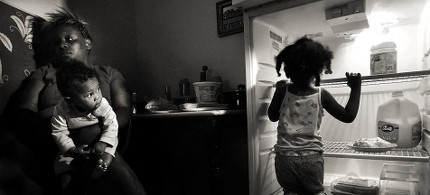
Fuente de la imagen: http://readersupportednews.org/images/stories/article_imgs20/020753-poverty-042216.jpg
Comparte este contenido:

Head of Accreditor for For-profit Colleges Leaves Amid Growing Scrutiny

América del Norte/EEUU/Abril 2016/Autor: Annie Waldman/ Fuente: ProPublica

Resumen: El jefe del organismo que vigila a las universidades con problemas de fines de lucro, Consejo de Acreditación para Colegios y Escuelas -ACICS-, renunció a su cargo, según la agencia el lunes en un comunicado. La renuncia de Albert Gray, que sirvió como presidente y CEO de ACICS durante los últimos siete años, llega en un momento precario para el ente acreditador. La semana pasada, una docena de abogados estatales hicieron llamados generales al Departamento de Educación para revocar el reconocimiento del acreditador. Sin el reconocimiento, los cientos de colegios, sobre todo con fines de lucro que supervisa el acreditador, podrían perder el acceso a la ayuda federal para estudiantes que constituye la mayor parte de sus ingresos.

The head of troubled for-profit college watchdog, Accrediting Council for Independent Colleges and Schools, has stepped down, the agency said Monday in a statement.

The resignation of Albert Gray, who served as ACICS’ president and chief executive officer for the past seven years, comes at a precarious time for the accreditor.

Last week, a dozen state attorneys general called on the Department of Education to revoke the accreditor’s recognition. Without recognition, the hundreds of mostly for-profit colleges that the accreditor oversees could lose access to the federal student aid that makes up the majority of their revenue.

Citing ProPublica’s reporting, the state attorneys general said that the actions of the agency had “ruined the lives of hundreds of thousands of vulnerable students whom it was charged to protect.” Our reporting found that students at colleges accredited by ACICS were far worse off than students at other schools.

The accreditor did not provide a specific reason for Gray’s departure.

During a Senate hearing last summer, Sen. Elizabeth Warren, D-Mass, slammed Gray for ACICS’ involvement in propping up for-profit college chain Corinthian Colleges amid widespread allegations of fraud, misrepresentation and predatory lending.

“How many federal and state agencies need to file lawsuits against one of your colleges before your organization takes a second look at whether that school should be eligible for accreditation, and most importantly, federal money?” she demanded.

Gray told the committee that the investigations into Corinthian were only allegations. “All of these investigations that you’ve mentioned are just that: investigations,” said Gray. “Without outcomes from these investigations, we don’t have any evidence to take any kind of action.”

In their letter last week, the state attorneys general also expressed concern about the composition of ACICS’ board and committees, saying that its leadership raised “serious questions about potential conflicts of interests and therefore ACICS’ ability to impartially evaluate those and other schools.”

As ProPublica has reported, at least two-thirds of ACICS’ commissioners since 2010 have worked as executives at for-profit colleges while sitting on the council. And at least one-third of the commissioners came from colleges that faced heightened scrutiny, including investigations by state attorneys general and federal financial monitoring.

“This Council takes the concerns raised by a variety of external stakeholders very seriously,” said Lawrence Leak, the chair of the board of directors, in a statement. “The assurance of quality and integrity of private post-secondary education by ACICS will become stronger and more effective in light of these concerns.”

A Department of Education committee is slated to review ACICS’ accrediting status in June.

Fuente de la noticia: http://readersupportednews.org/news-section2/318-66/36436-head-of-accreditor-for-for-profit-colleges-leaves-amid-growing-scrutiny

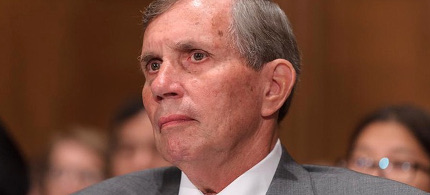
Fuente de la imagen: http://readersupportednews.org/images/stories/article_imgs20/020727-gray-042116.jpg

Comparte este contenido:

EE.UU: Brutal, abusiva e incomprensible paliza de un maestro a un indefenso alumno

 RTNoticias/Publicado: 22 abril 2016 13:13 GMT

 El video captado por un alumno en plena clase de biología recoge una pelea entre un asistente del maestro y un alumno en una escuela en el estado de Wisconsin (EE.UU.).

El asistente de un maestro de la escuela secundaria Bay View High School, en la ciudad norteamericana de Milwaukee, Estado de Wisconsin, empujó violentamente a un alumno de 14 años, sujetándolo contra el suelo, durante una clase de biología, informa el periódico ‘The New York Daily News‘.

La enconada y desigual pelea, que fue grabada por un compañero de clase, estalló en medio de una discusión. En el video se aprecia cómo el alumno levanta una pierna, antes de ser empujado sobre las sillas por el asistente, de 39 años. Además, se puede oír cómo el hombre grita improperios al adolescente mientras lo agarra por el cuello.

 En el video no se ve lo que ocurrió antes de la pelea, aunque parece que la víctima habría podido hacer comentarios ofensivos en dirección al maestro.

Tras el inccidente, el funcionario fue detenido por abuso físico, mientras que el adolescente fue trasladado a un hospital para tratarse heridas leves, según la Policía de Milwaukee.

Fuente: https://actualidad.rt.com/actualidad/205494-eeuu-maestro-empujar-alumno-suelo

Comparte este contenido:

Islas Marianas: PSS says 4 high schools will close if projected revenue does not change

Islas Marianas: PSS says 4 high schools will close if projected revenue does not change

Islas marianas/Abril de 2016/ portal Marianas Variety

Resumen: El sistema escolar público dice que si los ingresos del gobierno de los créditos disponibles para el año fiscal 2017 no cambia, se tendrá que cerrar cuatro escuelas secundarias y su oficina central. El Comisionado de Educación Rita A. Sablan, en una carta al gobernador Ralph Torres, señaló que su Oficina de Gestión y Presupuesto ha identificado sólo $ 112 millones de fondos para la apropiación en comparación con el año fiscal 2016 de $ 146 total de millones de presupuesto.

THE Public School System says if government revenue available for appropriations for fiscal year 2017 does not change, PSS will have to close four high schools and its central office.
Education Commissioner Rita A. Sablan, in a letter to Gov. Ralph Torres, noted that his Office of the Management and Budget has identified only $112 million in funding for appropriation compared to the FY 2016 total of $146 million budget.
“If PSS were to concede that its total budget pursuant to the 25 percent guaranteed funding under Section 1 (e) of the Article XV of the Commonwealth Constitution would be $28 million, PSS would have to close all four high schools and the central office to operate within the OMB budget figure,” Sablan said. Her letter was also signed by Board of Education Herman T. Guerrero.
“Because of the constitutional right of every person to free, compulsory and public elementary and secondary education, the Board of Education cannot fulfill its constitutional responsibility by submitting such an irresponsible budget,” Sablan and Guerrero stated.
PSS has asked for a budget of $39.5 million in FY 2017 which starts on Oct. 1, 2016. The amount reflects a $3 million increase compared to the school system’s current budget of $36.4 million.
“We ask for the support of the administration in our efforts to improve the educational experience of our students,” the education officials said.

Fuente: http://www.mvariety.com/cnmi/cnmi-news/local/85608-pss-says-4-high-schools-will-close-if-projected-revenue-does-not-change
Foto: http://k45.kn3.net/taringa/1/4/7/3/6/7/20/ensichivas_45/728.jpg?1908

Comparte este contenido:

EE.UU: Día de la Tierra 2016: 11 meses seguidos batiendo récords de calor

El marzo de 2016 y el primer trimestre del año también marcan máximas históricas en el cambio climático

LaVanguardia/22 de abril de 2016/Por: Joaquim Elcacho

Temperaturas más elevadas (colores rojos) del mes de marzo de 2016, en relación con la media climática para esta época del año (NOAA)

El 22 de abril, Día de la Tierra 2016, se abre el plazo para la firma del acuerdo contra el cambio climático aprobado en la Cumbre de París del pasado mes de diciembre. Mientras tanto se siguen acumulando los datos científicos que muestran la gravedad del problema, y el mes de marzo tampoco se ha quedado atrás en la espectacular carrera de calentamiento global.

Los registros publicados por la NASA, la Agencia Meteorológica de Japón y la Administración Norteamericana de la Atmósfera y los Océanos (NOAA)confirman que durante el mes pasado se volvieron a batir varios récords históricos.

Con motivo del Día de la Tierra 2016 cabe recordar que la temperatura media registrada, en la atmósfera terrestre y la superficie marina, del mes de marzo de 2016 fue la más alta para esta época del año desde 1880 (fecha en que se inició el registro sistemáticamente este tipo de datos).

Además, marzo de 2016 ha sido el onceavo mes consecutivo en que se superan las temperaturas más elevadas de la historia reciente de la Tierra (en relación con los meses respectivos de años anteriores). Nunca hasta ahora (desde 1880) se había producido un periodo tan largo de constantes récords mensuales de temperaturas elevadas, destacan los expertos de la NOAA en el informe difundido esta semana.

Por si fuera poco, el período enero marzo de este año fue el trimestre inicial más cálido desde 1880, con 1,15ºC por encima de la media del siglo XX y 0,28ºC más que en el mismo periodo del año pasado.

Calor por tierra, mar y aire

Marzo de 2016 batió el récord histórico de temperatura tanto en la superficie terrestre (2,33ºC más que la media del siglo XX) como en la oceánica (0,81ºC más que el promedio del siglo pasado), confirman los datos publicados por la NOAA.

El mapamundi elaborado para el mes de marzo por la NOAA -que ilustra esa información- muestra en colores rojos las zonas de Asia, África, América y Groenlandia en las que se registraron temperaturas especialmente altas en relación a la media climática. Marzo de 2016 ha sido también el más caluroso de los últimos 107 años en Australia y el sexto más cálido en Nueva Zelanda desde 1909.

El promedio global de la temperatura superficial del mar, por otra parte, rebasó en 0,81ºC el promedio de los meses de marzo del siglo XX. Se trata del marzo más cálido en los océanos desde 1880, con 0,18ºC más que en 2015.

La superficie de los océanos fue más alta de lo normal en la mayor parte del norte y el sudeste del Índico, partes del centro y el suroeste del Pacífico ecuatorial, el oeste y el sur del Atlántico, y extensas áreas del Ártico.

Publicación científica de referencia:
NOAA National Centers for Environmental Information, State of the Climate: Global Analysis for March 2016. April 20, 2016 www.ncdc.noaa.gov/sotc/global/201603
http://www.lavanguardia.com/natural/20160422/401244547933/dia-de-la-tierra.html

Comparte este contenido:

Hawaii: Not Even Once

Not Even Once

Hawaii/abril de 2016/portal Midweek

Resumen: Los estudiantes en Kauai Escuela Secundaria participaron recientemente en la Semana de la conciencia de Hawai Meth Meth Proyecto, promoviendo el mensaje «ni una sola vez» al consumo de estupefacientes. Hablaron sobre la metanfetamina y otras drogas, explicando los daños que ocasiona el consumo desde la primera vez. Los adolescentes tienen un club de «ni una sola vez» y reclutan a estudiantes voluntarios para ayudar a difundir su mensaje en todos los lugares posible, incluyendo en las reuniones de la comunidad, tales como la celebración Waimea Ciudad, y cualquier otro evento.

By COCO ZINGARO
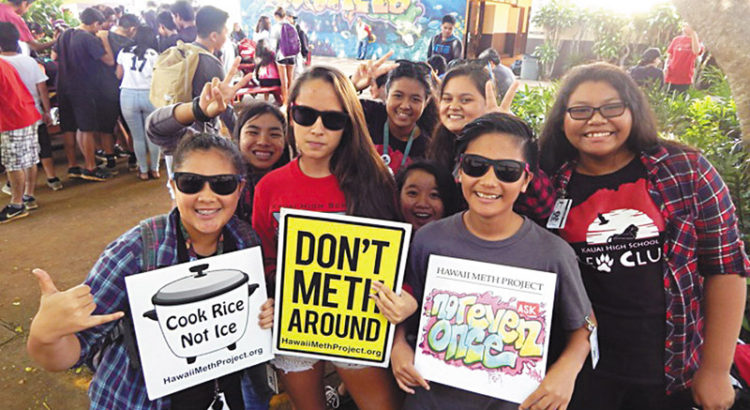
Erica Owan and Cassandra Mateo-Corpuz are determined to impart an important message to their peers about the dangers of methamphetamine. The Kauai High School seniors are encouraging other students to steer clear of the hazardous drug with the slogan: “Not Even Once.” They are ambassadors for Hawaii Meth Project and serve on the statewide Teen Advisory Council.
“Meth is a very powerful substance, so a lot of times, when people try it for the first time, they get hooked,” explains Owan. “Our motto is ‘not even once’ because it will lead you into that dangerous pathway.”
She knows just how damaging the effects of the drug can be — some of her family members were involved in drug use.
“It really damaged all of their relationships between each other,” she says. “I just wanted to help prevent others from having to face that.”
Mateo-Corpuz also is familiar with the devastation that follows a serious drug addiction. Her brother was a meth addict during his 20s, while she was between the ages of 8 and 12, and she unfortunately was exposed to its detrimental aftermath.

“He would bring me around his friends every night and every day he had the chance,” she says. “He always had an excuse to get out of the house to do meth.”
Now her brother is serving time in jail in Arizona.
“I pretty much lost my brother because of one bad choice he made,” she says.
She also lost out on a happy and carefree childhood, but that hasn’t stopped her from trying to help others avoid the same mistakes.

“What’s rewarding for me is knowing that if I help and can stop one person from doing it, it will stop them from hurting their families and feeling the same way I did,” she says.
The teens have a “Not Even Once” club and recruit student volunteers to help spread their message as far and wide as possible, including at community gatherings such as Waimea Town Celebration, “and any other events we can get our hands on,” says Owan.
They set up booths to educate teens and keiki about the multitude of emotional and physical repercussions of meth use, and even have games, including a modified version of “Operation” that identifies all the horrible things the drug can do, such as self-inflicted skin damage during hallucinations.
Their efforts seem to be working, as the most recent statistics from the survey, “Meth Use and Attitudes,” conducted by Hawaii Meth Project, indicate that 96 percent of students show a “strong disapproval” for using meth and that a majority of those surveyed statewide are aware of the organization.
“We want to see this continue. To be a part of breaking the cycle, we have to keep the message out there,” says Georgi DeCosta, executive director of Hawaii Meth Project, who is proud of the 19 members of the Teen Advisory Council and the work they do.

Though meth use usually begins with young adults between the ages of 19 and 26, Hawaii Meth Project’s prevention programs are aimed at changing youths’ understanding and sentiments toward the drug before they are lured by its temptations.
“Sometimes it’s peer pressure, but sometimes it’s that people don’t know what else to do,” says Mateo-Corpuz, explaining why so many young adults in Hawaii gravitate toward meth. “Some people reach a very low point
in their life, and then they see their friends doing it, and if they want to feel better about themselves, that’s what they start doing.”
DeCosta, who lives on Oahu but regularly visits Kauai to work with the teens, knows firsthand how tempting it is to start using drugs — when she was younger, she abused meth and heroin.
“I made a lot of bad choices,” she admits. “I regret a lot of the things that I went through. I’m so blessed to have this opportunity to maybe help others, young people, to not go through those same things I did because it was pretty painful for me, my family and those around me.”
She also feels lucky to have survived the addiction “in one piece,” as so many others do not. She knows plenty of people who sadly succumbed to overdoses, including the father of her children as well as their aunt, who died from organ failure because of meth use — she was only 30 years old.
“It’s extremely damaging what this drug can do. It’s unlike any other substance,” she says. “It really does destroy people’s mind, body and soul.”
So the nonprofit, which was founded in 2009, continues to spread a message of utmost importance.
“If we can do positive peer pressure to make people stay away from it, then we can help someone potentially continue their dreams instead of them being crushed by this drug,” says Owan.
Hawaii Meth Project will be recruiting new Teen Advisory Council members for the next school year (2016/2017). Applications will be available soon. Visit hawaii.methproject.org for updates and more information.

Fuente: http://www.midweek.com/not-even-once/
Foto: http://www.midweek.com/wp-content/uploads/2016/03/kmw-cover-012716-largegroupofstudentsstandingwithsigns-hmp.jpg

Comparte este contenido:

EEUU autoriza compras de café y textiles producidos por sector privado cubano

El Gobierno de EEUU incluyó este viernes al café y los textiles en la lista de importaciones autorizadas de bienes y servicios producidos por empresarios cubanos independientes.

SputnikNews/22 de abril de 2016

«A partir de este viernes se suman el café y nuevos productos textiles a la lista de bienes y servicios de emprendedores cubanos independientes que pueden ser importados por EEUU, de acuerdo con los cambios en la política hacia Cuba anunciada por el presidente (Barack Obama) el 17 de diciembre de 2014», dice un comunicado del Departamento de Estado (cancillería).

La decisión fue adoptada en acuerdo con la Oficina de Industria y Seguridad del Departamento del Comercio y con la Oficina de Control de Bienes Extranjeros del Departamento del Tesoro, que han realizado cinco grandes enmiendas a sus respectivas sanciones, adoptadas en el marco del embargo estadounidense contra Cuba.En enero de 2015, la Oficina de Control de Bienes Extranjeros del Departamento del Tesoro autorizó la importación de ciertos bienes y servicios que producen los llamados trabajadores por cuenta propia y estableció una lista.

Este viernes, el Departamento de Estado amplió la lista y estableció que las importaciones de tales bienes no necesariamente deben hacerse directamente desde la isla caribeña, «lo cual permitirá ampliar las relaciones con el sector cubano privado a través de nuevas oportunidades de negocios».

El Departamento de Estado asegura que la lista de bienes autorizados se actualizará de forma periódica, con el fin de «empoderar al pueblo y la sociedad civil de Cuba».Washington admite que «no puede predecir» si La Habana autorizará o no tales exportaciones, y aclara que los productos importados en este segmento estarán sujetos a los impuestos y aranceles vigentes.

EEUU y Cuba retomaron sus relaciones diplomáticas en 2015, luego de medio siglo de congelamiento.

Fuente: http://mundo.sputniknews.com/america_del_norte/20160423/1058989602/eeuu-cuba-importacion-cafe-textiles.html

Lea más en http://mundo.sputniknews.com/america_del_norte/20160423/1058989602/eeuu-cuba-importacion-cafe-textiles.html#ixzz46b9z5AgM

Comparte este contenido:
Page 380 of 400
1 378 379 380 381 382 400