Page 289 of 1684
1 287 288 289 290 291 1.684

México – Universidad y mérito: Debate inconcluso

Universidad y mérito: Debate inconcluso

Pedro Flores

Una cosa que llama la atención al visitar la librería Coop en Harvard Square es el número de libros catalogados en el anaquel bajo el título de “la meritocracia y sus críticos”. Ahí, en el seno de una de las universidades más elitistas de Estados Unidos, uno puede aprender de los diversos debates (periodísticos y académicos) que cuestionan si en realidad la sociedad americana ha recompensado a las personas por su capacidad, talento y esfuerzo individual. ¿No será que otros mecanismos como las “palancas”, raza, color de piel, nepotismo e ideología operan para ubicar a los seres humanos en determinadas posiciones? ¿Es el mérito resultado directo del esfuerzo individual para merecer abundancia? ¿Más vale “lealtad que capacidad”?

Cerca de la Coop también da clases Michael Sandel, un profesor de filosofía política que pese a lo impopular que podrían sonar sus temas, llena auditorios y estadios cuando da una charla, ¿mérito o mercadotecnia? Seguramente una mezcla de ambas. Pero eso no es lo importante, sino que Sandel acaba de publicar su libro La tiranía del mérito: ¿Qué ha sido del bien común? que ya fue traducido y publicado por Debate.

Teniendo como base esta obra, Sandel fue entrevistado por la BBC (03/02/21 nota de Irene Hernández). Sus observaciones nutren discusiones que hemos tenido algunos investigadores e investigadoras desde hace tiempo. Habrá que leer el libro en extenso y dar la batalla intelectual, pero mientras tanto, recuperaría algunos comentarios del profesor estadounidense en dicha entrevista.

Sandel expresa que la meritocracia es un “ideal atractivo”: si todos tienen las mismas oportunidades, los ganadores merecen ganar. Pero hay un problema, matiza, las oportunidades no son las mismas para todos. Por tanto, los más ricos —económicamente hablando— eligen y son admitidos en las universidades estadounidenses más prestigiosas.

Para el profesor estadounidense hay otro problema (real) con el ideal meritocrático: “crea arrogancia entre los ganadores y humillación hacia los que se han quedado atrás”. Bajo una “actitud hacia el éxito” (errónea), los primeros “llegaron a creer que su éxito era todo suyo porque lo habían ganado por sus propios méritos” mientras que los segundos “no tenían a nadie a quien culpar de su fracaso más que a ellos mismos. Esto ha envenenado, según Sandel, la política. Aprovechándose del resentimiento del humillado, “partidos populistas autoritarios” han apelado al agravio de éste para dirigir “acciones violentas” contra las élites. Tanto change maker y un país dividido no es la opción.

Al final de la entrevista, Sandel sugiere dignificar el trabajo, dejar de ver a la educación como un mero instrumento del progreso económico, y enseñarle a nuestros hijos que el “éxito” depende de una amplia mezcla de factores y circunstancias. De hecho, Robert Frank, en su libro “Éxito y suerte: Buena fortuna y el mito de la meritocracia” ha sostenido que ventajas triviales pueden derivar en diferencias económicas para la gente. Esto ayuda a “desmitificar” las bases del éxito personal. ¿En qué parte de este debate estamos en México?

Autor: Pedro Flores

Fuente de la Información: https://www.educacionfutura.org/universidad-y-merito-debate-inconcluso/


Comparte este contenido:

Want a law that helps teachers teach reading? Here’s what educators say they need.

Want a law that helps teachers teach reading? Here’s what educators say they need.

As a teacher or reading specialist for more than 20 years, Kim Geer has seen her share of state education laws and policies.

“It’s like every year something new comes along,” said Geer, a teacher at T.C. Henderson Elementary School of Science and Technology. “If we need to do something different, OK, that’s fine. But just help us to do it.”

Many elementary school teachers across the state feel the same way. With the General Assembly expected to consider reading legislation this session, we spoke with educators to find out what help they need.

“I think in creating any sort of legislation or policy, we have to make sure that we are bringing our teachers to the table, to have our teachers have a role in any sort of changes,” said Mariah Morris, the 2019 North Carolina Teacher of the Year and an advisor to the State Board of Education.

“We must design with them and not for them in this process. Because nobody [else] has to walk the walk of leading a classroom through the myriad of different needs in that room, alongside making any sort of pedagogical shift or cultural change,” she said.

Here are five takeaways from our conversations with educators.

Make training transformational, not burdensome

For starters, training should start when teachers are focused on knowledge-building — while they are in college, training to become teachers. We wrote more about that here.

It also means focusing on teacher leadership and empowerment. Morris has two ideas for doing this. First, bring back master’s pay to encourage teachers to get master’s degrees in reading. Second, reimagine teacher training.

Districts moving toward instruction based on the scientific research are doing a lot of training and professional development for teachers. Sometimes they pull teachers out of classrooms during the day, pay stipends to have them train on weekends, or send select teachers for training and then ask them to train others.

Morris said the state will get more buy-in if it pairs training with enrichment opportunities, like micro-credentials. Two of the restart schools in her district — Moore County Schools, where she is now innovation and special projects coordinator — have moved beyond training to create a three-tiered teacher leadership opportunity.

First, the North Carolina Center for the Advancement of Teaching provides some teachers and teacher assistants with virtual training in the science of reading. These teachers and teacher assistants receive a literacy badge.

After the training, the educators take a Canvas course the district built that reinforces the research and includes videos covering best practices. Finally, district coaches help these educators implement the learning in their classrooms.

Legislation requiring research-based instruction would get more teacher support if it includes these types of leadership opportunities, Morris said.

“Thinking about how we frame [professional development] so it’s not just sit and get,” she said. “It’s not, OK, there’s a reading law and we’re going to provide this webinar and then go do it. That’s not going to reach our teachers because, partly, it’s not respecting them.”

Help districts with curricula and materials

Joy Cantey is the director of literacy for Guilford County Schools. That district has taken steps for about four years to align instruction with the scientific research.

One of the main steps to achieving that, she says, is having a strong, evidence-based curriculum. Guilford is the third-largest district in the state and has resources at the central office to vet curricula. Not every district does, she said.

“Districts need support with selecting curriculum,” Cantey said. “All students across the state need a viable curriculum that they’re using. Teachers who don’t have a curriculum are left to just search the internet. The state needs to fund a curriculum. Districts can certainly have choice, and it doesn’t need to be the same curriculum in every single district, but there needs to be some funding for districts to adopt a comprehensive curriculum for literacy.”

She wants to see the state provide a list of approved curricula or create a rubric of essential components that a district’s curriculum must include.

The latter was a recommendation to the State Board of Education from the literacy task force it convened last year. Cantey was a member of that task force and said often that training teachers in the science of reading without providing them evidence-based curriculum creates disconnect and frustration.

Teachers also need funding and help selecting evidence-based materials for their classrooms.

Geer, for instance, is incorporating more decodable texts in her teaching. Her curriculum comes with some, but she needs more.

“I understand the premise of needing a decodable text,” she said. “So, (if) we’re going to do this, we need some good stuff.”

Provide instructional coaching and interventionists 

While Cantey emphasizes the importance of curricula and programs, she points out that none is perfect.

“So we have to build capacity in educators, because the educators need to be smarter than the resource,” she said.

This means teachers, in addition to training and strong curriculum, need coaching.

Teachers say any law that changes instruction methods should include coaching supports.

“I can watch all the videos and stuff that you throw at me, and I do, but I would rather have a person, whether it’s outside or the instructional coach who lives here, come into the room and let me watch,” Geer said. “Model some lessons and show me.”

Morris said she wants legislators to recognize the difference between instructional coaches and interventionists. Instructional coaches, she said, work with teachers to build their capacity. Interventionists work with students.

“Our state needs to fund them both if we want to move the needle on reading instruction,” she said. “Unfortunately, we don’t have state funding for a lot of these positions, and a lot of districts are forced to only have coaches or interventionists at Title I schools. That’s a huge blind spot in our goal to move the needle on reading instruction.

“Because you can have the best crafted law or policy, but if we don’t have boots on the ground and personnel who are able to help make that shift, it’s not going to happen.”

Help with classroom size and personnel

The scientific research supports differentiating instruction for students depending on their decoding or oral language needs, but class sizes are an issue.

This year, state law mandates that K-3 class sizes average 18 students. But the law limiting class sizes did not include funding for teachers and teacher assistants.

In some classes, this means teachers are teaching first- and second-graders. Geer, for example, took on three first-graders in her second-grade classroom to keep the average numbers in other first-grade classrooms balanced.

The impact on fourth- and fifth-grade class sizes is stark, with 30 or more students in some classes.

“Nothing magical happens to a child who is struggling with reading when they cross the threshold to grade four,” Morris said. “And, unfortunately, those class sizes have ballooned.”

A related concern is lack of assistance in classrooms. Susan King is a first-grade teacher at Lakeshore Elementary School in Iredell-Statesville Schools. She said that when she began teaching, she had a teacher aide several times a week for an hour or more per day. Now, the assistance she gets is a fraction of that.

“I have taught over 20 years, and I have less help now than I have ever had,” King said. “They are asking us to do all of this intensive reading instruction, but it works best in small groups. If you work with 6-year-olds, you cannot leave them unattended while you go work with other groups. They have to be managed. And so it’s great [to see] the need for teaching reading through the science of reading, but if we have 20 kids in our class and no assistant, we can’t do it with our hands tied behind our backs.”

Provide testing and assessments that align with expectations

Teachers worry about disharmony between how leaders want them to teach and how they assess teacher performance. They also worry about whether the assessments they use will test on what the state expects them to teach.

The testing inconsistencies begin before teachers enter the classroom. For licensure, teachers in the state have to pass a North Carolina Foundations of Reading exam. This exam tests teacher candidates on cueing students to predict words, a strategy that isn’t supported by the scientific research.

At Lenoir-Rhyne University, the college of education builds its elementary education literacy program around the scientific research. Monica Campbell, the coordinator of its elementary education program, says she still has to cover cueing for the pre-licensure exam, even though she tells her teacher candidates to forget the lesson after the exam.

“It shouldn’t be on that exam,” Campbell said. “If we are on board with the science, that can’t be on there.”

Campbell said she is part of a task force re-examining pre-licensure exams and hopes this will change.

The issue in the classroom has been more complicated. Assessments such as mCLASS and Istation were in the news a lot the last couple years, but much of the discussion was about how assessments were procured, not how well they perform.

In the classroom, some teachers say they aren’t happy with either assessment.

Carrie Norris, curriculum director in Transylvania County Schools, recalled that many teachers in her district were disappointed switching to Istation because they liked mCLASS. But training on the science of reading has changed that attitude some.

“I know we hated for mCLASS to go away,” Norris said to a group of instructional coaches, “but what did we care about the most at the end of the assessment?”

Almost in unison, the coaches said, “That level.”

They were referring to a level that mCLASS would assign a student after the assessment, at which point that student’s teacher would recommend books at that level for the student to read. These are called leveled readers.

Reading class in most elementary schools include whole-group instruction followed by small-group blocks. During small groups, there is disparity among the types of books kids are reading. Two common types are leveled readers and decodable texts.

Leveled readers are prevalent in reading classrooms where whole-language approaches are used, and they are included in balanced literacy curricula. In Transylvania County Schools, many teachers are now replacing these with decodable and knowledge-rich texts.

Haley Dawson, a first-grade teacher in TCS, appreciates that Istation breaks student proficiency across five fundamentals — phonics, phonological awareness, fluency, vocabulary, and comprehension — but she and other teachers say they still worry about Istation.

They worry about accuracy. For instance, they see students who are guessing words perform better than students who are sounding out phonemes, just because the guessers are finishing quicker. They also worry about screen time.

But their biggest concern: Some of what is being assessed isn’t what they believe they are asked to teach. There should be consistency there, they say. They add that state-mandated testing should also reflect what happens in a classroom with science-aligned instruction.

“To get ultimate, ultimate, ultimate buy-in — because there are a lot of teachers who teach to the test — if the test matches what the science says, then if you are someone who teaches to the test, you’ll be teaching the science,” Dawson said.


Editor’s note: Mariah Morris is on the Board of Directors for EducationNC.


Fuente de la Información: https://www.ednc.org/law-teachers-help-teach-reading-educators-need-coaching-curriculum-leadership-class-size/

Comparte este contenido:

Teen gives up college savings to help her mom pay rent

Teen gives up college savings to help her mom pay rent

An 18-year-old who was saving her own money to cover college expenses is giving up the funds to help her mother pay back rent.

Carmona said her mother, Martha Zepeda, lost her job three months ago and has been unable to pay the $800 per month in rent for their home.

«She works in the Port of Houston, and people work so close together, and the jobs died down [during COVID-19],» Carmona told «Good Morning America.» «She was really worried how she was going to get back on her feet.»

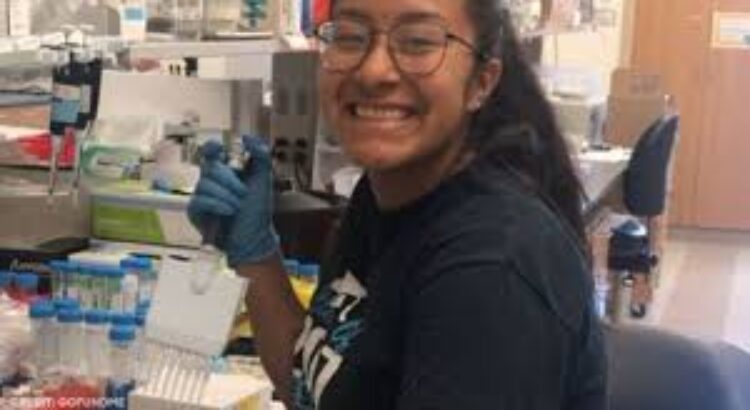
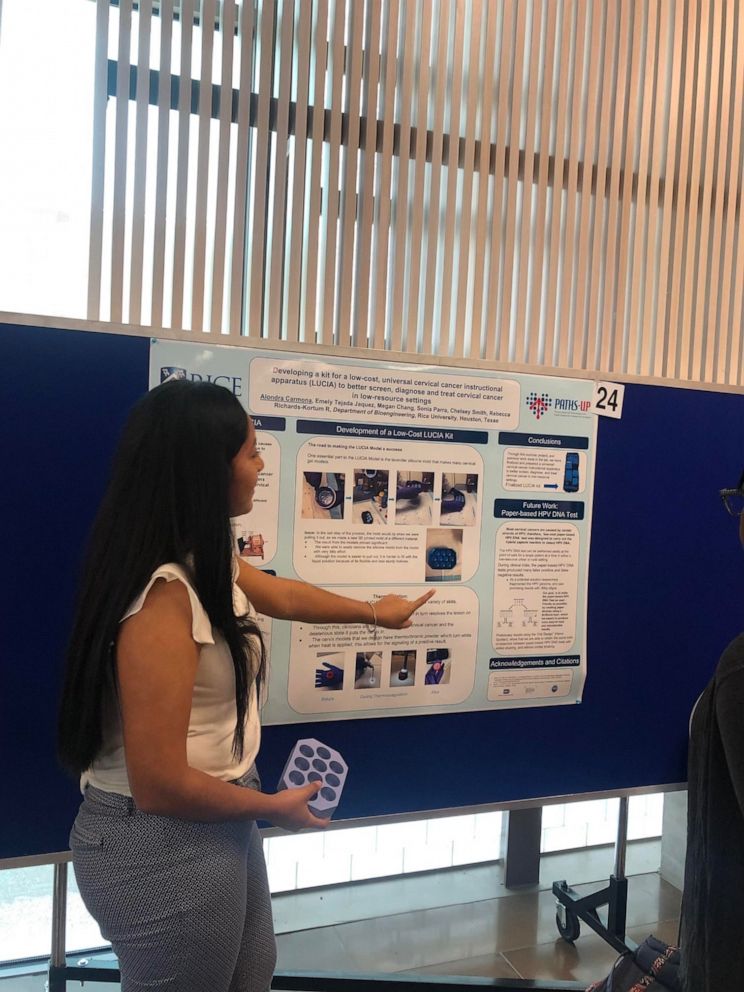
Carmona said she completed a six-week cervical cancer research internship at Rice University in the summer of 2018, and she earned a $1,000 stipend.

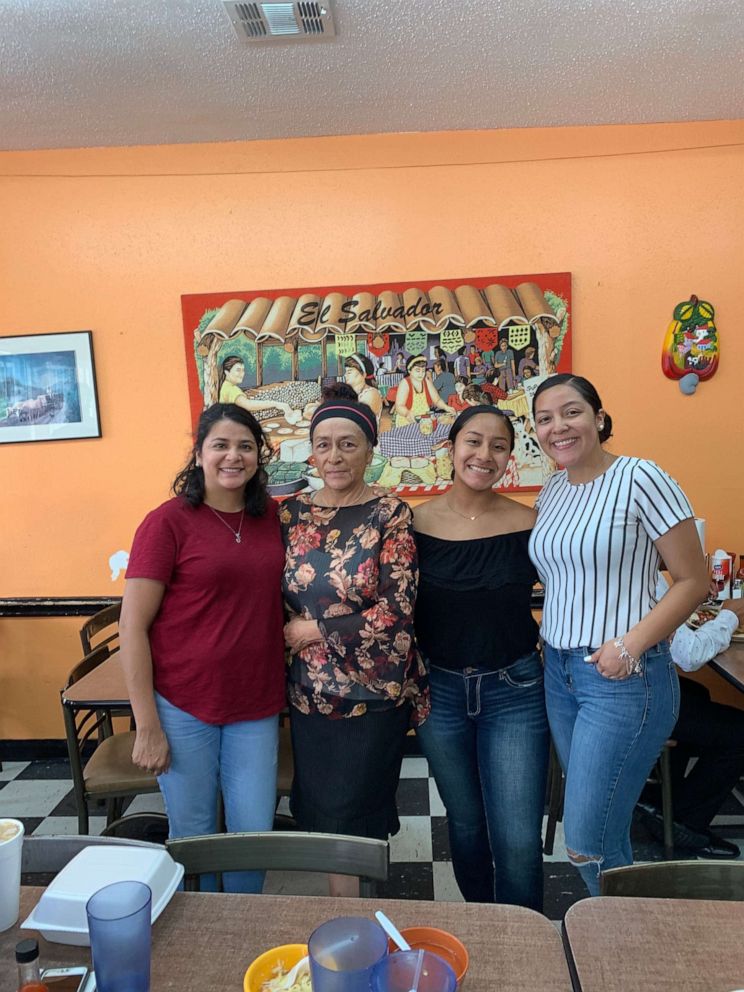
PHOTO: Alondra Carmona of Houston, Texasis pictured with her mom, Martha Zepeda, and sisters, Claudia Perez, 35 and Briceyda Zepeda, 21.

She saved that money in preparation for college, she said, and earned more from working a part-time job at Chipotle.

On Sunday, her mother was locked out of their home for not paying rent, so Carmona gave her the $1,800 in college savings to put toward the $2,000 she owes.

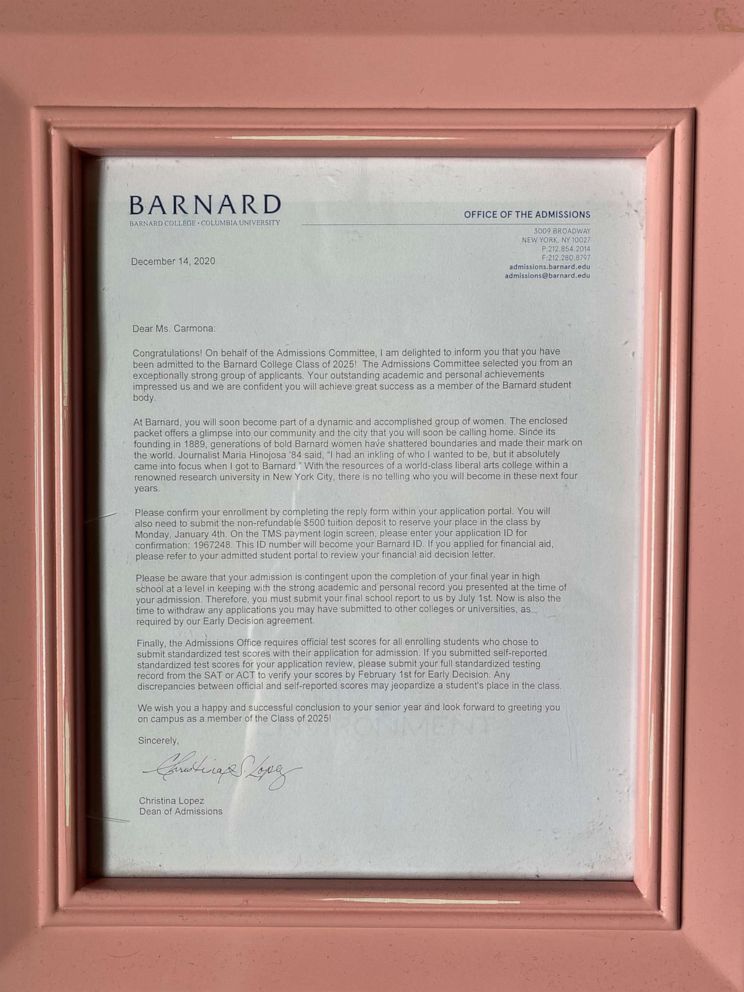
PHOTO: Alondra Carmona, 18, a senior at Yes Prep East End in Houston, Texas, was recently accepted to Barnard College-- an elite Ivy League liberal arts college for women located in New York City.

Carmona and her mom have been currently staying with her sister, Claudia Perez, 35, Carmona said.

The teen said she gave the money to her mom as a thank you for caring for her and her sisters, Perez and Briceyda Zepeda, 21.

«She’s always been a single parent and would work nights when I was little,» Carmona said. «My sisters and I would stay home alone … it was really hard, but she made sacrifices for us to have a better life.»

PHOTO: 
Alondra Carmona, 18, a senior at Yes Prep East End in Houston, Texas, was recently accepted to Barnard College-- an elite Ivy League liberal arts college for women located in New York City. Seen in this photo is Alondra's acceptance letter.

«She’s also wanted me to have a better education, and I got accepted to my dream school all because of her,» she added.

Carmona said Barnard gave her a $60,000 financial aid package, and she plans to come up with the difference she owes for room and board.

Since giving up her savings to help with rent, Carmona launched a GoFundMe page to help cover costs during the time she’ll be enrolled at Barnard.

«Some of the money I’ll use to help my mom pay [more] rent,» Carmona said of the crowdfunding. «And I’m so grateful to Barnard for helping me so much. They really are such an amazing school.»

Carmona will be majoring in neuroscience and minoring in Latin American studies. She hopes to become a neurosurgeon, she said.

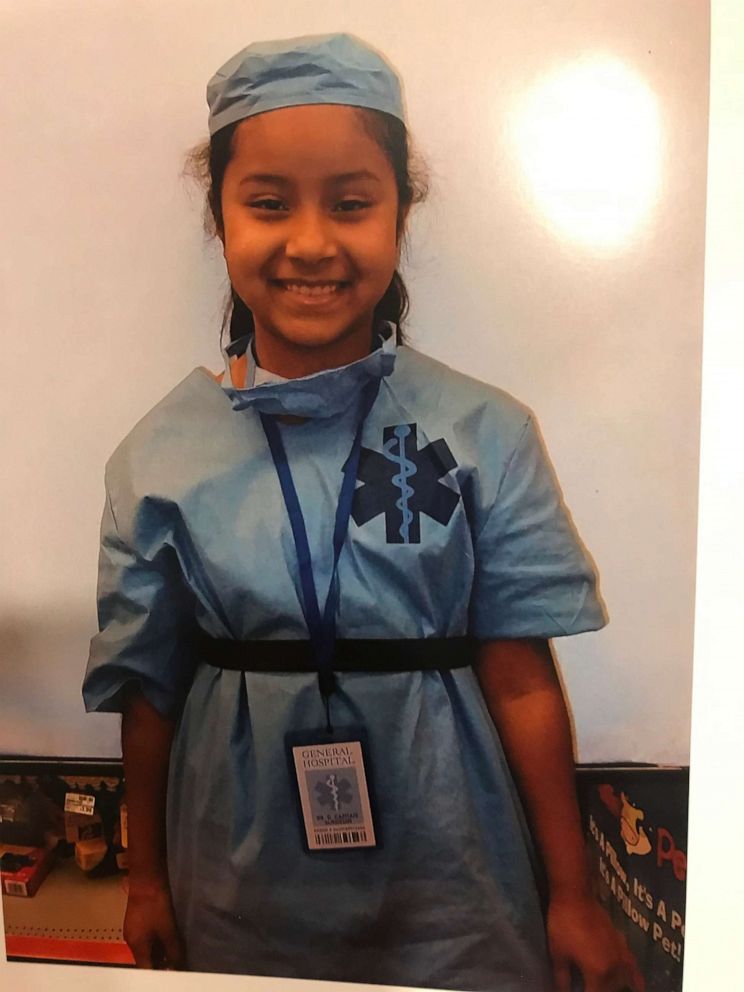
PHOTO: Alondra Carmona, 18, a senior at Yes Prep East End in Houston, Texas, was recently accepted to Barnard College in New York. Here, Alondra is seen when she was a child dressed up as a doctor.

«I know this is her lifelong dream, and she used to dress up as a doctor when she was little,» her mom, Martha Zepeda told «GMA» through a translator. «I’m really happy and proud.»

Zepeda said she will soon be looking for other work. Carmona is hopeful they will return home soon.

Fuente de la Información: https://abcnews.go.com/GMA/Family/teen-college-savings-mom-pay-rent/story?id=75779643&cid=clicksource_4380645_16_post_hero_card_hed

Comparte este contenido:

Woman’s journey through homelessness, unemployment shows struggle single mothers face in pandemic

Woman’s journey through homelessness, unemployment shows struggle single mothers face in pandemic

Every morning, Alisha Carter, 35, wakes up to the noise surrounding her West Baltimore neighborhood. From police sirens, gunshots and to the sounds of ambulances going up driving through the city, Baltimore is the only place she has ever called home.

But since the start of the pandemic, Carter — a full-time postal worker in her professional life and a mother of five daughters in her personal one — has dealt with losing her home, living in a hotel and having to move into a homeless shelter.

“I had several good jobs, you know, but during this time, I just kept working and not giving up,” Carter said. “To have a job, a good job at that and still be homeless was like, what am I doing wrong? Got a career, but you’re homeless.”

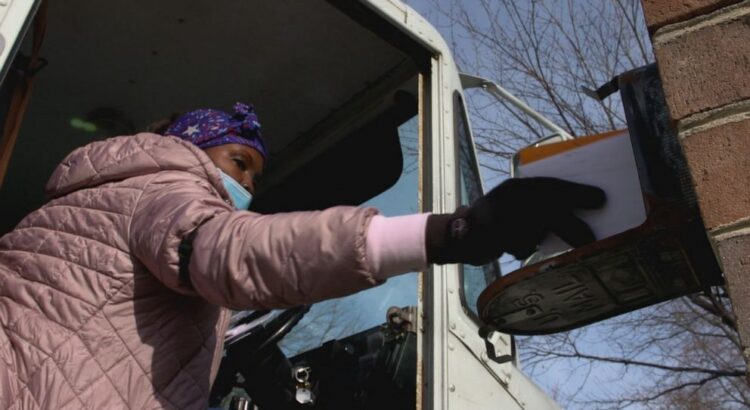
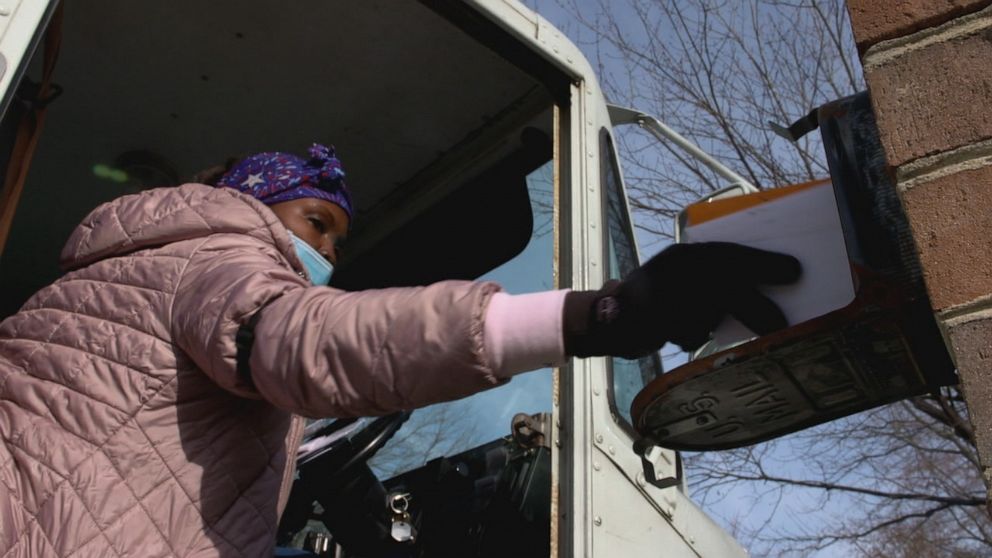
PHOTO: Alisha Carter, 35, on her mail route in Prince Georges County, Maryland.

Before the pandemic, Carter rented a row home and worked as a full-time bus driver when the homeowners advised Carter that someone purchased the home, which led Carter and her girls to have to leave and find a new place to stay.

They eventually settled in a hotel but Carter subsequently lost her job as a bus driver due to school closings from COVID-19, leaving her unemployed and with no funds to provide for her family.

With no place to go, she and her daughters lived out of a car for about two weeks before, eventually, through the help of a friend, contacting Sarah’s Hope, a homeless shelter in Baltimore that caters to single mothers and their children.

“Sometimes you have to go through things to get stronger,” Carter said. “I always felt like people that had stuff handed to them, they don’t value it, so, when you go through a struggle together with your family, it makes you stronger.”

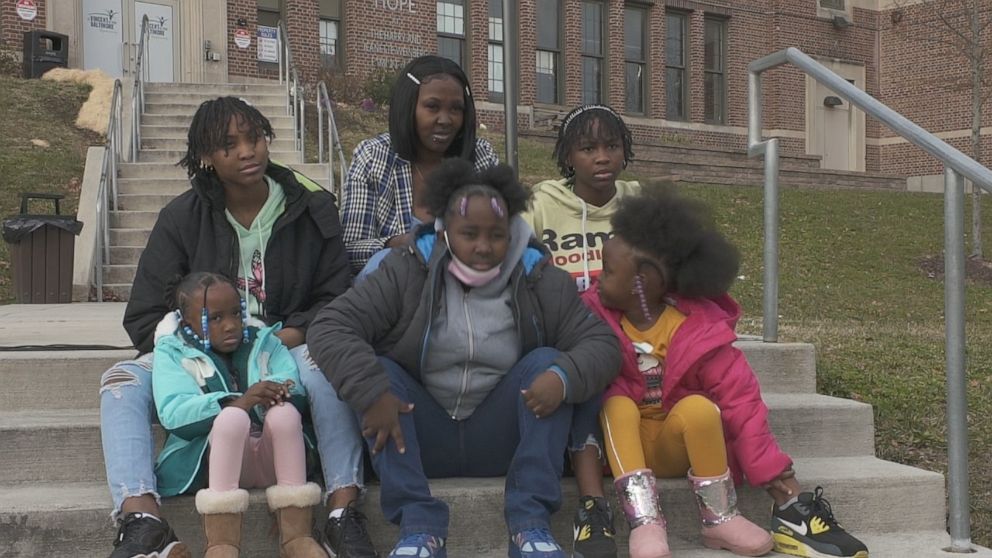
PHOTO: Alisha Carter, 35, with her 5 daughters Martaejah Easley, 16,Dakira Easley 15, Terziya Vann, 11, Mariah & Mya Lee, 5 (fraternal twins), in front of Sarah’s Hope in Baltimore, Maryland.

According to the United States Census Bureau, there are currently 13.6 million single parents in the U.S., raising 22.4 million children and 80% of those single parents are moms.

The state of Maryland as a whole has seen eye-opening numbers in regards to single mothers, with African American mothers being the ones who suffer the most. Data shows that, since the pandemic began, homelessness in Maryland has increased with experts saying single mothers and people of color are being hurt the most.

“You have to look at even prior to the pandemic, the resources were scarce for people of color,” said Leroy Fowlke, Program Director of Sarah Hope, the Baltimore shelter that housed Carter and her daughters. “As far as employment training opportunities, the communities themselves are not really conducive to growth in many situations. There’s so many obstacles to overcome, to get connected to what you need. So I really think the pandemic just kind of escalated that situation because now the resources are even more scarce.”

But even with all the odds against her, Carter remained headstrong and kept her faith close to her heart.

While at the homeless shelter, she managed to secure a job as a postal worker and through hard work, saving as well as the help of Sarah’s Hope, Carter and her five daughters recently moved into a new home that they can finally call home again, something that she says has brought a light to her life again.

“Every dark place always has a light, something that just brings light,” Carter said. “Don’t underestimate yourself.”

Fuente de la Información: https://abcnews.go.com/US/womans-journey-homelessness-unemployment-shows-struggle-single-mothers/story?id=75692062&cid=clicksource_4380645_15_hero_headlines_bsq_hed


Comparte este contenido:

No joke: Using humor in class is harder when learning is remote

No joke: Using humor in class is harder when learning is remote

Most discussions about the drawbacks of online education focus on the negative effects it has on learning. Less obvious – but also quite important – is how remote instruction can affect the teacher’s use of humor.

Scholars have formulated various explanations for why people use humor. As someone who has helped prepare and provide professional development for prospective and veteran teachers for more than 30 years, I am often asked whether humor is an effective way to teach. Decades of research has left little doubt: The answer is yes. Among other benefits, humor can create a positive learning environmentincrease learning and make students more motivated to learn.

No laughing matter

The pandemic hasn’t eliminated the benefits of humor in the classroom. Instructors, however, have told me during interviews for this article that it’s more difficult to use humor when their students appear on video screens than in actual classrooms.

Annette Trierweiler, an assistant professor of environmental science, told me that she used less humor in fall of 2020 because her remote lessons were like “performing in front of a dead audience.”

I have noticed the same thing in my own online courses. Comments and stories that usually make students laugh when I am in person somehow fall flat when class is online.

This challenge isn’t new.

Psychology professors Frank LoSchavio and Mark Shatz in 2006 published some of the first research on using humor in online courses. Neither has changed his mind about a key distinction between face-to-face and remote instruction.

“It’s generally easier to pull off humor in a traditional classroom,” LoSchavio told me.

And that brings us to five reasons humor is harder to pull off when learning is remote.

1. Clues get missed

Humor is primarily social in nature. In other words, it occurs when people interact. For that reason, successful humor depends on people being able to pick up on contextual clues. This includes gestures, facial expressions and posture. It can also involve things such as the pitch, speed and rhythm of a person’s voice. Remote instruction can make it harder to pick up on or make sense of these types of things.

Religion professor Stephen Hearne, who’s been teaching online courses for two decades, complains that body language and other ways to telegraph humor often go unnoticed or unseen on computer screens. According to Hearne, that’s one reason there’s “a better chance students will get more of the humor” in traditional classrooms.

2. Technical problems

The poor quality of audio and video connections can further distort a teacher’s voice and image, as well as student responses. As Mark Shatz, the psychology professor and author of a book on secrets to writing comedy, puts it, “the virtual platform removes or minimizes the feedback loop that guides humor selection and delivery.”

To make matters worse, cellphones – with their tiny screens and speakers – are the preferred or only internet connection for some students. The problem is that words get garbled and gestures are miniaturized beyond recognition on cellular devices.

3. Laughter is less contagious

Humor is social in another respect. We often rely on the subtle and not so subtle reactions of others to confirm if something is funny. That’s not possible when only a few students can or want to be seen during remote instruction. Moreover, hearing someone else laugh can trigger us to smile or laugh ourselves. Television sitcoms use laugh tracks for that very reason: They coax viewers into making desired responses.

Those types of desired responses are often lacking in remote instruction, especially if students have their cameras on mute. Andrew Barnhill, an assistant professor of public service, found that out this fall. “Students aren’t able to easily feed off of each other’s reactions to comments in the same way that they do in person,” he told me.

On a related matter, audio delays – a near universal phenomenon in remote education – can cause the teacher and students to speak over one another in a jerky start-and-stop rhythm. “The slight delay that you get over Zoom as opposed to in-person makes a difference,” Barnhill says.

[Insight, in your inbox each day. You can get it with The Conversation’s email newsletter.]

4. When the camera is on, the laughs are off

Humor research provides something else to consider. In one study, participants were overtly or covertly videotaped watching excerpts from popular television comedies. When they were aware of the camera’s presence, they laughed less. In short, the camera’s presence was a big killjoy.

This might help explain an experience that a Furman University religion professor Bryan Bibb – a colleague of mine – recently had. Prior to discussing certain risque double entendres in the Old Testament, Bibb usually plays sexually suggestive excerpts from early blues songs. Typically “a fun and funny moment,” Bibb said that over Zoom “it just felt sort of gross.”

Some students who are conscious of the camera’s seemingly voyeuristic leer – and self-conscious about how it makes them feel – turn off their audio and video feeds. This leaves only their names as unresponsive avatars on the teacher’s video screen.

Talk about a tough crowd.

5. Too many distractions

Distractions – the kryptonite of humor – are the rule, not the exception, in remote classes. People wander in the background and babies cry in the foreground.

Fionnuala Darby Hudgens, a community college English instructor, says that “interruptions occur during almost every online session.” For her and many others, the most common scene-stealers are kids and pets.

Comedian W.C. Fields once observed the same thing, advising people in entertainment to never work with animals or children because they steal attention.

The last laugh?

Tough times and tough crowds aside, it’s too early to give up on humor in remote instruction. The challenge for teachers lies not only in adapting to new technology, but also in understanding what makes something funny in the first place.

Humor can never be reduced to a one-size-fits-all model. More art than science, humor must respond to an ever-changing set of circumstances and personalities, which is the key to its survival. The joke will be on us as teachers if we ever forget that.

Fuente de la Información: https://theconversation.com/no-joke-using-humor-in-class-is-harder-when-learning-is-remote-153818

Comparte este contenido:

La fascinante red de «autopistas celestiales» que descubrió un equipo de científicos (y cómo puede revolucionar los viajes espaciales)

La fascinante red de «autopistas celestiales» que descubrió un equipo de científicos (y cómo puede revolucionar los viajes espaciales)

  • Redacción
  • BBC News Mundo

Si has sentido el placer de conducir velozmente por una carretera despejada, ahora imagina hacerlo surcando una vía expresa a través del espacio.

En un reciente estudio, un grupo de astrónomos dice haber descubierto una red de «autopistas celestiales» que permitiría enviar naves a sitios remotos del sistema solar a una velocidad sin precedentes.

Los cálculos de los investigadores muestran que a través de estas supervías, un asteroide puede viajar de Júpiter a Neptuno en menos de una década.

Un objeto que viaje durante un siglo a través de una autopista celestial podría completar una distancia de 15.000 millones de kilómetros, eso equivale a cien veces la distancia entre la Tierra y el Sol.

Arcos
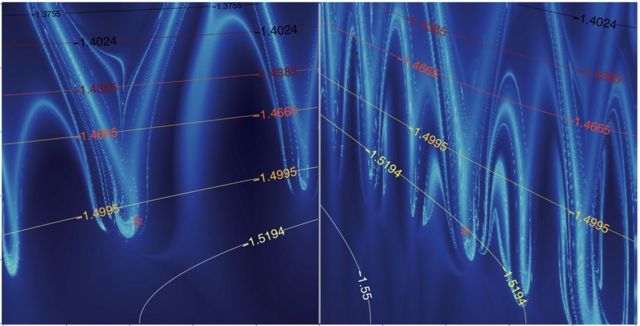
La interacción entra la gravedad de los planetas forman arcos que se extienden a los largo de colectores espaciales.
¿Cómo funcionan estas autopistas cósmicas y qué nos enseñan sobre el universo?

«Para decirlo de manera sencilla, estas autopistas son producidas por los planetas«, dice en un comunicado Aaron Rosengren, uno de los autores del estudio y profesor de ingeniería mecánica y aeroespacial en la Universidad de California en San Diego (EE.UU.).

Estas rutas expeditas se forman debido a los atracción gravitacional entre los planetas, creando así un corredor invisible que se extiende desde el cinturón de asteroides ubicado entre las órbitas de Júpiter y Marte, hasta más allá de Urano.

Vías

Los expertos ya sabían que en el espacio existen vías exprés, pero solo ahora descubrieron que se pueden conectar entre ellas, como un complejo sistema de carreteras.

Mediante simulaciones de computador y el análisis de millones de órbitas en el sistema solar, los expertos notaron que alrededor de cada planeta se forman unos arcos, que a su vez forman lo que ellos llaman unos «colectores espaciales».

Los arcos y los colectores se producen por la interacción de la gravedad entre dos objetos que están en órbita.

De esa manera se genera un «corredor gravitacional», como lo llama Shane Ross, ingeniera aeroespacial de la universidad Virginia Tech, en un artículo del portal Live Science.

Aunque son invisibles, las simulaciones de computador mostraron cómo la trayectoria de partículas que se acercaban a planetas como Júpiter, Urano o Neptuno, se veían afectadas al entrar a los colectores.

Además, notaron que «cada planeta genera estos arcos y todas esas estructuras pueden interactuar entre ellas para producir complicadas rutas de transporte«, según explica Rosengren.

Los científicos ya sabían que cada planeta puede formar su propio «circuito de autopistas celestiales», pero solo ahora descubrieron que estas rutas pueden cruzarse con las de otros planetas y así formar una red más compleja.

La gran carretera de Júpiter

La mayor cantidad de autopistas detectadas por los investigadores se hallaron en la zona donde influyen las fuerzas gravitacionales de Júpiter, el planeta más grande del sistema solar.

Júpiter

La mayor cantidad de autopistas celestiales se hallaron en Júpiter.

Los colectores de Júpiter podrían ser la explicación al comportamiento de cometas y asteroides que tienden a merodear alrededor del planeta antes de salir disparados fuera de la órbita.

«Es sorprendente la profundidad a la que los colectores que emanan de Júpiter pueden permear el sistema solar», dice Rosengren a Live Science.

El siguiente paso

Entender cómo funciona esta red de autopistas, incluyendo las que están cerca de la Tierra, puede ser una clave para utilizarlas como rutas rápidas para viajes espaciales que puedan llegar más lejos en menos tiempo.

También, explican los autores del estudio, puede ser útil para vigilar la trayectoria de objetos que podrían chocar con nuestro planeta, así como para monitorear la creciente cantidad de satélites artificiales que flotan entre la Tierra y la Luna.

Fuente de la Información: https://www.bbc.com/mundo/noticias-55830742

Comparte este contenido:

México: ¿Qué es la ciencia ciudadana? Te explicamos cómo puedes colaborar

¿Qué es la ciencia ciudadana? Te explicamos cómo puedes colaborar

Todas las personas pueden participar en diversos proyectos para contribuir en el desarrollo de conocimiento especializado e individual.

Cuando hablamos de ciencia pensamos en palabras como “rigidez”, “experimento” o “trabajo especializado”. Así, podría parecer que la ciudadanía no es un elemento indispensable en la producción de conocimiento. Sin embargo, en las últimas décadas se ha escuchado el término ciencia ciudadana, colaborativa, participativa o e-ciencia.

Todas las personas pueden participar en diversos proyectos para contribuir en el desarrollo de conocimiento especializado e individual. Te explicamos qué es y cómo puedes colaborar.

¿Qué es la ciencia ciudadana?

“La ciencia ciudadana es la participación del público o sociedad en actividades científicas, son personas que no tienen conocimientos especializados, o no cuentan con entrenamiento, pero que pueden participar en diferentes etapas del quehacer de la ciencia”, explica Carlos Galindo Leal, director general de comunicación de la ciencia de la Comisión Nacional para el Conocimiento y Uso de la Biodiversidad (CONABIO).

La sociedad puede participar de diferentes formas: recabando datos, haciendo preguntas o en la difusión del conocimiento. Y no es una práctica nueva, tiene aproximadamente 100 años, sin embargo, con el desarrollo de nuevas tecnologías se ha diversificado.

“La participación de la ciudadanía varía de acuerdo a sus fines. Hay jóvenes con intereses en las matemáticas y la astronomía, que representa para ellos problemáticas, desafíos y la posibilidad de relacionarse con expertos. En general, las reacciones son positivas porque las personas se sienten útiles (sobre todo si les gustan los proyectos), por la cuestión de aprendizaje, y el orgullo de la participación en los resultados de la investigación”, afirma Susana Finquelievich, directora del Programa de Investigaciones sobre la Sociedad de la Información en Argentina.

En el mundo, se emplean en diversos sectores como la agricultura, la oceanografía, preservación del agua dulce, turismo, salud o en la astronomía.

Las observaciones sistemáticas de las poblaciones ayudan a la comunidad científica a reducir costos y agiliza producir observaciones en tiempo real.

Qué es la ciencia ciudadana

Así puedes colaborar en México

En México la CONABIO trabaja con tres aplicaciones para identificar especies:

Bird

Fue realizada por la Universidad de Cornell, The Cornel Lab of Ornithology, para la observación de aves. Desde hace una década en México se comenzó a trabajar con este proyecto y se bautizó como “ver aves”. Carlos Galindo señala: “requieres entrenarte un poco, y lo que subes son observaciones. Hay curadores en las plataformas que reconocen las especies que los usuarios identifican”.

NaturaLista

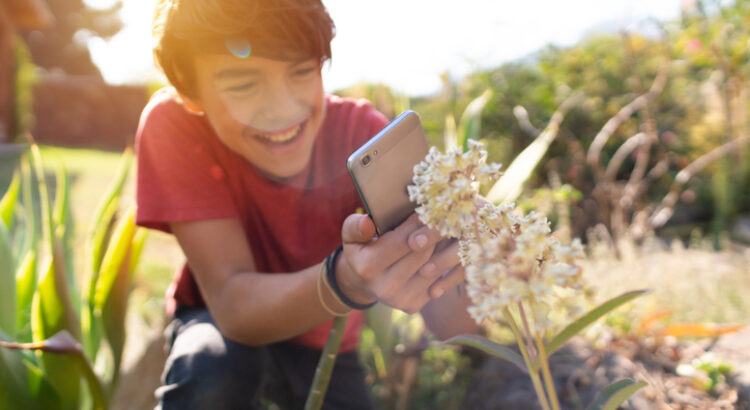
Fue desarrollada por la Universidad de California en Berkeley. Desde hace ocho años se implementó la plataforma en el país y es la más grande sobre biodiversidad en México. Cualquier persona con un teléfono móvil puede tomar fotos (observaciones) y subirlas a la plataforma.

EncicloVida

En 2019, CONABIO lanzó esta aplicación para dispositivos móviles. Cuenta con una base de datos de 13 millones de registros geográficos de 103,000 especies del país. “Solo tienes que buscar, al instante se crea una página y en segundos a través de información de los registros científicos, de eBird y NaturaLista se crea una enciclopedia de bolsillo”, describe el director general de comunicación de la ciencia de CONABIO.

Con sencillos pasos, los ciudadanos tienen una puerta al conocimiento. Las personas pueden ubicar una infinidad de especies con estas plataformas, disponibles también para teléfonos móviles: una planta endémica, saber el nombre del árbol que tienes en el patio, plantas medicinales o incluso contribuir a descubrir especies nuevas.

El problema en la difusión

En la aplicación se encuentran registradas más de 80,000 personas. “Poco a poco las especies van a ir cobrando importancia, es una herramienta para la sociedad”, indica Galindo Leal.

Promoverlo es el principal reto para que las personas las conozcan y se involucren.  Contrario a lo que se dice, el interés científico no es exclusivo del sector académico. Por el contrario, cada vez más la digitalización está visibilizando la inquietud de la ciudadanía en la producción de conocimiento y la conservación de las especies.

Fuente de la Información: https://tecreview.tec.mx/2021/02/05/ciencia/que-es-la-ciencia-ciudadana/


Comparte este contenido:
Page 289 of 1684
1 287 288 289 290 291 1.684