Page 828 of 1679
1 826 827 828 829 830 1.679

Thinking Dangerously: The Role of Higher Education in Authoritarian Times

Dr. Henry Giroux

What happens to democracy when the president of the United States labels critical media outlets as «enemies of the people» and disparages the search for truth with the blanket term «fake news»? What happens to democracy when individuals and groups are demonized on the basis of their religion? What happens to a society when critical thinking becomes an object of contempt? What happens to a social order ruled by an economics of contempt that blames the poor for their condition and subjects them to a culture of shaming? What happens to a polity when it retreats into private silos and becomes indifferent to the use of language deployed in the service of a panicked rage — language that stokes anger but ignores issues that matter? What happens to a social order when it treats millions of undocumented immigrants as disposable, potential terrorists and «criminals»? What happens to a country when the presiding principles of its society are violence and ignorance?

What happens is that democracy withers and dies, both as an ideal and as a reality.

In the present moment, it becomes particularly important for educators and concerned citizens all over the world to protect and enlarge the critical formative educational cultures and public spheres that make democracy possible. Alternative newspapers, progressive media, screen culture, online media and other educational sites and spaces in which public pedagogies are produced constitute the political and educational elements of a vibrant, critical formative culture within a wide range of public spheres. Critical formative cultures are crucial in producing the knowledge, values, social relations and visions that help nurture and sustain the possibility to think critically, engage in political dissent, organize collectively and inhabit public spaces in which alternative and critical theories can be developed.

At the core of thinking dangerously is the recognition that education is central to politics and that a democracy cannot survive without informed citizens.

Authoritarian societies do more than censor; they punish those who engage in what might be called dangerous thinking. At the core of thinking dangerously is the recognition that education is central to politics and that a democracy cannot survive without informed citizens. Critical and dangerous thinking is the precondition for nurturing the ethical imagination that enables engaged citizens to learn how to govern rather than be governed. Thinking with courage is fundamental to a notion of civic literacy that views knowledge as central to the pursuit of economic and political justice. Such thinking incorporates a set of values that enables a polity to deal critically with the use and effects of power, particularly through a developed sense of compassion for others and the planet. Thinking dangerously is the basis for a formative and educational culture of questioning that takes seriously how imagination is key to the practice of freedom. Thinking dangerously is not only the cornerstone of critical agency and engaged citizenship, it’s also the foundation for a working democracy.

Education and the Struggle for Liberation

Any viable attempt at developing a democratic politics must begin to address the role of education and civic literacy as central to politics itself. Education is also vital to the creation of individuals capable of becoming critical social agents willing to struggle against injustices and develop the institutions that are crucial to the functioning of a substantive democracy. One way to begin such a project is to address the meaning and role of higher education (and education in general) as part of the broader struggle for freedom.

The reach of education extends from schools to diverse cultural apparatuses, such as the mainstream media, alternative screen cultures and the expanding digital screen culture. Far more than a teaching method, education is a moral and political practice actively involved not only in the production of knowledge, skills and values but also in the construction of identities, modes of identification, and forms of individual and social agency. Accordingly, education is at the heart of any understanding of politics and the ideological scaffolding of those framing mechanisms that mediate our everyday lives.

Across the globe, the forces of free-market fundamentalism are using the educational system to reproduce a culture of privatization, deregulation and commercialization while waging an assault on the historically guaranteed social provisions and civil rights provided by the welfare state, higher education, unions, reproductive rights and civil liberties. All the while, these forces are undercutting public faith in the defining institutions of democracy.

This grim reality was described by Axel Honneth in his book Pathologies of Reason as a «failed sociality» characteristic of an increasing number of societies in which democracy is waning — a failure in the power of the civic imagination, political will and open democracy. It is also part of a politics that strips the social of any democratic ideals and undermines any understanding of education as a public good and pedagogy as an empowering practice: a practice that can act directly upon the conditions that bear down on our lives in order to change them when necessary.

As Chandra Mohanty points out:

At its most ambitious, [critical] pedagogy is an attempt to get students to think critically about their place in relation to the knowledge they gain and to transform their world view fundamentally by taking the politics of knowledge seriously. It is a pedagogy that attempts to link knowledge, social responsibility, and collective struggle. And it does so by emphasizing the risks that education involves, the struggles for institutional change, and the strategies for challenging forms of domination and by creating more equitable and just public spheres within and outside of educational institutions.

At its core, critical pedagogy raises issues of how education might be understood as a moral and political practice, and not simply a technical one. At stake here is the issue of meaning and purpose in which educators put into place the pedagogical conditions for creating a public sphere of citizens who are able to exercise power over their own lives. Critical pedagogy is organized around the struggle over agency, values and social relations within diverse contexts, resources and histories. Its aim is producing students who can think critically, be considerate of others, take risks, think dangerously and imagine a future that extends and deepens what it means to be an engaged citizen capable of living in a substantive democracy.

What work do educators have to do to create the economic, political and ethical conditions necessary to endow young people and the general public with the capacities to think, question, doubt, imagine the unimaginable and defend education as essential for inspiring and energizing the citizens necessary for the existence of a robust democracy? This is a particularly important issue at a time when higher education is being defunded and students are being punished with huge tuition hikes and financial debts, while being subjected to a pedagogy of repression that has taken hold under the banner of reactionary and oppressive educational reforms pushed by right-wing billionaires and hedge fund managers. Addressing education as a democratic public sphere is also crucial as a theoretical tool and political resource for fighting against neoliberal modes of governance that have reduced faculty all over the United States to adjuncts and part-time workers with few or no benefits. These workers bear the brunt of a labor process that is as exploitative as it is disempowering.

Educators Need a New Language for the Current Era

Given the crisis of education, agency and memory that haunts the current historical conjuncture, educators need a new language for addressing the changing contexts of a world in which an unprecedented convergence of resources — financial, cultural, political, economic, scientific, military and technological — is increasingly used to exercise powerful and diverse forms of control and domination. Such a language needs to be self-reflective and directive without being dogmatic, and needs to recognize that pedagogy is always political because it is connected to the acquisition of agency. In this instance, making the pedagogical more political means being vigilant about what Gary Olson and Lynn Worsham describe as «that very moment in which identities are being produced and groups are being constituted, or objects are being created.» At the same time it means educators need to be attentive to those practices in which critical modes of agency and particular identities are being denied.

In part, this suggests developing educational practices that not only inspire and energize people but are also capable of challenging the growing number of anti-democratic practices and policies under the global tyranny of casino capitalism. Such a vision demands that we imagine a life beyond a social order immersed in massive inequality, endless assaults on the environment, and the elevation of war and militarization to the highest and most sanctified national ideals. Under such circumstances, education becomes more than an obsession with accountability schemes and the bearer of an audit culture (a culture characterized by a call to be objective and an unbridled emphasis on empiricism). Audit cultures support conservative educational policies driven by market values and an unreflective immersion in the crude rationality of a data-obsessed market-driven society; as such, they are at odds with any viable notion of a democratically inspired education and critical pedagogy. In addition, viewing public and higher education as democratic public spheres necessitates rejecting the notion that they should be reduced to sites for training students for the workforce — a reductive vision now being imposed on public education by high-tech companies such as Facebook, Netflix and Google, which want to encourage what they call the entrepreneurial mission of education, which is code for collapsing education into training.

Education can all too easily become a form of symbolic and intellectual violence that assaults rather than educates. Examples of such violence can be seen in the forms of an audit culture and empirically-driven teaching that dominates higher education. These educational projects amount to pedagogies of repression and serve primarily to numb the mind and produce what might be called dead zones of the imagination. These are pedagogies that are largely disciplinary and have little regard for contexts, history, making knowledge meaningful, or expanding what it means for students to be critically engaged agents. Of course, the ongoing corporatization of the university is driven by modes of assessment that often undercut teacher autonomy and treat knowledge as a commodity and students as customers, imposing brutalizing structures of governance on higher education. Under such circumstances, education defaults on its democratic obligations and becomes a tool of control and powerlessness, thereby deadening the imagination.

The fundamental challenge facing educators within the current age of an emerging authoritarianism worldwide is to create those public spaces for students to address how knowledge is related to the power of both self-definition and social agency. In part, this suggests providing students with the skills, ideas, values and authority necessary for them not only to be well-informed and knowledgeable across a number of traditions and disciplines, but also to be able to invest in the reality of a substantive democracy. In this context, students learn to recognize anti-democratic forms of power. They also learn to fight deeply rooted injustices in a society and world founded on systemic economic, racial and gendered inequalities.

Education in this sense speaks to the recognition that any pedagogical practice presupposes some notion of the future, prioritizes some forms of identification over others and values some modes of knowing over others. (Think about how business schools are held in high esteem while schools of education are often disparaged.) Moreover, such an education does not offer guarantees. Instead, it recognizes that its own policies, ideology and values are grounded in particular modes of authority, values and ethical principles that must be constantly debated for the ways in which they both open up and close down democratic relations, values and identities.

The notion of a neutral, objective education is an oxymoron. Education and pedagogy do not exist outside of ideology, values and politics. Ethics, when it comes to education, demand an openness to the other, a willingness to engage a «politics of possibility» through a continual critical engagement with texts, images, events and other registers of meaning as they are transformed into pedagogical practices both within and outside of the classroom. Education is never innocent: It is always implicated in relations of power and specific visions of the present and future. This suggests the need for educators to rethink the cultural and ideological baggage they bring to each educational encounter. It also highlights the necessity of making educators ethically and politically accountable and self-reflective for the stories they produce, the claims they make upon public memory, and the images of the future they deem legitimate. Education in this sense is not an antidote to politics, nor is it a nostalgic yearning for a better time or for some «inconceivably alternative future.» Instead, it is what Terry Eagleton describes in his book The Idea of Culture as an «attempt to find a bridge between the present and future in those forces within the present which are potentially able to transform it.»

One of the most serious challenges facing administrators, faculty and students in colleges and universities is the task of developing a discourse of both critique and possibility. This means developing discourses and pedagogical practices that connect reading the word with reading the world, and doing so in ways that enhance the capacities of young people to be critical agents and engaged citizens.

Reviving the Social Imagination

Educators, students and others concerned about the fate of higher education need to mount a spirited attack against the managerial takeover of the university that began in the late 1970s with the emergence of a market-driven ideology, what can be called neoliberalism, which argues that market principles should govern not just the economy but all of social life, including education. Central to such a recognition is the need to struggle against a university system developed around the reduction in faculty and student power, the replacement of a culture of cooperation and collegiality with a shark-like culture of competition, the rise of an audit culture that has produced a very limited notion of regulation and evaluation, and the narrow and harmful view that students are clients and colleges «should operate more like private firms than public institutions, with an onus on income generation,» as Australian scholar Richard Hill puts it in his Arena article «Against the Neoliberal University.» In addition, there is an urgent need for guarantees of full-time employment and protections for faculty while viewing knowledge as a public asset and the university as a public good.

In any democratic society, education should be viewed as a right, not an entitlement. Educators need to produce a national conversation in which higher education can be defended as a public good.

With these issues in mind, let me conclude by pointing to six further considerations for change.

First, there is a need for what can be called a revival of the social imagination and the defense of the public good, especially in regard to higher education, in order to reclaim its egalitarian and democratic impulses. This revival would be part of a larger project to, as Stanley Aronowitz writes in Tikkun, «reinvent democracy in the wake of the evidence that, at the national level, there is no democracy — if by ‘democracy’ we mean effective popular participation in the crucial decisions affecting the community.» One step in this direction would be for young people, intellectuals, scholars and others to go on the offensive against what Gene R. Nichol has described as the conservative-led campaign «to end higher education’s democratizing influence on the nation.» Higher education should be harnessed neither to the demands of the warfare state nor to the instrumental needs of corporations. Clearly, in any democratic society, education should be viewed as a right, not an entitlement. Educators need to produce a national conversation in which higher education can be defended as a public good and the classroom as a site of engaged inquiry and critical thinking, a site that makes a claim on the radical imagination and builds a sense of civic courage. At the same time, the discourse on defining higher education as a democratic public sphere would provide the platform for moving on to the larger issue of developing a social movement in defense of public goods.

Second, I believe that educators need to consider defining pedagogy, if not education itself, as central to producing those democratic public spheres that foster an informed citizenry. Pedagogically, this points to modes of teaching and learning capable of enacting and sustaining a culture of questioning, and enabling the advancement of what Kristen Case calls «moments of classroom grace.» Moments of grace in this context are understood as moments that enable a classroom to become a place to think critically, ask troubling questions and take risks, even though that may mean transgressing established norms and bureaucratic procedures.

Pedagogies of classroom grace should provide the conditions for students and others to reflect critically on commonsense understandings of the world and begin to question their own sense of agency, relationships to others, and relationships to the larger world. This can be linked to broader pedagogical imperatives that ask why we have wars, massive inequality, and a surveillance state. There is also the issue of how everything has become commodified, along with the withering of a politics of translation that prevents the collapse of the public into the private. This is not merely a methodical consideration but also a moral and political practice because it presupposes the development of critically engaged students who can imagine a future in which justice, equality, freedom and democracy matter.

Such pedagogical practices are rich with possibilities for understanding the classroom as a space that ruptures, engages, unsettles and inspires. Education as democratic public space cannot exist under modes of governance dominated by a business model, especially one that subjects faculty to a Walmart model of labor relations designed «to reduce labor costs and to increase labor servility,» as Noam Chomsky writes. In the US, over 70 percent of faculty occupy nontenured and part-time positions, many without benefits and with salaries so low that they qualify for food stamps. Faculty need to be given more security, full-time jobs, autonomy and the support they need to function as professionals. While many other countries do not emulate this model of faculty servility, it is part of a neoliberal legacy that is increasingly gaining traction across the globe.

Third, educators need to develop a comprehensive educational program that would include teaching students how to live in a world marked by multiple overlapping modes of literacy extending from print to visual culture and screen cultures. What is crucial to recognize here is that it is not enough to teach students to be able to interrogate critically screen culture and other forms of aural, video and visual representation. They must also learn how to be cultural producers. This suggests developing alternative public spheres, such as online journals, television shows, newspapers, zines and any other platform in which different modes of representation can be developed. Such tasks can be done by mobilizing the technological resources and platforms that many students are already familiar with.

Teaching cultural production also means working with one foot in existing cultural apparatuses in order to promote unorthodox ideas and views that would challenge the affective and ideological spaces produced by the financial elite who control the commanding institutions of public pedagogy in North America. What is often lost by many educators and progressives is that popular culture is a powerful form of education for many young people, and yet it is rarely addressed as a serious source of knowledge. As Stanley Aronowitz has observed in his book Against Schooling, «theorists and researchers need to link their knowledge of popular culture, and culture in the anthropological sense — that is, everyday life, with the politics of education.»

Fourth, academics, students, community activists, young people and parents must engage in an ongoing struggle for the right of students to be given a free formidable and critical education not dominated by corporate values, and for young people to have a say in the shaping of their education and what it means to expand and deepen the practice of freedom and democracy. College and university education, if taken seriously as a public good, should be virtually tuition-free, at least for the poor, and utterly affordable for everyone else. This is not a radical demand; countries such as Germany, France, Norway, Finland and Brazil already provide this service for young people.

Accessibility to higher education is especially crucial at a time when young people have been left out of the discourse of democracy. They often lack jobs, a decent education, hope and any semblance of a future better than the one their parents inherited. Facing what Richard Sennett calls the «specter of uselessness,» they are a reminder of how finance capital has abandoned any viable vision of the future, including one that would support future generations. This is a mode of politics and capital that eats its own children and throws their fate to the vagaries of the market. The ecology of finance capital only believes in short-term investments because they provide quick returns. Under such circumstances, young people who need long-term investments are considered a liability.

Fifth, educators need to enable students to develop a comprehensive vision of society that extends beyond single issues. It is only through an understanding of the wider relations and connections of power that young people and others can overcome uninformed practice, isolated struggles, and modes of singular politics that become insular and self-sabotaging. In short, moving beyond a single-issue orientation means developing modes of analyses that connect the dots historically and relationally. It also means developing a more comprehensive vision of politics and change. The key here is the notion of translation — that is, the need to translate private troubles into broader public issues.

Sixth, another serious challenge facing educators who believe that colleges and universities should function as democratic public spheres is the task of developing a discourse of both critique and possibility, or what I have called a discourse of educated hope. In taking up this project, educators and others should attempt to create the conditions that give students the opportunity to become critical and engaged citizens who have the knowledge and courage to struggle in order to make desolation and cynicism unconvincing and hope practical. Critique is crucial to break the hold of commonsense assumptions that legitimate a wide range of injustices. But critique is not enough. Without a simultaneous discourse of hope, it can lead to an immobilizing despair or, even worse, a pernicious cynicism. Reason, justice and change cannot blossom without hope. Hope speaks to imagining a life beyond capitalism, and combines a realistic sense of limits with a lofty vision of demanding the impossible. Educated hope taps into our deepest experiences and longing for a life of dignity with others, a life in which it becomes possible to imagine a future that does not mimic the present. I am not referring to a romanticized and empty notion of hope, but to a notion of informed hope that faces the concrete obstacles and realities of domination but continues the ongoing task of what Andrew Benjamin describes as «holding the present open and thus unfinished.»

The discourse of possibility looks for productive solutions and is crucial in defending those public spheres in which civic values, public scholarship and social engagement allow for a more imaginative grasp of a future that takes seriously the demands of justice, equity and civic courage. Democracy should encourage, even require, a way of thinking critically about education — one that connects equity to excellence, learning to ethics, and agency to the imperatives of social responsibility and the public good.

History is open. It is time to think otherwise in order to act otherwise.

My friend, the late Howard Zinn, rightly insisted that hope is the willingness «to hold out, even in times of pessimism, the possibility of surprise.» To add to this eloquent plea, I would say that history is open. It is time to think otherwise in order to act otherwise, especially if as educators we want to imagine and fight for alternative futures and horizons of possibility.

Source:

http://www.truth-out.org/opinion/item/41058-thinking-dangerously-the-role-of-higher-education-in-authoritarian-times

Comparte este contenido:

Canadá: If ‘indigenizing’ education feels this good, we aren’t doing it right

Canadá/Noviembre de 2017/Fuente: The Conversation

Resumen:  «¡Siempre indigeniza!» Fue el grito de guerra de un artículo escrito por el académico canadiense Len Findlay hace casi 20 años. Fue visto por muchos en ese momento como un paso adelante radical pero indescriptiblemente positivo, una forma de hacer que las universidades sean más justas y diversas.

Este esfuerzo por autorigenizar a las universidades continúa siendo respaldado por muchos administradores y académicos bien intencionados. Tras el lanzamiento del informe final de la Comisión de la Verdad y la Reconciliación, este impulso de indigenizar ha adquirido un sentido de urgencia.

Always indigenize!” was the rallying cry of an article written by Canadian academic Len Findlay nearly 20 years ago. It was seen by many at the time as a radical but unassailably positive step forward — a way to make universities more just and more diverse.

This effort to indigenize universities continues to be supported by many well-meaning administrators and scholars. Following the release of the Truth and Reconciliation Commission’s final report, this push to indigenize has gained a sense of urgency.

Just this month, the University of Calgary was the latest higher education institution to unveil its new Indigenous Strategy, ii’ taa’ poh’ to’ p. In September, the University of Saskatchewan hit the headlines when some professors questioned a radical plan to indigenize the curriculum for 21,000 students.

Part of the reason for this quick adoption is, I believe, because it feels good. Many Canadians want to do something about our shameful history and “fix” our colonial past to make Canada more just, more equitable.

We’re doing it, we’re ‘indigenizing’

At the end of October, I attended the Society for Ethnomusicology’s annual conference in Denver. The conference included a day-long symposium on Indigenous musics, and many roundtables and papers on indigeneity and decolonization.

My own research focuses on Métis cultural festivals as sites of resurgence. I have also written about settler appropriation of Métis music, and the ways in which acts of inclusion function to control and contain Métis music. As such, I was interested in how calls to indigenize were being met or otherwise addressed by scholars in my discipline.

As one of a small group of Canadian music scholars in attendance, I found the differences between Canada and the United States to be palpable: Canadians, unlike Americans, have made territorial acknowledgements common and even expected at public gatherings. Americans, I found, seemed more hesitant to embrace this practice.

Canadian educators are starting to discuss and include Indigenous histories, methodologies and worldviews in their teaching practice. And Canadian universities are trying to address the lack of Indigenous faculty members through open calls for applications from Indigenous scholars.

Seeing these differences, it was hard not to get caught up in the excitement and feel a sense of pride in our achievements as Canadians. We’re doing it. We’re “indigenizing.”

Wait, isn’t this just good teaching?

And we should feel proud — at least a little. These small initiatives are positive. We should be constantly reminding ourselves and others of whose lands we are occupying. We should be making sure Indigenous scholars are a valued part of universities, and that students see themselves in their instructors. We should be teaching Indigenous histories. We should be valuing Indigenous worldviews.

We should make sure that Indigenous students receive the supports — financial and other — needed to finish their programs of study. We should be adopting methods of teaching that are more hands on and experiential. We should be doing research with Indigenous communities. We should be restructuring the tenure system so that community work is better supported and acknowledged. We need to unearth the systemic racism that exists on campus. And I could go on.

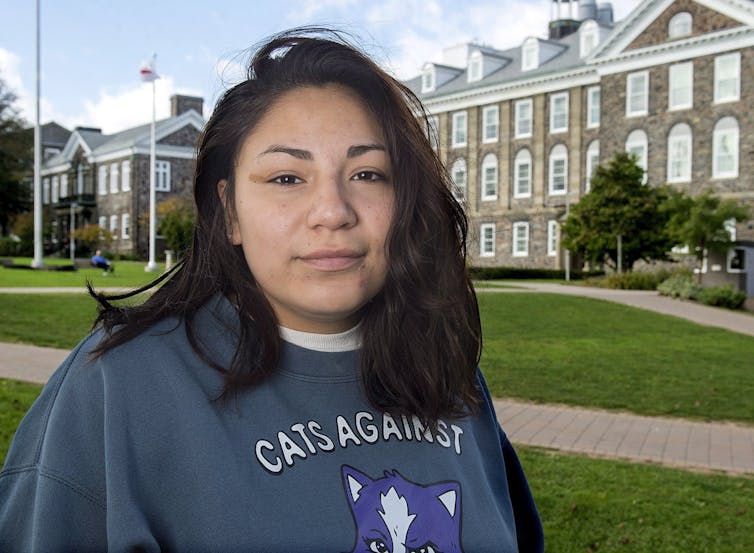
Kati George-Jim, an Indigenous student member of Dalhousie University´s board of governors has accused the university of systemic racism. (THE CANADIAN PRESS/Andrew Vaughan)

Also, the initiatives brought forward under the rhetoric of indigenizing the academy are not new — educators and researchers have been raising these issues for decades as evident in the work of Marie Battiste. The “initiatives” are actually just best practices for teaching and research.

Many educators have long-called for more equity and diversity in professorship, teaching practices, curriculum content, and learning and assessment . These calls aim to make educational systems better serve a diverse group of students, whether Indigenous students, racialized ones or students with disabilities.

Furthermore, ethics boards at universities work diligently to guide researchers so that possible harms to communities are reduced and research benefits optimized, something that, whenever applicable, includes community consultations and partnerships. None of this is new.

Dangerous opportunities

Why are we calling this “indigenizing” when really we’re just trying to do what’s right? In other words, isn’t teaching about Indigenous histories simply teaching a more complete history? Isn’t making sure that we use examples that Indigenous students can relate to just good teaching?

I’m also struck by the general lack of discussion about what it means to indigenize the academy. The effort to indigenize universities is, as such, being done with little critical engagement with what “indigenization” might involve, especially if it is to benefit Indigenous nations.

FNX

@FNXTV

Some University of Saskatchewan members are raising questions about the school’s efforts to «indigenize,»… http://fb.me/5JzaQ7lwr 

‘It’s not just add Indigenous and stir’: U of S’s indigenization approach raising questions

In two years from now, the University of Saskatchewan is planning to make Indigenous education mandatory for all 21,000 students.

 Drawing on the Oxford definition of indigenize, one scholar, Elina Hill, has suggested that to indigenize might mean bringing something (in this case the university) “under the control, dominance, or influence of Indigenous or local people.” Alternately, it might mean to “make indigenous.” These possibilities, she notes, are “miraculous at best or dangerous at worst.”

The miraculous possibility is unlikely to say the least. The dangerous possibility — to make indigenous — is eerily similar to a growing trend of “settler self-indigenization” whereby settlers with no prior connection to an Indigenous community become Indigenous. If universities claim to be indigenizing, how might this affect our understanding of Indigenous nations as separate from the Canadian state?

Universities as colonizers

Hill most poignantly asks, “Could there be instances in the end where…Indigenous people are not even necessary for indigenizing?”

This question might seem, at first glance, to be pushing the argument to the absurd. However, given that advocates for indigenization constantly reiterate that doing so is good for universities, it might be exactly on point.

Ultimately, much of what has happened around indigenizing the academy has been aimed at making the university — a settler institution — a better system. As Hill says, this creates “a better kind of university, with knowledge toward a better kind of still colonial Canada.” That the term indigenous — and indeed the verb to indigenize — does not need to refer to Indigenous peoples (that is, distinct nations) should not be forgotten.

Indigenizing as it is now practiced is largely good — for settlers, and perhaps for individual Indigenous students.

But it comes with a profound risk: Will Indigenous nations lose control over their intellectual property? Over how their traditions are taught and written? Will universities continue to facilitate colonization, reinforcing the belief that all that is worth knowing, all intellectual traditions, are, or should be, centred within the university?

Instead of working in their communities, will elders be asked to put their time and energy into supporting settler faculty as they attempt to “indigenize”?

True reparation will be painful

It should be clear by now that I don’t think “indigenizing” is the right approach to addressing Canada’s colonialism within universities. But if not indigenizing, what should we be doing as academics, as university administrators, as Canadians?

The question we need to consider is: In what ways have the university system and academic traditions harmed Indigenous nations, and how can we begin the process of reparation?

The first step is to start listening, listening to Indigenous scholars and to Indigenous nations on whose lands our universities stand. As such, I don’t have answers. I can’t tell you, or tell academic institutions across Canada, what needs to happen because knowing will require long-term, on-going engagement with Indigenous communities.

But I do know that reparation can’t be centred on universities, or on the needs of settler-colonizers. In fact, reparation will likely be painful for settlers because it will be profoundly unsettling.

If it feels good, if it feels easy, if it feels comfortable, we’re not doing it right.

Fuente: http://theconversation.com/if-indigenizing-education-feels-this-good-we-arent-doing-it-right-87166

Comparte este contenido:

México: Secretaría de Educación invierte 12 mil mdp en obras de rehabilitación

México/Noviembre de 2017/Fuente: Am Queretaro

El programa Escuelas al CIEN invierte más de 12 mil millones de pesos en mejora y rehabilitación de planteles públicos del país, informó el director general del Instituto Nacional de la Infraestructura Física Educativa (Inifed), Héctor Gutiérrez. Un proyecto de inversión que inició bajo propuesta del secretario de Educación Pública, Aurelio Nuño.

El director general del Inifed destacó que de 2015 a noviembre de 2017, la institución autorizó la transferencia de recursos correspondiente a 13 mil 24 anticipos y 31 mil 569 estimaciones, a los institutos estatales de infraestructura física educativa.

En un comunicado de la Secretaría de Educación Pública, indicó que con el programa Escuelas al CIEN, la derrama económica a nivel nacional generó 154 mil 516 empleos de mano de obra directa, 77 mil 258 empleos en empresas formalmente constituidas, y 46 mil 354 en pequeñas y medianas empresas (Pymes), que propiciarán una mayor ocupación laboral en compañías mexicanas.

Gutiérrez de la Garza aseguró que con los recursos se dará atención a daños en muros, pisos, techos, ventanas, pintura, impermeabilización, escaleras, barandales, instalación eléctrica, bardas.

También se atenderá la rehabilitación de instalaciones hidráulicas y sanitarias, el mejoramientode muebles sanitarios, así como se canalizarán recursos para el desarrollo de mejores espacios para maestros y personal directivo y administrativo e infraestructura para la conectividad.

Fuente: http://amqueretaro.com/el-pais/mexico/2017/11/19/secretaria-educacion-invierte-12-mil-mdp-obras-rehabilitacion

Comparte este contenido:

Aprueban ley para finalizar huelga de profesores en Ontario, Canadá

Canadá/Noviembre de 2017/Fuente: Prensa Latina

Los estudiantes universitarios de Ontario, Canadá, volverán a clases en los próximos días después de aprobarse hoy una ley que pone fin a la huelga de cinco semanas realizada por 12 mil trabajadores del sector.
La legislación de regreso al trabajo entró en vigor este domingo después de su tercera lectura y recibió el aval de la teniente gobernadora Elizabeth Dowdeswell, lo cual marca la primera vez en más de medio siglo que los profesores en paro del territorio son obligados a regresar a las aulas.

‘Este es el último recurso. Hicimos todo lo posible para evitar estar aquí’, expresó Deb Matthews, ministra de Desarrollo de Habilidades y Educación Avanzada, citada por el diario The Globe and Mail.

De acuerdo con el periódico, se espera que los centros de altos estudios reanuden las clases el martes, y ya anunciaron planes para ayudar a recuperar el tiempo perdido, con recortes de las vacaciones.

En total, fueron 500 mil los jóvenes que vieron detenido su curso académico por esta huelga, lo cual llevó a muchos de ellos a protestar por la interrupción y firmar una petición en Internet para que se les reintegrara el dinero pagado por sus matrículas.

La huelga iniciada el 16 de octubre exigió mejores contratos y salarios, y un mes después los líderes sindicales de los centros universitarios decidieron mantenerla tras rechazar una propuesta de contrato colectivo de la patronal.

Hace dos días, la primera ministra de Ontario, Kathleen Wynne, comenzó a alistar la ley para obligar a los profesores y empleados de 24 centros universitarios a abandonar el paro ante el fracaso de las negociaciones, y la legislatura provincial votó hoy a favor de esa medida.

El presidente del Sindicato de Empleados del Servicio Público de Ontario, Warren Thomas, manifestó que, a pesar de la legislación, el paro puso el foco en lo que se percibe como las luchas de los profesores contratados.

La huelga que el gobierno liberal acaba de terminar pone los problemas de los trabajadores contratados con salarios bajos en el centro de la agenda pública. Fue una batalla para los trabajadores precarios de hoy y para cada futuro trabajador, en la universidad o fuera de ella, dijo en un comunicado.

Fuente: http://www.prensa-latina.cu/index.php?o=rn&id=132729&SEO=aprueban-ley-para-finalizar-huelga-de-profesores-en-ontario-canada
Comparte este contenido:

¿Por qué luchamos? Experiencia de jóvenes en Naciones Unidas

Por: Amnistía Internacional

“En la India está penalizado darse un beso entre dos mujeres o entre dos hombres. Tenemos mucho por lo que luchar. Es fundamental salir a las calles y que el reclamo por la diversidad sexual y la no discriminación sume más voces. Igualmente la sociedad también tiene normas muy rígidas para parejas heterosexuales y las expresiones de deseo o de amor en lugares públicos no son muy comunes”. Pooja, activista de la India, revivía lo que allá es moneda corriente y acá, para las leyes argentinas, suena rudimentario. Si bien podemos leer estas historias en las redes, ser parte de un equipo de activistas que participó en el Foro de Alto Nivel Político de Naciones Unidas fue una oportunidad única para conocerlas de primera mano.

En junio quedé seleccionada entre un grupo de 500 jóvenes de todo el mundopara unirme a 4 jóvenes líderes de Kenia, Nigeria, Zimbabwe y la India*. Nuestra misión era lograr que, como jóvenes activistas por los derechos humanos, nuestras voces, preocupaciones y prioridades tengan un lugar en el Foro de Alto Nivel Político sobre Desarrollo Sostenible (HLPF-ONU) que se realizó del 11 al 19 de julio, en Nueva York.

Una vez en Nueva York pude conocer cómo trabajan otros y otras jóvenes que comparten el desafío de lograr el reconocimiento de nuestros derechos sexuales y reproductivosEn Kenia, Nairobi, por ejemplo, un joven facilita el acceso a Internet a través de un cyber para que otros puedan ir ahí a conectarse y sistematizar datos que recogen en comunidades. Son más de 300 jóvenes que caminan las comunidades para monitorear el nivel de implementación del Objetivo 5 que demanda lograr el empoderamiento de mujeres y niñas y la igualdad de género.

Otro día, entre sesiones, conocí a una joven activista de Nigeria que también trabaja a través de la educación en derechos humanos. Busca promover los derechos de las niñas a decidir sobre su cuerpo de forma libre y luchar contra el machismo en un país en el cual el matrimonio infantil y la mutilación genital femenina son unas de las principales violaciones de derechos humanos. Un gran desafío es buscar formas creativas de hablar estos temas entre niñas, niños y adolescentes para generar cambios culturales y sociales que respeten su dignidad y que involucren a todos y todas.

El cara a cara con jóvenes de todo el mundo me motivó a seguir trabajando para que otros puedan hablar libremente sobre sexualidad, puedan acceder a información sobre cuáles son sus derechos y puedan, además de ejercerlos, disfrutarlos. En la medida en que conocemos nuestros derechos, tenemos más poder para actuar por ellos. Estos Foros son una instancia en la cual podemos monitorear y dar seguimiento a la labor de los Estados para garantizar esos derechos a través de los Objetivos de Desarrollo Sostenible (comúnmente conocidos como ODS) y la Agenda 2030, acordados en diciembre de 2015.

Mi participación como joven activista fue como un curso acelerado en incidencia política ante Naciones Unidas: dos días previos al HLPF tuvimos talleres sobre el proceso de la Agenda 2030, el Foro y oportunidades de incidencia. Desde Amnistía Internacional pude dar un taller sobre campaña y activismo en el que fue muy valioso indagar sobre las experiencias e iniciativas en lugares tan distantes como Arabia Saudí, Alemania, Canadá y Uruguay. Luego, durante el Foro enfrenté los desafíos de conocer a actores relevantes: presentarte, tener claro para qué hablarle y cómo ese actor puede colaborar con tu estrategia eran preguntas claves antes de iniciar una charla. Sobre todo cuando un mismo edificio reunía a más de 2.500 personas para dar seguimiento a los ODS y revisar las estrategias para asegurar un desarrollo inclusivo.

No estás solo, no estás sola, súmate como joven activista al Grupo de Jóvenes de Amnistía Internacional Argentina para aprender más sobre tus derechos sexuales y reproductivos, defenderlos y actuar para que otros y otras jóvenes puedan ejercerlos libremente.

Fuente: https://www.amnesty.org/es/latest/news/2017/10/what-are-we-fighting-for-the-experience-of-young-people-at-the-united-nations/

Comparte este contenido:

Quebrando el paradigma de hospedaje de un Sistema de Gestión de Aprendizaje (LMS) en su propio servidor

Por: Lars Janér

Es una nueva era para el aprendizaje. Las nuevas tecnologías alteran la industria en todo momento, y los administradores de educación superior aprovechan esta oportunidad para reevaluar todo, desde los programas que ofrecen hasta los sistemas utilizados para ofrecerlos. Uno de los temas más fundamentales en este proceso está centrado en el sistema de gestión de aprendizaje (en Inglés Learning Management System, LMS) que, no en vano, es una de las primeras herramientas que los administradores buscan actualizar.

Hasta hace poco, las instituciones de educación superior tenían opciones escasas de LMS. La mayoría de las escuelas optaba por sistemas de gestión de aprendizaje con servidores propios de de código abierto, pués esta opción está más de acuerdo con los principios educativos modernos, y la hospedaje en la institución parecía ofrecer más control. Todavía, hoy las instituciones abandonan cada vez más estos sistemas heredados (y con frecuencia  “toscos”) y los reemplazan con LMS nativos en la nube que cuentan con API abiertas, aprovisionamiento automatizado, interfaces muy fáciles de usar y seguridad impecable.

En estas páginas, exploraremos algunos de los motivos principales que desencadenan esta mudanza masiva.

EL VERDADERO COSTO DE LA TITULARIDAD

En el caso de las opciones “gratuitas” tradicionales de servidor propio, el código está disponible, pero existen muchos costos asociados. La mayoría de esos costos se relaciona con el personal administrativo necesario para ejecutar el sistema, pero hay además otros costos que  se acumulan rápidamente: hardware, gastos generales institucionales, el costo de oportunidad de no estar alineados con el aprendizaje del siglo XXI y costos imprevistos, asociados con la carga de ejecutar un sistema propio, tales como los gastos en brechas de seguridad, fallas e inactividad.

Al considerar todos los puntos asociados con estas opciones de software “gratis” hospedados en un servidor propio, muchas instituciones ya perciben que la palabra “gratuito” no hace honor a su significado, lo que provoca que reevalúen sus sistemas actuales y se trasladen a opciones más nuevas y mejores como Canvas.

Canvas es un sistema de gestión de aprendizaje basado en la nube, de fuente abierta y alojado en un servidor comercial que simplifica los costos al reunirlos  en una única suma total, y deja libre la atención de las instituciones y su equipo para enfocarse en desafíos más importantes. Las instituciones que han hecho recientemente la transición a Canvas desde otros LMS afirman que Canvas posee un valor sin precedentes cuando se trata de lo siguiente:

  • Disponibilidad: 99,9 % de tiempo de actividad con aprovisionamiento automatizado para un rendimiento máximo.
  • Confiabilidad: servidor, seguridad, respaldo y actualizaciones sin intervención del usuario.
  • Asistencia: servicio de nivel mundial y un amable equipo de asistencia.
  • Utilidad: más fácil de usar y mejor funcionalidad.

EL PODER DE LA NUBE

Los sistemas de gestión de aprendizaje popularmente conocidos para ejecución en servidores locales, tienen problemas para competir en la nueva era del software de gestión de aprendizaje basado en la nube. Un sistema de gestión de aprendizaje que es nativo de la nube significa que las instituciones no necesitan preocuparse por comprar, configurar y mantener hardware y software para el servidor. No necesitan dedicar personal valioso de TI al mantenimiento del LMS y no necesitan preocuparse por las brechas de seguridad, el tiempo de inactividad o la aplicación de actualizaciones y parches.

En su calidad de único LMS realmente nativo de la nube, Canvas ha experimentado un aumento de la popularidad en todo el mundo. Su arquitectura de múltiples usuarios aprovecha Amazon Web Services para distribuir servicios informáticos a pedido. Esto permite a Canvas ofrecer aprovisionamiento automatizado en condiciones de carga pesada, redundancia de datos y conmutación por error en todas las geografías, y actualizaciones sin intervención del usuario que no requieren tiempo de inactividad.

Además, cada vez se vuelve más claro el potencial de la nube para crear comunidades de usuarios más unidas. En la nube, todos tienen la misma versión: la más reciente. Los usuarios se benefician equitativamente de los avances, y todos hablan el mismo “idioma”.

Canvas tiene una de las comunidades de usuários en Educación más activas de la actualidad. Dentro de su comunidad en línea, los miembros comparten ideas y planes de lecciones, debaten temas sobre tendencias en educación, participan en actividades de desarrollo profesional, se conectan con otros usuarios y dan forma a la ruta de producto mediante sugerencias y votaciones.

Con la tecnología actual, las escuelas no deberían tener que preocuparse por mantener un sistema de gestión de aprendizaje. En su lugar, deberían utilizar esos recursos en iniciativas que influyan de manera fundamental en la enseñanza y el aprendizaje, tanto del presente como del futuro.

SEGURIDAD

Proteger los datos de profesores y alumnos es crucial para las instituciones de educación superior. En un mundo de piratas y fallas de servidores, el servidor propio puede poner en riesgo a las instituciones. Algunas instituciones han creado equipos dedicados para el tema y han invertido mucho dinero en infraestructura para ofrecer redundancia de datos y una seguridad minuciosa.

Esa clase de inversión es un lujo para la mayoría de las instituciones, y las que no pueden pagar un marco de seguridad propio exclusivamente para ese fin quedan en una posición precaria.

Canvas protege legalmente la privacidad del usuario al aprovechar el servicio de servidores en la nube más seguro disponible: Amazon Web Services. Además, Canvas emplea un equipo de seguridad de clase mundial exclusivamente dedicado a proteger los datos del cliente. Se hace una copia de seguridad de cada byte automáticamente casi en tiempo real, en múltiples centros de datos en diferentes geografías.

Canvas también es el único LMS que realiza auditorías de seguridad abiertas anualmente, en las que una compañía externa básicamente “piratea” la plataforma e informa todos los puntos débiles o vulnerabilidades.

Todo el informe es entonces publicado y aborda los problemas de inmediato. Adicionalmente, como Canvas es de fuente abierta en GitHub, el código está disponible para que cualquier persona lo analice. Este tipo de transparencia ayuda a los usuarios a sentir confianza en la seguridad de la base de código de este LMS, además del manejo de soluciones de seguridad.

ENFOQUE EN EL FUTURO

A medida que las instituciones evalúan sus sistemas y ofertas actuales, es importante que piensen en el futuro. En lugar de basar las evaluaciones únicamente en las condiciones actuales, las instituciones deben pensar en dónde necesitan estar dentro de 3 a 5 años. Por ejemplo, los profesores y los alumnos interactúan cada vez más a través de dispositivos móviles. ¿Su sistema de gestión de aprendizaje tiene aplicaciones móviles nativas?

Canvas se creó para un mundo móvil y ofrece un conjunto de aplicaciones móviles con funciones completas e integradas.

¿Y qué sucede con el video? Las investigaciones indican que el video es uno de los medios más populares para el aprendizaje en el hogar, en el trabajo y, más importante aún, en la escuela. Los profesores y los alumnos usan video en entornos de aprendizaje a niveles sin precedentes.

Al igual que Canvas, su LMS debería incluir funcionalidades esenciales de video tales como captura de video integrada, retroalimentación de video y la posibilidad de conferencias. El aprendizaje semipresencial y la educación a distancia siguen creciendo en popularidad, pero para  implementar estos métodos, las instituciones necesitan un sistema de gestión de aprendizaje moderno que sea fácil de usar, adaptable a las necesidades específicas de los alumnos y capaz de integrarse sin problemas con otros softwares populares.

Con la tecnología actual, las escuelas no deberían tener que preocuparse por mantener un sistema de gestión de aprendizaje. En su lugar, deberían utilizar esos recursos en iniciativas que influyan de manera fundamental en la enseñanza y el aprendizaje, tanto del presente como del futuro. El modelo de Canvas de fuente abierta comercial realmente es lo mejor de ambos mundos: ofrece a las escuelas la libertad de determinar cómo y con qué fin utilizan la plataforma, y proporciona acceso a una creciente comunidad que ayuda a mejorar el código del núcleo, lo que garantiza que el software mejore tan rápidamente como evolucionen los alumnos, los profesores y las prácticas educativas.

Canvas respalda iniciativas abiertas de muchas formas: educación abierta, estándares abiertos, contenido abierto, investigación abierta; no solo software de fuente abierta. Porque cuando se trata de enseñar y aprender, la transparencia es la única forma de avanzar.

Fuente: http://www.educacionfutura.org/quebrando-el-paradigma-de-la-hospedaje-de-un-sistema-de-gestion-de-aprendizaje-lms-en-su-propio-servidor/

Comparte este contenido:

México: Amagan con parar universidades públicas del país

México/20 de Noviembre de 2017/NVI Noticias

Salarios y aguinaldos de trabajadores universitarios están en riesgo por el colapso financiero que atraviesan,  situación que provocaría un paro de actividades a nivel nacional en perjuicio de un millón y medio de estudiantes.

En conferencia de prensa, el secretario general de la Confederación Nacional de Trabajadores Universitarios (CONTU), Enrique Levet Oropeza, aseguró que durante la Asamblea General Ordinaria de la Confederación Nacional de Trabajadores Universitarios, donde participan 62 sindicatos de trabajadores, se definirá un paro de labores en más de 30 universidades públicas del país.

“Ante las difíciles circunstancias de las universidades de estrechez financiera producto de que el gobierno federal de no quiere atender la educación superior pública, es probable que tomemos la decisión drástica de realizar un paro nacional del sindicalismo universitario” comentó.

El líder nacional, indicó que en el presupuesto aprobado 2017 gobierno federal recortó los fondos extraordinarios a las universidades por un monto de 8 mil 500 millones de pesos, lo que ha provocado que “vayan para atrás”, y que no se haya podido incrementar la matrícula estudiantil.

Además, comentó que el nivel académico no se ha superado por qué sigue existiendo los viejos laboratorios, talleres y no se ha modernizado la tecnología de información y comunicación en las universidades públicas, las cuales no pueden responder a la sociedad quienes la financias a través de los impuestos que le otorgan al gobierno federal.

“Hacemos un llamado para que apoyen a las universidades que están en serios conflictos financieros, pues es probable que los trabajadores de las universidades severamente afectadas, no puedan recibir sus prestaciones sociales, salarios y aguinaldos, y pasen una navidad tristes”, expresó.

El líder mencionó que es lamentable que en este país se invierta más en proyectar una imagen y se deja de lado la educación,  por lo que solicitó que los recursos destinados para publicidad, campañas electorales y partidos políticos se destinen a la educación superior.

En tanto, agregó que 10 universidades a nivel Nacional se encuentran en crisis por la falta de presupuesto y se prevé que 21 universidades más estarán en la misma situación el próximo año.

Fuente: http://www.nvinoticias.com/nota/76587/amagan-con-parar-universidades-publicas-del-pais

Comparte este contenido:
Page 828 of 1679
1 826 827 828 829 830 1.679