Page 848 of 1679
1 846 847 848 849 850 1.679

México: Protesta maestros de CSL en contra del titular de la SEP

México/31 de octubre de 2017/Fuente: https://meganoticias.mx

https://vimeo.com/240253741

Protesta maestros de CSL  dicen “Ya basta” ante irregularidades en SEP

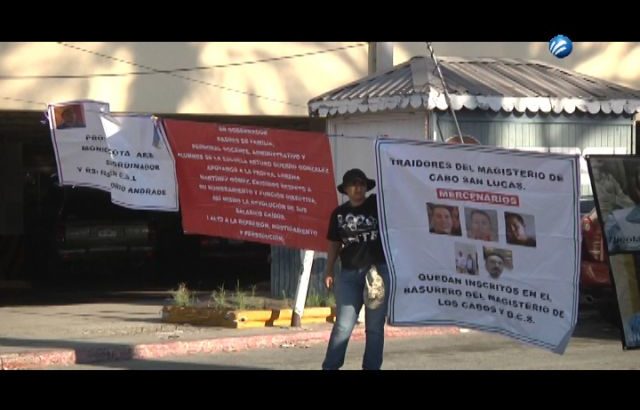
Bloquean calle frente a Gobierno del Estado.Un grupo de docentes de la Secundaria José María Garma Gonzalez del Municipio de Los Cabos protestaron al bloqueando la calle Isabela Católica en la capital.Esto tras la acusación del cese de la subdirectora de la misma institución y de algunos compañeros.Alrededor de 30 docentes, manifestaron su descontento.

El sitio fue bloqueado con pancartas que evidenciaba la figura de algunos maestros y servidores públicos.Tal es el caso del Secretario de la Secretaría de Educación Pública.Con lo que solicitaban ser atendidos por los presentes gobernantes y con ello construir un diálogo positivo.

Finalmente después de un par de horas de bloqueo los maestros fueron atendidos por autoridades.

Fuente de la Noticia:

https://meganoticias.mx/la-paz/noticias-la-paz/58185-protesta-maestros-de-csl-en-contra-del-titular-de-la-sep.html

Comparte este contenido:

Libro: Voces femeninas y construcción de identidad

Voces femeninas y construcción de identidad

Marcia Rivera. [Compiladora]

Alejandra Brito Peña. María Inés de Torres Carballal. María del Rosario Fernández. Rocío Vaca Buchelli. Marisa Weinstein. [Autoras de Capítulo]

Este volumen reúne trabajos seleccionados del III y IV curso del Programa Latinoamericano de Investigación y Formación sobre la Mujer, que fue desarrollado por CLACSO entre 1990 y 1992. El programa convocó a jóvenes de América Latina que deseaban profundizar su formación en investigación sobre temáticas económicas, políticas, sociales y culturales dede una óptica de género. Durante un período de cuatro semanas de estudio intensivo, participaron en talleres, seminarios y cursos elaborando cada cual un proyecto de investigación que luego, a lo largo de un año, completaron y sometieron a la evaluación del equipo docente, coordinado por María del Carmen Feijoó. Los artículos aquí reunidos fueron elaborados sobre la base de los informes finales de investigación, habiéndose seleccionado por un panel de especialistas en temas de género.

Secretaría Ejecutiva. Colección Histórica.
ISBN 950-9231-40-1
CLACSO.
Buenos Aires.
Marzo de 1995

Fuente:

latinoamericana/libro_detalle.php?orden=&id_libro=282&pageNum_rs_libros=100&totalRows_rs_libros=1112

Fuente imagen:

https://lh3.googleusercontent.com/RxwL3KLAvBJCK0_xOfZTt1Uu8oPo6EjkPT7famvarO7YVbh7CZeH2DTQKG8UbIaCLTc_GQ=s85

Comparte este contenido:

México: Educación, única salida para combatir al mal: Serafín Ortiz

México/31 de octubre de 2017/Fuente: https://www.elsoldetlaxcala.com.mx

La educación es la única vía para recomponer el tejido social, elevar los valores que más honramos y respetamos como mexicanos, y poner un cerco a la inclemente delincuencia que afecta a casi todo el país, aseguró Serafín Ortiz, quien también indicó que se deben proveer todos los elementos para que los estudiantes se preparen de la mejor forma, porque son ellos quienes “irán encendiendo la luz, señalando el camino” en el futuro de México.

Como abogado e investigador nacional en política criminal y derechos humanos, Serafín Ortiz fue invitado a clausurar el 3er Concurso de Destrezas en Litigación Oral del Sistema Penal Acusatorio Adversarial, que llevó su nombre y que tuvo como una de sus sedes a la Universidad Autónoma de Tlaxcala; dicha justa académica fue organizada por el Instituto de Ciencias Jurídicas de Puebla AC.

Al momento de su intervención, Serafín Ortiz, quien desde el año pasado es miembro honorario de la Real Academia de Jurisprudencia del Reino de España, fue muy claro en su defensa de la educación como la vía más idónea para reparar la descomposición que prevalece a todos los niveles en la sociedad mexicana, en donde se observa la ausencia de valores o una práctica muy limitada de ellos.

Luego del camino que ha recorrido en la academia dentro y fuera del país, Serafín Ortiz recordó que desde hace 25 años advirtió que el riesgo más grave que corría la sociedad mexicana era caer en una situación de anomia, lo que implica la pérdida de valores y de normas; en esa circunstancia, prosiguió, se ha generado un dramático escenario para la aplicación del Derecho Penal.

Por ello, el investigador asentó que ve a la educación como única salida que hay al grave problema del mal. Al referirse a los estudiantes que participaron en este certamen, destacó la importancia de que se preparen, que tengan una formación no solo teórica sino práctica que les permita ir encendiendo la luz e ir señalando el camino, si acaso con línea de gis, por donde debe ir el tema de la justicia penal, para que su desempeño como profesionistas sea apegado a los cánones jurídicos y a los más elevados valores.

Sin duda, reiteró Serafín Ortiz, la educación de buena calidad es el rumbo para apoyar a los jóvenes en el desarrollo de sus competencias, esa es la dirección correcta y desde las universidades potenciar la recuperación de los valores que más honran y respetan los mexicanos.

El académico advirtió que sus esfuerzos intelectuales no pararán hasta ir construyendo una ruta que permita sofocar el grave problema en que vivimos los mexicanos: “desde mi trinchera, que es el trabajo académico y la investigación, encontrar la respuesta idónea para los tiempos difíciles, para ir construyendo en el horizonte mejores condiciones de vida”.

Fuente de la Noticia:

https://www.elsoldetlaxcala.com.mx/local/747181-educacion-unica-salida-para-combatir-al-mal-serafin-ortiz

Comparte este contenido:

Lo electorero del nuevo modelo educativo

Por:  Abelardo Carro Nava

El clima electoral en nuestro país comienza a calentarse en demasía, tan es así, que los partidos políticos han fijado los “mecanismos” bajo los cuales habrán de ser “ungidos” sus candidatos. Para Aurelio Nuño, la silla grande parece escapársele de las manos dado que en el partido tricolor, desde mi perspectiva, se ha hecho lo necesario para Meade, actual Secretario de Hacienda, sea el que lleve su bandera y se posicione ante el electorado mexicano, compitiendo, como parece obvio, con Ricardo Anaya, Andrés Manuel López Obrador y alguno que otro independiente que logre colocarse en esa carrera presidencial.

Así  las cosas, y en medio de este asunto, una pregunta parece resonar en el aire: ¿qué pasará con el modelo educativo que tan pomposamente ha sido difundido por el actual Presidente de México y el propio Aurelio Nuño? Las especulaciones están a la vista y oídos de todos, sobre todo, de quienes nos encontramos insertos en el medio educativo. Y es que mire usted, aún y cuando dicho esquema de trabajo ha comenzado a implementarse en escuelas públicas “piloto” en algunas entidades del país, la zozobra pesa más cuando el 2018, fecha fatídica para su implementación, se aproxima.

En este sentido, y como lo he señalado desde hace tiempo cuando se habló de lograr una verdadera Revolución Educativa en este sexenio, el modelo educativo que entrará en vigor próximamente en todo el país adolece de varias cuestiones, destacando por su propia complejidad, la de los perfiles de egreso del nivel básico que en él se contemplan. No sé si usted sepa, pero de las adecuaciones curriculares que se hicieron en el 2011 y que en nuestros días siguen operando en este nivel educativo, no ha habido una valoración real que nos permita asegurar que el cambio o tránsito hacia un “nuevo” modelo era necesario dado el logro o no, de esos perfiles de egreso que se contemplaban en el Plan de estudios en referencia. Y lo que es peor, en ningún momento el magisterio estuvo presente o, más bien, fue el gran ausente, primero, de esa evaluación y, segundo, en el diseño del “ nuevo proyecto educativo”.

¿De qué forma puede obtenerse una mejora educativa si en los hechos los planteamientos curriculares obedecen a políticas internacionales más que necesidades nacionales previo diagnóstico de lo que se vive en mi México querido? Dese cuenta, el perfil de egreso que plantea el modelo educativo 2018, nivel preescolar, en el ámbito de lenguaje y comunicación, propone que los niños comprendan algunas palabras y expresiones en inglés. Si, así como lo leyó, “comprendan” algunas palabras y expresiones en inglés. Asunto nada menor si consideramos lo que ocurre en la mente para lograr esa comprensión pero, también, lo que implica el conocimiento de nuestro propio lenguaje, dada su complejidad semántica. ¿Cómo se espera que los niños de la sierra negra de Puebla, por ejemplo, logren este perfil si en las comunidades no hay docentes para la impartición de ese idioma? O, peor aún, ¿cómo se espera lograr ese propósito si además de abordar su lengua materna se tiene que adquirir el español y el inglés con todas las complejidades que tal acto requiere?

Aunado a ello, a alguien se le olvido que dichas comunidades siguen padeciendo los estragos de una serie de políticas económicas que, para acabar pronto, han abierto una brecha de desigualdad importante, no sólo en esta zona, sino en varias regiones del país.

“Aprender a aprender” suena bonito, se lee bonito; pero en los hechos, hay varios factores que impiden que los niños y adolescentes, y también los maestros, se acerquen a este sueño.

No, no piense que pretendo ser un aguafiestas y que mi pesimismo – aunque prefiero llamarlo realismo – opaque los anhelos de quien despacha en Los Pinos o en la Calle de República de Argentina. En absoluto, lo que pretendo decir, es que la realidad sobrepasa esos deseos que están plasmados en ese documento. Pongo otro ejemplo, en el documento “Los fines de la educación en el Siglo XXI” se lee lo siguiente: “Nos enfrentamos a la necesidad de construir un país más libre, justo y próspero, que forma parte de un mundo cada vez más interconectado, complejo y desafiante. En ese contexto, la Reforma Educativa nos ofrece la oportunidad de sentar las bases para que cada mexicana y mexicano, y por ende nuestra nación, alcancen su máximo potencial”.

Con base en ello, ¿cómo podemos construir un país más libre, justo y próspero si la realidad nos bofetea en el rostro cada vez que se descubren actos de corrupción por funcionarios y gobernantes cuya responsabilidad, se supone, debería ser la de atender las demandas sociales y que, para acabar pronto, han llevado a posicionar a nuestro México como uno de los más corruptos de América Latina?, ¿cómo lograr que haya un México interconectado si en muchas localidades mexicanas no hay luz ni servicios de internet y de banda ancha que permitan lograr precisamente esta interconexión con el mundo?, ¿cómo alcanzar nuestro máximo potencial si en resumidas cuentas más de la mitad de los mexicanos se haya en pobreza y pobreza extrema?

Las elecciones se aproximan, eso es un hecho, y el modelo educativo será vendido como el producto que nos permitirá ser un país de primer mundo, y puede ser cierto; sin embargo, somos muchos pero muchos mexicanos que no creemos en falsas promesas de campaña que pueden ser firmadas ante notario público, tal y como ese circo, que prometió un gran espectáculo y terminó siendo un fiasco.

México requiere de una educación que posibilite y potencialice el desarrollo de sus mexicanos, y lo requiere porque por muchos años se nos ha vendido la idea de que sólo a través de esa educación podremos salir del atolladero en el que nos encontramos y hasta el momento, nada ha pasado por las razones que he expuesto. El momento es propicio para levantar la voz y exigir que todos esos candidatillos saquen las manos de los procesos educativos, tan necesarios para el bienestar de los mexicanos.

Fuente del Artículo:

Lo electorero del nuevo modelo educativo

Comparte este contenido:

Candy Candy, rebelión femenina con sutileza

México/ 31 de octubre de 2017//Autor: Carlos Roca Cárdenas // Fuente: El Informador

Aunque Candice White no era una heroína con super poderes para combatir el crimen, el personaje creado por la japonesa Kyoko Mizuki (uno de los seudónimos de Keiko Nagita), significó un estandarte de liberación femenina para una época en la que el machismo y la sumisión de la mujer eran temas imposibles de tratar abiertamente en la sociedad.

Pese a que otros personajes de la ficción como la Mujer Maravilla marcaban un símbolo para alzar la voz sobre la capacidades intelectuales e independientes del sector femenino tras la Segunda Guerra Mundial a través de los comics, «Candy Candy» logró acaparar un argumento similar pero bajo un carácter realista que abogaba por reflejar las pericias que una niña huérfana enfrenta para consolidarse emocional y profesionalmente a lo largo de su vida.

«Candy Candy» ha sido sin duda una de las series animadas que marcó generaciones al ser traducida a más de 10 idiomas y llevada a todos los continentes bajo una idea pacifista que anteponía el instinto femenino como vértebra para determinar las buenas y malas acciones.

Una de las virtudes de «Candy Candy» era su formato similar a las telenovelas con una narrativa en la que la trama del personaje principal atravesaba por distintas experiencias y aprendizajes, desde las más conmovedoras y llenas de esperanza, hasta las más solitarias y desgarradoras, dejando en claro que los finales felices no siempre eran obligatorias en las historias de ficción televisiva.

Para Gilia García, maestra en Comunicación y Pedagogía de la Universidad Panamericana (UP), «Candy Candy» es un ejemplo del tipo de caricaturas que más allá de dibujos bonitos y coloridos, tiene un mensaje directo sobre los clichés que la mujer contemporánea tendría que romper progresivamente, pues más allá del drama de que «Candy» fuera huérfana, el personaje presentó a una mujer rebelde, autónoma y que evitaba quedarse callada ante las injusticias de su alrededor.

A contracorriente

Conforme la historia de «Candy» se revelaba a lo largo de dos años, a través de 115 capítulos, la serie animada también rompía un poco con la idea de los amores eternos y el «vivieron felices por siempre», pues aparecían personajes que hasta cierto modo exhibían y criticaban estereotipos relacionados a las conductas masculinas en los terrenos sentimentales hacia las mujeres, además de abordar pasajes históricos que determinaban el actuar de la sociedad.

«Para el momento en el que surgió ‘Candy Candy’, sí era una historia sumamente atractiva; los personajes abogaban por diferentes estereotipos de hombres, desde el más aventurero hasta el formalista o el guapísimo. ‘Candy Candy’ es una historia que, pese a ser un anime japonés, se desarrolla en Estados Unidos y hablaba de la aristocracia británica y norteamericana en un momento importante -por ejemplo- del país (Estados Unidos) posteriormente a la independencia».

Otro punto que consolidó «Candy Candy» fue la forma en que su contenido era expuesto en la pantalla chica al apostar por un formato radicado en el sentido educativo que daba prioridad a los valores universales como la familia, el amor, el reconciliación, la multiculturalidad, la libertad, elementos que no se destacan tanto en las series animadas actuales que se enfocan más en historias protagonizadas en la fantasía con situaciones lejanas a la vida real.

«‘Candy Candy’ era un contenido de mucha calidad en la televisión. El personaje era complejo, incluso la historia, porque se abordaban temas sobre historia, cultura, se mencionaban las guerras civiles. La historia y su narrativa en sí eran muy ricas, por eso gustaba tanto, era una gran telenovela».

La académica universitaria, Gilia García, puntualiza que en el caso de «Candy Candy», la repetición de mensajes positivos y métodos pacíficos para lograr la solución de problemas, son factores que ayudaron a la serie a convertirse en un referente motivacional sobre los paradigmas que la mujer estaba por enfrentar hacia la liberación e igualdad de género.

«Había una diversidad en la historia que la hacía atractiva independientemente del personaje. Fue un acierto muy grande el tener como protagonista a una mujer recia, que contestaba, que buscaba sus sueños y que en el fondo creía en el amor, era huérfana y quería ese soporte familiar; sin embargo, en su mayor apogeo en los años ochenta y noventa, todos los mensajes de los medios de comunicación e incluso en las películas de Disney, idealizaban a la mujer buscando el amor y me parece que ‘Candy’, como personaje de ese momento, era de los más integrales que lo hacían de una forma distinta a la esperada».

¿Qué se ve ahora?

La especialista en pedagogía argumenta que «Candy Candy» representaba un lujo educativo al tener la posibilidad de que los niños comprendieran de manera independiente los argumentos e intenciones de los personajes, situación que no acontece con las caricaturas actuales, en las que se recomienda tener la supervisión del padre de familia para determinar si el contenido es o no apropiado para los niños.

«En un niño influye todo porque todavía está en una etapa en la que su cerebro está en desarrollo, al igual que sus afectos y gustos. En el niño influye todo lo que ve y escucha, tanto en la calle, en casa o en televisión, es por ello que siempre necesita de la mediación de un adulto. Lo recomendable es que el padre de familia tiene que saber qué está viendo su hijo y le sepa explicar o mediar los contenidos».

La experta en Educación y métodos de aprendizaje explica que a diferencia de pasadas generaciones que encontraban en la televisión o el cine a personajes como modelos a seguir, ahora es situación no es determinante para los niños al existir otros medios de comunicación que ofertan contenido más variado, directo y sin distinción de etiquetas femeninas o masculinas como ocurría en las caricaturas.

«Todo se ha diversificado y aunque siguen existiendo las historias tradicionales como Candy, también están aquellas más fantasiosas y de ficción. Ahora hay mucha diversidad de opciones y canales, no solo se trata de televisión porque ya podemos ver en internet cualquier cosa. Actualmente un niño puede sobrevivir sin televisión  si tiene a su alcance una computadora. Esa diversidad hace que esta plataforma tan extensa de opciones tenga contenidos con enfoques muy tradicionales con valores que apuestan por la familia pero también el otro lado hay contenidos sin una ideología clara»

Fuente de la Noticia:

http://www.entornointeligente.com/articulo/8026416/%3Cspan-style=color

Fuente de la Imagen:

http://tvzap.kataweb.it/news/109851/candy-candy-leroina-bionda-del-cartone-animato-giapponese-compie-40-anni/

Comparte este contenido:

Donald Trump as the Bully-in Chief: Weaponizing the politics of Humiliation


Donald Trump’s ascendancy in American politics has made visible a scourge of oppressive stupidity, manufactured deceptions, a corrupt political system, and a contempt for reason that has been decades in the making; it also points to the withering of civic attachments, the undoing of civic culture, the decline of public life, and the erosion of any sense of shared citizenship. Galvanizing his base of true-believers in post-election demonstrations, the world is witnessing how Trump’s history of unabashed racism and politics of hate is transformed into a spectacle of fear, divisions, and disinformation.  Under President Trump, the plague of mid-20th century authoritarianism has returned not only in the menacing spectacle of populist rallies, fear-mongering, unchecked bigotry, and humiliation, but also in an emboldened culture of war, militarization, and extreme violence that looms over society like a rising storm.

The reality of Trump’s ascendency to the highest levels of power may be the most momentous development of the age because of its apocalyptic irrationality and the shock it has produced. People throughout the world are watching, pondering how such a dreadful event could have happened.  How have we arrived here? What forces have undermined education as a democratic public sphere making it incapable of producing the formative culture and critical citizens that could have prevented such a catastrophe from happening in an alleged democracy? We get a glimpse of this failure of civic culture, education, and civic literacy in the willingness and success of the Trump administration to empty language of any meaning while reducing political rhetoric to the service of humiliating taunts and a discourse of bigotry and hatred.  This is more than a politics of theatrical diversion, it is a rhetorical practice that constitutes a flight from historical memory, ethics, justice, and social responsibility.  Under such circumstances and with too little opposition, the United States government has taken on the workings of a disimagination machine, characterized by an utter disregard for the truth, and often accompanied, as in Trump’s case, by “primitive schoolyard taunts and threats.”  In this instance, Orwell’s “Ignorance is Strength” materializes in the Trump administration’s weaponized attempt not only to rewrite history, but also to obliterate it. What we are witnessing is not simply a political project but also a reworking of the very meaning of education both as an institution and as a broader cultural force.

Trump along with Fox News, Breitbart, and other right-wing cultural apparatuses, echoes one of totalitarianism’s most revered notions, one which pushes the notion that truth is a liability and ignorance a virtue.  Under the reign of this normalized architecture of alleged commonsense, education and critical thinking are regarded with disdain, words are reduced to data, and science is confused with pseudo-science. All traces of critical thought appear only at the margins of the culture as ignorance becomes the primary organizing principle of American society. For instance, two thirds of the American public believe that creationism should be taught in schools and a majority of Republicans in Congress do not believe that climate change is caused by human activity, making the U.S. the laughing stock of the world. Such ignorance operates with a vengeance when it comes to higher education. Not only is higher education being defunded, corporatized, and transformed to mimic labor relations associated with Wal-Mart by the Trump administration under the preposterous ill-leadership of the religious fundamentalist, Betsy DeVos, it is also according to a recent poll viewed by most Republicans as being “bad for America.” One of its liabilities being is that it is at odds with Trump’s vision of making America great again.[1]             The politics of humiliation has its counterpart in systemic culture of lies that has descended upon America like a plague. Trump rejoices in his role as a serial liar knowing that the public is easily seduced by exhortation, emotional outbursts, and sensationalism, all of which mimics an infantilizing and depoliticizing celebrity culture. Image selling now entails lying on principle making it easier for politics to dissolve into entertainment, pathology, and a unique brand of criminality.  The corruption of both the truth and politics is abetted by the fact that the American public has become habituated to overstimulation and live in an ever-accelerating overflow of information and images. Experience no longer has the time to crystalize into mature and informed thought.  Popular culture delights in the spectacles of shock and violence.[2] Defunded and stripped of their role as a public good, many institutions extending from higher education to the mainstream media are now harnessed to the demands and needs of corporations and the financial elite. In doing so, they have succumbed to the neoliberal assault reason, thoughtfulness, and informed arguments. Governance is now replaced by the irrational tweeter bursts of an impetuous four-year old trapped in the body of an adult.

Donald Trump is the high-priest of caustic rants. He appears to revel in a politics of humiliation both as a tool to insult his critics and as a way to discredit policies he dislikes. In part, his resort to producing humiliating insults is a rhetorical ploy that mimics a mix of cut throat politics, aggressive showmanship, and the bullish behavior found on Reality TV shows, not unlike the television show, The Apprentice, which launched him to celebrity status.  At the heart of Trump’s politics is a distorted mindset and a desire to make sure everyone but him is “fired” or voted off the island. Trump’s mode of governance combines a penchant for inflicting pain with a relentless obsession with ratings, praise, and disruption.  Such actions would be comical if it were not for the fact that they are being used endlessly by one of the most powerful politicians in the world.

Trump’s insults and bullying behavior have become a principal force shaping his language, politics and policies. He has used language as a weapon to humiliate just about anyone who opposes him. He has publicly humiliated and insulted members of his own Cabinet, such as Secretary of State, Rex W. Tillerson and Attorney General Jeff Sessions, undermining their respective ability to do their jobs. Senators such as Mitch McConnell, Jeff Flake, and Ben Sasse, among others have been the object of Trump’s infantile tweets.  More recently, he has mocked Senator Bob Corker’s height referring to him on Twitter as “Liddle Bob Corker,” and he has shamefully insulted Senator John McCain’s body language, pointing to the physical disabilities he suffered while he was a prisoner of war in Vietnam. The latter is particularly disturbing since McCain has recently been stricken with cancer. Chris Cillizza, a CNN editor, claims that “By my count, Trump has personally attacked 11 senators — or, roughly, 21% of the entire 52 person GOP conference between his time as a candidate and his nine months in the White House. That’s more than 1 in 5!”[3]

Ignorance is a terrible wound when it is self-inflicted but it is both a plague and dangerous when it is the active refusal to know and translates into power. Trump’s lies, lack of credibility, lack of knowledge, and unbridled narcissism have suggested for some time that he lacks the intelligence, judgment, and capacity for critical thought necessary to occupy the presidency of the United States. But when coupled with his childish temperament, his volatile impetuousness, and his Manichean conception of a world inhabited by the reductionist binary that only views the world in term of friends and enemies, loyalists and traitors, his ignorance translates into a confrontational style that puts lives, especially those considered disposable, if not the entire planet at risk.

Trump’s seemingly frozen and dangerous fundamentalism and damaged ethical sensibility suggest that we are dealing with a kind of nihilistic politics in which the relationship between the search for truth and justice, on the one hand, and moral responsibility and civic courage on the other have disappeared. For the past few decades, as Richard Hofstadter and others have reminded us, politics has been not only disconnected from reason but also from any viable notion of meaning and civic literacy. Government now runs on willful ignorance as the planet heats up, pollution increases, and people die. Evidence is detached from argument. Science is a subspecies of fake news, and alternative facts are as important as the truth.  In this instance, violence becomes both the pre-condition and the after effect of the purposeful effort to empty language of any meaning. Under such circumstances, Trump gives credence to the notion that lying is both normalized and can serve as the enabling force for violence.

For Mr. “Grab ‘Em By the Pussy”, words no longer bind or become the object of self-reflection, even when they reveal a complete collapse of civility and ethical norms. In this case, Trump’s revolting hyper-masculinity scoffs at any chance of dialogue or justifiable moral outrage. Trump has sucked all of the oxygen out of democracy and has put in play a culture and mode of politics that kills empathy, wallows in cruelty and fear, and mutilates democratic ideals. Trump’s worldview is shaped by Fox News and daily flattering and sycophantic news clips by his staff that boost his deranged need for emotional validation, all of which relieves him of the need to think and empathize with others. He inhabits a privatized and self-indulgent world in which tweets appear perfectly suited to colonizing public space and attention with his temper tantrums and incendiary vocabulary.  His call for loyalty is shorthand for developing a following of stooges who offer him a false and egregiously grotesque sense of community–one defined by laughable display of ignorance and a willingness to eliminate any vestige of human dignity. Anyone who communicates intelligently is now part of the fake news world that Trump has invented. Language is now forced into the service of violence. Impetuousness and erratic judgment become central to Trump’s leadership, one that is as ill-informed as it is unstable.

On a policy level, Trump has instituted legislation that reveals both his embrace of violence and the racial bigotry that drives it. For instance, he has recently revoked DACA [Deferred Action for Childhood Arrivals], putting the bodies and dreams in limbo of over 800,000 undocumented immigrants brought to the country as children. There is something particularly cruel and sadistic about Trump’s punishing these Dreamers who were brought to this country involuntarily and who only have known the United States as their home. Moreover, this particular group of immigrants by all the relevant measures are well-educated, economically productive, and valuable members of American society. This particular policy points to a president who thrives on a politics of social abandonment and extreme punitiveness.

Another recent example of Trump’s penchant for cruelty in the face of great hardship and human suffering is evident in his slow response to the devastation Puerto Rico suffered after Hurricane Maria. Five weeks after the powerful hurricane hit, the health care system is in shambles, a third of the population are without clean water, waterborne diseases are spreading, and the number of deaths is increasing. Trump’s response has been hideously slow, with conditions getting painfully worse. Given the accelerating crisis, the Mayor of San Juan, Carmen Yulin Cruz made a direct appeal to President Trump for aid stating: “We are dying.” Trump told her to stop complaining and then produced a series of tweets in which he suggested that the plight of the Puerto Rican people is their own fault and that they should start helping themselves rather than rely on government services. He also suggested, without irony or a sense of shame, that the crisis in Puerto Rico was not that bad when compared to a “real crisis like Katrina.”

Trump’s politics of humiliation reflects more than a savage act of cruelty, such practices also points to an emerging form of state sanctioned violence. What is different about Trump’s leadership compared to past presidents is that he relishes violence and willfully inflicts humiliation and pain on people; he pulls the curtains away from a systemic culture of cruelty, and in doing so refuses to hide his own sadistic investment in violence as a source of pleasure and retribution. Trump is the bully-in-chief, a sadistic troll who has pushed the country — without any sense of ethical and social responsibility — deep into the abyss of authoritarianism and has propagated a culture of violence and cruelty that is as unchecked as it is poisonous and dangerous to human life and democracy itself.

[1] Chris Riotta, “Majority of Republicans say Colleges are Bad for America (yes, really),” Newsweek (July 10, 2017).

[2] Brad Evans and Henry A. Giroux, Disposable Futures: The Seduction of violence in the Age of the Spectacle  (San Francisco: City Lights, 2016).

[3] Chris Cillizza, “Donald Trump has now personally attacked 1 in 5 Republican senators,” CNN Politics-The Point (October 24, 2017).

Source:

Donald Trump as the Bully-in Chief: Weaponizing the Politics of Humiliation
Comparte este contenido:

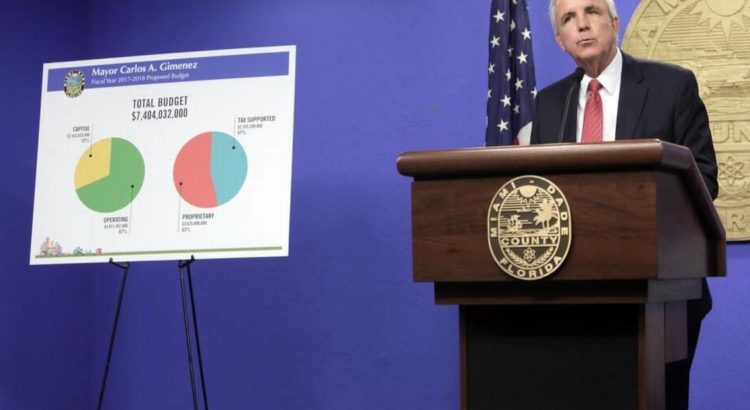
EEUU: CEOs say county budget should focus on transportation, education

EEUU/October 31, 2017/Source: http://www.miamiherald.com

This week’s question to the Miami Herald CEO Roundtable: In your opinion, what areas should commissioners focus on as they iron out the 2018 county budget?

==========

The commissioners should focus on providing the necessary services to meet the needs of the county, while being fiscally responsible to minimize or avoid a tax increase altogether. A tax increase will burden every homeowner in the county and impact the local economy. This requires that some tough decisions be made regarding spending for the greater good of the county residents.

Miami must decide if it wants to be a global center, or a provincial town. Public transportation is key to that, and needs to be supported. And, as South Florida’s premier provider of therapy to special needs children, I would be remiss without stressing we cannot forget those who rely on the government for help.

Maria Arizmendi, behavior analyst and president, Progressive Behavioral Science

Allocating funds and developing a comprehensive plan to significantly improve the county’s infrastructure, affordable housing and education should be top priorities. It is always easier to address our short-term, immediate needs. However, we should be working on a 25-year plan and budget to make us a more sustainable community. We need a long-term vision to secure a stronger and healthier city for our children and grandchildren in terms of infrastructure, education, social services and land planning. Today, let’s start envisioning the plan for Miami 2050 and strive each year to make our city greater, not just for ourselves, but for the generations to come.

Noah Breakstone, founder and managing partner, BTI Partners

==========

Transportation, transportation and transportation! The No. 1 complaint I hear about local government is the apparent inability to adequately address the increasingly dire state of transportation here in South Florida. A large part of the downtown Miami workforce relies on the Metrorail system to get to work. The system is not working. It now sometimes takes as much as 1 1/2  to 2 hours each way on Metrorail to get to and from downtown Miami from affordable suburbs due to breakdowns, crowded trains and inadequate scheduling. The Miami downtown business community cannot survive and prosper without the large workforce that commutes from affordable suburbs using Metrorail. There is no other viable form of transportation for a large part of the downtown Miami workforce that lives in these suburbs. For those who live closer to downtown Miami and drive to work, commute times are also dramatically increasing. Substantially greater resources should be committed on an urgent basis for modern systems to coordinate traffic signals and improve traffic flows.

Bowman Brown, partner and chairman of the Executive Committee and the Financial Services Practice Group of Shutts & Bowen

==========

K-12 education! Our schools should have enough money and resources to prepare our students for the real world. Our training in school really shapes the kind of business professional we will be in the future. Businesses need employees that can, at a minimum, communicate effectively! Without enough funds and resources going to education, we will all be impacted.

Patricia Elizee, managing partner, Elizee Law Firm

==========

Education, hands down. I’ll keep beating this drum because our students deserve a higher quality education and more opportunities. Create a strong foundation and you can build anything. This is not only a moral issue. If we allow our community’s future workforce to wither, our community will wither, too.

Richard Fain, chairman and CEO, Royal Caribbean Cruises Ltd.

==========

Theirs is a difficult job as they plan for present needs and future requirements. Infrastructure and environmental issues need to be addressed. Also, they must ensure an updated disaster plan is developed.

Jeffrey Freimark, president and CEO, Miami Jewish Health

==========

In light of the recently concluded TRIM and budget hearings in Miami-Dade, it’s clear that a strong transportation system and a robust pool of available housing — at all economic levels — are two things the county must have in order to be considered a competitive candidate for new business. Amazon, for example, recently announced plans to establish its second headquarters in North America, bringing with it 50,000 high-paying jobs, thousands of construction and operational positions, and billions of dollars in additional investment to the surrounding communities. Direct access to mass transit and a range of housing options are at the top of the company’s requirement list.

James Haj, president and CEO, The Children’s Trust of Miami-Dade County

==========

Three areas high on my list are transportation and transportation infrastructure, economic and business development, and the county’s emergency management plan. It’s important to review the emergency management plan within a budget context to ensure it addresses what we learned from Hurricane Irma, what Houston learned from Hurricane Harvey, and what the first responders and citizens of Puerto Rico are, unfortunately, learning following Hurricane Maria.

Bob Hohenstein, president and CEO, Miami-Dade County Youth Fair and Exposition

==========

Commissioners should focus on building a resilient community, improving our infrastructure and methods of communication to allow for energy and water resiliency as we continue to deal with these environmental disturbances. As a community, we should look to new development to grow our property taxes and start allocating more funds towards infrastructure improvements and rethinking the planning of our neighborhoods.

David Martin, president and co-founder, Terra

==========

I spent several days assisting relief efforts after Hurricane Irma — handing out ice and supplies to those in need. I was surprised and saddened by the poor living conditions at many of the housing communities in places like the West Grove, Overtown, Allapattah and Liberty City. We need more code enforcement at privately owned properties, as well as capital improvements at county-owned housing communities. It’s up to our elected officials to ensure that our residents are living in adequate conditions that don’t pose a health risk.

Aabad Melwani, president, Rickenbacker Marina, and managing principal, Marina PARC

==========

I have to admit I have not been monitoring the Miami-Dade County budget discussions because I reside in Broward County. However, I was glad to see that there was some focus on early childhood education. Research shows that a high quality early childhood education has a lifetime of benefits including narrowing, or even eliminating, achievement gaps.

Avis Proctor, vice president of academic affairs and president, North Campus at Broward College

==========

Affordable housing needs to be the top priority for commissioners in 2018. Miami has been one of the hardest-hit cities in the nation by the current affordable housing crisis. Low-income individuals, families and seniors are not the only ones to suffer — we all take a hit. A shortage of affordable and workforce housing poses a tremendous obstacle to our continued ascension into a preeminent world city. It limits our ability to attract major businesses to the area that can create well-paying jobs. It eats into our budget for goods and services that help keep our local economy vibrant. The economic impact is quite extensive, so the 2018 budget needs to focus on much greater allocation of available resources to affordable and workforce housing.

Source:

http://www.miamiherald.com/news/business/biz-monday/article180742331.html

Comparte este contenido:
Page 848 of 1679
1 846 847 848 849 850 1.679