Page 982 of 1684
1 980 981 982 983 984 1.684

EEUU: Mandated education efforts dwindle, but DNR says they are priority

EEUU/ 1 July, 2017/ By: host.madison.com/ Steven Verburg

The political pressure and budget cuts that dismantled the Wisconsin Department of Natural Resources science research bureau are also taking a toll on the agency’s ability to engage the public in conservation.

Under Gov. Scott Walker, the DNR has reduced environmental education efforts despite state law and department regulations mandating an active effort to ensure that citizens understand natural resources issues.

“It just seems like they are getting out of the business of educating people about our natural resources, which seems strange to us,” said Betsy Parker, of the Wisconsin Association for Environmental Education, a nonprofit whose 400 members work in parks and outdoors centers.

“If you want people to be involved as stewards of natural resources, you have to help get them engaged, so they can make informed decisions on how we manage our lands and preserve resources for the future,” said Parker, a Madison resident who is the group’s advocacy chairwoman.

But DNR spokesman Jim Dick said department leaders take their public education duties seriously.

“We are not concerned that strategically adjusting the way we direct public outreach will lessen the public’s understanding of our natural resources,” Dick said. “In fact, we may be able to reach more people.”

The changes are outgrowths of a major DNR reorganization announced in November that is also altering the department’s use of science, law enforcement in parks and pollution enforcement.

DNR secretary Cathy Stepp and other top administrators appointed by Walker have said elected officials demanded the agency shed unnecessary programs.

This was on the heels of 2015 budget cuts the Republican governor and lawmakers enacted, eliminating $34 million and 93 full-time positions while saying the department did unneeded work on climate change, mine pollution and wildlife management.

The 2015-17 budget included removal of 11 full-time DNR educator positions, and other changes resulting in a volunteer group supplying funding for most part-time parks naturalists.

The cuts also eliminated DNR forester positions two years after a DNR assessment found that its forestry education and outreach efforts had strengths but lacked staff and money to be consistent and effective.

In the 2017-19 budget, Walker proposed eliminating the department’s 88,000-circulation subscriber-supported Wisconsin Natural Resources magazine. Constituents howled and said the publication was crucial for rallying the public to conservation efforts, so lawmakers may just reduce the number of issues the magazine publishes.

This summer, the DNR announced it was sharply scaling back its presence at the 11-day state fair. For decades, hundreds of agency employees have promoted conservation and outdoor recreation with thousands of children and adults who passed though a 2-acre Natural Resources Park.

“The reason I got was ‘We’re going to go back to our core mission,’” said Doug Hoskins, a retired DNR conservation warden who has helped coordinate the fair effort since 2000. “I always thought that was part of our job, meeting the public.”

Hoskins said it’s an extension of Stepp’s practice of forbidding staff from publicly commenting on pending legislation — the administration doesn’t want knowledgeable DNR staff talking to the public about pollution problems or laws allowing high-capacity wells near vulnerable lakes and streams.

When members of the public deluged the DNR with complaints about its removal of factual information about the human causes of climate change from its website in December, department employees expressed frustration about how they should defend the decision.

A week or so later, the DNR told the Wisconsin Center for Environmental Education to stop distributing the department’s climate change activity guide to school teachers. An unknown number of the 86-page, full-color booklets were recycled.

The department said the booklets were out of date, but it hasn’t responded when asked if information about the human causes of climate change was what they considered outdated.

Refocusing education

DNR spokesman Dick said the department is allowing employees to focus on their main duties while using new and old ways to reach the public.

The department has had more than a million views on its YouTube channel, 18,800 Twitter followers, and 93,603 followers on Facebook, Dick said.

The DNR will continue to send representatives to hunting and fishing shows “that will allow us to strategically deliver our message of conservation and preservation of our natural resources,” Dick said.

Dick also touted the department’s partnership with volunteers in providing naturalists in state parks.

As funding for park naturalists has ebbed, local Friends of the State Parks volunteers have stepped in and raised money to supplement naturalist programs in 25 parks, said Friends president Bill Zager.

Education mandated

Wisconsin enacted a law mandating environmental education in the early part of the 20th century when the Dust Bowl was fresh on people’s minds and Wisconsin had its own environmental problems after loggers clear-cut the state’s forests.

The law doesn’t include funding or penalties, but its requirements are in the DNR’s administrative code — which carries the same weight as law.

“The successful stewardship of those resources is largely dependent upon enlightened and responsible decision-making by Wisconsin citizens, government and private interests,” the regulations state. “Education is the foundation of effective resource management and environmental protection activities.”

One section of the regulations requires the department secretary to appoint a committee to give advice on environmental education. Dick couldn’t say if the group has been meeting, but he said the department is complying with the regulation.

The regulations also call for the department to actively work with other organizations on conservation education and to make educational materials and the expertise of DNR employees available to the public.

And they require DNR to assist schools at all grade levels and ensure that they understand “the importance of their environmental education.”

Climate change lessons

Education on climate change has been a particular sore point in Wisconsin, where several Republicans have questioned it.

A week or so after the DNR changed its global warming website, copies of the agency’s climate change education guide for teachers were recycled by the Wisconsin Center for Environmental Education at UW-Stevens Point on instructions from the DNR.

“That resource is currently out of date and should no longer be distributed,” Dick, the DNR spokesman, said in a Jan. 7 email to the WCEE director.

“During our phone conversation you mentioned receiving a few calls regarding the resource,” Dick said in the email. “If the calls are from teachers, you can let them know that the resource is out of date and currently not available.”

Paul Robbins, director of the UW-Madison Nelson Institute for Environmental Studies, said science is always advancing and it’s good to update teaching materials, but it was hard to imagine that a 2009 guide on climate change would be unusable.

“I’ve never been contacted to shred any teaching materials in my entire career,” Robbins said. “And neither have most teachers, I’d wager, whether K-12 or higher ed. That’s a weird one, for sure.”

The guide was funded in part by a grant from the Wisconsin Environmental Education Board, which Walker and the Legislature eliminated in the 2015-17 budget.

In its last round of grants, the board distributed 41 two-year grants totaling over $300,000 for schools and outdoor centers. The money came from a surcharge on pollution fines, which have declined under Walker, and from a forestry tax he wants to eliminate in the current budget.

The Wisconsin Center for Environmental Education at UW-Stevens Point, which provides educational support on the topics of forestry and energy efficiency, was also to be eliminated in Walker’s 2015-17 budget, but the Legislature balked after the environmental educators group protested.

From: http://host.madison.com/wsj/news/local/govt-and-politics/mandated-education-efforts-dwindle-but-dnr-says-they-are-priority/article_f18fd639-fb5b-5ec2-b8ce-2027c4ce87ae.html
Comparte este contenido:

México: Las normales enfrentan carencias y menos solicitudes de ingreso, según el INEE

América del Norte/México, 01 de julio de 2017.  Fuente: jornada.unam.mx. Autora: Laura Poy Solano

En 20 años la docencia dejó de ser una profesión atractiva

Desde mediados de los años 90 del siglo pasado, el gobierno federal consideró prioridad la transformación y fortalecimiento académico de las escuelas normales. Sin embargo, las más de 270 instituciones públicas formadoras de maestros enfrentan graves carencias, no sólo de infraestructura y equipamiento.

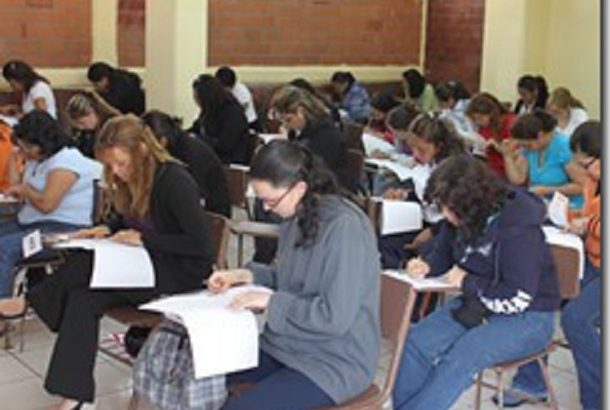
De acuerdo con datos del Instituto Nacional para la Evaluación de la Educación (INEE), la matrícula de estudiantes normalistas ha ido disminuyendo desde hace dos décadas. En su informe Los docentes en México, señala que del inicio del sexenio foxista (2001-2002) al primer año de gobierno del presidente Enrique Peña Nieto (2013-2014), el número de alumnos inscritos en una normal, pública o privada, pasó de 184 mil 100 a 132 mil 205, y los planteles se redujeron de 655 a 484.

En el ciclo escolar 2013-2014, el INEE destaca que existían 210 normales privadas, donde se atendía a 23.1 por ciento de la matrícula total de normalistas, mientras las públicas sumaban 274, donde cursaban sus estudios casi ocho de cada 10 jóvenes que se formaban de maestros.

Sin embargo, destaca que en ese periodo las solicitudes de ingreso a normales públicas disminuyeron, pues sólo 72.6 por ciento de los lugares disponibles en el ciclo escolar 2013-2014 fueron ocupados, mientras en las escuelas privadas cayó a 52.4 por ciento.

Los estados con menor demanda para la formación inicial de maestros fueron Baja California, Chiapas y Nuevo León, donde no se asignó casi la mitad de espacios disponibles en normales públicas. En contraste, la demanda de ingreso superó la oferta en Chihuahua, Michoacán, Morelos, San Luis Potosí y Yucatán, donde el número de aspirantes inscritos rebasó el total de lugares disponibles.

El INEE destacó que, en 2013, al menos 59 por ciento de las familias de estudiantes normalistas percibían ingresos mensuales per cápita de poco más de mil pesos, es decir, que estaban por debajo de la línea de bienestar mínimo establecida para las zonas urbanas. Esta situación se agudizaba para las familias con normalistas de primaria intercultural bilingüe, pues en 2013, 87.1 por ciento de estos jóvenes vivía en hogares que se encontraban por debajo de la línea de bienestar mínimo.

Ante este panorama, el instituto concluyó que cada vez menos jóvenes se interesan en las licenciaturas de formación docente para educación básica. La disminución de la demanda podría encontrar respuesta en las condiciones y características del mercado laboral, el sistema de ingreso al servicio docente, los salarios y las expectativas de mejora a largo plazo, que no hacen de ésta una profesión atractiva.

Agregó que el decremento de la demanda ha provocado ya el cierre de programas de formación inicial en algunas instituciones. No sería extraño que las normales privadas comenzaran a desaparecer o a buscar otras áreas para su desarrollo dentro del mercado educativo.

Fuente noticia: http://www.jornada.unam.mx/2017/06/24/politica/007n2pol
Comparte este contenido:

Los normalistas, la educación pública y México

Por: Francisco Lemus 

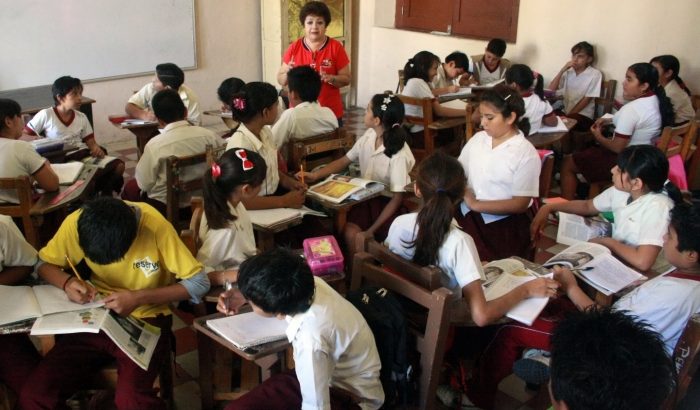
Una de las muy escasas oportunidades para salir de la marginación la representan las escuelas Normales rurales, que para muchas familias campesinas son la posibilidad de que sus hijos puedan aspirar a una vida mejor. Primero despojados de oportunidades en la marginación del campo, ahora en las aulas de clase gracias a las contrarreformas neoliberales.

La historia de las Normales rurales en México ha estado marcada por la lucha social, desde su nacimiento, con el proyecto de educación socialista, hasta el auge de las acciones guerrilleras en la década de los 70.

Esto las convierte en una amenaza viviente para el Estado que preferiría que los Normalistas se integraran a la apatía que caracteriza en este momento a la mayor parte de los estudiantes.

Pero aún en los momentos en que los estudiantes han buscado hacerse escuchar hay algo que distingue a los normalistas. El ejemplo más notable es el del movimiento #YoSoy132, al que bastó una acción represiva por parte del gobierno federal el 1º de diciembre de 2012 para desmovilizarlo y sumarlo a las luchas del pasado.

Una historia de lucha no se puede subestimar tan fácilmente, y a pesar de sus errores tácticos y estratégicos, hay que reconocer que los normalistas han tenido el temple de salir una y otra vez después de las acciones represivas del Estado, ya sea mediante el gobierno federal, estatal y a veces hasta municipal.

El gobierno federal sabe que tiene en ellos y en los profesores sindicalizados a sus adversarios más fuertes en su plan de llevar a cabo una contrarreforma que le ponga fin de una vez por todas a la idea de educación pública que México ha tenido hasta ahora, para entonces poder seguir con otros contrincantes menores en número y en organización: los estudiantes y profesores universitarios.

La educación pública y gratuita tenía un fin en la era del modelo de sustitución de importaciones, generar mano de obra capacitada para inversionistas nacionales o extranjeros, ahora que es más negocio vender servicios, se ha decretado que la educación, aún esa que genera obreros, debe ser un bien de mercado, y quien “se esfuerce” debe ser quien acceda a ella.

El normalista asume, hoy más que nunca, que para poder sobrevivir tendrá que enfrentarse al Estado para el que es un estorbo. No sólo reconoce que es el heredero de una lucha de casi 100 años, también reconoce que para el Estado sus padres y abuelos fueron instrumentos y ahora son estorbos, que si no luchan van a desaparecer no sólo figurativamente, también físicamente.

El problema es que el resto de la sociedad se niega a aceptar que si los normalistas desaparecen, y con ellos el modelo de educación pública, las repercusiones en el aumento del costo de la vida y los retrocesos en la vida democrática del país no se harán esperar, afectando a los sectores más precarios que, vale aclarar, son ya más del 60 por ciento de los mexicanos.

La retirada del Estado mexicano de sus obligaciones sociales sólo puede dar pie a pensar que prefiere tener un país cada vez más desfragmentado, con altos índices de pobreza y delincuencia, que empezar a reconstruir condiciones para un verdadero desarrollo nacional.

Fuente:  http://www.cambiodemichoacan.com.mx/columna-nc25390

Comparte este contenido:

México y Francia estrechan lazos en materia educativa

América del Norte/México/01 Julio 2017/Fuente: Segundo enfoque

Aurelio Nuño, secretario de Educación Pública en México, se reunió con Jean Michel Blanquer, ministro de Educación Nacional en Francia, para adelantar temas de movilidad estudiantil entre estudiantes de ambas naciones.

Por su parte, Nuño también aprovechó la reunión para plantear los avances en la Reforma Educativa que se ha implementado poco a poco en el sistema educativo mexicano, las medidas de inclusión, autonomía escolar, capacitación de maestros y nuevas tecnologías.

Tanto México como Francia aspiran avanzar en materia de transformación educativa con el propósito que la población tenga niños y niñas bien formados que puedan alcanzar sus metas, así como afianzar una amistad entre ambas naciones, a través de la  movilidad académica de mexicanos en Francia, país que ha recibido hasta la fecha unos mil 700 estudiantes latinoamericanos.

Ambas naciones también buscan compartir avances en programas de la Reforma y Modelo educativos, en especial en la profesionalización de maestros y organización de escuelas. Otro punto importante para ambos países es  fortalecer los primeros años de la educación.

México hará un esfuerzo para permitir que sus maestros se preparen en Francia, así como las estudiantes de las universidades tecnológicas y politécnicas. El ministro de Educación francés expresó que son bienvenidos los estudiantes mexicanos que aspiren a obtener una mejor educación.

Por su parte, secretario de Educación Pública de México manifestó que la presencia de estudiantes mexicanos en Francia consolida el intercambio estudiantil, ya que la nación francesa es la tercera en recibir estudiantes mexicanos, en especial los provenientes de la Universidad Nacional Autónoma de México.

Para Nuño Mayer es vital a través de este intercambio compartir los avances de los programas de la Reforma y Modelo educativos, pero también los apoyos que permitirán obtener maestros más profesionales y organizados.

Por eso, la mitad de la agenda de intercambio bilateral aspira fortalecer el intercambio en materia educativo y movilidad estudiantil. Por eso, la cooperación y el intercambio cultural entre la Comunidad Europea y los países de América Latina son temas vitales que serán atendidos próximamente durante la cumbre CELAC-Unión Europea en materia educativa.

Fuente: http://segundoenfoque.com/mexico-y-francia-estrechan-lazos-en-materia-educativa-55-360850/
Comparte este contenido:

Unesco defiende papel central de la educación en Agenda 2030

Naciones Unidas/01 Julio 2017/Fuente: Prensa Latina

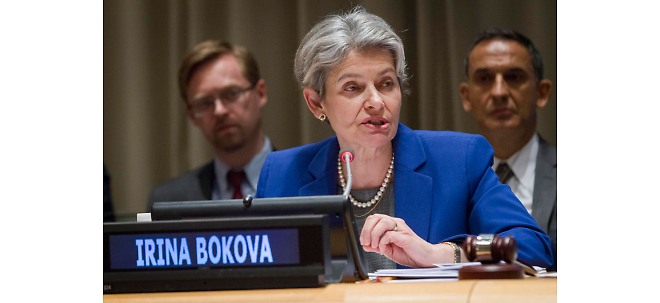
La directora general de la Organización de las Naciones Unidas para la Educación, la Ciencia y la Cultura (Unesco), Irina Bokova, defendió el papel central de la educación en la implementación de la Agenda 2030 de Desarrollo Sostenible.
Al intervenir en la instalación de un foro de alto nivel de la Asamblea General de la ONU, la funcionaria recordó que la Agenda establecida en 2015 para erradicar la pobreza extrema y reducir las desigualdades tiene como principio el no dejar a nadie atrás.

Pero eso no está pasando en las escuelas, dijo Bokova, quien lamentó que más de 260 millones de niños, adolescentes y jóvenes estén fuera de las aulas, un fenómeno que afecta de manera abrumadora a los residentes en países pobres.

De acuerdo con la directora general de la Unesco, el objetivo de la Agenda de alcanzar una educación inclusiva y de calidad para 2030 guarda una estrecha relación con las otras 16 metas plasmadas en la ambiciosa plataforma de progreso humano.

Si le preguntamos a cada en familia en cualquier lugar del mundo o a cada niño y niña qué es lo que más necesitan, la respuesta es clara: educación, subrayó en el evento que reúne a ministros y diplomáticos de los cinco continentes.

Para Bokova, todos los gobiernos del mundo deberían colocar a la enseñanza como una prioridad, por su potencial impacto en la erradicación de la pobreza y la construcción de sociedades pacíficas.

El acceso a la educación pudiera reducir la pobreza en más de la mitad, precisó.

La directora general de la Unesco insistió en que la educación no constituye una opción, sino un derecho humano básico y el cimiento para el desarrollo inclusivo y sostenible.

Fuente: http://www.prensa-latina.cu/index.php?o=rn&id=96825&SEO=unesco-defiende-papel-central-de-la-educacion-en-agenda-2030
Comparte este contenido:

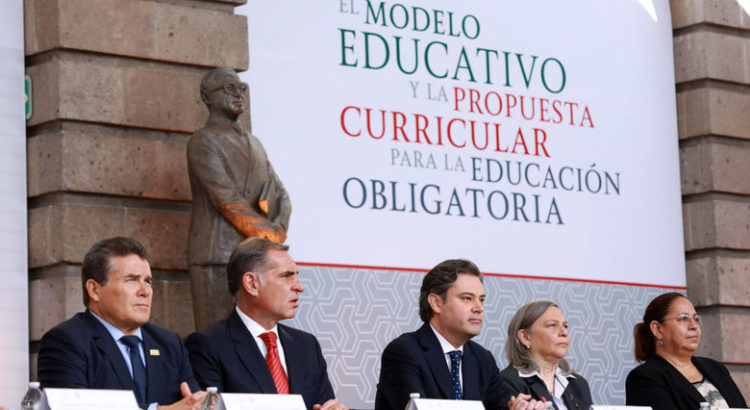
México: Publica SEP proceso del Modelo Educativo para la Educación Obligatoria

América del Norte/México/Junio del 2017/Noticias/http://www.vanguardia.com.mx/

Se dio a conocer en el DOF; participaron distintos sectores de la población para la consolidación, señala

La Secretaría de Educación Pública (SEP) presenta el proceso que se llevó para consolidar el Modelo Educativo para la Educación Obligatoria.

En la edición del Diario Oficial de la Federación (DOF) explicó que en diciembre de 2012, las principales fuerzas políticas del país pusieron en marcha un proceso de profunda transformación: la Reforma Educativa.

Esta reforma, subrayó, elevó a nivel Constitucional la obligación del Estado Mexicano de mejorar la calidad y la equidad de la educación, es decir que todos los estudiantes se formen integralmente y logren los aprendizajes que necesitan para desarrollar con éxito sus proyectos de vida en un mundo globalizado, como lo exige la sociedad del siglo XXI.

La SEP señaló que como parte de la Reforma, tal como lo mandata el Artículo 12 transitorio de la Ley General de Educación, se realizó una revisión del modelo educativo en su conjunto, que incluyó los planes y programas, los materiales y los métodos educativos.

Precisó que este replanteamiento inició en el primer semestre de 2014, con 18 foros de consulta regionales sobre el modelo educativo vigente, seis de ellos sobre la educación básica, e igual número para la educación media superior y educación normal.

Adicionalmente, se realizaron tres reuniones nacionales en las cuales se presentaron las conclusiones del proceso.

En total, participaron más de 28 mil personas y se recibieron cerca de 15 mil documentos con propuestas.

Con estas aportaciones, en julio de 2016, la SEP presentó un planteamiento para la actualización del modelo educativo, compuesto de tres documentos:

1. Carta sobre los Fines de la Educación en el Siglo XXI. Expone de manera breve qué mexicanas y mexicanos se buscan formar con el nuevo Modelo Educativo.

2. Modelo Educativo 2016. Explica, en cinco grandes ejes, el modelo que se deriva de la Reforma Educativa, es decir la forma en que se propone articular los componentes del sistema para lograr el máximo logro de aprendizaje de niñas, niños y jóvenes.

3. Propuesta Curricular para la Educación Obligatoria 2016. Contiene un planteamiento curricular para la educación básica y la media superior, y abarca tanto la estructura de los contenidos educativos como los principios pedagógicos que la sustentan.

A partir de la convicción de que el mejoramiento de la educación es un desafío que requiere de la participación de todos y de que un modelo educativo tiene que conformarse como una política de Estado, la SEP sometió los tres documentos al análisis y discusión de todos los actores involucrados en la educación.

Fuente:

http://www.vanguardia.com.mx/articulo/publica-sep-proceso-del-modelo-educativo-para-la-educacion-obligatoria

Fuente imagen:

https://lh3.googleusercontent.com/MEWrLQVnzf-0nLE07uzyd1i-uIGQQRR4XOPw7R6c8eEZuSKOZHKsiTahcFdvDhyMBBWKDw=s85

Comparte este contenido:

Canada: Twenty years on from the first book, Harry Potter continues to cast a spell on readers

América del Norte/Canadá/Junio del 2017/Noticias/https://theconversation.com/

A couple of weeks ago while at Durham’s Pride Parade, my attention was caught by a teenager carrying a placard which read:

If Harry Potter taught us anything it’s that no one deserves to live in a closet.

A quick Google search revealed that this powerful adage – originally a poster created by The Youth Project, an LGBT charity in Nova Scotia, Canada, and later retweeted by JK Rowling – has been doing the rounds online for a number of years.

And it’s not the only Harry Potter-related slogan to make an appearance at recent marches or protest events. At the worldwide Women’s Marches, which took place in January, there were numerous “Dumbledore’s Army” and “Hermione wouldn’t stand for this!” placards on show.

What these placards remind us of is that two decades on from the publication of Harry Potter and the Philosopher’s Stone, JK Rowling’s novels are about so much more than just witchcraft and wizardry. For many young people, Harry Potter is a familiar, even comforting, frame of reference that can help them to process and understand their experiences. And this is particularly the case in the current context of increasing division and inequality in both the US and Britain.

Revisiting first impressions

Though Hogwarts is clearly a fantastic and fictional setting, the characters experience real life trials and traumas – bereavement, loneliness, persecution, jealousy, unrequited love, guilt, and bullying, to name but a few.

There are also the “stock” characters common to everyone’s school days – the class bully and his goons, the “insufferable know-it-all”, the school jokers, and the sadistic teacher.

Part of the appeal and achievement of the series, though, is the way these characters develop in complexity as Rowling’s readers grow and mature. So that assumptions made about characters upon first reading are challenged and tested by the events and revelations of the later books.

All aboard! Shutterstock

In the first novel, for example, Dumbledore and Snape form the pairing of “good teacher vs bad teacher”. Both are essentially unknowable to the characters and to the reader, who cannot yet see beyond Dumbledore as the all-knowing, twinkly-eyed, grandfatherly character and Snape as the black-eyed, evil-tempered “malevolent bat”.

But as the series progresses, these two characters move through mirror image character arcs. The “good” or even “perfect” Dumbledore is humanised and made relatable as we discover he is racked with guilt and self-blame about his early association with the fearsome dark wizard, Grindelwald and his part in the death of his sister, Ariana.

“Bad” Snape, on the other hand, is rehabilitated and made sympathetic through the back story of his unrequited love for Lily Potter – Harry’s mother – his anguish at her death, and his lifelong mission to atone for the sins of his youth. They are no longer stock heroes or villains but believable characters with complex motivations.

In this way, there is something powerful about literature that compels us to examine and revise our first impressions, assumptions, and opinions. It teaches us to be willing and able to do this in real life, too.

Life lessons from Hogwarts

Before the likes of Harry Potter, 18th and 19th-century children’s literature was intended as instruction: the “good” were rewarded and the “bad” were punished – with “bad” behaviour linked to “bad” character and vice versa.

In contrast, a series like Harry Potter helps today’s young readers to appreciate that the world, and the people in it, are not easy to understand or “sort” in the Hogwartian sense. Gryffindors may be cowardly – think Peter Pettigrew – and Slytherins may be motivated by love rather than by ambition, for example when Narcissa Malfoy chooses to lie to Lord Voldemort about Harry being dead in the seventh novel.

True magic never dies. Shutterstock

A recent study from the University of Cambridge supports the idea that reading and literature can help children to learn about the world and the people around them. It found that:

Reading fiction provides an excellent training for young people in developing and practising empathy and theory of mind. That is, [an] understanding of how other people feel and think.

Or as Hermione would put it, reading fiction helps you not to have “the emotional range of a teaspoon”. And it is this emotional range and empathy, found in books such as Harry Potter, which can help children to navigate the complex and magical world we all share.

An inexhaustible source of magic

But of course, though the world of Hogwarts and Diagon Alley may offer us an escape from our “muggle” existence, theirs is a world as marred by inequality, oppression, and danger as our own.

And in this way, the books create a space where both children and adults can explore and process pressing questions of morality, responsibility, conflict, and trauma at a safe distance.

JK Rowling has said that while she doesn’t believe in the “magic of waving a wand and making things happen”, she does believe in “the magic of imagination and the magic of love”. Let’s add to that another kind of magic that we can all believe in and which continues to be very much part of our lives – and that is the inexhaustible magic of the world of Harry Potter.

Fuente:

https://theconversation.com/twenty-years-on-from-the-first-book-harry-potter-continues-to-cast-a-spell-on-readers-79872

Fuente imagen:

https://lh3.googleusercontent.com/JNBsWwVetSOOr8lOeFJJlL6OXtHzHoqaBD8I5zREurbG33JrJ1oRe6GfFYjciN469b1d=s85

Comparte este contenido:
Page 982 of 1684
1 980 981 982 983 984 1.684