Page 182 of 773
1 180 181 182 183 184 773

Recursos matemáticos que consiguen que los niños adoren las matemáticas

Noticia/22 Agosto 2019/El país

Un recurso educativo es una ayuda o un medio para favorecer el aprendizaje. Los recursos matemáticos no son magia

Un recurso educativo es una ayuda o un medio para favorecer el aprendizaje. Los recursos matemáticos no son magia, pero facilitan enormemente que los niños aprendan matemáticas. Para entender el papel que representan es necesario comprender la importancia que tienen las emociones en todos los procesos de aprendizaje.

Cuando una persona está aprendiendo, antes de que la información sea absorbida de manera intelectual, es procesada por el sistema límbico donde se encuentran las emociones. Esto nos sugiere que el aprendizaje está condicionado por las emociones positivas o negativas que se producen en el momento de aprender. Todos sabemos que somos principalmente seres emocionales y en segundo lugar seres racionales.

Por tanto, la emoción abre las puertas al proceso de aprendizaje y por ello es tan importante despertar la curiosidad y el interés en los niños y las niñas. Los niños prestan atención a aquello que les interesa porque les proporciona una recompensa emocional positiva y dejan de atender a lo que les produce una compensación emocional negativa.

Así cuando uses un recurso matemático ten esto en cuenta. Tienes que generar situaciones que causen un impacto emocional positivo, es decir, que motiven, ilusionen o diviertan. Si además implican a varios sentidos mejor, dejarán mayor huella emocional eficaz facilitando el aprendizaje.

Además, para que puedas asegurarte de que aprenden matemáticas es imprescindible que las propuestas pongan en marcha su razonamiento lógico-matemático. Es decir, no se trata de utilizar un recurso porque sí o porque está de moda, sino que tienes que acompañarlo de una pregunta o un reto. De otra forma, el cerebro se acomoda y no “se esfuerza” por aprender.

Existen cientos de recursos que puedes usar en casa o en el aula, y te voy a indicar mis tres grupos favoritos.

1. MATERIALES MANIPULATIVOS

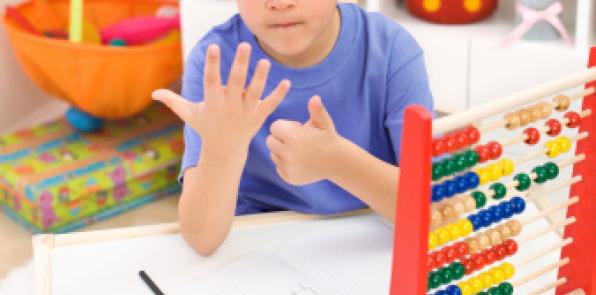
Están diseñados para que los niños puedan visualizar muchos conceptos matemáticos. Sin ellos las matemáticas son abstractas y, en muchos casos, incomprensibles para los niños. Hay una gran diversidad yo te recomiendo tres de los más utilizados:

1. Las regletas numéricas

Son una colección de barritas de madera que representan los números del 1 al 10, cada número tiene una longitud y un color diferente. Con ellas se puede consolidar la noción de número, descubrir relaciones numéricas y también investigar sobre medidas y geometría. Las recomiendo usar desde los 5 a los 16 años.

2. Los policubos

Son unos cubos encajables útiles para entender las tablas de multiplicar, las fracciones o los gráficos estadísticos. Se puede utilizar a partir de los 5 años y hasta los primeros cursos de secundaria.

3. Los bloques lógicos

Permiten hacer actividades para desarrollar el razonamiento lógico como series, clasificaciones y cambio de cualidades. Ideales para niños de 3 a 12 años.

2. JUEGOS DE MESA

Para aprender matemáticas de forma duradera se necesita activar la memoria alargo plazo; es decir, no se trata de aprender las tablas de multiplicar para el examen de la semana que viene, sino que es necesario que los niños las aprendan para siempre. Aquí es cuando entran los juegos de mesa: sirven para consolidar aprendizajes.

Cuando los niños juegan en casa o en clase con juegos, están afianzando aprendizajes. Hay cientos de juegos desde el clásico parchís a juegos tremendamente matemáticos como Código secreto.

3. LIBROS Y CUENTOS

Dispones de muchas obras literarias para que los niños se acerquen a las matemáticas desde la lectura. Algunas permiten repasar o ampliar conocimientos matemáticos a través de los juegos, retos y curiosidades que proponen.

Si quieres comenzar tu biblioteca matemática te sugiero tres títulos para tres rangos de edades diferentes.

1. Por cuatro esquinitas de nada (de 3 a 6 años)

2. Cuentacuentos (a partir de 3 años, si se lo leemos nosotros, y hasta 7 años)

3. Matemática Mente (a partir de 7 años)

Los recursos matemáticos son elementos básicos en la enseñanza de las matemáticas y deberían estar en todas las casas y aulas ya que permiten que los niños aprendan disfrutando.

Para elegir las propuestas más adecuadas para tus hijos o tus alumnos te recomiendo que tengas en cuenta la versatilidad del recurso ya que así lo podrás usar para diferentes contenidos o distintos grados de dificultad.

Fuente: https://elpais.com/elpais/2019/07/23/mamas_papas/1563878699_183234.html
Comparte este contenido:

Xi subraya importancia de la formación vocacional

Asia/China/22 Agosto 2019/Spanish.xinhua

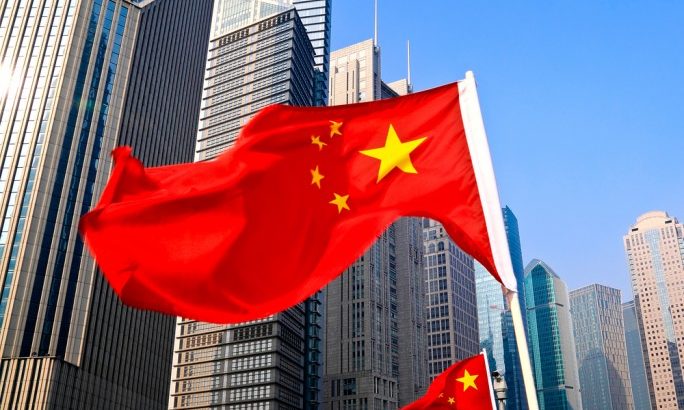
El secretario general del Comité Central del Partido Comunista de China, Xi Jinping, visitó el martes una escuela de formación vocacional en la ciudad de Zhangye de la provincia noroccidental de Gansu, donde subrayó la importancia de fomentar la educación vocacional.

La región noroccidental de China está rezagada en el desarrollo debido a las condiciones naturales, explicó Xi, tras detallar que, a pesar de que los factores de desarrollo varían de una región a otra, no deberían existir diferencias en la igualdad de oportunidades.

Para resolver este problema es esencial desarrollar la educación, especialmente la formación vocacional, subrayó el mandatario chino en la Escuela Bailie del distrito de Shandan, en Zhangye.

La economía china necesita el apoyo de la economía real, que requiere de una gran cantidad de personal profesional y técnico y artesanos.» Por lo tanto, la formación vocacional tiene mucho que aportar», señaló Xi, expresando su apoyo.

fuente: http://spanish.xinhuanet.com/2019-08/21/c_138326436.htm

Comparte este contenido:

China promete medidas severas contra alteración de orden escolar

Asia/China/22 Agosto 2019/Spanish.xinhua

Las autoridades chinas prometieron tomar severas medidas contra los actos que alteren el orden escolar, y solucionar las disputas por accidentes escolares conforme a la ley, de acuerdo con una directriz publicada hoy.

Tales actos incluyen atacar a personas, dañar de forma intencionada propiedades públicas, colocar pancartas en los campus, bloquear puertas de escuelas y acosar a funcionarios escolares, según la directriz emitida por cinco departamentos, incluyendo el Ministerio de Educación, el Tribunal Popular Supremo y el Ministerio de Seguridad Pública.

Estos actos podrían ser realizados por familiares de los estudiantes en disputas por accidentes relacionados con la escuela, con frecuencia para forzar a las escuelas a pagar compensaciones.

«Los actos que alteran el orden escolar han sometido a una indebida presión a las escuelas, las cuales podrían de ahí en adelante abstenerse de la educación física normal, las actividades extracurriculares y la evaluación de los estudiantes», dijo Deng Chuanhuai, director del Departamento de Políticas y Reglamentos del Ministerio de Educación.

Esto ha afectado la calidad de la educación y el entorno educativo y se debe resolver con mayores esfuerzos, añadió.

Fuente: http://spanish.xinhuanet.com/2019-08/21/c_138324410.htm

Comparte este contenido:

Myanmar: Ciudadanos de ninguna parte

Asia/Myanmar/22 Agosto 2019/El país

Desde inicio del éxodo de los rohingyas, su situación como refugiados sigue siendo preocupante

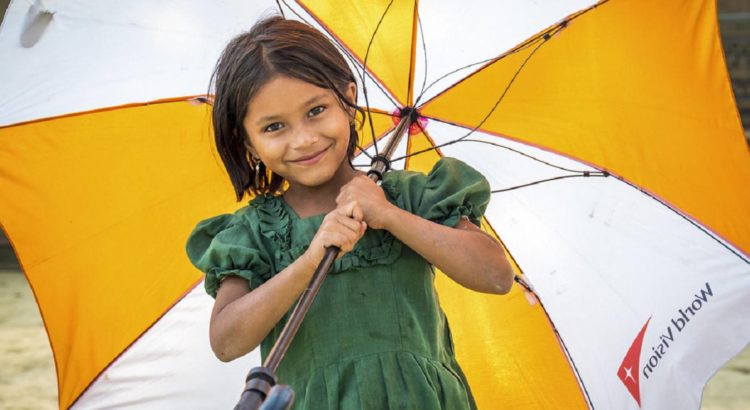
Jannatul Firdous, de cinco años, está sumida en sus pensamientos. ¿Cómo describir el significado de su nombre? Jannatul Firdous significa cielo –el mejor cielo– un significado profundo, la niña lo sabe y quiere hacerlo bien. “El cielo es un lugar donde los niños pueden jugar”, empieza la pequeña mientras su mamá Salima, de 26 años, la mira con una dulce sonrisa. “Hay muchas flores”, continúa. “Hay un gran estanque de agua. El cielo es un lugar feliz”.

Jannah a menudo se traduce en el Corán como “cielo”. Jannatul Firdous es el nivel más alto de cielo del Islam.

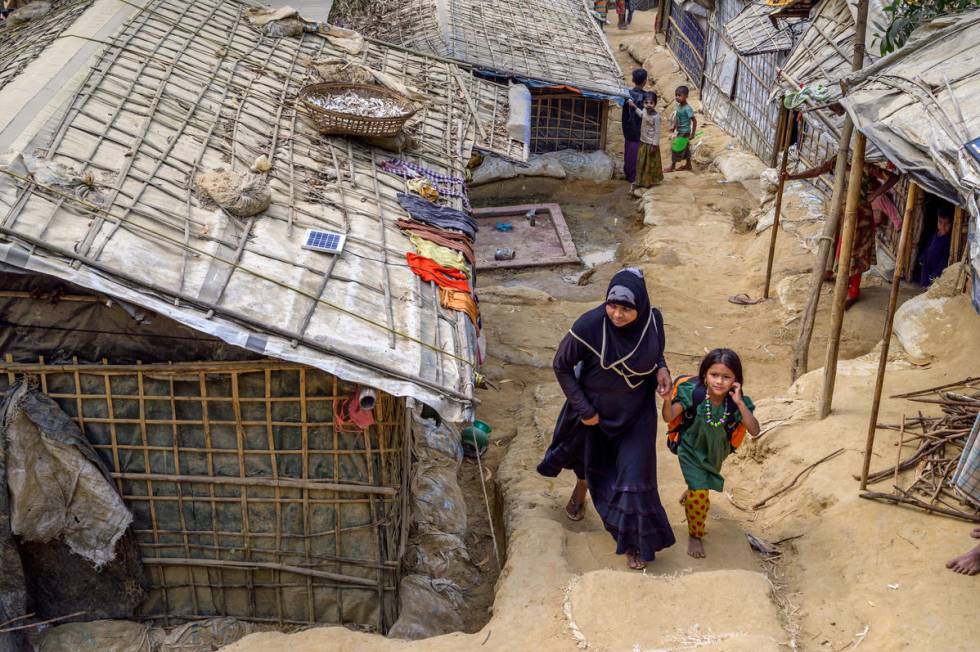
El campamento 13 en Myanmar, donde ahora vive Jannatul, no es el cielo y dista mucho de serlo. Los niños juegan en la tierra, levantando un polvo que flota en el aire caliente de la tarde. Está muy lejos del exuberante y verde campo que rodeaba la casa de la que huyó en Myanmar; tal vez sea de ahí de donde provenga su idea del cielo. Aquí no hay estanques y Jannatul debe cargar agua en contenedores pesados desde una toma de agua relativamente cercana, por una escalera empinada hasta el refugio improvisado de su familia.

Jannatul vive en el campo de refugiados más grande y densamente poblado del mundo, en Cox’s Bazar, Bangladesh. De su casi un millón de residentes, más de la mitad son niños. La mayoría de las personas aquí son rohingya, un grupo perseguido, predominantemente musulmán y una minoría de Myanmar, que ha sufrido discriminación en su país durante varias décadas, incluyendo la denegación de la ciudadanía.

El campamento 13 es uno de los 33 subconjuntos dentro del megacampamento. Es un espacio superpoblado, hogar de 41.000 personas, ciudadanos de ninguna parte, la antítesis del lugar feliz con el que sueña Jannatul.

Refugiados de segunda

Jannatul y su madre van de un lado a otro por el campamento de refugiados. El 55% de sus residentes son menores.
Jannatul y su madre van de un lado a otro por el campamento de refugiados. El 55% de sus residentes son menores. JON WARREN WORLD VISION

Las niñas y las mujeres llegaron a Bangladesh con cicatrices físicas y emocionales que probablemente nunca terminarán de curarse. Un informe de la Alta Comisión para los Refugiados de Naciones Unidas en 2018 titulado Cultura, contexto y salud mental de los refugiados rohingya detalla cómo las mujeres sufrieron abusos, fueron violadas y obligadas a prostituirse en Myanmar.

Cuando estalló la violencia en su aldea, en agosto de 2017, la familia de Salima se separó: «Jannatul acabó conmigo, pero no sabía qué había pasado con mi esposo y mis otros hijos», dice su madre. «Más tarde, los vi muertos». Mohamed, de 30 años, recibió un disparo; su hijo, Hafej, de 2 años, y su hija, Kalima, de 1 año, también fueron asesinados. Su expresión se nubla de dolor mientras lo cuenta. En un momento del relato Salima extiende su teléfono para mostrar una foto de Kalima y Hafej, sonriendo junto a su hermana mayor, Jannatul.

¿Por qué los rohingya no son refugiados comunes?

En 1982, Myanmar aprobó una ley que excluía a muchas etnias de la condición de raza nacional oficial. Como resultado, a los rohingya se les negó la ciudadanía, lo que les convirtió en uno de los grupos de apátridas más grande del mundo, y se les sometió a restricciones en el matrimonio, el tamaño de la familia, el empleo, la educación, la elección religiosa y la libertad de movimiento. Por poner un ejemplo, en algunas ciudades del norte de Myanmar, a los rohingya se les permite tener solo dos hijos.

Ante esta situación miles de personas se vieron obligadas a huir a Bangladesh, donde están más seguros y tienen más libertad pero se enfrentan a restricciones por parte de un país que no es signatario de la Convención de las Naciones Unidas sobre los Refugiados de 1951 y, por lo tanto, no les reconoce como refugiados. Sin la condición de refugiado legal, los rohingya en Bangladés no pueden trabajar, vivir fuera de los campamentos o emigrar a otros países. Los niños no pueden ir a la escuela; y las mujeres y los menores son objeto de abuso, como la trata de personas, el trabajo infantil, el matrimonio infantil, la violencia de género y otras formas de explotación.

Espacios Seguros para Niños

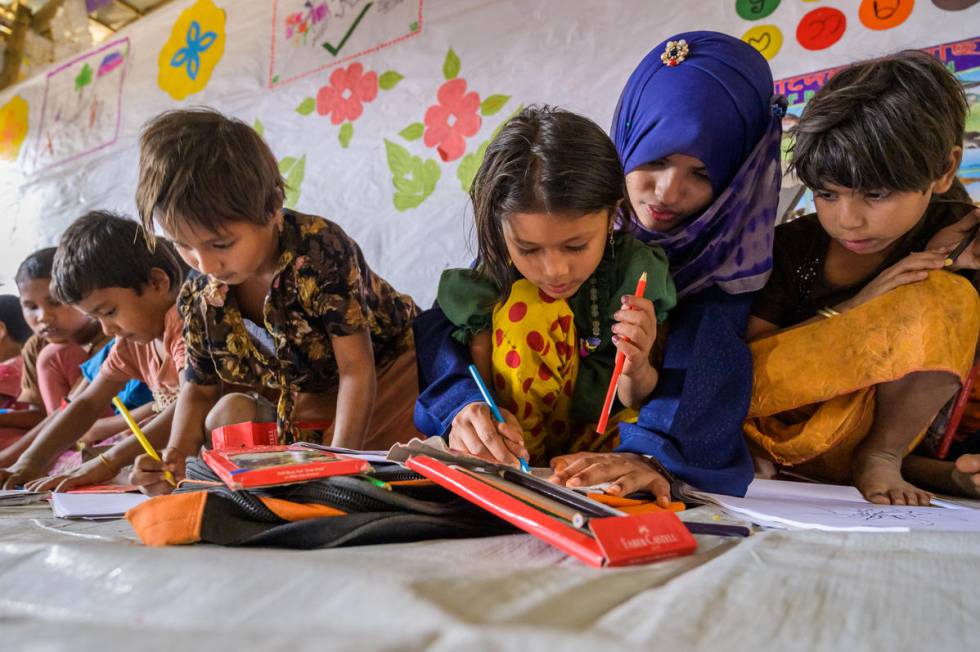
Jannatul llega a uno de los espacios seguros para niños, lo más parecido a un colegio que pueden tener.
Jannatul llega a uno de los espacios seguros para niños, lo más parecido a un colegio que pueden tener.JON WARREN WORLD VISION

Situado en el corazón del campamento, el Espacio Seguro para Niños al que acude Jannatul es un centro alegre, a menudo ruidoso, pintado de un color naranja chillón. Fueron los propios menores quienes decidieron llamar a este espacio –Surjoful– en honor de algo simbólico que dejaron en Myanmar: los girasoles. Según sus profesores, Jannatul sencillamente brilla en este espacio cuando tiene la oportunidad de cantar, bailar o recitar pequeños poemas.

La pequeña es una de las favoritas del personal, nos confiesa su maestra, Farjana Faraz Tumpa, de 20 años. Algunos niños prefieren quedarse con sus madres, aún son muy pequeños y necesitan sentirse acompañados por un familiar, aunque sea haciendo cola para recibir la ayuda diaria. Pero Jannatul no se pierde ni un día de “cole”, porque estos centros son lo más parecido a un colegio que estos menores han visto en muchos meses.

El 55% de los refugiados rohingya son menores. Niños y niñas que se enfrentan a diario a la violación de sus derechos; violencia física y sexual, explotación, matrimonio infantil, problemas psicosociales y de salud mental, trata y secuestro de niños, trabajo infantil y un largo etcétera. Niños de segunda, niños de ninguna parte e invisibles para el mundo.

Fuente e imagen: https://elpais.com/elpais/2019/08/15/3500_millones/1565888791_003001.html

Comparte este contenido:

India orders schools to reopen, but Kashmiri parents keep kids at home: ‘Education is less important than our children’s lives’

Asia/ India/ 20.08.2019/ Source: www.independent.co.uk.

Authorities criticised for move as situation remains volatile in disputed region

Parents across Kashmir kept their children at home, despite an order from Indian authorities for schools to reopen, fearing the youngsters could get caught in clashes between civilian protesters and armed personnel.

Authorities closed schools and colleges on 5 August after India revoked the special status of Kashmir, which is divided between India and Pakistan and claimed in entirety by both.

Kashmiris have criticised the authorities for reopening the schools when the situation remains volatile and clashes continue.

The ongoing internet and communications blockade also contributed to the fears of parents who had no means of contacting the school authorities.

“If normality has returned to that extent that schools can be reopened, then why don’t authorities lift the ban on phone connectivity and public movement?” said Showkat Nabi, whose son is in nursery at Tyndale Biscoe School, a Christian missionary institution in Srinagar.

“The kids are too young to understand what has happened… If we send them to schools, they will go – but we fear for their safety,” he continued.

At Burn Hall School, one of the oldest Christian missionary educational institutions in Srinagar, gates have been locked for the past two weeks.

The security personnel guarding the school told The Independent no student attended today’s classes and few teachers had turned up.

“Who would risk sending a 5-year-old kid to school in the present situation in Kashmir?” said the guard, who asked to be identified as Sagar.

Mohammad Younis Malik, director of school education in Kashmir, said 166 of Srinagar’s 196 primary schools were open, but admitted that 72 of them had “thin” attendance.

Tariq Aziz, whose son studies at a private school in Srinagar, argued that not sending children to school was a form of protest by the parents.

“I want my son to know that India is trying to grab our land. Our future is at risk in Kashmir now. I want to make him conscious that he has to fight for it in future,” Mr Aziz said.

“Education is less important than the lives and safety of our children. We have seen the closure of schools for months in the past and if it continues our teachers will volunteer to open community schools,” he said.

Government employees were also ordered to attend their offices today, but it is unclear how many exactly followed the order.

Sehrish Asghar, an official spokesperson of the government, described the numbers of those heading back to work as “encouraging”.

“It is difficult to reach the office amid strict restrictions on public movement, but we have to take a risk to save our jobs,” engineer Aftab Ahmad told The Independent.

Across Kashmir, most shops and businesses remained closed, and the streets remained largely deserted.

But in a several locations, small-scale protests were seen as people clashed with the heavy contingents of armed forces deployed across towns and villages of the disputed region

Deputy Inspector General VK Birdi, who briefed media about the situation in Kashmir, said there was no major law-and-order incident reported in the region.

“Some minor incidents of stone pelting were reported at some localities and were dealt with as per norm. The culprits were dispersed,” Mr Birdi said.

He said authorities are closely monitoring the situation, which is “slowly returning to normality”.

Source of the notice: https://www.independent.co.uk/news/world/asia/kashmir-schools-open-india-pakistan-crisis-a9070431.html


Comparte este contenido:

Learning education from Japan

By: Naazir Mahmood.

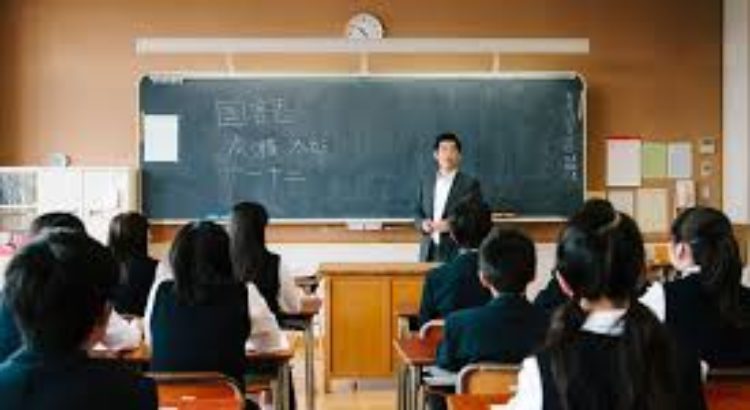
One of the reasons for Japan’s rapid progress in the 20th century was its education system. Today we discuss some of the salient features of Japanese education and how it has facilitated the creation of one of the most civilized nations on the globe. Here being ‘civilized’ does not mean their achievements in science and technology alone, it also means a nation of people who are caring, considerate, honest, and responsible citizens. This can be seen while travelling across Japan, and even while walking on the streets in cities from Tokyo to Nagasaki.

On a recent visit to Japan, this writer availed himself of the opportunity to review the elementary and secondary education system in Japan and also visited a couple of universities. Ms Yumioka Haruna from the Ministry of Education, Culture, Sports, Science, and Technology (MECSST – normally written as MEXT) was kind enough to give a detailed briefing about the Japanese education system. With her impeccable English proficiency, she explained the intricacies of their system and the challenges they have faced and overcome. She started with the constitutional provisions for education in her country.

Article 26 of the Japanese constitution says, “All people shall have the right to receive an equal education corresponding to their ability, as provided by law. The people shall be obligated to have all boys and girls under their protection receive ordinary education as provided by law. Such compulsory education shall be free.” Before moving forward, I would like to make two comments here: first, please have a look at the name of the ministry once again. It is one ministry that takes care of culture, education, science, sports, and technology.

If you compare this with the countries in South Asia, most have separate ministries for all of the above. In Pakistan, even almost a decade after the 18th Constitutional Amendment was passed in 2010, we have overlapping ministries at the federal and provincial levels. In Japan, MEXT combines all related departments such as culture, education, and sports together; and also puts science and technology (S&T) under the same umbrella. If one of the purposes of education is to nurture citizens who are cultured and civilized, you cannot separate culture from education. Being cultured means being caring, considerate, honest, and responsible.

The second comment is regarding Article 26 of the Japanese constitution and its provisions. Its stress on ‘equal education’ deserves attention as in Japan the state provides almost equal opportunities to all its citizens. As opposed to South Asian countries where the states have miserably failed to offer ‘equal education’, Japan has been successful in doing so, mainly thanks to its appropriate allocations to education. If we look at the Basic Act of Education of Japan, its Article 5 reads:

“The objective of general education, given in the form of compulsory education, shall be to cultivate the foundation for an independent life within society while developing the abilities of each individual, and to foster the basic qualities necessary for those who form our state and society.”

Please note that there is no mention of any national, patriotic, or religious responsibilities; neither is there any rhetoric about defending or preserving any ‘Japanese culture’ or any ‘Buddhist or Shinto’ heritage. Yes, there is emphasis on cultivating “the foundation of an independent life” and “developing the abilities of each individual”. This is the spirit and the approach for an effective education system. If you compare this with our myriad education policies, we find them full of platitudes about our nationalistic and patriotic pride, and cultural heritage and religious identity, and Pakistani faith, unity, and discipline.

Now some more specifics. The costs of municipal elementary, junior, and high schools are borne by the government. The national government is merely responsible for establishing a framework and setting of national standards. It also secures funding sources for preparation of education conditions. That means the national government provides guidance, advice and assistance without interfering into the curriculum and syllabus matters, as long as certain national standards are followed. There are two tiers or boards of education (BoE): prefectural and municipal. Prefectural is like the provincial board that establishes and operates high schools and special-needs schools.

Prefectural BoEs also hire teachers and make payments to elementary and junior high school teachers’ salaries. Municipal BoEs get advice, assistance and guidance from prefectural BoEs, but they establish and operate their own municipal schools. Interestingly, BoEs are established in all prefectures and municipalities as administrative committees, but they are totally independent of the prefectural or municipal head of government. BoEs decide the basic policy and important matters regarding the administration of education. Each BoE has five members: one full-time superintendent with a three-year term; and four part-time lay members who can be reappointed after four years.

The relevant local assemblies approve the appointment of the head of prefectural or municipal BoE. The BoE ensures political neutrality – meaning the contents of education must be neutral, fair and free from personal value judgments. The BoE also ensures sustainability and stability of compulsory education throughout the learning period. That means absenteeism and dropouts are controlled and minimized. There is a strong provision for pre-primary education (PPE) which starts at the age of three and ends at the age of six when children start elementary schools. For PPE there are integrated centres for early childhood education and care (ECEC) established and run by the kindergarten department.

The elementary department establishes and runs elementary schools that provide primary education for six years till the age of 12. The last phase of compulsory education is managed by the lower secondary department which runs lower secondary schools offering three years of schooling till the age of 15. MEXT, which is a large ministry, has multiple departments for each level of education. Again, if you compare it with public education in South Asia, here perhaps the most neglected area is PPE or kindergartens. Lack of facilities and resources, and absence of committed and qualified ECEC professionals render early childhood education meaningless in countries such as Pakistan.

After the age of 15, Japanese boys and girls can do part-time courses, join upper secondary schools, or get into specialized training colleges to do upper secondary courses run by the upper secondary department. They may also get admitted to colleges of technology run by the higher education department. At age 18, when they complete 12 years of education, they may get into junior colleges or specialized training colleges where they can enroll into one-year or two-year courses. They have an exit option after every year and may also continue for four years doing multiple courses if they want.

This model is quite contrary to the HEC model in Pakistan which has enforced a four-year bachelor’s programme without introducing exit options after two years. The provincial HECs in Pakistan should introduce two-year associate degrees in all disciplines and in all degree colleges or universities so that students who face family problems or financial issues may exit after two years and join the workforce. Here we have a lot to learn from the Japanese model of higher education which offers six years of higher education till the age of 24 but also has multiple exit options on the way, without forcing students to quit midway without a degree or certificate.

But perhaps the best aspect of Japanese education system is its stress on the three components of education – intellectual, moral and physical. That’s how they take a holistic approach, and teachers in Japan are trained not only to teach but also to engage in extracurricular activities to develop competencies and provide guidance. Lastly, meal provision in schools makes a lot of difference, where children themselves serve food provided by the school and are encouraged to clean up after themselves.

Source of the article: https://www.thenews.com.pk/print/514098-learning-education-from-japan

Comparte este contenido:

Learning for empathy: A world effort to build peace through education

Asia/ Japan/ 19.08.2019/ Source: www.japantimes.co.jp.

In a classroom on a recent Saturday, junior high school students were gathered in small groups discussing death, specifically whether they would consent for their organs to be harvested after they passed away. “I am willing to donate my organs because at that time I will no longer care what happens to my body,” one student told the class. “I will be glad if my body can be useful to others in need after my death.” Many students shared similar viewpoints.

The topic came up during moral education classes in mid-July during an open day at Funabashi Kibou Junior High School in Tokyo’s Setagaya Ward, where parents had been invited to observe special classes addressing life values. Moral education classes are not meant to judge if students’ opinions are right or wrong, or instruct them how they should think. Instead, the classes aim to encourage reflection and listening to others’ viewpoints to promote critical thinking and empathy — the ability to understand other people’s feelings and the basis for living together in peace.

“To survive in the world peacefully, we must show empathy to others. We must understand feelings of others,” said Mamtaz Jahan, an assistant English teacher from Tejgaon Government Girls High School in Dhaka, who observed the classes with a group of teachers, school leaders and officials from Bangladesh, Indonesia and Pakistan. After the session, parents were also invited to speak with teachers about morals and ethics in daily life and how to address these topics with children.

The visit was part of the UNESCO project “Learning for Empathy: A teacher exchange and support programme,” sponsored by the Japanese government. The project targets teachers as key influencers in social transformation linked to the sustainable development goals, particularly SDG4.7 highlighting the appreciation of cultural diversity and promotion of a culture of peace and non-violence.

Teachers can have a direct impact on strengthening students’ resilience to discriminatory and violent narratives as well as model values of respect and trust. In many countries, school leaders and teachers share similar concerns and challenges in terms of the quality and relevance of learning in the 21st century, when societies are rapidly changing in terms of technology, human relationships and how we relate with the natural environment.

The empathy project offers education professionals from different countries opportunities to learn from each other, find inspiration and generate changes in mind-set. The group visited schools and community learning centers in Tokyo to learn what Japan does to make learning meaningful, motivating and empowering, and exchange ideas with Japanese teachers and students.

“We come here from Bangladesh, Pakistan and Indonesia to learn about how the education system is running in Japan,” Jahan said, adding that she wanted to know how Japan had incorporated SDGs in education, particularly SDG4.7 promoting a holistic view of learning based on the three pillars of cognitive, socio-emotional and behavioral dimensions.

The global indicator established for Target 4.7 measures the extent to which Education for Sustainable Development (ESD) and Global Citizenship Education (GCED) are mainstreamed in national education policies, curricula, teacher education and student assessments. Japan has long-standing experiences in inclusive quality education with many schools, including those visited, promoting topics such as sustainable development and peace.

Omori Dairoku Junior High School in Ota Ward is one of the most active UNESCO Associated Schools in Japan, actively promoting ESD through a whole school approach. School teachers collaborated to develop the SDGs Calendar as part of the school curriculum, integrating learning of and for SDGs in all teaching subjects throughout the school year. For example, ninth grade social studies focused in April on protecting democracy (SDG17: Partnership for the Goals) and in May on protecting human rights (SDG17 and SDG10: Reduced Inequalities).

“Learning for empathy is a universal value, but nowadays I think we have to think more about how to integrate it into the field of education, not only in the school, but also at home and in the community,” said Gilang Asri Devianty, a teacher from State Junior High School 2 in Cileunyi, West Java.

Education, including learning for empathy, involves three levels of learners, teachers and the broader education community, which also covers parents and community members.

For example, in addition to the usual parent-teacher association, Hasune Daini Elementary School in Itabashi Ward runs learning-support sessions led by volunteers in the community, many of whom are parents, helping students who cannot keep up with classes.

“We cannot live by our own. We are social beings, so we have to work with the others. To do so, we have to know and understand the others so we can coordinate, cooperate and collaborate,” Gilang said. “I think the very basic thing as a teacher, when we try to educate the students to have empathy toward each other, is to teach them how to accept differences, meaning not judging.”

The world is experiencing a rise of intolerance and conflict despite growing interconnectedness and interdependency among people and nations. Education can help to prepare learners to be active and responsible contributors to sustainable development and world peace. In the Asia-Pacific, an immensely culturally and linguistically diverse region, this is a particularly vital role.

Part of that mission is deconstructing prejudices about “others,” help to instill healthy self-esteem, and raise awareness about basic human rights and values. Education has a role to play in creating a strong sense of belongingness for people who feel excluded or marginalized as well as give them opportunities to develop skills for non-violent expression, communication and action through collaboration.

“I think one of the immediate problems is clashes of identities,” said Muhammad Israr Madani, an Islamic scholar and madrassa teacher at the International Research Council for Religious Affairs in Pakistan. “There are a lot of conflicts between different identities based on their ethnicity, religion, sectarian[ism] and language. Sometimes, identity crisis can create extremism.”

During the visit, participants also went to Mita High School in Minato Ward, to talk with about 30 students who are members of the school’s UNESCO Committee. Each country and the UNESCO Committee made presentations and discussed how empathy was taught in their countries, including challenges and what young people are most passionate about.

Madani said he believed that Pakistan needed to participate in such exchange programs, which would help people with different identities understand each other better. “We need to promote empathy through teacher training,” he said, emphasizing the need for proper teacher training on peace-building and conflict-resolution skills.

The visit ended with participants presenting plans that they would implement respectively in Bangladesh, Indonesia and Pakistan, taking into account challenges identified in their local contexts. Despite the differences in language, ethnicity and other factors, empathy — a key to learn to live together — is a thread that unites us all together.

Source of the notice: https://www.japantimes.co.jp/opinion/2019/08/19/commentary/japan-commentary/learning-empathy-world-effort-build-peace-education/#.XVqVjugzbIV

Comparte este contenido:
Page 182 of 773
1 180 181 182 183 184 773