Page 181 of 773
1 179 180 181 182 183 773

Two years after exodus, Myanmar’s ‘desperate’ Rohingya youth need education, skills: UNICEF

Asia/ Bangladesh/ 28.08.2019/ By: Patrick Brown/ Source: news.un.org.


The daily struggle to survive for Myanmar’s Rohingya people in one of the world’s largest refugee settlements, has caused “overwhelming” despair and jeopardized the hopes of an entire generation, the head of the UN Children’s Fund (UNICEF), Henrietta Fore, said on Friday.

In a report marking two years since the arrival of around 745,000 Rohingya civilians in Bangladesh – after fleeing State-led persecution and violence in Myanmar – Executive Director Fore appealed for urgent investment in education and skills training.

‘Mere survival is not enough’

“For the Rohingya children and youth now in Bangladesh, mere survival is not enough,” she said. “It is absolutely critical that they are provided with the quality learning and skills development that they need to guarantee their long-term future.”

Without adequate learning opportunities, youngsters can fall prey to drug dealers and traffickers who offer to smuggle “desperate” ethnic Rohingya out of Bangladesh, the UN report warned.

Education ‘can help avoid risks’

Women and girls face harassment and abuse especially at night, UNICEF noted, while adding that one of the agency’s objectives through education is to give teenagers the skills they need to deal avoid “many risks”, including early marriage for girls.

In addition to Bangladesh’s Kutupalong camp, which is home to some 630,000 people, hundreds of thousands more, have found shelter in another dozen or so camps in the Cox’s Bazar region close to the Myanmar border.

Living conditions are often described as perilous by UN humanitarians, including UNICEF, which have issued frequent alerts about the devastating effects of monsoon rains on flimsy bamboo and tarpaulin shelters.

Between 21 April and 18 July this year, refugee camp authorities recorded 42 injuries and 10 fatalities, including six children, because of monsoon weather, according to UNICEF.

For the Rohingya children and youth now in Bangladesh, mere survival is not enough – UNICEF chief Henrietta Fore

Amid huge needs – and with conditions still unsuitable for the return of ethnic Rohingya to Myanmar, according to the UN Refugee Agency (UNHCR) – basic public services have been provided in Cox’s Bazar, including health care, nutrition, water, sanitation and hygiene, under the leadership of Bangladesh.

“But as the refugee crisis drags on, children and young people are clamouring for more than survival; they want quality education that can provide a path to a more hopeful future,” the UNICEF report insists.

According to the agency, around 280,000 children aged four to 14, now receive educational support. Of this number, 192,000 of them are in 2,167 learning centres, but more than 25,000 children “are not attending any learning programmes”, the agency noted.
© UNICEF Patrick Brown
A boy reads from his textbook in a camp in Cox’s Bazar, Bangladesh. (2 July 2019)

Most 15 to 18-year-olds miss out on school

More worrying still, nearly all 15 to 18-year-olds are “not attending any type of educational facility”, UNICEF said, before highlighting the case of one Kutupalong resident, Abdullah, 18.

“I studied six subjects back in Myanmar,” Abdullah says. “But when I arrived here, there was no way I could continue. If we do not get education in the camps, I think our situation is going to be dire.”

In an appeal to the Governments of Bangladesh and Myanmar, UNICEF and other agencies are calling for the use of national educational resources – curricula, training manuals and assessment methods – to help provide more structured learning for Rohingya children.

“Providing learning and training materials is a huge task and can only be realized with the full backing of a range of partners,” UNICEF chief Ms. Fore said. “But the hopes of a generation of children and adolescents are at stake. We cannot afford to fail them.”

Source of the notice: https://news.un.org/en/story/2019/08/1044321
Comparte este contenido:

‘Quash’ convictions and release women jailed for protesting against wearing veils in Iran, urge UN rights experts

Asia/ Iran/ 27.08.2019/ Source: news.un.org.


Decades-long prison sentences handed down to three women protesting the strictly enforced wearing of veils in Iran, have drawn alarm and condemnation from six United Nations independent human rights experts.

“We are alarmed that the arrest and lengthy sentences handed to these women are directly related to the peaceful exercise of their rights to freedom of expression and assembly in the pursuit of gender equality in Iran,” the experts said in a joint statement on Friday.

They called upon the Iranian authorities to quash the convictions and “immediately release all human rights defenders who have been arbitrarily detained for their work in advocating women’s rights, and to ensure full respect for the rights of women to freedom of opinion and expression, peaceful assembly and non-discrimination.”

Respect and support for women rights defenders’ activities are essential to the overall enjoyment of human rights, according to the experts.

Mojgan Keshavarz was given a sentence of 23 years and six months, while Monireh Arabshahi and her daughter Yasaman Aryani were each sentenced to 16 years of incarceration.

All three were convicted of assembly and collusion in acts against national security, propaganda against the State and “encouraging and providing for [moral] corruption and prostitution”.

Ms. Keshavarz was also convicted on a charge of “insulting the sacred”.

The charges were brought after an online video showed the three women handing out flowers on the Tehran metro on 8 March, International Women’s Day.

The human rights defenders, who themselves were not wearing the hijab, peacefully protested Iran’s compulsory veiling laws and advocated for a woman’s right to choose what to wear.

After the video surfaced, the women were detained in April and “disappeared” without friends or family being able to contact them, for several weeks.

women human rights defenders challenging the imposition of a compulsory dress code on women, are acting in defense of universally guaranteed human rights — UN human rights experts

During the initial investigation stage, they were denied access to lawyers and during the trial their legal representatives were reportedly prohibited from representing them – sparking the express concern of the rights experts, who said this appeared to contravene their right to a fair trial.

“We remind the Iranian authorities that women human rights defenders challenging the imposition of a compulsory dress code on women, are acting in defense of universally guaranteed human rights”, the statement continued. “The use of repressive legislation to criminalize the exercise of freedom of expression and peaceful assembly is incompatible with Iran’s obligations under international human rights law”.

These women join the ranks of other Iranian human rights defenders who have been detained and convicted on national security-related charges for promoting women’s rights.

According to news reports, since January 2018, at least 32 people have been arrested and at least 10 imprisoned for protesting the mandatory wearing of the hijab.

Arrests of women’s rights activists have reportedly increased in recent weeks, and an official warning has been made that others protesting against the compulsory wearing of the veil may be charged with national security offences.

Although the UN experts notified Iran of their concerns, the Government replied that the three women had been arrested on charges relating to morality and national security offences.

Special Rapporteurs and independent experts are appointed by the Geneva-based UN Human Rights Council to examine and report back on a specific human rights theme or a country situation. The positions are honorary, and the experts are not UN staff, nor are they paid for their work.

The UN experts who made the statement are Javaid Rehman, Special Rapporteur on the situation of human rights in the Islamic Republic of Iran; Dubravka Šimonović, Special Rapporteur on violence against women, its causes and consequences; Michel Forst, Special Rapporteur on the situation of human rights defenders; Meskerem Geset Techane, Chair, Working Group on discrimination against women and girls; David Kaye, Special Rapporteur on the promotion and protection of the right to freedom of opinion and expression; Ahmed Shaheed, Special Rapporteur on freedom of religion or belief.

Source of the notice: https://news.un.org/en/story/2019/08/1044371

Comparte este contenido:

Bringing Japanese Educational Approaches to Egyptian Schools

By: Saitō Katsuhisa.

A World First

Under the Egypt-Japan Education Partnership administered by the Japan International Cooperation Agency, Egypt is the first country in the world to adopt tokkatsu, an integral part of Japanese education, throughout its school system.

Egypt, a leading Arab nation, is famed for its pyramids, but its education system is rife with problems. Teachers are poorly paid and frequently moonlight as tutors or cram school operators, practices that parents have complained about. Under pressure to excel academically, students may fail to develop well-rounded personalities. Since there are too few schools to meet demand, classes with 70 or 80 pupils are not unusual, and school graduates are increasingly failing to find jobs. Given these myriad issues, the government decided that the time was ripe for educational reforms.

Egypt’s president, Abdel-Fattah el-Sisi, has always been highly impressed by punctual, industrious Japanese, whom he has called “a walking embodiment of the Quran.” In the Arab world, it is commonly believed that Japan’s education system has been key to its success as an advanced nation. Sisi, visiting Japan in 2016, concluded the EJEP agreement with Japan to introduce elements of Japanese schooling into all levels of the Egyptian education system.

Egypt-Japan Schools Opened

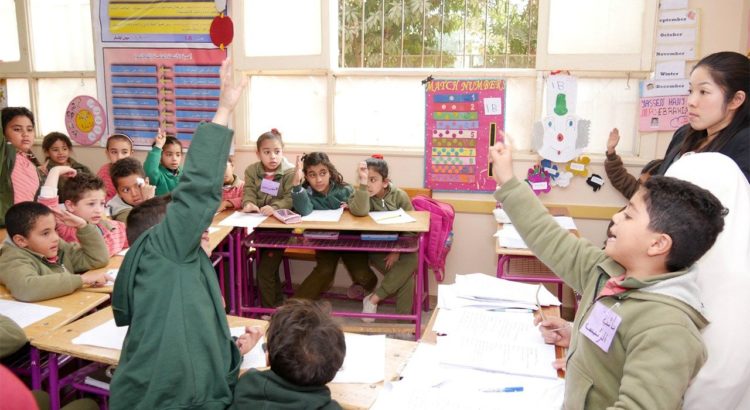
Egypt’s education authorities saw tokkatsu—activities outside of school subjects intended to foster children’s all-round development—in Japanese elementary schools as a way of nurturing well-rounded individuals in Egypt. Tokkatsu including class meetings were introduced on a trial basis in 12 public schools, and 35 brand-new Egypt-Japan Schools opened in September 2018. At these schools, tokkatsu are part of the school day, and the schools follow Japanese operational methods. Kakehashi Tarō, an assistant director in JICA’s Basic Education Group, says that 45 minutes per week of tokkatsuactivities were incorporated into the curriculum for first graders at all elementary schools in the country at the same time.

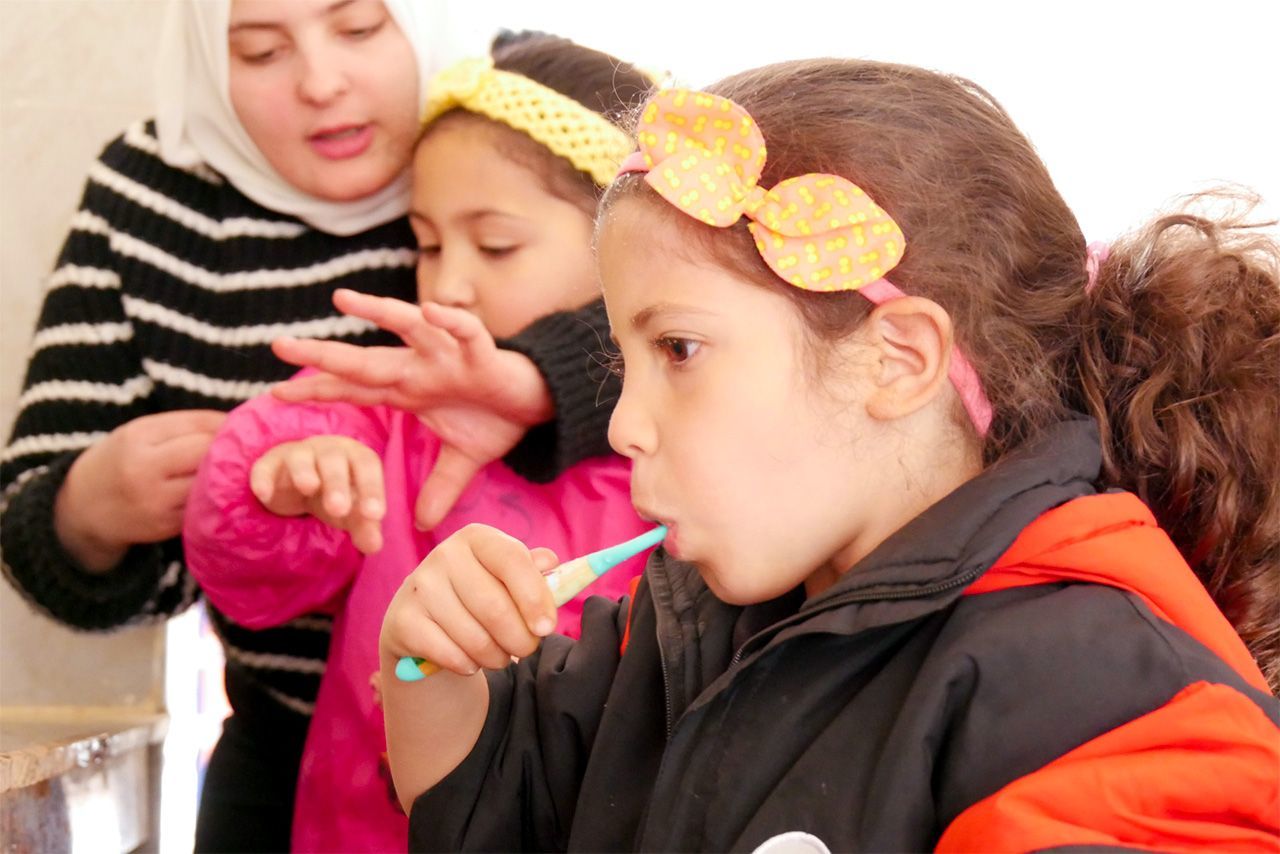
Tokkatsu includes a number of key activities. Class meetings, where pupils discuss and decide on topics for schoolwide events, help them learn to express their ideas and respect those of others. Guidance consists of helping pupils to acquire good habits like washing their hands and brushing their teeth, training them to give proper greetings, and encouraging them to be considerate of others. All pupils take the role of class leader of the day in turn; this teaches children leadership and gives them the experience of leading the class. Egypt’s education system has never included activities like tokkatsubefore, so this has been a novel experience.

Children brushing their teeth after lunch. This activity is part of overall guidance to promote good hygiene. More children are now participating voluntarily.

Unlike schools for Japanese children living abroad, EJS institutions are tokkatsu model public schools attended by local children. The schools have introduced practices common in Japan, such as study periods and classroom cleaning by pupils, intramural seminars where teachers observe each others’ classes and offer teaching hints, and school staff meetings.

Children Cleaning Classrooms: A Novel Experience

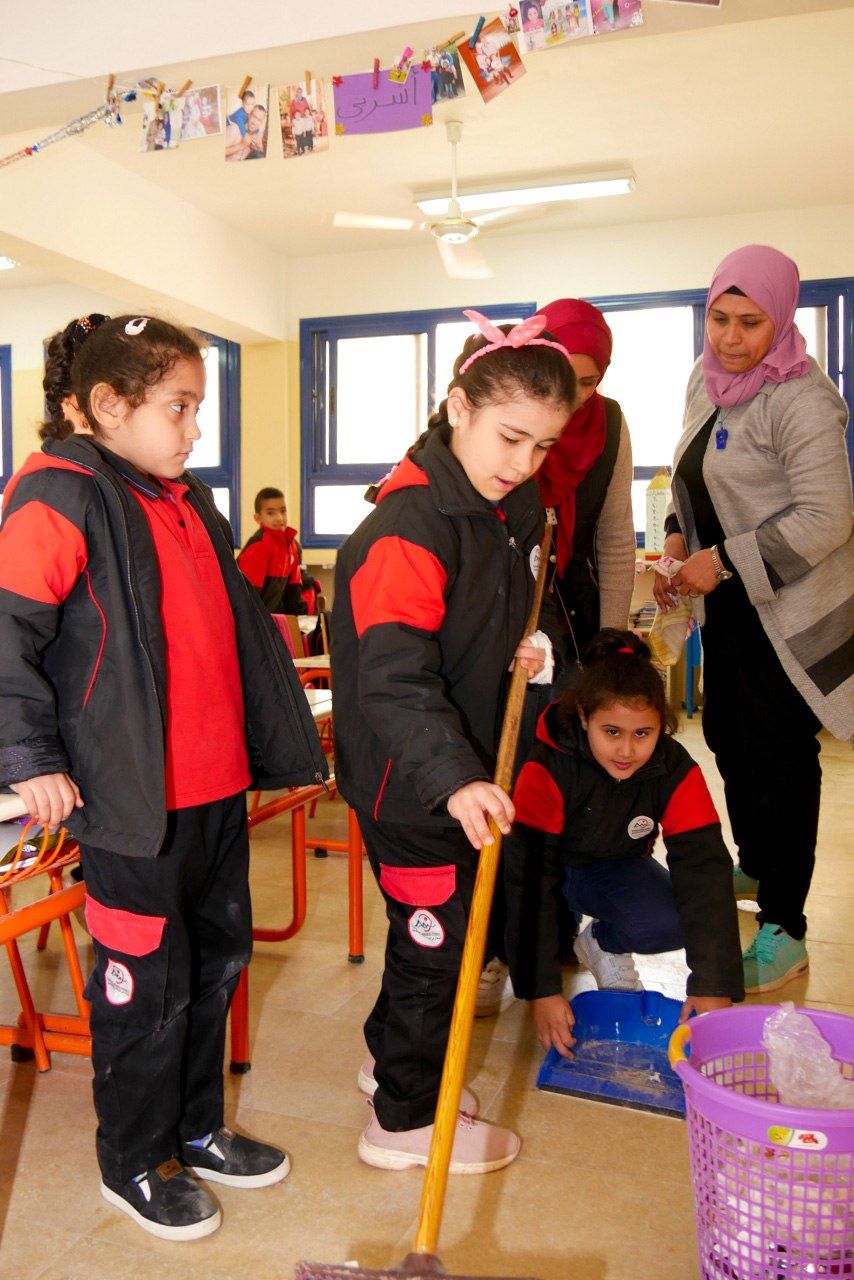
One tokkatsu practice that raised issues was cleaning. In Japanese schools, pupils clean their classrooms and other parts of their schools as a matter of course. In Egypt, though, cleaning is viewed as a menial task carried out by the lower classes, and children and their parents alike were shocked that they were expected to clean. Some pupils initially refused to participate, and parents also protested, saying they were not sending their children to an EJS to clean. But the idea of everyone working together to keep classrooms and other spaces clean is starting to take hold. Some pupils started cleaning, and others, seeing their friends doing so, eventually joined in. Everyone learned to keep their desks neat and tidy too.

Classroom cleaning. Some pupils disliked the idea at first, but now most participate in this activity meant to teach teamwork.

JICA education experts make the rounds of EJSs and continue to offer advice. Up to now, 42 people, including school principals and teachers in charge of introducing tokkatsu, have participated in month-long training sessions in Japan that include a first-hand look at Japanese schools in action. Over the next four years, JICA envisages bringing a total of about 700 teachers to Japan for similar training.

These schools have been in operation for barely a year now but are already showing results. For example, EJS attendees have shown solid progress in listening to what their classmates are saying and respecting their ideas. Tardiness is also less of a problem now, children are quarreling less at school, and more children are helping with chores at home.

Egypt-Japan Schools offer a pleasant environment: The buildings are new and class sizes, at around 35 to 40 pupils, are about half the size of classes at other public schools. Tuition, however, is expensive, costing the equivalent of ¥60,000 to ¥70,000 yearly, which is 5 to 10 times the tuition at regular schools. According to JICA’s Kakehashi, “There are no EJS entrance examinations, but we have asked the Egyptian authorities to ensure that the schools don’t turn into places just for children from high-income families. We hope the government will offer more scholarships and make it easier for those who want to enter EJS institutions to do so.”

Developing Human Resources

Ayman Ali Kamel, Egypt’s ambassador to Japan, says that through the EJS program, “Egypt hopes to learn from Japan’s experience to contribute to social progress and effect comprehensive reforms to the education system. We view classrooms and elementary schools as miniature societies, and we hope that these societies will inculcate a sense of morality in our children and help mold their personalities.”

Hany Helal, Egypt’s former minister of higher education and scientific research, who worked as a coordinator between Egypt and Japan to set up the EJEP and other projects, comments: “The most important issue for Egypt is developing high-quality human resources, which has been difficult to accomplish with our existing education system. We hope to improve our learning environment by introducing features of Japanese education like tokkatsu to nurture the upcoming generation driving our country’s future.”

Source of article: https://www.nippon.com/en/japan-topics/g00727/bringing-japanese-educational-approaches-to-egyptian-schools.html

Comparte este contenido:

Forman una cadena humana en Hong Kong en reclamo de más democracia

Redacción: Grupo La Provincia

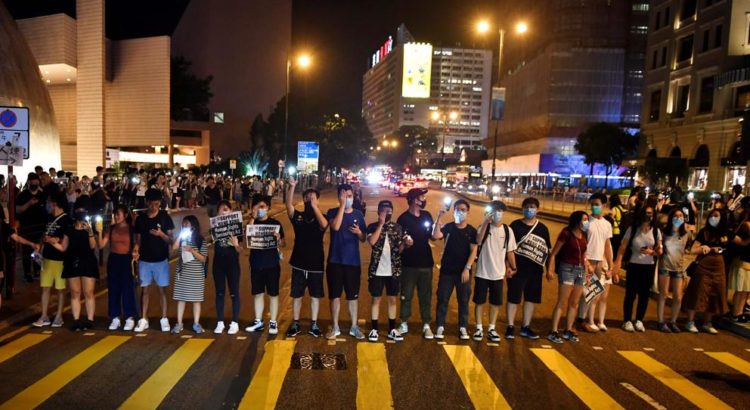
Decenas de miles de ciudadanos de Hong Kong formaron hoy una cadena humana alrededor de la ciudad en una nueva protesta contra el control chino, inspirada en una histórica manifestación que tuvo lugar hace tres décadas en las repúblicas bálticas en pro de la independencia de la Unión Soviética.

Algunos se tomaron de las manos, mientras otros alzaron sus teléfonos encendidos para formar una larga cadena de luces blancas que resaltaban en la ciudad en la que ya se había ocultado el sol.

Los organizadores esperaban que la cadena, que trazó el recorrido de tres líneas de metro, alcanzara una longitud de 40 kilómetros.

Esta es la última protesta del movimiento ciudadano que hace once semanas salió a la calle para reclamar en contra de un proyecto de extradición a China, que con el correr de los días y la brutalidad policial derivó en demandas de apertura democrática y un pedido de investigación independiente a los policías que reprimieron a los manifestantes.

La protesta fue inspirada en la Cadena Báltica, que tuvo lugar el 23 de agosto de 1989, mediante la cual dos millones de personas de Estonia, Letonia y Lituania se unieron y formaron una larga fila en rechazo a la ocupación soviética en la misma fecha hace 30 años.

En Hong Kong, una ciudad dénsamente poblada, los manifestantes debieron sortear algunos obstáculos para formar la cadena humana.

Con los semáforos funcionando normalmente, cada vez que se ponían en verde, los hongkoneses se veían obligados a separarse y volvían a juntarse cuando se ponía en rojo.

Algunas personas portaban carteles con mensajes en diferentes idiomas, como francés, japonés, alemán, italiano y letón, que reflejaban uno de los objetivos de la acción: llamar la atención internacional sobre la situación de Hong Kong.

«Espero que este sea un evento significativo que atraiga la atención internacional sobre los problemas que afrontamos. Necesitamos que el mundo sepa que estamos luchando por nuestra libertad y democracia frente a la represión», sostuvo Yu, una joven hotelera de 20 años, en declaraciones a la agencia de noticias EFE.

Ante la preocupación de que durante este fin de semana se produzcan nuevas protestas que afecten a sectores como el transporte, el Tribunal Superior de la urbe extendió hoy el mandamiento provisional que amplía las medidas de seguridad en el Aeropuerto Internacional, que fue cortado hace unos días por los manifestantes.

Además, la compañía que opera el metro, MTR Corporation avisó que cerrará estaciones si se producen peleas o actos violentos y advirtió que la Policía «podría tener que entrar en las estaciones para tomar las medidas adecuadas de aplicación de la ley cuando sea necesario».

Fuente: https://www.grupolaprovincia.com/internacionales/forman-una-cadena-humana-en-hong-kong-en-reclamo-de-mas-democracia-354777
Comparte este contenido:

China en Xinjiang: ¿campos de concentración o centros de educación?

Redacción: France 24

China anunció que la mayoría de musulmanes en sus «centros de capacitación» ya se han integrado a la sociedad, mientras la comunidad internacional señala que un millón de musulmanes de la región fueron detenidos en campos de concentración.

La presión internacional sobre China por su actuación en la región autónoma de Xinjiang aumentó luego de que en una rueda de prensa los responsables de Gobierno de la región del noroeste del país aseguraran que «la mayoría de las personas de los centros de la provincia ya regresaron a sus hogares». Una afirmación cuestionada por varios países y las familias de los retenidos.

Estos polémicos centros fueron puestos en marcha hace unos años por Beijing para «terminar con el extremismo islámico de la zona» y son llamados «centros de reeducación» o «capacitación» por el Gobierno central.

Sin embargo, múltiples organizaciones hicieron eco de que lo que se está llevando a cabo allí es una «detención arbitraria» de hasta un millón de musulmanes que residen en la zona.

La región de Xinjiang es la más extensa de China y se encuentra en el interior del continente asiático. Se estima que en ella viven unos 12 millones de personas de la etnia uigur y kazaja, ambas de religión musulmana. Sin embargo, en los últimos años se ha denunciado una persecución constante hacia las minorías orquestada por los chinos de etnia han, la mayoritaria del país asiático.

Shohrat Zakir, presidente de la región uigur de Xinjiang, durante una rueda de prensa en Pekin.
Shohrat Zakir, presidente de la región uigur de Xinjiang, durante una rueda de prensa en Pekin. Roman Pilipey / EFE

Para el vicepresidente de la región, Alken Tuniaz, «hay ciertos países y medios de comunicación que tienen motivos ocultos, que se encargaron de tergiversar lo correcto y lo incorrecto y calumniar el nombre de China».

Los funcionarios chinos se refieren a estas personas como «alumnos» y aseguran que en sus centros «se protegen plenamente las libertades individuales y religiosas de las personas» ya que mayoritariamente sirven «para reinsertar a la sociedad a estos individuos y ayudarles a encontrar trabajo».

Sin embargo, antiguos presos aseguraron que los centros se asemejan más a «cárceles» donde se vieron «obligados a renunciar a la fe y jurar lealtad al Partido Comunista de China».

Según estos testimonios de uigures y kazajos, en ningún momento se les informó sobre la causa de su detención aunque esta se puede producir por intentar viajar al extranjero, tratar de comunicarse con familiares de otros países o dejarse crecer la barba.

Xinjiang: una región hermética al exterior

La falta de información sobre la zona alimenta aún más las sospechas. Estados Unidos instó a China a que permita una visita del alto comisionado para los Derechos Humanos de las Naciones Unidas y realizar su trabajo sin impedimentos para evaluar la situación.

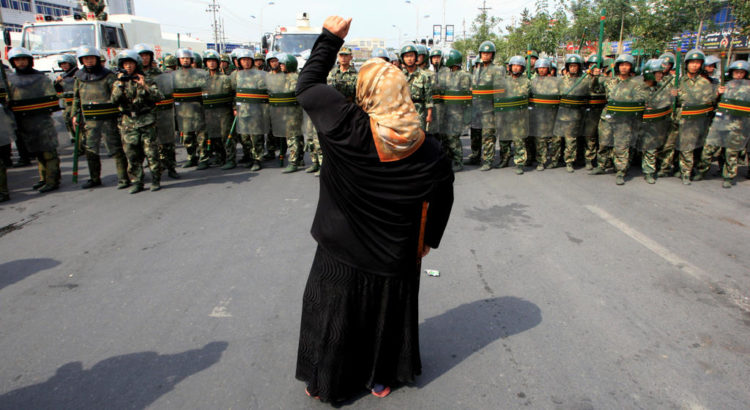
Una mujer sostiene a un policía chino mientras una multitud de lugareños se enfrentan a las fuerzas de seguridad en Urumqi, capital de Xinjiang, durante unas protestas en 2009.
Una mujer sostiene a un policía chino mientras una multitud de lugareños se enfrentan a las fuerzas de seguridad en Urumqi, capital de Xinjiang, durante unas protestas en 2009. David Gray / Reuters

El director regional de Amnistía Internacional en la zona aseguró que por culpa del hermetismo al exterior es muy probable que «China esté haciendo declaraciones engañosas y no verificables en un vano intento de calmar la preocupación mundial por las detenciones masivas de uigures y miembros de otras minorías étnicas».

En los últimos meses, los funcionarios chinos organizaron visitas altamente coreografiadas para periodistas y diplomáticos a algunas de las instalaciones, donde el Gobierno dice que los derechos de los «aprendices» están totalmente garantizados.

Fuente: https://www.france24.com/es/20190731-china-xinjiang-campos-concentracion-educacion

Comparte este contenido:

Bangladesh: Refugee Children Missing Out on Education and Viable Future

GENEVA – A study by the U.N. Children’s Fund finds more than half a million Rohingya refugee children in Bangladesh’s Cox’s Bazar are not learning the life skills they need to prepare them for the future or to protect them from present-day abuse and exploitation.

Hundreds of thousands of Rohingya children have been languishing in squalid, overcrowded refugee camps in Cox’s Bazar for two years — ever since a mass exodus of 745,000 refugees fleeing persecution and violence in Myanmar began.

The U.N. Children’s Fund reports more than a quarter million children up to age 14 are receiving a non-formal education, while more than 25,000 others are receiving none.

Author of the UNICEF report, Simon Ingram, said adolescents are most disadvantaged.

He said 97 percent of children aged 15 to 18 years are not attending any type of educational facility, putting them at particular risk.

“When you meet teenagers in the camps, they speak readily of the dangers they face, especially at night, when drug dealers operate, and gang fights are reported to be a regular occurrence,» he said.  «Cases of trafficking are also being reported, although they are hard to quantify.  The camps can be especially hazardous for girls and women.”

UNICEF and partners have provided learning to more than 190,000 Rohingya children in more than 2,000 centers.  These agencies are calling on the governments of Myanmar and Bangladesh to allow the use of their national educational resources to provide more structured learning for Rohingya children.

A Rohingya refugee girl sells vegetables in Kutupalong refugee camp, Bangladesh, Aug. 28, 2018.
FILE – A Rohingya refugee girl sells vegetables in Kutupalong refugee camp, Bangladesh, Aug. 28, 2018.

Ingram told VOA that UNICEF is appealing to Myanmar authorities to provide education to the children in the refugee camps.  Until now, he said, the children have been taught in the Burmese language by volunteer teachers from the refugee population.

“And, with the best will in the world, that is not the same as having a properly trained teacher, someone who has experience of delivering the Myanmar government’s own curriculum.  So, that is really what we are looking for and those are the conversations that are now ongoing with the government in Myanmar and we hope that we will receive a positive response to that,” said Ingram.

Ingram said it is critical for refugee children to be taught in Burmese as that is the language they will need if and when they return back to Myanmar.  Unfortunately, he notes Rohingya adolescents will continue to live in limbo until it is safe for them to go home.  He acknowledged that going home does not appear to be a realistic possibility for the foreseeable future.

Fuente de la Información: https://www.voanews.com/south-central-asia/rohingya-refugee-children-missing-out-education-and-viable-future

Comparte este contenido:

India pone en marcha programa gigante de formación de docentes

Asia/India/22 Agosto 2019/Fuente: Prensa Latina

El Ministerio de Desarrollo de los Recursos Humanos de la India anunció que puso en marcha el programa de formación de docentes más grande del mundo, se divulgó hoy en esta capital.
Se trata de la Iniciativa Nacional para el Avance Integral de Directores de Escuela y Maestros, indicó el diario The Hindu.

‘Necesitamos apoyar a nuestros maestros para que puedan fomentar el pensamiento crítico entre los estudiantes en lugar del aprendizaje de memoria’, dijo la secretaria de Educación Escolar Rina Ray durante la inauguración del proyecto.

Más de 42 millones de maestros y directores de escuelas públicas de educación primaria de todo el país se someterán en los próximos meses a un programa de formación de cinco días de duración para aprender métodos de enseñanza innovadores, el uso del arte y la tecnología en el aula y técnicas básicas de asesoramiento.

Fuente: https://www.prensa-latina.cu/index.php?o=rn&id=299921&SEO=india-pone-en-marcha-programa-gigante-de-formacion-de-docentes
Comparte este contenido:
Page 181 of 773
1 179 180 181 182 183 773