Page 400 of 772
1 398 399 400 401 402 772

Israel: Académicos se oponen a la segregación de la educación por sexos

Asia/Israel/19 Agosto 2017/Fuente: Sputniknews

Destacados académicos israelíes se oponen a que el Consejo para la Educación Superior se pronuncie a favor de una segregación de los estudiantes según el sexo, así como a la segregación de los profesores según el sexo de sus alumnos.

La denuncia se produce después de que el pasado mes de mayo el Consejo para la Educación Superior aprobara la ampliación de la segregación de estudiantes y de profesores según su sexo hasta el año 2022, informa el diario Haaretz.

Esta decisión permite que en algunos centros universitarios los estudiantes acudan a clase en función de su sexo, e incluso se regula el sexo de los profesores para que no se dé el caso de que una profesora enseñe a estudiantes judíos ultraortodoxos varones, en contra de las leyes religiosas de la modestia.

Según el abogado Hagai Kalai, uno de los firmantes que presentado la petición, en la actualidad hay en Israel una veintena de centros de enseñanza superior que segregan a los estudiantes según el género y todo indica que esta tendencia se ha incrementado paulatinamente en los últimos años.

La mayoría de los profesores afectados por la tendencia son mujeres académicas a las que no se les permite estudiar o enseñar a estudiantes ultraortodoxos varones.

Una mujer en niqab
© AP PHOTO/ CLAUDE PARIS

Según Kalai, cientos de alumnas mujeres son «sacrificadas» cada año debido a esta práctica en los institutos de educación superior de Israel.

La petición señala que mientras se dice que se quiere proceder a la integración de los estudiantes ultraortodoxos varones, «para quienes no es correcto escuchar la voz de una mujer», se está sacrificando a las alumnas y a las profesoras mujeres, y esto se ha convertido en una «posición aceptable» dentro del mundo académico.

La doctora Yofi Tirosh, profesora en la facultad de Derecho de la Universidad de Tel Aviv, advierte que «si esta tendencia no se detiene, en el plazo de diez años veremos que un gran porcentaje de estudiantes en Israel estudian en función de la segregación sexual».

La Universidad de Bersheba, en el sur de Israel, uno de los centros más progresistas del país, se opuso a crear cursos en los que los estudiantes estén separados según su sexo, aunque otros muchos centros se disponen a segregar a los alumnos.

Imagen: http://www.cciu.org.uy/uploads/20141024094057.jpg

Fuente: https://mundo.sputniknews.com/cultura/201708171071644283-israel-sexismo-universidad/

Comparte este contenido:

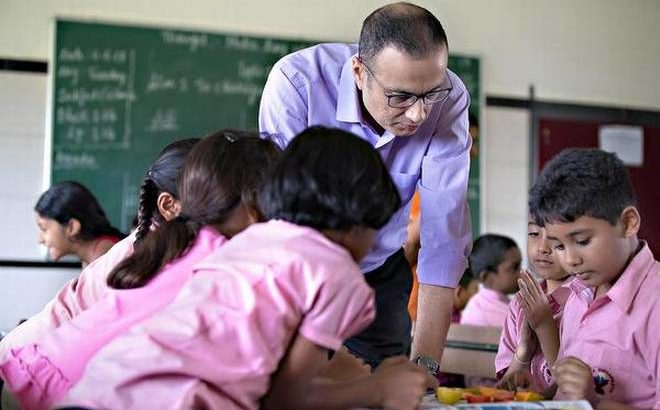
India: Changing the approach

Asia/India/Agosto del 2017/Noticias/http://www.thehindu.com/


School of Tomorrow, in discussing the present state of schools, proposed what needs to go into learning in the days to come

What would be your response if your child colours a mountain pink? Tendency, of course, is to correct the child right away. “Unfortunately only two out of hundred teachers try to know the reason behind such a colouring,” stated Priya Krishnan, CEO of Kids Learning and You. She was speaking as a panellist in ‘School of Tomorrow’ conference organised by XSEED, a company that works with elementary schools to improve learning abilities in children.

What’s the failure?

“What then are the loopholes of our current education system?” asked journalist Samar Haralnkar, moderator of the panel discussion. Rajat Chauhan, a doctor-turned-athlete, pointed out “Indian education system celebrates medal winners while in reality majority of the workforce is not from the tip of the excellence pyramid. Secondly,” he continued, “our degrees are over-rated. For instance, I train non-qualified people interested in sports medicine as physiotherapists. They are able to sense the body and learn the art quicker than physiotherapy graduates who have studied the subject for years. I need to first make them unlearn before teaching. Therefore, in my experience, marks and degrees need not be the hallmark of quality. But because they are given importance, in trying to win the race, students are losing the purpose of education.”

Praveen Sood, Additional Director General of Police, Bangalore responded: “Students do not know what and why they are studying. If I ask the motivation behind candidates’ applications to the police department, the general answer is: ‘…..as I am qualified’. This may be because students are not taught how to connect what they learn in schools to the outer world.”

On what is deficient in our schooling, Priya mentioned, “We concentrate too much on individual achievement when ten years from now, everything would depend upon ‘collaborative skills’ which our current generation lacks.”

Samar in his concluding remarks added, “The problem with our educational set-up also is that we are made to show respect more than required which many a times depletes the confidence in students.”

The way forward

“Education is one of those industries in which consumer who is receiving the service is different from the payer of the service. Whose interest to satisfy here becomes a question for a service provider talking purely in business terms. Often parents expect a stable and remunerative job from their children while the students might have a different line-up. I think, it is time for Educational Institutions to educate parents of the need to nurture their children’s dreams, rather than catering to their vivid ambitions in order to score admissions” suggested Priya.

Rajat stated, “Like it is crucial for a doctor to listen to his patients, it is equally essential that we listen to children patiently. Half the problems do not prop up if this is followed. And another aspect is that we worry too much about failure.” Rajat who calls himself a student of learning and failing, feels it is important that children learn how to fail. He claimed: “Coping with failure should become the assessing parameter instead of ranks.” Samar recalled at this point that he was once a twelfth standard failure and how his parents’ support made him pursue his education further.

Praveen noted, “For six decades, we never bothered about ‘passion’ in our discussions on education.” “That is why more and more white-collar jobs are getting converted into blue-collar ones in the country today,” remarked Priya on the state of job market in India. “Therefore,” Rajat stressed, “it should be passion which should guide us in our pursuit of education and not the prospect of employability.”

The conference by XSEED emphasised that connectivity, communication, collaboration, management of failure, life-skills, willingness to learn for life long, attitude and problem-solving abilities should be inculcated in school children. Passion oriented learning requires a different commitment on the teachers’ and parents’ side

Fuente:http://www.thehindu.com/education/schools/changing-the-approach/article19490319.ece

Fuente imagen:https://lh3.googleusercontent.com/AhWQdvJmr_t5dR217YJugbbF1lDPqrXwpTExImYP-XQAKr51s0cQOTAtWerteMvRzm6GkA=s85

Comparte este contenido:

México: Universitarios de Querétaro regresan de China con premio de robótica

América del Norte/México/Agosto del 2017/Noticias//www.20minutos.com.mx


Alumnos egresados de la Escuela de Bachilleres de la Universidad Autónoma de Querétaro (UAQ) obtuvieron el primer premio en la competencia internacional Robot Challenge 2017, que se desarrolló en Beijing, China, del 4 al 6 de agosto. Ximena Valles Novoa y Manuel Alejandro Cardoso Duarte, a su llegada, afirmaron que están orgullosos de poner en alto el nombre de la Universidad de Querétaro y de México. Miembros del Club MekLab, en la Facultad de Ingeniería de la UAQ, los jóvenes alumnos se enfrentaron a una competencia que reunió a representantes de 26 países, mil 976 participantes y mil 316 robots. “No sólo te enfrentas a equipos como en las competencias nacionales, sino que además tienes que hacer frente al idioma”, explicó Manuel Alejandro, quien agregó que a pesar de contar con un traductor, no fue un asunto sencillo enfrentarse a grupos principalmente asiáticos. Por su parte Ximena, quien actualmente estudia la Ingeniería en Nanotecnología de la Facultad de Ingeniería, explicó que gracias a los conocimientos que obtuvieron en el club, pudieron sortear los diferentes retos que representó el concurso de robótica y alzarse con el triunfo en esta edición. El robot con el que participaron está hecho con piezas de LEGO, es programado por computadora y aunque en las otras dos categorías en las que concursaron -sumo y seguidor de líneas- ya estaba previamente construido en el Unknown Mission, había que empezar desde cero un modelo que les indicaban en ese momento. Por su parte, Daniela Trejo Saavedra, asesora del equipo, señaló que es importante observar los logros de los jóvenes y poner a prueba sus habilidades, y que el trabajo que se hace durante cada semana se refleja con esta clase de resultados. Por lo pronto, los jóvenes ya se preparan para participar en la etapa nacional de la World Robot Olimpiad, que será el próximo 9 de septiembre en Monterrey, Nuevo León, y esperan tener buenos resultados dentro de este y otros certámenes.

Fuente  http://www.20minutos.com.mx/noticia/255792/0/universitarios-de-queretaro-regresan-de-china-con-premio-de-robotica/#xtor=AD-1&xts=513356

Fuente imagen https://lh3.googleusercontent.com/KKg_IdB4sXvTGT7f-D3NyrqRV4BT2xHK0JZpHWlkJip–6DXZNIE-umXJxI4cDow2zRh=s85e

Comparte este contenido:

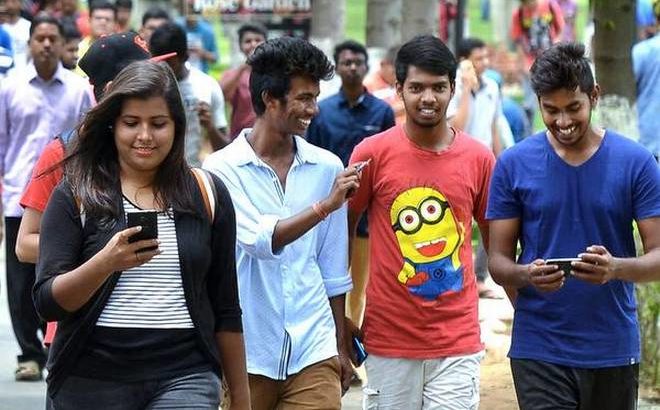
India: Patriotism: No token gestures now

Asia/India/Agosto del 2017/Noticias/http://www.thehindu.com/

That day does not mean the same any more, Independence Day couldn’t translate beyond a national holiday. Of late, there are no speeches by principals reinstating the significance of patriotism nor a customary loud speaker that plays Lata Mangeshkar’s Ae Mere Watan Ke Logon.

The memories are vivid in Anjana, a HCU student who has outgrown the Independence Day nostalgia in school. “The day had me appreciating the atmosphere around, taught me to value my roots, and my identity.” Over the years, the flag has turned into another symbol. Attending a flag-hoisting event is not important for her; Independence Day is like any other regular day. At a time when student unions are on the verge of losing their autonomy, she says patriotism also means the right to question. “It’s a phase where student politics, pointing out the flaws of a nation are considered anti-national. For me Independence Day means the opportunity to say that something is wrong as well.”

What has been a positive change in recent years is the interest of youngsters in politics and their strong stance on current affairs.

Students have tried to go beyond token initiatives and instead focus on field work to make a change – Street Cause, HYA, Youngistaan are among those who utilised social media to make an impact. Students efforts to help kirana stores, chai walas tide over demonetisation a few months ago made an impression. Saketh Kothamasu, a student of TISS-Hyderabad feels the Independence Day is a reminder of one’s social responsibility. “I make it a point to spend August 15 with events at several homes, help the needy know that we’re there for them. I pray for the people around me and continue to be the same through the year,” he adds.

Independence Day or not, Ananya Mullapudi is among students who prefer to keep things simple. She states, “In a world that’s not known to be kind always, I want to make it a better place with an act of kindness, even beyond August 15. The context of patriotism has definitely changed from the time I spent at school to now. It was compulsory and fun then, what’s important is to keep the good work going through the year. There is propaganda now, but I seriously don’t mind the order of a national anthem being played at a theatre; standing up for it comes instinctively to me.”

Fuente:

http://www.thehindu.com/education/colleges/patriotism-no-token-gestures-now/article19491436.ece

Fuente imagen:

https://lh3.googleusercontent.com/zJ7O74VzT1VT2pzUSklUh8Cw-Lgu10MpH2yQ0CNn1xxXhEN9EQENDRElMekV3dFB4KokeQ=s85

Comparte este contenido:

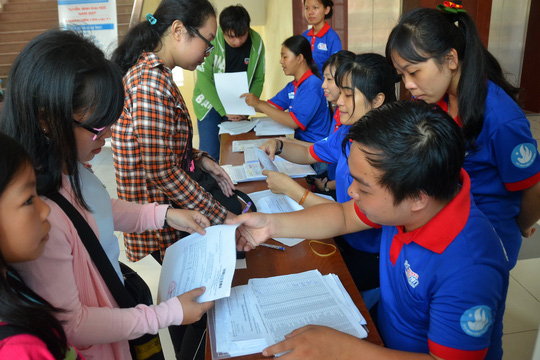
Vietnam: Universities face shortage of students

Many universities are facing a shortage of hundreds of students this academic year.

Asia/Vietnan/english.vietnamnet.vn

Resumen: El problema se planteó durante la conferencia de revisión para el año académico 2016-2017  realizada el 11 de agosto, y organizada por el Ministerio de Educación y Capacitación . Como los estudiantes pueden aplicar a varias instituciones antes de que se establezcan estándares de admisión, las universidades se enfrentan a un número inexacto de solicitudes cada año. Según el ministerio, desde el 8 de agosto, alrededor de 110.000 de los 352.000 estudiantes no se inscribieron en las universidades a las que solicitaron. Muchas universidades como la Universidad de Comunicaciones y Transporte, la Universidad Nacional de Ingeniería Civil y la Universidad de Recursos Hídricos carecen de 300 a 800 estudiantes en comparación con su cuota, a pesar de que el ministerio afirmó tener la situación bajo control. Las universidades habían llamado a cada estudiante pero todos querían inscribirse en otras universidades o tenían otros planes. Cuando se le preguntó, el ministro de Educación, Phung Xuan Nha, dijo: «No es demasiado difícil entender por qué 110.000 estudiantes no se inscribieron, las instituciones educativas deben competir y los estudiantes se sentirán más seguros para aplicar a las instituciones de calidad»


The problem was raised during the review conference for 2016-2017 academic year and this year held by the Ministry of Education and Training on August 11.

As students can apply to multiple institutions before admission standards are set, the universities face an inaccurate number of applications every year. According to the ministry, as of August 8, about 110,000 out of 352,000 students didn’t register for the universities they applied to.

Many universities such as the University of Communications and Transport, National University of Civil Engineering and Water Resources University lack from 300 to 800 students compared to their quota even though the ministry claimed to have the situation under control. The universities had called each student but they all wanted to register to other universities or had other plans.

When being asked, Minister of Education Phung Xuan Nha said, «It’s not too difficult to understand why 110,000 students didn’t register. Educational institutions need to compete. Students will feel more secure to apply to quality institutions.»

Nha warned the universities not to recruit too many students for popular courses even though there are few jobs in those sectors.

Hoang Minh Son, head of Hanoi University of Science and Technology said universities should invest more into consultancy, market research and communication departments.

Also at the meeting, many complained that the tests this year seemed to result in too many maximum scores which lead to impossibly high entrance scores at some universities.

Nha said the exam was transparent and there were still many average-scoring students. However, too many students applied to popular universities like Hanoi Medical University. Places at these universities were actually halved which made competition tougher. He promised the technology and framework would be improved next year.

Fuente; http://english.vietnamnet.vn/fms/education/184742/universities-face-shortage-of-students.html

Comparte este contenido:

Students outed by teachers, however well-intentioned, feel at risk in Japan

Japón/Agosto de 2017/Autor: Tomomi Miura/Fuente: The Japan Times

Resumen:  La salida de los estudiantes lesbianas, gays, bisexuales y transexuales por parte de los profesores está en auge en Japón, que todavía carece de un marco para entender las ramificaciones de la cuestión en términos del sistema educativo. Los profesores que simplemente piensan que están mostrando consideración a los estudiantes LGBT al informar a los padres y compañeros de clase de su orientación sexual o identidad de género puede estar causando un daño irrevocable, dicen los expertos. Divulgar públicamente tal información confidencial sin consentimiento desalienta a otros estudiantes LGBT de venir hacia adelante debido a los temores de discriminación y falta de confianza.

The outing of lesbian, gay, bisexual and transgender students by teachers is on the rise in Japan, which still lacks a framework for understanding the ramifications of the issue in terms of the educational system.

Teachers who may simply think they are showing consideration to LGBT students by informing parents and classmates of their sexual orientation or gender identity may in fact be causing irrevocable harm, experts say.

Publicly disclosing such confidential information without consent discourages other LGBT students from coming forward due to fears of discrimination and lack of trust.

While this has been a hot topic in the United States, Japan is in uncharted waters.

Minako “Minata” Hara, representative director of Kyosei Net, a Tokyo-based nonprofit organization also known as the All Japan Sexual Minorities Support Network, says the number of LGBT students seeking consultations for being outed at school is rising.

Hara recently consulted a student who had just been outed.

“Although the LGBT student only consulted with the teacher in charge, the parents found out immediately,” said Hara, adding that some parents have difficulty accepting their children’s changes and scold or rebuke them.

Some parents often blame themselves, thinking the issue stems from “a problem with the child’s upbringing,” she said.

In one case, a student with gender identity issues who was registered as male at birth told a supervising teacher she wanted to be included in the female group for a school trip. But before the student realized it, the teacher told her classmates about the situation, and some of their parents later complained to the school.

Kyosei Net has seen a rise in consultations related to outing and more incidents are reported each year.

“Most of the teachers are just acting because they want people around them to be aware. But since they lack a common understanding, they are often just playing it by ear,” said Hara.

A 2013 survey by the Education, Culture, Sports Science and Technology Ministry found that 606 students had consulted their school administrators because they felt uncomfortable with their sex registry at birth. But it is believed there are a considerable number who simply do not wish to come forward, meaning those who do represent only the tip of the iceberg.

In recent years, the government has started working to provide schools with proper knowledge about the LGBT community to prevent more incidents of outing.

Last year for the first time, the education ministry compiled and distributed a pamphlet nationwide on how teachers can support students who are sexual minorities.

Given the lack of an LGBT-inclusive curriculum, teacher training has started in Tokyo’s Bunkyo Ward, Kashiwa in Chiba Prefecture, and other places around the country.

“First of all, we have to make sure teachers aren’t the ones who are harming the students,” said the person in charge of training in Kashiwa.

But according to one elementary school teacher from the Tohoku region with experience teaching a pupil with LGBT issues, there is still a long way to go.

“There is still a huge awareness gap among teachers. The issue of how to deal with this is close at hand. We have to firmly grasp the knowledge and have support measures in place.”

There is also a fear that a delay in action is causing harm from a medical perspective.

The Japanese Society of Gender Identity Disorder and the Japanese Society of Psychiatry and Neurology both made requests in July to the education ministry to warn teachers that outing LGBT students could lead to depression and in some cases suicide.

Junichiro Ota, who heads JSPN’s panel on gender identity disorder, said the wishes of LGBT students should always be respected first and foremost. Students should also be taught about understanding sexual diversity, he said.

“The wishes of the persons involved must be respected and teachers must proceed cautiously in explaining this to others around them,” he said. “Regardless of whether there are LGBT students involved, we have to have education that deepens understanding of sexual diversity.”

Fuente: https://www.japantimes.co.jp/news/2017/08/17/national/social-issues/students-outed-teachers-however-well-intentioned-feel-risk-japan/#.WZX7YNLyi00

Comparte este contenido:

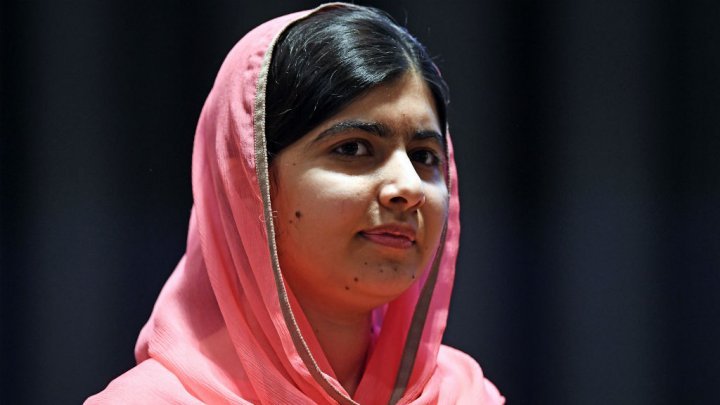
Pakistan’s Malala Yousafzai ‘excited’ to study at Oxford University

Pakistán/Agosto de 2017/Fuente: France 24

Resumen: Malala Yousafzai, la más joven ganadora del Premio Nobel de la Paz a los 17 años, dijo el jueves que estaba «emocionada» después de ganar un lugar para estudiar en la Universidad de Oxford. Yousafzai dijo que había sido aceptada en Oxford para estudiar Política, Filosofía y Economía. Se unió a miles de otros estudiantes en Gran Bretaña para descubrir dónde irán a la universidad después de obtener sus resultados finales de la escuela. Otros que han estudiado el mismo curso en Oxford, una de las mejores universidades del mundo, incluyen el ex primer ministro británico David Cameron y la ex primera ministra paquistaní Benazir Bhutto.

Malala Yousafzai, la más joven ganadora del Premio Nobel de la Paz a los 17 años, dijo el jueves que estaba «emocionada» después de ganar un lugar para estudiar en la Universidad de Oxford.

Yousafzai dijo que había sido aceptada en Oxford para estudiar Política, Filosofía y Economía. Se unió a miles de otros estudiantes en Gran Bretaña para descubrir dónde irán a la universidad después de obtener sus resultados finales de la escuela.

Otros que han estudiado el mismo curso en Oxford, una de las mejores universidades del mundo, incluyen el ex primer ministro británico David Cameron y la ex primera ministra paquistaní Benazir Bhutto.

After recovering from the Taliban attack, she has attended school in England.

Early figures showed a fall in the number of places allocated by universities, although the proportion of students scoring top grades rose.

University admissions service UCAS said on its website the decrease in the number of university acceptances had been driven by a fall in acceptances from older students and fewer students from the European Union.

UCAS said 416,310 people had been accepted to degree courses on A-level results day, down two percent compared to 2016. But over 1 in 4 of the grades was an A or A*, the best ratings, up 0.5 percentage points on last year.

Fuente: http://www.france24.com/en/20170817-pakistan-uk-malala-yousafzai-excited-study-oxford-university-education

Comparte este contenido:
Page 400 of 772
1 398 399 400 401 402 772