Page 736 of 773
1 734 735 736 737 738 773

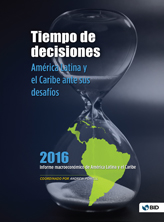
Extra: mañana BID presenta Informe Macroeconómico de América Latina y el Caribe 2016 Tiempo de decisiones: América Latina y el Caribe ante sus desafíos

Fuente BID / 13 de Abril de 2016

El auge de las materias primas que en un determinado momento benefició las economías de la región ha acabado, y los países tienen menos espacio fiscal para emprender políticas contracíclicas que durante la crisis financiera global. El Informe Macroeconómico de América Latina y el Caribe de este año aborda los retos a los que se enfrenta la región en una nueva era económica y ofrece orientación sobre como los responsables de las políticas pueden reducir los riesgos de largo plazo en un período de menor crecimiento.

Informe disponible en este enlace: Informe Macro económico de ALC

Comparte este contenido:

IBE-UNESCO engages in policy dialogue to involve Cambodian girls and women in STEM education

Fuente IBE / 13 de Abril de 2016

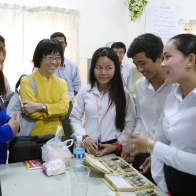
The IBE coordinated a policy dialogue workshop to foster female participation in STEM education and to discuss tangible ways to mainstream gender-sensitive STEM education into the syllabi, learning and materials, teacher education and professional development.

This activity took place beginning of April in Phnom Penh, Cambodia, and was co-organized by the Ministry of Education, Youth and Sport of the Kingdom of Cambodia (MoEYS) and UNESCO with the support of the Ministry of Education of Malaysia and within the framework of Malaysia-UNESCO cooperation project “Strengthening STEM Curricula for Girls in Africa and Asia and the Pacific-Phase I” funded by Malaysia Funds-in-Trust.

Recently, the MoEYS has approved the first STEM (science, technology, engineering and mathematics) policy in the country taking into account the developments of the IBE-Malaysia project. The Ministry has identified STEM education as one of its priority areas in order to promote the interest for STEM among children and youth, especially girls, as well as to improve STEM teaching and learning strategies and resources.

The workshop began with the opening remark of the Secretary of State of the MoEYS, H.E. Mr Im Koch, and the Director of the UNESCO Office in Phnom Penh, Ms Anne Lemaistre. Participants shared their knowledge and experience through engaging presentations followed by productive roundtable discussions involving various actors across the different levels of the Cambodian MoEYS and other ministerial officials (Ministry of Labor, Technical and Vocational Training, Commerce, Agriculture, Forestry and Fisheries, Information and Technology, Women’s Affairs, etc.), academic sector, STEM Commission, Japanese and Korean cooperation entities, the British Council, and civil society. Three priority areas were agreed upon to give effect to the new STEM policy. These are: (i) infuse STEM philosophy and implement the STEM policy into the new curriculum framework with a gender perspective; (ii) repertoire of teaching and learning resources (printed and online) to support the development of STEM nationwide; and (iii) raising public awareness for the enhancing girl’s involvement.

During the last day of the workshop a meeting was held with the Minister of MoEYS, H.E. Mr Hang Chuon Naron, and H.E. Mr Im Koch along with the Malaysian counterparts and the Director of UNESCO Office in Phnom Penh to further discuss the implementation of the STEM policy. One of the actions planned is to organize a capacity-development workshop for the core team in charge of STEM education within the new curriculum framework. One big challenge lies in infusing STEM philosophy into the curriculum. The IBE will continue to provide technical assistance to mainstream gender-sensitive STEM education in Cambodia.

Comparte este contenido:

Un informe sobre Pearson da la señal de alarma respecto a la privatización en la educación

Un informe publicado por la Internacional de la Educación ha advertido acerca del impacto de la mayor empresa de educación privada del mundo, explicando en detalle la amenaza que esta multinacional supone para la calidad de la educación y el acceso a la misma, al perseguir únicamente sus intereses económicos.

En una carta dirigida a John Fallon, Director Ejecutivo de Pearson, que precede a un informe de seis páginas sobre las prácticas de la empresa, la IE expresa su preocupación por el peligroso impacto que Pearson está teniendoen el sector. El documento hace hincapié en que, si bien la misión que declara tener Pearson es “empoderar a las personas para que puedan progresar en la vida a través del aprendizaje”, su estrategia empresarial se basa sin embargo en la idea de que la educación no es un bien público ni un derecho humano sino más bien un producto que puede comprarse y venderse.
El «Informe de los actores implicados» relaciona la privatización de la educación con un cambio en el compromiso de los Gobiernos nacionales “hacia soluciones mercantilizadas para resolver los problemas de la educación”. Los defensores de esta tendencia mundial afirman buscar una mayor eficiencia y eficacia en la educación. Pero al involucrarse en el sector educativo como uno de sus principales actores, Pearson “espera en última instancia obtener un rendimiento significativo de los 5 billones USD que se invierten cada año en educación a nivel mundial”, subraya el informe.
El informe y la carta ponen en tela de juicio las alegaciones de Pearson – según las cuales está contribuyendo a mejorar los resultados académicos de los estudiantes y el acceso a una educación de calidad – por el hecho de ser una “empresa rentable y generadora de efectivo”. El informe sostiene además que, en realidad, la actual estrategia empresarial de Pearson está socavando el mismísimo tejido de la educación pública.
En su carta al Director Ejecutivo de Pearson, Fred van Leeuwen, Secretario General de la IE, escribe que “Pearson necesita la convicción para defender e invertir verdaderamente en sus alegaciones de ser una empresa socialmente responsable y comprometida con el empoderamiento de las personas a través del aprendizaje”. De esta forma “promovería los principios de equidad y acceso educativo para todos los jóvenes y protegería los derechos democráticos de los docentes y de los estudiantes”.
Pearson PLC es la mayor empresa de educación del mundo (o edubusiness), con operaciones en más de 70 países. Sus servicios abarcan desde la provisión de materiales didácticos, evaluaciones y servicios relacionados con la educación a Gobiernos, escuelas, docentes, padres y alumnos, hasta la creación de escuelas privadas con ánimo de lucro, sobre todo en los países del Sur.
Descargar aquí el Informe de las partes interesadas de Pearson y la correspondencia relacionada enviada a John Fallon, Director Ejecutivo de Pearson.
Comparte este contenido:

Planning for crisis – what can education systems do to prevent and prepare?

Fuente IIPE – Buenos Aires/ 13 de Abril de 2016

Hazards, either natural or human-made, do not necessarily lead to crisis. However, when an education system is impacted by a conflict or natural disaster, there are measures that can be put in place to mitigate risks and increase efficiency and equity.

Ministries of education (MoE) are increasingly aware of this and countries including South Sudan, Uganda, Mali, Burkina Faso and others have started planning for crises before they occur.

WHAT DOES CRISIS-SENSITIVE PLANNING ENTAIL?

Crisis-sensitive planning begins with a risk analysis, or as some would call it, a conflict and disaster risk analysis. There are many tools out there to support the development of such an analysis, including the Rapid Education and Risk Analysis(RERA), UNESCO-IIEP’s and PEIC’s guidance and more. These analyses then feed into policy and plan development and implementation. And in order for risk reduction strategies to be effectively implemented, they need to be costed and funded.

What’s important to remember is that if the ultimate goal is to develop national education systems that are crisis-sensitive and contribute to social cohesion and peacebuilding, crisis-sensitive planning needs to be linked with government systems and processes. How can we do this?

  • By ensuring government ownership when developing a specific conflict and disaster risk reduction analysis. Ideally such an analysis should be done around the time when the education sector analysis, or ESA, is in development. The central idea is that government officials in a given country lead the process of developing the methodology, implementing the data collection and preparing the analysis. Ministries in countries including Burkina Faso, Mali, and currently in South Sudan have been pioneers in this area with support from partners such as UNESCO-IIEP, UNICEF, USAID, PEIC, Search for Common Ground, and others.
  • By using data and data collection tools that belong to governments. In Mali, for example, the Ministry of Education, together with devlopment partners, developed a questionnaire  for a sampling survey to look at the effects of various risks on the system. In South Sudan, official data from the Education Management Information System (EMIS) was merged with OCHA’s vulnerability index, to highlight how the vulnerabilities related to conflict, displacement, food insecurity and epidemics affect the education system.
  • By bringing together government officials and humanitarian partners (or those who have conducted the analysis) during the planning process. Ideally, as mentioned earlier, risk analyses should take place as part and parcel of the broader education sector analysis, in order to identify risk reduction strategies. These strategies should be seen as an opportunity for partners –whether humanitarian or development partners –to work together and invest in long-term systems’ building. This may be a challenge in terms of timing, for example, if a country is in the middle of implementing a five-year plan. However, there are opportunities to integrate risk analyses during mid-term or annual reviews. In South Sudan, the education cluster, UNHCR, and local humanitarian NGOs were all involved in the crisis-sensitive ESA that has recently beenfinalized. The expectation is that they will now all be involved in developing the next education sector plan and that innovative decisions to further align humanitarian and development programmes will be made.
Comparte este contenido:

Expert meeting on quality assurance, accreditation and academic corruption

Fuente IIPE-Buenos Aires/ 13 de Abril de 2016

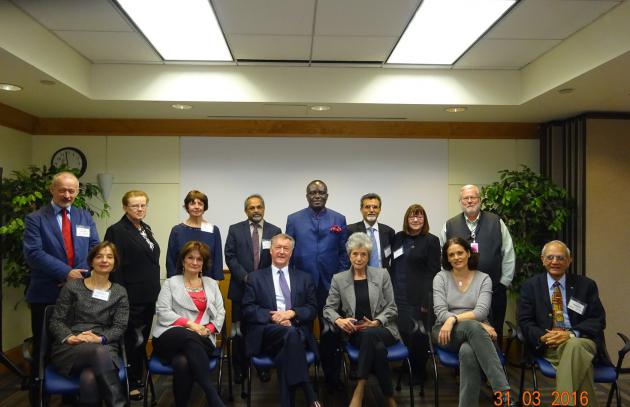
The Council for Higher Education Accreditation/International Quality Group(CHEA/CIQG) and the International Institute for Educational Planning (IIEP) of the United Nations Educational, Scientific and Cultural Organization (UNESCO) hosted a two-day expert meeting to address quality assurance, accreditation and the role they play in combatting academic corruption. The meeting built on IIEP’s long-standing research experience in two areas: ethics and corruption in education and quality assurance and governance in higher education.

The meeting, held March 30-31 in Washington, DC, brought together representatives from accrediting and quality assurance (QA) bodies, colleges and universities and higher education associations in Asia, Africa, Europe and North America. Co-chairs of the meeting were Sir John Daniel, Chair of the United World Colleges International Board, and Muriel Poisson, Head of the Research and Development Team, IIEP-UNESCO. IIEP was also represented by Michaela Martin, Programme Specialist who focuses on higher education policy-making, planning and management.

For the purposes of the meeting, “academic corruption” was defined as any prescribed action in connection with admissions, examinations or degree awarding that attempts to gain unfair advantage, including cheating, plagiarism, falsification of research, degree mills and accreditation mills.

Topics addressed included the background and history of academic corruption in higher education; an overview of quality assurance and its current role in addressing and combating academic corruption; and key questions to be considered in developing an advisory on the issue of academic corruption, including 1) whether existing codes of good practice are sufficient to make QA agencies resilient against corruption, 2) how QA agencies and higher education institutions can best work together to prevent academic corruption and 3) whether QA agencies should work together with other stakeholders (government, student associations, oversight authorities and society) to prevent academic corporation.

“Corruption in higher education is an incredibly serious problem that many stakeholders are reluctant to face,” said Sir John Daniel. “We hope that our work will be a wake-up call.”

“Academic corruption in higher education implies distorted selection processes, the overall devaluation of degrees and underqualified professionals. It also has detrimental effects on ethics and values,” Muriel Poisson noted. “To restore trust, a comprehensive set of strategies needs to be developed. Making quality assurance ‘integrity sensitive’ is one of them.”

“While some quality assurance agencies use already certain integrity standards, they can be more explicit on certain practices through which Higher Education Institutions could address corruption,” said Michaela Martin.

A joint CHEA/IIEP-UNESCO advisory statement on quality assurance, accreditation and academic corruption will be developed in the next several months.

“We are delighted to have been co-host of this important and productive expert meeting,” said CHEA President Judith Eaton. “Providing an international forum to address issues related to quality assurance internationally is an important focus for CIQG.”
Comparte este contenido:

Afganistán: La nueva niña en Plaza Sésamo que empodera a la mujer

Afganistán/11 de abril de 2016/Fucsia

descarga (1)

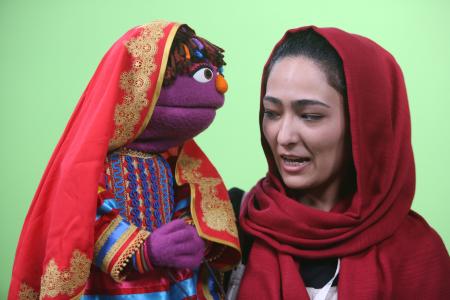
Zari es el nuevo miembro del elenco de Plaza Sésamo. Esta niña afgana de 6 años, cuyo nombre significa ‘brillante‘, hizo su debut en Baghch-e-Simsim (Jardín Sésamo) la versión afgana del reconocido programa educativo infantil.

La misión de Zari no es nada fácil: promover el empoderamiento femenino y los derechos de la mujer en un país que muchas veces ha sido considerado uno de los peores para el sexo femenino. En su segmento, esta niña hablará con los televidentes, niños afganos y expertos de todo el país.

Debutar con una niña dulce y confiada es la oportunidad perfecta para incluir a niños y niñas en mensajes sobre el empoderamiento femenino y la aceptación de la diferencia«, declaró en un comunicado de prensa de Plaza Sésamo  Sherrie Westin, vicepresidente ejecutiva de impacto global y filantropía del programa.

Westin añadió al Huffington Post, que temporadas anteriores del programa les han abierto las mentes a los padres afganos sobre el valor de educar a sus hijas, según la investigación que han realizado en la serie.

Actualmente en Afganistán hay cinco millones de niños menores de 5 años y una tercera parte de ellos no está en el colegio. ‘Jardín Sésamo‘ es financiado en ese país por el departamento de Estado estadounidense. Un 81 por ciento de los niños entre los 3 y 7 años lo ha visto alguna vez en su vida.

«‘Jardín Sésamo‘ ha logrado más por educar y entretener que cualquier otro programa en Afganistán», declaró en un comunicado Saad Mohseni, jefe de Moby Group, productora del programa en ese país.

Lo emocionante de Zari es que es un modelo para las niñas y  les dice que es maravilloso ir al colegio y está bien soñar con tener una carrera», añadió Westin a Reuters.

Fuente: http://www.fucsia.co/personajes/internacionales/articulo/zari-nina-de-plaza-sesamo-que-promueve-los-derechos-de-la-mujer/70892

Comparte este contenido:

Microsoft Japón utilizará Minecraft y la impresión 3D para enseñar programación

nuevo programa educativo junto al Ministerio de Asuntos Internos y Comunicaciones de Japón

Japón/11 de abril de 2016/

Microsoft-japon (1)

Microsoft Japón ha desarrollado un nuevo programa educativo junto al Ministerio de Asuntos Internos y Comunicaciones de Japón, un curioso programa de educación que ayudará a que los jóvenes japoneses aprendan programación gracias al uso de Minecraft y de la impresión 3D.

El programa educativo propuesto por Microsoft Japón consta de 10 sesiones de 45 minutos cada una en la que el niño crea una estructura con Minecraft en su versión educativa y tras la finalización del proyecto, el joven tiene que imprimirlo en una impresora 3D. Este método hará que el niño no sólo aprenda programación sino que también tenga conocimientos básicos de construcción

Fuente: http://www.hwlibre.com/microsoft-japon-utilizara-minecraft-y-la-impresion-3d-para-ensenar-programacion/


Comparte este contenido:
Page 736 of 773
1 734 735 736 737 738 773