México/12 junio 2017/Fuente: sinembargo
La “verdadera revolución educativa” que traerá el Nuevo Modelo Educativo, como lo definió el Secretario de Educación Pública Aurelio Nuño Mayer, parece no incluir a la educación rural.
Académicos y expertos criticaron que este nuevo modelo sigue sin contemplar de manera correcta la diversidad del país y opta por incluir a todos los grupos en uno solo, generando un “currículum único”.
Según el Inegi, el 26.4 por ciento (10.3 millones) de los niños y adolescentes de menos de 17 años del país viven en zonas rurales. Sin embargo, los expertos señalan que en el proyecto impulsado por el Gobierno federal los habitantes del campo serán capacitados para vivir y desarrollarse en una sociedad globalizada.
“Hay cada vez más educación para las zonas rurales, pero cada vez menos educación rural”, sostiene Benjamín Berlanga Gallardo, profesor de la Universidad Campesina Indígena en Red de Puebla.
Benjamín Berlanga Gallardo, profesor de la Universidad Campesina Indígena en Red de Puebla, aseguró que actualmente debe retomarse la educación rural, entendiéndola como la vía para recuperar lo campesino y la idea de serlo. Sin embargo, este concepto se enfrenta a la instauración del Nuevo Sistema Educativo.
Para el académico, la educación rural se trata de un proyecto de resistencia, aunado o ligado a las luchas campesinas y de los indígenas.
Criticó que el Nuevo Modelo federal no toma en cuenta a la educación rural, porque desde la década de los años 80 se cree que las vidas de los campesinos son vidas que no merecen la pena ser lloradas o que socialmente no merecen la pena vivirse; que a esa propuesta le hace falta definir desde qué valores, desde qué idea de ser sujeto, desde qué idea de ser ser humano se desarrollará.
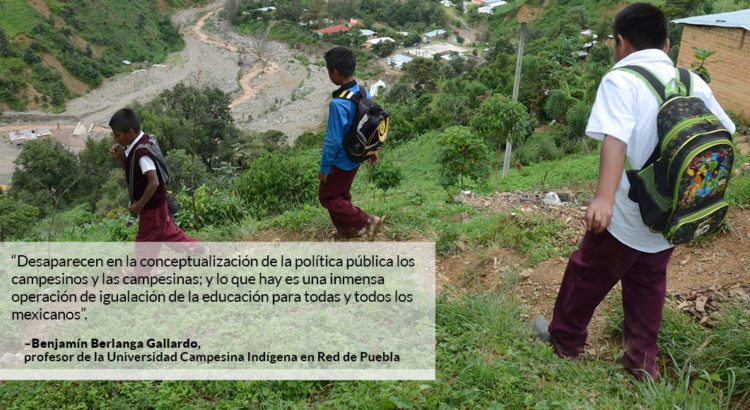
“Desaparecen en la conceptualización de la política pública los campesinos y las campesinas; y lo que hay es una inmensa operación de igualación de la educación para todas y todos los mexicanos”, dijo.
Y lanzó una paradoja: “hay cada vez más educación para las zonas rurales, pero cada vez menos educación rural”. Esto porque hay cada vez más cobertura educativa en las zonas rurales, tanto en educación básica como en bachillerato, pero hay una renuncia explícita a la educación rural, de un “ser sujeto” desde lo campesino y desde lo rural.
Pidió dejar de pensar la educación rural como un problema de cobertura, de infraestructura y de rezago y verla como una educación que tenga que ver con lo campesino y aseguró que una oferta de educación para este sector no la habría hasta que no se construya otro tipo de país, en el que la vida de los habitantes del campo cuente.
De acuerdo con los último datos proporcionados por el Instituto Nacional de Estadística y Geografía (Inegi), en México hay 39.2 millones de niños, niñas y adolescentes, de estos el 26.4 por ciento (10.3 millones) viven en zonas rurales.
Mientras que de casi 4 millones de niñas, niños y adolescentes indígenas (3-17 años), poco más de 1.8 millones hablan alguna lengua indígena, de los cuales más de 1.4 millones habitan en localidades rurales, aproximadamente 312 mil habitan en localidades semiurbanas, y más de 100 mil, en localidades urbanas; todos ellos con derecho a recibir educación en su lengua.
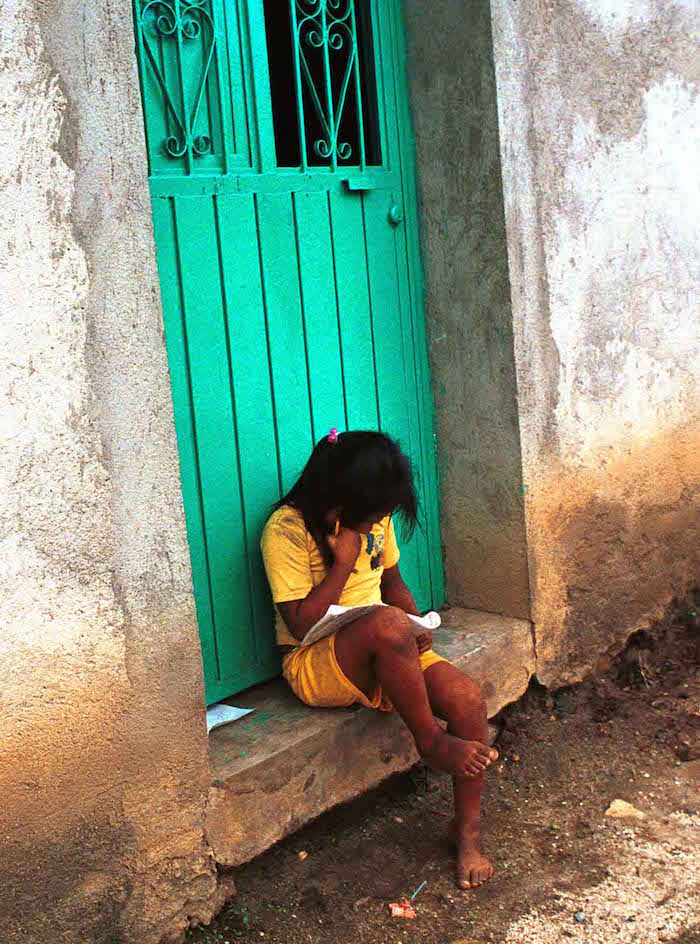
Una niña de la comunidad de Maruata, aprovecha la tarde para estudiar. Ella estudia en una de zonas marginadas de la Sierra Costa de Michoacan. Foto: Cuartoscuro
Lesvia Rosas Carrasco, investigadora independiente y miembro de la Red de Investigación en Educación Rural, aseguró que los altos niveles de desigualdad que hay en el país se reflejan en el sistema educativo, cuando es la educación la que debe contribuir a revertir la desigualdad.
Criticó también que el Nuevo Modelo Educativo trata de manera genérica a la población rural, indígena, afrodescendiente y migrante y los engloba en una categoría de grupos marginados y vulnerables.
El problema, dijo la investigadora, es que ese método “acumula déficits marcados que propician el abandono escolar, que tienen menos oportunidades de desarrollar al máximo su potencial”.
El Nuevo Modelo, sostuvo, se desarrollaría bajo una idea de globalización y por lo tanto, quienes estudien ahí están capacitados para vivir y desarrollarse sólo en ese tipo de sociedad.
“Posiblemente, debido a ese enfoque, es que en el documento no se hace una distinción entre el medio rural y el medio urbano, no hay una definición de población rural o de lo rural, de las condiciones de vida y las características de los niños y jóvenes que habitan esas zonas, de lo que para ellos significa la escuela a la que actualmente asisten, del papel que le corresponde desempeñar a la educación en esas zonas o para esa población, y tampoco se defienda escuela rural”.
Este modelo, dijo, al igual que el que fue elaborado hace 100 años sigue sin poder reflejar la diversidad que caracteriza al país. Aunque en el documento se reconoce la diversidad de escuelas (y de manera reiterada) no hay un capítulo en el que se analice la situación de cada una de ellas.
“Si se piensa en la población rural como deficitaria; y en las escuelas rurales, multigrado, indígenas, de jornaleros agrícolas, para migrantes, telesecundarias y telebachillerato también como deficitarias ante otra modalidad educativa, difícilmente por muchos apoyos que se les hagan llegar lograrán desarrollar todo su potencial, que es uno de los propósitos del Nuevo Modelo Educativo”, señaló.
El documento luego abunda en el tema de la cobertura, que en efecto, ha aumentado, aunque el reto ahora está en la educación media superior, superior y preescolar, particularmente en los niveles de ingreso más bajos y los grupos tradicionalmente excluidos.
El documento agrega que “las desigualdades se manifiestan en el propio aprovechamiento de las niñas, niños y jóvenes, así como en la discriminación que viven cotidianamente al interior del sistema educativo. De manera crónica, las personas que provienen de los estratos de menores ingresos, los estudiantes de turnos vespertinos, los hablantes de lenguas indígenas, los habitantes urbanos que residen en zonas marginadas, quienes forman parte de comunidades indígenas, los residentes de las localidades rurales y las poblaciones de regiones menos desarrolladas, obtienen resultados más bajos, acumulan déficits marcados que propician el abandono escolar y con ello tienen menos posibilidades de desarrollar al máximo su potencial”.
Se propone una educación de calidad para todos, pero en el apartado que corresponde a la atención de población indígena y a hijos de jornales agrícolas migrantes se aborda sobre la educación intercultural y bilingüe y la creación de Consejos Escolares de Participación Social.
El objetivo del plan es garantizar el acceso a una educación de calidad a todos los niños y jóvenes; que se aborte el modelo de memorizar y se abra paso al inglés, a aprender a aprender, que es una propuesta que la Universidad Nacional Autónoma de México (UNAM) implementó en su bachillerato desde 1971.




 Users Today : 141
 Total Users : 35509888
 Views Today : 179
 Total views : 3637717