Noticia
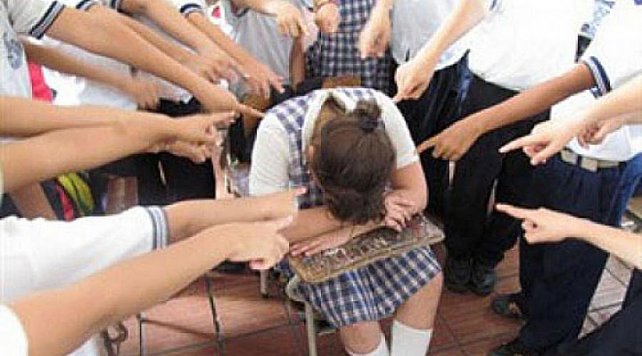
Vietnam has school education and child labour problems akin to India
Vietnam/Abril de 2017/Fuente: Merinews
Resumen: En Vietnam, los problemas educativos son muy semejantes a los de la India. Además de la calidad insatisfactoria de la educación en las pequeñas aldeas y en las viviendas interiores, los problemas del trabajo infantil y de la trata de seres humanos también son desenfrenados. Aunque algunos proyectos para mejorar la calidad de la educación con ayuda externa están en marcha, pero la mejora se informa que es lento. Sin embargo, los informes dicen que los niveles de lectura y los hábitos han disminuido a lo largo de los años como el caso en muchos países en desarrollo. «La diversidad étnica y cultural del país no se ha vinculado a los materiales curriculares ni a las prácticas en el aula, y los métodos de instrucción en el aula no son adecuados para los niños, lo que lleva a que los niños abandonen las escuelas y se conviertan en trabajo infantil potencial.
Ethnic and cultural diversity of the country has not been linked to the curricular materials and classroom practices. Also, methods of classroom instruction at the school level are not child friendly leading to children dropping out of schools and becoming potential child labour. However, the higher education institutions are doing well. The new problem is the standard of English and now the coaching institutes are doing a good business,» said the front office manager of a local hotel in Ha Long which is finding difficult to get workers and tourist guides well versed in English.
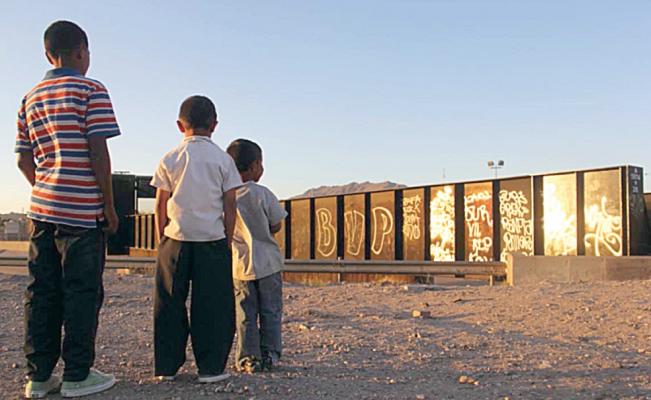
Pointing towards a news story in the paper of April 20, he said that acute child labour problem of highland province of Dak Lak wherein a good number of children in the age group of 10 to 15 years work in garment factories has been compounding. He further said that many out of school girls from poor families have become vulnerable to social evils like trafficking, sexual abuse and prostitution.
In India too, the problem of out of school children and child labour have not been solved despite the Right to Education Act, I told him when he queried. He agreed that the problem is not with children but implementing the schemes of the state and enforcing the Acts and the rules.
Fuente: http://www.merinews.com/article/vietnam-has-school-education-and-child-labour-problems-akin-to-india/15924577.shtml
FAO Infografía: Abordando la migración joven rural por situaciones de vulnerabilidad
Abril de 2017/Fuente: FAO
Los migrantes son un recurso potencial para la agricultura y el desarrollo rural, así como para la reducción de la pobreza en las zonas de origen. Sin embargo, la migración de la juventud rural por situaciones de vulnerabilidad puede resultar en la pérdida de la parte más vital y dinámica de la fuerza de trabajo, con consecuencias negativas para la productividad agrícola. Esta infografía describe las causas profundas de la migración de los jóvenes rurales por situaciones de vulnerabilidad y explica cómo la migración y las remesas pueden contribuir a desarrollo rural, reducción de la pobreza y seguridad alimentaria.

Fuente: http://www.fao.org/resources/infographics/infographics-details/es/c/428636/
Write your name to fund education for Syrian refugee kids
Siria/Abril de 2017/Fuente: Khaleej Times
Resumen: Una campaña de donación de dos días para la iniciativa «Escribimos para niños sirios» comenzará mañana en el 16º Foro de Medios Árabes (AMF). La campaña, lanzada por el Dubai Press Club (DPC) en asociación con Dubai Cares, miembro de las Iniciativas Mundiales Mohammed Bin Rashid Al Maktoum, tiene como objetivo ayudar a educar a los refugiados sirios en edad escolar en los campamentos de refugiados y mejorar su acceso a la educación. Aquellos que deseen donar para apoyar la iniciativa pueden visitar la plataforma de Dubai Cares ubicada en el área de Media Walk en la AMF. Usando un dispositivo iPad, deben escribir el nombre del donante y seleccionar el nombre de una civilización antigua, después de lo cual el nombre del donante será reescrito en el alfabeto antiguo de la civilización seleccionada. Al pulsar el botón «donar», se completa el proceso y se registra la donación. El comité organizador del Arab Media Forum pagará el monto de la donación, que reflejará el número de nombres escritos.
A two-day donation drive for the ‘We write for Syrian children’ initiative will kick off tomorrow at the 16th Arab Media Forum (AMF). Launched by Dubai Press Club (DPC) in association with Dubai Cares, a member of the Mohammed Bin Rashid Al Maktoum Global Initiatives, the campaign aims to help educate school-age Syrian refugees in refugee camps and improve their access to education.
Those who wish to donate to support the initiative can visit the Dubai Cares platform located in the Media Walk area at the AMF. Using an iPad device, they should write the donor’s name and select the name of an ancient civilisation, following which the donor’s name will be rewritten in the ancient alphabet of the selected civilisation. Upon pressing the ‘donate ‘button the process is completed and the donation is registered. The organising committee of the Arab Media Forum will pay the donation amount, which will reflect the number of names written.
Speaking about the charity drive, Mona Ghanem Al Marri, president of DPC and chairperson of AMF organising committee, said both organisations endeavour to improve children’s access to quality primary education in refugee camps and developing countries alike. «The gift of education gives children, regardless of where they live, the best start in life. We thought of creating value out of the participation of more than 3,000 people at AMF, which is in line with the ‘Year of Giving’ initiative’.»
The CEO of Dubai Cares, Tariq Al Gurg, said that through the UAE residents’ donations, «we will be able to improve the reading, math and social-emotional outcomes for the highly vulnerable Syrian refugee children aged 6-16; strengthen the capacity of teachers in learning in a healing classroom; and improve parent engagement in children’s learning and protection.»
Shaima Al Suwaidi, member of the organising committee of the AMF, added that the initiative will support Dubai Cares ‘drive to mobilise efforts to develop the education sector in developing countries, with a focus on improving primary education and learning outcomes.
Themed ‘Civil Dialogue’, this year’s Arab Media Forum will be held under the patronage of His Highness Sheikh Mohammed bin Rashid Al Maktoum, Vice-President and Prime Minister of the UAE and Ruler of Dubai, on May 1 and 2 at Madinat Jumeirah.
Fuente: http://www.khaleejtimes.com/nation/write-your-name-to-fund-education-for-syrian-refugee-kids
Libro: Mudanzas de la infancia. Entre la institucionalización, la ciudadanización y la mercantilización
Mudanzas de la infancia
Entre la institucionalización, la ciudadanización y la mercantilización
Sabine Cárdenas Boudey. [Autora]
ISBN 978-987-722-007-0
CLACSO.
Buenos Aires.
Diciembre de 2013
Estados Unidos: Lake high school students to be challenged with rigorous AP Capstone course
Estados Unidos/Abril de 2017/Fiente: Orlando Sentinel
Resumen: Con el objetivo de mejorar el distrito C-rated, los funcionarios de la escuela del Condado de Lake están planeando ofrecer «una clase como ninguna otra» para mejorar las habilidades de pensamiento crítico de los estudiantes universitarios y añadir otro nivel a su currículum. AP Capstone, que ya está en funcionamiento en 17 escuelas en los condados de Seminole y Orange, está diseñado para enseñar a los estudiantes las habilidades de investigación a través de dos cursos avanzados de colocación y se ofrecerá en las escuelas secundarias South Lake, East Ridge y Lake Minneola este otoño. «Es esa educación de estilo antiguo, con discusiones y preguntas, de regreso a la antigua Grecia, incluso de vuelta a Platón y Aristóteles», dijo Sheri Hjelm, que enseña el Seminario AP en la Escuela Secundaria Freedom en el Condado de Orange. Los estudiantes AP Capstone completan el Seminario AP primero, luego toman una clase llamada AP Research. Los estudiantes generan varias preguntas de investigación durante dos años, estudian literatura y luego «agregan a esa brecha en el conocimiento» sobre temas con ensayos y presentaciones verbales, dijo.«No hay un plan», dijo Hjelm. «Los estudiantes se topan con los callejones sin salida, se levantan de nuevo y prueban una avenida diferente».
Aiming to improve the C-rated district, Lake County school officials are planning to offer “a class like no other” to sharpen college-bound students’ critical-thinking skills and add another notch to their resume.
AP Capstone, already in place in 17 schools in Seminole and Orange counties, is designed to teach students inquiry skills through two advanced-placement courses and will be offered at South Lake, East Ridge and Lake Minneola high schools this fall.
“It’s that old-style [education], having discussions and asking questions, back to ancient Greece, even back to Plato and Aristotle,” said Sheri Hjelm, who teaches AP Seminar at Freedom High School in Orange County.
AP Capstone students complete AP Seminar first, then take a class called AP Research. Students generate several research questions over two years, study literature and then “add to that gap in knowledge” on subjects with essays and verbal presentations, she said.
“There is no blueprint,” Hjelm said. “Students run into dead ends, pick themselves up again and try a different avenue.”
In AP Seminar, kids have the chance to get accustomed to a learning environment that revolves more around asking pointed questions than providing answers.
But the course ratchets up the next year in AP Research, during which students as young as sophomores could spend an entire year on a single research question they developed. It culminates in a 5,000-word essay and a 20-minute oral presentation in front of a panel of scholars. Upon finishing, students receive a Capstone diploma.
For Sanuki Prematilleke, who is 17 and graduating from Freedom next month, the AP Capstone courses were the most challenging of her last two years in high school.
But it wasn’t like math or English class, when students budget time to fill out formulas and answer questions in paragraph form. In the AP Capstone classes, researching answers took hours of wading through data and articles.
“Taking Seminar was something I didn’t expect,” Sanuki said. “It was not only a lot more time and work needed, but also a different way of thinking.”
Sanuki, who plans to major in vocal performance at Florida State University, said she studied medical uses for non-spectral color technology and the effectiveness of Title IX, a federal law that protects against gender discrimination in school sports.
Other topics have gained traction for their relevance and motivated students along the way.
As the Orange County School Board contemplated changing school start times, Freedom students studied the impact of sleep deprivation. One junior’s presentation on whether water was a commodity or a right resulted in invitations to speak at three conferences.
The course has seen success in Seminole County, which had some of the first schools nationwide to adopt AP Capstone in 2014.
“When the work has meaning, when that happens, you have that much more enthusiasm for the project,” said Connie Collins, principal of Seminole High School in Sanford. “It attaches real-world problems to real-world solutions.”
Developed by the College Board, AP Capstone was a result of feedback from universities and colleges. Hjelm, who took a five-day orientation course to teach AP Seminar, said colleges noticed that students were knowledgeable but lacked a crucial skill: working through a problem from the ground up by themselves.
Lake school officials hope the courses’ unique challenge can enliven the student body. About 29 percent of 4,600 AP tests taken by Lake students in 2013 scored high enough to receive college credit, according to the most recent state Department of Education data.
With the graduation rate in Lake at 78.1 percent last year — lagging behind other Central Florida districts — officials have often moved their focus to low-performing students.
“But you also have students that need a challenge and providing that challenge has been a little bit of a struggle for us,” Lake School Board Chairman Marc Dodd said.
Lake initially planned to implement the International Baccalaureate program, a prestigious academic course, but some School Board members shied away after seeing its high costs and projected student reach.
In Groveland, South Lake High School Principal Steven Benson heard about the course from one of his teachers who came back after a day of observing AP Capstone at West Orange High School in Winter Garden.
Reporting to Benson, he said he saw students talking to University of California doctors and researchers from New England.
“I was thinking that it was exactly the type of opportunity that we had been lacking for our upper-tier students,” Benson said.
Fuente: http://www.orlandosentinel.com/news/lake/os-ap-capstone-lake-county-20170427-story.html
Educação Superior no Brasil nos últimos anos
Brasil/Abril de 2017/Fuente: Artigos
Resumen: De acuerdo con el último Censo de la Educación Superior, Brasil tiene en actividad de educación 33 501 estudiantes. De esta cantidad, aproximadamente 2/3 se encuentran en los centros de educación superior (IES) privadas. En este sentido, observamos que incluso con la expansión del sistema federal de educación superior, las universidades privadas se destacan en la escena brasileña. Entre las regiones de Brasil, el sureste es quien tiene el mayor número de inscritos (más de 3,5 millones), seguido por el nordeste (casi 1,7 millones). Incluso con esta gran diferencia, es evidente que existe una descentralización de los cursos a otras regiones del país. Por otra parte, en casi todas las regiones, los cursos de BA son los más solicitados (y más ofrecido), seguido de grados y finalmente por los tecnólogos (ya que son un modo relativamente nuevo).
De acordo com o último Censo da Educação Superior, o Brasil possui 33.501 cursos superiores em atividade. Desse quantitativo, cerca de 2/3 estão nas instituições de ensino superior (IES) privadas. Neste sentido, nota-se que mesmo com a expansão da rede federal de ensino superior, as faculdades privadas ainda se destacam no cenário brasileiro.
Dentre as regiões do Brasil, o Sudeste é quem concentra o maior número de matriculados (mais de 3,5 milhões) seguido pelo Nordeste (com quase 1,7 milhões). Mesmo com essa grande diferença, percebe-se que há uma descentralização dos cursos para outras regiões do Brasil. Ademais, em praticamente todas as regiões, os cursos de bacharelado são os mais procurados (e os mais ofertados), seguidos pelas licenciaturas e por último pelos tecnólogos (por se tratarem de uma modalidade relativamente recente).
A faixa etária dos universitários é bem diversificada, mas concentra-se de 18 a 24 anos, sendo maioria dos alunos proveniente de escolas públicas (tanto em IES privadas como públicas federais, estaduais e municipais).Nota- se ainda uma maior concentração de mulheres cursando o ensino superior (em 2015 exisitiam 700 mil mulheres a mais do que homens).
Há também um maior número de pessoas matriculadas em cursos noturnos (que são mais comuns nas IES privadas do que nas públicas) e um maior número de concluintes no interior do que na capital, o que reflete os esforços de interiorização.
O curso de Administração sempre se destacou pela grande quantidade de cursos e de alunos no Brasil, mas em 2015 perdeu o posto para o curso de Direito (que em 2015 possuía 1.172 cursos em atividade com mais de 850 mil alunos matriculados). Além de maior abrangência e rápida inserção no mercado de trabalho, a grande procura destes cursos também e dá pela regulamentação mais simples de sua oferta pelas IES.
Com relação ao corpo docente, destaca-se o grande número de doutores (mais de 140 mil), que normalmente estão concentrados nas universidades, enquanto que os mestres tem mais presença em faculdades e centros universitários.
Por meio desses dados, é possível dizer que o Ensino Superior no Brasil vem conseguindo uma maior capilaridade nas regiões do país, mas sem se concentrar apenas nas capitais. Além disso, notam-se reflexos de inclusão dos alunos da rede pública, provavelmente por razão das ações afirmativas nas IES públicas ou por programas como o Prouni nas IES privadas.
Fuente: http://www.administradores.com.br/artigos/academico/educacao-superior-no-brasil-nos-ultimos-anos/104145/
Imagen: http://www.desdelared.com.mx/guiadesde/notas/2015/01-notas/0120-inflacion-educacion-83857568390933.html


Users Today : 24
Total Users : 35497150
Views Today : 27
Total views : 3616638