Page 5630 of 6793
1 5.628 5.629 5.630 5.631 5.632 6.793

Ghana: Minister for Education Presents Learning Materials to Basic Schools for the 2016/2017 Academic Year

África/Ghana/11 de Septiembre de 2016/Fuente: All Africa

RESUMEN: El Ministro de Educación, Prof. Jane Naana Opoku Agyemang-, ha hecho una presentación de los suministros de rutina de aprendizaje y material didáctico a las escuelas de base para el año académico, a partir del martes, 13 de de septiembre de 2016. En una breve discusión con los medios de comunicación en Accra el martes, dijo que todas las escuelas públicas de todo el país fueron dotadas con suministros tales como tizas, registros, cuadernos de clase de los profesores y libros de ejercicios para que todos los estudiantes tengan un año académico exitoso y de calidad. Dando la descomposición, dijo el profesor Opoku Agyemang-, para el año académico 2016/2017,  el gobierno habían comprado un total de 350.000 registros de asistencia, 230.000 libros para maestros   y 2.400.000 cajas de tiza blanca. Además, dijo, el gobierno también ha puesto a disposición de 209,415 uniformes escolares y 40.000 sandalias escolares, así como diccionarios 2,549,647 para las escuelas básicas de todo el país.

Minister for Education, Prof. Jane Naana Opoku-Agyemang, has made a presentation of routine supplies of learning and teaching material to Basic Schools for the academic year, beginning Tuesday, September 13, 2016.

In a brief discussion with the media in Accra on Tuesday, the Minister said with the presentation, all public schools across the country were to be furnished, upon re-opening, with supplies such as chalks, registers, teachers’ lesson notebooks and exercise books to enable all students have a successful and quality academic year.

Giving the break down, Prof. Opoku-Agyemang said, for the 2016/2017 academic year, her office and government had purchased a total of 350,000 attendance registers, 230,000 teachers note books and 2,400,000 boxes of white chalk.

In addition, she said, government had also made available of 209,415 school uniforms and 40,000 school sandals as well as 2,549,647 dictionaries for basic schools across the country.

She disclosed that the Ministry of Education, in a joint partnership with the Publishers and Printers Association of Ghana, had completed the procurement process for the supply of Core Text Books to Senior High Schools (SHSs).

Prof. Opoku-Agyemang stated that in the 2016/2017 academic year, contracts were awarded for the supply of 52, 773 pieces of assorted furniture to both basic and SHSs.

Touching on school fees, the Education Minister said the Ministry, in collaboration with the Ghana Education Service (GES) Council, had developed standardized approved fees for SHSs in respect of 2016/2017 academic year.

According to Prof. Opoku-Agyaman, Day SHS students were expected to pay an amount of Four Hundred and Sixty Ghana Cedis (GH¢ 460.00), while the boarders would pay a fee of Nine Hundred and Twenty Two Cedis, Twenty Pesewas (GH¢ 922.20), for the first term only.

She said the first term fees included one-off payment of uniforms, house dresses, P.E Kits, school cloth, medical exams and school supplies.

She disclosed that as part of the progressively free education mandate of government in the Constitution, government would absorb 12 fee items on the bill, namely examination, entertainment, national science and maths quiz, science development, utilities, library, Information and Communications Technology (ICT), sports, culture co-curricular activities and Student Representative Council (SRC) dues, adding that the charges only applied to government schools.

She noted that parents still had a huge responsibility towards their wards in school and appealed to all stakeholders to work with GES Council in approving any fees to be charged within their jurisdiction.

Fuente: http://allafrica.com/stories/201609091033.html

Fuente de la imagen: http://www.networkjungle.com/education-in-ghana/

Comparte este contenido:

India: Officials to voice concerns before education commissioner

Asia/India/11 de Septiembre de 2016/Autor: Abhishek Choudhari/Fuente: The times of India

RESUMEN: El seminario de educación de dos días de mega que se inició hoy en Nagpur dará una plataforma para los oficiales de educación para expresar sus preocupaciones sobre problemas que surgen durante la ejecución de los planes, directamente al comisionado de educación del estado Dheeraj Kumar. Al inaugurar el evento el sábado por la mañana, Kumar dijo a los oficiales de educación de los seis distritos bajo la división de Nagpur que agradecería sus comentarios. «El domingo, cuando terminamos este caso, me gustaría saber de usted acerca de los problemas y expectativas. Díganos lo que cree que puede hacerse para elevar el nivel académico en las escuelas de todo el mundo,» dijo Kumar. La conferencia es un evento educativo del gobierno de estado completamente con asistencia por invitación. La casi 2.000 fuerte audiencia formada por funcionarios de educación de Bhandara, Nagpur, Gadchiroli, Gondia, Chandrapur y distritos Wardha. Todos los funcionarios de educación estarán dando presentaciones sobre las medidas tomadas únicas en las escuelas bajo su jurisdicción para mejorar la calidad de la educación.

The mega two-day education seminar that began today in Nagpur will give a platform for education officers to voice their concerns over challenges faced during implementation of schemes, directly to the state’s education commissioner Dheeraj Kumar.

While inaugurating the event on Saturday morning, Kumar told education officers from all six districts under Nagpur division that he would appreciate their feedback. «On Sunday when we end this event, I would like to hear from you about the problems and expectations. Tell us what you think can be done to raise the academic standards in schools everywhere,» said Kumar.

The educational conference is a completely state government event with attendance by-invitation only. The almost 2,000 strong audience comprised of education officials from Bhandara, Nagpur, Gadchiroli, Gondia, Chandrapur and Wardha districts. All education officers will be giving presentations on unique steps taken in schools under their jurisdiction to improve the quality of education.

Anil Pardhi, deputy director of education (Nagpur division), played a key role in organizing the event and said Kumar and Maharashtra State Council Educational Research and Training (MSCERT) director Govind Nandede’s presence will be a major boost for education officials. «All employees will appreciate when such senior officers come and guide them for the task ahead. Also it’s a big confidence booster when they present their achievements before them and get appreciation,» said Pardhi.

Fuente: http://timesofindia.indiatimes.com/city/nagpur/Officials-to-voice-concerns-before-education-commissioner/articleshow/54265423.cms

Fuente de la imagen: http://indianexpress.com/article/india/india-others/india-made-impressive-progress-in-providing-primary-education-un-report/

Comparte este contenido:

Estados Unidos: Race, Wealth And Achievement Gaps; Affecting US Education Progress?

América del Norte/Estados Unidos/11 de Septiembre de 2016/Autora: Kristine Walker/Fuente: Parent Herald

RESUMEN: La administración de Obama y sus predecesores durante mucho tiempo han estado abogando por la importancia de la educación de calidad, que tiene el potencial de marcar el comienzo y más oportunidades de éxito. Por desgracia, el costo de la educación en los Estados Unidos sigue aumentando, dejando una gran cantidad de estudiantes lisiados con deuda y préstamos estudiantiles. En el nuevo año escolar, casi 100.000 escuelas públicas ofrecen oportunidades de aprendizaje a unos 50 millones de estudiantes desde el preescolar hasta la secundaria. A pesar de que las tasas de graduación de secundaria han aumentado considerablemente y las tasas de deserción han disminuido, el progreso educativo de Estados Unidos todavía no está casi a la par con otras naciones, McClatchy reveló DC.

The Obama administration and its predecessors have long been advocating the significance of quality education, which has the potential to usher more opportunities and success. Sadly, the cost of education in the United States continues to increase, leaving a lot of students crippled with debt and student loans.

In the new school year, almost 100,000 public schools offered learning opportunities to some 50 million students from kindergarten to high school. Even though high school graduation rates have sharply increased and dropout rates have declined, America’s education progress is still not almost on pace with other nations, McClatchy DC revealed.

With that said, experts believed that a nation that is trailing others like Canada, Germany, France, Korea and Japan in education will lag in international competitiveness, thus contributing to economic challenges. Within the United States, the education sector is also plagued with challenging gaps such as for achievement, by race, wealth and many others.

In spite of the fact that the U.S. federal government could influence policies and practices, education remains the main responsibility of the states. Meanwhile, national education reformers are reportedly targeting local school boards as it becomes a political battleground.

Based on a recent research, Michigan State University (MSU) political science assistant professor and lead study author Sarah Reckhow found that local school boards can serve as significant battlefields in national politics. According to Phys.org, Reckhow also said that there are organizations and donors who see local school board elections as «critical contests» over opposing ideas of education.

The study also found that outside money can be a good thing if the fund came from donors who share the same values and interests of the local residents. But the findings also warned that the local education politics nationalization might lure local leaders into the much theoretically opposed and steadfast position-taking, underwriting the national-level gridlock.

In other education-related reports, a Supreme Court judge ordered the state of Connecticut on Wednesday to come up with a new funding solution for its public schools. Aside from extensive reforms, Hartford Courant reported Judge Thomas Moukawsher also mandated the state to develop clear standards for both elementary and high school levels, not to mention requiring a total reform of Connecticut’s evaluation system of teachers, principals and superintendents.

What are your thoughts on America’s education system? Sound off below and follow Parent Herald for more news and updates.

Fuente: http://www.parentherald.com/articles/65964/20160909/education-latest-news-updates-race-wealth-achievement-gaps-affecting-us-education-progress.htm


Comparte este contenido:

México: Alumnos demandan servicios

América del Norte/México/11 de Septiembre de 2016/Autor:Miguel A. Moo Góngora/Fuente: Diario de Yucatán

Alumnos de la Universidad Pedagógica Nacional de la Unidad 31-A subsede Peto, realizaron ayer viernes por la mañana una protesta frente al Palacio de Gobierno para exigir que el gobernador Rolando Zapata Bello atienda las necesidades de la institución educativa.

Los estudiantes señalaron que el próximo mes se cumplirán 11 años de haber llegado a la comunidad esta universidad, primera en el sur del Estado en ofrecer licenciaturas y una de las mejores opciones para los estudiantes de la región, sin embargo no ha podido crecer más porque carece de infraestructura y servicios.

Alrededor de 60 los alumnos de la licenciatura en Intervención Educativa participaron en la protesta, salieron de Peto en cuatro vagonetas como a las 9 de la mañana para dirigirse a la capital del Estado.

Los estudiantes se concentraron frente al Palacio de Gobierno, donde instalaron un equipo de sonido, dieron a conocer las necesidades que tiene el plantel y recordaron que desde diciembre del 2015 no reciben recursos para los servicios básicos de la universidad.

Comentaron que la universidad subsiste con las cuotas de $100 que pagan los estudiantes cada semestre.

Les cortaron la luz

Resaltaron que la “gota que rebasó el vaso” fue el hecho de que les hayan cortado el suministro de corriente la semana pasada, motivo por el cual se suspendieron las clases tres días, pues la Secretaría de Investigación, Innovación y Educación Superior (SIIES) no pagó el recibo.

Los alumnos exigían igualdad de condiciones y mejores servicios en alusión a que en otras universidades del Estado el gobierno “ha invertido millones de pesos”, tanto para infraestructura como en servicios, mientras que “a nosotros no nos dan nada”.

Justo González Zetina, profesor de la Universidad, dijo que los alumnos exigen sus derechos y explicó que desde junio la Secretaría de Educación del Estado les informó que dejaría de pagar el servicio de electricidad porque esa responsabilidad caería en la Secretaría de Investigación, Innovación y Educación Superior, sin tener la garantía de que así sería.

—Los alumnos realizaron una protesta pacífica y sus demandas son justas, la universidad carece de infraestructura básica y servicios. —dijo

Por su parte, los estudiantes pidieron una audiencia para entregar un pliego petitorio, incluso hicieron una invitación al gobernador para que visite la universidad y confirme que es verdad que tienen carencias.

Los universitarios señalaron que “todos pensaron que nois quedaríamos callados porque somos pocos”, sin embargo, están demostrando que no es así y aseguraron que si no hay una respuesta favorable a sus demandas, regresarán.

Recalcaron que a pesar de que son una universidad pequeña, porque así lo han querido las autoridades educativas, no están dispuestos a seguir callando.

Señalaron que las instalaciones son limitadas y por eso no puede aumentar la matrícula estudiantil. A pesar de la demanda que tiene la Licenciatura en Intervención Educativa, cada ciclo escolar sólo se pueden recibir 30 alumnos en promedio.

Durante la manifestación se cerró la calle 61 porque los estudiantes caminaron sobre la arteria.

Después de varios minutos les pidieron que integren una comisión porque serían recibidos para que planteen cuáles sus demandas.

La comitiva fue integrada por los alumnos Jimi Castillo Canto, Melina Nah Ucán, Magnolia María Pantí, Rudy Poot Ortegón, Celmy Hernández Carrillo y Adriana González Góngora.

Fueron recibidos por el director de Gobierno, Carlos Sobrino Castrejón, a quien le expusieron el motivo de la protesta y las exigencias y necesidades que tienen.

Los estudiantes aseguraron que el funcionario se comprometió a atender el caso y se comunicaría con la SIIES para ver la manera de apoyar al plantel.

Confían en su palabra

A pesar de que no se firmó algún documento, los alumnos indicaron que hubo el compromiso verbal y confían en la palabra del funcionario, aunque si no hay respuesta regresarán “las veces que sea necesario”.

Comentaron que el funcionario se comprometió a comunicarse con ellos hoy sábado para informarles en qué se les puede apoyar.

Los alumnos aprovecharon la ocasión para entregarle fotografías del plantel y del camino de acceso, que queda intransitable cada vez que cae una lluvia fuerte.

También plantearon la cuestión de las becas de Manutención del Ibecey, pues habría una reducción de beneficiarios y eso los afectaría, por lo que fueron enviados a esa dependencia para hablar con la directora.

Expusieron que carecen de sala de cómputo, auditorio, cafetería, espacio para el desarrollo de actividades cívicas, recreativas y deportivas, y estacionamiento. También requieren mantenimiento básico del edificio.

Fuente: http://yucatan.com.mx/yucatan/alumnos-demandan-servicios

Comparte este contenido:

Sudáfrica: Deputy Minister Condemns Burning of University Property

África/Sudáfrica/11 de Septiembre de 2016/Fuente: All Africa

RESUMEN: El Viceministro de Educación Superior,  Mduduzi Manana ha condenado  la destrucción de la propiedad de la Universidad de KwaZulu-Natal durante las recientes protestas. El Viceministro pidió a los estudiantes ejercitar la paciencia y permitir que la comisión de investigación, que fue establecida por el presidente Jacob Zuma para estudiar modelos alternativos de financiación para la educación superior,  hacer su trabajo sin interrupciones. Dijo esto cuando la Asamblea Nacional llevó a cabo un debate en torno al tema: «cuotas de los estudiantes de crisis en África del Sur», el jueves. «Compañeros, seguimos siendo testigos con consternación del vandalismo recurrente de nuestras instituciones. Como gobierno, condenamos la destrucción de la propiedad educativa y hacemos un llamado a todas las comunidades a hacer lo mismo.

Higher Education Deputy Minister Mduduzi Manana has condemned the destruction of property during recent protests at the University of KwaZulu-Natal.

The Deputy Minister called on students to exercise patience and allow the Commission of Inquiry, which was established by President Jacob Zuma to look into alternative funding models for higher education, to do its work without disruptions.

He said this when the National Assembly held a debate under the theme: «Student fees crisis in South Africa» on Thursday.

«Fellow students, we continue to witness with dismay the recurring vandalism of our institutions. As government, we condemn the destruction of educational property and we call on all our communities to do the same.

«We have to isolate and expose vandals from genuine students who need to build their future in our universities,» he said.

The university’s senate building and six vehicles outside the Westville campus were set alight, allegedly by protesting students, with a university spokesperson confirming that several students were arrested following the incident.

During the debate on Thursday, the Deputy Minister condemned the torching of the buildings, which also left the university’s Law Library in ashes.

«Serious action must be taken against the perpetrators of sordid criminality. We equally condemn police brutality against students and all our law enforcement agencies but to instead arrest all those who are found to be responsible,» he said.

The Deputy Minister said all stakeholders participating in the Commission of Enquiry should exercise patience.

This comes after reports that some hearings held by the commission were disrupted by students when emotions ran high.

«In this connection, I wish to appeal to all our stakeholders, and particularly the students, to allow the commission of enquiry to do its work without disruptions so that the views of members of society on possible options can be well captured.

«As you may be aware, the commission is not only [seized by] investigating modalities for free undergraduate education, but it is also looking at the pertinent issue of funding for the entire post-school system,» he said

While short-term solutions will provide a much-needed cushion for students who cannot afford university fees, discussions should also explore lasting solutions to ensure accessibility of the higher education system.

«We are navigating through this precarious path with all our stakeholders, the communities and indeed the masses of our people who stand to benefit from improved access to higher quality education and training.

«We therefore ask our people to exercise maximum patience as we find lasting and workable solutions to the current challenges.»

Fuente: http://allafrica.com/stories/201609090404.html

Fuente de la imagen: http://www.timeslive.co.za/politics/2015/11/02/Deputy-Higher-Education-Minister-Manana-stood-up-students-at-parliament

Comparte este contenido:

Nueva Zelanda: Palmerston North schools to learn using a community approach

Oceanía/Nueva Zelanda/11 de Septiembre de 2016/Autora: Karoline Tuckey/Fuente: Stuff

RESUMEN: Tras el lanzamiento de la primera Comunidad de Aprendizaje de Palmerston North, un reportero de Karoline Tuckey habla a educadores en Manawatu sobre el nuevo esquema. Se espera que los niños serán los ganadores si en las escuelas aprenden a jugar juntos muy bien a través de las nuevas comunidades cooperativas de  de aprendizaje, el cual establece los grupos de las escuelas para hacer frente a los retos juntos. Los críticos dicen que las escuelas de Nueva Zelanda han sido arruinadas por una tendencia hacia el aislamiento, como resultado de las estructuras de autogestión introducidas por las escuelas del mañana. Por lo tanto, los maestros de la puesta en marcha de la primera Comunidad de Aprendizaje de Palmerston North, el 29 de agosto fueron entusiasmados con las oportunidades que el programa podría contener para el desarrollo y aplicación de la enseñanza a través de la colaboración.

Following the launch of Palmerston North’s first Community of Learning, reporter Karoline Tuckey speaks to Manawatu educators about the new scheme.

Children are expected be the winners if schools learn to play together nicely through the new cooperative Communities of Learning scheme, which establishes groups of schools to tackle challenges together.

Critics say New Zealand’s schools have been blighted by a tendency toward isolation, resulting from the self-management structures introduced by Tomorrow’s Schools.

Meanwhile those who excell in teaching positions find promotions funnel them toward administration roles. Many educators say that both factors have resulted in a system that has not fostered the sharing of teaching expertise and skills.

So, teachers at the launch of Palmerston North’s first Community of Learning on August 29 were understandably excited about the opportunities the scheme could hold for development and application of teaching through collaboration.

About 320 teachers, principals, and board of trustee members from 10 schools in the Palmerston North East Communities of Learning (CoL) joined speakers for the launch at the Palmerston North Convention Centre. The group has a total student population within their boundaries of about 4500.

CoL were initiated by the Ministry of Education. They are formal clusters of schools that define the common challenges they face, share expertise, skills and successful ideas, and develop new ideas to address their challenges.

CoL are formed around geographic boundaries, and schools from early childhood education to secondary schools can opt in. Once formed, each group works with the Ministry to define its goals, and how to pursue them.

he PNECoL lead principal Peter Brooks (principal of Freyberg High School) says the group submitted the first expression of interest nationally, and has now been granted $750,000 a year, over three years.

This covers release time for school staff to work on the project, including ‘within school’ teachers, ‘across-school’ teachers and the lead principal.

The balance of teachers would be funded for about half to one day per year of release time.

«It’s hugely exciting, because [schools] have been silo-ed before, we’ve been little islands, and it’s crazy.

«It’s not like [peer development] hasn’t happened before, people do go into each others’ classrooms, but we’ve had to struggle with resources, and you don’t get the release time.

«They might be a master teacher, but how do you get the time for people to come and watch them.»

So far a working party has analysed the strengths and weaknesses of the ten schools in the Palmerston North East group to set three «Achievement Challenges» they plan to tackle as a group.

These are: for 85 per cent of their students to achieve NCEA level 2 in maths, to raise the reading levels of boys (who are lagging behind girls), and to raise students’ science, technology and critical thinking skills.

The group would also look at ideas to improve students’ transitions between schools and schooling levels, including introducing a program to give consistency in national standards assessments.

Brooks says students arriving at high school, even with the same national standards scores, could have widely varying levels of competencies.

«It hasn’t been moderated and given the same rigour [across all age groups] as it has at NCEA level, there’s no real consistency between the schools.»

Early childhood educators, tertiary representatives, political bodies and Rangitane were also involved as partners to the group, he says.

«It’s going to have a big impact on the community, we’ve got a learning pathway from 3 [years] to 23, and that’s 4500 students – if you can improve their learning and job prospects and futures across the community…»

Russell Street School board of trustees member Leanne Fa’aea says the local, yet big picture approach had a lot of pluses.

«I think communities can become overly concerned only about what’s happening in my school, but those kids will have to go off to school somewhere else, and then to work in the community.

«I like the idea that teachers are going to be teaching teachers, because they know their craft and they know their kids, and it’s community based – it’s our community.»

There was some confusion among parents about what CoL were, but this could change as more tangible plans were formed, she said.

Freyberg High School Head of English Rachel Shepherd, said teachers were excited to find ways to enrich their teaching practice, and children’s learning, but wanted to know more about how the program would be run.

«The biggest question mark is just how well this works in practice. We’re getting a lot of information about the potential … but not how it will work in practice.»

Ross Intermediate School teacher Nick Wilson was hopeful collaboration would give schools more information and tools.

«Better communication can only be a good thin for kids – in the past there’s nothing that has had to go on in terms of communication between schools.

«I’m quite excited that science and technology is going to play quite a big part in it, and that greater engagement in those curriculum areas is something they’ll be putting a lot of attention into.»

Palmerston North-based New Zealand Education Institute representative Liam Rutherford said the union was supportive of the CoL, but cautious of how it would affect teachers’ workloads.

«We’d like to see some of the [self-determination] around the flexibilities that CoL get to shape how the actual funding is used around resourcing and leadership structures.

«We appreciate any time that we can come together to allow us to collaborate – at the end of the day, if teachers see value in it, they will make it work.»

Schools in the Palmerston North East CoL: Freyberg High School, Russell Street School, Ross Intermediate School, Milson School, Roslyn School, Terrace End School, Whakarongo School, Ashhurst School, Hokowhitu School and Parkland School.

Other nearby CoL are a Palmerston North and Rangitikei one covering Catholic schools, and a Horowhenua CoL.

Communities of Learning, by the numbers:

148 CoL approved nationally.
About 1260 schools involved so far – more than half of the national total.
This covers 410,000 children.
Funding is from the $359 million national Investing in Educational Success initiative.
CoL will be rolled out over three years.

Fuente: http://www.stuff.co.nz/national/education/84044228/Palmerston-North-schools-to-learn-using-a-community-approach

Comparte este contenido:

Perú: Evalúan infraestructura de 60 colegios en Lima Norte

América del Norte/Perú/11 de Septiembre de 2016/Fuente: Diario La República

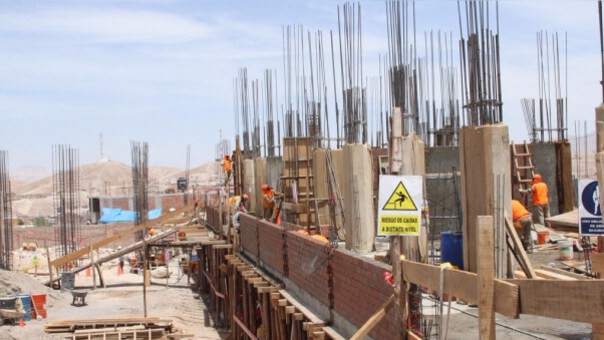
Durante las siguientes semanas, un total de 60 colegios ubicados en Lima Norte serán evaluados por especialistas para saber si es que su infraestructura representa un riesgo para los estudiantes, directores y profesores.

De esta forma, en diciembre próximo, las instituciones educativas recibirán un informe sobre las áreas que deberán ser mejoradas para evitar posibles derrumbes u otro tipo de riesgos.

La iniciativa forma parte del proyecto Dipecho (Más Educación, Menos Riesgos) y es promovida por el Ministerio de Educación, Unesco, la Mancomunidad de Lima Norte así como otras instituciones.


Además, se detalló que usarán una metodología aplicada en El Salvador (Visus) con la que se reveló los problemas de infraestructura que presentaban unos 100 colegios en dicho país.

“El objetivo de este proyecto es brindar a los tomadores de decisiones y a la comunidad educativa una herramienta para evaluar los riesgos que afecten la infraestructura de las escuelas”, explicó Magaly Robalino, de Unesco.

Fuente: http://larepublica.pe/sociedad/801196-evaluan-infraestructura-de-60-colegios-en-lima-norte

Comparte este contenido:
Page 5630 of 6793
1 5.628 5.629 5.630 5.631 5.632 6.793