Page 835 of 6733
1 833 834 835 836 837 6.733

América Latina y el Caribe: Cierre de asimetrías, financiamiento para el desarrollo y bienes públicos globales, claves para una recuperación transformadora en línea con la Agenda 2030

Cierre de asimetrías, financiamiento para el desarrollo y bienes públicos globales, claves para una recuperación transformadora en línea con la Agenda 2030

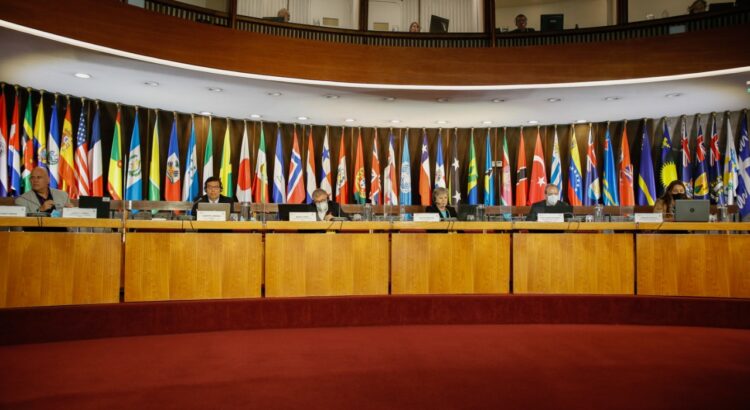
Participantes en los debates del segundo día de la cuarta reunión del Foro de los Países de América Latina y el Caribe sobre el Desarrollo Sostenible, que se celebra de forma virtual bajo la Presidencia de Costa Rica, plantearon la necesidad de cerrar las actuales asimetrías financieras, climáticas y sanitarias presentes en el mundo, garantizar financiamiento para el desarrollo y crear bienes públicos globales -entre ellos una vacunación equitativa contra el COVID-19- para avanzar hacia una recuperación transformadora en línea con la Agenda 2030 para el Desarrollo Sostenible.

Durante la Mesa 1: Salud y economía ¿un falso dilema? se destacó el hecho de que “sin salud no hay economía ni sociedad posible” y que el bienestar de la población es prerequisito para una recuperación sostenible en América Latina y el Caribe. También se enfatizó la urgencia de contar con instituciones sólidas para enfrentar la actual pandemia, fortalecer la capacidad de los Estados de anticiparse a nuevas crisis, garantizar la participación de todos los actores, entre ellos de la sociedad civil, y fomentar la transparencia y la rendición de cuentas de parte de las instituciones públicas.

El panel se inició con reflexiones de Carissa F. Etienne, Directora de la Organización Panamericana de la Salud (OPS), y continuó con intervenciones de Joy St. John, Directora Ejecutiva del Organismo de Salud Pública del Caribe; Alejandro Werner, Director del Departamento del Hemisferio Occidental del Fondo Monetario Internacional (FMI); y Blanca Margarita Ovelar de Duarte, Senadora Nacional del Paraguay y Presidenta de ParlAméricas.

A ellos se sumaron Mónica Jasis, punto focal del grupo de interés Personas Migrantes y Desplazadas por Desastres o Conflictos, de la Mesa de Vinculación del Mecanismo de Participación de la Sociedad Civil en la Agenda de Desarrollo Sostenible y en el Foro de los Países de América Latina y el Caribe sobre el Desarrollo Sostenible; Román Macaya, Presidente Ejecutivo de la Caja Costarricense de Seguro Social de Costa Rica; Daniel Innerarity, Director del Instituto de Gobernanza Democrática de España; y Martha Delgado Peralta, Subsecretaria para Asuntos Multilaterales y Derechos Humanos de la Secretaría de Relaciones Exteriores de México, con la moderación de Alberto Arenas, Director de la División de Desarrollo Social de la CEPAL.

En una intervención especial, Alicia Bárcena, Secretaria Ejecutiva de la Comisión Económica para América Latina y el Caribe (CEPAL), reiteró la importancia del multilateralismo ante las graves asimetrías globales, regionales y nacionales que se han evidenciado y magnificado durante la pandemia, entre ellas, las asimetrías financiera, climática y la de salud y de acceso a las vacunas contra el COVID-19. “Es el momento de que América Latina y el Caribe piense colectivamente” y potencie su integración a través, por ejemplo, de mecanismos como la Comunidad de Estados Latinoamericanos y Caribeños (CELAC), especificó.

“Nuestra sociedad tiene que construir resiliencia y la única salida es crear una sociedad del cuidado, que privilegie la protección social, los bienes públicos, a través de nuevos pactos políticos y sociales”, dijo.

La Mesa 2: Crisis, recuperación y transformación en la década de acción para los Objetivos de Desarrollo Sostenible, en tanto, contó con la participación de Cristina Gallach Figueras, Secretaria de Estado de Asuntos Exteriores y para Iberoamérica y el Caribe de España; Camillo Gonsalves, Ministro de Finanzas, Planificación Económica, Desarrollo Sostenible y Tecnología de la Información de San Vicente y las Granadinas y Presidente del Comité de Desarrollo y Cooperación del Caribe (CDCC); y André Lara Resende, Investigador Principal Adjunto en la Escuela de Asuntos Internacionales y Públicos de la Universidad de Columbia.

Intervinieron también José Francisco Pacheco, Director de la Junta Directiva del Banco Central de Costa Rica; Maurizio Bezzeccheri, Director para América Latina de Enel; y Laura Becerra Pozos, punto focal suplente del grupo de interés Redes, Colectivos, Organizaciones y Plataformas de ONG, de la Mesa de Vinculación del Mecanismo de Participación de la Sociedad Civil en la Agenda de Desarrollo Sostenible y en el Foro de los Países de América Latina y el Caribe sobre el Desarrollo Sostenible, con la moderación de Mario Cimoli, Secretario Ejecutivo Adjunto de la CEPAL.

La pandemia ha obligado a los países a reaccionar rápidamente a numerosos desafíos y hace imperativo repensar las actuales políticas para acelerar una recuperación transformadora, plantearon los representantes en dicho panel. Esto implica aumentar la productividad y preparar las economías para el futuro, así como eliminar la pobreza y reducir la desigualdad social. La necesidad de avanzar hacia Estados de bienestar en el marco de un cambio del modelo de desarrollo también fue resaltada, así como la importancia de la cooperación internacional.

En sus palabras de cierre, Alicia Bárcena alertó sobre los diversos riesgos a los que se enfrentan los países de la región en su camino hacia un futuro distinto, entre ellos, la reprimarización de las economías y la ineficiencia de la insostenibilidad ambiental y la desigualdad. “El actual modelo de desarrollo está anclado a una estructura y nuestras sociedades no están creando riqueza, sino extrayéndola”, explicó, citando a la economista Mariana Mazzucato. “Tenemos que generar valor. Ahí hay una fuente de desigualdad muy grande”, expresó.

“El llamado que nos hace el Caribe es muy importante. Se necesita alivio de la deuda hoy, es un imperativo, es insostenible. La única forma en que puede salir adelante es con inversiones en adaptación climática”, concluyó.

La cuarta reunión del Foro de los Países de América Latina y el Caribe sobre el Desarrollo Sostenible, que por primera vez en su historia se realiza de manera virtual, reúne a más de 1.200 representantes de gobiernos, sociedad civil, organismos internacionales, sector privado y academia, quienes hasta el jueves 18 de marzo revisarán los avances y desafíos de la implementación de la Agenda 2030 en América Latina y el Caribe, la región en desarrollo más impactada por el COVID-19 desde el punto vista sanitario, económico y social.

El programa completo de la cuarta reunión del Foro está disponible en el sitio web especial del encuentro.


Para consultas relacionadas con la cobertura periodística del evento, contactar en Santiago de Chile a la Unidad de Información Pública de la CEPAL. Correo electrónico: prensa@cepal.org; teléfono: (56) 22210 2040.

Participantes en los debates del segundo día de la cuarta reunión del Foro de los Países de América Latina y el Caribe sobre el Desarrollo Sostenible, que se celebra de forma virtual bajo la Presidencia de Costa Rica, plantearon la necesidad de cerrar las actuales asimetrías financieras, climáticas y sanitarias presentes en el mundo, garantizar financiamiento para el desarrollo y crear bienes públicos globales -entre ellos una vacunación equitativa contra el COVID-19- para avanzar hacia una recuperación transformadora en línea con la Agenda 2030 para el Desarrollo Sostenible.

Durante la Mesa 1: Salud y economía ¿un falso dilema? se destacó el hecho de que “sin salud no hay economía ni sociedad posible” y que el bienestar de la población es prerequisito para una recuperación sostenible en América Latina y el Caribe. También se enfatizó la urgencia de contar con instituciones sólidas para enfrentar la actual pandemia, fortalecer la capacidad de los Estados de anticiparse a nuevas crisis, garantizar la participación de todos los actores, entre ellos de la sociedad civil, y fomentar la transparencia y la rendición de cuentas de parte de las instituciones públicas.

El panel se inició con reflexiones de Carissa F. Etienne, Directora de la Organización Panamericana de la Salud (OPS), y continuó con intervenciones de Joy St. John, Directora Ejecutiva del Organismo de Salud Pública del Caribe; Alejandro Werner, Director del Departamento del Hemisferio Occidental del Fondo Monetario Internacional (FMI); y Blanca Margarita Ovelar de Duarte, Senadora Nacional del Paraguay y Presidenta de ParlAméricas.

A ellos se sumaron Mónica Jasis, punto focal del grupo de interés Personas Migrantes y Desplazadas por Desastres o Conflictos, de la Mesa de Vinculación del Mecanismo de Participación de la Sociedad Civil en la Agenda de Desarrollo Sostenible y en el Foro de los Países de América Latina y el Caribe sobre el Desarrollo Sostenible; Román Macaya, Presidente Ejecutivo de la Caja Costarricense de Seguro Social de Costa Rica; Daniel Innerarity, Director del Instituto de Gobernanza Democrática de España; y Martha Delgado Peralta, Subsecretaria para Asuntos Multilaterales y Derechos Humanos de la Secretaría de Relaciones Exteriores de México, con la moderación de Alberto Arenas, Director de la División de Desarrollo Social de la CEPAL.

En una intervención especial, Alicia Bárcena, Secretaria Ejecutiva de la Comisión Económica para América Latina y el Caribe (CEPAL), reiteró la importancia del multilateralismo ante las graves asimetrías globales, regionales y nacionales que se han evidenciado y magnificado durante la pandemia, entre ellas, las asimetrías financiera, climática y la de salud y de acceso a las vacunas contra el COVID-19. “Es el momento de que América Latina y el Caribe piense colectivamente” y potencie su integración a través, por ejemplo, de mecanismos como la Comunidad de Estados Latinoamericanos y Caribeños (CELAC), especificó.

“Nuestra sociedad tiene que construir resiliencia y la única salida es crear una sociedad del cuidado, que privilegie la protección social, los bienes públicos, a través de nuevos pactos políticos y sociales”, dijo.

La Mesa 2: Crisis, recuperación y transformación en la década de acción para los Objetivos de Desarrollo Sostenible, en tanto, contó con la participación de Cristina Gallach Figueras, Secretaria de Estado de Asuntos Exteriores y para Iberoamérica y el Caribe de España; Camillo Gonsalves, Ministro de Finanzas, Planificación Económica, Desarrollo Sostenible y Tecnología de la Información de San Vicente y las Granadinas y Presidente del Comité de Desarrollo y Cooperación del Caribe (CDCC); y André Lara Resende, Investigador Principal Adjunto en la Escuela de Asuntos Internacionales y Públicos de la Universidad de Columbia.

Intervinieron también José Francisco Pacheco, Director de la Junta Directiva del Banco Central de Costa Rica; Maurizio Bezzeccheri, Director para América Latina de Enel; y Laura Becerra Pozos, punto focal suplente del grupo de interés Redes, Colectivos, Organizaciones y Plataformas de ONG, de la Mesa de Vinculación del Mecanismo de Participación de la Sociedad Civil en la Agenda de Desarrollo Sostenible y en el Foro de los Países de América Latina y el Caribe sobre el Desarrollo Sostenible, con la moderación de Mario Cimoli, Secretario Ejecutivo Adjunto de la CEPAL.

La pandemia ha obligado a los países a reaccionar rápidamente a numerosos desafíos y hace imperativo repensar las actuales políticas para acelerar una recuperación transformadora, plantearon los representantes en dicho panel. Esto implica aumentar la productividad y preparar las economías para el futuro, así como eliminar la pobreza y reducir la desigualdad social. La necesidad de avanzar hacia Estados de bienestar en el marco de un cambio del modelo de desarrollo también fue resaltada, así como la importancia de la cooperación internacional.

En sus palabras de cierre, Alicia Bárcena alertó sobre los diversos riesgos a los que se enfrentan los países de la región en su camino hacia un futuro distinto, entre ellos, la reprimarización de las economías y la ineficiencia de la insostenibilidad ambiental y la desigualdad. “El actual modelo de desarrollo está anclado a una estructura y nuestras sociedades no están creando riqueza, sino extrayéndola”, explicó, citando a la economista Mariana Mazzucato. “Tenemos que generar valor. Ahí hay una fuente de desigualdad muy grande”, expresó.

“El llamado que nos hace el Caribe es muy importante. Se necesita alivio de la deuda hoy, es un imperativo, es insostenible. La única forma en que puede salir adelante es con inversiones en adaptación climática”, concluyó.

La cuarta reunión del Foro de los Países de América Latina y el Caribe sobre el Desarrollo Sostenible, que por primera vez en su historia se realiza de manera virtual, reúne a más de 1.200 representantes de gobiernos, sociedad civil, organismos internacionales, sector privado y academia, quienes hasta el jueves 18 de marzo revisarán los avances y desafíos de la implementación de la Agenda 2030 en América Latina y el Caribe, la región en desarrollo más impactada por el COVID-19 desde el punto vista sanitario, económico y social.

El programa completo de la cuarta reunión del Foro está disponible en el sitio web especial del encuentro.


Para consultas relacionadas con la cobertura periodística del evento, contactar en Santiago de Chile a la Unidad de Información Pública de la CEPAL. Correo electrónico: prensa@cepal.org; teléfono: (56) 22210 2040.

Fuente de la Información: https://www.cepal.org/es/noticias/cierre-asimetrias-financiamiento-desarrollo-bienes-publicos-globales-claves-recuperacion

Comparte este contenido:

Las mujeres inmigrantes mantienen unida a la sociedad durante la pandemia

Las mujeres inmigrantes mantienen unida a la sociedad durante la pandemia

El año pasado se produjeron varios confinamientos como resultado de la pandemia, lo que repercutió profundamente en la educación, el empleo y la forma en que trabajamos a nivel mundial. Estos factores han tenido un efecto especialmente marcado para las mujeres.


Las escuelas, para más de 168 millones de niños en todo el mundo, estuvieron cerradas durante casi todo un año, lo que según UNICEF les obligó recurrir al aprendizaje a distancia desde casa. Durante los confinamientos, en la mayoría de los hogares,l as mujeres han sido las que han soportado la mayor parte de la carga de la educación en el hogar.

Mientras tanto, incluso cuando trabajar desde casa se ha convertido en la nueva normalidad, la pandemia ha provocado la pérdida de 24,7 millones de puestos de trabajo, según una estimación de la Organización Internacional del Trabajo (OIT). Es probable que la desigualdad económica empeore, advierte la OIT, ya que la crisis del empleo afecta de manera desproporcionada a las mujeres y a los inmigrantes. En América Latina las frecuentes restricciones y confinamientos han marcado la vida durante la pandemia, cuyo impacto social ha recaído de manera desigual sobre las mujeres. Esto ha llevado a muchas mujeres a dejar la vida laboral debido a la creciente presión ejercida sobre ellas para cuidar a sus familias, especialmente porque la brecha salarial de género significaba que era posible que no fueran las principales aportadoras del hogar.

En los casos en los que las mujeres intentan conservar sus empleos, al tiempo que asumen la mayor carga de las tareas domésticas en comparación con los hombres, a veces, la única opción disponible, si pueden permitírsela, es contratar a un trabajador del hogar para que realice los diversos tipos de cuidados como cocinar, limpiar, cuidar a niños o a los ancianos, algo que no puede ser realizado fácilmente por una mujer que trabaje. Según datos proporcionados por la ONU en Mujeres en 2016, una de cada seis trabajadoras del hogar es una inmigrante; de estos trabajadores, el 73,4 por ciento son mujeres. Así que el trabajador del hogar es casi por norma una mujer inmigrante.

Debido a la naturaleza precaria de los trabajos del hogar y al insuficiente poder político de las empleadas del hogar, sus condiciones laborales son espantosas. Según datos proporcionados por Alliance for Solidarity, el 57% de quienes se dedican al trabajo doméstico carece de un horario laboral fijo. Eso significa que estas empleadas del hogar no controlan cuánto tiempo trabajan al día ni cuándo pueden salir de sus lugares de trabajo, tampoco controlan sus descansos ni el horario de sus comidas.

Empleadas del hogar

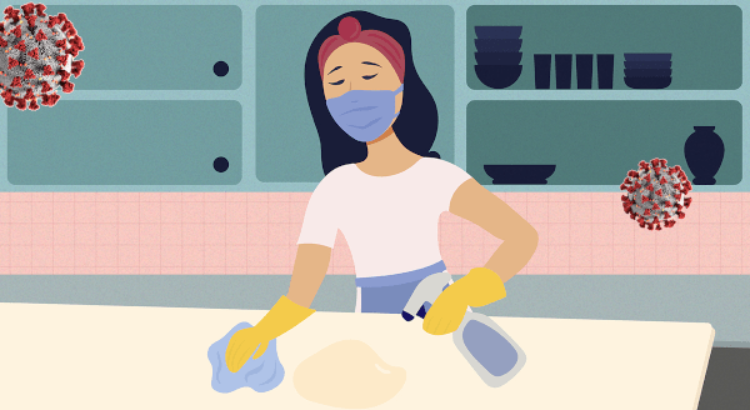
Durante la pandemia empeoró la situación de las trabajadoras del hogar. Y tuvieron que afrontar decisiones difíciles: o se quedaban en la casa de su empleador mientras durara el confinamiento y descuidaban por ello a sus propias familias, o elegían viajar y arriesgarse a perder sus trabajos porque sus empleadores temían que pudieran llevar el virus a sus hogares. Los sindicatos de las trabajadoras del hogar han protestado contra esta terrible disyuntiva. Pero sus voces no aparecen en los medios de comunicación, en gran parte porque estas mujeres se encuentran marginadas y son tratadas como partes invisibles de la sociedad. Las trabajadoras domésticas forman parte de una gran comunidad de trabajadoras informales, muchas de las cuales han mantenido unida a la sociedad durante esta pandemia. Son estas trabajadoras informales las que han estado atendiendo la distribución de alimentos, limpiando espacios públicos y trabajando en pequeñas tiendas de alimentación y otros comercios. Corren un alto riesgo de infectarse no solo por la naturaleza de su trabajo, sino también por sus largos desplazamientos en transporte público. En América del Sur, estos trabajos están en gran parte ocupados por mujeres migrantes, muchas de las cuales tienen un estatus de residencia inseguro.

«No tenemos derechos laborales, solo condiciones laborales»

Angélica Venega se fue de Perú a Chile para ganar más dinero y poder sufragar la educación de su hija. Un familiar la puso en contacto con Sinducap, un sindicato de trabajadores del hogar y de empleados en actividades afines. Sinducap, fundada en 1988, forma parte de la Confederación Latinoamericana y del Caribe de Trabajadoras del Hogar. Sinducap, me dijo Venega, le permitió negociar las condiciones de trabajo claramente definidas para el hogar donde trabaja. Estos términos de empleo incluían las horas de trabajo, el suministro de comidas y dinero para el transporte, el pago de la seguridad social, el requisito o no de llevar uniforme así como la especificación de las labores a realizar durante las horas de trabajo.

Emilia Solís Vivano, presidenta de Sinducap, me dijo que hay más de 300 personas en el sindicato. Los miembros del sindicato no son solo trabajadores del hogar, sino que también tienen cabida los limpiadores, proveedores de catering, jardineros y limpiadores de ventanas. Estos trabajadores ayudan a mantener una mejor forma de vida para sus empleadores. Desafortunadamente, no es aplicable lo mismo para ellos. La situación de las trabajadoras, ya de por sí precaria antes de la pandemia, ha empeorado en los últimos meses. “Debido a la estigmatización de las trabajadoras del hogar como posibles [portadoras] del virus”, me dijo Venega, “muchos empleadores nos piden que vivamos en su casa para evitar usar el transporte público. Ésta no es exactamente una oferta. Si no aceptas esta oferta quedas despedido. Te despiden, pero como te hacen una oferta que rechazas lo llaman renuncia. Si renuncias [no] hay beneficios legales. En una pandemia no tenemos derechos laborales. Solo tenemos condiciones». La exigencia de que los trabajadoras del hogar vivan en su lugar de trabajo, dijo Venega, no es solo por la pandemia, el miedo a las enfermedades y los protocolos de salud. La pandemia, dijo, está siendo utilizada por los empleadores para extender la jornada laboral a cambio de un salario menor. Cuando vives en la misma casa donde trabajas la jornada laboral puede terminar siendo dictada por la conveniencia y las condiciones laborales fijadas por los empleadores, quienes pueden exigir más atención una vez que llegan a casa del trabajo, durante los fines de semana al recibir visitas, o a tenor del horario de sus hijos. Estas son condiciones, me dijo Venega, que los empleadores de los trabajadores del hogar no tolerarían en sus propios lugares de trabajo donde están empleados, pero no dudan en imponer condiciones tan terribles a los propios trabajadores del hogar. Los empleadores a menudo reducen los salarios de los trabajadores del hogar alegando que sus propios salarios se han visto reducidos debido a la pandemia. Si una trabajadora está infectada por la covid-19, es despedida de forma fulminante. Y en ese caso las propias trabajadoras son las responsables de pagar por su tratamiento médico y donde pasan el período de cuarentena. Esto es aún más terrible para una inmigrante que tal vez no tenga una casa a la que ir o una familia donde refugiarse. Ser despedida podría significar la deportación.

La nueva normalidad, me dijo Venega, no es tan nueva. Es parte integral de cómo eran las cosas incluso antes de la pandemia. «Lo que se está volviendo normal, dijo, es la codicia».Taroa Zuñiga Silva es coeditora con Giordana García Sojo de Venezuela de Vórtice de la Guerra del Siglo XXI (2020)Es miembro de la Secretaría de Mujeres Inmigrantes en Chile. También es miembro de la Mecha Cooperativa, un proyecto del Ejército Comunicacional de Liberación


Fuente de la Información: https://vientosur.info/las-mujeres-inmigrantes-mantienen-unida-a-la-sociedad-durante-esta-pandemia/

Comparte este contenido:

Estados Unidos: California police officer allegedly punches woman twice in the face during arrest

California police officer allegedly punches woman twice in the face during arrest

Authorities said she exhibited “signs of being under the influence” and paramedics were called. As they waited for medics to arrive, Garcia was «not complaint» and “became combative,» police said.

A California police officer has been placed on administrative leave after he was filmed apparently punching a handcuffed woman twice in the face, according to police.

On April 21, police say they received a call alleging that 34-year-old Ciomara Garcia assaulted an Asian woman who tried to rescue a dog running in the street.

Officers said they found Garcia and learned she had an outstanding felony bench warrant for vandalism. She was handcuffed by officers.

Authorities said she exhibited “signs of being under the influence” and paramedics were called. As they waited for medics to arrive, Garcia was «not complaint» and “became combative,» police said.

Video footage taken by a bystander shows Garcia falling to the ground after being handcuffed with her hands behind her back. She appears to kick one officer.

In the video, the officer, who has not been named and appeared to be kicked, then struck Garcia. He hit her «two times in the face with his fist,» police said.

The footage then shows the other two officers immediately intervene and push him away from Garcia.

«When we opened the door, they’re trying to put handcuffs on her, and she was resisting,» Adolfo Rosales, who claimed to be Garcia’s brother, said to local ABC affiliate KABC. «They’re walking her out, and when we got out of the walkway, that’s when she started kicking their shins. That’s when they threw her into the plants.»

Garcia was taken to a nearby hospital for evaluation and no injuries were reported, according to police. She has been booked into Orange County Jail.

Police said an investigation of the officer’s use of force and the witness cellphone footage led them to place the officer on paid administrative leave pending an internal affairs investigation.

The Westminster Police Department said the Orange County District Attorney’s Office “will evaluate the officer’s use of force and determine if criminal charges are warranted.”

The department said it will also submit the charges against Garcia, including assault and battery and resisting arrest, to the DA’s office. A lawyer for Garcia could not be immediately identified.

“The Westminster Police Department considers this a serious event and will ensure that this investigation will be guided by the law and the truth,” the department said in a statement.

Fuente de la Información: https://abcnews.go.com/US/california-police-officer-allegedly-punches-woman-face-arrest/story?id=77265492&cid=clicksource_4380645_8_heads_posts_card_hed

Comparte este contenido:

Canadá: Area boards release joint 2021-22 school year calendar

Area boards release joint 2021-22 school year calendar

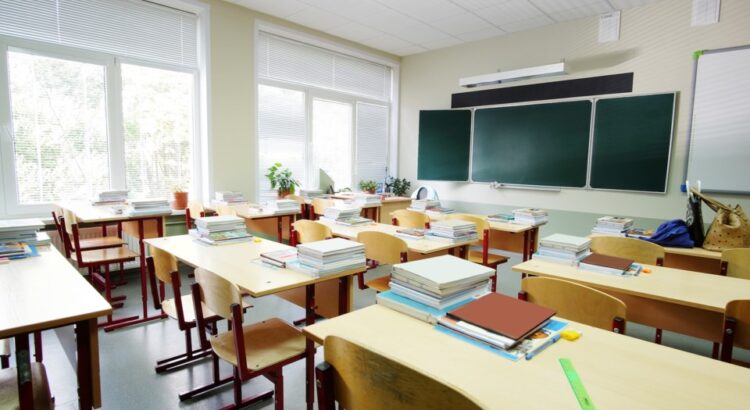
In a join news release issued today, all four area school boards – Algoma District School Board, Conseil scolaire catholique Nouvelon, Conseil scolaire public du Grand Nord de l’Ontario, and Huron-Superior Catholic District School Board – shared a new modified 2021- 2022 school year calendar.

Included in the joint calendar are mandatory PA days, Christmas holidays, and March Break dates.

In March of this year, the Ministry of Education requested that all school boards schedule three mandatory Professional Activity (PA) days prior to the start of student instruction for the 2021-2022 school year. As such, all boards in the Algoma District have modified their 2021- 2022 school year calendars.

Algoma District School Board (ADSB), Conseil scolaire catholique Nouvelon, Conseil scolaire public du Grand Nord de l’Ontario (CSPGNO) and Huron-Superior Catholic District School Board (HSCDSB) have approved the modified School Year Calendar for 2021-2022.

The four school boards have worked together to produce a common calendar, facilitating the co-ordination of services such as student transportation. Each board adopted the calendar, consisting of a 194-day school year, following its own consultation process. Their respective calendars will be submitted to the Ministry of Education for final approval.

The 2021-2022 School Year Calendar will be the same for all English and French-language schools and all public and Catholic school boards in the Algoma and Sudbury Districts including Blind River, Chapleau, Dubreuilville, Elliot Lake, Espanola, Hornepayne, Manitoulin Island, Massey, the North Shore, Sault Ste. Marie, Spanish, Wawa and White River. Except for minor changes, the calendar will also apply to CSC Nouvelon and CSPGNO schools
in Greater Sudbury, Espanola and Sudbury East.

Overview of the Modified 2021-2022 School Year

Elementary and Secondary Schools:  
•    CSC Nouvelon staff begin on Wednesday, Sept. 1, 2021
•    ADSB, CSPGNO and HSCDSB staff begin on Thursday, Sept. 2, 2021
•    CSC Nouvelon students begin classes on Wednesday, Sept. 8, 2021
•    ADSB, CSPGNO and HSCDSB students begin classes on Thursday, Sept. 9, 2021
•    The Christmas holiday schedule is set from Dec. 20 to Dec. 31, 2021 inclusive
•    March Break is scheduled from Monday, March 14 to Friday March 18, 2022. CSC Nouvelon students will also have a board holiday on Friday, March 11, 2022
•    The last day of classes for students is June 30, 2022

Professional Activity Days:
•    Sept. 1, 2021 – CSC Nouvelon only
•    Sept. 2, 2021- four boards
•    Sept. 3, 2021 – CSC Nouvelon only
•    Sept. 7, 2021 – ADSB, CSPGNO and HSCDSB
•    Sept. 8, 2021- ADSB, CSPGNO and HSCDSB
•    Sept. 24, 2021 – four boards
•    Feb. 4, 2022 – four boards
•    May 20, 2022 – four boards
•    June 10, 2022 – four boards

The complete School Year Calendar for 2021-2022 is available on school board websites:
•    Algoma District School Board
•    Huron-Superior Catholic District School Board
•    Conseil scolaire catholique Nouvelon
•    Conseil scolaire public du Grand Nord de l’Ontario


Fuente de la Información: https://www.sootoday.com/local-news/area-boards-release-joint-2021-22-school-year-calendar-3660645

Comparte este contenido:

Algerian Professor Gets 3-Year Jail Term for Offending Islam

Algerian Professor Gets 3-Year Jail Term for Offending Islam

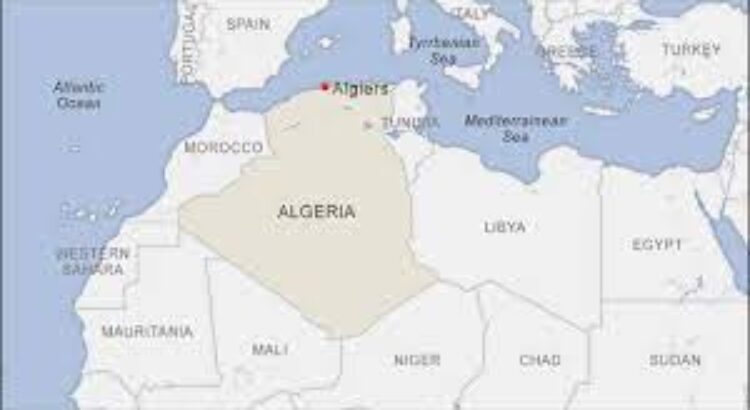
ALGIERS, ALGERIA – An Algerian court on Thursday convicted a high-profile university professor specializing in Islam of offending the Muslim religion and sentenced him to three years in prison.

Said Djabelkhir was not immediately jailed and said he would appeal, according to a group of lawyers defending dozens of detained members of Algeria’s pro-democracy movement.

«I am a professor and not an imam,» using «reason and critical thought,» he was quoted in the press as saying as he left the courtroom.

Another university professor, joined by a group of lawyers, had filed suit against Djabelkhir for Facebook posts they deemed offensive to Islam.

Before his conviction, Djabelkhir told the French daily Le Figaro that it is «the first time in the history of Algeria that a university professor is (being tried) for giving his opinion in his own domain of specialization.»

Djabelkhir said he makes the distinction between history and myth in religious writing, but his detractors contend that «everything in the Quran is history, with a capital H.»

The Algiers office of Amnesty International spoke of a «scandalous» ruling.

«To punish someone for his analysis of religious doctrine is a flagrant violation of freedom of expression and religious liberty,» even if the comments are offensive to others, Amnesty said.

The conviction appeared to be a message that defending Islam is also a judicial matter in Algeria.

Some politicians, university teachers and journalists had expressed solidarity with the professor ahead of his trial, denouncing a «return of the Inquisition.»

Djabelkhir, widely followed on social media, is known for putting into question some dogmas of Islam. He also opposes the head covering warn by many Muslims, saying that it is not a religious obligation and «nowhere affirmed (as such) in the Quran or the Sunna» — references to the Muslim holy book and tradition and practices of the prophet of Islam.

Fuente de la Información: https://www.voanews.com/africa/algerian-professor-gets-3-year-jail-term-offending-islam


Comparte este contenido:

How U.S. Medical Schools Are Training a Post-Pandemic Generation of Doctors

How U.S. Medical Schools Are Training a Post-Pandemic Generation of Doctors

In February 2019, the Kaiser Permanente health system announced a new kind of medical school. The school would be built “from the ground up” to prepare students for the complexities of the U.S. medical system. The curriculum would emphasize cultural competency, patient and provider well-being, and the elimination of socioeconomic disparities in the medical system. Students would see patients right away, and hands-on learning would replace many lectures. What’s more, the first five graduating classes would pay nothing to attend; Kaiser hoped this would attract a student body more diverse than the typical U.S. medical school.

“The school will help shape the future of medical education,” promised Kaiser CEO Bernard Tyson, who died unexpectedly, reportedly of a heart attack, about nine months after the announcement.

That future felt a good deal more urgent by the time the Kaiser Permanente Bernard J. Tyson School of Medicine opened its doors in Pasadena, Calif., in July. The COVID-19 pandemic had put a hold on almost every facet of “normal” life, and the medical system was scrambling to treat millions of patients with a new and terrifying disease, a disproportionate number of them Black and brown. The streets were filled with people protesting police brutality and racism, as a nation that had long overslept awoke to the disparities woven into almost every American institution. “Our country doesn’t just have a pandemic; it also has a renewed recognition of centuries of racism,” says Kaiser’s founding dean Dr. Mark Schuster. “We need to make sure that our students understand our history.”

Kaiser isn’t alone there, of course. Medical schools all over the world have had to adjust on the fly during the pandemic, in ways both practical and ideological. First, schools had to figure out how to remotely train students in skills taught hands-on before lockdowns. Then, in the U.S., schools were also forced to grapple with their roles in a health care system that often fails to keep Black and brown patients well. That meant learning how to produce doctors who could help chip away at those disparities moving forward. With no warning and no instruction manual, medical schools are figuring out how to train a generation of post-pandemic doctors for a world still taking shape.

The foundations of the American medical education system haven’t changed much for decades. The first two years are a mad rush to attend lectures and memorize as much information as humanly possible, since students usually take the first part of their medical licensing exam after their second year of school. In their third year, students start clinical rotations in hospitals, then spend most of their fourth trying to find a match for their next phase of training: medical residency.

The coronavirus pandemic upended all of that last spring. Classes could no longer happen in person, let alone in large lecture halls. Students couldn’t go to hospitals for training, since facilities needed to conserve resources and personal protective equipment. And travel restrictions made it difficult for fourth-year students to do “audition rotations” at hospitals where they hoped to complete residency. Fiona Chen, who was in her third year at Brown University’s Warren Alpert Medical School, went from spending around 40 hours a week in the clinic to watching one Zoom lecture a week and volunteering for a coronavirus information hotline. “We basically put a pause on our entire lives,” she says.

They couldn’t stay paused forever. Schools had no choice but to adapt, which, for many, opened the door to overdue changes—changes that are coming in handy with COVID-19 again surging and new lockdowns being enacted.

“A lot of the inertia and conventions of medicine are being broken down,” says Dr. William Jeffries, vice dean for medical education at the Geisinger Commonwealth School of Medicine in Pennsylvania. “Advances in medical education are now happening at light speed.”

Though some students returned to the classroom later in the year, step one last spring was bringing traditional classes online—a fairly easy task for most schools in the developed world, though less so for schools in places like Southeast Asia and Africa, where Internet access is spottier. In developed nations, at least, the shift enabled schools to look critically at the way they were teaching before the pandemic. Kaiser’s preexisting plan to teach students anatomy using virtual reality simulators, rather than cadavers, proved fortuitous. Imperial College London gave students access to a video library of old patient interviews and exams. At New York University’s Grossman School of Medicine, professors began prerecording their lectures so students could watch in advance and use class time for livelier discussion. “Lectures have been fading as a useful didactic model for 10 years, but we continue to use them,” says Dr. Steven Abramson, NYU’s vice dean for education, faculty and academic affairs. The pandemic may finally catalyze lasting change.

When third- and fourth-year students were yanked from hospitals last spring, many schools pivoted to telemedicine appointments. (This wasn’t unique to medical schools; remote visits surged across the health care system.) After the new academic year started this past summer, third-year students at Geisinger spent the first 10 weeks learning how to take patient assessments and develop treatment plans over Zoom. “When clinical care changes, medical student education follows,” says Dr. Alison Whelan, chief medical education officer at the Association of American Medical Colleges (AAMC).

That required teaching students “webside” (as opposed to bedside) manner, to prepare them for a clinical practice likely to be far more virtual than that of their predecessors. “If you’re not shaking hands, how do you make that initial connection [with a patient]?” Whelan asks. Students have also been honing the skills needed to perform the behind-the-scenes work that goes into a telemedicine appointment—like how to handle patient privacy when a spouse wanders into the room, or what to do when a patient can’t figure out how to work the web platform, Whelan says.

Still, you can’t take an EKG or draw blood virtually. To continue teaching skills like these when students were sent home, Geisinger built an “e-ICU” that allows students to see what’s going on in hospital rooms, and remotely do the sort of trainee doctor work they’d have done in person before the pandemic. Through a webcam, they can ask resident doctors on duty to perform certain exams or tests, as if they’re actually at the patient’s bedside, and then get immediate feedback from the resident.

The model worked so well that Geisinger plans to continue the e-ICU and the school’s broader telemedicine training even as students return to regular clinical work, Jeffries says. Doctors who are digitally literate and comfortable using telemedicine could help expand access to care in the future, he says. Programs like the e-ICU could also help connect doctors in small community clinics with specialists who may not be available locally. “I come from a small town in the middle of nowhere. We don’t even have a post office,” says Dr. Cass Lippold, a critical-care fellow at Geisinger who oversaw the e-ICU program. “This will be great to help those people who don’t have access to a hospital.”

Programs like these could also improve doctors’ work-life balance. “If you’re a physician with a couple young kids at home, telemedicine has really opened an opportunity to work from home a couple days a week and still see patients,” says NYU’s Abramson. Jeffries notes that moving classes online could also make it easier for prospective doctors with physical or learning disabilities to participate, since they could tailor their environment to fit their needs.

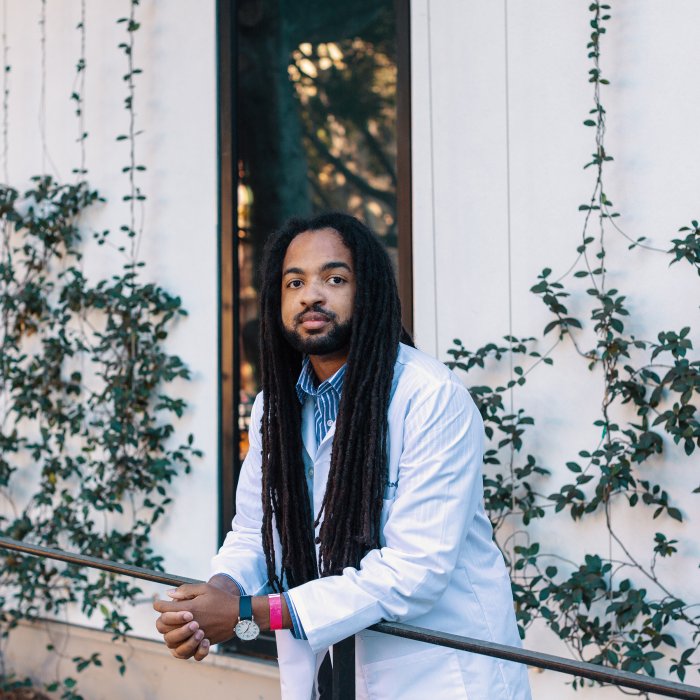
Cruz Riley, a first-year student at Kaiser Permanente's new medical school, is photographed on campus in Pasadena, Calif., in November.

The shift to online learning was a logistical undertaking, but the harder work may be producing doctors who are better equipped to take on the systemic issues exposed by the pandemic, like race-based health disparities, uneven access to care and ballooning treatment costs.

At Kaiser Permanente, that preparation began before students even started classes last summer. The entire class was invited to a virtual check-in to discuss the racial-justice movement, and the conversation hasn’t stopped since, says 26-year-old first-year student Cruz Riley, who has a special interest in Black maternal health. “You would think [students] would be talking about what we watched on Netflix,” he says. “But [the students] are always talking about systematic inequality, and we are always bouncing ideas off each other.”

Even at a school that proudly states its dedication to diversity and has woven race and racism into its curriculum, the conversations haven’t been seamless. In December, Kaiser physician and medical school instructor Dr. Aysha Khoury, who is Black, went viral on Twitter when she posted that the school had suspended her from teaching in August after she led a frank, emotional discussion about racial disparities and bias in health care. Even after outcry from students and fellow physicians, Khoury says she has not been reinstated to her faculty position or told which policy the school thinks she violated. “I wish [administrators] understood that it is O.K. for Black people, people from marginalized groups, to share their stories,” Khoury says. “If we’re truly going to change health care … they have to create a way and space to move forward together.”

Representatives from Kaiser did not comment on details of the investigation but said the school values diversity and Khoury was not penalized for talking about her personal experiences or for discussing anti-racism in medicine—a topic spokespeople maintained is a cornerstone of Kaiser’s curriculum.

Kaiser also requires first-year students to take a class on mental health and overcoming stress, and to visit an on-campus psychologist three times during their first semester. Those services, available free of charge throughout their medical education, are part of a program Kaiser implemented to counter high rates of burnout and mental distress among medical students: studies estimate more than 25% worldwide show signs of depression, and about 10% of suicidal thinking. But it has also provided valuable support as students of color do the emotional labor of living through constant reminders of racism in America, says 25-year-old first-year student Emilia Zevallos-Roberts, who was born in Ecuador.

Courses on health disparities and racism in medicine aren’t new in the U.S., but they also haven’t been terribly effective. Racism is still a problem in medical schools, as well as the wider medical system. A 2020 study found that about 25% of students who identify as Black, Hispanic/Latinx or American Indian/Alaska Native experienced race-based discrimination during medical education. That doesn’t stop after graduation. “There were so many comments that I had to endure in my undergraduate years, in my medical school years,” Dr. Tsion Firew, an emergency-medicine physician at New York City’s Columbia University, who is Black, told TIME last summer. “When I walk into my hospital, it’s not [diverse] like New York City. The second you walk into the hospital, you are reminded that you’re not part of the majority.”

Medicine and medical education remain very white fields in America. In 2019, out of nearly 38,500 medical school professors in the U.S., 755 (2%) identified as Black, around 1,000 (2.6%) identified as Hispanic or Latino, and just 37 (0.01%) identified as American Indian or Alaska Native, according to AAMC data. More than 29,000, or 75%, identified as white. For context, about 60% of the total U.S. population identifies as white, while about 12% identify as Black, 18% as Hispanic, 5.6% as Asian and less than 1% as American Indian/Alaska Native, according to data from the U.S. Census Bureau’s American Community Survey.

Given that dynamic, it’s not hard to understand why many schools haven’t historically done a good job teaching concepts like cultural competency (the ability to connect with and treat patients from all backgrounds) and social determinants of health (the myriad ways socioeconomic factors affect a person’s well-being). Many also fail to correct (and in some cases even perpetuate) racist and incorrect stereotypes about biological differences between Black and white patients. One 2016 study found that, out of about 400 medical students and residents surveyed in the U.S., half held false beliefs, such as that Black people have a higher pain tolerance or physically thicker skin than white people. If students are steeped in these incorrect stereotypes, rather than very real social determinants of health, they may contribute to a system of racially insensitive, and potentially harmful, medical care.

Many schools were already working to fix that before the pandemic, but mainstream conversations about inequality and racism have hastened the process. Chen, currently a fourth-year student at Brown, says she’s noticed that race and social factors now come up when discussing every patient case, whereas before they were often relegated to stand-alone lectures or lessons. Tian Mauer, a third-year student at Geisinger, has noticed the same thing. And for schools across the U.S., the AAMC has guidelines for teaching equity, diversity and inclusion in medicine. “COVID has really highlighted for some for whom it had not yet clicked that the social determinants of health are really critical,” Whelan says.

Of course, it will take more than a few lectures to address centuries-old disparities in medical care, particularly because systemic racism has so many tendrils. It’s not enough to train physicians on implicit bias and cultural sensitivity when Black and Hispanic Americans’ health suffers due to poverty and segregation built up over centuries—or when many people from these communities can’t afford to become doctors themselves, perpetuating cycles of mistrust in a heavily white medical system.

At most medical schools, the student body looks a lot like the faculty. Together, Black and Hispanic students made up less than 15% of the national medical student population during the 2019–2020 school year, AAMC data show. People who identified as American Indian/Alaska Native made up just 0.2%. Wealth disparities go a long way to explaining why: medical school tuition and fees can easily top $60,000 per year, and the average new doctor graduates with about $200,000 in debt, according to AAMC data.

Before the pandemic, a small but growing group of schools were trying out a way to fix that: offering free or heavily discounted tuition. NYU permanently waived its $55,000 annual tuition in 2018. Geisinger now offers free tuition for students who agree to practice within its health system. Kaiser’s free tuition offer will go to its first five graduating classes.

The pandemic may accelerate conversations about affordability, especially as financial stress stretches on. Dr. Steven Scheinman, the dean at Geisinger, says a stronger reliance on remote learning could push the school’s tuition down over time. NYU and about a dozen other U.S. medical schools are also part of a consortium studying how an accelerated medical school schedule—three years instead of four—affects learning, student finances and licensing and placement for new doctors. Cutting a year of school would get doctors out into the field faster, saving them a year of expenses. More than a dozen U.S. medical schools, including NYU and each of the four medical schools in Massachusetts, along with many in the U.K., like the University of Cambridge and Oxford University, allowed their students to graduate early last spring to help with pandemic response. In a worst-case scenario, the ongoing spike in cases and hospitalizations could necessitate something similar.The U.S. medical school system also has missed opportunities presented by COVID-19. For example, relatively few schools changed their admission requirements in ways that could have made life easier for applicants. To apply for most U.S. medical schools, students still had to take a $320 hours-long standardized exam called the Medical College Admission Test (MCAT). A grassroots group called Students for Ethical Admissions called on schools to waive that requirement, citing the risks of disease spread that come with sitting for hours in an exam room with strangers, but only a handful of schools, including Stanford and the University of Minnesota, did so. The AAMC, which administers the test, maintains that all students should still take the MCAT.

And not all schools have used the moment to update their curricula, nor done a seamless job of bringing learning online. A study of U.K. medical students found that the majority experienced some disruption to their normal training. “This is a detriment to my education, sitting in my bedroom trying to focus when my parents are home working,” agrees 23-year-old Elli Warsh, who is in a nursing program at New Jersey’s Rutgers University. Warsh and her classmates were pulled out of the hospital from March to July and didn’t see any patients for those months. They had to practice skills like full-body assessments on family members or roommates; some students who lived alone used teddy bears. Now, Warsh says, she has no idea if her skills will be on par with previous new nurses when she graduates in May.

Those are real fears, particularly for students who aren’t attending big-name, richly endowed medical schools that were able to adjust on the fly, and for students shouldering burdens like financial distress and childcare during the pandemic. Time will tell how they fare when their residency placements come around. In the meantime, students like Zevallos-Roberts, from Kaiser’s School of Medicine, find optimism in the disruption. “Although the pandemic is obviously devastating,” Zevallos-Roberts says, “I’m hoping that the energy and momentum for change that we’re seeing now, that we’re able to bring that forward when we’re graduating three years from now.”

Update, Jan. 7, 2021

This story has been updated to include information about Dr. Aysha Khoury’s suspension from Kaiser Permanente’s medical school.

Fuente de la Información: https://time.com/5914062/medical-schools-coronavirus-pandemic/


Comparte este contenido:

Estados Unidos: Biodegradable plastic that can break down in your compost developed by scientists

Biodegradable plastic that can break down in your compost developed by scientists

Biodegradable plastic bags, cutlery and coffee cup lids may seem like a win for the environment, but they often introduce more problems than solutions.

Despite being touted as «green», many of these plastics take just as long as their conventional counterparts to break down in home composts and landfill, leading to more pollution in soils and waterways.

Many are also not recyclable, and can only be broken down by industrial composting under high temperatures.

Now, a team of researchers at the University of California, Berkeley have finally created a biodegradable plastic that disappears almost entirely in household compost within a matter of days, just by adding heat and water.

The new material includes built-in enzymes that chew the plastic down to non-toxic molecules without leaving behind traces of harmful microplastics.

The researchers’ study has been published today in Nature.

«Enzymes are really just catalysts evolved by nature to carry out reactions,» materials scientist and study co-author Ting Xu said.

Biodegradable does not equal compostable

2015 study estimated that just 9 per cent of the world’s plastics are recycled, with most of it ending up in landfill.

Australia is marginally better, with about 18 per cent of our plastic waste ending up at recycling facilities.

Biodegradable plastics — which break down into water, carbon dioxide or organic material with the help of microorganisms — have been proposed as an environmentally friendlier alternative to petroleum-based varieties.

Many of these plastics are made from polyesters, such as polylactic acid (PLA) and polycaprolactone (PCL).

They comprise tightly packed chains of molecules, called polymers.

This makes them durable, but also difficult for water and soil microbes to penetrate enough to degrade them.

Scientist in lab creating plastic

While the chemical make-up of these traditional materials is technically biodegradable, they can only be broken down in industrial composting facilities under tightly controlled temperatures and conditions, said materials scientist Hendrik Frisch at the Queensland University of Technology, who was not involved in the study.

«Under other conditions such as soil or marine environments, these materials often display a similar durability as their conventional fossil-fuel-based counterparts, causing significant environmental damage and pollution,» Dr Frisch said.

In response to this problem, the federal government launched a National Plastics Plan earlier this year that aims to phase out plastics that «do not meet compostable standards».

The power of enzymes

Professor Xu has been exploring how to use enzymes to tackle pollution and make materials more biodegradable for more than a decade.

In 2018, Professor Xu and her team created fibre mats with embedded enzymes that break down toxic chemicals, found in insecticides and chemical warfare agents, in water.

In their new study, Professor Xu and colleagues dispersed billions of polyester-eating enzymes throughout PLA and PCL beads, which are used early in the manufacturing process to create plastic products.

After melting these beads down, they shaped the material into filaments and sheets for testing.

Biodegradable plastic breaks down in compost

To prevent these enzymes from falling apart before they had a chance to do their job, the researchers coated them in custom-designed polymers to keep them embedded in the plastic.

Without this supportive polymer coating, the enzymes could only partially chew through the molecular chains, leaving behind polluting microplastics.

But when wrapped in the coating, the enzymes were able to chomp these large molecules down to their building blocks, similar to unthreading a pearl necklace.

«The enzyme doesn’t leave the plastic [behind],» Professor Xu said.

«Even when the plastic degrades into very small pieces, the enzymes keep working.»

Plastics pull a disappearing act

When the team added their enzyme-studded polyesters to household soil compost with a little tap water, 98 per cent was converted into their individual building blocks in just a few days.

The small molecules left behind were harmless, with the enzymes turning PLA into lactic acid, a food source for soil microbes.

The enzymes ate away at the plastics even faster under industrial composting conditions, with PCL breaking down in just two days at 40 degrees Celsius, and the PLA disappearing within six days at 50C.

While the «programmed degradation» offers a promising approach to tackling plastic pollution, Dr Frisch says more research is needed to find out whether the technique works on other types of plastic.

Reassembling the remains of the degraded plastics into new products may also require a specialised recycling facility, he added.

«Implementing multiple cycles of making and unmaking will be something that has to be investigated in the future.»

Professor Xu said the approach could one day be applied to make products that are more biodegradable, from polyester clothing to biodegradable glue in phones and electronics.

«We want to work with industry to really move this forward, so that it’s in the grocery store and on your countertop.»

Fuente de la Información: https://www.abc.net.au/news/science/2021-04-22/biodegradable-plastic-compost-enzymes-environment-soil-green/100082958

Comparte este contenido:
Page 835 of 6733
1 833 834 835 836 837 6.733