Page 34 of 102
1 32 33 34 35 36 102

Australia: Mejorar los logros de los/as estudiantes mediante una mayor financiación de la educación en lugar de exámenes

Oceanía/Australia/Agosto del 2o17/Noticias/https://www.ei-ie.org/

Los/as educadores/as australianos/as han advertido del peligro de hacer demasiado hincapié en los resultados de los exámenes y argumentan que el objetivo debe ser que todas las escuelas reciban la financiación y los recursos que necesitan para ofrecer una buena educación a los/as estudiantes y mejorar los resultados académicos.

Centrarse en las necesidades de los/as estudiantes para tener éxito en las escuelas

“Las escuelas necesitan financiación y recursos adecuados para mejorar los niveles de resultados y logros”, dijo la presidenta federal del Australian Education Union (AEU), Correna Haythorpe, el 2 de agosto.

Lamentó que el plan de financiación de escuelas del gobierno de Turnbull “no ofrecerá la financiación tan necesaria que nuestras escuelas requieren” y hará todavía más difícil que las escuelas mejoren los resultados de los/as estudiantes, “ya que no proporciona los recursos esenciales para reducir las desventajas a las que se enfrentan muchos/as estudiantes”. Además, añadió que dejará a algunos/as de los/as estudiantes más vulnerables sin el apoyo que necesitan para obtener buenos resultados en la escuela.

Añadiendo que los/as docentes saben que la financiación adecuada marca una diferencia significativa y mejora los resultados académicos, ya que según el acuerdo Gonski original la mayoría de la financiación se iba a proporcionar a las escuelas en 2018 y 2019 para que las escuelas se beneficiaran plenamente de la financiación basada en las necesidades, reconoció que “es muy importante para las escuelas poder invertir en el aprendizaje de los/as estudiantes con personal de enseñanza y de apoyo educativo adicional, programas de alfabetización y aritmética, e intervenciones en la primera infancia”.

A continuación, Haythorpe lamentó que el plan gubernamental no proporcionara en absoluto el nivel de financiación necesario para 2023, lo que dejaría a la gran mayoría de escuelas públicas muy por debajo del nivel de recursos para escuelas.

Mejorar los resultados del NAPLAN no es decisivo

Pasó a destacar que “mejorar los resultados académicos no significa simplemente mejorar los resultados del Programa nacional de evaluación de la alfabetización y la aritmética (NAPLAN, por sus siglas en inglés)”. El NAPLAN es una evaluación nacional anual para todos/as los/as estudiantes de los cursos 3, 5, 7 y 9. Se espera que todos/as los/as estudiantes en esos cursos participen en las pruebas de lectura, redacción, convenciones del idioma (ortografía, gramática y puntuación) y aritmética.

Destacando que el NAPLAN es “solamente una prueba, una instantánea, y por sí solo proporciona un panorama limitado e incompleto de la educación de un/a estudiante y no toma en consideración la gran calidad, el amplio plan de estudios y la experiencia de aprendizaje que ofrecen las escuelas”, Haythorpe explicó que los/as estudiantes deben tener la oportunidad de implicarse en su aprendizaje por medio de actividades extracurriculares y un plan de estudios amplio y de calidad que les ayude a desarrollar las competencias para entrar en el mundo del trabajo moderno.

La dirigente del AEU concluyó que la realidad es que el plan de educación del gobierno de Turnbull lo hará mucho más difícil e implica que las escuelas no tendrán la financiación que necesitan para proporcionar el apoyo y los recursos que merecen nuestros/as estudiantes.

Fuente:

https://www.ei-ie.org/spa/detail/15315/australia-mejorar-los-logros-de-losas-estudiantes-mediante-una-mayor-financiaci%C3%B3n-de-la-educaci%C3%B3n-en-lugar-de-ex%C3%A1menes

Fuente Imagen:

https://lh3.googleusercontent.com/ymrw6gUXyqL3NhHOW0THryz13m43YEg_XN4o5eU6VNrVcphg2951SRcTRWzWTIW-VfSUow=s85
Comparte este contenido:

Australia: Fee increases still on the table after Senate committee reports on higher education changes

Oceanía/Australia/Agosto del 2017/Noticias/https://theconversation.com/


On Wednesday, a Senate committee reported on the government’s proposed changes to higher education.

Though more moderate than the 2014 version, the new higher education package represents groundhog day for the major political parties. The committee, chaired as it was by the Coalition, recommended passing the measures, stating that they will:

… balance the Commonwealth’s need to recover student debts over time with the need of students to access a fair and high-quality system of higher education without facing high upfront fees.

However, the Labor members of the committee dissented. They strongly argued for the bill to be rejected, arguing that:

Australian students will have to pay more, for less, sooner.

Where to next?

What are the changes?

The reforms’ explicit intent is to rein in government spending on higher education without compromising teaching quality or restricting access to higher education by making it unaffordable.

The headline changes are:

  • An increase in the student contribution toward the cost of the degree to, on average, 46% for Australian students (currently they pay on average 42%).
  • According to the government, the maximum cost of a Commonwealth-supported course would be A$50,000 for a four-year degree, or $75,000 for a six-year medical degree.
  • Students paying for their degree through HECS-HELP would start paying it back when they earn $42,000 (the current threshold is $54,869).
  • The universities would be subjected to a 2.5% funding cut (the government calls it an efficiency dividend), which amounts to around $380 million in 2019.
  • Access to Commonwealth-supported places for Australian permanent residents and New Zealand students would be removed. These students would have to pay the full tuition rate. This would typically double or even triple the cost of their degree. To offset the fee increase, these students will be able to access HECS-HELP loans like Australian citizens, whereas previously they had to pay up front.

For context, when higher education reform was last attempted in 2014, proposed cuts to university teaching funding were around 20%. And student fees were to be deregulated, leading to fears that degrees could cost more than $100,000.

The 2014 proposals proved almost universally unpopular but the legislation lingered, zombie-like, for several years before being shelved. This new proposal is an attempt to press the reset button and move forward.

Those opposed to the latest proposal have pointed to reduced funding for universities, higher costs to students, and tougher loan repayment requirements.

Those supporting the changes feel the fee increases and funding cuts are moderate in comparison to the 2014 proposals, and in line with the overall fiscal reality.

How was the new reform agenda received?

Since announcing the changes, the government has received more than 1,200 submissions from a wide range of higher education stakeholders, including students and their parents.

Further submissions were made to the Senate committee. The vast majority opposed the proposed changes to student tuition fees and repayments.

The general sentiment revealed by the submissions was a belief that “students will end up paying more to get less”. This phrase, or similar versions of it, appeared in multiple submissions.

Many submissions were from permanent residents and New Zealanders, worried about the intended increase to the cost of their education. In the words of one:

I am pretty sure there are countless others who have had their dreams of studying higher education crushed … We should take care of the people living in this country, and give them a chance to progress into university, before they like us feel as though they may have to return back to their home countries just to follow their educational dreams.

In its submission, the University of South Australia supported the student fee increase but opposed the lowering of the repayment threshold.

Victoria University proposed the money raised by increasing student tuition fees should be given to the universities rather than the Commonwealth:

… in order to directly improve the student experience of those paying the fees.

All other universities either opposed the student fee increases, or avoided the issue in their submissions.

All universities opposed the proposed funding cut to the universities themselves.

What next?

In its dissenting report, Labor calculated, for example, that a graduate with a HELP debt earning $51,000 will have less disposable income than someone earning $32,000.

Labor also expressed its concern about the impact of student debt on New Zealanders and permanent residents, given they will be required to pay full fees.

Similarly, the Greens members of the committee dissented, stating that:

… young people from low socioeconomic backgrounds would be priced out of an education.

Assuming the government proceeds with the changes, the Senate will debate and vote on the bill in due course. If so, its fate lies with the minor parties and independents – just as it did the last time.

Comparte este contenido:

Australia: ‘Sack them’ call on Safe Schools plot

Australia/Agosto de 2017/Fuente: The Australian

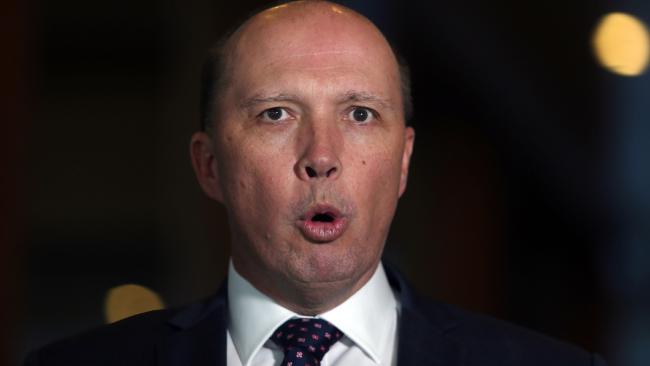
Resumen: Las autoridades educativas de NSW se disculparon por un «descuido» que vio un enlace al polémico programa de Escuelas Seguras contenido en material de salud sexual publicado en un sitio web de educación. Horas después de que el ministro de Inmigración, Peter Dutton, pidiera que los burócratas de la educación de Nueva Gales del Sur fueran despedidos por otro ejemplo de «corrección política enloquecida», un portavoz de la Autoridad de Estándares de Educación de NSW (NESA) dijo que estaba «revisando sus procesos para evitar errores similares en el futuro». El Daily Telegraph reveló hoy que una guía sobre «sexualidad y educación sobre salud sexual» para los años 1-10 fue publicada en el sitio web de NESA el viernes a pesar de que el gobierno de Nueva Gales del Sur prohibió el programa de escuelas seguras.

Las autoridades educativas de NSW se disculparon por un «descuido» que vio un enlace al polémico programa de Escuelas Seguras contenido en material de salud sexual publicado en un sitio web de educación.

Horas después de que el ministro de Inmigración, Peter Dutton, pidiera que los burócratas de la educación de Nueva Gales del Sur fueran despedidos por otro ejemplo de «corrección política enloquecida», un portavoz de la Autoridad de Estándares de Educación de NSW (NESA) dijo que estaba «revisando sus procesos para evitar errores similares en la futuro».

El Daily Telegraph reveló hoy que una guía sobre «sexualidad y educación sobre salud sexual» para los años 1-10 fue publicada en el sitio web de NESA el viernes a pesar de que el gobierno de Nueva Gales del Sur prohibió el programa de escuelas seguras.

“Safe Schools is not and has never been part of the NSW curriculum,’’ the spokesman said.

The revelation came as a school on Sydney’s Northern Beaches slammed for a play which featured Year 6 students dressing up as nuns and abusing Aboriginal Children.

Earlier, Mr Dutton said the reinstalment of Safe Schools was the latest example of “political correctness gone mad”.

“The silent majority just shake their head in bewilderment at this,” Mr Dutton told 2GB.

“Something has to happen here. The people who are in the department that actively made the decision to go against the government of the day, to go against the New South Wales Education Minister and to go ahead and provide this information, those people need to be sacked.

“There’s no question about it. They need to be held to account for their actions, and you’re right, we send our kids to school because we want them to learn to read and write, we want them to not have political correct agendas shoved down their throat, and at the same time as we are seeing a drop-off in the literacy and numeracy rates, we’re putting more and more money into education.

“I think we need to really shine a light on this because it’s unacceptable and these people need to realise that there’s a consequence and a price to pay if they’re going to act against the instruction that they’ve been given.”

Fuente: http://www.theaustralian.com.au/national-affairs/education/safe-schools-ploy-educators-should-be-sacked-over-move-peter-dutton-says/news-story/2331f46d7d432904ce0aa5fbf3dfa234

Comparte este contenido:

Las abejas conciben el cero como un número

Por: Tendencias 21

Es el primer invertebrado que muestra esta capacidad, complicada incluso para los humanos.

Las abejas entienden el cero, una habilidad complicada incluso para nosotros, según una investigación. Es el primer invertebrado que muestra esta capacidad, después de los chimpancés y los monos en el reino animal. Se ha comprobado que conciben el cero como un número.

El  cero no es un concepto fácil de comprender, ni siquiera para nosotros. Los niños pequeños aprenden este número más tarde que otros, y a menudo tienen problemas para identificar si es menor o mayor de uno. 

Aparte de nosotros mismos, existen algunos otros animales que captan este concepto, como los chimpancés y los monos pero, hasta ahora, ninguno invertebrado había demostrado signos de esta habilidad matemática.

Sin embargo, una investigación presentada esta semana en la conferencia sobre comportamiento animal Behaviour 2017 celebrada en Estoril (Portugal), asegura que, pese a sus diminutos cerebros, las abejas sí son capaces de entender la compleja idea de cero, y en ese caso, serían el primer invertebrado que conocemos que lo hace, según informa Newscientist. Estos insectos han mostrado anteriormente habilidades sorprendentemente bien desarrolladas: un estudio previo encontró que son capaces de contar hasta 4.

Para ver si las abejas son capaces de entender el cero, el equipo de investigación liderado por Scarlett Howard, de la Universidad de RMIT en Melbourne (Australia), las entrenó previamente para que diferenciaran entre dos números. Para ello, establecieron dos plataformas, cada una de ellas estaba formada por entre una y cuatro formas geométricas.

En una plataforma, a las abejas se les dio una solución de sacarosa dulce, y en la otra, una solución de quinina de sabor desagradable. Esto se hizo así porque investigaciones anteriores habían encontrado que las abejas aprenden más rápidamente si no son solo recompensadas por las elecciones correctas, sino también castigadas por las equivocadas.

Los investigadores entrenaron a las abejas para asociar con la recompensa dulce a una plataforma que tenía menos formas en ella , hasta que los insectos hicieron la elección correcta el 80% de las veces. Las abejas fueron sometidas a nuevas pruebas con objetos de formas diferentes para confirmar que respondían al número de formas y no a su apariencia.

A continuación, cuando se les da una opción entre dos o tres formas y otra con cero, las abejas eligieron cero la mayor parte del tiempo. Es decir, aparentemente reconocieron ninguna forma como un valor menor que algunas formas.

Pruebas adicionales

En un segundo experimento, otras abejas fueron entrenadas de la misma manera, pero esta vez tuvieron que elegir entre aterrizar en una plataforma con cero objetos y otra con entre uno y seis objetos. Los insectos eligieron siempre la que no tenía ninguno, pero fueron menos precisas y tardaron más tiempo en decidir cuando la otra opción era uno en lugar de seis.

Los investigadores afirman que el hecho de que la distancia numérica entre las dos cantidades ofrecidas parezca afectar la dificultad de las abejas, proporciona pruebas adicionales de que las abejas conciben cero como un número.

Los experimentos sugieren que la comprensión de las abejas de cero es similar a la de algunos seres humanos y primates, pero no está claro por qué tienen esta capacidad. Asumen que aún queda mucho por investigar, sobre todo porque, hasta el momento, se han hecho muy pocos estudios para probar si animales distintos de los primates pueden reconocer cero como un número.

Fuente: http://www.tendencias21.net/Las-abejas-conciben-el-cero-como-un-numero_a44111.html
Comparte este contenido:

Australia’s NZ uni fee change ruled ‘discriminatory’

Australia/Agosto de 2017/Fuente: RNZ

Resumen:  El cambio de ley – señalado en el Presupuesto federal en mayo – afecta a expatriados y residentes permanentes que anteriormente eran elegidos para acceder a subsidios en educación superior. Las nuevas reglas podrían ver triplicar los honorarios para esos estudiantes. En un informe presentado en el Parlamento, el comité dijo que la eliminación del subsidio de la Commonwealth «discrimina directamente a los residentes permanentes ya los ciudadanos de Nueva Zelanda». «Este grupo tendrá que pagar cuotas (ya sea anticipadas, o reembolsadas con el tiempo) que son sustancialmente más altos que los ciudadanos australianos». Sin embargo, el vicepresidente del comité, el diputado federal de Trabajo de Queensland, Graham Perrett, reconoció que su decisión era desdentada. A pesar de todo, el informe del comité pasaría ahora a ejecutivos del gobierno. Cuando el comité preguntó por qué el gobierno estaba discriminando, no podía justificarlo, dijo Perrett.

The law change – signalled in the federal Budget in May – affects expatriates and permanent residents who were previously eligible for subsidised higher education places.

The new rules could see fees for those students triple.

The Parliamentary Joint Committee on Human Rights voted unanimously last week that the change is discriminatory.

In a report tabled in Parliament, the committee said the removal of the Commonwealth subsidy «directly discriminates against permanent residents and New Zealand citizens».

«This group will have to pay fees (either upfront, or repaid over time) that are substantially higher than Australian citizens.»

However, the committee’s deputy chair, Queensland federal Labor MP Graham Perrett, acknowledged its ruling was toothless.

Regardless, the committee’s report would now go to government executives.

When the committee questioned why the government was discriminating, it could not justify it, said Mr Perrett.

«The minister didn’t actually justify why he has got rid of this, but he did say: We now let New Zealanders access this scheme where they can get a loan to pay off the higher education fees,» he said.

It may fall foul of an agreement between the two nations, but that was not enough to deter the Australian government.

«Nation states sign treaties, it wouldn’t be the first time an executive might not have complied with all aspects of a treaty they’d signed and ratified.»

There were many New Zealanders living in Mr Perrett’s electorate, with socio-economic challenges, and he expected more New Zealanders to raise their concerns with the government, he said.

Fuente: http://www.radionz.co.nz/news/world/337110/australia-s-nz-uni-fee-change-ruled-discriminatory


Comparte este contenido:

Una cafetería australiana cobra más a los hombres que a las mujeres por un café

Oceania/Australia/13 Agosto 2017/Fuente y Autor:cadenaser 

Handsome Her cobra un 18% más a los hombres para reinvindicar la brecha salarial

Alexandra O’Brien es la dueña de Handsome Her, una cafetería situada en Melbourne (Australia) en la que los hombres pagan más que las mujeres por un café. La razón de esta medida trata de reivindicar un problema que afecta a numerosos países; la brecha salarial.

O’Brien quiere que los hombres se paren a pensar en los privilegios laborales que tienen. Por ello, pagarán un 18 % más por un café, que es la diferencia entre lo que cobraron los hombres y las mujeres en Australia en el año 2016. Así lo explica un cartel situado en el establecimiento.

La iniciativa se realiza una semana al mes y todo lo recaudado va destinado a asociaciones benéficas de mujeres australianas en situación de precariedad laboral. La gerente declaró a ‘The Mirror’ que el restaurante está hecho por y para mujeres-quiénes tienen preferencia para sentarse- pero que todos los hombres son bienvenidos y que «no tienen que pagar más si no quieren».

La medida ha creado polémica entre las redes sociales, pero Alexandra asegura que no ha tenido ningún problema. Todos los hombres que han acudido han pagado el cargo y les ha parecido una iniciativa muy buena. La iniciativa lleva activa una semana y O’Brien asegura que han conseguido algo muy importante: «Hemos conseguido que Australia hable de la desigualdad salarial, un tema muy olvidado».

Brecha salarial en España

España también sufre la brecha salarial. Los últimos estudios de la Confederación Sindical de CCOO anunciaban que en 2014 la ganancia media anual de las mujeres era de 19.744 euros y la de los hombres 25.727 euros, unos 5.983 euros más que las mujeres. Esta diferencia supone que el salario medio de las mujeres tendría que incrementarse un 30 % para equipararse al de los hombres, dato que indica que una mujer tendría que trabajar 109 días más por año para que su salario medio anual se equipare al de un hombre.

Fuente de la noticia:  http://cadenaser.com/ser/2017/08/11/sociedad/1502435565_960326.html

Fuente de la imagen:

http://cadenaser00.epimg.net/ser/imagenes/2017/08/11/sociedad/1502435565_960326_1502435706_noticia_normal.jpg

Comparte este contenido:

Australia: Primary schools are losing more and more male teachers, so how can we retain them?

Oceanía/Australia/Agosto del 2017/Noticias/https://theconversation.com/

The percentage of male primary school teachers in Australia has decreased in recent decades, from 30.24% in 1983 to 18.26% in 2016. Education authorities have responded to this with recruitment-focused initiatives, such as scholarships and quota systems.

But the continuing decline suggests more attention needs to be given to retaining those already in the profession.

Why the decline?

Men often leave teaching because of the gender-related challenges they face.

My PhD research has found the biggest challenges male primary school teachers face are:

  • uncertainty about physical contact with students;
  • an increased workload due to expectations to take on masculine roles; and
  • social isolation caused by difficulties in developing positive professional relationships with colleagues.

If male primary teachers have more effective coping strategies they might be able to deal better with these challenges, and consequently persist in the profession.

What are some coping strategies?

Participants in this study detailed several coping strategies and supports that enabled them to deal with these challenges and persist with teaching.

Some men described how they dealt with their fear and uncertainty about physical contact by employing a strict no-contact policy for their own self-protection. They used humour and playing sport with students at break times to build relationships with their students in ways that did not involve the physical contact strategies that their female colleagues used.

Other strategies they described included:

  • setting up their classrooms to minimise incidental physical contact;
  • never being one-on-one with students; and
  • moving to a public location to talk with students.

Many indicated they were happy to give an upset child a hug. However, they were fearful of other people perceiving the contact as inappropriate and making a career-ending accusation.

Those men who were prepared to make the same physical contact as their female colleagues were generally older, more experienced and had worked in their schools for many years. This had allowed them to develop trust and rapport within their school community.

Several participants discussed the gendered double standards on physical contact. They noted the media sensationalising of inappropriate behaviour by male teachers, with much less attention when accusations were later proved false.

Teaching has intensified

Although the substantial intensification of workload in recent decades has affected all teachers, previous research has noted that male primary school teachers report higher workloads than their female colleagues. This is because of expectations to perform roles such as behaviour management, manual labour, sports coaching, and being responsible for subjects such as science and ICT.

Participants reported they were expected to perform these roles, and seemed to have accepted this as a part of their job.

Men primarily employed strategies such as arriving early at school and recycling lessons from previous years to use their time more effectively, and cope when additional behaviour issues arose. They also sought help from other men working at the school, such as the groundsman to help with manual labour.

Many said strong support from their principal was a vital component of their ability to cope with this challenge.

Participants said they generally got on well with their female colleagues. But they felt socially isolated because they did not have many colleagues, particularly male ones, with common interests. This isolation was particularly evident in the staff room at break times.

Men coped with this challenge by using strategies such as being proactive in identifying common interests for conversation topics, developing positive professional relationships with trusted female colleagues they could rely on for support, and pursuing out-of-school hobbies such as clubs and sport. There they could interact with more men and “balance” their female-dominated work environment.

Men also described self-isolating behaviours such as reading the paper and going back to their office to do work.

Several themes emerged as participants described their strategies for dealing with these gender-related challenges. These included the influence of traditional constructions of how men should and shouldn’t act, schools perpetuating these societal constructions, and the importance of having strong support from colleagues and school leaders.

These factors all need to be considered if more men are to be retained in teaching.

Fuente: https://theconversation.com/primary-schools-are-losing-more-and-more-male-teachers-so-how-can-we-retain-them-82017

Fuente Imagen:

https://lh3.googleusercontent.com/vXsgGbakJvke6_IU6Vfd9ljFudnyLrDECtR17S5-rQ_o2KGZZrS5dLXNGe4Cw6BS__M0OQ=s85

Comparte este contenido:
Page 34 of 102
1 32 33 34 35 36 102