Page 70 of 102
1 68 69 70 71 72 102

Nueva Zelanda: ‘Real world’ journo schools face ethical dilemmas

Nueva Zelanda / 27 de julio de 2016 / Por: TJ Aumua / Fuente: http://asiapacificreport.nz/

“Teaching hospital” is a model that is regarded as a way for journalism educatorWJEC wide logo 150wides to turn their classrooms into newsrooms by immersing students into a practical learning environment. But it is often debated among media educators who are continuously faced with ethical dilemmas of trying to provide a real world learning experience while staying within the boundaries of institutional ethics and keeping students safe on location. It was a topic discussed among media educators at the 4th World Journalism Education Congress in New Zealand this week.

‘Real world’ vs learning environment
The teaching hospital model has been a success in their journalism school, says Associate Professor Katherine Reed of the Missouri School of Journalism, who was chairing the panel.

Talking to Asia Pacific Report, she said students had been “Pulitzer prize winners” and are able to find work and contribute towards interesting projects after graduation.

But it has not been without its challenges either, Reed admitted.

During the panel debate, she mentioned the ethical dilemmas she had faced when applying a real world working environment within a university.

She gave an example of her journalism students wanting to cover the conflict and unrest in Ferguson, Missouri, in 2014.

“I told them it was too dangerous,” Reed said.

“Stories that were not an ‘imminent threat’ but still served the community, were important to cover.”

She said although there were challenges, it’s important that stories continue to serve the community otherwise “we are teaching our students to be self-absorbed”.

Reed also questioned how students could cope with the stress that comes with the workload of a newsroom as well as being able to meet deadlines for other subject assignments.

Professor of journalism at the University of Florida, Dr Kim Walsh-Childers, said the model was a success because it allowed students to write for their wider community and “past their own university audiences”.

But she said conflicts of interest for the university could also arise as a result.

Post-traumatic care
Professor Harry Dugmore of the School of Journalism and Media Studies at Rhodes University in South Africa said his class have had “real, live and fiery debates” concerning ethics while practising the model.
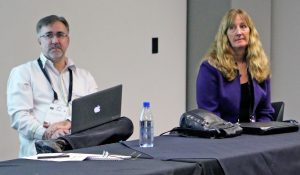
(From left): Professor Harry Dugmore and Dr. Walsh-Childers on the 'teaching hospital' panel debate. Image: TJ Aumua/PMC
(From left): Professor Harry Dugmore and Dr. Walsh-Childers on the ‘teaching hospital’ panel debate. Image: TJ Aumua/PMC

Dugmore said the school had applied “analytical tools from sociology and political science” to the teaching hospital theory; allowing students to gain insight into understanding dispositions and conflicts in their country.

“It confronts them with the reality of South Africa and allows them to be more sensitive journalists,” he toldAsia Pacific Report.

During his presentation, Dr Dugmore highlighted a student incident that emphasised the need for post-traumatic care for students.

He said a group of university students produced a story addressing the issue of rape culture within the campus, in which names of several alleged rapists were anonymously published.

The university was then “barred and barricaded for a week”.

Despite the story providing a platform to voice a serious issue, it did raise the need for the model to include “debriefing and post-traumatic care for students”, he said.

Listen to an extended interview with Associate Professor Katherine Reed, where she defines the teaching hospital model and explains why she disagrees with the metaphor, saying the model is better compared to the workings of a “kitchen” not a hospital.

Fuente noticia: http://asiapacificreport.nz/2016/07/18/wjec16-real-world-journo-schools-face-ethical-dilemmas/
Comparte este contenido:

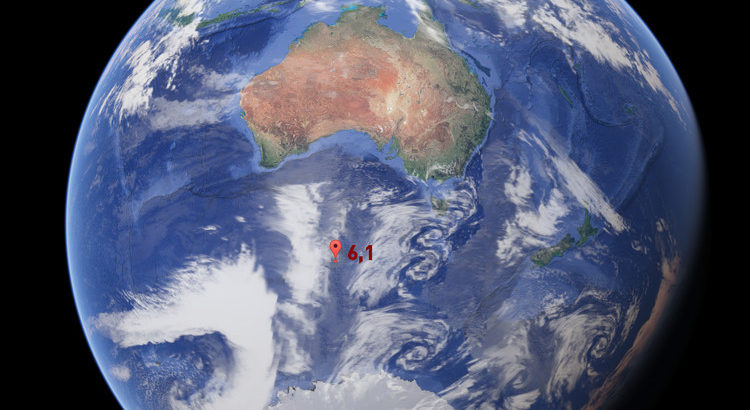
Un sismo de magnitud 6,1 sacude el sur de Australia


Oceania / australia/ Julio del 2016/ Noticia/actualidad.rt.com

En un primer momento se había reportado que el terremoto era «potencialmente causante de tsun

 Un fuerte sismo de magnitud 6,1 ha sacudido este lunes el sur de Australia, informaGeoscience Australia. En un primer momento se había reportado que el terremoto era «potencialmente causante de tsunami». Sin embargo, la información ha sido desmentida posteriormente.

El sismo, que ha tenido lugar a las 8:58 (GMT), se ha producido a una distancia exacta de 1.704,1 kilómetros de la costa de Queenstown y el epicentro se sitúa a una profundidad de solo 15 kilómetros.

Por su parte, el Servicio Geológico de EE.UU. (USGS) ha cifrado la magnitud del terremoto en 5,9, y situado la profundidad en 10 kilómetros. Por el momento, no se ha reportado la existencia de daños materiales ni víctimas.

Fuente: https://actualidad.rt.com/actualidad/214155-tsunami-sismo-australia

Fuente imagen: https://cdn.rt.com/actualidad/public_images/2016.07/article/5795dfeec36188fc2e8b4694.jpg


Comparte este contenido:

Indonesian minister ends Fiji visit

Oceania/Fiji/24 de Julio de 2016/Autora: Matilda Simmons/Fuente: The Fiji Times

RESUMEN: La ministra indonesia de capacitación de las mujeres y la protección infantil, Yohana Susana Yembise, concluyó su visita oficial de ayer después de asistir al Grupo de trabajo técnico conjunto en la 2ª acogida por el Gobierno de Fiji. El evento es parte de un memorando de entendimiento firmado entre Fiji e Indonesia para colaborar en las áreas de capacitación de las mujeres, la igualdad de género y la protección de los niños. «En Indonesia tenemos 250 millones de personas para cuidar, la mitad de la población son mujeres y 87 millones son niños. No es lo mismo aquí. Ustedes tienen la igualdad ya, no tenemos la igualdad todavía. sin embargo, hemos aprendido mucho de Fiji. La calidad del servicio que aquí está muy bien organizado «, dijo. La ministra es una de las pocas mujeres de Papúa que han alcanzado los niveles más altos de educación en Indonesia. Ella tiene una maestría de la Universidad Simon Fraser en Canadá, así como un doctorado de la Universidad de Newcastle en Australia.

THE Indonesian Minister of Women Empowerment and Children Protection, Yohana Susana Yembise, says she learnt a lot from Fiji after her two-day visit.

The minister ended her official visit yesterday after attending the 2nd Joint Technical Working Group hosted by the Fiji Government.

The event is part of an MOU signed between Fiji and Indonesia to collaborate in the areas of women empowerment, gender equality and child protection.

The MOU was to strengthen partnership between the two countries to share information and resources for development opportunities.

«In Indonesia we have 250 million people to look after, half of the population are women and 87 million are children. The country is so vast so it is a challenge working under my portfolio. It’s not the same here. You have equality already, we don’t have equality yet. However, we have learnt a lot from Fiji. The quality of service here is well organised,»she said.

The minister is one of a few Papuan women who have achieved the high echelons of education in Indonesia. She holds a Master’s degree from Simon Fraser University in Canada as well as a doctorate from the University of Newcastle in Australia.

«Under my ministry I look after the women and children in West Papua. I want to get more Papuan women to receive the same high level of education,» said the Papua-born minister.

The minister declined to talk on the issue for autonomy by her fellow Papuans.

«I am here to do my work, to better the standards of women and children in my country,» she said.

Mrs Yembise visited Queen Victoria School on Tuesday as well as Navutukea Village in Naitasiri during her trip. She was accompanied by the Minister for Women, Children and Poverty Alleviation, Rosy Akbar.

Fuente: http://fijitimes.com/story.aspx?id=363106

Fuente de la imagen: http://www.thejetnewspaper.com/2016/07/20/indonesian-delegation-visit-qvs/

Comparte este contenido:

Nueva Zelanda: Tertiary staff face immense pressure – survey

Oceania/Nueva Zelanda/24 de Julio de 2016/Autor: Mani Dunlop/Fuente: RNZ

Resumen: Un estudio sobre la educación terciaria dice que más de 1000 personas muestran los niveles de estrés del personal de las universidades y politecnicos, afirmando que ahora son mucho más altos que hace 10 años. Sandra Grey, presidente nacional   dijo que muchos de los encuestados, de 25 instituciones, dijeron que sintieron que no tenían la seguridad laboral y no estaban siendo escuchadas por su empleador. «La encuesta muestra un sistema bajo presión absoluta», dijo. Esto significa que están muy preocupados por la calidad de la enseñanza y los servicios de aprendizaje y de apoyo en el campus porque el personal estresado realmente se esfuerzan por proporcionar una educación de calidad hacer bien su trabajo «. El sindicato recibió 2334 respuestas escritas a partir de 1006 entrevistados para la encuesta y el Dr. Gris dijo que contaron la historia real de lo que estaba ocurriendo en el sector.

A survey suggests budget cuts and restructuring in the tertiary sector is causing increased stress levels for staff who say they are under immense pressure.

The Tertiary Education Union says its own survey of more than 1000 people shows stress levels of staff at universities, polytechnics and wānanga are much higher than 10 years ago.

National president Sandra Grey said a lot of the respondents, from 25 institutions, said they felt they had no job security and were not being listened to by their employer.

«The survey shows a system under absolute pressure,» she said.

«Even since 2013, what we are are seeing are increasing stress levels for staff in the system and in turn this means they are really worried about the quality of teaching and learning and support services on campus because stressed staff really struggle to provide good quality education to do their jobs well.»

The union received 2334 written responses from 1006 respondents for the survey and Dr Grey said they told the real story of what was going on in the sector.

«We had one talking about student support services being cut because of budgets.

«They had a suicidal student and when they went to student support they said ‘come back tomorrow, we don’t have anyone here who can help you because we don’t have the staff.’,» Dr Grey said.

«You can’t do that when it comes to suicidal students. We have got real on-the-ground harm being done in our institutions by underfunding.»

She said one of the contributing factors was the growing student-to-staff ratio and despite drops in enrolments in recent years, there were still fewer staff compared to students.

«Tertiary institutions are cutting staff numbers because they need to make savings, they just don’t have the money. The government is underfunding the sector by more than a million dollars, and that means institutions need to make savings and the savings are in staff.»

Fuente: http://www.radionz.co.nz/news/national/309292/tertiary-staff-face-immense-pressure-survey


Comparte este contenido:

Fiji: Climate Change Adaption and Education

Oceania/Fiji/22 de Julio de 2016/Fuente: Fiji Sun Online

RESUMEN: La conferencia sobre Actualización del Pacífico en la Universidad del Pacífico Sur (USP) en Laucala dedicó una sesión para discutir la Adaptación del  Cambio Climático y la  Educación. El Dr. Tess Martin habló sobre la Enseñanza Técnica en la Unión Europea y el  Proyecto de Formación del Pacífico (UE PacTVET). El propósito del proyecto es la ampliación de la  capacidad regional y nacional y la experiencia técnica para responder  al Cambio Climático (CCA) y los desafíos de la energía sostenible (SE). Al explicar la razón de ser del proyecto, el Dr. Martin dijo que había una necesidad de incluir el cambio climático y la energía sostenible en el plan de estudios de la FTP y construir sistemas de educación y formación sostenibles. «En la actualidad existen proyectos o programas para incluir el cambio climático, la gestión del riesgo de desastres y la energía sostenible en los programas escolares de primaria y secundaria,» dijo.

The 2016 Pacific Update conference at The University of the South Pacific (USP) in Laucala dedicated a session to discuss Climate Change Adaptation and Education.

USP senior lecturer, Dr Tess Martin talked about the European Union Pacific Technical Vocational Education and Training (EU PacTVET) project, while speaking on Quality Assured TVET Qualifications in Resilience for the Pacific Islands Region.

The purpose of the project is to create regional and national capacity and technical expertise to respond to Climate Change Adaptation (CCA) and Sustainable Energy (SE) challenges.

While explaining the project rationale, Dr Martin said there was a need to include climate change and sustainable energy in TVET curriculum and build sustainable education and training systems.

“At present there are projects or programmes to include climate change, disaster risk management and sustainable energy in primary and secondary school curricula,” she said.

“There are also university programmes on climate change, disaster risk management and sustainable energy in the region.”

Head of Department of Crop Production at the Fiji National University, Hirdesh Sachan who spoke on Information Needs for Climate Change Adaptation among Farmers in Fiji, said agriculture was referred to as the backbone of Fiji, however, the sector was not immune to obscurity and faced many challenges.

Two such challenges, he said, were the lack of agricultural information being disseminated to farmers and traditional negative stereotype towards agriculture and adapting to climate change.

“Climate change poses a direct and growing threat to the livelihoods of people in agriculture.

“Poor rural households, whose livelihood depend predominantly on agriculture and natural resources, will bear a disproportionate burden of adverse impacts of climate change and thus should be adaptations in interventions,” Mr Sachan said.

He said that the Pacific islands were the most vulnerable to climate change due to its geographical remoteness and size.

Other topics discussed included building future climate leaders and policy initiatives to promote climate smart production systems.

Fuente: http://fijisun.com.fj/2016/07/22/climate-change-adaption-and-education/

Comparte este contenido:

Nueva Zelanda: Overseas recruitment drives planned to tackle teacher shortage

Oceanía/Nueva Zelanda/22 de Junio de 2016/Autor: Meghan Lawrence/Fuente: Stuff

RESUMEN: La  Ministra de Educación Hekia Parata ha dicho públicamente que va a hacer anuncios sobre una serie de iniciativas sobre la oferta de docentes en un futuro próximo.Una escasez crítica se puso de relieve en un estudio reciente llevado a cabo por la Asociación de Directores de Auckland donde el 65 por ciento de las escuelas que respondieron había experimentado un número muy bajo de solicitantes de empleo.«Sabemos que los directores de Auckland están preocupados por las presiones sobre la oferta de docentes. Consideramos que esta área es una prioridad, por lo que hemos estado trabajando duro para áreas donde se han identificado carencias, como la secundaria  en ciencias, las matemáticas y la tecnología «

A plea from Auckland principals for national acknowledgement of a teacher shortage has been met with support from the Ministry of Education.

A critical shortage was highlighted in a recent survey undertaken by the Auckland Primary Principals’ Association where 65 per cent of schools that responded had experienced very low numbers of job applicants.

Association president Diane Manners says there are schools with no applicants and a significant percentage with only three or less.

«That is a significant concern as it is only term two and the schools we surveyed are predicting a very large number of positions still required between now and December.»

The ministry’s acting deputy secretary for early learning and student achievement, Karl Le Quesne, says it has been meeting regularly with Auckland principals and other education leaders to develop solutions.

«We know Auckland principals are concerned about pressures on teacher supply. We consider this area a priority, which is why we’ve been working hard to address areas where shortages have been identified, such as the secondary sciences, maths, technology and te reo Maori.»

Education Minister Hekia Parata has said publicly she will be making announcements on a range of initiatives on teacher supply in the near future.

Le Quesne says its first focus is on bringing Kiwi teachers back home from the United Kingdom to fill positions.

«We’ve been undertaking a series of recruitment drives in the UK, the last of which was in March,» he says.

«We are already supporting more than 200 overseas-trained teachers looking for positions in New Zealand.
Ad Feedback

«We are matching them to roles where a suitable New Zealand-based candidate cannot be found and helping them through the processes required by a number of government agencies.»

Le Quesne says a number of Auckland schools are also sending representatives to the Britain to interview applicants for positions.

«To back this up, we are speeding up the approval processes for overseas teachers coming to work in New Zealand schools by working with Immigration, NZQA and the Education Council.»

The ministry plans to launch a British advertising campaign in September, before its next recruitment drive in October.

Fuente: http://www.stuff.co.nz/auckland/local-news/manukau-courier/82316486/overseas-recruitment-drives-planned-to-tackle-teacher-shortage


Comparte este contenido:

Imparten clases sobre feminismo y equidad de género en escuela preparatoria de Australia

Australia/21 julio 2016/ Fuente: Desde Puebla

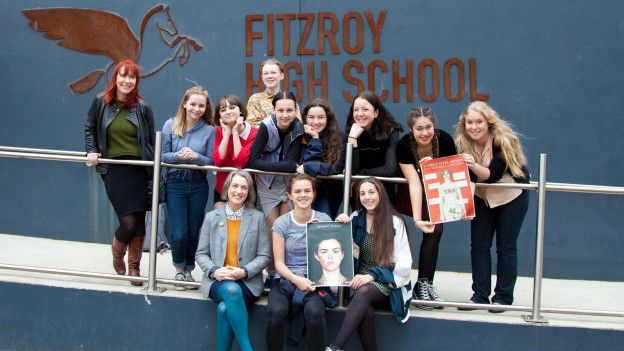
Tras encontrarse con la lacerante realidad de que en las escuelas de nivel medio superior, y en general, en todas en menor o mayor medida, la discriminación por cuestiones de género era recurrente y cotidiana, un grupo de estudiantes de la Preparatoria Fitzroy de Melbourne, Australia se comenzaron a agrupar en un Colectivo Feminista que a través de Facebook inició un debate sobre las situaciones de sexismo que se vivían en la escuela.

Al paso del tiempo, la maestra Briony O’Keeffe se acercó al grupo y sugirió al colectivo, conformado por 12 chicas, enfocar sus energías y “rabia” en producir algún recurso didáctico que se pudiera traducir en una materia o contenido curricular a fin de incrementar su impacto en la comunidad estudiantil de la institución educativa.

A esto se sumaron cifras que demostraban que en Australia, una de cada tres mujeres de 18 años de edad, o menos, han sido víctimas de violencia por parte de un hombre, y que a la semana, una mujer es asesinada por su pareja sentimental.

Arduos meses de trabajo entre la docente y las alumnas derivaron en la creación del manual Fightback: Addressing Everyday Sexism in Australian Schools para ayudar a los educadores a contar con recursos accesibles para hablar sobre la inequidad de género con la comunidad estudiantil.

Dentro de su contenido se incluyen los temas de igualdad de género, las representaciones de género en los medios, la cosificación de los cuerpos de las mujeres jóvenes, el uso de lenguaje sexista, la violencia contra las mujeres y los hombres, las orientaciones sexuales e identidades de género, detalles estadísticos de las brechas salariales y la visibilidad de la mujer en el deporte, entre otras.

Una vez terminada la propuesta, las autoridades escolares abrieron espacio para que los contenidos de dicho manual fueran impartidos en materias como salud y sexualidad, desarrollo humano y estudios sobre la sociedad y el medio ambiente, entre otras.

“No queremos enseñar ideología”

De acuerdo con Nia Staford, una de las alumnas impulsoras del proyecto, “no se pretende enseñar a los chicos y chicas a ser feministas o una ideología política, sino enseñarles acerca de la inequidad de género y que existe”.

A partir del pasado 25 de noviembre, a pesar de las críticas en redes sociales por parte de algunos sectores del colegio, sobretodo grupos de hombres, que incluso las han comparado con el Ku Klux Klan, el curso se comenzó a impartir, y en contraparte, el Departamento de Educación ha propuesto que se imparta en otras escuelas australianas.

Por su parte, O’Keeffe comentó que algunas críticas dicen que estos contenidos promoverán la misandria y otras formas de discriminación hacia los hombres, las cuales, considero desacreditadas debido a que el objetivo del programa es hacer que los estudiantes sepan sobre la existencia de la discriminación por cuestiones de género, no sólo para mujeres, sino también para hombres, debido a la perpetuación de las normas de género y los estereotipos.

Fuente: http://desdepuebla.com/imparten-clases-sobre-feminismo-y-equidad-de-genero-en-escuela-preparatoria-de-australia/137159/

Comparte este contenido:
Page 70 of 102
1 68 69 70 71 72 102