Page 73 of 102
1 71 72 73 74 75 102

More parents are choosing to home school their children – why?

Oceanía/Australia/Julio  del 2016/noticia/ http://theconversation.com/

Más padres en Nueva Gales del Sur (NSW) están eligiendo a la escuela a casa su hijo.

En la actualidad hay alrededor de 10.000 niños inscritos que son educados en casa cada año en Australia. En Nueva Gales del Sur, el número ha aumentado en un 10% en el último año – esto sigue la tendencia de los últimos años.

Es difícil obtener una imagen clara del estado-por-estado de la educación en casa cómo varía a través de Australia NSW porque sólo proporciona datos completos sobre esto.

No hay ningún requisito legal para los padres y cuidadores para informar a la Junta de Estudios Enseñanza y Estándares Educativos (BOSTES) en cuanto a por qué han elegido a la escuela a casa.

Las razones para la educación en casa son complejas. La mayoría de quienes escuela de origen que lo haga por razones ideológicas y filosóficas. Esto puede incluir la creencia de que los hogares proporcionan un mejor ambiente para que los niños aprendan o que los sistemas formales no pueden o no para satisfacer las necesidades de los niños

El beneficio, sin embargo, del sistema de acreditación es que ofrece reconocimiento de una educación sólida de ser entregado por los hogares para niños a través de la educación en casa.

El BOSTES es la celebración de reuniones de consulta para las familias de la escuela a casa, para mejorar el sistema de la mejor manera posible dentro de las directrices.

Parte de la función de la persona autorizada (el acreditador) es asegurar que ven los niños que son educados en casa.

Un número creciente de padres con un hijo con discapacidad sienten que tienen de educar en casa, porque las necesidades de aprendizaje no están siendo apoyados por el sistema público.

El sistema escolar no tener acceso a la financiación unida a un niño que es educado en casa. Y tampoco lo hacen los padres que la educación en casa.

Esto significa que alrededor de 10.000 niños potencialmente no tienen fondos para su educación.

A través de los niños siendo educados en casa, el dinero que se habría asignado a ellos para la educación desaparece esencialmente. Teniendo en cuenta el aumento anual constante en los registros de la educación en casa, y el continuo descenso del rendimiento académico en la educación formal, podemos asumir la educación en casa sólo seguirá aumentando.

Por lo tanto, se necesita más investigación para examinar los efectos potenciales que esto puede tener sobre los niños y la sociedad.

Fuente: http://theconversation.com/more-parents-are-choosing-to-home-school-their-children-why-60787

More parents in New South Wales (NSW) are choosing to home school their child.

There are now around 10,000 registered children who are home schooled each year in Australia. In NSW, the number has increased by 10% in the last year – this follows the trend of the last few years.

It’s difficult to get a clear state-by-state picture of how home schooling varies across Australia because only NSW provides comprehensive data on this.

There is no legal requirement for parents and carers to inform the Board of Studies Teaching and Educational Standards (BOSTES) as to why they have chosen to home school.

Parents across Australia are required to register, but it is thought that over 50% don’t.

No formal support is provided for home schooling other than curriculum documents. But many home school groups are available to offer support.

The gender balance between home-schooled children is fairly equal, with just over 50% being male. But there is a slight increase in numbers of middle primary school children being home schooled. This suggests that some parents choose to home school after having allowed their children to experience formal education.

Reasons for home schooling

The reasons for home schooling are complex. Most who home school do it for ideological and philosophical reasons. This can include the belief that households provide a better environment for children to learn or that formal systems are unable or unwilling to meet the needs of children.

But the research shows that for 40% of households, we don’t know their reason for choosing to home school.

Those who home school argue that it allows a focus on individual student needs – rather than just on grades; offers flexibility in learning; provides a safer learning environment; increases sociability with mixed-aged people, whether in the community or through extended family members and friends; and that this makes home schooling a better choice.

The arguments against home schooling are that it isolates children; means children are usually taught by someone who is not trained to teach; and can limit educational attainment.

But the research on home schooling is neutral; the findings neither confirm nor disprove any such claims.

Home-schooled children appear to do neither worse nor better than those who attend regular school. Their achievements and success after Year 12 are similar. And many home school parents are trained teachers.

However, the data recognises that not all children after Year 10 can be tracked as there is no requirement to register for home schooling after this point.

Many home school parents also choose for their children not to participate in standardised tests, such as NAPLAN, and therefore comparative data is inconclusive.

If home schooling is undertaken in Years 11 and 12, students can complete Higher School Certificate (HSC) exams to receive an ATAR but, due to the internal mark requirement, may not receive an actual HSC certificate.

Rise of home schooling in NSW

Home schooling is more common in certain areas of NSW: the Hunter region, South Coast and Sydney West. There is, however, no specific data as to why these areas have higher registration numbers.

In NSW, children can only be registered for home schooling from the age of six, with the highest number of initial registrations being at eight years old. This is usually after formal schooling has been attempted and perceived as not working. Other states do not publish this data.

NSW has the most comprehensive accreditation system, through required approval visits from BOSTES staff, as well as detailed application information in Australia – and many home school households find it burdensome.

The benefit, however, of the accreditation system is that it offers recognition of a sound education being delivered by households to children through home schooling.

The BOSTES is holding consultation meetings for home school families, to improve the system as best as possible within the guidelines.

Child protection issues

The 2014 NSW parliamentary home school inquiry did raise concerns about child protection issues in home schooling. Its report argued that, unlike formal schools where children are continually observed, there is no ongoing daily oversight of home-schooled children.

Part of the authorised person’s role (the accreditor) is to ensure they view children who are home schooled.

Increasing numbers of parents with a disabled child feel they have to home school because learning needs are not being supported by the public system.

But home schooling should be a choice, and not a last option. Through home schooling, parents hope that the diverse needs of their children will be met, rather than having their child isolated or denied full access to the curriculum as recent research demonstrates has been happening.

No funding for home-schooled children

The school system does not get access to the funding attached to a child who is home schooled. And neither do the parents who do the home schooling.

This means that around 10,000 children potentially have no funding for their education.

This does raise the question that if home school parents can provide an equivalent education without the $15,450 per student the public system receives, and often without a teaching degree, does NSW Education Minister Adrian Piccoli need to rethink how we educate children?

Through children being home schooled, the money that would have been allocated to them for education essentially disappears. Given the consistent annual increase in home-schooling registrations, and the continual lowering of academic achievement in formal schooling, we can assume home schooling will only continue to increase.

Further research is therefore needed to look at the potential impacts this may have on children and society.


Comparte este contenido:

Australia: Why some Adelaide school students may be moved to UniSA’s Magill campus

Oceanía/Australia/Julio 2016/Autor: Daniela Abbracciavento / Fuente: East Torrens Messenger

Resumen:  Las escuelas primarias Norwood Morialta High y Magill están considerando llevar a los estudiantes al campus UniSA Magill, como parte de un plan para crear un nuevo centro de educación para niños de hasta 12 años de edad.

NORWOOD Morialta High and Magill Primary schools are considering moving students to UniSA’s Magill campus as part of a plan to create a new birth-Year 12 education hub.

The State Government has released results of an 18-month, $250,000 study into creating a new school for 1400 students at the university, which has a focus on teacher training.

Norwood Morialta is considering shifting its middle school students to its senior campus, on The Parade, and its senior campus to the university site.

Magill Primary may relocate its Years 5, 6 and 7 students.

Norwood Morialta principal Jacqui van Ruiten said her school was consulting parents about a potential move.

“The first part of the study was creating a concept and then asking stakeholders, which includes us, whether we want to be part of it,” Ms van Ruiten said.

“The idea would be a staged process, potentially over 20 years.

“We see there are some wonderful opportunities with working collaboratively with the university.”

Norwood Morialta’s middle school campus has 880 students and has not been upgraded in more than 40 years.

Magill Primary principal Di Fletcher said the government’s proposal could help ease enrolment pressure at the Adelaide St school.

“There is a positive sense from parents and staff and a strong willingness to explore the possibilities,” Ms Fletcher said.

“We do know Magill School will not be closed at this point in time.

“Moving the Year 5-7s would support Norwood Morialta and allow us to keep our facilities, but ease the pressure on us, because we are full and can’t take any more children at the moment.”

University of South Australia deputy vice-chancellor Nigel Relph said transforming the campus into an education hub would have benefits for students and teachers.

“For student-teachers, the precinct would provide a unique opportunity to work in the classroom with a teacher,” Mr Relph said.

“Students would have day-to-day interaction with exceptional educational researchers and experienced practitioners.”

The two schools have until August 26 to decide if they want to be part of stage two of the investigation process.

Education Department executive infrastructure director Ross Treadwell said the second stage would include a more detailed analysis and include costs and timing.

If the schools agreed to be involved, that stage would be complete by the end of the year.

The Education Department said it was too early to speculate on the future use of the Norwood Morialta middle school campus land.

Fuente de la noticia: http://www.adelaidenow.com.au/news/south-australia/why-some-adelaide-school-students-may-be-moved-to-unisas-magill-campus/news-story/f09d7e3bbd3b645b7451830dac539a48

Fuente de la imagen: http://cdn.newsapi.com.au/image/v1/06582be43c9c1c583806c7d87455eb9d?width=1024

Comparte este contenido:

Nueva Zelanda: Thousands of Indian students denied visas

Oceanía/Nueva Zelanda/Julio de 2016/ /Fuente: RNZ

RESUMEN: Las instituciones terciarias están tratando de inscribir a miles de estudiantes de la India aunque Inmigración de Nueva Zelanda no creen que sea realmente la intención de estudiar aquí. Las cifras proporcionadas en virtud de la Ley de información oficial muestra 51 instituciones, incluyendo la mitad de las escuelas politécnicas del país, que tienen tasas de disminución de visado para los estudiantes de la India de más del 30 por ciento.
En la mayoría de las instituciones más de la mitad de las solicitudes están siendo rechazada y en uno la tasa de disminución es del 86 por ciento.
Ellos muestran que la inmigración Nueva Zelanda 3864 rechazó solicitudes de visado para las instituciones, y aprobado 3176 durante ese tiempo.
Inmigración de Nueva Zelanda dijo al programa Insight de RNZ que la mayoría de las aplicaciones se redujo en los primeros cuatro meses de este año porque no creía que el solicitante realmente venía a estudiar, o porque no creía que tenía suficiente dinero para mantenerse a sí mismos.
Autor: John Gerritsen
Tertiary institutions are trying to enrol thousands of Indian students that Immigration New Zealand does not believe are really intending to study here.
Figures provided under the Official Information Act show 51 institutions, including half of the country’s polytechnics, have visa decline rates for Indian students of more than 30 percent.
At most of the institutions more than half of applications are being turned down and at one the decline rate is 86 percent.
The figures cover the six months from the start of December 2015 to the end of May 2016 and are only for institutions with at least 10 visa applications from Indian students. They show that Immigration New Zealand turned down 3864 visa applications for the institutions, and approved 3176 during that time.

Immigration New Zealand told RNZ’s Insight programme that most of the declined applications in the first four months of this year were because it did not believe the applicant was really coming to study, or because it did not believe they had enough money to support themselves.
In 2014, Immigration New Zealand warned New Zealand Qualifications Authority (NZQA) that high refusal rates could indicate problems with tertiary institutions.
«For the purpose of prioritisation INZ believes that a provider who has an average decline rate of 30 percent or above warrants urgent attention. Such a high decline rate would give INZ serious cause for concern that the provider does not have adequate systems and processes in place to control the quality of the offers of place being issued, or that business practices are flawed.»
Immigration said it had increased its audits of providers with high decline rates and was now assessing information obtained from the 10 establishments it had visited so far.
It also had other tools, such as extra verification of visas applications for providers with high decline rates.
NZQA said it was assessing what it should do about the providers, but noted it recently gained new powers for dealing with rogue institutions.
Many institutions trying to enrol students from India are having their applications declined. Photo: 123rf
Auckland International Education Group spokesperson Paul Chalmers said the vast majority of the declined applications were not cases of fraud, but were simply not up to Immigration’s specifications.
Immigration was sometimes turning down bona fide students, he said.
«Whenever we have had an appeal from an agent we have taken it to INZ and won it.»
The international education spokesperson for the private sector body, Independent Tertiary Education, Richard Goodall, said Immigration was being tougher on applications from India, but visa decline rates above 50 percent were questionable.
«You’re getting more declined than accepted, something’s wrong along the way.»
His institution relied on agents to provide information about students, but it checked that information and often interviewed the students to make sure they should be enrolled, he said.
«I think there are, and there probably always will be, some who are more inclined to take the marginal ones than we are. It’s always painful for private enterprise to turn away a customer.»
The chief executive of Newton College of Business and Technology in Auckland, Ashish Trivedi, told Insight that all institutions enrolling from India were having a lot of students turned down.
His organisation was one of 21 that Immigration New Zealand said had decline rates above 60 percent.
«Some of it is a real necessary crack down on fraudulent activities and we support that. We have had rejections to student visa applications based on fraudulent activities. Working in Indian market you are going to be affected by that,» Mr Trivedi said.
Other institutions contacted for comment for this story did not respond, including Imperial College of New Zealand which had the highest rate of refused applications at 86 percent.
Minister of Tertiary Education Steven Joyce said institutions must sign up to a Code of Practice in order to enrol foreign students and recent changes to that document would help NZQA weed out any bad operators.
«What this does is make sure that NZQA, with supporting information from Immigration New Zealand, and as the code administrator will be able to say, ‘no we’re not happy with the practices here and if we don’t see a very significant change immediately you’re placing your whole future at risk’.»
Income from foreign students was growing steadily toward the government’s target of $5 billion a year by 2025, Mr Joyce said.
Foto: Immigration New Zealand is turning down as many as 86 percent of the study visa applications coming from India for some tertiary institutions. Photo: 123RF

Fuente: http://www.radionz.co.nz/news/national/308191/thousands-of-indian-students-denied-visas

Comparte este contenido:

Digital technology to become part of the New Zealand Curriculum and Te Marautanga o Aotearoa

MinisteriodeEducacióndeNuevaZelandia/08 de julio de 2016

Resumen: La tecnología digital es llegar a ser parte del plan de estudios de Nueva Zelanda y Te Marautanga o Aotearoa. A partir de ahora hasta el final de 2017, el Gobierno consultará con las partes interesadas, el diseño de nuevos contenidos plan de estudios, y desarrollar objetivos de rendimiento a través de toda la vía alumno. La tecnología digital será completamente integrada en el plan de estudios de Nueva Zelanda y Te Marautanga o Aotearoa en 2018. El ministro de Educación Hekia Parata ha anunciado hoy el cambio en el plan de estudios de Nueva Zelanda en la Cumbre de Tecnología NZTech avance de la educación en Auckland. Se va a integrar formalmente la tecnología digital en el plan de estudios lo cual tiene como objetivo apoyar a los jóvenes a desarrollar habilidades, la confianza y el interés en las tecnologías digitales y conducirlos a las oportunidades en todo el sector de las TI. Se incluye como una hebra de la zona de aprendizaje Tecnología en el plan de estudios de Nueva Zelanda, y como WhenU dentro del Hangarau Wāhanga Ako de Te Marautanga o Aotearoa. La decisión es el resultado del plan del gobierno de Ciencia y Sociedad Estratégica ‘Una nación de mentes curiosas: Te Whenua Hihiri i TE Mahara que revisó el posicionamiento y el contenido de la tecnología digital en el plan de estudios de Nueva Zelanda y Te Marautanga o Aotearoa.

Digital technology is to become part of the New Zealand Curriculum and Te Marautanga o Aotearoa. From now until the end of 2017, the Government will consult with stakeholders, design new curriculum content, and develop achievement objectives across the whole learner pathway.

Digital technology will be fully integrated into the New Zealand Curriculum and Te Marautanga o Aotearoa in 2018.

Education Minister Hekia Parata has today announced the change to the New Zealand Curriculum at the NZTech Advance Education Technology Summit in Auckland.

Formally integrating digital technology into the curriculum is intended to support young people to develop skills, confidence and interest in digital technologies and lead them to opportunities across the IT sector.

It will be included as a strand of the Technology learning area in the New Zealand Curriculum, and as a whenu within the Hangarau Wāhanga Ako of Te Marautanga o Aotearoa.

The decision is an outcome of the Government’s Science and Society Strategic Plan ‘A Nation of Curious Minds: Te Whenua Hihiri i te Mahara which reviewed the positioning and content of digital technology within the New Zealand Curriculum and Te Marautanga o Aotearoa.

From now until the end of 2017, the Government will consult with stakeholders, design new curriculum content, and develop achievement objectives across the whole learner pathway.

It will be fully integrated into the New Zealand Curriculum and Te Marautanga o Aotearoa in 2018.

Tomado de: http://www.education.govt.nz/news/digital-technology-to-become-part-of-the-new-zealand-curriculum-and-te-marautanga-o-aotearoa/

Imagen: https://www.google.com/search?q=Digital+technology+to+become+part+of+the+New+Zealand+Curriculum+and+Te+Marautanga+o+Aotearoa&source=lnms&tbm=isch&sa=X&ved=0ahUKEwi-lbrx6OHNAhUDFR4KHTtcDJkQ_AUICSgC&biw=1366&bih=623#imgrc=raMdxXdxwBwGCM%3A

Comparte este contenido:

Nueva Zelandia: Reading celebrated during Government Book Week 2016

MinisteriodeEducaciondeNuevaZelanda/08 de julio de 2016

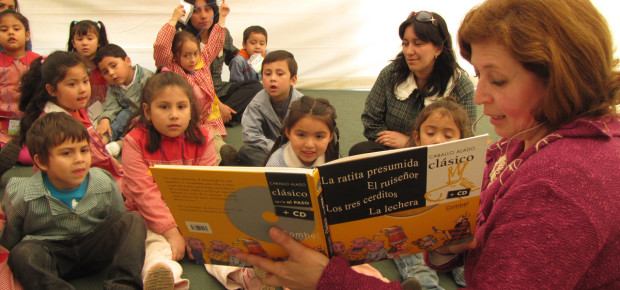
Resumen: Más de 90.000 niños en edad escolar tendrán esta semana se presentarán con libros gratuitos para marcar Gobierno Semana del Libro 2016 (4-10 de julio). Los libros han sido financiados por el Ministerio de Educación, en asociación con la Fundación de Beneficencia Alan Duff. Los estudiantes de las más de 500 escuelas en los libros de Duffy en el programa de viviendas se presentarán con los libros. La visión del programa es romper el ciclo de la booklessness en Nueva Zelanda por inspirar un amor de libros en los niños Duffy, por lo que se convierten en adultos que inspirar el amor por la lectura. Los estudiantes de las escuelas inscritas en el programa se les dará 5 libros gratis de su elección cada año. Estos son financiados por el Ministerio de Educación y por los propios, o por otros patrocinadores del programa de escuelas. Durante la Semana del Libro Gobierno muchas escuelas invitar a su miembro local del Parlamento a una asamblea donde los estudiantes son presentados con sus libros.

Original News:

More than 90,000 school children will this week be presented with free books to mark Government Book Week 2016 (4-10 July).

The books have been funded by the Ministry of Education in association with the Alan Duff Charitable Foundation.

Students from the more than 500 schools in the Duffy Books in Homes programme will be presented with the books. They have been able to choose from a selection of popular books including some written in te reo Māori.

More than 11 million books have been given to Kiwi children since the Duffy Books in Homes programme started in 1995.
The programme’s vision is to break the cycle of booklessness in New Zealand by inspiring a love of books in Duffy children, so they become adults who inspire a love of reading.

Students from the schools registered in the programme get 5 free books of their choice each year. These are funded by the Ministry of Education and either by the schools themselves, or by other sponsors of the programme.

During Government Book Week many schools invite their local Member of Parliament to an assembly where students are presented with their books.

http://www.education.govt.nz/news/reading-celebrated-during-government-book-week-2016/

Imagen: https://www.google.com/search?q=La+lectura+se+celebra+durante+el+Gobierno+de+la+Semana+del+Libro+2016&source=lnms&tbm=isch&sa=X&ved=0ahUKEwil_sbi2OHNAhVBqh4KHcMSD5oQ_AUICSgC&biw=1366&bih=667#imgrc=9S6LqltaAXAlrM%3A

Comparte este contenido:

Australia: ¿Debe impartirse el feminismo en las escuelas?

Australia/07 julio 2016/ Autora: Andrea Sánchez/ Fuente: Nueva Mujer

Mientras en muchos lugares del mundo aún hay polémica sobre cómo definirlo, en Australia un colectivo de mujeres logró convertirlo en una asignatura. La historia sucedió casi por accidente, el Colectivo Feminista Fitzroy comenzó cuando en un club de lectura entraron en un debate sobre la violencia que infringían los personajes del libro que estaban leyendo.
La plática llegó un poco más lejos al hablar del sexismo al que se enfrentaban las mujeres todos los días y cómo esa violencia era algo cotidiano. De esta forma nació la idea de crear la campaña ‘Fightback’ con la que recaudaron fondos para darle vida a una clase optativa.

Pues bien, hay una unidad en la que se investiga el concepto de desigualdad de género, la noción de privilegio y el papel del feminismo en el tratamiento de la desigualdad.

Otra unidad está enfocada en ayudar a los estudiantes a construir una idea a profundidad del proceso de objetivación y las repercusiones que tiene para las mujeres.

Finalmente, este curso habla del lenguaje sexista, en particular hacia la mujeres jóvenes y se incentiva el debate acerca de las creencias personales.

Briony O’ Keefee, profesora que encabeza este movimiento, declaró a varios medios internacionales que cada vez hay un número mayor de hombres y mujeres jóvenes que están dispuestos a unirse a la clase, aseguró que el impacto será mayor debido a que los jóvenes de entre 16 a 25 años son más proclives a fomentar actitudes que apoyen la violencia machista.

Comparte este contenido:

Nueva Zelanda: Tasman Mayor calls on Hekia Parata to visit Salisbury School before closure

Oceanía/Nueva Zelanda/Julio de 2016/ Stuff

RESUMEN: El Alcalde de Tasman, Richard Kempthorne, dijo que la Ministra de Educación, Hekia Parata, debe escuchar «la solución Salisbury» antes de cerrar la escuela especializada. Kempthorne pidió a Parata visitar la escuela en Richmond, cerca de Nelson, después de que el ministro anunció una propuesta el mes pasado para discutir el cierre de la escuela a principios del año próximo. Kempthorne dijo: Salisbury tenía el personal y los recursos para desarrollar habilidades para la vida de los estudiantes y ayudar a hacer la transición a la educación general. Esa imagen, llamada «La solución Salisbury» pide al Ministerio de Educación para financiar un «enfoque mejorado» en 30 estudiantes con autismo y discapacidad intelectual en lugar de todos los estudiantes con necesidades especiales.

Autor: Adele Redmon
Tasman Mayor Richard Kempthorne has asked Minister for Education Hekia Parata to visit Salisbury School so it can share its vision for the future. Parata has proposed the specialist school’s closure within a year.

Tasman Mayor Richard Kempthorne says Education Minister Hekia Parata should listen to «the Salisbury Solution» before closing the specialist school.
Kempthorne called on Parata to visit school in Richmond, near Nelson, after the minister announced a proposal last month to discuss closing the school early next year.
Parata’s office said the minister would happily visit Salisbury if a convenient time could be arranged.
Kempthorne said Salisbury had the staff and resources to develop its students’ life skills and help them transition to mainstream education.
Since the spectre of closure appeared two years ago, Salisbury School has built a very comprehensive offering in providing support for students with severe intellectual disabilities and those at the severe end of the autistic spectrum.
«It’s got a clear picture of what’s to be provided and the value of that for disadvantaged students.»
That picture, called «The Salisbury Solution» asks the Ministry of Education to fund an «enhanced focus» on 30 autistic and intellectually disabled students rather than all special needs students.
This would make Salisbury the first residential education facility solely targeted at such students in New Zealand.
Kempthorne said that most schools «aren’t resourced to give sufficient support to young people with high needs» under the government’s Intensive Wraparound Service (IWS).
«Investment at this stage in the students’ lives will certainly be paid back many times over in the future, financially, socially and morally.»
Salisbury’s board of trustees chairperson John Kane had a similar view.
«Young people with autism and complex intellectual disabilities are falling through the special education holes as they are not even getting into the IWS.
«The Salisbury proposal offers a solution based on international literature and best practice, utilising Salisbury’s current facilities and expertise, and requiring no further funding than was granted in the 2015 school year.»
Kane welcomed a visit from Parata and hoped to meet her before the current consultation period ended in August.
Fuente: http://www.stuff.co.nz/national/education/81761607/tasman-mayor-calls-on-hekia-parata-to-visit-salisbury-school-before-closure

Comparte este contenido:
Page 73 of 102
1 71 72 73 74 75 102